Where to Stay on the Rocha Coast: Town by Town
Rocha’s Atlantic shore isn’t one resort. It’s a string of small beach towns that sleep very differently, and choosing between them matters more than choosing a room. Pick wrong and you can end up dragging a suitcase through sand with no car, hunting for a cash machine that only opens in summer, or paying January money for a village you’d have liked better in March. The real question is which town, which corner, and how early to book.
For where to stay in Rocha Uruguay, pick La Paloma for year-round services and a town that works without a car, Punta del Diablo for surf, cabañas and summer energy, La Pedrera for a calmer clifftop village, and Cabo Polonio or Barra de Valizas only if you’re happy to live simply. For January, book early.
This page goes deeper than our country-wide advice on choosing where to stay in Uruguay, and it sticks to the coast of the Rocha department: what each town is like to sleep in, which kind of lodging dominates where, which part of town suits whom, the January squeeze, and the services you can and can’t count on. Bus fares, truck tariffs and campground rules below were checked in November 2026 against COT, Rutas del Sol, Turismo Rocha, the Ministry of Environment and the army’s park service, which runs Santa Teresa.
Rocha’s beach towns at a glance
| Town | What it’s like to stay in | Lodging that dominates | Book ahead for January? | Without a car |
|---|---|---|---|---|
| La Paloma | A real town that keeps going in winter; bank, supermarkets, pharmacies | Hotels, apart hotels, cabin complexes, rental houses | Yes, especially near the beaches | Easiest: direct COT buses, walkable center |
| Punta del Diablo | Fishing village turned surf town; packed and social in summer | Cabañas and cabin complexes, hostels, some hotels, campgrounds | Yes, as early as you can | Workable: COT buses on the Ruta 9 line |
| La Pedrera | Small clifftop village, quieter, a little bohemian | Rental houses, cabañas, a few posadas and small hotels | Yes | Workable, but buses are few |
| Cabo Polonio | Off-grid hamlet inside a national park; no electric lighting or running water, per the official page | Simple posadas, hostels, rented ranchos | Yes, and confirm what’s included | Bus to the Ruta 10 terminal, then the park truck |
| Barra de Valizas | Tiny, rustic, dunes behind and a creek in front | Cabañas, hostels, a posada or two | Yes for January weekends | Limited buses; check the operator |
| Aguas Dulces | Old-style fishing and holiday village of ranchos and cabañas | Rental ranchos and cabañas, small hotels, apart hotels | Less pressure than the big names | Limited buses; a car helps |
| Santa Teresa park | Huge forested campground by the beaches | Tent pitches, carpicabañas (small cabins) | Can’t: no reservations | Rutas del Sol’s Ruta 9 line stops at the fortress |
Cost works in tiers rather than fixed prices: a front-line sea view, a short walk to the sand and the New Year week push a room or cabin to the top of its range, while the same place in March or November can cost a fraction of that. Nightly rates swing so much by week that the quickest way to see the pattern is to compare the same dates across several towns.
What kind of lodging will you find on the Rocha coast?
Turismo Rocha’s own summary of the department’s lodging runs from hotels and campsites to country houses, hostels, apart hotels and houses for rent. On the coast, a handful of types do most of the work, and each town leans on different ones.
Posadas
Small, owner-run, personal. A posada is a small inn, often a handful of rooms around a garden or a shared kitchen, run by the people who live there. On this coast they range from simple rooms with a fan to design-minded places with a view. They suit couples and solo travelers who want breakfast made for them and someone to ask about the tide or the truck times. The catch: with so few rooms, a good posada books up for January long before the cabin complexes do.
Cabañas and cabin complexes
The default for families and groups. A cabaña is a self-contained cabin, usually with a kitchen and a barbecue grill outside, and Rocha is full of them. Some stand alone in a garden; others come in complexes with a pool and a reception desk. Prices are usually per unit, not per person, so four people sharing a two-bedroom cabaña often spend less than two couples in a posada. Ask how far it is to the beach on foot, not “near the beach”.
Hostels
Cheapest beds, best for meeting people. Hostels cluster in Punta del Diablo, Barra de Valizas and Cabo Polonio, with dorms and private rooms. In summer they’re social by design, which is the point for some travelers and a reason to stay elsewhere for others. Our rundown of hostels across Uruguay covers how dorm stays work nationally.
Rental houses
A common way Uruguayan families do it. Whole-house rentals, from simple ranchos to modern glass boxes, fill La Pedrera, La Paloma and Aguas Dulces. They’re rented by the week or fortnight in high season through local inmobiliarias (real-estate agents) or directly from owners. They make sense for a week or more, with a car. For contracts, deposits and red flags, see our guide to renting a beach house in Uruguay.
Hotels and apart hotels
Fewer than you might expect, and mostly in La Paloma. If you want a front desk, daily cleaning and a room that’s identical to the photos, La Paloma has the widest choice, with Punta del Diablo next.
Camping
The budget backbone of a Rocha summer. The big one is inside Santa Teresa National Park, covered below, and there are smaller private campgrounds around the villages. Campgrounds in Punta del Diablo are part of the official description of the town.
A tax note that applies to all of the above. Hotels and other registered lodging bill non-residents zero IVA (Uruguay’s value-added tax) on accommodation when you show a foreign identity document, all year; it isn’t a card discount and there’s no refund to claim. Separately, a 9-point IVA reduction on restaurants, car hire and holiday-rental mediation paid by card or electronic money runs to April 30, 2027 under Decreto 235/026, and the tourism ministry has announced that the full exoneration for non-residents paying with foreign cards continues for the 2027 season. Check your receipt to see what was applied.
Where to stay in Punta del Diablo
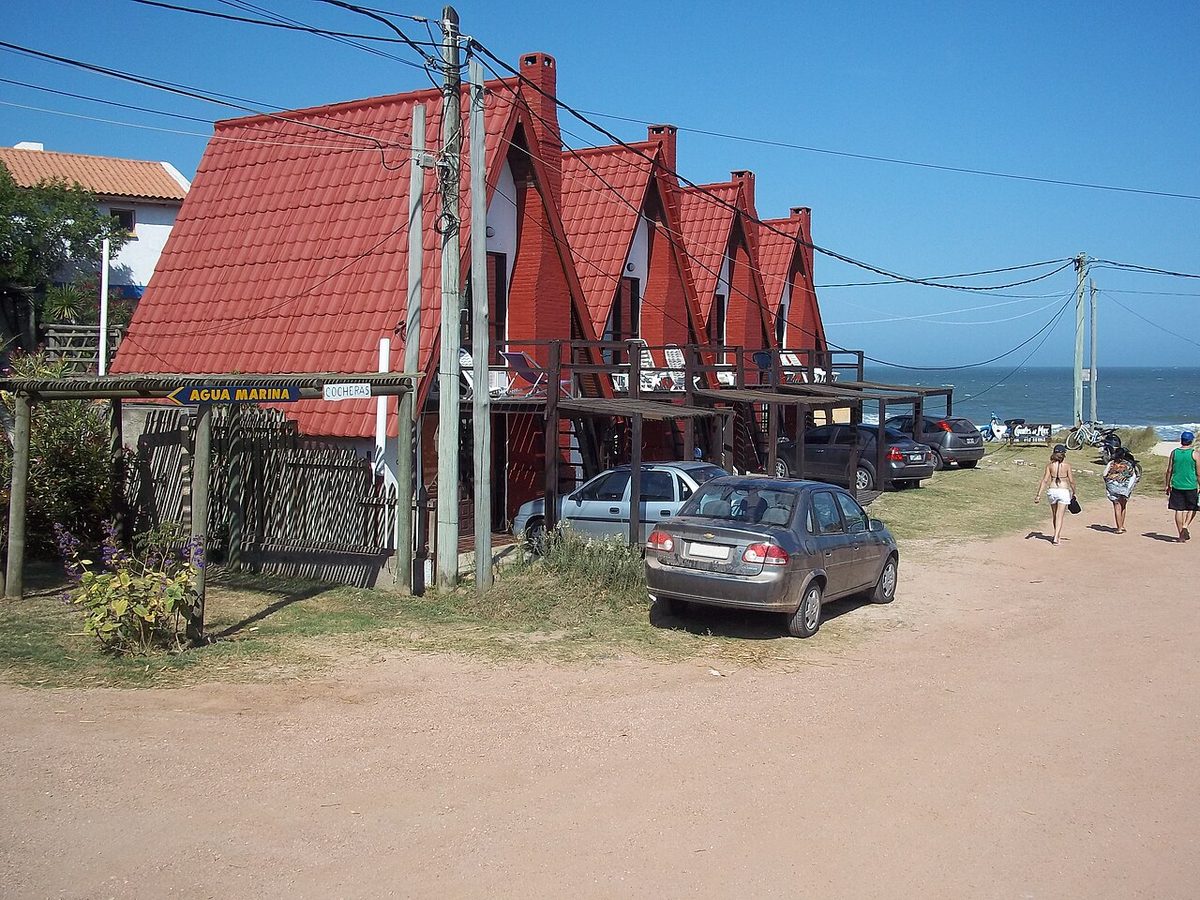
Punta del Diablo is the town most first-timers picture when they hear “Rocha”: painted fishing boats on the sand, a rocky point, surf on both sides, and a summer crowd that keeps the place going late. It had 2,014 residents in the 2023 census, and it is about 45 km from the Brazilian border at Chuy. Rocha’s tourism office describes its lodging as cabin complexes, hotels and campgrounds, and that’s an accurate picture: cabañas outnumber everything else, with hostels filling the budget end. For the beaches, food and things to do, see our full Punta del Diablo guide; here we stick to where to sleep.
Around the point and the fishermen’s beach
Best for: car-free stays and night owls. Sleeping near the old center puts you within walking distance of the food stalls, bars, shops and the bus stop. It also puts you where the noise is. In January, music carries. Light sleepers should look one or two streets back, or farther out.
Toward Playa del Rivero
Best for: surfers and longer stays. Playa del Rivero lies north of the point and is one of the surf spots the tourism ministry names here, along with La Viuda and Pescadores. Cabañas here are close enough to walk into town and far enough to sleep. Expect the walk back to be uphill on sand and gravel some nights, and plan your shopping accordingly.
Out toward Playa Grande and the park
Best for: families who want space, with a car. Playa Grande stretches north between the village and Santa Teresa National Park. Lodging out this way tends to be cabins with more room and less going on outside. Without a car or a bicycle, every meal and every bag of groceries becomes a trek.
Verdict: Punta del Diablo is the right choice if you want a lively summer base with surf on the doorstep, and the wrong one if you want quiet in January. In March, it’s a different and gentler place, with far more choice of cabañas.
Plan it: COT buses leave Montevideo at 09:40, 13:30 and 20:30 and take 4h10 to 4h25; the one-way fare is UYU 1,015 (about US$24-26 at November 2026 exchange rates, checked November 2026). Summer timetables can differ, so check COT for your travel date. Best for: surfers, groups of friends, backpackers, car-free travelers who want a social summer.
Where to stay in La Pedrera
La Pedrera sits on a low rocky bluff above the sea, and Turismo Rocha’s description of it as a place where everything is calm except the ocean is about right. It has a clifftop main avenue with small shops, restaurants, a craft fair and a social club that hosts shows and events, and two beaches with different crowds: El Desplayado, a small bay between rocks that suits families, and Playa del Barco, which draws a younger surf crowd. Our La Pedrera guide covers the village itself.
Lodging leans toward rental houses and cabañas, with a few small hotels, posadas and a hostel in the official directory.
On or near the main avenue
Best for: no car, short stays. Everything you need is on or just off the main avenue, and the bus stops nearby. Rooms and posadas close to it are the easiest choice for two or three nights.
The quieter streets behind and above the beaches
Best for: a week with family or friends. Rental houses here give you a garden, a grill and long evenings. You’ll walk to the beach, but you’ll want a car for groceries, day trips and getting back from La Paloma at night.
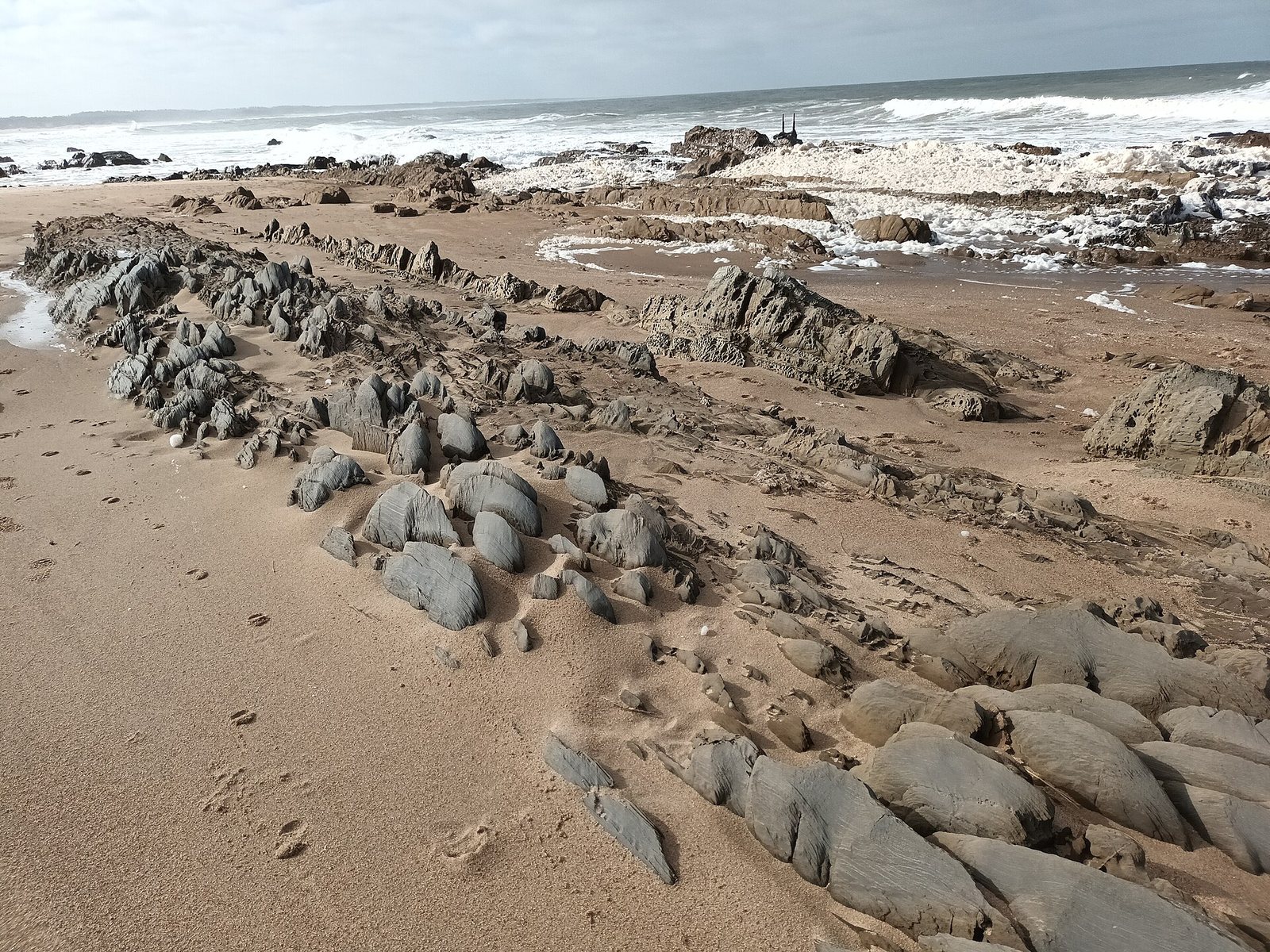
Verdict: La Pedrera is the best compromise on this coast for couples: livelier than Valizas, gentler than Punta del Diablo, and close enough to La Paloma for its supermarkets and bank. It’s thin on choice for a single night in January, when most owners want a week.
Plan it: COT lists Montevideo departures at 06:00, 13:15 and 18:00, taking 3h45 to 3h50, for UYU 819 (about US$20-21) one way (checked November 2026). Best for: couples, small families, surfers who want a quieter base.
La Paloma: the year-round base
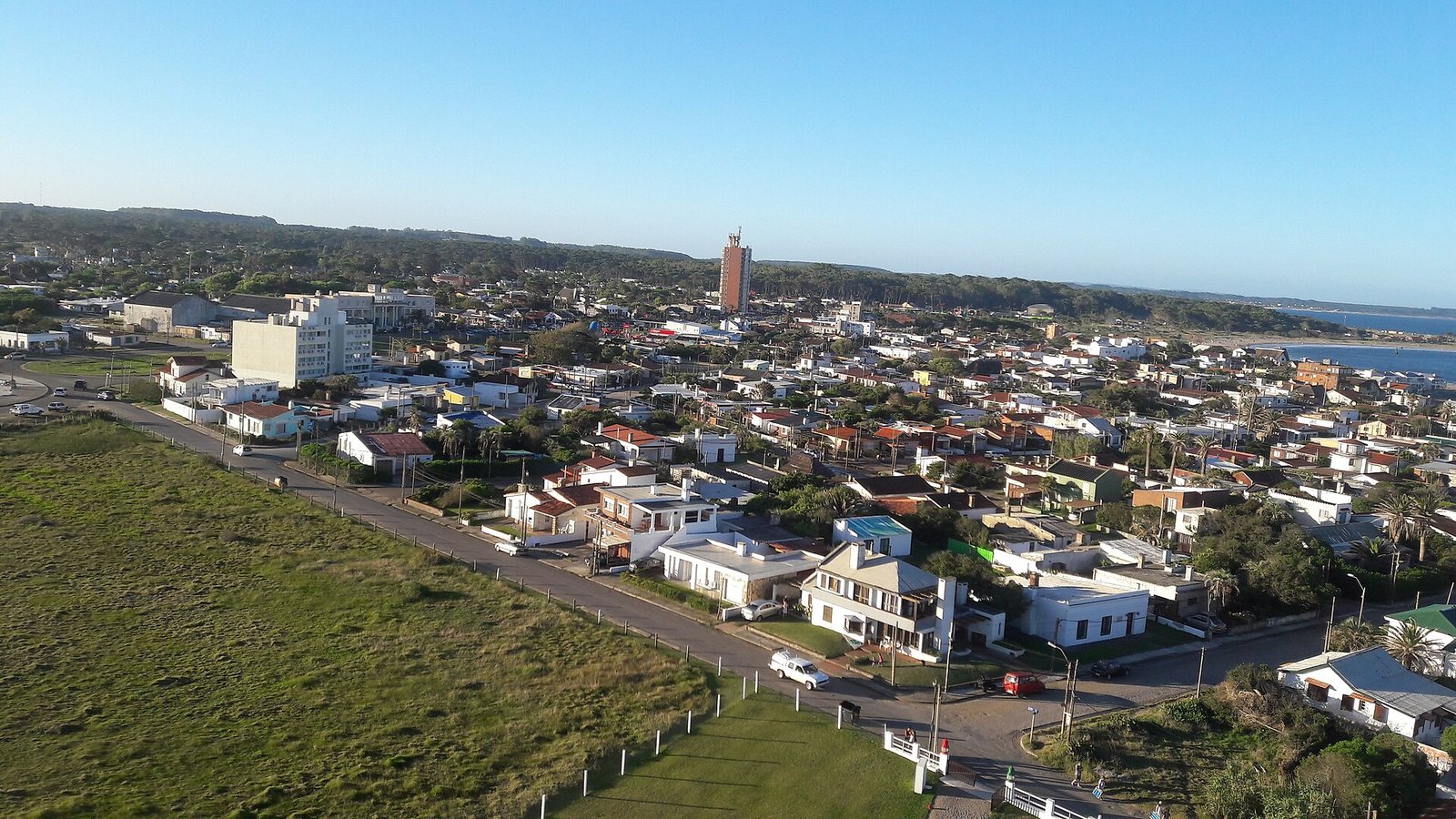
La Paloma is the most town-like place on the coast, and that’s its strongest argument. Turismo Rocha notes restaurants, supermarkets and pharmacies in the center and surf conditions through the year, and it’s the only beach town with a year-round bank ATM on the tourism office’s list, at the BROU branch. People gather at La Balconada beach to watch, and applaud, the sunset. Our La Paloma guide has the beaches one by one.
The lodging mix is the broadest in the department: hotels, apart hotels, cabin complexes, rental houses and municipal cabañas all appear in the official directory, many of them marked as open all year. That makes La Paloma the safest choice outside summer, when some smaller villages wind down.
The center
Best for: car-free travelers and first-timers. Stay within a few blocks of the main avenue and you can walk to the bus, the bank, the supermarket and several beaches. It’s the one place on this coast where a wheeled suitcase isn’t a mistake.
Near La Balconada and the western beaches
Best for: couples and sunset people. Quieter, more residential, still walkable to the center on a fine evening.
The edges of town
Best for: families renting for a week. Houses and cabin complexes on the outskirts give you more space for the money. A car or bicycles make life much easier.
Verdict: If you’re coming without a car, or outside December to March, start your search in La Paloma. It’s less romantic than Cabo Polonio and less fun at midnight than Punta del Diablo, but it works, and from here La Pedrera is next door.
Plan it: COT runs Montevideo to La Paloma in 3h30 to 3h35 for UYU 786 (about US$19-20) one way (checked November 2026). Best for: first-timers, families, off-season trips, anyone without a car.
Where to stay in Cabo Polonio
Cabo Polonio is the place people come to Rocha to see, and the one where the lodging decision matters most. It’s a tiny settlement inside a national park of 25,820 hectares, with 128 residents in the 2023 census, a lighthouse, moving dunes and offshore islands that hold almost half of Uruguay’s fur seals and sea lions. Rocha’s official tourism page says plainly that there is no electric lighting or running water, and that the village has irregular paths rather than streets. Take that at face value when you book. Our Cabo Polonio guide covers the village and the walks.
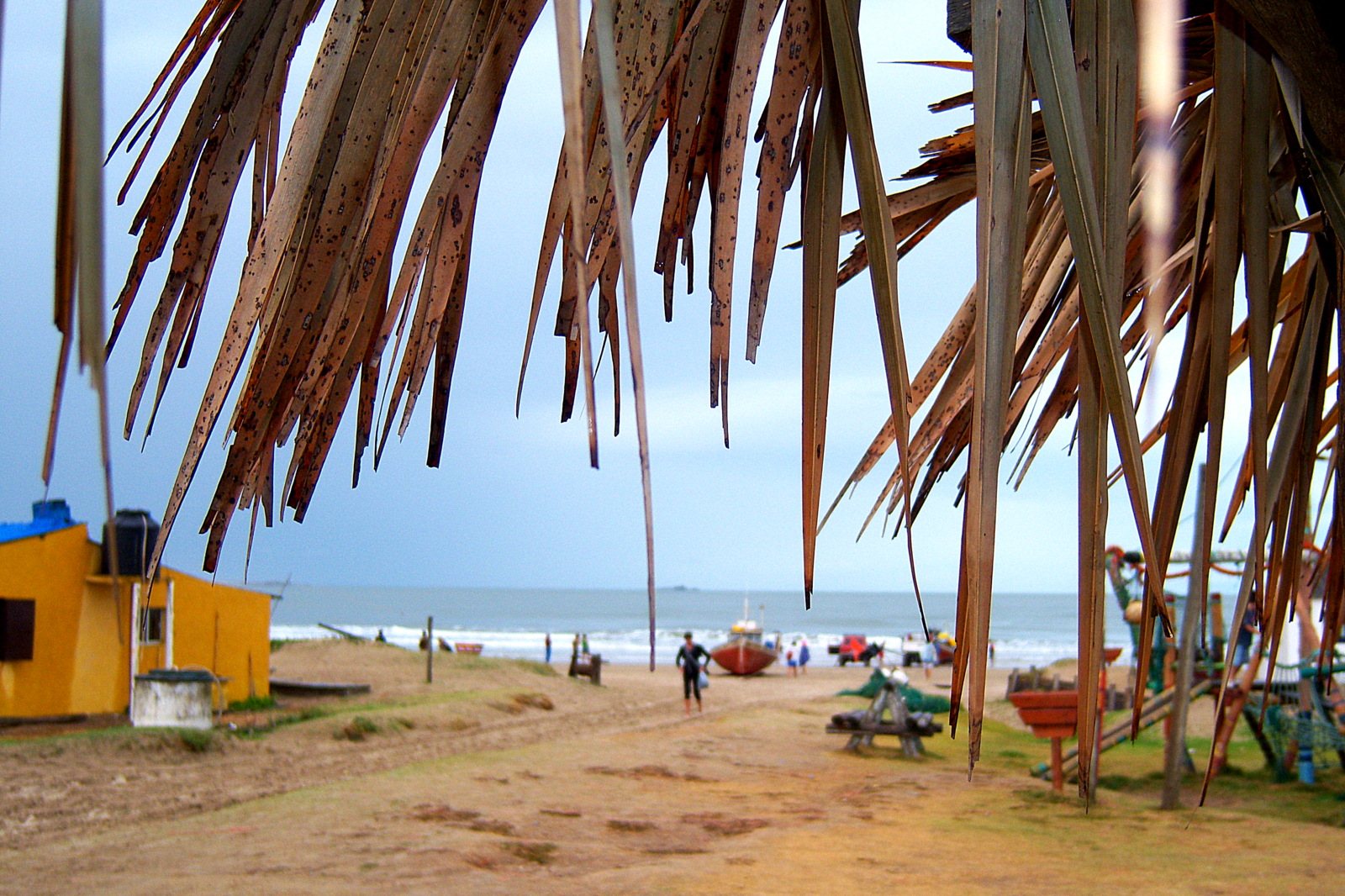
What lodging looks like
Simple, and that’s the deal. Lodging here means small posadas, hostels and rented ranchos (simple cottages, often thatched). The Ministry of Environment’s park page lists a handful of hostels and posadas as providers in the area, while stating that it isn’t responsible for their service. Every place handles light, water and cooking its own way, so ask your host directly how it works at that property, what bedding and towels are included, and whether you need to bring anything. Don’t assume anything you’d take for granted in La Paloma.
Getting there with luggage
No private cars in the park. You leave your car, or your bus, at the access terminal on Ruta 10 at km 264.5 and ride the park’s authorized trucks across the dunes, about 20 minutes. The return fare is UYU 470 (about US$11-12) per person, with children up to and including age five free; a surfboard costs UYU 100 (about US$2-3) return, and parking at the terminal is UYU 350 (about US$8-9) a day, all checked November 2026 on Turismo Rocha’s timetable page. You can pay cash in Uruguayan pesos, Brazilian reais, euros or US dollars, or by debit card or bank transfer. Our step-by-step on how to get to Cabo Polonio covers buses, the terminal and the walking route.
The truck timetable, marked as updated April 7, 2026, lists the first departure into the park at 05:30 and the last at 20:00 (it waits for the bus until 20:30), with the last truck out at 18:00. Check it again for your dates, since summer schedules can change, and time your arrival so you’re not hauling bags across the village in the dark.
One night or more?
At least one, ideally two. Day-trippers leave on the afternoon trucks. The village after that, with the lighthouse beam and the sea lions and very little else, is the reason to stay. A single night is enough to see it; two lets you walk the dunes without watching the clock. Families with small children and anyone who needs reliable power for medical equipment should think hard about it, or choose Valizas or La Paloma and visit for the day.
Plan it: Rutas del Sol runs a daily Montevideo departure at 10:10 that reaches the Cabo Polonio entrance at 14:30, for UYU 1,003 (about US$24-26) one way on fares in force from July 1, 2026; check its summer timetable. Bring cash, a flashlight and a bag you can carry. Best for: couples, solo travelers and anyone happy to unplug.
Where to stay in Barra de Valizas
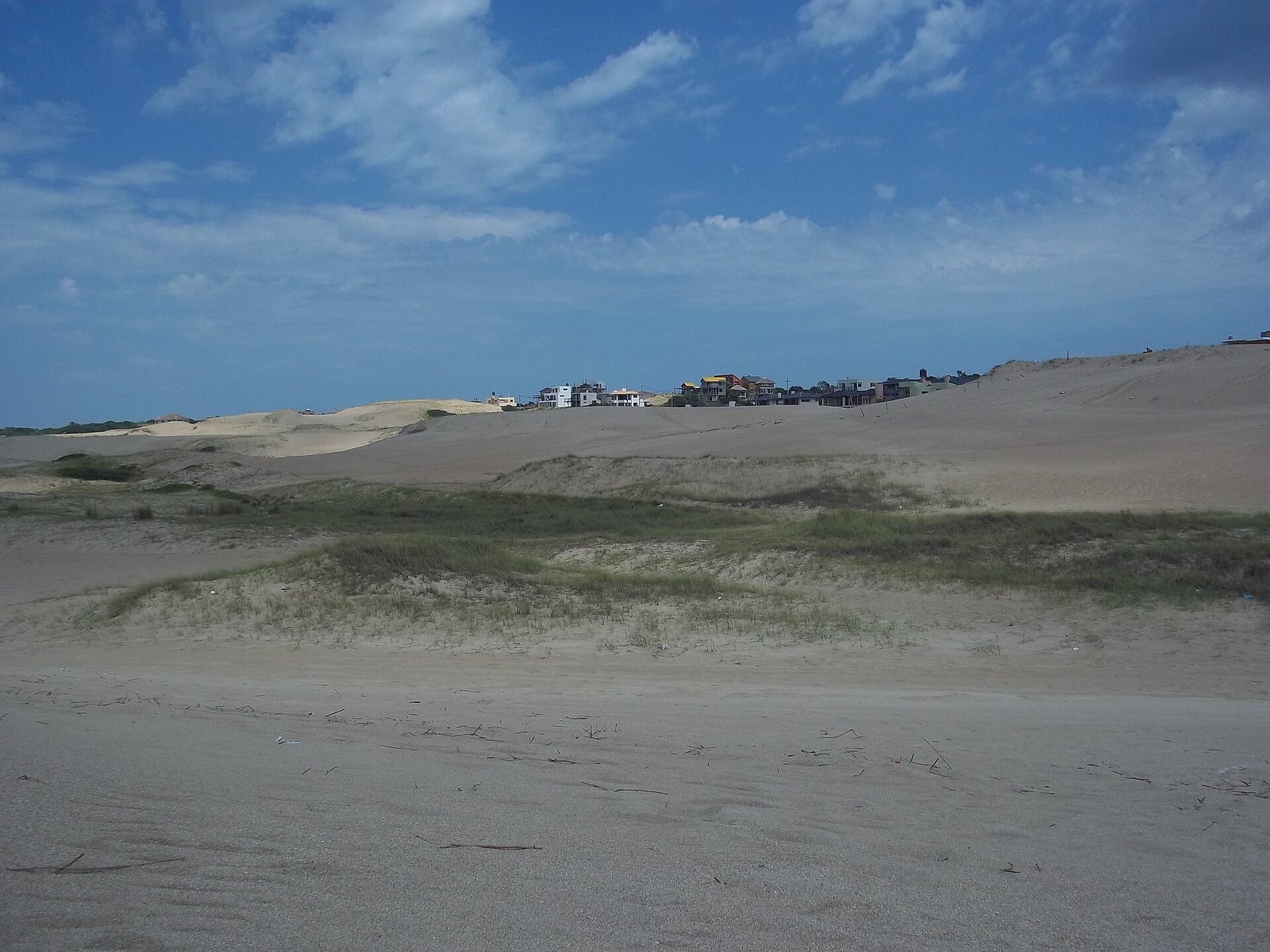
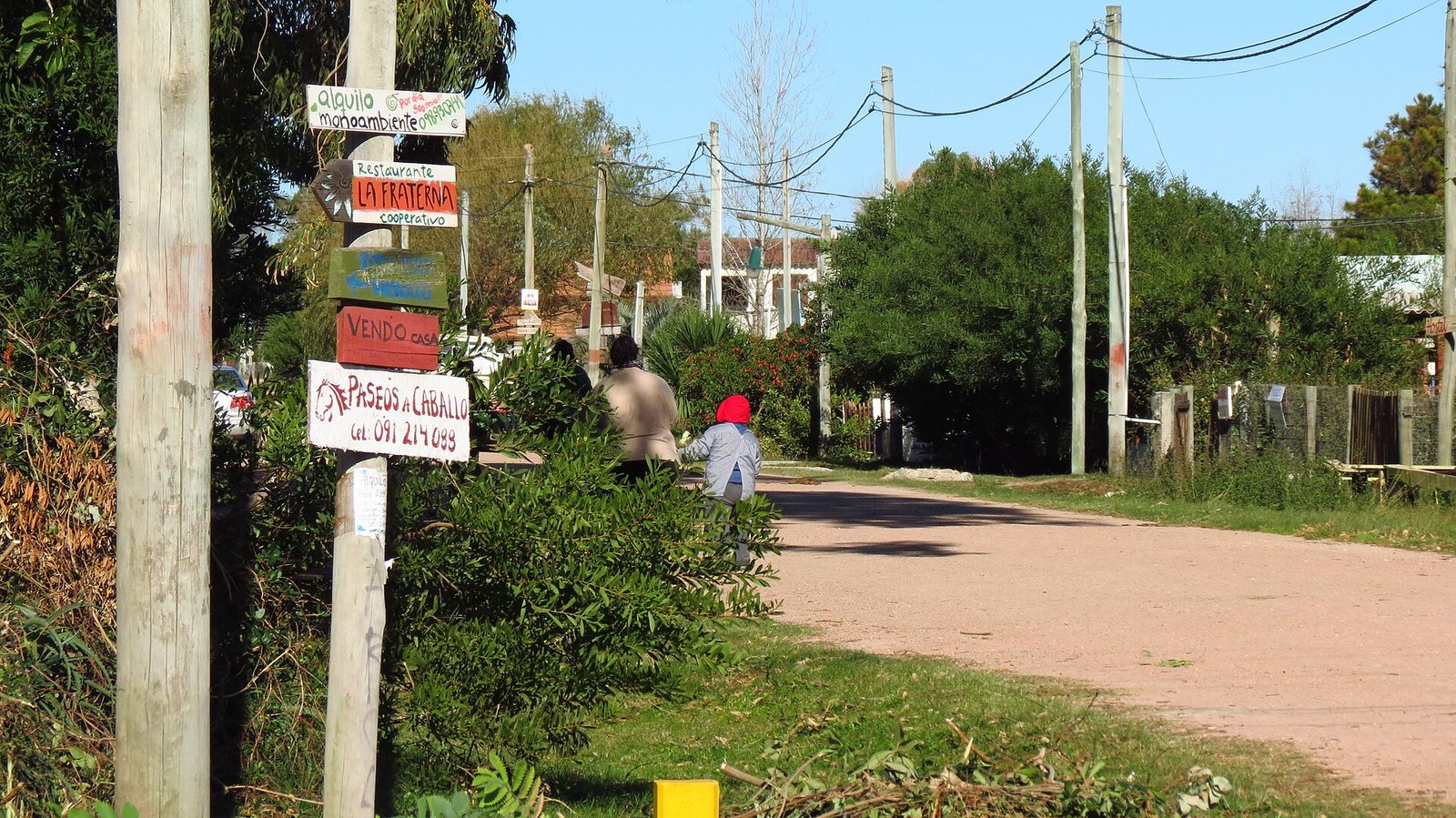
Barra de Valizas is a small village at the mouth of the Arroyo Valizas, with huge dunes rising behind it and the walking route to Cabo Polonio starting on its doorstep. It’s rustic, sandy and quiet outside the summer peak. Lodging means cabañas, hostels and a posada or two; the official directory lists several that open all year. Read more in our Barra de Valizas guide.
Valizas makes sense as a cheaper, more connected alternative to sleeping in Cabo Polonio itself. Turismo Rocha describes the crossing of the creek toward Cabo Polonio by boat, or on foot when conditions allow, and warns against swimming across. From there the walk runs along the beach past the remains of the Don Guillermo, which Turismo Rocha describes as a US Navy barge stranded in 1952. The route is about 8 to 10 km depending on the line you take, so it’s a full outing, not a stroll. The big Cerro Buena Vista dune is about 20 minutes on foot from the main beach access.
Verdict: Stay in Valizas if Cabo Polonio’s lack of services worries you but you still want the dunes and the quiet. Don’t stay here expecting nightlife or a choice of restaurants, and note that Turismo Rocha’s ATM list shows no machine in the village.
Plan it: Rutas del Sol’s winter 2026 timetable lists Montevideo to Barra de Valizas both via Castillos and via La Paloma; check its current timetable for summer departures. Best for: walkers, couples, budget travelers, Cabo Polonio fans who want a bit more comfort.
Aguas Dulces: the old-school option
Aguas Dulces sits at km 277.5 of Ruta 10, and Turismo Rocha describes it as a village full of ranchos and cabañas, popular with people who like nature, sport fishing and calm, with pubs and a craft fair in the evenings along its main avenue, known as “Cachimba” or “Faroles”. It feels less curated than La Pedrera and less crowded than Punta del Diablo.
Most lodging is rented ranchos and cabañas, plus a hotel, a cabin complex and an apart hotel in the official directory. One caution: many front-line houses sit right at the edge of the sand, and “beachfront” here can be very literal. Ask for recent photos.
Verdict: Aguas Dulces is good value and low-key for a week with a car. It’s not a first choice for a short, car-free trip, and the tourism office’s ATM list shows no machine here either.
Camping in Santa Teresa National Park
The huge campground inside Santa Teresa National Park, north of Punta del Diablo off Ruta 9 at km 302, is the classic budget summer stay on this coast. It’s run by the army’s park service (Servicio de Parques del Ejército), and Turismo Rocha gives the campground’s capacity as 10,000 people.
How it works. The operator lists 1,810 ordinary pitches and 189 with electricity and drinking water. There are no reservations: plots are allocated on arrival, first come, first served. Showers have hot water; there’s no Wi-Fi. Only the Achiras sector is directly on the ocean, and the rest sits inland among the trees. The park’s hostel is listed as not in operation, and the alternative to a tent is one of the carpicabañas (small cabins) at Playa La Moza.
What it costs. The operator’s page is still headed with the 2025-26 season tariff: UYU 250 (about US$6) per person per day for an ordinary pitch and UYU 300 (about US$7-8) for one with power and water, with a three-night minimum. Those are 2025-26 figures; check the park’s accommodation page for the 2026-27 rates before you go. Park admission is free, and the gates are open 08:00 to 20:00 from December to February.
Verdict: Ideal for campers on a budget, and a decent car-free option, since Rutas del Sol’s Ruta 9 line lists a stop at Fortaleza Santa Teresa. Arrive early in the day in January, and don’t count on a beachfront plot.
Which Rocha town suits you?
- First trip, no car: La Paloma, with a night or two in Cabo Polonio.
- Surfers: Punta del Diablo for the social scene, La Pedrera for a calmer base with Playa del Barco and El Desplayado nearby.
- Families with young children: La Paloma or a cabaña in La Pedrera; Cabo Polonio as a day trip rather than a stay.
- Couples who want quiet: La Pedrera outside January, Barra de Valizas, or a posada on the edge of Punta del Diablo.
- Backpackers: Punta del Diablo’s hostels, then Valizas and Cabo Polonio.
- Campers: Santa Teresa, with Punta del Diablo for supplies and nights out.
- Off-season travelers: La Paloma first; elsewhere, filter for places that open all year.
How hard is January, and when should you book?
January is when Uruguay goes to the beach, and Rocha’s small towns feel it more than anywhere. The supply is small: a village of a couple of thousand residents can’t stretch to absorb a summer crowd, so the posadas and well-placed cabañas go first, and whole-house rentals often only come by the week. The New Year week and the Carnival long weekend are the tightest of all. If you’re reading this in late November with January dates in mind, start booking now, and be flexible about the town before you’re flexible about the quality.
December is gentler. The first half of the month is still shoulder season, with more choice and quieter beaches, and the pressure builds toward Christmas and New Year. Our guide to Uruguay in December covers the holidays and the weather, and the January month guide covers peak summer across the country.
A few booking habits help in high season:
- Ask about minimum stays before you fall in love with a place; small owners often prefer longer bookings in January.
- Confirm how you’ll pay. Some small hosts want a transfer or a deposit, and cash matters in villages without an ATM.
- Get the walk, not the distance. “Two blocks from the beach” can mean two sandy blocks uphill.
- Book in writing and keep the host’s phone number; in Cabo Polonio and Valizas, finding a door at night isn’t easy.
Verdict: Late February and March are the sweet spot for most people: the days are long, the towns are still open, and you can choose where to stay rather than take what’s left.
Access and services: what to sort out before you arrive
Buses
The coast is reachable without a car, but frequencies are thin and summer timetables change. These are the published figures, checked in November 2026; see our guide to getting around Uruguay by bus for terminals and tickets.
| From Montevideo to | Operator | Journey | One-way fare |
|---|---|---|---|
| La Paloma | COT | 3h30-3h35 | UYU 786 (about US$19-20) |
| La Pedrera | COT (06:00, 13:15, 18:00) | 3h45-3h50 | UYU 819 (about US$20-21) |
| Punta del Diablo | COT (09:40, 13:30, 20:30) | 4h10-4h25 | UYU 1,015 (about US$24-26) |
| Cabo Polonio entrance | Rutas del Sol (10:10 daily) | 4h20 | UYU 1,003 (about US$24-26) |
| Barra de Valizas, Aguas Dulces | Rutas del Sol | Check the timetable | Check the operator |
Driving
Ruta 9 is the main highway linking Rocha city, Castillos and Chuy, and it runs past Punta del Diablo and Santa Teresa. Ruta 10 is the coastal road, but it doesn’t run continuously: the departmental planning documents describe it as interrupted at Laguna de Rocha, so plan your route between José Ignacio and La Paloma before you set off. A car makes the biggest difference in Aguas Dulces, Valizas and the outer edges of every town.
Cash and ATMs
Turismo Rocha’s ATM list is worth reading before you choose a base. Year-round BROU bank machines are listed in Rocha city, Castillos, Chuy and La Paloma. The machines it lists in La Pedrera, Punta del Diablo, Santa Teresa park, La Coronilla and at the Cabo Polonio access terminal on Ruta 10 are marked as open only in the summer season, and none is listed in Barra de Valizas or Aguas Dulces. Bring enough pesos for small hosts, food stalls and the trucks.
What to skip, and what costs more than it should
- Skip the New Year week in Punta del Diablo unless the party is the point. It’s the most expensive and the loudest week of the year.
- Skip booking Cabo Polonio from a listing that won’t explain water and light. A good host will tell you exactly how it works. If they can’t, book elsewhere.
- Skip a one-night, car-free stay in Aguas Dulces. It rewards a slow week, not a quick stop.
- Don’t plan to pick a town on arrival in January. It works in March. In January it often means a long, hot afternoon and a bed somewhere you didn’t want to be.
Where to stay in Rocha Uruguay: your questions answered
Is it better to stay in Punta del Diablo or La Pedrera?
It depends on the noise you want. Punta del Diablo is bigger, busier and more social, with more cabañas and hostels and a strong surf scene. La Pedrera is smaller and calmer, built around one clifftop avenue, with more whole-house rentals. Couples and families who want quiet usually prefer La Pedrera; groups of friends and backpackers usually prefer Punta del Diablo.
Can you stay overnight in Cabo Polonio?
Yes. There are small posadas, hostels and rented ranchos inside the park, and staying overnight is the best way to see it once the day-trippers leave. Book ahead in summer, ask your host what’s included, and time your arrival with the park trucks from the Ruta 10 terminal. The last truck out of the village leaves at 18:00 on the published timetable, so check it for your dates.
Does Cabo Polonio have electricity?
Rocha’s official tourism page says Cabo Polonio has no electric lighting or running water, and that it has irregular paths rather than streets. Individual lodgings handle light and water in their own ways, so ask your host exactly what to expect at that property and bring a flashlight. If you depend on reliable power, stay in Valizas or La Paloma and visit for the day.
Do I need a car to stay on the Rocha coast?
Not if you choose your base well. La Paloma and the center of Punta del Diablo work on foot, with direct COT buses from Montevideo. La Pedrera works if you stay near the main avenue. A car makes a big difference in Aguas Dulces, Barra de Valizas and the outer parts of every town, and it’s essential for a rental house a long way from the center.
How far ahead should I book for January?
As early as you can. The New Year week and the Carnival long weekend fill first, followed by the rest of January. Small posadas and well-placed cabañas go before hotels and big cabin complexes. From late February into March, booking a few weeks ahead is usually enough, and in the off-season you can often book days ahead in La Paloma.
Is there an ATM in Cabo Polonio or Punta del Diablo?
Turismo Rocha lists a machine at the Cabo Polonio access terminal on Ruta 10, not in the village, and one in Punta del Diablo, but both are marked as open only in the summer season. Year-round BROU machines are listed in La Paloma, Rocha city, Castillos and Chuy. Bring enough pesos for the trucks, small hosts and food stalls.
Can you camp in Santa Teresa National Park without a reservation?
You have to: the operator takes no reservations and allocates pitches on arrival. It lists 1,810 ordinary pitches and 189 with power and water, a three-night minimum and hot showers. The 2025-26 tariff was UYU 250 (about US$6) per person per day for an ordinary pitch and UYU 300 (about US$7-8) with services; check the park’s page for 2026-27.
Final thoughts
For most first visits, the best answer to where to sleep on this coast is two bases, not one: a few nights in La Paloma or La Pedrera, where the bank, the bus and the supermarket are close, and one or two nights in Cabo Polonio or Valizas, where none of them are. Punta del Diablo earns a week if you surf or want summer company; Santa Teresa if you camp. Whatever you choose, book January early and ask your host the practical questions that listings skip.
To put the towns in order on the map, follow our day-by-day Rocha coast itinerary. If you’re weighing the whole country rather than one coast, start again from the country-wide lodging advice linked at the top.
Credits & sources
Sources & further reading
- Turismo Rocha: Cabo Polonio: the official description of the village and its services
- Turismo Rocha: Cabo Polonio truck timetable and tariffs: current truck times, fares and parking
- Turismo Rocha: ATMs in Rocha: which towns have a cash machine, and which open only in summer
- Ministerio de Ambiente: Cabo Polonio protected area: park rules, access and listed lodging providers
- Servicio de Parques del Ejército: Santa Teresa accommodation: campground rules and the current season’s tariff
- COT: timetables and fares: buses from Montevideo to La Paloma, La Pedrera and Punta del Diablo
- Rutas del Sol: routes and timetables: buses to Cabo Polonio, Barra de Valizas and Aguas Dulces
- IMPO: Decreto 235/026: the tourism IVA reduction in force to April 30, 2027
Photo credits
All images via Wikimedia Commons, used with thanks: Punta del Diablo from the dunes at Playa de la Viuda by Elcolorin123 (CC BY-SA 3.0); Rock shelves on the beach at La Pedrera by Sadads (CC BY-SA 4.0); The beachfront at Cabo Polonio by Miriam Edith Leal (CC BY-SA 4.0); A lane in Barra de Valizas by Casaseneleste (CC BY-SA 4.0); Dunes at Barra de Valizas by Luciajimena1990 (CC BY 4.0); La Paloma from the Cabo Santa María lighthouse by Igna (CC BY-SA 4.0).