Punta del Diablo: Uruguay’s Boho Fishing Village (2026)
Where the paved road ends and the sand begins
The asphalt gives out a few kilometres before town. One moment you are on a smooth ruta with the Atlantic flashing through the dunes; the next, your tyres are crunching over loose sand and grey gravel, the car slows to a crawl, and a dog with no obvious owner trots alongside as if escorting you in. That is the first thing anyone tells you about Punta del Diablo, and it turns out to be true: the road simply stops being a road, and you arrive somewhere that has decided, on purpose, not to tidy itself up.
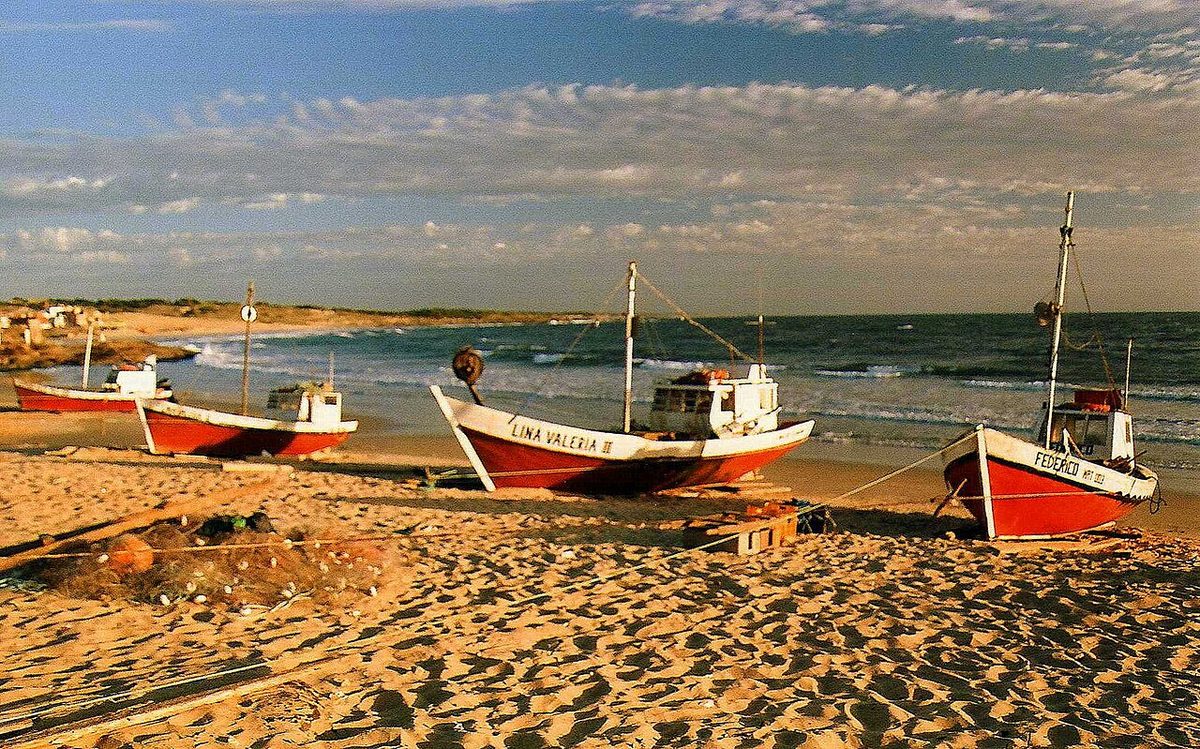
I came down the first time on a grey April afternoon expecting a postcard and found something better. Wooden cabins painted the colours of boiled sweets. Fishing boats hauled up the beach at angles, nets drying on the rails. A handful of cafes with their shutters half down for the season, and the sea doing that flat, metallic thing the Atlantic does off the coast of Rocha. I have been back in summer since, when the place is unrecognisable, and that contrast is the whole story.
So here is the short version before we get into the detail.
Punta del Diablo is a former shark-fishing village on Uruguay’s Atlantic coast, in the Rocha department, about 300 km east of Montevideo and 43 km from the Brazilian border. It has roughly 800 permanent residents, sandy unpaved streets, a working fishing port, four good beaches and a bohemian, low-rise feel. In January it swells past 25,000 people; off-season it is nearly empty.
That single swing, from a few hundred souls to a small city and back again, explains almost everything about the town: the prices, the empty cafes in June, the surf, the lack of cash machines, the reason backpackers love it and the reason some people leave disappointed. Get the timing right and it is one of my favourite places in the country.
What this guide covers
I am going to stay in Punta del Diablo itself here, rather than trying to explain the whole coast at once. We will look at the village and its fishing port, walk through the four beaches one by one, talk honestly about surfing and fishing, cover where to eat and sleep, and then deal with the dramatic difference between January and the rest of the year. There is a planning section by traveller type and an FAQ at the end.
This town sits inside a wider region. If you want the lay of the land, start with the parent guide to Rocha, Uruguay, which frames how all these beach towns relate. The nearest sibling up the coast is Cabo Polonio, the off-grid hamlet in the dunes, and if you are weighing the two ends of this coast against the glossier resort scene, the comparison piece on Punta del Este versus Rocha is the honest version. The national park next door has its own guide too: Santa Teresa National Park, with its fortress, forest campground and beaches.
| At a glance | Punta del Diablo |
|---|---|
| Where | Atlantic coast, Rocha department, ~300 km / 185 mi east of Montevideo; 43 km from Chuy and the Brazilian border |
| Vibe | Laid-back former fishing village; low-rise wooden cabins; sandy ripio streets; artisan and backpacker scene; no high-rises |
| Best months | December to mid-March for warmth and open businesses; late Nov, March and April for a quieter compromise; May to October for surf and solitude |
| How to arrive | Bus from Montevideo (Tres Cruces), about 4.5 to 5 hours, around US$20 to US$26 one-way; or a 4-hour self-drive. From Brazil, bus via Chuy |
| How long to stay | Three nights is the sweet spot; two feels rushed given the distance; a week if you are here to surf or switch off |
The village and the fishing port
Punta del Diablo was not always a holiday town. The Rocha family settled here in 1935, the story goes, in search of clean sea air for a child with asthma. Then around 1942 fishermen drifted down from nearby Valizas chasing tiburon, the shark whose liver oil was a valuable export at the time. For decades that was the entire economy: a clutch of families, a hard living off the Atlantic, and no road in at all until 1968. Tracks across the dunes blew away as fast as anyone could cut them.
You can still feel that history at the caleta de pescadores, the working fishermen’s cove that sits right in the middle of town. Caleta just means a small fishing cove or landing, and this one is the real article, not a heritage display. Brightly painted wooden boats are dragged up onto the sand by hand, the whole crew hauling together, and in the old days a horse and cart did the heavy work. The catch gets cleaned and laid out on the spot.
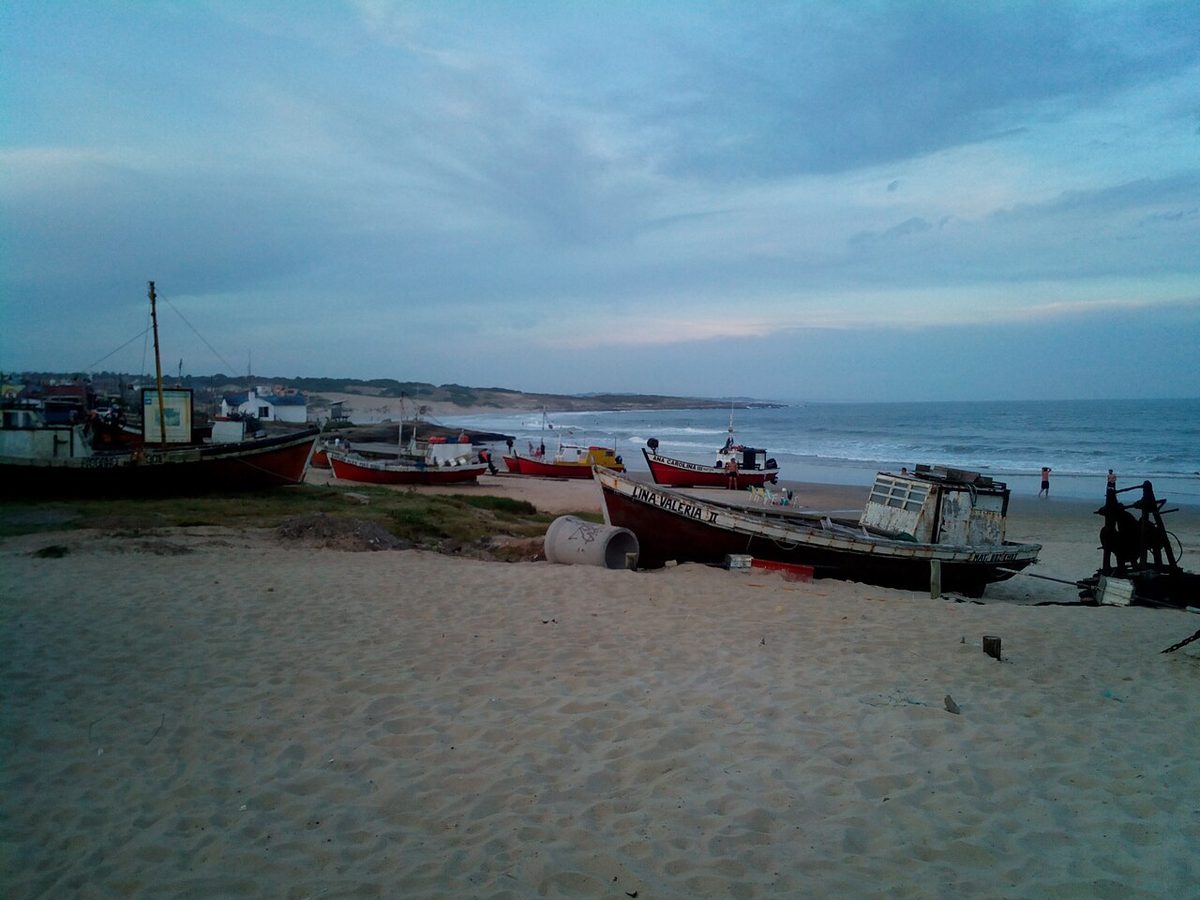
Wander up from the boats and you hit the artisan market at the rocky end of the beach. Shell jewellery, driftwood, pottery, carved starfish, the sort of thing the fishermen’s wives started making generations ago and that became a proper feria over time. Some of it is lovely and locally made; some, I will be honest, is the same imported tat you see at any beach market. Pick through it and you find the good stuff.
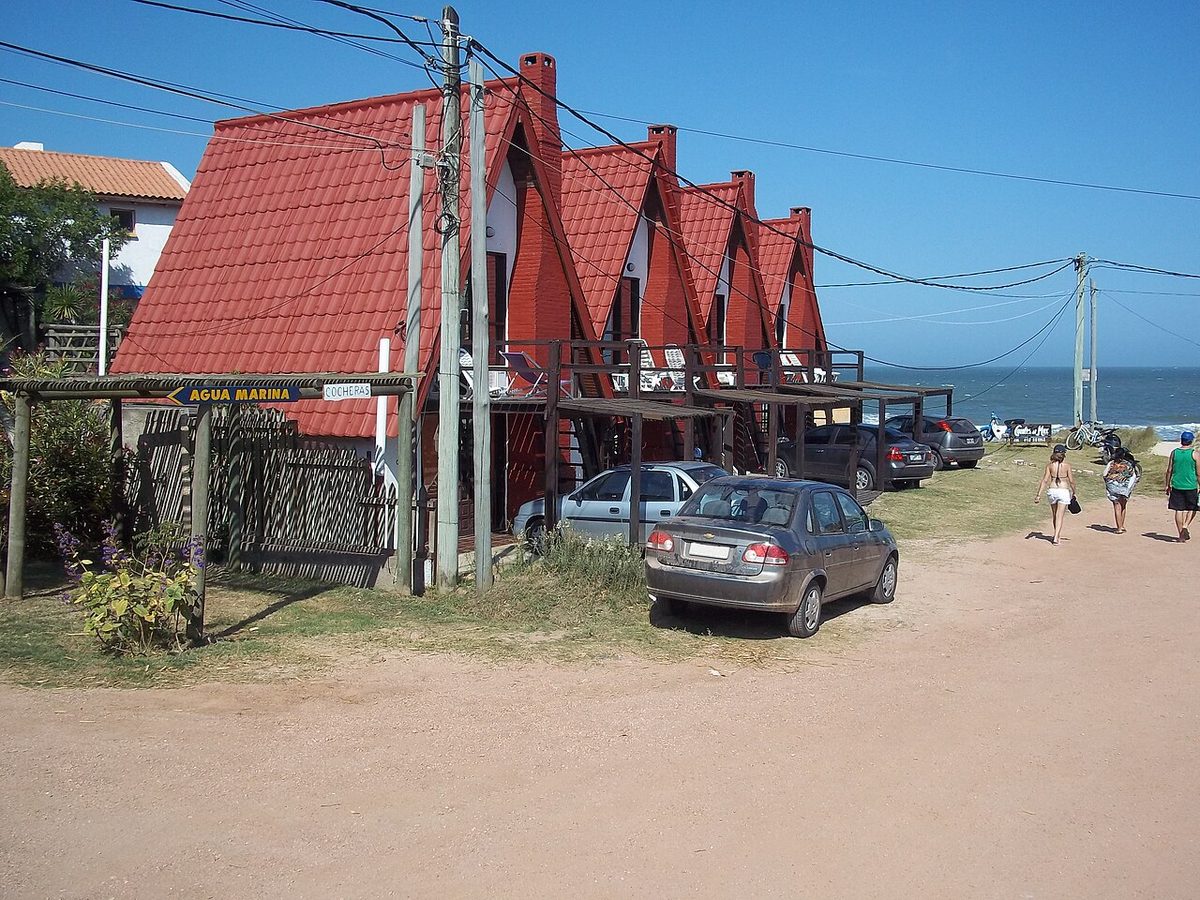
The town itself is tiny. You can cross it on foot in about an hour, and walking is genuinely the only sensible way to get around. Brightly coloured cabins line sandy lanes that fan out from the centre, there are a few small supermarkets and a scatter of cafes, and the whole thing is deliberately low. Strict building codes ban high-rises and sprawling resorts, which is exactly why the place still looks like itself and not like a smaller Punta del Este. Whether developers have respected the spirit of those rules is another matter, and I will come back to it.
One honest warning about the streets
Those sandy, gravelled streets, ripio in the local term, are part of the charm right up until they are not. After rain they turn to mud and puddles. A normal hire car is fine in the dry but you will be crawling along in low gear, and anyone picturing wheeled suitcases gliding to the door should picture instead dragging them through soft sand in the dark. Pack light, wear shoes you do not mind ruining, and accept that everything here is a short, gritty walk away.
The beaches of Punta del Diablo
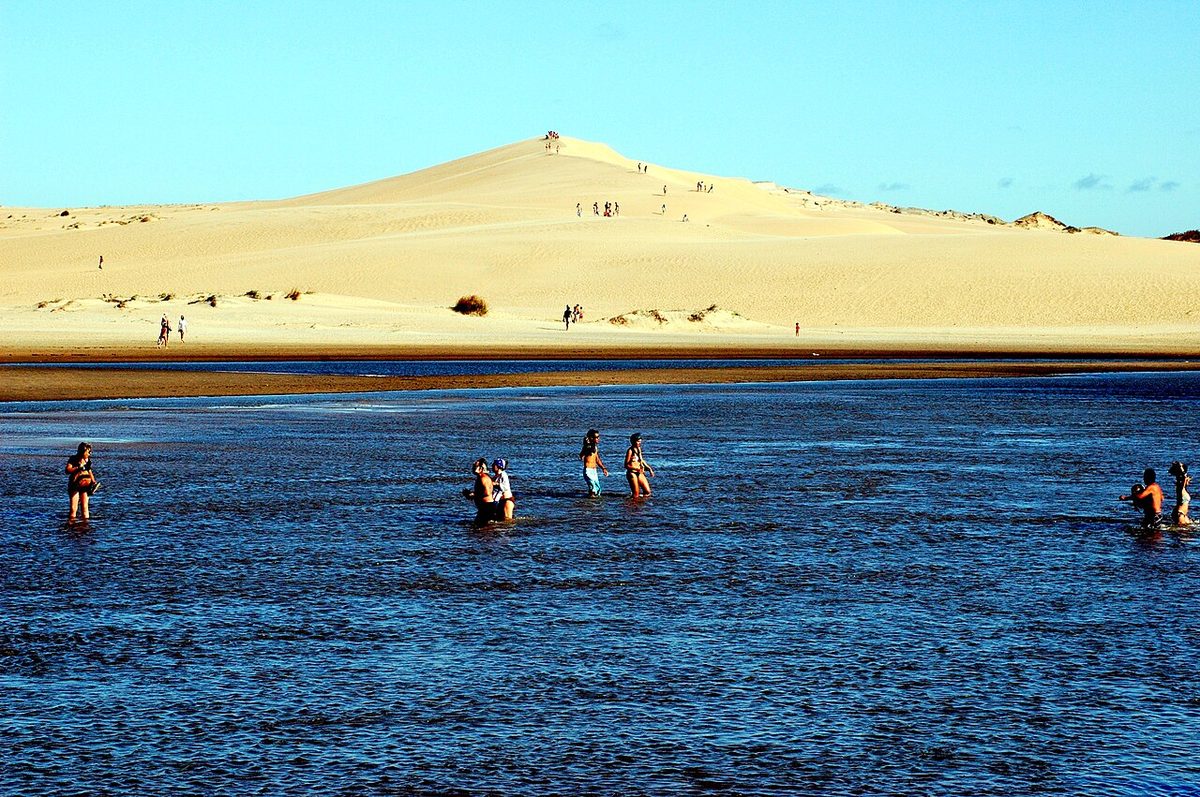
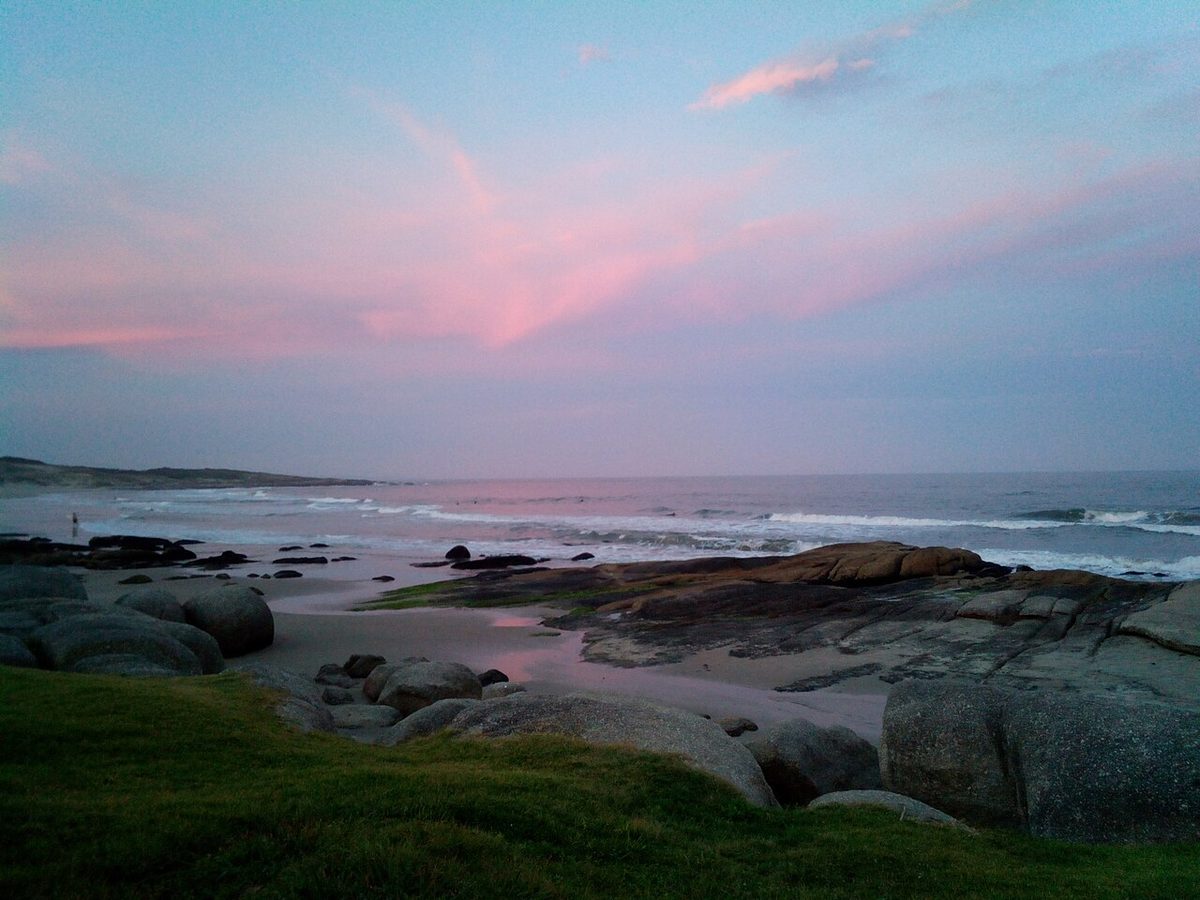
For a place this small, the beaches are absurdly good, more than 10 km of coastline that is empty for most of the year. They face roughly east, so this is a sunrise coast rather than a sunset one, though the light over the point in the evening is its own reward. There are four you will actually use, and they each do a different job.
Playa de los Pescadores
The fishermen’s beach is the heart of town and the one with all the boats. It is not really a swimming-and-sunbathing beach, more a working waterfront with the artisan market alongside and a row of stands where the fishermen sell their catch straight off the sand. Come here for the atmosphere, the boats, and dinner ingredients, not for a quiet towel spot.
Playa del Rivero
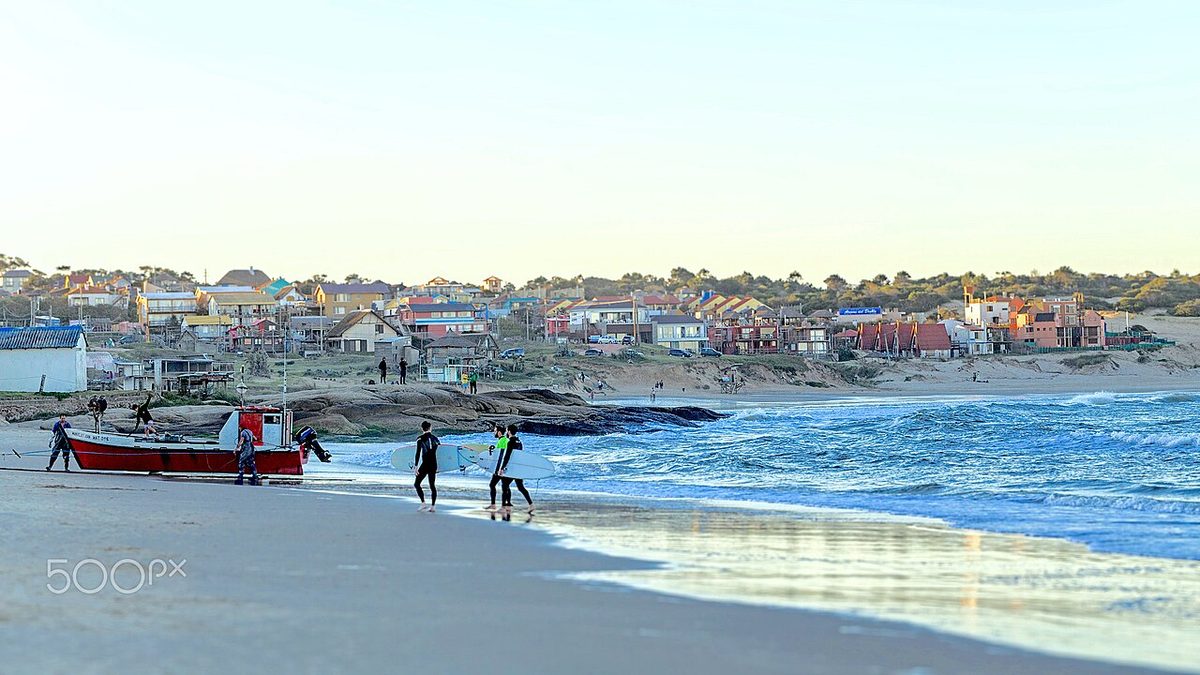
El Rivero is the main beach and, for most visitors, the one they mean when they say “the beach.” It is a protected bay just south of the point, with the cleanest, most reliable waves in town, a string of beach bars in summer, and the spot most surfers paddle out from. If you are staying near the centre this is your default. The trade-off is that it is also where the summer crowds concentrate, so in peak January it can be packed and the bar music carries late.
Playa Grande
Past the rocky headland of Rivero, Playa Grande opens out into a long, wide sweep of sand that runs north towards Santa Teresa National Park. It is about a twenty-minute walk from the centre and feels a world away, far emptier, better for a long aimless beach walk than for facilities, of which there are basically none. At the far end there is a wooden whale-watching post; from roughly June to October, southern right whales pass close to shore on their migration and you can sometimes see them from the sand, no boat required.
Playa de la Viuda
La Viuda, “the widow’s beach,” takes its name from the widow of an Argentine businessman whose mansion still stands, lonely, at the far end, built before the town was even on a map. It is a sweeping, powerful beach popular with surfers and overlooked by some of the ritzier modern houses. On summer nights you will find people gathered around small beach fires here with a guitar, which is about as Punta del Diablo as it gets. The undertow can be strong, so it is one to respect rather than splash about in.
Surfing and fishing
Surfing is the activity that put this town on the backpacker map, and it deserves the reputation. Playa del Rivero and Playa de la Viuda are the two everyday breaks, and they suit different days: Rivero is the friendlier, more consistent one, La Viuda the heavier. Beginners can take cheap lessons and rent boards from the surf shop and the hostels, and the waves on a small day off Rivero are about as forgiving an introduction as Uruguay offers.
The seasons here run backwards from what swimmers expect. The strongest, most reliable swell arrives in autumn and winter, roughly May to October, when the water is cold but the waves are long and properly hollow. Summer, December to March, brings smaller, more manageable conditions, warmer water and a lot more people in it. A 3/2 mm wetsuit does for high summer; bring a 4/3 mm for any other time of year, because the Atlantic off Rocha is not the tropics.
One honest caveat for serious surfers: the town breaks get crowded in January and the swell is least reliable exactly when the most people are here. The best waves of the year roll in when half the cafes are shut. If you are chasing the longest ride, the genuinely good point breaks, including La Moza, reckoned to be Uruguay’s longest right-hander, are over in the national park rather than in town. For the wider picture, our guide to surfing in Uruguay puts Punta del Diablo in context with the rest of the coast.
Fishing, meanwhile, is not a tourist add-on here; it is the reason the town exists. The boats still go out, and the simplest pleasure in Punta del Diablo is buying fish straight off the beach from the people who caught it, then grilling it that evening. Corvina (croaker) and brotola are the local staples. If you want to go out yourself, ask around the caleta in season; this is informal, cash, word-of-mouth stuff rather than a booking website.
Eating and sleeping
Food in Punta del Diablo is, unsurprisingly, about fish. The stands on the fishermen’s beach do picada, the Uruguayan mixed plate of fried fish and calamari, and you will eat extraordinarily fresh seafood for very little if you buy it raw and cook it yourself. Among the sit-down places, a handful have built real reputations: Cardamomo for locally sourced home cooking, and a couple of well-regarded Italian-leaning kitchens doing pasta and seafood. An asado, the Uruguayan barbecue, is easy to come by, and several hostels fire up a parrilla in the evenings.
Two honest notes on eating. First, food here costs noticeably more than inland Uruguay, often close to double, because everything is trucked in to a remote coast. Second, and this matters: off-season, most restaurants close. In June you might find three or four places open rather than thirty. Self-catering from the small supermarkets, plus fish off the beach, is the move in winter.
On where to sleep, the town is built around cabanas, the small wooden self-catering cabins that pepper every lane, plus a strong cluster of hostels that made this a backpacker favourite. There are no big hotels and there never will be, thanks to those building codes. Long-running hostels like El Diablo Tranquilo and La Casa de las Boyas anchor the social scene, run surf and yoga and barbecues, and stay open year-round, which not everything does.
A couple of practical warnings worth more than any glossy listing. Cabana rentals often include nothing: no towels, no bedding, no toilet paper, or they charge a few dollars a head for linen, so check before you arrive expecting a hotel. And in the first two weeks of January every bed in town is booked, sometimes weeks ahead, even dorm beds. If you want a wider framing of accommodation styles across the country, see where to stay in Uruguay.
January versus the off-season: the swing that defines the town
Nothing about Punta del Diablo makes sense until you understand its split personality. The permanent population is around 800. In the first half of January that figure detonates to somewhere between 25,000 and 35,000, a flood of Argentines, Brazilians and Uruguayans down for the summer holidays, and the whole character of the place flips.
Summer Punta del Diablo is loud, young and busy. Bars throw open along Rivero, there is a club scene that revolves around a barn-like venue that does not really get going until four in the morning, live music drifts down the main strip, and the streets fill with families and twenty-somethings. It is genuinely fun if that is what you want. It is also crowded, pricey, and, if you came for a sleepy fishing village, not remotely what you were promised.
Off-season, from about March to mid-December, the town empties back out. Beaches go deserted, the misty mornings are beautiful, surfers get the waves to themselves, and the pace drops to nothing. The flip side is real: many restaurants and shops shut, bus services thin out, and a wet midweek day in winter can feel genuinely bleak if you need things to be open. The shoulder months, late November, March and April, are the compromise I usually recommend: warm-ish, far quieter, and enough still open to eat well. To slot this into a wider trip, our notes on the best time to visit Uruguay and on Uruguay in summer are worth a read.
Planning your trip by traveller type
Because the town changes so completely with the calendar, the right advice depends a lot on who you are and what you came for.
Backpackers and solo travellers
This is prime territory for you. The hostel scene is sociable without being a full-blown party machine the way some are, beds are cheaper than in Punta del Este, and it is easy to fall in with people over a beach barbecue or a surf lesson. Come outside the first fortnight of January and you will always find a bunk. For broader tips, solo travel in Uruguay covers the practicalities.
Couples and quiet-seekers
Avoid January entirely. A cabana in the shoulder season, a deserted Playa Grande and fish grilled at home is one of the more romantic things this coast offers, and it costs a fraction of high summer. Just go in with eyes open about what is closed.
Families
February and Uruguay’s Tourism Week (the local name for the Easter break) are the family-friendly windows, calmer than peak January but with services still running. The protected bay at Rivero is the safest swimming, and the working boats are a genuine novelty for kids.
Surfers
You are on a different clock from everyone else, chasing the autumn and winter swell from roughly April to November. Accept the cold water, the thicker wetsuit and the shut cafes as the price of empty line-ups.
Getting to Punta del Diablo, and getting around
From Montevideo it is about 300 km. By bus from the Tres Cruces terminal the trip takes roughly 4.5 to 5 hours and costs somewhere around US$20 to US$26 one-way, with companies like Rutas del Sol and COT running through the day. Booking ahead online is easy and, in January, essential, as seats sell out days in advance. A heads-up that catches people out: some buses do not enter the town but drop you at a junction on the highway about 5 km out, from where it is a walk, a hitch, or a wait for the local connection. Our guide to getting around Uruguay by bus explains how the system and timetables work.
Driving yourself takes about four hours from the capital on mostly empty roads, and a car gives you the freedom to combine the town with the rest of the coast; the wider Uruguay road trip guide maps out the route. Note that you cannot bring a Brazilian hire car across the border, so arriving from Brazil means a bus to Chuy and a connection onward. Once you are here, you do not need a vehicle at all. The town is walkable end to end, and the soft, sandy streets are honestly easier on foot than behind a wheel.
One last practical point that has tripped up many a visitor: cash. For years there was no permanent ATM in town at all, only seasonal machines that frequently ran dry, and many cabana owners still prefer to be paid in US dollars. Things have improved, but treat reliable cash machines as something you sort out before you arrive, in Castillos or Chuy, rather than something you count on finding here. Bring more cash than you think you need.
Punta del Diablo also works beautifully as one stop on a longer eastern loop. It pairs naturally with the off-grid hamlet of Cabo Polonio further down the coast, and if you are stitching the region together, see how to slot it into a full Uruguay itinerary or browse the wider roundup of Uruguay beach towns. Cabo Polonio itself is reachable only by 4×4 dune truck or on foot; our guide to getting to Cabo Polonio has the schedules and prices.
Punta del Diablo: your questions answered
Is Punta del Diablo worth visiting?
Yes, if you match it to your taste and timing. It is one of Uruguay’s most characterful beach towns: a real fishing village with great surf, empty beaches and no high-rises. People who want polish, nightlife and certainty should manage expectations, but if you like rough edges and sand streets, it is a highlight of the coast. If you want the same coast with more certainty, La Paloma, further south, is its biggest town, with banks, supermarkets and a year-round population.
How many days do you need in Punta del Diablo?
Three nights is the sweet spot. That gives you a day for the beaches and the port, a day for a longer walk to Playa Grande or the national park edge, and a day to do nothing at all. Two nights feels rushed given how far it is from Montevideo; surfers and switch-off seekers happily stay a week.
When is the best time to visit Punta del Diablo?
For warmth and open businesses, December to mid-March. To dodge the worst crowds while still finding things open, aim for late November, March or April. For surf and solitude, May to October, accepting cold water and many closures. Peak January is the one window I would actively steer most people away from.
Is Punta del Diablo expensive?
It depends entirely on when you come. In the first half of January prices spike hard and accommodation can cost many times its off-season rate. Outside that, it is good value, and you can rent a cabana for a month in winter for what one January night might cost. Food always runs higher than inland Uruguay because of the remoteness.
Does Punta del Diablo have ATMs?
Unreliably. The town historically had no permanent cash machine, only seasonal ones that often ran out, and many places still prefer US dollars. Withdraw what you need in Castillos or Chuy before you arrive, carry more than you expect to spend, and assume cash where you might expect card.
Is Punta del Diablo good for surfing?
Very. Playa del Rivero and Playa de la Viuda are solid, accessible breaks, with cheap lessons and rentals for beginners. The strongest swell runs autumn to winter, May to October, rather than in summer. The longest, best point breaks, including La Moza, sit just over the line in the neighbouring national park.
Final thoughts
What I keep coming back for is the honesty of the place. Punta del Diablo does not pretend to be anything other than a fishing village that tourists found, sand streets, working boats, painted cabins and all. It is at its truest somewhere in the shoulder seasons, when the beaches are empty, the surf is up and a few good kitchens are still serving fresh corvina to the handful of people who bothered to show up.
Go in January if you want the carnival of it, and you will have a loud, fun, expensive week. Go in April and you might just understand why people quietly settle here. Either way, sort your cash before you arrive, pack shoes you can ruin, and let the road turn to sand without minding too much. From here the gateway to Santa Teresa National Park is right next door, but that, as promised, is a story for another guide.
Credits & sources
Sources & further reading
- Punta del Diablo, Wikipedia — history, census population figures and geography.
- Guru’Guay: Punta del Diablo — long-running, locally informed guide to the town and its seasons.
- Wikivoyage: Punta del Diablo — practical, traveller-maintained notes on transport, lodging and getting around.
- Turismo Rocha (official) — the Rocha departmental tourism board’s local listings.
Photo credits
All images via Wikimedia Commons: Punta Del Diablo Fishing Boats by rodoluca (CC BY-SA 3.0); Punta Del Diablo Caleta Pescadores by Mariana Zorrilla (CC BY-SA 3.0); Punta Del Diablo Playa Del Rivero by Mariana Zorrilla (CC BY-SA 3.0); Punta Del Diablo Village Cabanas by Elcolorin123 (CC BY-SA 3.0); Punta Del Diablo Sunset Point by Marcelo Campi (CC BY-SA 3.0).