Uruguay’s Beach Towns Compared: Where Should You Go? (2026)

The first time someone asked me which Uruguayan beach town they should visit, I gave a useless answer. “It depends,” I said, and watched their eyes glaze over. They didn’t want “it depends.” They wanted me to point at a map and say “go here.” So I’ve spent the years since figuring out how to actually do that.
Here’s the thing nobody tells you upfront. The coast east of Montevideo isn’t one beach experience repeated a dozen times. The Uruguay beach towns are at least four different countries pretending to be one. You can have valet parking and a champagne tower, or you can have a fishing shack with no electricity and a sea lion colony next door, and they’re a two-hour drive apart.
So this is the guide I wish I’d had: an honest, opinionated head-to-head of the main Uruguay beach towns, sorted so you can pick the right one for your actual trip instead of someone else’s highlight reel.
The short answer: which Uruguay beach town should you choose?
For most first-timers, Punta del Este is the safe pick for amenities and Cabo Polonio is the wild card for atmosphere. The best of the Uruguay beach towns depends on what you want: families lean to Atlántida or La Paloma, surfers to La Pedrera and Punta del Diablo, partygoers to Punta in January, and anyone craving quiet to José Ignacio in the off-season.
That’s the headline. The rest of this guide is the reasoning behind it, town by town, with one honest drawback for each so you know what you’re trading away.
How to use this guide
Geography first, because it makes everything else click. Nearly all of these towns sit on a single line running east from the capital. You leave Montevideo, you follow the Ruta Interbalnearia (the “between-resorts highway”) and later Ruta 10, and the towns get progressively wilder, emptier and further from an airport the further east you go.
Think of it as three zones. The Costa de Oro (Gold Coast) sits closest to Montevideo and feels like a 1960s family summer. The Maldonado zone in the middle is where Punta del Este and its glossy neighbors live. Then comes Rocha, the wild Atlantic frontier near Brazil, where the road thins out and so do the crowds.
I’ll cover each town in a paragraph or two and link you down to the full deep-dive where one exists, so you can go as shallow or as deep as you like. A couple of local words you’ll meet constantly: a balneario is a beach resort town; a rambla is the seafront promenade every self-respecting Uruguayan town has; ripio is the loose gravel road you’ll bump down to reach the wilder spots; and mate is the bitter green tea everyone drinks from a gourd, which you’ll see clutched under every arm on the beach.
If you’d rather read about the sand itself than the towns, our guide to the best beaches in Uruguay ranks the actual stretches of coast. This page is about choosing a base.
Uruguay beach towns at a glance
Before the detail, here’s the whole coast in one view. Distances are rough driving distances east of Montevideo, the way a local would describe them, not satellite-precise figures.
| Town | Rough distance from Montevideo | Vibe | Best for | The honest drawback |
|---|---|---|---|---|
| Atlántida & Costa de Oro | ~45 km / under 1 hr | Sleepy, retro, family | Easy first trip, kids, no car | Calm river water, not dramatic surf |
| Piriápolis | ~100 km / ~1.5 hr | Old-fashioned seaside resort | Walkable budget base, day trips | Feels faded next to flashy Punta |
| Punta del Este | ~135 km / ~2 hr | Glossy high-rise resort | Nightlife, amenities, January scene | Pricey and packed in peak summer |
| La Barra | ~145 km / ~2 hr | Hip, design-y, younger | Boutiques, bars, surf-adjacent cool | Tiny and traffic-clogged in season |
| José Ignacio | ~165 km / ~2.5 hr | Barefoot luxury, jet-set | Quiet glamour, food, romance | Eye-watering prices, sleepy off-season |
| La Paloma | ~225 km / ~3 hr | Relaxed surf-and-family | Mixed crowd, lighthouse, nature | A bit plain compared with its neighbors |
| La Pedrera | ~235 km / ~3 hr | Bohemian, arty, surfy | Surfers, low-key cool, New Year | Limited services outside summer |
| Cabo Polonio | ~265 km / ~3.5 hr | Off-grid, wild, hippie | Disconnecting, dunes, sea lions | No cars, scant electricity, basic beds |
| Punta del Diablo | ~300 km / ~4 hr | Rustic fishing-village surf | Surfers, backpackers, budget | Remote, very quiet off-season |
Notice the pattern. Money and glamour peak in the middle around Punta del Este. Wildness peaks at the far end in Rocha. Family ease sits closest to home on the Costa de Oro. Your job is figuring out where on those three sliders you want to land.
The Costa de Oro: closest, calmest, most underrated

Drive 40-odd minutes east of Montevideo and you hit the Costa de Oro, a string of small balnearios that most foreign visitors blow straight past on their way to Punta. Strictly speaking the sand starts before you leave the capital, since Montevideo’s own city beaches run from Pocitos out to Carrasco, free and walkable if you’re short on days. That’s a mistake if you have kids or a tight budget. This stretch still faces the Río de la Plata rather than the open Atlantic, so the water is calmer, browner and warmer, and the towns have a faintly nostalgic, frozen-in-1965 feel.
Atlántida and the Costa de Oro towns
Atlántida is the anchor town here, and it’s the one I send families to first. It’s close enough to Montevideo for a day trip or an easy first base, the beach is a long gentle horseshoe, and the town has actual year-round life rather than shuttering completely in winter. There are oddball landmarks too, like the eagle-shaped concrete sculpture (El Águila) perched on the rocks, which kids find weirdly thrilling.
Its quieter neighbors, places like Las Toscas, Parque del Plata and Costa Azul, are residential beach villages where Montevideo families have kept summer houses for generations. There’s not much to do, and that’s the point. The honest drawback for the whole Costa de Oro is the water: this is calm river-influenced swimming, not the bracing surf-and-cold-Atlantic drama you get further east, so if you came for waves you’ll be underwhelmed. For a deeper look at this coast and where to base yourself, see our full guide to Atlántida and the Costa de Oro.
Piriápolis: the grand old dame
Piriápolis is where the Costa de Oro gives way to Maldonado, and it’s genuinely one of my favorite towns to recommend to a certain kind of traveler. Built from scratch in the early 1900s by an eccentric entrepreneur named Francisco Piria, it has a sweeping bay, a long rambla, a vintage funicular up Cerro San Antonio, and the once-glamorous Hotel Argentino that was the biggest resort in South America when it opened.
What makes it useful today: it’s walkable, it’s affordable, and it works without a car. You can stroll the entire seafront, eat well without booking weeks ahead, and use it as a base for nearby hills and the Pan de Azúcar reserve. The honest drawback is that Piriápolis can feel a little faded and end-of-the-pier next to the chrome and glass of Punta del Este half an hour up the road, so if you want to feel fashionable, this isn’t it. If a budget-friendly, walkable old-school resort sounds right, read the full Piriápolis travel guide.
The Maldonado zone: Punta del Este and its glossy neighbors
This is the famous bit, the stretch of coast that put Uruguay on the rich-and-beautiful map. Three towns sit close together here, and they’re often lumped into one “Punta” idea, but they could not be more different in feel. Picking the wrong one of the three is one of the most common planning mistakes I see.
Punta del Este: the headline act
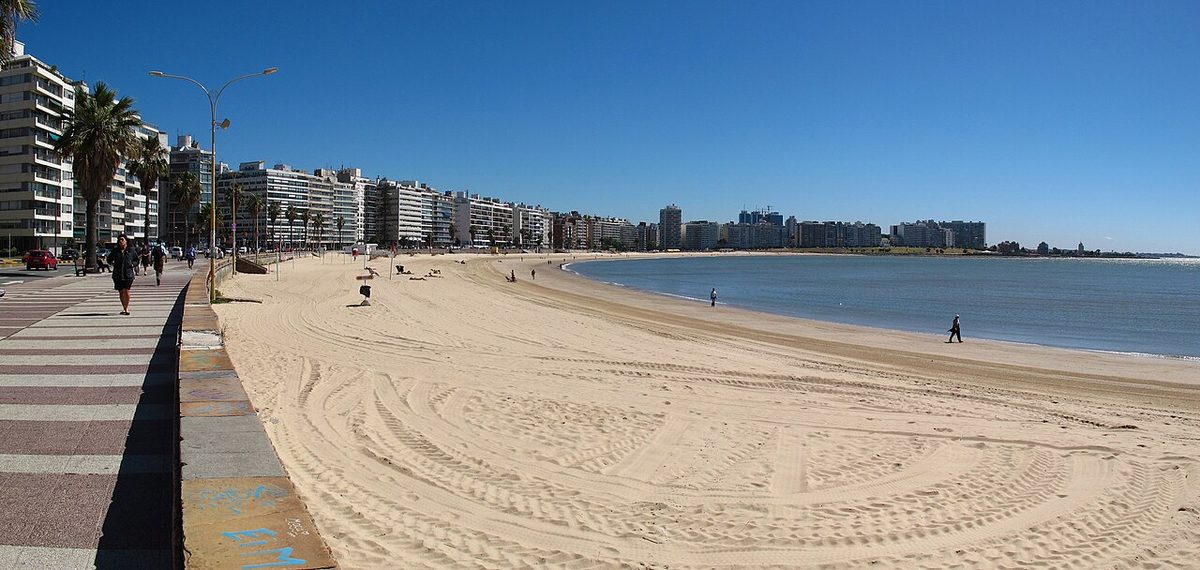
Punta del Este is the closest thing South America has to Miami Beach crossed with Saint-Tropez. A peninsula bristling with high-rises, two beaches with opposite personalities, the famous La Mano sculpture (those giant concrete fingers clawing out of the sand), a casino, marinas, and in January a wall-to-wall scene of Argentine and Brazilian holidaymakers. The two beaches matter: the Mansa (“tame”) side faces the calm river and the Brava (“rough”) side faces the open Atlantic with real surf.
I genuinely like Punta, but I’m clear-eyed about who it’s for. Come here if you want amenities on tap, nightlife that runs till sunrise, restaurants for every mood, and the buzz of being where the action is. Come in December, February or the shoulder months and it’s a relaxed, even elegant resort with room to breathe. The honest drawback is January: prices spike, traffic crawls, and the beaches get genuinely crowded, so the peak-summer version of Punta is not a quiet escape. For the full picture, see our complete guide to Punta del Este, and if it’s the sand you’re weighing up, our rundown of the beaches in Punta del Este compares Mansa, Brava and the rest.
La Barra: the cool younger sibling
Cross the wavy, roller-coaster bridge over the Maldonado stream and you reach La Barra, a few kilometers east of Punta proper. For years this was the bohemian, surf-flavored alternative, and it still has more design hotels, galleries, boutiques and late bars per block than anywhere else on the coast. The crowd skews younger and hipper, and the sunsets over the bridge are a genuine event.
I’d point you to La Barra if you want Punta’s energy and dining but with a more stylish, less corporate edge, and you don’t mind being a short drive from the main beaches. The honest drawback is its size: La Barra is tiny, and in peak season that single main road gets so clogged with traffic and pedestrians that getting in and out becomes a chore. Our La Barra guide goes deeper on where to stay and eat.
José Ignacio: barefoot luxury

Half an hour east of Punta, on a little cape with a working lighthouse and a permanent population you could fit in a café, sits José Ignacio. This is where the truly moneyed crowd decamped once Punta got too built-up. The look is deliberately understated: thatched roofs, sandy lanes, no high-rises allowed, and some of the best restaurants in the country, including the legendary beach parrilla La Huella.
Recommend José Ignacio for a honeymoon, a special-occasion splurge, or anyone who wants glamour without the glitz, where the flex is how little you appear to be trying. The two beaches, again a calm Mansa and a wild Brava, are wide and beautiful. The honest drawback is the money: this is the priciest spot on the coast by a distance, and out of season it can feel almost eerily shut and empty. The full José Ignacio guide has the details if your budget stretches that way.
Rocha: the wild Atlantic coast
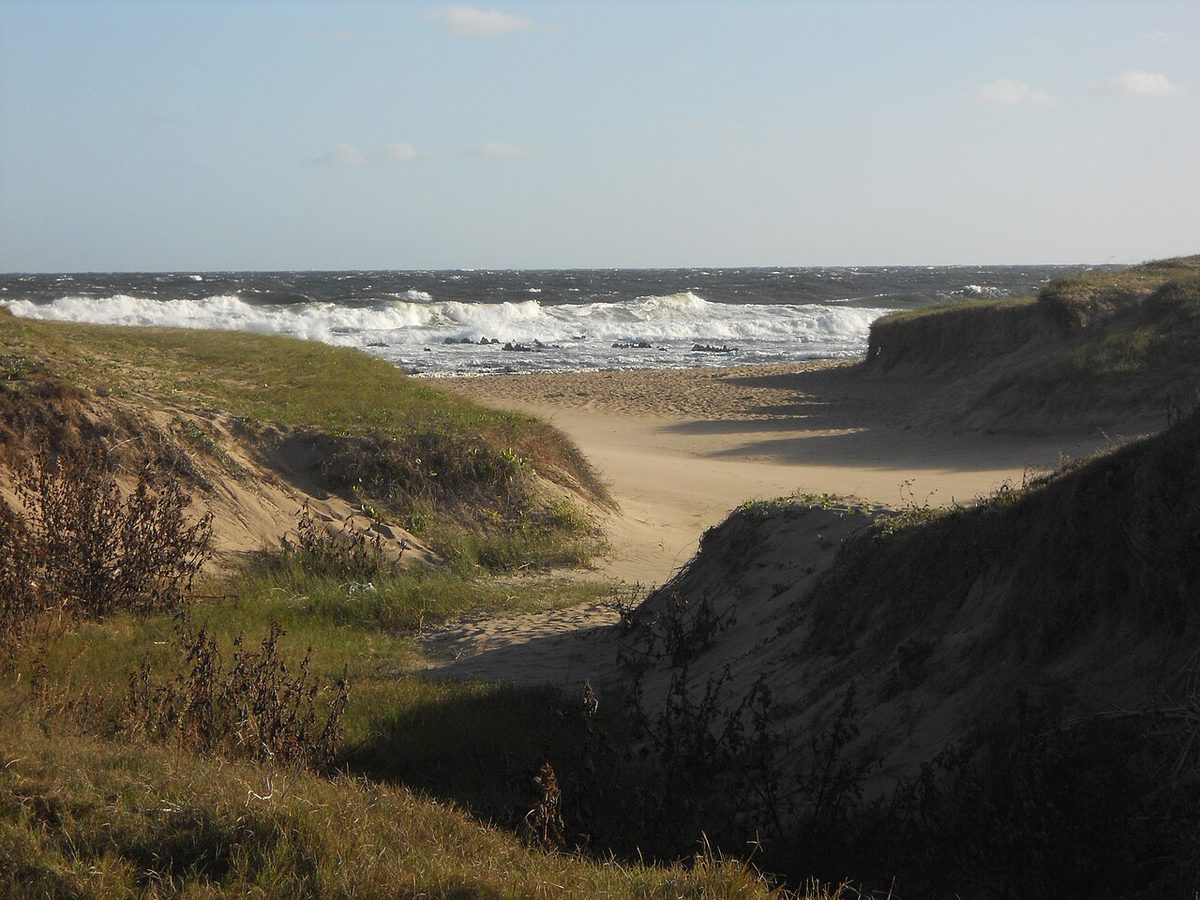
Past Punta and José Ignacio, the polish wears off and Uruguay gets interesting in a different way. The department of Rocha (say it “ROH-cha”) runs all the way to the Brazilian border, and its beaches stayed empty and local until backpackers started trickling in during the 1990s. The water is colder and rougher here, the towns are smaller and scruffier, and the dominant aesthetic is what Uruguayans cheerfully call “hippie.” This is my favorite stretch of the whole country, but it asks more of you.
One practical note: the further into Rocha you go, the more you’ll meet ripio, those loose gravel roads that rental-car contracts sometimes frown on. Distances feel longer than the map suggests. For the wider region, including the inland nature and the lagoons, see our guide to Rocha.
La Paloma: the all-rounder gateway
La Paloma is the practical entry point to Rocha, a proper little town with a working lighthouse, year-round services, and a beach for every mood within a short hop. It pulls a mixed crowd: surfers chasing the breaks at Anaconda and La Aguada, families who like that kids can roam safely, and nature lovers using it as a base for the flamingo-filled Laguna de Rocha lagoon nearby.
I send people to La Paloma when they want a taste of wild Rocha without giving up shops, restaurants and a pharmacy. It’s the sensible all-rounder. The honest drawback is that La Paloma itself is a touch plain and functional next to its prettier, artier neighbors, so it wins on convenience rather than charm.
La Pedrera: bohemian surf cool

Just up the coast from La Paloma, La Pedrera is Rocha’s design-conscious darling. It sits on a low headland with long beaches falling away on either side, a rusting shipwreck (the Cathay) marooned on Playa del Barco, a clutch of good seafood spots, and a famously chaotic New Year’s scene when the town’s population multiplies overnight. The vibe is barefoot-bohemian: surfboards, artisan stalls, sandy feet in every bar.
Choose La Pedrera if you surf, or if you want the wild-Rocha look with slightly more style and slightly better food than its neighbors. It threads the needle between rough and refined. The honest drawback is seasonality: outside the summer months, a lot of La Pedrera simply closes, and you can find yourself in a near-empty town with limited options. Surfers should also read our guide to surfing in Uruguay for where the breaks actually work and when.
Cabo Polonio: off the grid entirely

Cabo Polonio is the one that stays with you. It sits inside a national park, on a sandy point reached only by lumbering 4×4 trucks that grind across the dunes from the main road, because there’s no paved access. Once you arrive, there are essentially no cars, no mains electricity beyond a few solar panels and generators, no running water in many places, and one of South America’s biggest sea lion colonies basking right beneath the lighthouse.
I recommend Cabo Polonio to exactly one type of person: someone who actively wants to unplug. No screens, candlelit dinners, star-fields you forgot existed, and a pace that resets your nervous system after a day or two. It is magical. The honest drawback is right there in the description, though: the accommodation is rustic to the point of basic, comforts are few, and if you need air conditioning, reliable power or a hot shower on demand, you will be miserable here. Go knowing exactly what you’re signing up for.
Punta del Diablo: rustic surf at the end of the road

Near the very end of the Uruguayan coast, a short drive from the Brazilian frontier, Punta del Diablo started life as a shark-fishing village and still has wooden boats hauled up on the sand. It’s grown into a scruffy, beloved surf-and-backpacker town with cheap cabins, reliable waves much of the year (the best swells run roughly April to November), and a real end-of-the-world feeling.
This is my pick for budget travelers, surfers and anyone who wants the rustic Rocha experience but still likes a bit of life around them: hostels, beach bars, a young crowd. It’s livelier than Cabo Polonio and cheaper than anywhere near Punta. The honest drawback is remoteness: it’s a long haul from Montevideo and the airport, and outside the summer peak the town goes very quiet indeed, which is either the appeal or the problem depending on your mood.
The best beach town in Uruguay for your trip
Enough geography. Here’s the decision matrix I actually use when friends ask, sorted by what you care about most. Find your priority, get a pick.
| If your priority is… | Go here | Why |
|---|---|---|
| Traveling with young kids | Atlántida or La Paloma | Calm or manageable water, safe streets, year-round services |
| Surfing | La Pedrera or Punta del Diablo | Consistent Atlantic swells, surf-town infrastructure, board rental |
| Nightlife and the scene | Punta del Este (Jan), La Barra | Clubs, beach parties, the whole see-and-be-seen circus |
| Total quiet and disconnection | Cabo Polonio | No cars, scant power, nothing to do but exist |
| Quiet luxury and romance | José Ignacio | Barefoot glamour, top restaurants, no high-rises |
| Traveling without a car | Piriápolis or Punta del Este | Walkable centers and the best bus connections from Montevideo |
| A tight budget | Punta del Diablo or Piriápolis | Cheap cabins and hostels, lower food prices, fewer temptations |
| Wild nature and birdlife | La Paloma / Rocha lagoons | Laguna de Rocha flamingos, dunes, national parks within reach |
| An easy first trip | Punta del Este | Most amenities, easiest logistics, hardest to get wrong |
Best for families
Atlántida wins for little kids because the river-calm water and the short drive from Montevideo take the stress out of everything. As children get older and braver, La Paloma is the better fit: it has surf for teenagers, safe streets for roaming, and enough going on to avoid the dreaded “I’m bored.” Punta del Este works too if you want resort amenities, just steer toward the calm Mansa beach. The one drawback to weigh: the genuinely wild Rocha beaches have strong currents and few lifeguards outside peak season, so they’re not ideal for unconfident swimmers.
Best for surfers
La Pedrera and Punta del Diablo are the heart of Uruguayan surf culture, with the most consistent waves and a town built around board-shorts life. La Paloma’s Anaconda break is a solid third. Punta del Este’s Brava beach has surf too, but you’re sharing it with the whole resort. Bear in mind the best swells generally run April to November, which is autumn and winter here, so prime surf and warm sunbathing don’t fully overlap. Our surfing in Uruguay guide breaks down each break.
Best for nightlife
Nothing in Uruguay touches Punta del Este in January for sheer party volume, with La Barra as its hipper annex. La Pedrera and Punta del Diablo throw legendary New Year’s gatherings but are sleepy the rest of the time. If a buzzing scene is non-negotiable, you’re choosing Punta, full stop. Just accept the drawback: that scene only fully switches on for about six weeks around January, so timing is everything.
Best for peace and quiet
Cabo Polonio is the undisputed champion of switching off, followed by José Ignacio in the off-season and the smaller Costa de Oro villages any time. The wild Rocha coast generally rewards anyone who wants empty sand. The trade-off, of course, is that quiet and convenient rarely coexist here: the emptier the beach, the further you are from a good restaurant or a pharmacy.
Best with no car
Piriápolis and Punta del Este are the two towns genuinely built for the car-free traveler. Both have walkable centers and frequent buses from Montevideo’s Tres Cruces terminal, and within Punta you can manage on foot, taxi and local bus. Most of Rocha, by contrast, really wants you to have wheels. The drawback to a no-car trip is reach: you’ll see the towns well but miss the empty beaches between them, which are often the best part.
Best on a budget
Punta del Diablo is the backpacker bargain, all cheap cabins and self-catering, while Piriápolis offers the best value among the more established resorts. Avoid Punta del Este and José Ignacio in January unless your wallet is bottomless. The honest catch with budget travel here: the cheapest months (winter) are also the coldest, so you’re saving money partly by skipping beach weather.
Punta del Este vs Rocha: the big choice in brief
If you only have time for one base and you’re torn, this is usually the real decision: polished Maldonado or wild Rocha. Punta del Este and its neighbors give you comfort, dining, nightlife and easy logistics, at the cost of higher prices and, in peak season, crowds. Rocha gives you emptiness, drama, surf and a fraction of the price, at the cost of comfort, convenience and reliable infrastructure. I put the two side by side on cost, crowds, food and transport in a head-to-head of the two coasts.
My rule of thumb: choose Punta if it’s your first trip, you’re short on time, you’re traveling without a car, or comfort matters more than character. Choose Rocha if you’ve got at least a week, you don’t mind roughing it, and the idea of an empty beach genuinely excites you rather than worries you. Plenty of people split the difference and do a few nights of each, which is exactly what a coastal road trip is for. If that’s you, our Uruguay road trip guide and the wider Uruguay itinerary map out how to string the towns together.
Planning the practical side
Wherever you land, a few logistics apply across the whole coast. The season runs roughly December to February for guaranteed beach weather, with January the busiest and priciest by far; the shoulder months of November and March are my sweet spot for warm-enough days and far fewer people. Most foreign visitors fly into Montevideo or Punta del Este, so it’s worth reading up on getting to Uruguay before you book.
For lodging, the towns vary wildly, from José Ignacio’s design villas to Punta del Diablo’s bare-bones cabins, and in peak season the good places vanish months ahead. Our overview of where to stay in Uruguay covers the range. And if you want to break up the beach with cities and culture, both Montevideo and historic Colonia del Sacramento pair naturally with a coastal trip, while our list of things to do in Uruguay rounds out the rest.
Uruguay beach towns: your questions answered
What is the most beautiful beach town in Uruguay?
Beauty is subjective, but the two that consistently take my breath are José Ignacio, for its understated thatched-roof elegance and wide twin beaches, and Cabo Polonio, for its raw, off-grid dunes and lighthouse. If you mean polished and pretty, choose José Ignacio. If you mean wild and unshakeable, choose Cabo Polonio. They sit at opposite ends of the spectrum and the coast.
Which Uruguayan beach town is best for families?
For young children, Atlántida on the Costa de Oro is the easiest choice, thanks to calm river-warm water, safe streets and a short drive from Montevideo. For families with older kids, La Paloma in Rocha offers gentle surf, room to roam and year-round services. Punta del Este also works well if you stick to the sheltered Mansa beach and want full resort amenities on hand.
What is the cheapest beach town in Uruguay?
Punta del Diablo is generally the most budget-friendly, built around cheap cabins, hostels and self-catering rather than hotels and fine dining. Piriápolis is the best value among the more established, walkable resorts. Across the whole coast, prices drop sharply outside January, so traveling in the November or March shoulder seasons saves money almost everywhere, at the cost of slightly cooler weather.
Do any Uruguay beach towns have no cars?
Yes. Cabo Polonio, inside a national park, has no paved road access and essentially no cars: you reach it by 4×4 trucks that cross the dunes, and once there you get around on foot. It also has very limited electricity and running water. It’s the most extreme example of off-grid coastal Uruguay, and the experience of arriving is half the appeal for the travelers who love it.
When is the best time to visit the Uruguayan coast?
December to February is high summer with the warmest, most reliable beach weather, but January is intensely busy and expensive. My preferred windows are late November and March, the shoulder seasons, when days are still warm, the sea is swimmable and the crowds and prices have eased. If you’re chasing surf rather than sun, the best swells in Rocha tend to run from April to November.
Is Punta del Este or Rocha better?
It depends on what you want, but the short version: pick Punta del Este for comfort, dining, nightlife and easy logistics, especially on a first or short trip; pick Rocha for wild, empty beaches, surf and lower prices if you have more time and don’t mind roughing it. Many travelers do a few nights in each, which is the ideal way to feel the contrast between Uruguay’s two coastal personalities.
Final thoughts
Looking back at all the times I’ve fumbled the “where should I go” question, the honest answer is that there’s no single best beach town in Uruguay, only the best one for the trip you’re actually taking. Match the town to your priority and you’ll have a great time. Pick the famous name by default and you might end up in glossy Punta when what your soul wanted was a candlelit night in Cabo Polonio.
Start with the one slider that matters most to you, comfort versus character, and let the rest follow. Then go. This coast is short, the towns are close, and the contrast between them is the whole point of the journey.
Credits & sources
Sources & further reading
- Wikivoyage: Atlantic Coast of Uruguay — practical, regularly updated overview of the coastal departments and towns.
- Guru’Guay: Beaches in Uruguay — a long-running, locally written guide to the country’s beach regions.
Photo credits
All images via Wikimedia Commons: Uruguay Beach Towns Punta Del Este by a Wikimedia Commons contributor (CC BY-SA 3.0); Piriapolis Rambla Waterfront by Roxyuru (CC BY-SA 3.0); Jose Ignacio Lighthouse Beach by Pablo Torrado (CC BY-SA 3.0); La Pedrera Beach Rocha by Scann (CC0); Cabo Polonio Lighthouse Dunes by María Zully Bautista (CC BY-SA 3.0); Punta Del Diablo Fishing Boats by rodoluca (CC BY-SA 3.0).