Things to Do in Montevideo: The Complete City Guide
Last updated: June 2026
The first time I walked out of Montevideo’s port terminal, I nearly turned around. It was a grey Tuesday, the buildings looked like they’d been left in the wash too long, and a man at a kiosk was drinking from a thermos with the focus of a surgeon. Three days later I’d extended my stay twice and was drinking from a borrowed thermos myself. This city does that — quietly, and to almost everyone who gives it more than an afternoon.
The best things to do in Montevideo are walking Ciudad Vieja’s faded grandeur, eating asado under the iron roof of Mercado del Puerto, cycling the 22-kilometer Rambla at sunset, hearing candombe drums roll through Barrio Sur on a Sunday night, and losing a morning in the Tristán Narvaja flea market. Two or three days is enough; most people wish they’d stayed longer.
This guide is for anyone planning those days: cruise passengers with eight hours, travelers crossing from Buenos Aires, and anyone using the capital as a base for a longer Uruguay trip. I’ve organized it by neighborhood and theme rather than a numbered countdown, because Montevideo is a city of barrios, and the barrio you’re standing in decides what kind of day you’re having.
Things to do in Montevideo at a glance
Montevideo holds about 1.4 million people — nearly half of Uruguay — but it behaves like a string of small towns along a river that looks like a sea. Here’s how the city breaks down:
| Neighborhood | Best for | Don’t miss | Time needed |
|---|---|---|---|
| Ciudad Vieja | History, architecture, museums | Plaza Independencia, Mercado del Puerto, Sarandí street | A full day |
| Centro | Everyday Montevideo, Art Deco | Avenida 18 de Julio, Palacio Salvo, Intendencia lookout | Half a day |
| Cordón | Sunday flea market, cafés | Feria de Tristán Narvaja | A Sunday morning |
| Barrio Sur & Palermo | Candombe, street life | Sunday-evening drum calls | An evening |
| Parque Rodó | Parks, lake, museums | The park itself, MNAV art museum | Half a day |
| Pocitos & Punta Carretas | Beach, eating, sunset | Playa Pocitos, the Rambla, Montevideo sign | Half a day |
| Parque Batlle | Football pilgrimage | Estadio Centenario and its museum | 2–3 hours |
| Prado | Rose gardens, quiet grandeur | Rosedal, Museo Blanes | 2–3 hours |
| El Cerro | The view back at the city | Fortaleza del Cerro | 2–3 hours |
One orientation note that saves confusion: the water you’re looking at is the Río de la Plata, not the Atlantic. It’s brown not because it’s dirty but because it’s a river the width of a sea, carrying half a continent’s sediment past the city. Locals swim at the eastern beaches all summer.
Ciudad Vieja: start where the city did
The old town occupies the little peninsula where Montevideo began in 1724, and it’s the densest concentration of worthwhile stops in Uruguay. It’s also, fair warning, a neighborhood of moods: lively on weekday lunchtimes and cruise-ship mornings, near-silent on Sunday afternoons, when it can feel like the set of a film nobody’s shooting. I like it best between 10am and 4pm, then again at night around its restaurant corners. Sleeping in the old town buys you those hours on your doorstep, and my barrio guide to where to stay in Montevideo weighs that against a base out in Pocitos or Punta Carretas.
Plaza Independencia and Palacio Salvo
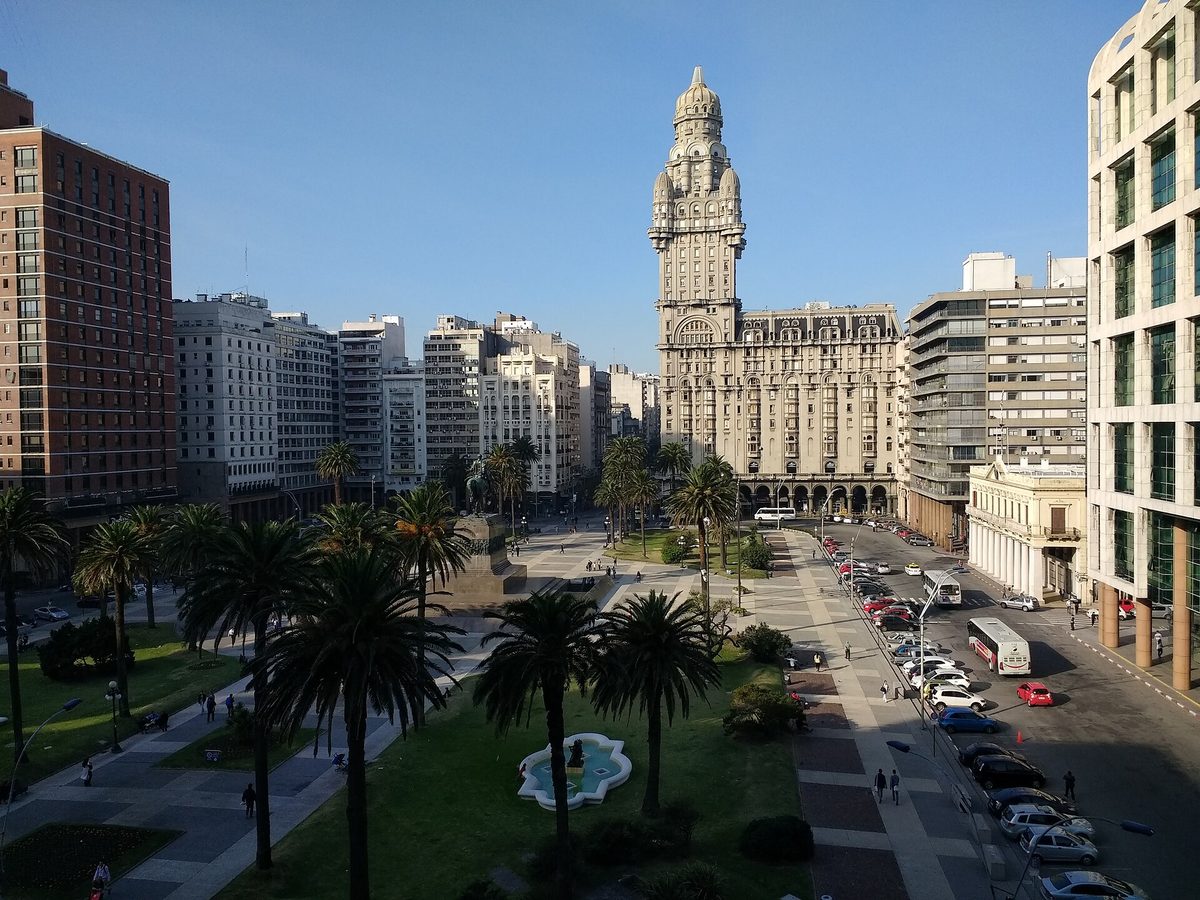
Every walk starts here, at the seam between old and newer Montevideo. In the center, José Artigas — the national hero who argued for federalism and died in exile — rides a 17-ton bronze horse above his own mausoleum, where an honor guard stands over his remains below ground. The plaza’s eastern edge is commanded by Palacio Salvo, a 1928 tower that looks like a wedding cake designed during a fever dream. Montevideans couldn’t decide between loving and hating it for a century; I’ve decided. It’s magnificent.
You can ride up on a guided visit to the mirador for what I think is the best high view in the city — the official tours run most days and cost around 590 pesos last I checked, with the schedule on their site. Bring your passport for the security desk. The honest drawback: the interior tour is heavier on anecdote than substance, so if you only care about the view, confirm the lookout is included before you pay.
On the plaza’s far side stands the Puerta de la Ciudadela, the lone surviving gate of the Spanish citadel walls, and the proper entrance to the old town.
Teatro Solís
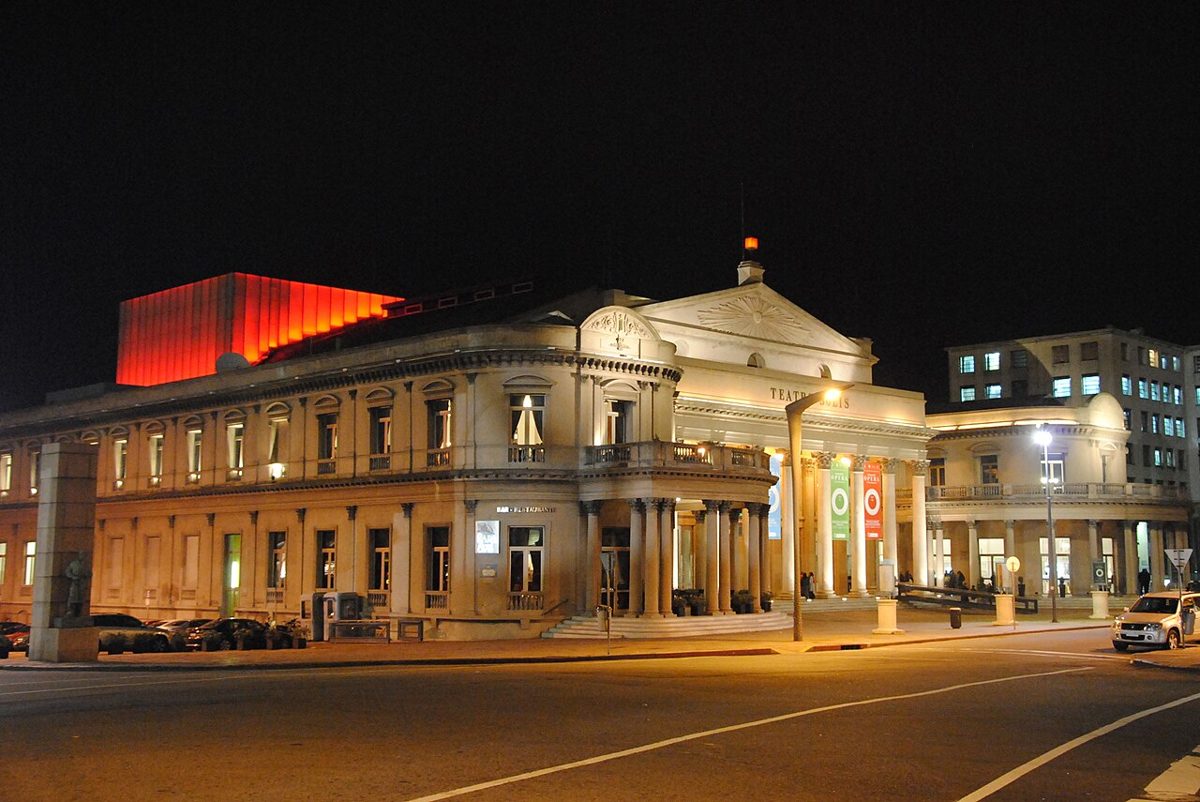
Half a block away, Uruguay’s grand 1856 theater is the oldest of its kind still working in South America, restored in 2004 until its horseshoe hall glows. Two ways in: a guided tour (a few times daily except Mondays, around 400 pesos for foreigners, and genuinely good — the guides tell you about the chandelier’s 1,400 pieces and the ceiling painted with Uruguayan skies) or, far better, a performance. Tickets for orchestra nights or ballet often start cheaper than a parrilla dinner. Check the program before you build your evenings; I’ve paid about ten dollars for seats I’d have paid eighty for in Buenos Aires.
Sarandí street to Plaza Matriz
Peatonal Sarandí is the old town’s pedestrian spine — buskers, mate-gourd stalls, secondhand booksellers, and a slow parade of everyone. Follow it to Plaza Matriz (officially Plaza Constitución), the city’s oldest square, where the Catedral Metropolitana has stood since colonial days and an antiques fair sets up most Saturdays. The plaza’s café terraces are touristy by Montevideo standards, which is to say mildly. Sit anyway. One block north, the Cabildo — the old colonial town hall — is free and quietly excellent on the city’s revolutionary years.
Museums worth your old-town hours
Three stand out, and all are small enough to enjoy rather than endure. The Museo Andes 1972 (Rincón street, closed Sundays, around 600 pesos) tells the story of Air Force Flight 571, which crashed carrying a Montevideo rugby team whose survivors endured 72 days in the cordillera. The films made it a survival story; the museum makes it a Montevideo story, told through letters and artifacts, and I left more moved than I expected. The Museo de Arte Precolombino e Indígena (MAPI) covers the indigenous cultures of the region, including the Charrúa, with honesty about how they were destroyed. And the Museo Torres García celebrates the painter who drew South America upside down — his Constructivist grids are Montevideo’s visual signature once you start noticing them, and the gift shop is the city’s best.
If contemporary art is more your thing, note the Espacio de Arte Contemporáneo further uptown — covered below with the Centro — because it’s housed in a former prison and is unlike any gallery you’ve visited.
Mercado del Puerto: the famous lunch
At the old town’s port end, an 1868 iron market hall — the structure shipped over from Liverpool, the story goes — now holds a dozen-plus parrillas under one smoky roof. Walking in at 1pm on a Saturday is one of the great food-theater moments in South America: half a cow over wood coals, grill men working like blacksmiths, families demolishing platters the size of car doors.
Order asado de tira (ribs), a provoleta (grilled provolone), or pamplona (stuffed rolled chicken or pork), and drink medio y medio — half still white wine, half sparkling — which the surrounding bars have poured for a century. Café Roldós, in business since 1886, sells it by the glass for pocket change.
The honest drawback, and it’s real: Mercado del Puerto is the most touristic restaurant address in Uruguay, and prices run roughly double a neighborhood parrilla’s. You’re paying for the room, and the room is worth one lunch. For the second asado, go where the locals go — I cover that in the food section below, and at length in my guide to the best restaurants in Montevideo, which sorts the barrio parrillas, cantinas and bistros by neighborhood. It’s open daily for lunch, roughly 11am to 6pm; weekends are the spectacle.

The Rambla: 22 kilometers of the city’s living room
Montevideo’s defining feature isn’t a building. It’s the riverfront promenade that runs unbroken from the port to Carrasco — locals will tell you it’s the longest continuous sidewalk in the world, and after cycling it I’m not inclined to argue. On a warm evening, the entire city decants onto it: runners, fishermen, teenagers with speakers, families with deck chairs, and thermos-carriers as far as the eye can see. If you do one thing from this guide, do this one at golden hour.
The classic stretch runs from Playa Ramírez (by Parque Rodó) east past Punta Carretas to Playa Pocitos. Walk it in 90 minutes or rent a bike — several rental shops and hostels around Pocitos and Ciudad Vieja offer day rates, and the path is flat the whole way. The drawback is the wind: the Río de la Plata produces gusts that can turn a casual ride into a workout, so check the forecast and ride east with the wind at your back if you can.
The beaches, honestly rated
City beaches are city beaches — I wouldn’t fly to Uruguay for Pocitos when Punta del Este and the Rocha coast exist. But as somewhere to swim before dinner inside a capital city, they’re a gift. Playa Pocitos is the headline act: a two-kilometer crescent of soft sand backed by white apartment towers, with volleyball nets and calm river water. Playa Ramírez is more local and more retro, with Parque Rodó’s funfair behind it. East of Pocitos, Playa Buceo (by the little yacht harbor) and Playa Malvín are quieter and, to my eye, prettier. Water quality is monitored all summer — green flags mean swim — though after heavy rain I’d give it a day.
At the Pocitos end you’ll find the MONTEVIDEO sign, the city’s obligatory photo stop. Sunset queues get long, and the light is behind the letters anyway; come in the morning, or do what I do and photograph the Rambla itself, which is the better picture.

Castillo Pittamiglio
Midway along the Rambla in Punta Carretas, a brick castle facade with a ship’s prow jutting from it interrupts the apartment blocks. This was the life’s work of Humberto Pittamiglio — alchemist, architect, eccentric — and the inside is all staircases to nowhere and corridors built to symbolic proportions. Tours run most afternoons for around 300–400 pesos. It’s a 45-minute curiosity rather than a revelation, but as a break on a Rambla walk it earns its keep.
Markets: where Montevideo actually shops
Feria de Tristán Narvaja, the great Sunday sprawl
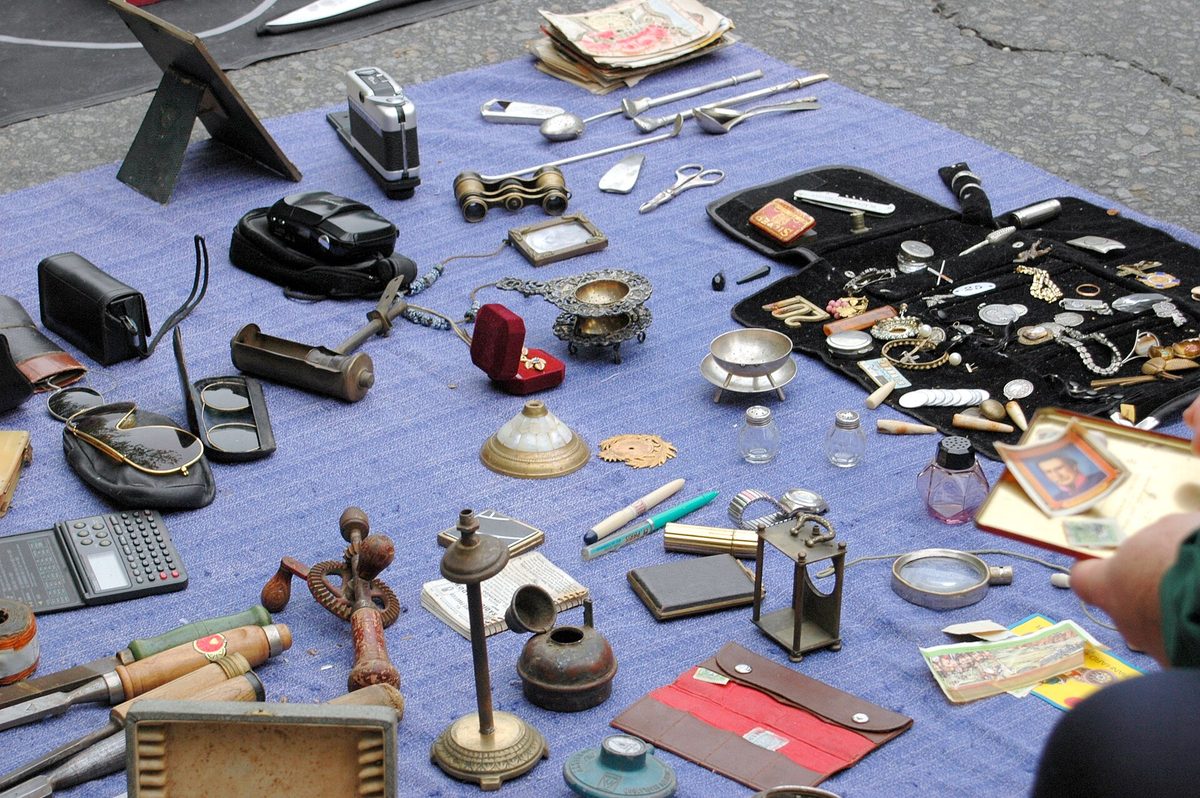
Every Sunday from around 9am to 3pm, the Cordón neighborhood surrenders a dozen blocks to Uruguay’s largest street market. It began as a produce fair more than a century ago and has grown into something Borges would have invented if it didn’t exist: crates of vinyl next to live canaries, antique soda siphons next to motorcycle parts, first-edition books next to bins of doorknobs. I once watched a man sell a brass diving helmet within ten minutes of opening.
Come hungry — the street food runs from Venezuelan arepas to choripán — and come with small bills. Watch your phone in the densest crowds, as you would at any flea market on earth, and don’t expect bargaining to get you far; prices are already honest. Start at Tristán Narvaja and 18 de Julio and drift north. If your trip includes a Sunday, this is non-negotiable.
Mercado Agrícola and Mercado Ferrando
The Mercado Agrícola de Montevideo (MAM), a beautifully restored 1913 iron market hall in Goes, is where the market-hall formula meets daily life: proper greengrocers and butchers alongside craft beer taps, empanada counters and the city’s best one-stop survey of Uruguayan products — dulce de leche, alfajores, honey grappa — without cruise-port pricing. It’s a 15-minute taxi from the center and worth pairing with the nearby Palacio Legislativo. Mercado Ferrando in Cordón is the newer, trendier cousin — a converted furniture factory full of food stalls where young Montevideo eats on weekend nights. Neither will change your life; both will feed you well and show you the unselfconscious city.
Candombe, carnival and tango: the city’s soundtrack
This is the section page-one guides skim, and it’s the thing I’d cross the city for.
Candombe on a Sunday night
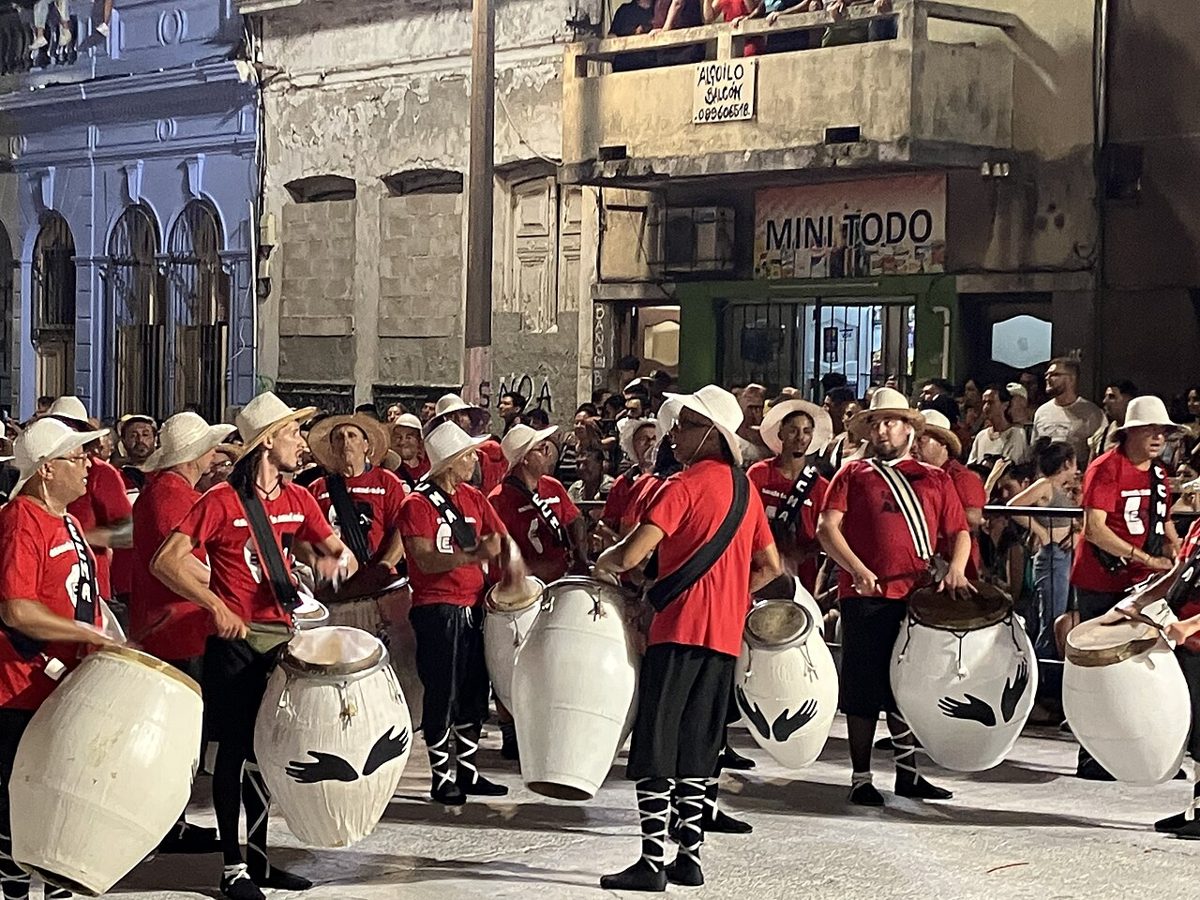
Candombe is the drumming tradition built by enslaved Africans and their descendants in Montevideo’s south barrios, now recognized by UNESCO and utterly alive. Three drum voices — chico, repique, piano — lock into a groove that you feel in your sternum before you hear it properly. Most Sunday evenings (and many other nights), comparsas rehearse by marching through Barrio Sur and Palermo, gathering crowds as they go; the blocks around Isla de Flores street are the traditional heartland. It’s free, it’s not staged for anyone, and standing on a curb as forty drums come up the street remains my single favorite Montevideo experience.
The courtesy notes: this is a neighborhood tradition, not a show. Follow along the edges, ask before close-up photos of drummers, and spend something at the corner shops. If your visit lacks a Sunday, the Museo del Carnaval by the port covers the tradition well, and drum schools around the city run open practices most weeks.
The longest carnival on earth
Rio’s carnival is bigger; Montevideo’s is longer — roughly forty days from late January into early March. The two anchor events are the opening Desfile Inaugural along 18 de Julio and Las Llamadas, two February nights when the comparsas of Barrio Sur and Palermo parade in full regalia. The rest happens in tablados, neighborhood stages where murga troupes — think satirical choral theater in clown paint, skewering the year’s politics — perform into the small hours. Tickets for most tablados cost a few hundred pesos; Las Llamadas grandstand seats sell out, but plenty of people watch free from side streets. If you’re considering a summer trip, time it for carnival season and book your bed early — it’s the one stretch when Montevideo accommodation actually fills.
Tango without the dinner show
Montevideo co-parents tango with Buenos Aires — La Cumparsita, the most famous tango ever written, premiered here in 1917, composed by a Uruguayan teenager — and the local scene is refreshingly un-touristy. Skip the dinner-show formula and find a milonga: Joventango runs accessible nights at the Mercado de la Abundancia, where locals of every age dance and nobody minds a beginner watching from a table with a glass of wine. Free, or close to it.
Football: a pilgrimage, even if you don’t care about football
Uruguay, population 3.4 million, has won two World Cups and fifteen Copa Américas. The first World Cup final ever played happened here in 1930, in a stadium built for it in under a year. That stadium — Estadio Centenario, in Parque Batlle — still hosts the national team, and FIFA lists it as a historical monument of world football, the only one of its kind.
Visit on a quiet day for the Museo del Fútbol inside the stands: two floors of relics including kits and trophies from 1930 and 1950, when Uruguay silenced 200,000 Brazilians at the Maracanã. The museum runs weekdays roughly 10am–5pm, around 200–300 pesos last I checked, and lets you out into the stands to take in the great concrete bowl and its Art Deco tower. It’s charmingly analog — don’t expect interactive screens, expect yellowed telegrams and the actual ball.
Better yet, see a match. Peñarol and Nacional, the country’s two giants, split the city the way Boca and River split Buenos Aires, and even a mid-table league fixture comes with flares, drums and full-throated abuse of the referee. Tickets are sold through Abitab or RedPagos agency branches (bring your passport number) or at stadium windows on match day for non-clásico games — expect to pay around 400–800 pesos for a standard seat. The honest caveats: the Peñarol–Nacional clásico is not a casual outing (buy the calmer ‘neutral’ stands if you go at all), and night matches in winter are arctic. Dress like you’re going sailing.

Museums, art and the buildings themselves
Espacio de Arte Contemporáneo
A 19th-century prison on Arenal Grande street, decommissioned in the 1980s, reopened as the city’s contemporary art space — and they had the sense to leave the building alone. Each former cell holds a different artist’s work; at the corridor’s end, a glass wall faces the untouched east wing, all rust and peeling paint and absence. The art rotates and varies in quality, as contemporary art does, but the place itself never misses. Free entry, closed Mondays and Tuesdays. The surrounding blocks hold some of the city’s best street art, which makes a natural walking pair.
The art museums
The Museo Nacional de Artes Visuales in Parque Rodó is the country’s flagship collection — Blanes, Figari’s candombe paintings, Torres García — free and rarely crowded; an hour here explains Uruguay’s visual culture better than any book. Out in the leafy Prado, the Museo Blanes pairs the national painter’s big historical canvases with a Japanese garden and a rose park next door that holds hundreds of varieties; locals treat the whole ensemble as a Sunday outing, and so should you. And the Museo de la Memoria, also in the Prado, documents the 1973–85 dictatorship with restraint and force. It’s free, and it’s the museum I’d least want a visitor to skip — recent history explains this gentle, watchful country more than colonial history does.
Centro’s working monuments
Walking 18 de Julio — ‘la 18’, the city’s main artery — you pass an open-air catalog of early-20th-century architecture. Three stops: the Palacio Municipal (the Intendencia), whose 22nd-floor lookout is free on weekdays and gives you the city grid against the river (the full-size bronze replica of Michelangelo’s David on the esplanade below is a delightful piece of municipal confidence); the 1925 Palacio Legislativo further north, faced in reportedly more kinds of native marble than any building on the continent, with guided visits on weekdays for a small fee; and Plaza Fabini’s Art Deco surroundings. None of these takes an hour, and together they explain Montevideo’s golden age — roughly 1900 to 1950, when Uruguay was among the richest countries per head on earth and built like it.
Fortaleza del Cerro
Across the bay, the squat Spanish fortress on Montevideo’s namesake hill (the ‘monte’ itself) guards the harbor and offers the best wide shot of the city skyline over water. Entry costs next to nothing; the military museum inside is modest. Getting there is the commitment — a 124/125 bus or a 20-minute taxi through working port districts — so I’d rank it ‘great if you have three days, skippable with one.’ Go late afternoon when the light comes from behind you.
Eating and drinking your way through it
Montevideo eats simply and seriously: beef, wheat, wine, and an Italian inheritance visible in every pasta menu. A few rules of engagement.
The asado, round two
After the Mercado del Puerto spectacle, eat your second asado at a barrio parrilla where the meat is the same and the bill is half. My standbys: the grill counters around Mercado Ferrando in Cordón, the parrillas along 26 de Marzo in Pocitos, and García in Carrasco if you’re out that way. Order vacío (flank) or entraña (skirt) over the tourist-menu lomo, ask for it jugoso if you want any pink at all — Uruguayans cook beef past where you’d stop — and add grilled morrones and a Tannat. A full parrilla dinner with wine runs around US$25–40 a head at honest places, last I checked.

The chivito, the national sandwich
A chivito is thin-sliced beef, ham, bacon, mozzarella, egg, olives, mayo and salad on a bun — a sandwich with the structural integrity of a collapsing star, and the thing to order when you want to understand Uruguayan appetite. The canonical versions are debated the way barbecue is debated in Texas. I’ll stake my claim: the chivito canadiense at a proper bar de barrio (La Pasiva chain feeds you reliably; neighborhood bars feed you memorably) with a liter of Patricia beer is one of the best cheap dinners on the continent. Split one. Seriously.
Mate etiquette, since you’ll be surrounded
Uruguayans drink more yerba mate per person than anyone — the thermos-under-arm posture is the national silhouette. You generally can’t order mate in a café (it’s a domestic ritual, not a menu item), but if someone offers you their gourd: drink the whole pour, don’t touch the bombilla straw’s position, hand it back to the server — not the next person — and say gracias only when you’re done for good, because gracias means ‘I’m out.’ Buy your own kit at Tristán Narvaja or any mercado; a decent gourd, bombilla and kilo of yerba costs around US$25–35 and is the best souvenir Uruguay sells.
Craft beer, wine and the café question
The craft beer scene has grown real roots — Montevideo Beer Company and Davok are reliable taprooms, and Mastra’s tasting flights show what Uruguayan hops do. For wine, Tannat country starts 30–45 minutes outside town in Canelones: Bouza is the polished half-day visit (tour, tasting and an excellent restaurant; book ahead and budget properly for lunch), while Pizzorno and Juanicó are friendlier to walk-in budgets. If you’d rather stay urban, Montevideo’s vermuterías and wine bars around Cordón pour Tannat by the glass for a few dollars. Coffee, meanwhile, has improved dramatically — third-wave cafés like La Farmacia in Ciudad Vieja occupy gorgeous old shopfronts — though the default cortado at an old bar remains its own pleasure, served with the soda siphon and zero hurry.
Parks and the quieter corners
Parque Rodó is the park you’ll keep returning to: a lake with pedal boats, a small vintage funfair, weekend artisan stalls, and lawns that fill with mate circles by late afternoon. The Prado, further north, is the aristocratic counterpoint — old plane trees, the rose garden, the Blanes museum — and almost tourist-free. The Jardín Botánico nearby is free and lovely in spring. Out east, Parque Roosevelt and the Carrasco beachfront show you the city’s calm, prosperous edge, where the 1921 Hotel Casino Carrasco (now a Sofitel) still looks like an ocean liner that docked and stayed.
One more quiet pleasure: the Cementerio Central, near Barrio Sur. Like Recoleta in Buenos Aires but unvisited, it holds presidents, poets and shipwreck memorials under broken-nosed angels. Free, open mornings to mid-afternoon, and genuinely beautiful.
Day trips from Montevideo
Uruguay is small and Tres Cruces terminal connects everywhere, so the capital makes a workable base. Four options, ranked by my enthusiasm, with eight more in my full guide to day trips from Montevideo:
Canelones wine country (30–45 minutes) — The closest reward-per-hour. Bouza, Pizzorno, Juanicó and a dozen family bodegas do tastings where the winemaker often pours. Go for lunch, taste Tannat where it’s grown, and be back for the Rambla sunset. Booking ahead matters; many close Sundays.
Colonia del Sacramento (2¾ hours by bus each way) — The UNESCO-listed Portuguese-Spanish town is as pretty as everyone says: cobblestones, sycamores, a lighthouse over the river. As a day trip it means nearly six hours of bus for four hours of town, which is why I’d rather you slept there a night en route to or from Buenos Aires. If a day trip is all you have, take the earliest COT departure.
Punta del Este (2–2¼ hours each way) — In summer, the famous resort justifies the ride for the beach-and-scene day: La Mano sculpture, Brava surf, Casapueblo at sunset on the way back if you’ve arranged a car. In winter it’s a town with its lights off. I’ve written a full Punta del Este guide covering when it’s worth it.
Piriápolis (1½ hours) — The faded Belle Époque resort built by Francisco Piria (of the castle) is an endearing time capsule: a grand 1930 hotel, a funicular-less hill you walk up, pancakes on the rambla. Lower wattage than Punta, easier on the budget, and very Uruguayan.
Things to do in Montevideo by traveler type
Cruise-day visitors (6–9 hours). You dock a ten-minute walk from Mercado del Puerto. My route: coffee on Sarandí as shops open, Plaza Matriz and the Cabildo, Museo Andes 1972 or Torres García depending on taste, Plaza Independencia and the Palacio Salvo lobby, then back for a 1pm asado at the Mercado before the all-aboard. If your ship stays past 6pm, taxi to Pocitos for an hour of Rambla. Skip: anything requiring cross-town traffic at rush hour. My Montevideo cruise port guide covers the part that catches people out first, clearing the working-harbor gate, plus a four-hour version of this route if your call is short.
Families. Parque Rodó’s funfair and pedal boats, the beaches (Pocitos has the gentlest grade), bikes on the Rambla, and the Museo del Fútbol, which works for any child who has ever kicked a ball. Sunday candombe is surprisingly kid-friendly — the drums delight them.
Couples. A Teatro Solís performance, vermouth hour in Cordón, a Bouza lunch, sunset at Punta Brava with a thermos like everyone else, and a Ciudad Vieja boutique hotel — the old town’s restored mansions (Alma Histórica and its neighbors around Plaza Zabala) are half what equivalent rooms cost in Buenos Aires.
Budget travelers. Montevideo is Uruguay’s best value, which is faint praise in an expensive country but real. Free: the Rambla, candombe Sundays, Tristán Narvaja, MNAV, Memoria, EAC, the Intendencia lookout, Cementerio Central, beaches. Cheap: chivitos, ‘menú del día’ lunches around Centro for a few hundred pesos, city buses everywhere. The 18% VAT refund on restaurant card payments (below) matters most to you.
Rainy or winter days. The city doesn’t hibernate — this is when I actually prefer it. Museums (Andes 1972, Memoria, Torres García), the MAM under its iron roof, café afternoons, Teatro Solís nights, and football season running through winter. Pack a windproof layer; the humidity makes 10°C feel meaner than it reads.
Planning the practical bits
How many days?
Two full days covers the essentials at a humane pace — old town plus markets one day, Rambla, beaches and a museum the next. Three days adds wine country or a proper football/candombe evening. For the hour-by-hour version of all three lengths, my one, two and three-day Montevideo itinerary walks the routes in order. Five days with day trips, and you’ll leave reluctant. If Montevideo is one stop on a bigger route, my complete guide to the best things to do in Uruguay shows how it fits a ten-day loop.
Getting there
From Buenos Aires, Buquebus’s direct ferry crosses in about 2¼ hours (roughly US$70–130 depending on class and season); the via-Colonia ferry-plus-bus combos take 4–5 hours and cost meaningfully less. From Carrasco airport — regularly rated among the world’s prettiest small terminals — a taxi into town runs around US$40–50, an Uber less, and the COT/DM1 buses a few dollars if you’re patient. Long-distance buses from everywhere in Uruguay arrive at Tres Cruces, which is central, safe and attached to a shopping mall with everything a traveler forgets.
Getting around
The city is flat, walkable and bus-rich. Buses cost around 50 pesos a ride — pay the conductor in cash or with an STM card — and Google Maps reads the network accurately. Uber and Cabify work well and cost little; metered taxis are honest. E-scooters come and go by app. The only trap is scale: Montevideo looks compact on a map and isn’t — Ciudad Vieja to Pocitos is an hour’s walk — so cluster your days by barrio, as this guide does.
Money, and the tourist VAT trick
Uruguay is the most expensive country in South America; Montevideo is merely its most reasonable corner. The legitimate hack: pay restaurants with a foreign credit or debit card and the government currently knocks the VAT — that’s a real discount in the order of 18–22% appearing on your card statement, a pandemic-era incentive that keeps getting extended (currently through late 2026; check before you budget around it). It applies at restaurants, bars and car rentals, automatically, with a foreign-issued card. Cash gets you nothing but exact change.
Safety
Montevideo consistently ranks among South America’s safest capitals, and it feels it — this is a city where parents send kids to the corner shop after dark. Normal awareness applies: phone-snatching exists around Ciudad Vieja’s quiet Sunday streets and in market crowds, and the blocks immediately around the port get sketchy late. I’ve spent weeks here across six visits without an incident worse than an overcharged taxi, once.
When to come
December–March is beach-and-carnival season; October–November and April are mild, cheap and uncrowded — my pick for city-focused trips; winter (June–August) is moody, grey-skied and culturally busy. The full month-by-month picture is in my best time to visit Uruguay guide.
FAQ: things to do in Montevideo
Is Montevideo worth visiting?
Yes — with calibrated expectations. It has no single bucket-list monument; its pleasures are cumulative: the Rambla at dusk, drums on a Sunday, a long lunch under an iron roof. Travelers who need spectacle sometimes leave shrugging. Travelers who like cities that live for themselves, not for visitors, tend to rank it a trip highlight.
How many days do you need in Montevideo?
Two full days for the core — Ciudad Vieja, the Rambla and beaches, a market and a museum. Three lets you add wine country, a match or a proper candombe night. Cruise passengers can honestly cover the old town and the famous lunch in one well-planned day in port.
Is Montevideo safe for tourists?
By Latin American capital standards, notably safe — Uruguay regularly tops the region’s stability and peace indexes. Petty theft is the realistic risk: keep phones off café tables in Ciudad Vieja, mind backpacks at Tristán Narvaja, and use taxis or Ubers late at night near the port. Violent crime against visitors is rare.
What is Montevideo known for?
Candombe drumming and the world’s longest carnival, the 1930 World Cup and a football culture out of all proportion to the country’s size, asado and Tannat wine, the 22-kilometer Rambla, and a progressive, laid-back civic character — Uruguay legalized cannabis nationally in 2013, and the capital wears that relaxed confidence visibly.
Can you drink the tap water in Montevideo?
Yes — OSE-supplied tap water is treated and considered safe, and most locals drink it. After a drought-driven salinity scare in 2023, bottled habits linger among some residents, and the mineral taste varies by neighborhood. If you’re sensitive, bottled water is cheap and everywhere; otherwise refill and don’t overthink it.
Which is better, Buenos Aires or Montevideo?
Different instruments. Buenos Aires is the symphony: bigger, grander, louder, more of everything including hassle. Montevideo is the acoustic set — slower, safer, friendlier at street level, with beaches inside the city. The 2¼-hour ferry makes choosing unnecessary; most itineraries deserve both, and Montevideo rewards the nights Buenos Aires day-trippers never see.
Is Montevideo walkable?
Within each barrio, extremely — flat streets, short blocks, constant café stops. Across barrios, deceptively not: Ciudad Vieja to Pocitos is roughly an hour on foot. Plan one neighborhood cluster per half-day and connect them by bus, Uber or bike along the Rambla, which is the most pleasant commute in South America anyway.
Final thoughts
Montevideo took three days to win me over, and it did it without trying — which is, I’ve come to think, the whole point of the place. It isn’t performing for you. The drums on Isla de Flores would roll without a single tourist on the curb; the Rambla would fill at sunset if no photograph were ever taken of it. Give it a couple of unhurried days, eat more than you planned, and let the thermos culture slow your clock. The cities that don’t need you are the ones worth knowing.
Credits & sources
Sources & further reading
- Descubrí Montevideo — the city government’s official visitor portal (events, museum hours, carnival schedules).
- Uruguay Natural — Ministry of Tourism — official national tourism site, including current non-resident VAT benefits.
- Teatro Solís — performance calendar and guided-visit times.
- Estadio Centenario / Museo del Fútbol — stadium and museum visiting information.
Photo credits
All images via Wikimedia Commons, used under their respective licenses: Mx. Granger (CC0); Leandro Ciuffo (CC BY 2.0); Alvaro Aticus (CC BY-SA 3.0); Femenias (CC BY 3.0); Andrés Franchi Ugart… (CC BY-SA 3.0); Manzanita2203 (CC BY-SA 4.0); Uwebart (CC BY-SA 3.0); Ypsilon from Finland (CC0).


2 comments
Comments are closed.