Estadio Centenario & the Museo del Futbol (2026)

The first thing that surprised me about the Estadio Centenario was how quiet it was. I’d built it up in my head as this thundering cathedral of South American football, and instead I walked up Avenida Ricaldoni on a grey Tuesday morning with nobody around but a man walking his dog and a school class filing in through a side door. Then I stepped into the bowl, looked up at the tower, and understood. This place doesn’t need a crowd to feel enormous. It carries 1930 in its concrete.
I’ve now visited three times, on a museum morning, a midweek national-team qualifier, and once for a club match that taught me something about the difference between a famous stadium and a full one. What follows is what I wish someone had told me before each of those visits.
The Estadio Centenario is Montevideo’s national football stadium, built in 1929-30 for the very first FIFA World Cup and opened on 18 July 1930. It hosted that tournament’s final, where Uruguay beat Argentina 4-2. Today it holds the Museo del Fútbol and remains the spiritual home of the national team. FIFA calls it the only Historical Monument of World Football.
This guide covers the stadium itself and the football museum inside it: the 1930 story and why the building looks the way it does, what you actually see in the Museo del Fútbol and how long to give it, and the match-day experience including the famous clásico between Peñarol and Nacional. Broader Uruguayan football identity, candombe and mate I leave to the deep dive on Uruguayan culture, and how to slot a visit into a wider city plan sits in our Montevideo itinerary. Here, it’s just the stadium and its ghosts.
| At a glance | Estadio Centenario |
|---|---|
| Built / opened | Constructed 1929-30; opened 18 July 1930, the centenary of Uruguay’s 1830 constitution |
| Architect | Juan Antonio Scasso (1892-1973) |
| Claim to fame | Hosted the 1930 World Cup final (Uruguay 4-2 Argentina); FIFA’s only Historical Monument of World Football, since 18 July 1983 |
| Capacity | Around 60,000 today (record crowd 79,867 in 1930) |
| The museum | Museo del Fútbol, beneath the Olimpica stand; roughly 3,000 m² over two floors, opened 1975 |
| Tickets & hours | Museum usually Mon-Fri, about 10:00-17:00; modest entry fee (hedge and confirm); closed weekends and match days. Stadium tours bookable in advance |
| Getting there | In Parque Batlle, about 4-5 km from Ciudad Vieja; 15-20 min by taxi, or city buses along 8 de Octubre |
| Best for | Football history lovers, World Cup pilgrims, anyone who wants Montevideo beyond the old town |
Why a small country built a giant stadium in nine months
To understand the Centenario you have to understand 1930, a year Uruguay had been pointing at for a decade. The country was marking one hundred years since it swore in its first constitution, and football had become the way Uruguayans told the world who they were. La Celeste, the sky-blue national team, had won Olympic gold in Paris in 1924 and again in Amsterdam in 1928. When FIFA went looking for a host for its brand-new World Cup, Uruguay offered to build a stadium and pay everyone’s way. The reigning Olympic champions got the tournament.
Construction was a sprint that should not have worked. The cornerstone went down on 21 July 1929, and serious work on the concrete only began in February 1930, leaving a matter of months before the opening. Around 1,100 labourers, many of them immigrants, worked in three shifts a day. Rain kept stopping them. They did not quite finish in time, which is why a handful of the tournament’s early matches were farmed out to the smaller grounds of Peñarol and Nacional while the paint dried, almost literally, on the main arena.
Chroniclers say the pitch was dried the night before the opening with braziers and electric heaters, and that the cement was still curing on the day. Yet on 18 July 1930, a national holiday, La Celeste walked out in front of a packed house and beat Peru 1-0. Pedro Cea, the winger, reportedly told his team-mates they had no choice but to win the whole thing, given what the workers had poured into the place. Twelve days later they did exactly that.
The 1930 final: Uruguay 4-2 Argentina
The final on 30 July 1930 is the match the whole building is really a monument to. Uruguay against Argentina, neighbours and rivals, in front of 68,346 spectators, with a Belgian referee named John Langenus who is said to have officiated in a jacket and tie. Feeling ran so high that the two sides could not agree on whose ball to use, so the referee settled it by having one half played with an Argentine ball and the other with a Uruguayan one.
It did not start well for the hosts. Uruguay went ahead through Pablo Dorado, Argentina hit back, and by half-time the visitors led 2-1. Then the home side turned it around in the second half: Pedro Cea levelled, Santos Iriarte put Uruguay in front, and Hector “Manco” Castro, the one-armed striker, sealed it late for a 4-2 win and the first World Cup ever played. The Jules Rimet Trophy went to the country that had built the stadium for it. Standing on the terraces nearly a century later, that result is the thing you feel humming under your feet.
Worth saying plainly, because the comeback is genuinely thrilling: this is the founding myth of “garra charrúa,” the never-say-die fighting spirit Uruguayans name after the indigenous Charrúa people. You’ll hear the phrase everywhere in Montevideo. The Centenario is where it was, in the national story, first proven.
The architecture and the Torre de los Homenajes

Scasso’s design still looks modern, which is the strange part. Rather than copy the boxy, square English grounds of the era, he built a clean concrete bowl with four separate grandstands divided by open corners, the pitch sunk below street level and one stand cleverly resting on a natural slope to save time and money. When FIFA’s first president Jules Rimet saw it, he reckoned he had never seen anything so complete, a stadium built for football and nothing else. That single-purpose idea was, in 1930, genuinely novel.
Each stand carries a name that is really a memory. The two ends behind the goals are Colombes and Amsterdam, after the cities where Uruguay won its 1924 and 1928 Olympic golds. The main side is the Olimpica, nodding to those same Olympic triumphs, and across from it sits the America stand, which proved a fitting name given Uruguay’s later dominance of the Copa América. None of this is decoration. The whole building is a list of things the country was proud of, written in concrete.
Rising over the Olimpica stand is the Torre de los Homenajes, the Tower of Tributes, and it is my favourite detail in the place. It was shaped to resemble a ship’s rudder, a deliberate nod to the immigrants who arrived in Uruguay by sea, and its nine balconies stand for the nine stripes on the national flag. A panoramic lift was added in 2004, and from the top you get a long view over Parque Batlle and the city. Beneath the tower lies the foundation stone laid back in 1929, which you can still see.
Visiting the Museo del Fútbol

The football museum in Montevideo lives beneath the Olimpica stand, and getting into it is, for a football fan, the whole reason to come. It opened in 1975, was remodelled in 2004, and spreads across roughly 3,000 square metres on two floors. It is not slick in the modern, touchscreen-everywhere way. It is better than that: it feels like a shrine assembled by people who were actually there, dense with objects and a little chaotic, which suits the subject.
What you see is the physical evidence of Uruguay’s footballing golden age. There are flags, trophies and uniforms from the Colombes 1924 and Amsterdam 1928 Olympic sides; material from the 1930 and 1950 World Cups, the two Uruguay won; and personal belongings of the captains José Nasazzi and Obdulio Varela, the latter the granite-faced leader of the 1950 team that silenced the Maracanã in Rio. One of the oldest pieces is the actual furniture used in 1916 when Uruguay, Argentina, Brazil and Chile signed the South American football confederation into being. A screening room shows footage of the 1928 Olympics, the stadium’s construction and the 1930 final.
Give it an hour, maybe ninety minutes if you read everything and watch the films. Much of the signage is in Spanish, so a little of the language, or a translation app, helps you get the most from it; the objects, though, mostly speak for themselves. The ticket itself is a nice touch, printed to look like a replica of a 1930 World Cup match ticket, so you walk out with a souvenir without trying.
Tickets, hours and tours
Plan around the museum’s rhythm, because it is not open every day. In my experience it runs Monday to Friday, roughly 10:00 to 17:00, and is normally closed on Saturdays, Sundays and any match day. That last point catches people out: if there’s a big game, the museum shuts, so check the fixture list before you build a weekend around it. Treat every time and price here as a starting point and confirm on the official stadium website before you go, since hours and fees do shift.
Entry is cheap, a token few dollars’ worth of pesos last time I went, and you can usually just turn up and pay at the door on a weekday. For the full experience, the stadium also offers guided tours that take you beyond the museum into the stands and tunnel areas, sometimes up the tower, and these are bookable in advance through the official site, with English available. If walking out onto the edge of the pitch and standing where the 1930 final was decided matters to you, book the tour rather than the museum alone.
One honest note on managing expectations. On a quiet weekday the stadium around the museum can feel cavernous and a bit faded, more working monument than polished attraction, and the museum’s old-school presentation won’t wow anyone who isn’t already into football. If you’re lukewarm on the sport, an hour here is plenty; if you love it, you’ll happily lose a morning.
Match day and the clásico
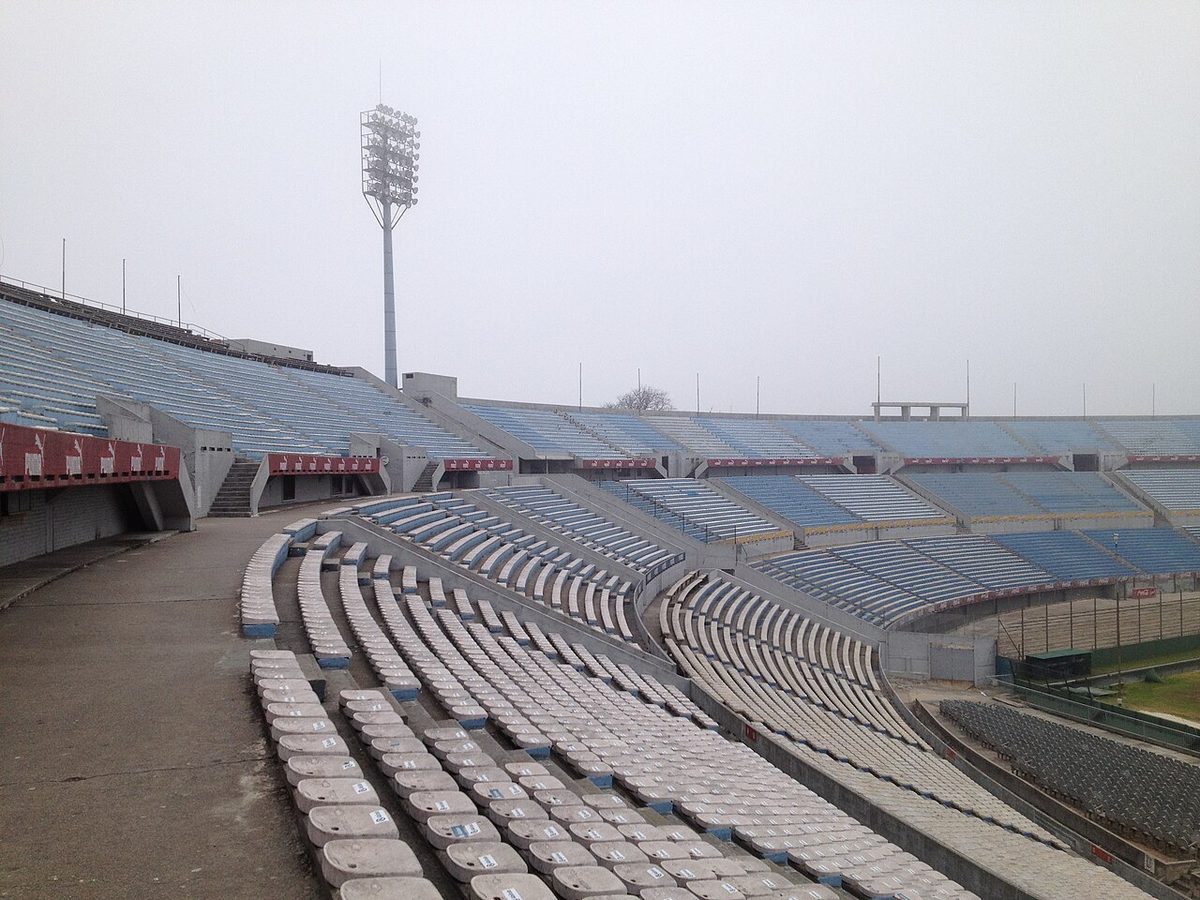
Visiting the museum tells you what the Centenario was. Going to a match tells you what it still is. The stadium is the home of the Uruguayan national team, and it also gets rented out for big domestic fixtures, so on the right night you can watch football in the same bowl as the 1930 final. A national-team World Cup qualifier here, with the whole country willing La Celeste forward, is one of the great atmospheres in the sport.
The fixture to understand is the clásico, the meeting of Montevideo’s two giants. Peñarol, in black and yellow, and Nacional, in white, blue and red, between them have won the vast majority of Uruguay’s league titles, and their rivalry is among the oldest and fiercest in world football. Peñarol moved to its own ground, the Campeón del Siglo, in 2016, but the two clubs have historically played nearly all their clásico meetings at the Centenario, and the biggest editions still land here. Each club’s hinchada, its hardcore travelling support, brings drums, flags and non-stop song.
Here is the honest drawback, and it’s an important one. The clásico is segregated, heavily policed and occasionally tense, with the two sets of fans kept rigorously apart and a history of trouble that means security is serious. It is a thrilling thing to witness, but it is not a relaxed family outing, and as a visitor you should go in clear-eyed. For a gentler first taste, a national-team game or a midweek fixture is far easier to enjoy.
How to get match tickets safely
Buy through official channels and your night will be simple. For Uruguayan league and clásico matches, tickets are generally sold through the clubs and the country’s official ticketing platforms online, and increasingly tied to a fan-ID system, so it pays to look early and follow the instructions exactly. Prices for ordinary league games are reasonable; the clásico costs more and sells out fast.
Resist the touts. There are people outside the ground selling tickets on the day, and for a high-tension fixture that’s a route to a fake ticket, the wrong end, or a seat in the rival fans’ section, which is the last place a neutral wants to be. If you’re nervous about navigating Spanish-language ticketing, a local guide or your accommodation can often sort it, and for the national team in particular, plenty of reputable operators bundle a match ticket with transfers. Whatever you do, sort seating before the day rather than gambling at the gate.
A practical tip on which seats to pick. The Olimpica side is the calmer, more comfortable choice with the best view, while the Colombes and Amsterdam ends behind the goals are the cheaper, louder “popular” terraces where the singing lives. As a visitor wanting atmosphere without the sharpest edge, a spot in the Olimpica gives you the noise as a spectacle rather than putting you in the middle of it.
Getting there and combining it with the rest of the city

The Centenario sits in Parque Batlle, a leafy district a little inland and east of the historic centre, roughly four to five kilometres from Ciudad Vieja. From the old town or the port, a taxi or rideshare takes about fifteen to twenty minutes and costs little; it’s the easiest option and what I’d suggest for a first visit. If you’d rather go local, several city buses run out along the 8 de Octubre corridor and drop you within a short walk of the ground, though working out the right line is easier with a transit app than from a printed map.
Because the stadium sits inside a large park, it pairs naturally with a slower morning outdoors. Parque Batlle has wide tree-lined avenues, monuments and joggers, and it’s a pleasant place to walk off a museum visit. The full sweep of what else to do across the capital, from markets to barrio-hopping, lives in our guide to things to do in Montevideo, which is the parent piece this stadium guide hangs off.
For a tidy day, I’d anchor the morning at the Centenario and the museum, then head back toward the coast and water. The Rambla waterfront walk is a short ride away and shows you how Montevideo actually relaxes, while lunch at the Mercado del Puerto puts a wood-fired parrilla in front of you near the old town. History buffs can fold in the cobbled streets of Ciudad Vieja on the same loop.
Planning your visit
Time your trip to your interest. If you only want the museum and the building, any weekday works and you can be done in a couple of hours. If your dream is a match, you’re at the mercy of the calendar: the Uruguayan league runs across much of the year, the national team plays World Cup qualifiers in scattered windows, and the biggest clásico dates are worth planning a city break around. Check fixtures before you book flights if football is the point.
Montevideo is mild but changeable, and the Centenario has open corners and exposed terraces, so a match in winter can be genuinely cold and wet. Bring a layer and something waterproof for evening kick-offs, and aim for a daytime tour if you want the tower view at its best. Our rundown of the best time to visit Uruguay breaks the seasons down if you’re still deciding when to come.
One more bit of context for first-timers. The stadium is a half-day at most, so treat it as one strong ingredient in a Montevideo trip rather than the whole meal. It slots neatly into a longer plan, whether that’s a focused Uruguay itinerary covering several regions, or a string of day trips from Montevideo out to Colonia and the coast on either side of your football fix.
Estadio Centenario: your questions answered
Can you visit the Estadio Centenario without going to a match?
Yes, and most visitors do exactly that. The Museo del Fútbol beneath the Olimpica stand is open to the public on weekdays, and the stadium also runs guided tours that take you into the stands and tunnel and often up the tower. You don’t need a fixture to experience the place; many people prefer the quiet of a museum morning.
How much time should I set aside for the museum?
Budget around an hour for the museum, stretching to ninety minutes if you watch the films and read the Spanish signage carefully. If you add a full guided stadium tour with the tower and pitch-side access, give yourself closer to two hours in total. Football obsessives will linger; casual visitors can move faster.
What is the clásico at the Centenario?
The clásico is the match between Montevideo’s two biggest clubs, Peñarol and Nacional, the oldest and fiercest rivalry in Uruguayan football. Many of their meetings are played at the Centenario, and the atmosphere is extraordinary, with each side’s hinchada, its hardcore support, bringing drums and song. It is also heavily segregated and policed, so plan carefully.
How do I get to the Estadio Centenario from the centre?
You’ll find the stadium in Parque Batlle, about four to five kilometres east of Ciudad Vieja. A taxi or rideshare from the old town or port takes roughly fifteen to twenty minutes and costs little, which is the simplest option. City buses run out along the 8 de Octubre corridor too, if you’d rather travel like a local.
Is it worth visiting if I’m not a huge football fan?
Honestly, it depends. If you have any interest in history, the 1930 World Cup story and the building’s symbolism are genuinely moving, and an hour is well spent. If football and sport leave you cold, the dense, old-school museum may underwhelm, and you might prefer to admire the architecture from outside and move on.
When is the football museum closed?
The museum is normally closed on Saturdays, Sundays and any match day, opening Monday to Friday at roughly 10:00 to 17:00. Because a big game shuts it, always check the fixture list and confirm current hours on the official stadium website before you travel, especially if your only free day falls on a weekend.
Final thoughts
Some famous places shrink when you finally stand in them. The Centenario does the opposite. Even empty, even faded, it holds the weight of being where the World Cup began, and where a small, stubborn country proved a point to the whole sport. The Torre de los Homenajes, the named stands, the cement that was still wet on opening day, all of it adds up to a building that is really a story about national pride told in concrete.
Go on a weekday for the museum and the calm, or chase a match for the noise, but go knowing what you’re there for. If you want to set the stadium against everything else the country does well, our overview of the best things to do in Uruguay and the honest take in whether Uruguay is worth visiting are good next stops. For me, this remains the most moving hour in Montevideo, even on a quiet grey morning with only a dog-walker for company.
Credits & sources
Sources & further reading
- FIFA: Estadio Centenario, an icon of world football turns 90
- Estadio Centenario official site: stadium history and visiting info
- Wikipedia: Estadio Centenario
- Wikipedia: 1930 FIFA World Cup final
Photo credits
All images via Wikimedia Commons: Estadio Centenario Exterior by Ismael Cordero (CC BY-SA 3.0); Estadio Centenario Torre Homenajes by Uwebart (CC BY-SA 3.0); Museo Del Futbol Montevideo by Ypsilon from Finland (CC0); Estadio Centenario Tribuna by Paulo JC Nogueira (CC BY-SA 3.0); Estadio Centenario Aerea by Marcelo Campi from Costa de Oro, Uruguay (CC BY-SA 2.0).


