30 Best Things to Do in Uruguay (2026 Guide)
Last updated: June 2026
The first time I told friends I was going to Uruguay, the response was a polite pause, then: “On purpose?” Two weeks later I was standing on a dune the size of an apartment block, watching sea lions argue below a lighthouse, having paid about twelve dollars to get there in a 4×4 with surfboards strapped to the roof. I have been back six times. The pause was their loss.
The best things to do in Uruguay split into six worlds: Montevideo‘s markets and candombe drums, Punta del Este‘s glamour beaches, UNESCO-listed Colonia del Sacramento, the wild Rocha coast around Cabo Polonio, Tannat wine country, and the gaucho interior with its riverside hot springs. You can taste all six in ten days.
This guide is for anyone planning that trip: the full menu of what’s genuinely worth your time in Uruguay, what each thing costs, when to do it, and the handful of famous stops I’d quietly skip. I’ve organized it by region and theme rather than a countdown, because that’s how you’ll actually travel it. If you’d rather have a ranked shortlist, the best places to visit in Uruguay is that guide.
Things to do in Uruguay at a glance
Uruguay is small — about the size of England and Wales, with 3.4 million people and roughly four times as many cows. Nothing on this list is more than a day’s drive from anything else. Here’s how the country breaks down:
| Region | Best for | Don’t miss | Time needed |
|---|---|---|---|
| Montevideo | Food, culture, carnival | Mercado del Puerto, the Rambla, candombe | 2–3 days |
| Punta del Este & Maldonado | Beaches, nightlife, art | Casapueblo at sunset, La Mano, José Ignacio | 2–4 days |
| Colonia & the southwest | History, slow wine towns | Barrio Histórico, Carmelo’s wineries | 1–2 days |
| Rocha (the wild coast) | Off-grid beaches, surf, nature | Cabo Polonio, Punta del Diablo, Santa Teresa | 3–5 days |
| The interior | Gaucho culture, estancias, hills | An estancia stay, Patria Gaucha festival | 1–3 days |
| The northwest litoral | Hot springs, river towns | Termas del Daymán, Fray Bentos factory | 1–3 days |
The icons: five things to do in Uruguay before anything else
Every country has its short list. Uruguay’s is mercifully un-crowded compared to, say, Machu Picchu at dawn — but these five earn their postcard status.
1. Watch the sun go down from Casapueblo
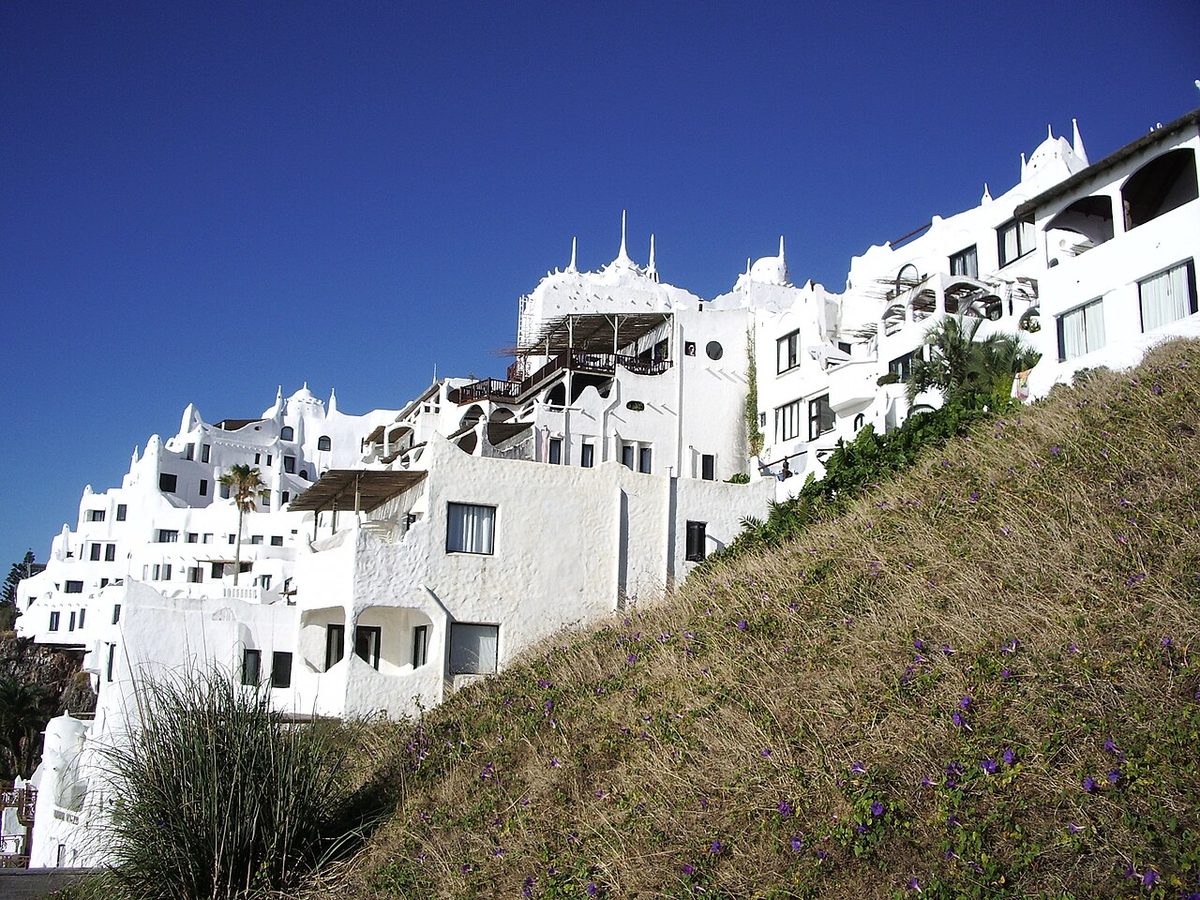
Carlos Páez Vilaró — painter, sculptor, friend of Picasso, father of one of the Andes crash survivors — spent 36 years hand-building this whitewashed, no-right-angles villa into the cliffs at Punta Ballena, fifteen minutes west of Punta del Este. He called it his “habitable sculpture,” and it drips down the rocks like something Gaudí might have dreamed after too much Tannat. Today it’s a museum, café and hotel. Come an hour before sunset, pay the museum entry (around US$12 last time I checked), then find a spot on the terraces for the Ceremonia del Sol, when a recording of Vilaró’s poem farewells the sun over the water. Touristy? Completely. Worth it? Every single time. The honest catch: summer evenings get packed, so arrive early or book the hotel’s café table instead.
2. Meet La Mano, the hand in the sand
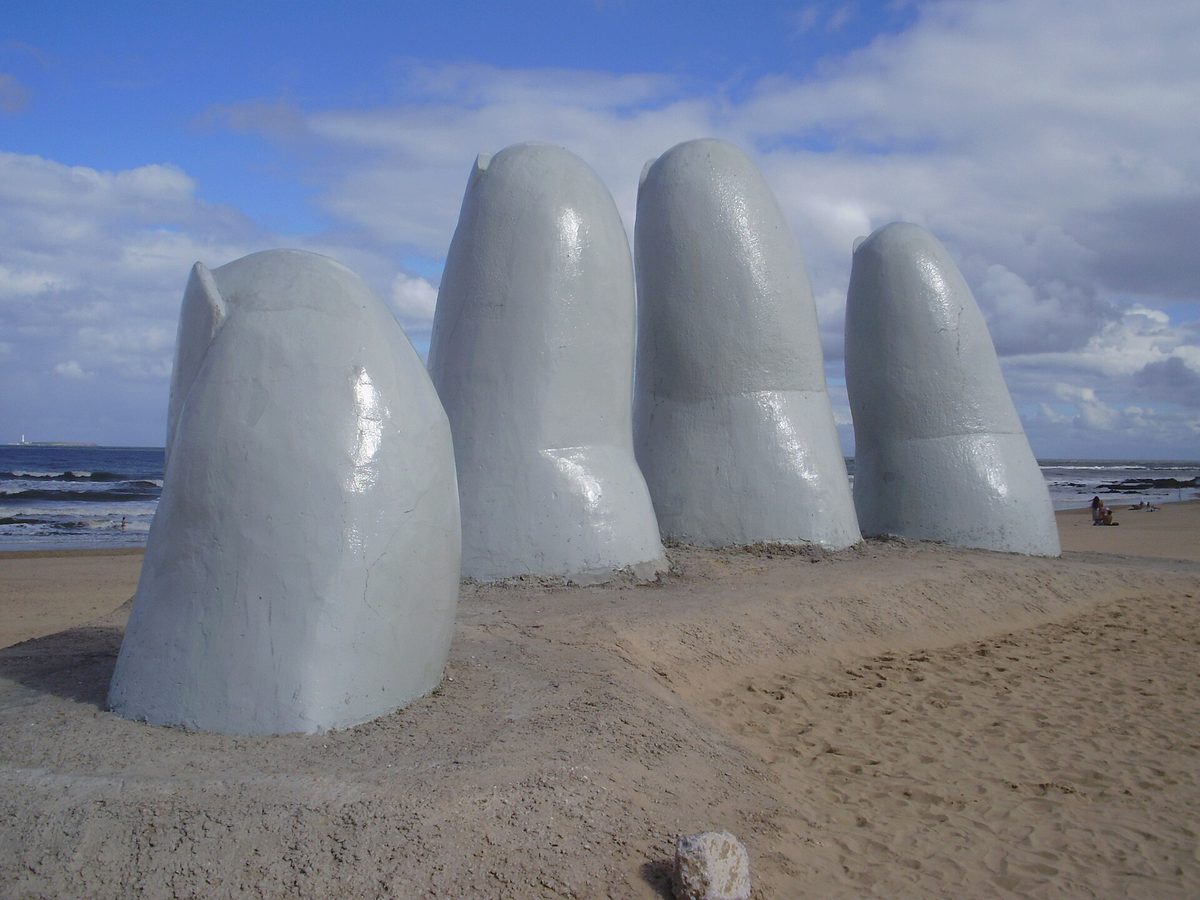
Five concrete fingers, each taller than you, surfacing from Playa Brava like a drowning giant’s last wave. Chilean sculptor Mario Irarrázabal built La Mano for a sculpture competition in February 1982, intending a warning about the sea’s power; Punta del Este adopted it as the town logo instead. It’s free, it’s always open, and at midday in January you’ll queue behind a dozen Instagram boyfriends for your photo. Go at sunrise — you’ll have all five fingers, pink light, and the odd jogger to yourself. It sits at Parada 1 on the Brava side, a ten-minute walk from the bus terminal, which makes it the easiest landmark in the country to tick off.
3. Lose an afternoon in Colonia del Sacramento
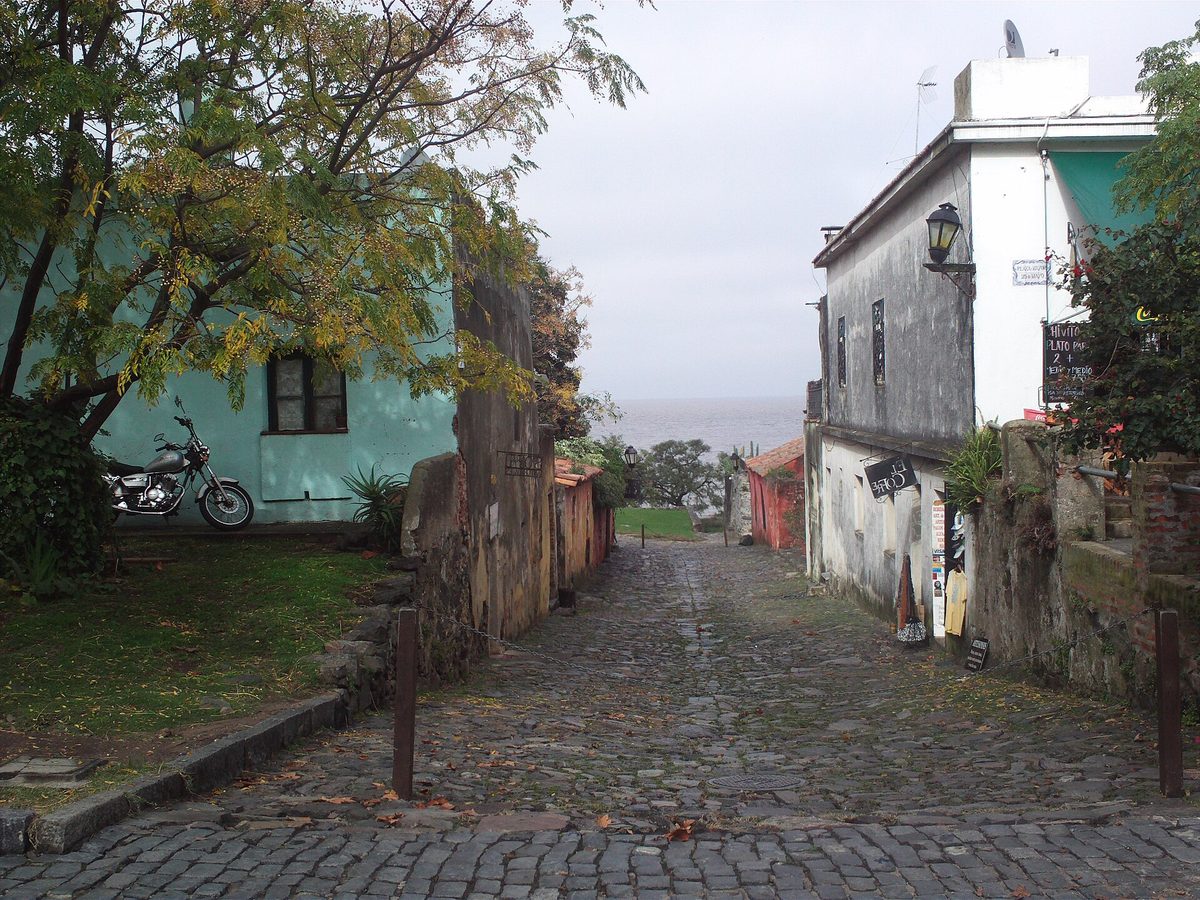
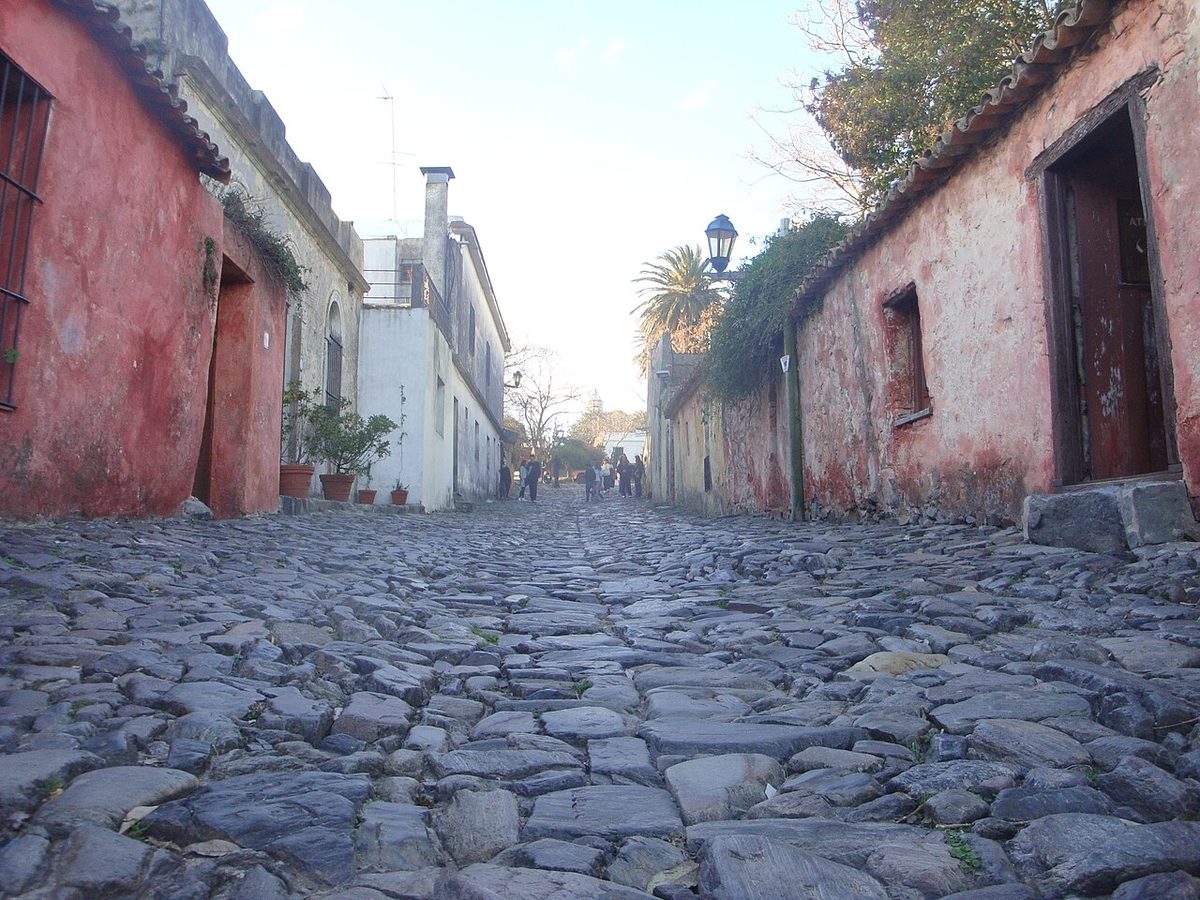
Founded by the Portuguese in 1680 expressly to annoy the Spanish across the river, Colonia changed flags so many times the architecture gave up choosing sides — which is exactly why UNESCO listed its Barrio Histórico in 1995. The old quarter is six blocks of uneven cobbles, sycamores, vintage cars rusting photogenically, and the famous Calle de los Suspiros (Street of Sighs), whose name nobody can explain without inventing a smuggler or a heartbroken sailor. Climb the 19th-century lighthouse for the river panorama (small fee, vertiginous spiral stairs), order a chivito on a plaza, and stay for sunset over the Río de la Plata — it regularly embarrasses the Atlantic ones. Most people come as day-trippers from Buenos Aires; spend a night and you’ll have the lanes to yourself by 7pm.
4. Eat asado where it was perfected: Mercado del Puerto
Montevideo’s 1868 iron market hall — the framework was allegedly destined for a train station before someone misplaced the paperwork — now houses a dozen parrillas grilling short ribs, sweetbreads and chorizo over wood embers from late morning. Grab a stool at the counter at Estancia del Puerto or El Palenque, order an asado de tira and a medio y medio (the half-sparkling, half-white wine invented at Roldós, the market’s oldest stand, pouring since 1886), and watch the grillmaster work fire like a second language. Come for lunch, not dinner — most counters wind down by late afternoon — and expect to pay around US$25–35 a head with wine. It’s the single best introduction to how seriously this country takes beef, which is very seriously indeed.
5. Walk the Rambla at golden hour
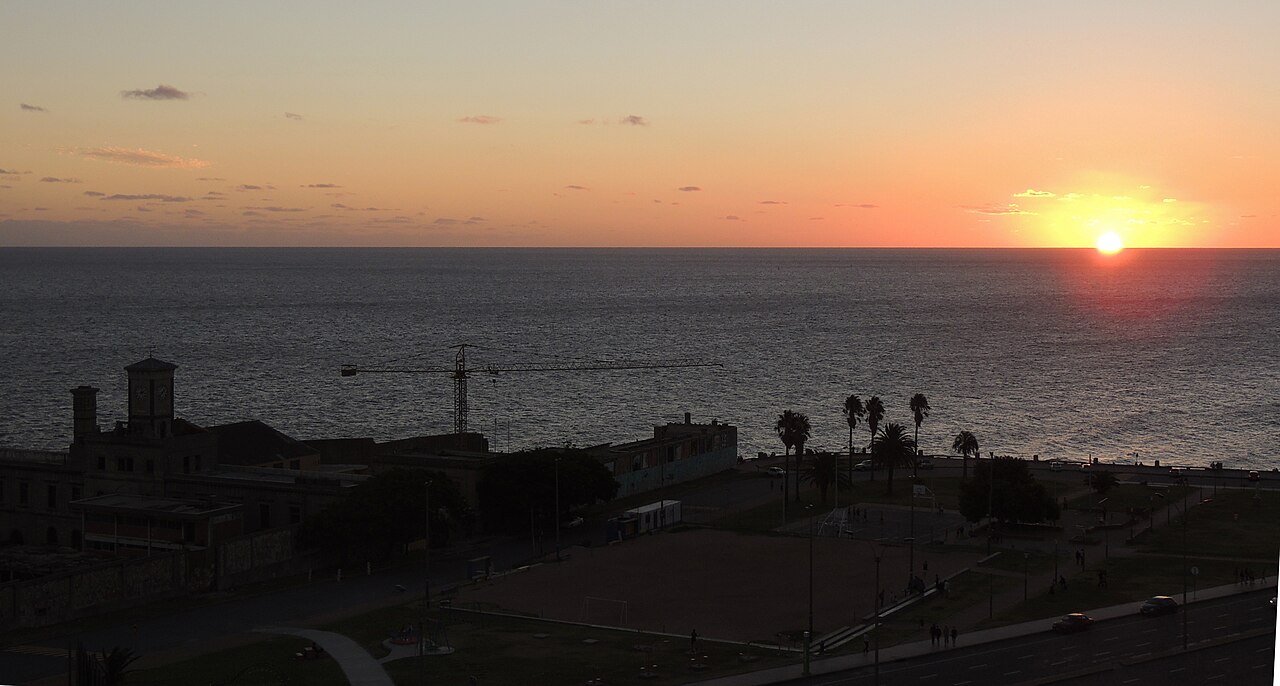
Montevideo’s waterfront promenade runs more than 22 kilometers from the port to Carrasco — locals claim it’s the longest continuous sidewalk in the world, and nobody has been bothered to disprove them. At around 7pm on any decent evening, half the city materializes: joggers, dog-walkers, teenagers with bluetooth speakers, fishermen, and above all mate drinkers, thermos wedged under one arm, passing the gourd along the sea wall. Join them. Buy a beer or a corn-flour torta frita from a cart, sit on the wall at Pocitos or Punta Carretas, and watch the sun drop into the river that looks like a sea. It costs nothing and tells you more about Uruguay than any museum: this is a country that knocks off work to watch the sky.
Beach-hop the southern coast
From Montevideo east to José Ignacio runs 180 kilometers of sand in every personality type: city beaches, family coves, surf breaks, and the most photographed stretch of coast in South America. The Atlantic side is wilder and colder; the river side is calm and warm. Pick your temperament.
6. Choose your side in Punta del Este: Mansa or Brava
Punta del Este is a peninsula with a split personality. The Mansa (“tame”) side faces the river: flat warm water, families, sunset views, paradas (numbered beach stops) with loungers and waiter service. The Brava (“fierce”) side faces the open Atlantic: surf, undertow, La Mano, and considerably better people-watching. The town behind them is South America’s Saint-Tropez — Gorlero avenue, the Calle 20 designer strip, casinos, and a January scene where Argentine celebrities outnumber pelicans. My advice: swim Mansa, walk Brava, and visit in December or March when you get the weather without the 4am traffic jams. In deep winter half the restaurants close, which has its own melancholy charm.
7. Do precisely nothing in José Ignacio
Forty minutes east of Punta del Este, this former fishing village on a lighthouse point has become the hemisphere’s most understated luxury destination — the place where media moguls park barefoot next to hand-painted signs because paving roads would ruin the brand. In season (mid-December to late January) it’s all linen shirts, beach clubs and US$40 catch-of-the-day at Parador La Huella, one of South America’s most celebrated restaurants. Off-season it reverts to a sleepy village of maybe 300 people where the lighthouse keeper outranks everyone. Climb the 1877 faro, eat at La Huella once even if it stings, and walk Playa Brava at dusk. Budget honesty: there is no budget version of José Ignacio in January. Come in November or April, or come for the day.
8. Gallery-hop and wave-hop in La Barra
Between Punta del Este and José Ignacio, La Barra announces itself with the puente ondulante — engineer Leonel Viera’s 1960s rollercoaster bridge, which dips and rises like a flattened sine wave and was deliberately built that way (the story that it sagged is a myth locals enjoy not correcting). The town behind it is Punta’s bohemian annex: surf shops, small galleries, the Museo del Mar’s cabinet-of-curiosities shell collection, and Bikini Beach for the young and aggressively tanned. In January the nightlife here outpaces Punta itself. The rest of the year it’s a pleasant afternoon: cross the bridge, browse a gallery, eat ice cream, watch surfers at Montoya. One drawback — summer parking is a contact sport.
9. Ride the chairlift in time-capsule Piriápolis
Before Punta del Este existed as an idea, alchemist-entrepreneur Francisco Piria built his own resort town from scratch in the 1890s — street grid by esoteric numerology, if you believe the tour guides. Piriápolis still feels like a sepia postcard: the grand Argentino Hotel (opened 1930, once the largest hotel in South America, thermal pools still open to visitors), a belle-époque rambla, and a chairlift up Cerro San Antonio for the bay view. Twenty minutes inland, Piria’s actual castle is now a free-entry museum. It’s an hour from Montevideo and beloved by Uruguayan families, which keeps prices honest. If Punta is champagne, Piriápolis is a choripán eaten on the seawall — and some afternoons that’s exactly what you want.
10. Find the brick masterpiece of the Costa de Oro
The “golden coast” of Canelones — a 60-kilometer ribbon of pine-backed beach towns between the capital and the east — is where actual Uruguayans summer. Atlántida is its hub, and on its edge stands one of the strangest beautiful buildings in the Americas: Eladio Dieste’s Cristo Obrero church (1958–60), a chapel of undulating self-supporting brick walls that earned UNESCO World Heritage status in 2021. Engineers make pilgrimages here; you can simply walk in and gawp for free. Pair it with Atlántida’s eagle-head folly on the dunes (built for reasons nobody fully agrees on), a swim, and a beachfront lunch among families who’ve rented the same cabin for thirty years. Zero glamour, maximum Uruguay.
Go wild on the Rocha coast

East of Laguna Garzón the boutique hotels stop, Route 10 turns to gravel in places, and Uruguay’s coast goes gloriously feral. Rocha department holds 180 kilometers of dunes, lagoons and fishing villages where the loudest thing at night is surf. For ten months a year these beaches are functionally empty. This is the Uruguay I’d defend in a bar argument against any coastline on the continent.
11. Go off-grid in Cabo Polonio
No roads in. No power grid. No streetlights, which is the point: the Milky Way over Cabo Polonio is the best free show in Uruguay. You reach this national-park hamlet by official 4×4 truck from the terminal on Route 10 — a 20-minute lurch over Uruguay’s biggest dune field that costs around US$10–12 return — or you walk in along the beach. Inside: maybe 80 permanent residents, a working lighthouse, candle-lit hostels, and one of South America’s largest sea lion colonies barking on the rocks below. Days are for the two endless beaches; nights are for wine, wind and stars. Book a cabin well ahead for January; bring cash because card machines need signal the village doesn’t always have. It’s rustic in the genuine, occasionally cold-shower sense. That’s the deal, and it’s a good one.
12. Slow down in Punta del Diablo

A fishing village of brightly painted cabins on three beaches near the Brazilian border, Punta del Diablo runs on maybe a thousand people most of the year — then hosts tens of thousands in the first week of January, when it becomes the unofficial capital of young Uruguay. Outside that delirious window it’s hammocks, surf lessons on Playa de la Viuda, fishermen hauling boats up Playa de los Pescadores, and seafood shacks selling the Rocha specialty nobody warns you about: buñuelos de algas, crisp seaweed fritters that taste far better than they have any right to. Stay two nights minimum. The town’s only real flaw is that every backpacker on the continent has the same idea in high summer.
13. Camp beneath the fortress at Santa Teresa National Park
Ten minutes north of Punta del Diablo, this army-administered park wraps a hilltop Portuguese fortress (begun 1762, fully restorable-castle handsome) in 3,000 hectares of eucalyptus, dunes and near-empty surf beaches. Uruguayan families treat it as a national institution: a thousand-plus campsites, capybaras grazing between tents at dusk, a greenhouse, even a small bird park. Day visitors can drive through for the fortress and Playa Grande for a token fee. If you’ve ever wanted to fall asleep to owls and wake to a beach with nobody on it, the campsites cost less than a Punta del Este cocktail. Summer weekends get busy and the mosquitoes take no prisoners — bring repellent and book January ahead.
14. Surf La Paloma and La Pedrera
Rocha’s twin surf towns sit twenty minutes apart and split the vote. La Paloma, on its lighthouse peninsula, is the more organized: consistent breaks at La Aguada and Anaconda, surf schools renting boards by the hour, and supermarkets that stay open in winter. La Pedrera is the looker — one clifftop main street ending in Atlantic views, with Playa del Barco’s rusting shipwreck to the north. Surf season runs roughly autumn through spring when the swells organize; summer brings smaller waves and bigger crowds. Non-surfers still win here: between July and October, southern right whales breach close enough to shore that the spray is visible from your breakfast table. Cerro de la Virgen in La Paloma is the classic free viewpoint.
15. Walk the dunes from Valizas to Cabo Polonio
The best hike in coastal Uruguay starts in Barra de Valizas — a hippie hamlet whose grid amounts to sand streets and artisan stalls — and crosses roughly eight kilometers of mountainous dunes to Cabo Polonio, cresting Cerro de la Buena Vista where the panorama runs lagoon-to-ocean. Three hours of trudging, wading the Valizas creek mouth (a rowboat ferries you across for small change in season), and not a fence in sight. Go early, carry more water than seems reasonable, and time it to arrive in Polonio for lunch; the 4×4 trucks can carry you back out to Route 10. In January, the same walk at full moon is a minor local tradition — bring a head torch and company.
16. Cross the circular bridge at Laguna Garzón
When a bridge finally replaced the raft crossing between Maldonado and Rocha in 2015, Uruguayan-born architect Rafael Viñoly refused to build a straight one — drivers, he argued, should be forced to slow down and look. The result is a perfect concrete ring laid on the lagoon, half roadway, half pedestrian loop, wholly absurd and somehow correct. Park, walk the circle, watch kitesurfers and — if the water level cooperates — flamingos working the shallows. The lagoon itself is a protected area threaded with kayak outfitters in season. It’s a fifteen-minute stop that has become, against all odds, one of the most photographed structures in the country. Sunset turns the whole ring gold.
Dive into the culture: drums, fútbol and tango

Uruguay’s cultural exports per capita are frankly unfair: the longest carnival on Earth, two World Cups from a nation of three million, a UNESCO-listed drumming tradition, and a strong legal claim to tango’s most famous song. Most of it happens in Montevideo, and most of it costs pocket change.
17. Catch the world’s longest carnival (late January–early March)
Rio gets the cameras; Montevideo gets forty-plus nights. Uruguayan carnival is a marathon of neighborhood stages called tablados, where costumed murga choirs perform razor-edged satirical revues — imagine a barbershop quartet crossed with a protest march, in glitter. The two unmissable street events are the Desfile Inaugural down 18 de Julio in late January and the Desfile de Llamadas through Barrio Sur and Palermo in early February, when comparsa after comparsa of candombe drummers shakes the asphalt for hours. Grandstand seats sell through Abitab outlets for modest sums; locals just bring a chair. Book accommodation ahead and sleep in the next morning like everyone else.
18. Hear candombe on a Sunday night in Barrio Sur
Candombe — the drum language carried by enslaved Africans and kept alive by their descendants — earned UNESCO intangible-heritage status in 2009, but it was never a museum piece. Most Sunday evenings year-round, comparsas rehearse through the streets of Barrio Sur and Palermo: forty drummers walking abreast, chico-repique-piano patterns bouncing off the housefronts, neighbors trailing behind with the dog. It’s free, it’s open to respectful onlookers, and it beats any staged show in the city. Etiquette is simple: walk behind or beside the drummers, not through them; ask before close-up photos; and let the bonfires warming the drumheads alone. Arrive around sunset near Isla de Flores street and follow your ears.
19. Take in a fútbol match — or at least the Estadio Centenario
Uruguay hosted and won the first World Cup here in 1930, and the Estadio Centenario still stands as football’s Parthenon — weathered, vast, and treated by FIFA as a historical monument. The Museo del Fútbol inside holds the relics (early World Cup memorabilia, Maracanazo newspapers, a century of obsession) and lets you onto the stands most weekdays for a few dollars. Better yet, see a match: tickets for ordinary league fixtures are cheap and easy. The Peñarol–Nacional clásico — the oldest derby outside Britain — is electric but best attended with a local or organized tour, and never in away colors. Even empty, the stadium hums. For a country this size, two World Cups and fifteen Copa Américas borders on showing off.
20. Crawl Ciudad Vieja’s architecture and museums

Montevideo’s old town rewards slow walking: start at Plaza Independencia under the 1928 Palacio Salvo — Mario Palanti’s 95-meter eclectic rocket ship, once the tallest building in South America and still the city’s favorite argument about beauty — then pass the Puerta de la Ciudadela into pedestrian Sarandí. En route: the gilded 1856 Teatro Solís (cheap guided tours, cheaper standing tickets to actual shows), the Mercado de los Artesanos, second-hand bookshops, and a chain of free state museums — the Museo Andes 1972 (see below), the decorative-arts Palacio Taranco, the Cabildo. Saturday brings the Tristán Narvaja flea market a few blocks east, where you can buy a 1950s mate gourd, a live chicken and a physics textbook from adjacent stalls. Watch your phone in quiet side streets after dark; daytime is relaxed.
21. Sit with the story at the Museo Andes 1972
In October 1972, Uruguayan Air Force Flight 571 crashed into the Andes carrying a Montevideo rugby team; sixteen survived 72 days at 3,600 meters by the means the world now knows from books and films. What the films skip is that this is, at heart, a Montevideo story — and this small, privately run museum in Ciudad Vieja treats it with a tenderness that sneaks up on you: recovered objects, letters, the survivors’ own voices. Give it an hour, entry runs around US$10, and the founder is often on hand answering questions. It is the most moving sixty minutes in the city, and I say that as someone who went in skeptical of disaster tourism. You’ll leave thinking about it for days.
22. Dance (or just watch) tango in its other birthplace
Buenos Aires never mentions it, but “La Cumparsita” — the most famous tango ever written — was composed in 1917 by a Uruguayan teenager, Gerardo Matos Rodríguez, and premiered in a Montevideo café that stood where Palacio Salvo now does. The city’s tango scene is smaller than its rival’s and far friendlier to beginners: milongas like the weekend dances at the Mercado de la Abundancia (home of Joventango) charge a couple of dollars, run beginner-friendly floors, and serve wine at folding tables. Nobody will scowl at your footwork. Catch a free summer milonga on a Ciudad Vieja plaza if your timing’s right, and listen for La Cumparsita — by tradition, always the night’s last song.
Eat and drink your way across Uruguay
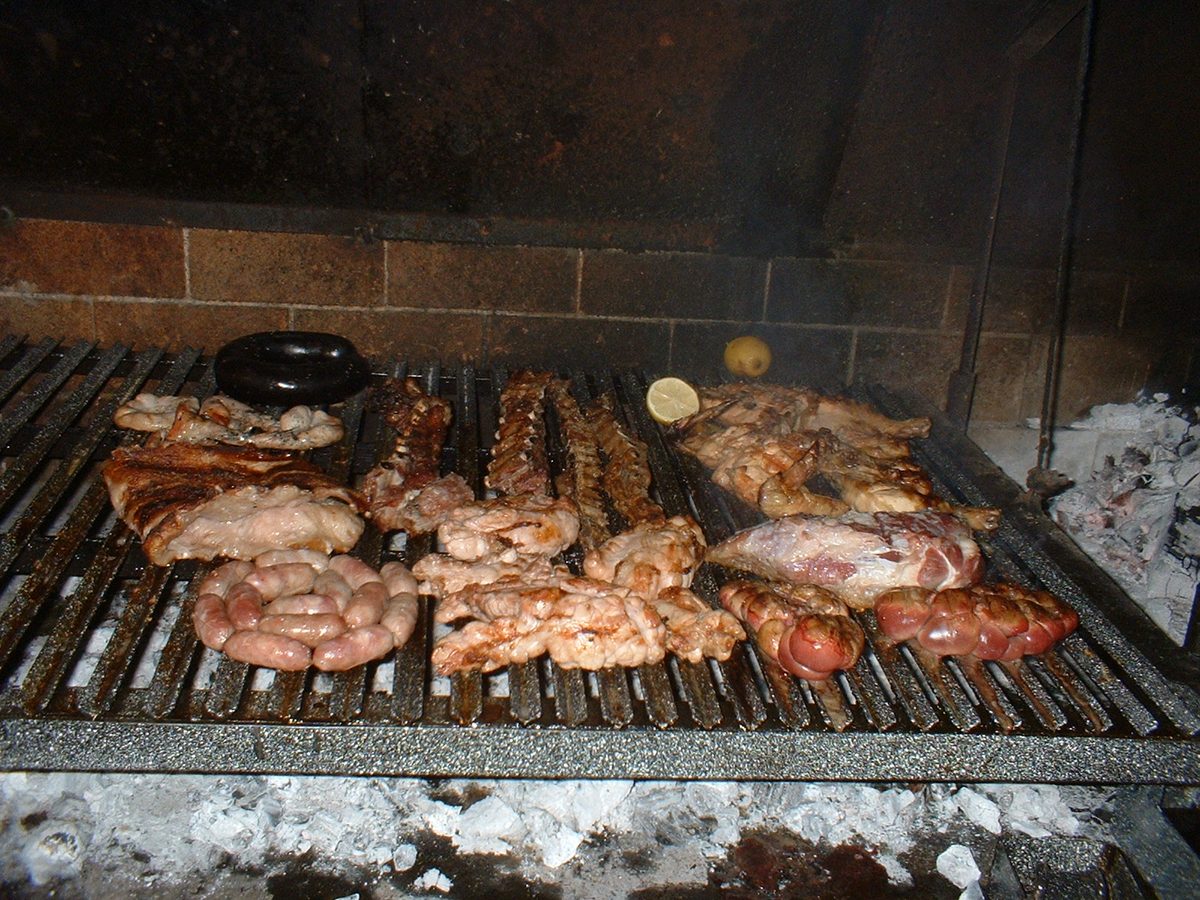
Uruguayans eat more beef per person than anyone on the planet and drink mate with a devotion that borders on liturgy. The food rarely shouts — this is a cuisine of embers, bread and dulce de leche — but done right it’s quietly magnificent. Here’s the syllabus.
23. Take the chivito seriously
The national sandwich is a dare: thin-sliced churrasco steak, ham, bacon, mozzarella, a fried egg, olives, tomato and mayo on a bun, usually with fries underneath whatever’s left of your resolve. Legend dates it to 1944, when a customer at El Mejillón bar in Punta del Este asked for roast kid (chivito) and owner Antonio Carbonaro, having none, improvised with beef and an apology. Order it al pan (as God and Carbonaro intended) or al plato — dumped over fries with salads, fork required. Ask five Uruguayans for the best one and you’ll get five answers and possibly an argument; Bar Arocena in Carrasco and Chivitería Marcos are perennial contenders. Expect US$10–15 and skip lunch first. One per trip minimum; one per week maximum, on cardiologist’s advice.
24. Learn the mate ritual (and its rules)
Uruguayans drink more yerba mate per capita than anyone — Argentines included, a statistic locals produce with suspicious speed. The kit is everywhere: gourd, metal straw (bombilla), and the thermos wedged under one arm like a parking brake. Mate is shared in rounds: one person (the cebador) pours and the gourd circles the group, each drinker finishing it before passing back. The etiquette that matters: don’t touch the bombilla, don’t stir, don’t take it personally when the gourd skips you — and don’t say “gracias” unless you’re done, because thanks means you’re out. Buy a starter kit at any supermarket for a few dollars; canned commercial mate is considered a war crime. Joining a round on the Rambla is the fastest friendship shortcut in the country.
25. Drink Tannat at the source: Bodega Garzón and Canelones
Tannat arrived from the French Basque country in the 1870s with immigrant Pascual Harriague and found its soulmate soil here: Uruguay’s signature red is dark, structured and built for that beef. The showpiece is Bodega Garzón, half an hour inland from José Ignacio — a gravity-flow winery in rolling almost-Tuscan hills, with tastings and tours (roughly US$45–95 depending on flight, book ahead) and Francis Mallmann’s fire-cooking restaurant attached for serious occasions. The quieter, cheaper counterweight: family bodegas across Canelones within 45 minutes of Montevideo — Bouza, Juanicó, Pizzorno among them — where the winemaker’s cousin often pours your flight. Most require reservations; most reward them with generosity that would bankrupt a Napa tasting room.
26. Spend a slow weekend in Carmelo wine country
An hour north of Colonia, Carmelo is what wine regions looked like before marketing departments: gravel lanes, century-old family vineyards, and the absolute absence of hurry. Taste at Almacén de la Capilla or Bodega Irurtia — odds are decent a family member leads the tour — then dine at Narbona, a restored 1909 farmhouse-winery whose dulce de leche alone justifies the detour. Bicycles are the local tasting vehicle of choice, which says everything about the pace and the traffic. Argentines arrive by boat from Tigre for weekend escapes; the rest of the world hasn’t noticed yet. Pair it with Colonia for the ideal unhurried southwest loop — history one day, Tannat the next.
Head inland: gauchos, hot springs and one strange factory
Ninety-five percent of visitors never leave the coast, which means the interior — most of the country — is where Uruguay stops performing and just gets on with being itself. Rolling cuchilla hill country, cattle outnumbering people, towns where the loudest noise is the bakery. Give it at least a day; it tends to be the part people won’t shut up about afterward.
27. Stay on a working estancia
The gaucho is not a costume here; he files taxes. A night or two on an estancia — a working cattle ranch taking guests — gets you horseback rides across land with no fences to the horizon, asado cooked over an open fire, and conversation with people whose families have ridden the same hills for two centuries. The grande dame is San Pedro de Timote in Cerro Colorado, two hours from Montevideo with its chapel, library and 200 years of history; dozens of smaller family ranches dot the country, many barely an hour from the coast. Can’t spare a night? Book a día de campo — a day visit with ride and lunch, typically US$80–150. City-dwelling Uruguayans take these to recharge, which tells you it isn’t a tourist trap.
28. Soak in the termas of the northwest
Along the Río Uruguay near Salto — a comfortable overnight bus or five-hour drive from Montevideo — hot mineral water comes out of the ground at around 38–46°C, a happy accident of mid-century oil drilling that found wellness instead. Termas del Daymán is the most developed: a village of pools of varying temperatures where entry costs a few dollars and half the visitors are Argentine grandmothers executing a serious soaking schedule, with the Acuamanía waterpark next door for kids. Termas del Arapey, ninety minutes further into open country, is the remote all-inclusive version. Combine with a look at Salto Grande dam or the riverside town itself. In July, when the coast is windy and shut, this corner of Uruguay is warm, cheap and quietly thriving — the local winter-trip hack.
29. Time your trip to a gaucho festival
Twice a year, rural Uruguay throws its capital-letter parties. In early March, Tacuarembó hosts the Fiesta de la Patria Gaucha — the region’s biggest gaucho gathering, five days of horsemanship, jineteadas (bronco riding that makes rodeo look padded), open-fire cooking competitions and folk music, with thousands camping in period dress and almost no foreign tourists. During Easter week, Montevideo’s Semana Criolla at the Rural del Prado brings the same culture to the city: rides, crafts, endless grills. Both are cheap entry and zero artifice — this is heritage performed for its own audience, not for you, which is exactly why it’s worth rearranging dates for. Book Tacuarembó lodging well ahead; the town fills completely.
30. Tour the meat factory that fed the world: Fray Bentos
Stay with me: the best industrial museum in South America is a slaughterhouse. From 1863, the Liebig (later Anglo) plant at Fray Bentos shipped corned beef and meat extract to half the planet — it provisioned both World Wars, gave Britain its OXO cube and a synonym for canned pie, and at its peak employed workers from 60 nations. UNESCO listed the entire frigorífico complex in 2015, and the guided tour through the echoing machine rooms (around UYU 150, with English tours some days — and free entry Tuesdays when I last checked) is gripping, strange and oddly beautiful. Two scheduling notes: it’s a 4.5-hour drive or bus from Montevideo, so pair it with Carmelo or the termas, and vegetarians may prefer the riverside promenade.
Things to do in Uruguay by traveler type
First trip, one week
Montevideo (two nights) → Colonia (one) → Punta del Este with Casapueblo and José Ignacio (two) → as much Rocha as remains. You’ll touch four of the six worlds and immediately start planning the return for the other two.
Couples
Carmelo wine lodges, a José Ignacio dinner, an estancia night, and the Casapueblo sun ceremony. Uruguay does understated romance far better than it advertises.
Families
Base on the Mansa side of Punta del Este or in Piriápolis; day-trip the Cerro San Antonio chairlift, sea lions at the port, Acuamanía if you head north, and camping (or glamping) at Santa Teresa. Uruguayan beach towns are built around children.
Backpackers
The classic string: Montevideo hostels → Punta del Diablo → Cabo Polonio → Valizas, by COT and Rutas del Sol buses. Cook your own asado at the hostel grill and your budget survives. January doubles every price; shoulder months are kind.
Cruise-day visitors
From Montevideo’s port you’re a ten-minute walk from Mercado del Puerto and Ciudad Vieja — lunch, Plaza Independencia, Andes museum, back aboard without a taxi. From Punta del Este tenders, La Mano and the peninsula loop fill a day easily.
Planning the practical bits
How many days do you need?
Five days covers the Montevideo–Colonia–Punta triangle. Seven to ten lets you add Rocha properly (Polonio deserves two nights). A full lap with estancia and termas wants two weeks. Resist the day-trip-from-Buenos-Aires-only itinerary if you possibly can; Colonia is lovely but it is the country’s foyer. (Still torn between the two banks of the river? Uruguay vs Argentina settles it honestly.)
When to go
Summer (December–February) is beach prime and carnival season — but January is when Argentina and Brazil arrive en masse and coastal prices double or triple. The sweet spots are November–early December and March: summer weather, human prices. July–October adds whales on the Rocha coast and termas weather inland. Winter (June–August) is mild (rarely below 8°C), moody and cheap — Montevideo’s cultural calendar doesn’t hibernate.
Getting there and around
Most visitors arrive at Montevideo’s Carrasco airport or by ferry from Buenos Aires — Buquebus runs direct in about 2¼ hours, while the Colonia Express and Buquebus via-Colonia routes (1¼-hour crossing plus bus) are cheaper. Long-distance buses from Montevideo’s Tres Cruces terminal reach every town in this guide cheaply and comfortably. A rental car unlocks Rocha and the interior — roads are empty and tolls electronic, but note Uruguay’s zero-alcohol limit for drivers and the gravel ripio on side roads. Uber works in Montevideo and Punta del Este.
What things cost
Uruguay is the most expensive country in South America — budget more Portugal than Bolivia. Rough dailies: backpackers US$50–70, midrange couples US$120–200 per person with rental car and restaurant dinners. A chivito runs US$10–15, a menú del día less, a Garzón tasting US$45+. One legal mercy: pay restaurants and rentals with a foreign card and a chunk of VAT usually comes off the bill automatically — Uruguay’s standing thank-you note to tourists.
Book ahead, skip lightly
Reserve in advance: anything coastal in January, Cabo Polonio cabins, Garzón and Narbona tables, Llamadas grandstands, Tacuarembó beds in March. Things I’d skip, candidly: Punta del Este in peak January unless crowds are the point; the Isla de Lobos boat if you’re seasick-prone (the port sea lions perform for free); and queueing for the Montevideo sign photo when the Rambla beside it is the actual attraction.
Things to do in Uruguay: your questions answered
Is Uruguay worth visiting?
Emphatically — if your idea of travel includes food, wine, empty beaches and unhurried culture rather than bucket-list monuments. Uruguay’s pleasures are atmospheric: a four-hour asado, a drum line at dusk, a dune with nobody on it. Travelers chasing Machu Picchu-scale spectacle should adjust expectations; travelers who like places that work, relax and feed you well tend to rave.
How many days in Uruguay is enough?
Seven to ten days is the honest answer for the classic loop — Montevideo, Colonia, Punta del Este and the Rocha coast — without rushing. Five days covers the southern triangle; two weeks adds wine country, an estancia and the hot springs. A Colonia day trip from Buenos Aires alone shows you the doorway, not the house.
What is Uruguay famous for?
Beef and asado culture, mate (the world’s highest per-capita consumption), Tannat wine, football far above its weight class — two World Cups and the 1930 original — the world’s longest carnival, candombe drumming, progressive politics, and 660 kilometers of Atlantic and river beaches running from glamorous (Punta del Este) to gloriously off-grid (Cabo Polonio).
Is Uruguay expensive to visit?
By South American standards, yes — it’s the continent’s priciest country, closer to southern Europe. Expect US$50–70 a day backpacking and US$120–200 midrange. January coastal prices spike dramatically. Offsets: superb free attractions (beaches, Rambla, candombe rehearsals, most museums), cheap intercity buses, and automatic VAT discounts on restaurant bills paid with foreign cards.
Is Uruguay safe for tourists?
It’s among South America’s safest and most stable countries, and most visits are entirely uneventful. Normal city sense applies in Montevideo — pickpocketing and phone-snatching exist in Ciudad Vieja and on crowded buses, and a few peripheral neighborhoods are best left off the itinerary. Beach towns and the interior are very relaxed. Solo and LGBTQ+ travelers generally report feeling notably comfortable.
What is the best month to visit Uruguay?
March, for my money: summer warmth, swimmable ocean, carnival’s tail end, grape harvest in the wineries, and the January crowds and prices gone. November–early December is the runner-up with the same logic in reverse. Choose July–September if whales and hot springs appeal more than swimming.
Do you need Spanish to visit Uruguay?
You’ll manage without it in Punta del Este, José Ignacio and tourism businesses generally, but English thins out fast in Montevideo neighborhoods, bus terminals and the interior. A polite handful of Spanish — and tolerance for the local vos and the “sh” sound where other dialects say “y” — transforms the warmth of every interaction. Uruguayans are patient with attempts.
Final thoughts
Somewhere on my second trip — possibly in the dunes, possibly mid-chivito — Uruguay stopped being the country I had to explain to friends and became the one I gatekeep. It does not dazzle on arrival; it accumulates. The drums get into your pulse, the mate circle widens to include you, and one evening on the Rambla you realize the sun is setting and absolutely everyone has stopped to watch, and so have you. Go before the secret finishes leaking out. The pause, remember, is everyone else’s loss.
Credits & sources
Sources & further reading
- Uruguay Ministry of Tourism — official destination and events information
- Buquebus — current Buenos Aires–Montevideo/Colonia ferry schedules and fares
- UNESCO: Fray Bentos Industrial Landscape — the World Heritage listing
- UNESCO: Historic Quarter of Colonia del Sacramento
Photo credits
All images via Wikimedia Commons: Casapueblo by Talkingheads (CC BY-SA 3.0); La Mano by María Cecilia (CC0); Calle de los Suspiros by Ypsilon from Finland (CC0); Palacio Salvo by Herr stahlhoefer (public domain); Cabo Polonio and Punta del Diablo by rodoluca (CC BY-SA 3.0); Llamadas drummers by Renedeveer (CC BY-SA 3.0); asado by a Wikimedia contributor (CC BY-SA 2.5).