Uruguayan Food: 25 Dishes & Drinks You Have to Try (2026)

Uruguayan food is what happens when grass-fed beef, a wood fire, and a century of Italian and Spanish grandmothers all end up in the same small country. It is meat-forward, pasta-heavy, sweet on dulce de leche, and washed down with mate. This guide runs through 25 dishes and drinks worth your appetite, where to find each one, and what you will actually pay.
I have eaten my way around Uruguay on several trips, from the parrilla stalls of Montevideo’s port market to roadside carts selling fried dough in the rain, and the thing nobody tells you is this: Uruguayan cooking is not flashy. There is no long list of indigenous dishes, no chili heat, no famous regional sauces you have to hunt down. What there is instead is consistency. The beef is genuinely some of the best on earth, the pasta is made by people whose great-grandparents came from Genoa and Naples, and the sweets are dangerous. Once you understand the few simple things Uruguayans do extremely well, you eat well everywhere.
Below I have organized the food by how you will actually meet it on a trip: the fire first, then the sandwiches, the Italian inheritance, the snacks, the cheese, the seafood almost every other guide skips, the desserts, and finally what to drink. After that you get the practical stuff: where and when to eat, rough prices, advice by traveler type, and the questions people always ask.
Uruguayan food at a glance
If you only have a few days and want to hit the essentials, this is the short list. Prices are rough, in US dollars, and were accurate last I checked in early 2026 — treat them as ballpark, because the peso moves and tourist spots charge more.
| Dish or drink | What it is | Where to try it | Rough price (USD) |
|---|---|---|---|
| Asado | Wood-fired barbecue, several cuts | A parrilla, or any Uruguayan home on a Sunday | $20–40 for a shared grill |
| Chivito | The loaded steak sandwich, national obsession | Any bar; born in Punta del Este | $10–20 |
| Choripán | Grilled chorizo in a roll with chimichurri | Street carts, football matches | $3–6 |
| Milanesa | Breaded fried cutlet, often “napolitana” | Every café and corner restaurant | $8–15 |
| Pizza & fainá | Pizza with a chickpea flatbread on top | Pizzerías, Montevideo especially | $8–14 |
| Ñoquis | Potato gnocchi, eaten on the 29th | Pasta houses, any month’s 29th | $8–12 |
| Empanadas | Baked or fried stuffed pastries | Bakeries, kiosks, takeaway | $1–2 each |
| Torta frita | Fried dough, comfort food for rainy days | Street carts when it drizzles | Under $1 |
| Dulce de leche | Milk caramel on and in everything | Supermarkets, every dessert menu | $3–5 a jar |
| Alfajor | Two cookies, dulce de leche, chocolate or coconut | Kiosks, bakeries, airports | $1–3 |
| Chajá | Sponge, meringue, cream and peaches | Paysandú original; cafés nationwide | $3–5 a slice |
| Mate | The national drink, a shared herb infusion | Everywhere — bring your own gourd or watch | Effectively free / social |
| Tannat | Uruguay’s bold signature red wine | Wine bars, wineries near Montevideo | $10–25 a bottle |
| Medio y medio | Half still, half sparkling white wine | Roldós, Mercado del Puerto | $4–7 a glass |
That table is the trip in miniature. Now the detail, starting where every Uruguayan meal of consequence starts: at the fire.
The fire: asado and the parrilla
Asado is the single most important thing to understand about eating in Uruguay. It is both a dish — barbecued meat — and an event, a Sunday-afternoon institution that pulls in family, neighbors, and anyone who happens to be around. There are nearly four cows for every person in this country, and Uruguayans eat around 57 kilograms of beef each per year, among the highest rates anywhere. The cattle are grass-fed and free-range almost by default, which is why even a cheap steak here tastes like something.
The Uruguayan difference, and locals will defend this to the death against Argentina, is the fuel. A proper Uruguayan asado is cooked over leña, real firewood burned down to embers, rather than charcoal. The fire is built off to the side and the glowing coals are raked under the grill as needed, so the meat cooks slowly with a faint woodsmoke edge. It is a low, patient process. Do not show up to an asado hungry and expect to eat in twenty minutes.
The grill itself is the parrilla, and the person running it is the parrillero, a role that carries real social weight. When you order an asado at a restaurant, you are usually ordering a meal for two or more that arrives in waves.

The cuts and the order they arrive
Knowing a few words off the parrilla menu saves you from ordering three versions of the same thing. Here is what tends to land on the table, roughly in order:
Achuras come first — the offal and odds and ends that cook fast. This means chorizo (sausage), morcilla (blood sausage, which comes salada/savory or, brilliantly, dulce/sweet with orange peel and walnuts), chinchulines (chitterlings), riñón (kidney) and mollejas (sweetbreads). The sweetbreads are the prize. If you try one thing outside your comfort zone in Uruguay, make it a molleja, crisped at the edges and squeezed with lemon. The honest drawback: offal is an acquired texture, and a plate of chinchulines will defeat plenty of first-timers.
Tira de asado is short ribs cut across the bone, the cut most people picture when they think asado. Vacío (flank) is a Uruguayan favorite, tougher but deeply flavored. Pulpón or colita de cuadril (rump) shows up at the bigger meals. Entraña (skirt steak) is thin, fast, and arguably the best-value cut on any parrilla. Asado de tira, entraña and a good chorizo, plus a green salad, is my standard order and it rarely costs more than around $20–25 a head outside the tourist strips.
Two condiments matter. Chimichurri is the herb-garlic-vinegar sauce that goes on everything off the grill — parsley, oregano, garlic, oil, a little chili. It is mildly piquant at most; this is not a spicy cuisine. Salsa criolla is the chunkier cousin, diced tomato, onion and pepper in vinegar. Both are usually on the table. If you want heat beyond that, you will be hunting.
One more grill item worth ordering on its own: provoleta, a thick disc of provolone cheese grilled until the outside crusts and the inside goes molten, dusted with oregano. It is a starter, it is fantastic, and it will comfortably ruin your appetite for the meat if you are not careful.
The sandwiches and quick bites
If asado is the centerpiece, the sandwich is daily life. Uruguay takes its handheld food seriously, and a couple of these are genuinely world-class.
Chivito — the one you cannot skip
The chivito is Uruguay’s national sandwich and, in my opinion, one of the best sandwiches on the planet. The name literally means “little goat,” which is a joke at this point because there is no goat in it. The story goes that in 1944, at a restaurant in Punta del Este, an Argentine traveler asked for goat the way she had it back home; the owner had none, improvised with a thin grilled beef steak in a bun, and a legend was born. Anthony Bourdain called it “the Everest of steak sandwiches.”
A classic chivito stacks a slice of tender grilled beef (churrasco) with ham, melted mozzarella, bacon, lettuce, tomato, a fried egg, olives and mayonnaise, usually with a mountain of fries on the side. Order it al plato and you get the same pile without the bread, knife-and-fork style. A chivito canadiense adds extra — more bacon, peppers, sometimes a slice of beetroot or egg. It is enormous. One chivito is honestly a meal for two light eaters, and at around $12–18 in a decent restaurant it is the best-value gut-buster in the country. The drawback is obvious: it is a heart attack on a plate, and after one you will not want another for a week.

Milanesa, the everyday cutlet
The milanesa is a thin breaded cutlet, usually beef (often veal), fried crisp. It is the default cheap lunch, the thing kids grow up on, and it appears on every menu in the country. The upgrade everyone orders is the milanesa napolitana: the cutlet topped with tomato sauce, ham and melted mozzarella, baked until bubbling. Served with fries and a wedge of lemon, it runs around $9–14 and rarely disappoints. As a sandwich, a milanesa al pan is the great Uruguayan hangover food.
Choripán and the pancho
Choripán — chori (chorizo) plus pan (bread) — is the grill sandwich you eat standing up. The Uruguayan chorizo is roughly two-thirds beef to one-third pork and is grilled rather than cured, so it is juicy, split down the middle, laid in a roll and topped with chimichurri. It is the classic football-match and street-cart food, usually $3–6. The pancho is the local hot dog, a beef frankfurter that gets loaded with mustard, mayo and an alarming range of pickled toppings. Neither is sophisticated. Both hit perfectly at the right moment.
The cold sandwiches: olímpico and sándwiches de miga
For a lighter bite, Uruguayans love cold layered sandwiches. The olímpico is a tall stack of soft bread, ham, cheese, egg, lettuce, tomato and peppers. Sándwiches de miga are crustless tea sandwiches sold by the dozen for parties and merienda. They are everywhere in bakeries, cheap, and a useful counterweight when you cannot face another grilled animal.
The Italian inheritance
Half of Uruguay’s food story is Italian, and you feel it most in Montevideo. Waves of immigrants from Genoa, Naples and the Italian south arrived through the late 1800s and early 1900s, and they brought the food that became, over a few generations, simply Uruguayan. Nobody here thinks of pasta as foreign.
Pizza and fainá — order them together
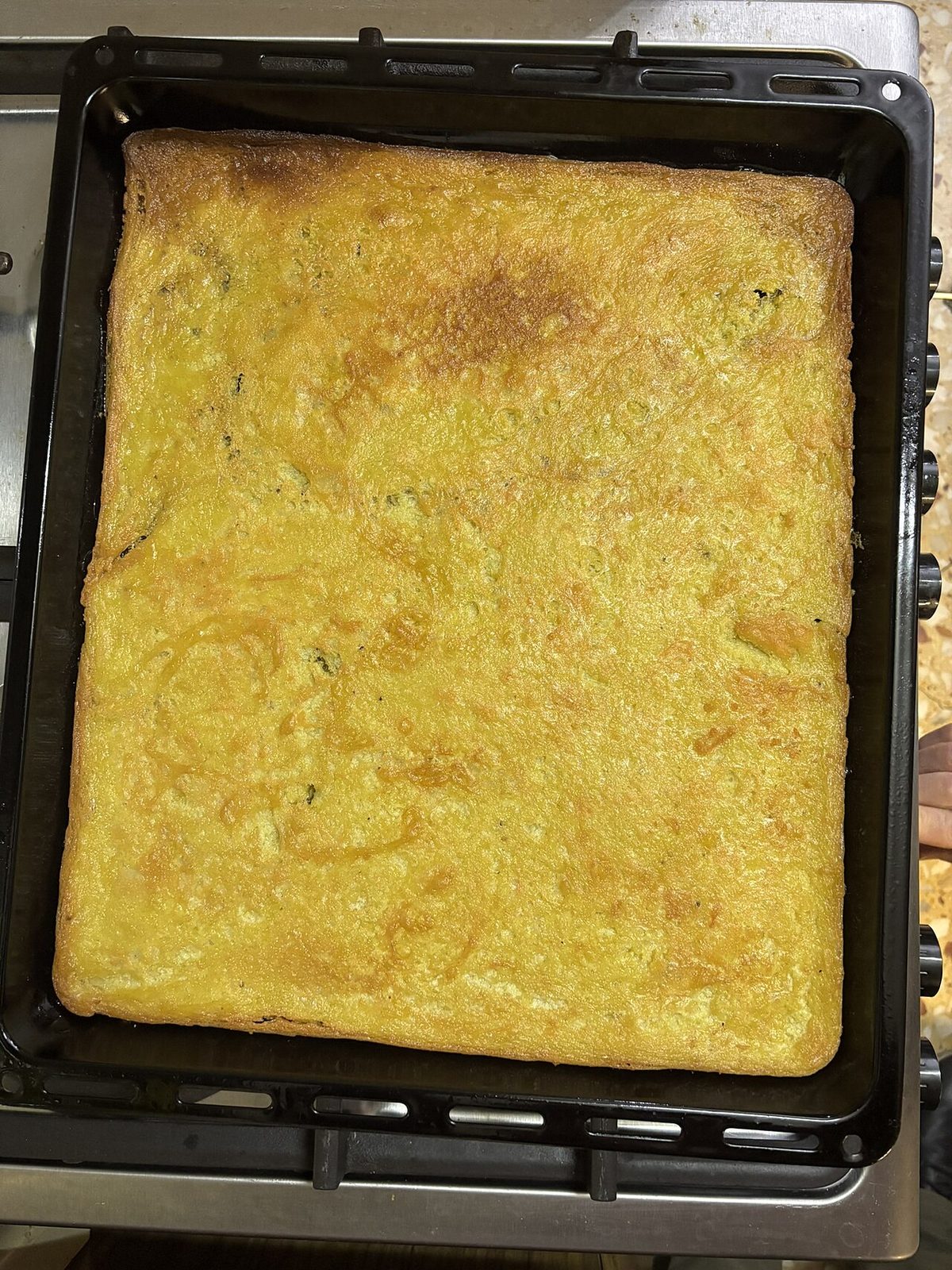
Uruguayan pizza is its own thing: often rectangular, cooked in wood ovens, sometimes sold by the meter. A plain pizza may arrive with just sauce; ask for muzza (mozzarella) if you want cheese, which you do. But the move that marks you as someone who knows the country is ordering fainá alongside. Fainá is a thin, peppery flatbread made from chickpea flour, baked golden — descended from Genoese farinata, and reportedly popularized in Uruguay after the Guido brothers opened a chickpea-flour mill in 1915. You lay a wedge of fainá on top of your pizza slice and eat the two together. That stack has a name: pizza a caballo, “pizza on horseback.” Cheap, odd, and completely addictive.
Ñoquis del 29 and the coins under the plate
Ñoquis — the Spanish spelling of gnocchi — are soft potato dumplings, and in Uruguay they come with a tradition. On the 29th of every month, families and restaurants serve gnocchi, and you are meant to place a banknote or coin under your plate before eating for good financial luck. The date is not random: the 29th is the lean stretch just before payday, when potatoes and flour were what people could afford. One legend ties it to Saint Pantaleon, who blessed a poor family that shared their gnocchi with him. Whatever the origin, on the 29th the pasta houses fill up. Try to be in one.
Filled pasta and the Caruso sauce
Ravioli, tortellini, cappelletti and cannelloni are all standard, and the sauces are where it gets local. Beyond tomato tuco and Bolognese, look for salsa Caruso, a Uruguayan invention: a hot cream sauce with ham, mushrooms, cheese and a meaty depth. It was created in a Montevideo restaurant in the 1950s and named for the tenor Enrico Caruso, who had toured the city decades earlier. Cappelletti a la Caruso is a national comfort dish. If you see it, order it once — it is rich enough that once may be plenty.
Snacks, street food and the savory bakery
Some of the most reliable eating in Uruguay happens between meals, from carts and bakery counters. This is also where vegetarians find the most to work with.
Empanadas are the universal snack — pastry turnovers, baked or fried, stuffed with seasoned beef (the classic criolla, with onion, egg and sometimes olives), ham and cheese, chicken, tuna, or spinach. They cost a dollar or two each and make a perfect cheap lunch on the move. Quality varies wildly; a good bakery’s empanadas are a different food from a gas-station tray.

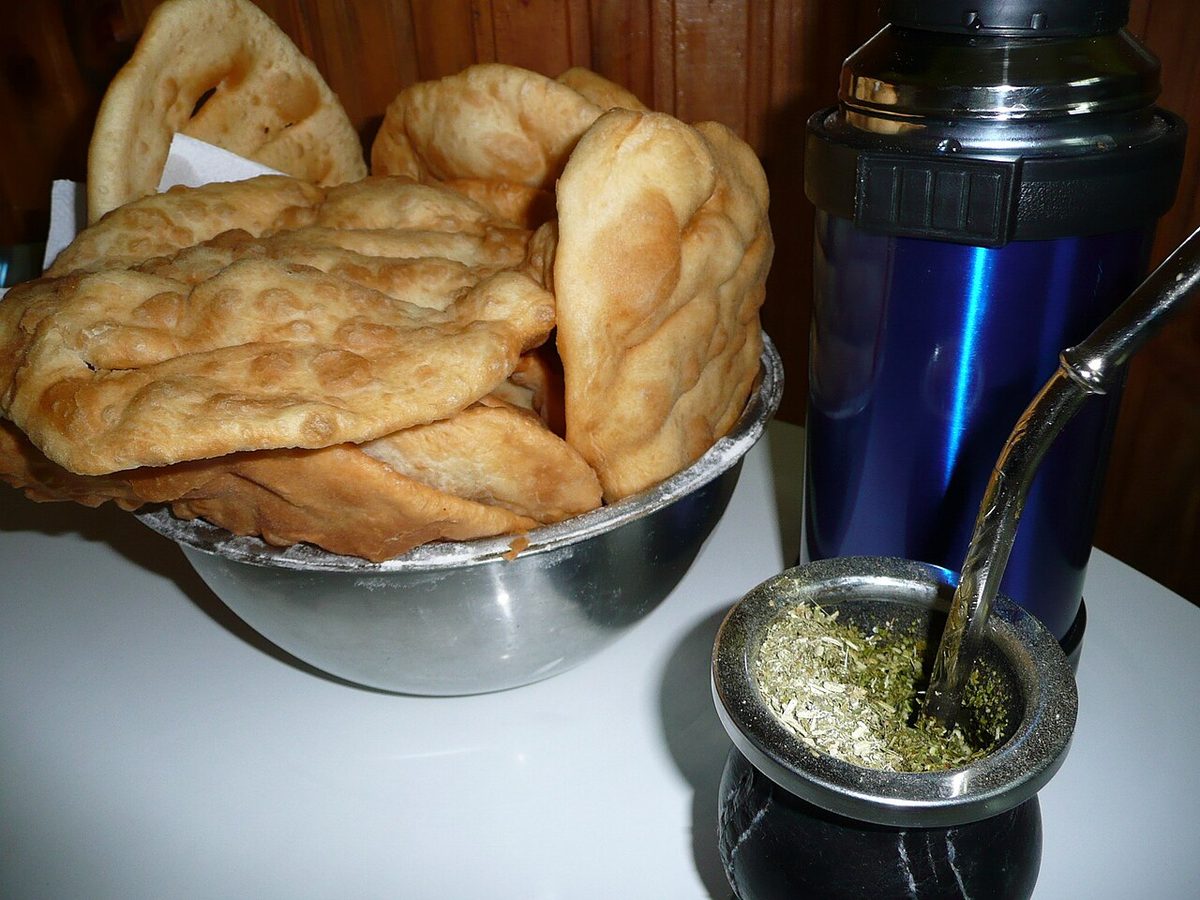
Tortas fritas are pure Uruguayan comfort. They are flat discs of fried dough, faintly salty, often dusted with sugar, and they appear on street corners the moment it starts to rain — there is a genuine cultural link between gray drizzle and the smell of frying dough. You eat them warm, ideally with mate. They cost almost nothing and they are, nutritionally, a catastrophe. Eat them anyway; this is one of the small joys of a rainy Montevideo afternoon.
The savory bakery also gives you tartas and the torta pascualina, a sturdy double-crust pie of spinach or chard bound with egg and cheese, with whole boiled eggs set inside so each slice shows a yolk. It is excellent cold, travels well, and is a vegetarian’s best friend at a roadside stop. A picada, meanwhile, is the grazing board you order with drinks: cubes of cheese, salami, olives, ham, maybe fainá or fried bites, designed to be picked at by a table over a bottle of wine.
Cheese, and the smaller plates
Uruguay quietly makes very good cheese, again thanks to immigrants — this time the Swiss who settled the Colonia region in the 19th century around towns like Nueva Helvecia. Their legacy is queso Colonia, the country’s most popular cheese: a semi-soft, mild cow’s-milk cheese with scattered round holes, aged a few months. It turns up sliced in sandwiches, melted on everything, and cubed on picada boards. It is not a dramatic cheese, but it is honest and everywhere, and it anchors one of Uruguay’s simplest desserts (more on that shortly).
For a vegetarian main at a parrilla — a place otherwise built entirely around animals — the order to know is morrón relleno, a roasted red pepper stuffed with cheese, sometimes ham and olives, melted on the grill. Ask for it sin jamón to keep it meatless. It is rarely printed on the menu but almost always available if you ask. That single tip will rescue more than one dinner.
The seafood nobody mentions
Here is the gap in almost every other Uruguayan food guide: the coast. Uruguay has hundreds of kilometers of Atlantic and Río de la Plata shoreline, and while the country is meat-obsessed, the seafood is real and worth seeking out — especially along the coast east of Montevideo and up into Rocha.
Look for corvina (a local croaker, the everyday white fish), brótola (a soft, sweet hake-like fish that is my pick for a simple grilled fillet), pejerrey (silverside), and mejillones (mussels), often done a la provenzal with garlic and parsley. In the fishing towns of Rocha — places like La Paloma and the lagoon villages — you can eat shrimp and fish that came in that morning. Montevideo’s Puertito del Buceo and the stalls around the port are good bets in the capital. A whole grilled fish with salad runs roughly $12–20 depending on the catch and the postcode.
The honest caveat: Uruguay is not a seafood destination the way it is a beef destination, and inland you should stick to the grill. But on the coast, ordering fish is a genuine relief from the daily tonnage of red meat, and locals do it constantly in summer.
The sweet stuff — and dulce de leche runs through all of it
Uruguay has a serious sweet tooth, and almost every dessert here passes through one ingredient: dulce de leche. It is milk and sugar cooked slowly until it caramelizes into a thick, glossy, golden-brown spread, somewhere between caramel and fudge. Uruguayans put it on toast, in cakes, inside pastries, between cookies, on pancakes, and frequently straight onto a spoon. Argentina and Uruguay have argued for a century over who invented it; both are right enough. There is even a World Dulce de Leche Day, on October 11. Buy a jar to take home — it costs a few dollars in any supermarket and it is the most portable taste of the country.

From there, the greatest hits:

Alfajores are two soft cookies sandwiched around dulce de leche, then coated — in dark or white chocolate, or rolled in coconut around the edge (the classic alfajor de maicena, made with cornstarch cookies). They are the national snack-aisle obsession, sold everywhere from gas stations to fancy chocolatiers, from under a dollar to a few dollars for an artisan one. Uruguayans eat them at breakfast, with coffee, on the beach, on the bus. Bring a stack home; they survive the trip.
Chajá is the country’s signature cake and, for once, a genuinely Uruguayan original. It was created in 1927 in the city of Paysandú by a baker named Orlando Castellano, and the recipe is still guarded. It layers soft sponge, crumbled meringue, whipped cream and peaches into something airy and barely sweet — a cousin of pavlova. It is named after a native bird whose ruffled feathers the dessert is said to resemble. You will find it slice by slice in cafés nationwide; the peach-and-cream version is the one to get.
Martín Fierro is minimalism: a slab of quince paste (dulce de membrillo) on a slab of cheese, usually queso Colonia. Sweet meets salty, done. Pasta frola is the lattice-topped tart filled with quince or dulce de leche, the standard thing to bring when someone invites you over. Arroz con leche (rice pudding, enriched here with egg yolks and dusted with cinnamon) is the homey one. Príncipe Humberto is a frozen supermarket dessert of Marie biscuits, meringue, cream and — of course — dulce de leche, weirdly specific and weirdly wonderful. And churros, the fried dough sticks, come filled with dulce de leche or chocolate; you will smell them before you see them.
For breakfast or merienda, the bakeries sell bizcochos, small flaky pastries that come sweet (filled with cream, jam or dulce de leche) or savory (with ham, cheese or made with pork fat, de grasa). A bag of bizcochos with a coffee or mate is the standard Uruguayan morning, and it is a good one.
What Uruguayans drink
Mate — the drink that is really a ritual
You will see it before you taste it: people walking, driving and working with a gourd in one hand and a thermos tucked under the arm. Mate (rhymes with “latte”) is an infusion of dried, ground yerba leaves steeped in hot water and drunk through a metal straw called a bombilla. Uruguay drinks more of it per person than any country on earth, which is funny given the yerba is all imported — the climate here does not grow it. It is bitter, grassy, mildly caffeinated, and an acquired taste. The point was never really the flavor. Mate is social glue.

Because it is shared, there is mate etiquette, and getting it wrong marks you instantly. A few rules that actually matter:
- One person, the cebador, pours and runs the mate. They drink the first, foamiest, often most bitter pour themselves — that is not them being greedy, that is them taking the rough one for the group.
- You drink the whole gourd when it is handed to you, then pass it back to the cebador, not to the next person. The cebador refills and serves the next drinker. It goes in a turn around the group.
- Do not stir or rearrange the bombilla. It is set the way it is on purpose; fiddling with it is a small faux pas.
- Only say “gracias” when you have had enough and want out of the rotation. Say it too early and you will be politely skipped from then on. Thank-you means “I’m done,” not “thanks for this round.”
- Sharing one straw is the entire point. Worrying about germs misses what mate is for — it is an act of trust and belonging.
As a traveler you usually will not be served mate in a restaurant; it is a home and street thing. But if a Uruguayan offers you a sip, accept it. You have just been let in.
Medio y medio, the easy classic
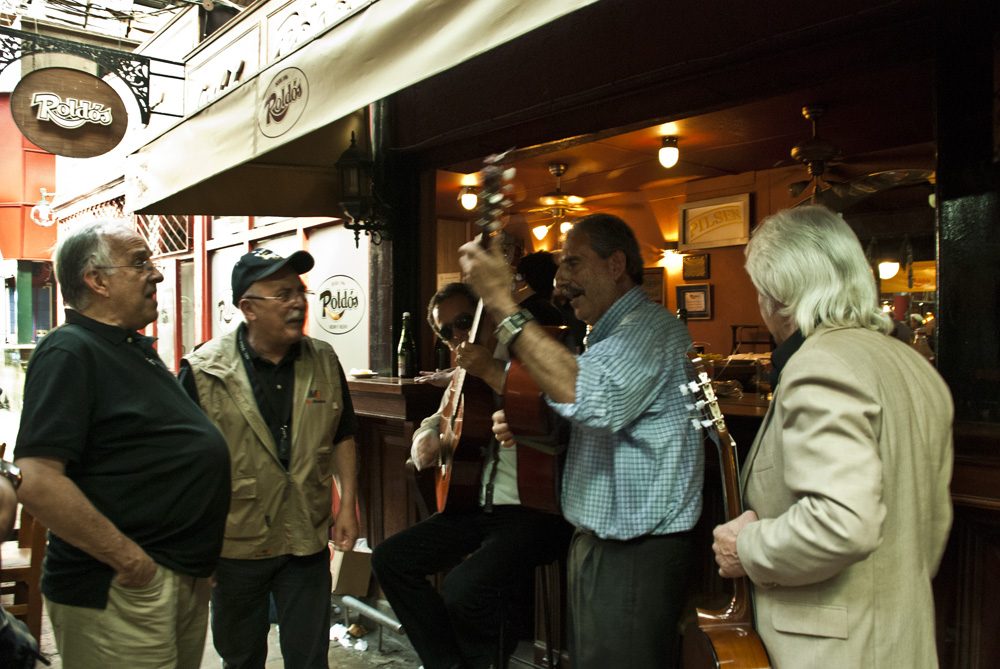
Medio y medio is half dry white wine and half sparkling white, poured together into a light, low-alcohol aperitif that goes down dangerously easily on a warm afternoon. Its spiritual home is Roldós, a stand inside Montevideo’s Mercado del Puerto that has been pouring it since 1886. A glass with a chivito or a plate off the grill is a near-perfect lunch.
Tannat and the wine country
Uruguay’s signature wine is Tannat, a dark, tannic, full-bodied red. The grape came from southwest France in the 1870s, carried over by Basque immigrant Pascual Harriague, and it took to the Uruguayan climate so well it became the national variety. Young Tannat can be fierce and astringent, so many producers soften it by blending or aging — but a good one, with a fatty cut of asado, is a real pairing. Most of the wineries sit in Canelones, a short drive from Montevideo, and many do tastings and lunches.
The rest of the bar
Beyond those, look for grappamiel (grappa sweetened with honey, a warming countryside digestif), caña (sugarcane spirit), and clericó, the summer wine-and-fruit punch served at celebrations. Uvita is a sweet local grape drink. Uruguay also has a young but growing craft-beer scene in Montevideo, and the everyday lagers — Pilsen and Patricia — do the job on a hot day. And then there is coffee culture: café con leche with a couple of bizcochos is the standard breakfast and afternoon pick-me-up.
Where and when to eat in Uruguay
Knowing the dishes is half of it. The other half is knowing the rhythm, because Uruguay runs on a later, slower clock than most visitors expect.
The eating schedule
Breakfast is small — coffee and a couple of bizcochos or a media luna (small croissant). Lunch lands around 1 to 3pm. The thing that catches travelers out is dinner: Uruguayans eat late, and many kitchens do not get going until 8:30 or 9pm, with locals rolling in at 9:30 or 10. Show up at 7:30 expecting a buzzing parrilla and you will get a near-empty room. Bridging the gap is merienda, the late-afternoon coffee-and-pastry (or mate-and-tortas-fritas) break around 5 to 6pm. Lean into it; it is one of the nicest habits here. For more on pacing a trip and day-to-day logistics, our Uruguay travel tips guide goes deeper on schedules, tipping and money.

Where to actually eat
A few categories cover most of your meals:
The parrilla. Every town has them, from white-tablecloth places to neighborhood joints with a wood fire and plastic chairs. The neighborhood ones are usually better value and just as good. In Montevideo, the famous spot is the Mercado del Puerto, an 1868 wrought-iron market hall in the old city packed with grill stalls under one soaring roof. It is the most atmospheric place in the country to eat asado — and also the most touristy and priciest, with mains running $20–40 and a beer around $7. Go once for the spectacle and the medio y medio at Roldós; eat your cheaper, better asados in the neighborhoods. The capital’s full range of restaurants is covered in our complete Montevideo guide.
Carritos. These are the street carts and food trucks — choripán, panchos, tortas fritas, sometimes whole burgers and chivitos. Montevideo’s coastal rambla and the parks are good hunting grounds. This is the cheapest honest eating in the country.
Ferias. The street markets, like Montevideo’s huge Sunday Feria de Tristán Narvaja, mix produce, street snacks and grilled food. Great for grazing and for buying yerba, cheese and dulce de leche to take home.
Confiterías and bakeries. For empanadas, bizcochos, alfajores, tartas and coffee. Open all day, ideal for filling the long gap before that 9pm dinner.
Prices, the cubierto and tipping
Uruguay is not a cheap country by South American standards — it is closer to European pricing, and the coast in summer (Punta del Este especially) is dear. Budget roughly $25–45 a head for a sit-down dinner with wine in a mid-range restaurant, much less if you live off carritos and bakeries. Two local quirks to expect on the bill: the cubierto, a small per-person cover charge (a dollar or two) for bread and table service, and tipping, which is modest — rounding up or leaving about 10% is generous and not strictly required. Many places now add the tip option to card machines.
If you are timing a trip around the best weather and lowest prices, our guide to the best time to visit Uruguay lines up seasons, crowds and costs.
Eating Uruguay by traveler type
For the meat lover and the foodie
You are in the right country. Build trips around long parrilla lunches, order the cuts you do not get at home (entraña, vacío, mollejas), and pair them with Tannat. Do a winery day in Canelones, and on the coast switch to a grilled fish for balance. The chivito is non-negotiable. Punta del Este, where the chivito was born, has both high-end dining and great casual grills — see our Punta del Este guide for where to point your appetite.
For vegetarians and vegans
Honest truth: Uruguay is hard work if you do not eat meat, especially outside Montevideo. But it is doable. Your reliable orders are the morrón relleno (stuffed grilled pepper, ask sin jamón), torta pascualina and other vegetable tartas, pizza and fainá, cheese-and-quince martín fierro, ñoquis and pasta with tomato or pesto, and the whole bakery world. Montevideo has a real and growing vegetarian and vegan restaurant scene; smaller towns will test your patience. Carry alfajores as emergency fuel.
For families
Easy. Kids here grow up on milanesa, pizza, pasta, panchos and dulce de leche, so children’s tastes are well covered, and restaurants are relaxed about late, loud, multi-generational tables — that is just how Uruguayans eat. Portions are large and shareable. The main adjustment is the late dinner clock; an early merienda keeps small kids from melting down before the 9pm rush.
For the budget traveler
Live off carritos, bakeries and the menú del día (the fixed-price lunch many restaurants run on weekdays, often a main plus a drink for a set price). Empanadas, choripán, pizza-by-the-slice with fainá, and a torta frita when it rains will keep you fed cheaply and well. Supermarket dulce de leche, queso Colonia and bread make a fine picnic. Self-catering near the coast and beaches stretches a budget a long way in summer.
Frequently asked questions about Uruguayan food
What is the national dish of Uruguay?
Asado, the wood-fired barbecue, is the closest thing to a national dish — it is the centerpiece of Sunday lunches and celebrations across the country. The chivito, a loaded steak sandwich, is the national sandwich and runs a very close second as the dish most associated with Uruguay.
Is Uruguayan food spicy?
No. Uruguayan cooking is savory and meat-forward but mild, built on beef, cheese, pasta and bread rather than chili heat. The closest thing to a kick is chimichurri, a garlic-and-herb sauce with at most a faint chili note. If you need real spice, bring your own or expect to go without.
What do Uruguayans eat for breakfast?
Breakfast is light: coffee or café con leche, or mate, with bizcochos (small flaky pastries) or toast with dulce de leche. It is the smallest meal of the day. The bigger eating happens at lunch, the late-afternoon merienda, and a notably late dinner that often starts at 9pm or later.
What is Uruguay’s national drink?
Mate, a shared infusion of yerba leaves drunk through a metal straw, is the national drink and a daily social ritual — Uruguayans consume more of it per capita than anyone. For alcohol, Tannat is the signature red wine, and medio y medio (half still, half sparkling white wine) is the classic café aperitif.
How much does food cost in Uruguay?
More than you might expect — prices sit closer to European than typical South American levels. A street choripán is $3–6, a chivito $10–20, and a mid-range sit-down dinner with wine runs roughly $25–45 a head. The coast in summer, especially Punta del Este, costs noticeably more.
Is Uruguayan food the same as Argentine food?
They overlap heavily — asado, chivito, dulce de leche, alfajores and mate are shared across the Río de la Plata. The differences are in the detail: Uruguayans grill over firewood rather than charcoal, claim the chivito as their own, and have a few originals like chajá and queso Colonia. Think close cousins, not twins.
What is the best food souvenir to bring home from Uruguay?
A jar of good dulce de leche, a box of alfajores, and a bag of yerba mate (the Canarias brand is the local favorite) travel well and cost only a few dollars each. A bottle of Tannat is worth the suitcase space if you have it. All are easy to find in any supermarket.
Final thoughts
The first reaction a lot of travelers have to Uruguayan food is a small shrug — no exotic spice, no long roster of indigenous dishes, a menu that looks like Italy and Spain had a beef-loving child. Give it a few days and the shrug turns into something warmer. This is a cuisine that does a handful of things at a very high level: it grills the best beef you will eat anywhere, it makes pasta with real conviction, it bakes and fries and caramelizes with a sweet tooth that never quits, and it turns a bitter green tea into the most generous social gesture in the country.
Eat the asado slowly. Order the chivito at least once. Put the fainá on your pizza, the coins under your gnocchi on the 29th, and the dulce de leche on everything. Accept the mate when it comes around, and remember not to say thank you until you mean it. Do that and you will not just have eaten in Uruguay — you will have been let in. For help building the rest of the trip around these meals, start with our guide to the best things to do in Uruguay and our Uruguay itinerary planner.
Credits & sources
Sources & further reading
- Uruguayan cuisine — Wikipedia, for background on dishes, influences and history.
- Guru’Guay: typical Uruguay foods, a long-running local English-language guide with pronunciation notes.
- Mercado del Puerto, Montevideo, the official site for the historic market and its parrillas.
Photo credits
All images are from Wikimedia Commons under Creative Commons licenses:
- Asado on the parrilla — Fadesga, CC BY-SA 4.0.
- Chivito canadiense — TitiNicola, CC BY-SA 4.0.
- Milanesa napolitana — Kimberly Vardeman, CC BY 2.0.
- Mate at the football — Vince Alongi, CC BY 2.0.
- Tortas fritas street cart, Montevideo — Fadesga, CC BY-SA 4.0.
- Dulce de leche — audinou (Paris), CC BY 2.0.
- Alfajor de maicena by the sea — Anina2007, CC BY-SA 2.0.
- Mercado del Puerto, Montevideo — Felipe Restrepo Acosta, CC BY-SA 4.0.
About Uruguay Tourism Guide. We are an independent guide to Uruguay, not a tourist board or a booking agent. Everything here comes from first-hand research on the ground — eating the chivitos, standing at the carritos in the rain, and getting the mate etiquette wrong so you do not have to. Prices and details change, so double-check anything time-sensitive before you travel, and tell us when something has moved on.
2 comments