Asado in Uruguay: Fire, Beef & the Best Parrillas (2026)
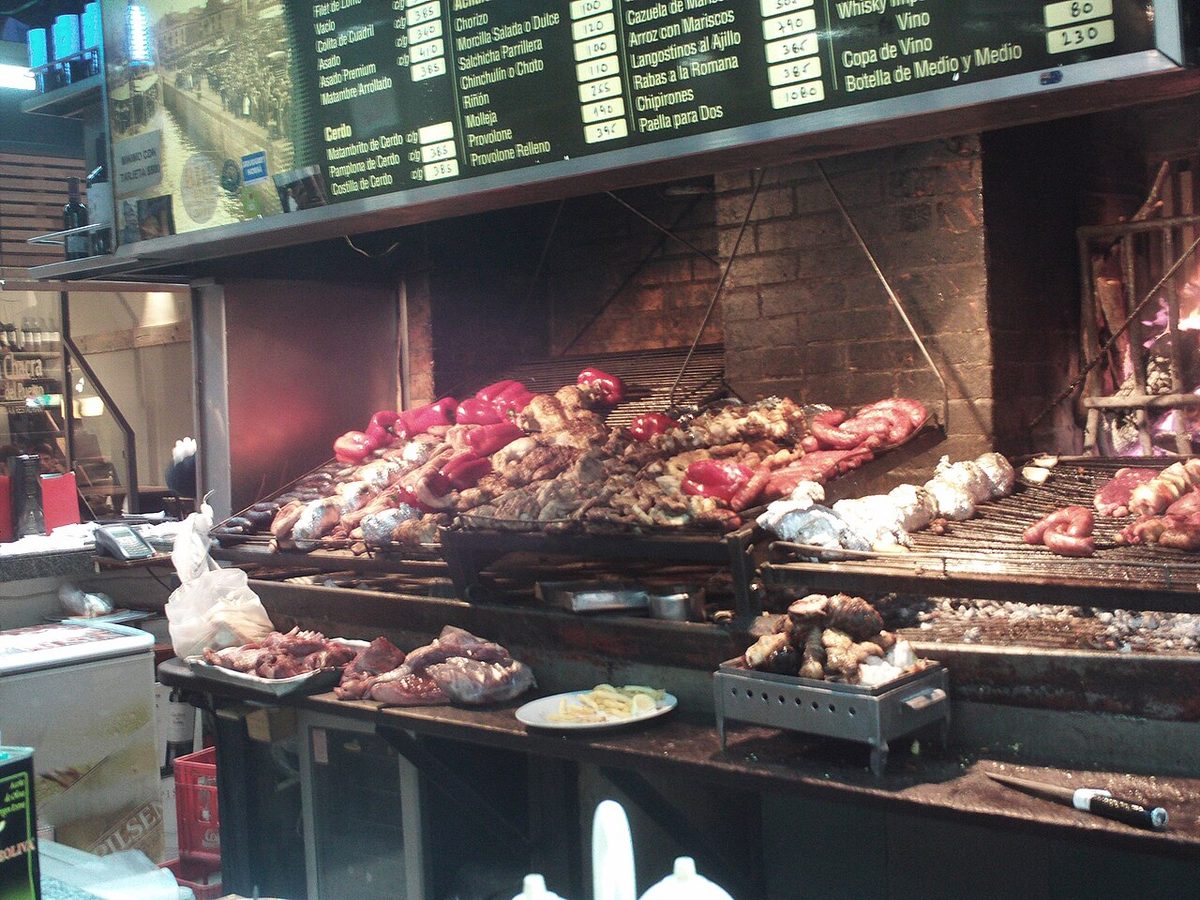
The first time I understood Uruguayan asado, I was standing in a backyard in Carrasco at four in the afternoon, holding a glass of warm Tannat, watching a man feed split eucalyptus logs into a brick hearth. Lunch had been promised for one. It was now nearly four, nothing had been served except a plate of cheese and salami, and nobody seemed remotely concerned.
That is the thing nobody tells you. The fire is the event. The meat is almost incidental.
I have eaten asado in Montevideo basements, on a windswept estancia in Lavalleja, at a chaotic parrilla in the Mercado del Puerto, and on a beach near Punta del Este where the asador kept losing his fire to the wind and refusing all help. Every time, the lesson was the same: slow down, shut up, and let the smoke do its work.
Uruguayan asado is the country’s wood-fired beef ritual — meat cooked slowly over embers from burning lena (firewood, usually eucalyptus), seasoned with little more than coarse salt, and served in stages over several hours. It is not “barbecue” in any quick, saucy sense. The grill, called a parrilla, sits at the center of a social gathering that is the real reason everyone is there.
This guide covers what asado actually means as a ritual, the fire and the role of the asador (grill master), the cuts you’ll meet on a Uruguayan parrilla, how a proper asado unfolds from first sausage to last rib, where to eat it as a traveler in Montevideo and on the coast, the estancia version out in gaucho country, and the eternal Uruguay-versus-Argentina argument. I’ll also tell you the one honest drawback of each, because a guide that loves everything is useless.
If you only skim one thing, make it this table. It’s the cuts cheat sheet I wish I’d had on my first parrilla menu, when I ordered three kilos of meat for two people and limped out defeated.
| Cut (Spanish) | What it is | When it’s served / who it’s for |
|---|---|---|
| Chorizo / morcilla | Pork sausage / blood sausage | First, with the achuras. Safe starting point for everyone. |
| Mollejas | Sweetbreads (thymus gland) | Early. Buttery, crisp-edged, the connoisseur’s pick. |
| Chinchulines | Small intestine, coiled and grilled | Early. Chewy-crisp. The bravest item on the table. |
| Asado de tira | Short ribs cut across the bone | The main event. Order this if you order one thing. |
| Vacio | Flank with a fat cap | Mid-meal. Juicy, deeply beefy, slow-cooked. |
| Entrana | Skirt steak, thin and intense | Cooks fast, vanishes faster. Great to share. |
| Pamplona | Rolled, stuffed chicken or pork | A genuinely Uruguayan creation. More on this below. |
What asado actually is (and why “barbecue” misses it)
Call it a barbecue to a Uruguayan and you’ll get a patient, slightly pained smile. The word translates, but the concept doesn’t. A barbecue, in the North American sense, is often a fast event: light the coals, slap on burgers, eat in an hour. Asado is the opposite of fast.
Roots run back to the gauchos, the cattle horsemen who worked Uruguay’s grasslands in the 1700s and 1800s. They cooked beef on iron crosses staked beside open fires, salted it, and ate it with a knife. That image — meat, fire, open sky — is still the emotional core of asado today, even when it happens in a tiled city courtyard.
Here’s the context that makes it make sense. Uruguay is a country of grass and cows. Roughly 80% of the land is grazing pasture, and cattle outnumber people by something like three or four to one. Beef isn’t a treat here; it’s the default. In 2024, Uruguayans ate close to 100 kilos of meat per person, with beef alone around 48 kilos a head, among the very highest rates on earth. Asado is simply how a cattle country eats together.
The fire: lena, not charcoal (the rule that defines uruguayan asado)
If you remember one technical detail about uruguayan asado, make it this: it’s cooked over firewood, not charcoal. Uruguayans burn split logs — usually eucalyptus in the cities, sometimes native hardwoods in the countryside — down to glowing embers, then rake those embers under the grill. Lena is the Spanish word for firewood, and you’ll hear it spoken with reverence.
Why does it matter? Wood gives a smoke and a flavor that charcoal can’t, and it forces a slower, more attentive rhythm. Charcoal is predictable and quick. A wood fire is alive: it flares, dies, needs feeding, and demands that someone manage heat across the grill like a chess game. That someone is the asador.
The asador is the grill master, and the role is close to sacred. One person owns the fire for the entire event. They decide when the embers are ready, which cut goes on first, when to rake more heat under the ribs, and when the meat is done — by touch and instinct, never by stabbing it with a knife to peek. Offering to help the asador, unless you’re family or explicitly invited, is a small social trespass. Bring them a drink instead.
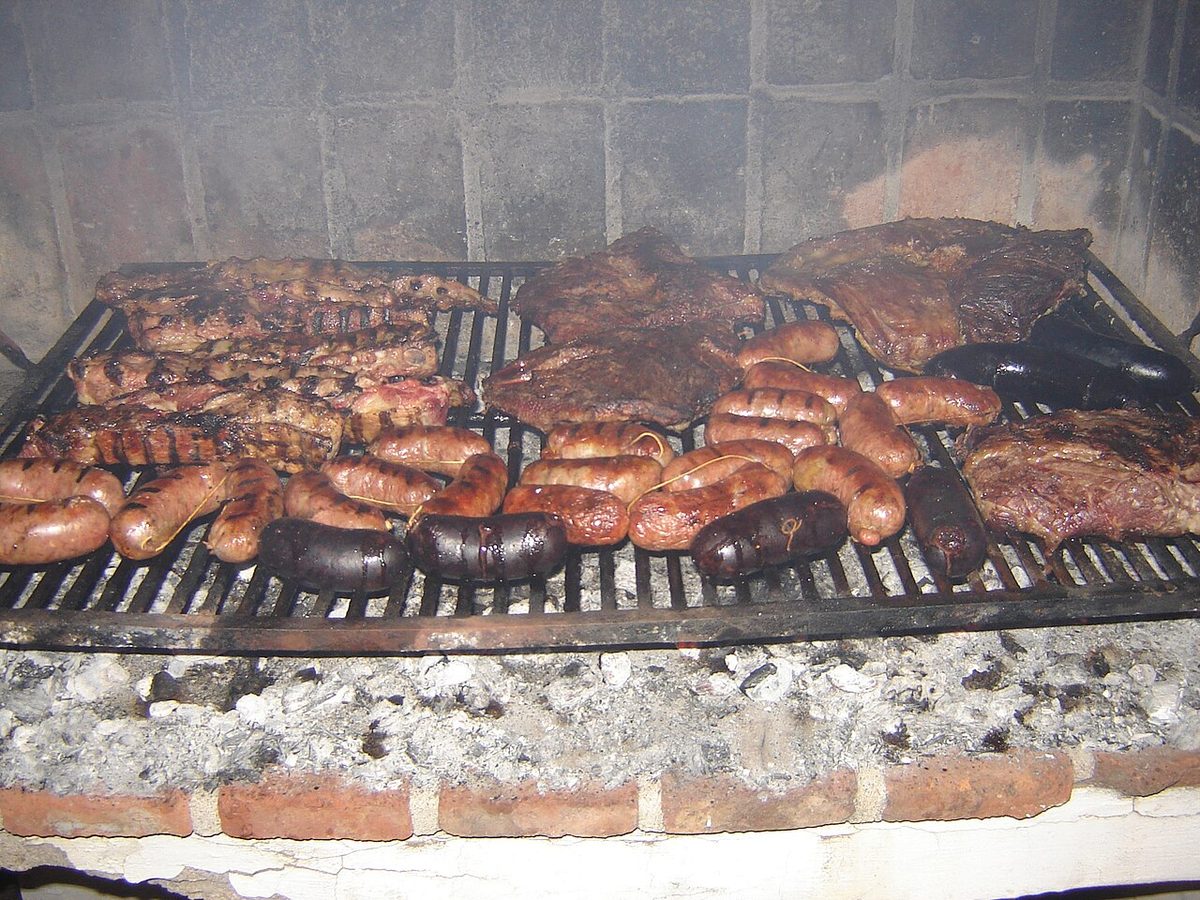
One honest caveat: plenty of high-volume city parrillas now use a charcoal-and-gas assist to get fires going faster, or run charcoal entirely at peak service. It’s not a scandal, and the food can still be excellent. But if you want the real wood-fired flavor, pick a place where you can actually see the log fire and the ember pit. Ask. A good parrilla is proud of its lena.
The cuts and the achuras: what’s actually on the grill
A Uruguayan parrilla menu can read like a foreign-language exam. Worse, the cuts don’t map neatly onto English butchery, so the translations on tourist menus are often wrong or vague. Learn a handful of names and you’ll order like someone who belongs there.
The meal usually opens with achuras — the sausages and offal that cook quickly and buy time while the big cuts render. This is where travelers either light up or quietly panic.
The achuras (sausages and offal)
Three to know. Chorizo is a fresh pork sausage, often tucked into bread as a choripan — the single best thing to eat while you wait. Morcilla is blood sausage, soft, rich, faintly sweet; better than it sounds, I promise. And chinchulines are small intestine, cleaned and coiled, grilled until chewy and crisp at the edges. The chinchulines are the bravery test. Texture, not flavor, is what trips most visitors.
Then there are mollejas — sweetbreads, the thymus gland of the calf. Don’t let the description scare you. Done right, mollejas are creamy inside, lacy and crisp outside, and they taste nothing like what they are. They’re the most prized item on most tables and usually the first thing a serious asador lays on the fire. If you try one new thing at your first asado, make it the mollejas.
The beef
Asado de tira is the headliner: beef short ribs cut across the bone into long strips. Cooked low and slow, the meat closest to the bone goes deep and savory, and you gnaw the last shreds straight off. If you order a single beef cut, order this one. Vacio is the flank, slow-cooked with its fat cap intact until it’s juicy and intensely beefy. Entrana is skirt steak — thin, fast-cooking, and so good it disappears from the table in minutes.
Uruguayan beef is overwhelmingly grass-fed, so expect a leaner, more mineral, more “country” flavor than the heavily marbled grain-fed steak you might know from a US steakhouse. Less even marbling, more genuine beefiness. That’s the style, not a defect — and it’s a big part of why people argue Uruguay’s beef is among the best anywhere.
Pamplona: the cut that’s actually Uruguayan
Most asado cuts are shared across the River Plate, but pamplona is one Uruguayans claim as their own. It’s a deboned chicken or pork fillet, rolled around ham, cheese, and red pepper, bound into a fat sausage shape and grilled whole until the inside melts. The dish was born on Uruguayan grills, and Punta del Este has run a National Chivito and Pamplona Festival celebrating it since 2013.
Pamplona is the friendly entry point for anyone unsure about offal or unfamiliar cuts. It’s familiar flavors — chicken, ham, cheese — in an unfamiliar, delicious format. If you’re traveling with kids or a skeptical eater, this is your peace offering. For more on the wider food scene it belongs to, our guide to Uruguayan food and the dishes you have to try puts asado in its full context.
How a real asado unfolds: timing, picada, and the order of cuts
A home asado is not a meal with a start time. It’s a sequence, and understanding the sequence is what separates a relaxed guest from a confused one checking their watch.
People arrive, greet, and pour something to drink. The asador lights the fire and starts building embers — this alone can take 45 minutes to an hour. Nobody rushes it. While the wood burns down, out comes the picada: a shared board of cheese, salami, olives, maybe some provoleta (a thick disc of grilled provolone-style cheese, melty and blistered). The picada is the holding pattern. Graze, talk, drink, repeat.
Then the food arrives in waves. First the achuras — chorizo, morcilla, mollejas, chinchulines — because they cook fastest. You eat standing up, off small plates, in no particular hurry. Later, the big beef cuts come off the grill: asado de tira, vacio, entrana, whatever the asador chose. Bread, simple salads, and roasted peppers fill the table. If you grew up with everyone sitting down to a single plated meal, this feels like delicious chaos. It’s meant to.
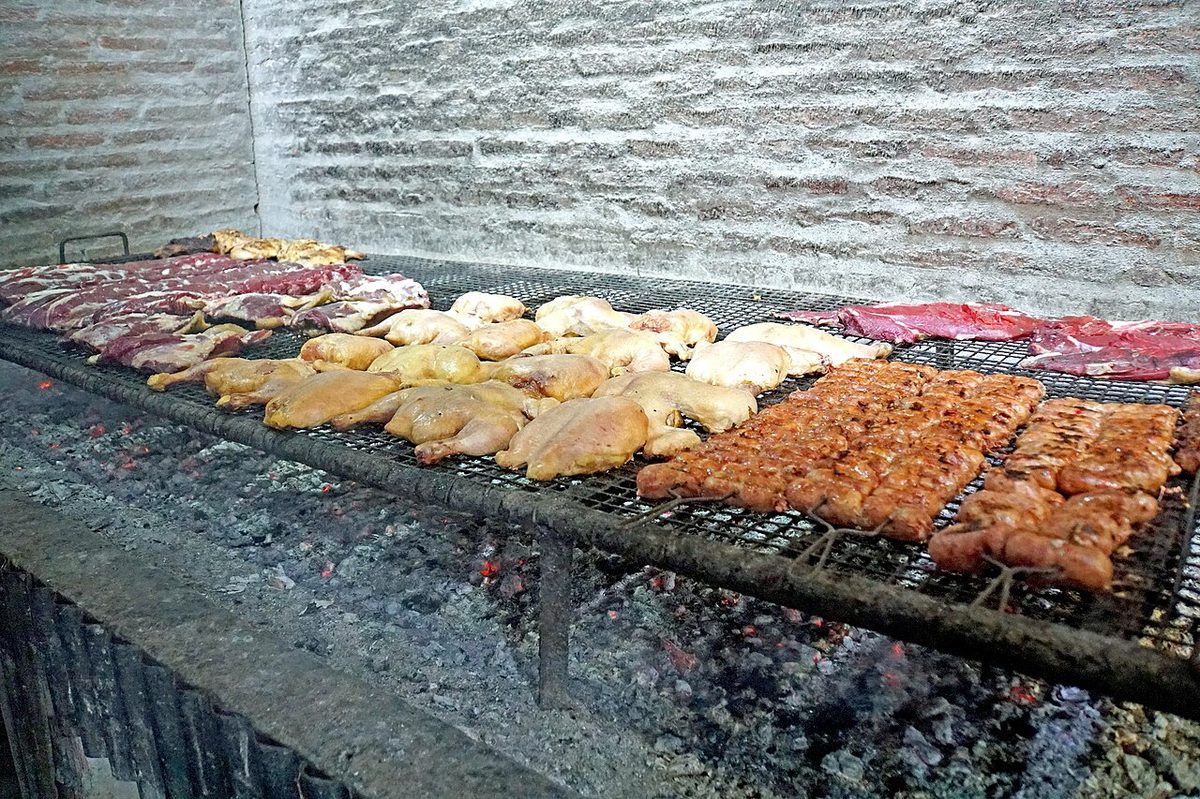
Expect the whole thing to run three to five hours. A “one o’clock” asado might see the first serious beef hit your plate at half past two or three. This is not disorganization. It’s the point. The long arc of the afternoon is the gift.
Seasoning: the “don’t ruin it” philosophy
Traditional seasoning is coarse salt — sal gruesa — and basically nothing else. No marinades, no rubs, no sticky glaze. The whole idea is to taste beef and smoke, not a spice cabinet. Salt usually goes on just before or during grilling, not hours ahead.
You’ll still find chimichurri (a loose herb sauce of parsley, garlic, oregano, oil, and vinegar) and salsa criolla (chopped tomato, onion, and pepper in vinegar) on the table. Treat them as light accents, not the main act. My advice: take your first bite of a great cut with salt alone. Add a little chimichurri to the second. If you drown good grass-fed beef in vinegar, all you’ll taste is the vinegar, and you’ll have wasted something special.
If you get invited to a home asado: the unspoken rules
Being invited to a Uruguayan home asado is a genuine compliment. Uruguayans can be reserved with strangers, so an invitation usually means they’ve decided they like you. The rules, though, are unwritten, and travelers trip over them constantly.
Bring something. Wine — Tannat is the natural choice — or beer, bread, or dessert. Ask the host what’s needed. Don’t touch the grill tools unless you’re invited to; the fire belongs to the asador. Expect a late, loose start and pace yourself across the rounds rather than loading one giant plate. A single sincere compliment to the asador (“esta barbaro” — “it’s great”) lands better than effusive praise. And if you don’t eat meat, or won’t try offal, say so quietly and early, not with a speech at the table. Eat the bread and salad, try one new thing, and you’ll be remembered fondly.
Where to eat uruguayan asado as a traveler
Not everyone scores a home invitation, and you don’t need one. Uruguay’s parrillas — the grill restaurants that are the public face of asado — range from chaotic tourist halls to quiet neighborhood spots where the asador has worked the same fire for thirty years. Here’s how to choose well.
Mercado del Puerto, Montevideo
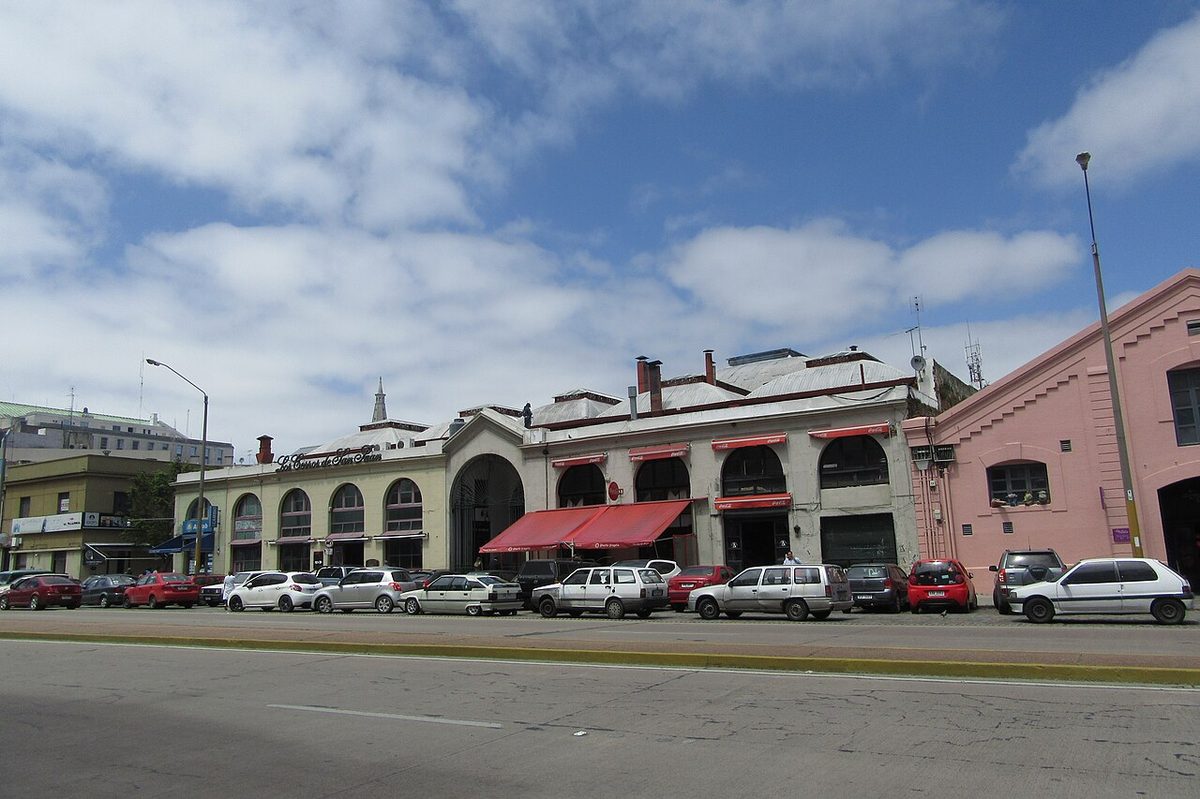
This is the postcard. A grand 1868 iron market hall in Ciudad Vieja, packed with a dozen-odd parrillas all firing at once, the air thick with eucalyptus smoke and the clatter of grills. It is loud, theatrical, and genuinely fun to do once. Watching the asadores work the open grills, drink in hand, is a Montevideo rite of passage.
The honest drawback: quality varies a lot stall to stall, and prices run higher than a neighborhood parrilla for the same food. It’s also crowded enough that pickpockets work the room — keep your phone in a front pocket. Check the menu before you sit, and don’t be shy about comparing a couple of stalls. I dig into the whole experience in my guide to the Mercado del Puerto, Montevideo’s cathedral of beef. Go hungry, go around midday, and treat it as a spectacle as much as a meal.
Montevideo’s neighborhood parrillas
Beyond the market, Montevideo’s real asado happens in barrio parrillas where locals actually eat. Long-running classics, polished mid-range rooms, and a few genuinely high-end grills all coexist. The pattern that matters more than any single name: a visible wood fire, a patient asador, and a menu that lets you order a half portion (media porcion) so two people can share a starter and one great cut without ordering an entire cow.
Prices have climbed — Uruguay is not cheap by South American standards, and a parrilla dinner is one of the places you feel it. A solid mid-range meal for two with a starter, a shared main, sides, and a glass of wine often lands somewhere in the 2,000 to 4,000 peso range, depending heavily on the cut and the wine. For specific recommendations on where locals go, see my roundup of the best restaurants in Montevideo, and if you want to understand the city around the table, the full Montevideo travel guide sets it up.
Punta del Este and the coast
On the coast, asado goes a little more upscale, especially in season. Punta del Este and chic Jose Ignacio have parrillas that plate grass-fed beef with a glossier touch and beach-resort prices to match. The food can be superb; the bill, in January high season, can be eye-watering. My guide to the best restaurants in Punta del Este covers where the asado is worth the splurge. Over in Colonia del Sacramento, the parrillas are simpler and cheaper, and a riverside asado at sunset there is one of my quiet favorites.
One drawback worth flagging for coastal asado: in peak summer, the best places book out and service slows to a crawl. Reserve ahead, or eat your big asado on a weekday rather than a packed Saturday night.
Asado at an estancia: the countryside version
If you want asado in its original setting — open sky, grass to the horizon, a fire that’s been someone’s job for generations — head to an estancia, a working cattle ranch. Many offer a dia de campo, a “day in the country” that bundles an asado lunch with horseback riding and gaucho demonstrations. The most accessible ones for travelers sit in Maldonado, Lavalleja, and Colonia departments, all within reasonable reach of the main tourist hubs and an easy day trip or overnight.
Out here, asado is the real thing: native wood, an unhurried gaucho asador, beef that often came from the very fields you can see. Served with homemade bread, simple salads, and local wine, eaten at a long table with strangers who won’t be strangers by dessert. It’s the most complete version of the ritual you can buy access to. My full guide to Uruguay’s estancias and gaucho country walks through how to pick and book one.
The honest drawback: a polished tourist dia de campo can feel a touch staged, and the better working estancias often require a night’s stay and a fair drive. If you only have a city break, you may not reach one — in which case a good Montevideo parrilla is a perfectly honorable substitute.
Uruguay vs Argentina: whose asado is it anyway?
Bring up asado anywhere near the River Plate and you’ve started a fight that will outlive you. Both countries are besotted with grilled beef, both trace it to the same gaucho roots, and both will insist, with total sincerity, that theirs is the authentic article. As someone who’s eaten plenty on both sides, here’s the honest breakdown.
Argentina is bigger, louder, and globally famous; “Argentine asado” is the version most foreigners have heard of. Uruguay is smaller and quieter about it, which is exactly why visitors so often arrive thinking Uruguayan asado is just Argentina’s with a different flag. It isn’t, and the differences are real.
The clearest one is fuel. Uruguay leans hard on firewood — lena, that eucalyptus smoke — while a lot of Argentine grilling, especially in the cities, runs on charcoal or burns hardwood down to coals. Uruguayans treat the wood fire as non-negotiable. Then there’s pamplona, the rolled stuffed cut Uruguay invented and Argentina mostly borrowed. Uruguayans also reach more often for grilled pork and for salsa criolla alongside the salt-only purism. The numbers fuel the pride too: depending on the year, Uruguay and Argentina trade the title of world’s top beef consumer, both hovering near 48 to 51 kilos a head, neck and neck at the very top of the planet.
My genuinely held opinion, which will annoy people in Buenos Aires: Uruguay’s wood-fired, grass-fed asado has a cleaner, more honest smoke flavor, and the smaller scale means fewer industrial tourist traps per capita. If you’re weighing the two countries as a trip rather than a meal, I lay out the wider case in Uruguay vs Argentina: which should you visit? For now: don’t pick a winner out loud at a Uruguayan table. Just eat, and quietly form your own view.
How to experience asado without a local host
You came to eat asado, you don’t know anyone with a backyard fire, and you’ve got limited days. Entirely solvable. Here’s how I’d play it by traveler type.
If you have one night in Montevideo
Skip the agonizing and do the Mercado del Puerto at lunch for the spectacle, then a proper neighborhood parrilla for dinner where you can taste the difference. Order a provoleta to share, one asado de tira (a half portion if it’s just two of you), a simple salad, and a glass of Tannat. That single sequence teaches you most of what asado is.
If you’re on a budget
Eat a choripan from a street or market grill — it’s a few hundred pesos, it’s delicious, and it’s authentically asado. For a sit-down meal, order one excellent cut to share with bread and salad rather than a giant mixed parrillada you can’t finish. My notes on what Uruguay is known for explain why beef this good is so woven into daily life here.
If you want the full ritual
Book a dia de campo at an estancia in Lavalleja or Maldonado, ideally with an overnight. You’ll get the fire, the open country, the gaucho asador, and the long table — the complete version, not the city compression of it.
What to drink with it
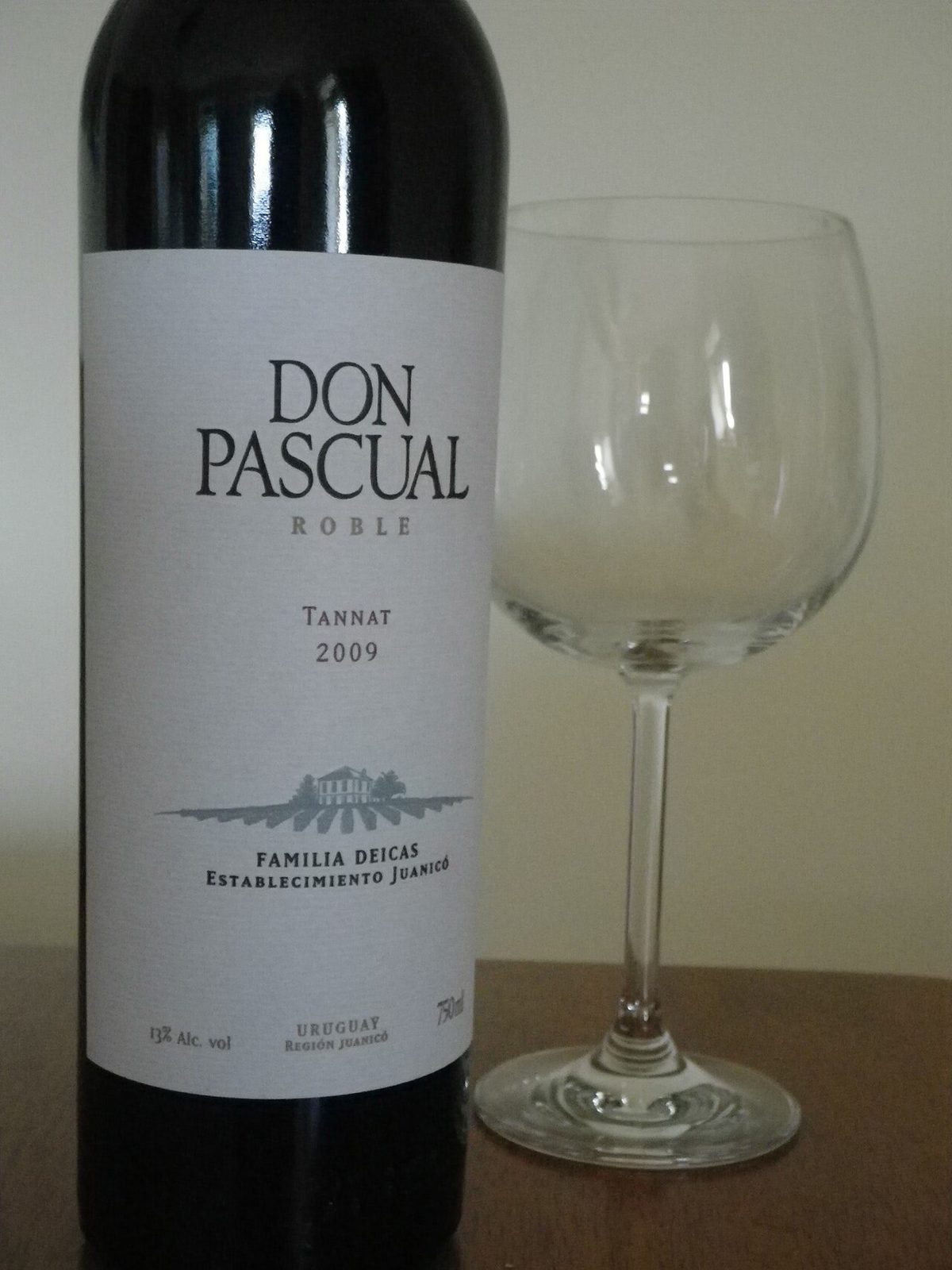
Tannat. Uruguay’s signature red is high in tannin, which is precisely what cuts through fat and stands up to smoke. It is not a coincidence that the national grape pairs perfectly with the national meal. If wine is part of your trip, the Uruguay wine country guide covers Tannat and the wineries worth visiting, several an easy hop from Montevideo.
And if you’d rather build a whole eating itinerary around it, asado’s natural partner is the chivito, Uruguay’s national sandwich — a steak-and-everything monster that’s the country’s other great beef obsession. Do both in one trip and you’ll understand Uruguay better than any monument could teach you.
Uruguayan asado: your questions answered
What is the difference between Uruguayan asado and Argentine asado?
The headline difference is fuel and rhythm. Uruguayan asado is traditionally cooked over firewood (lena), usually eucalyptus, where much Argentine grilling uses charcoal. Uruguay also claims pamplona, the rolled stuffed cut, leans more on grilled pork, and uses salsa criolla more freely. Both seasons with little but coarse salt and serve the meal in stages, starting with achuras.
Is it safe to eat mollejas, chinchulines, and other achuras?
In reputable parrillas, yes. Achuras are everyday food here and should arrive fully cooked and piping hot. The real obstacle is personal taste and texture, not safety. If you’re unsure, start with chorizo and mollejas (the gateway offal — creamy and mild), and leave chinchulines for when you’re feeling brave. Avoid any place that looks rushed or unclean.
How much meat should I order per person?
For a full home asado, around 400 to 500 grams of meat per person is the rule of thumb, including achuras and bread. In restaurants, portions run large and sharing is normal, so order fewer items than you think you need. Most parrillas will do a media porcion (half portion), which lets two people taste more cuts without waste.
What time do Uruguayans eat asado?
Late, by many travelers’ standards. A family lunch asado often starts in the early afternoon and stretches for hours. Dinner asado runs even later — many parrillas don’t fill up until 9:30 or 10pm, especially Thursday to Saturday. Show up at 7:30 and you’ll likely get a table easily, but the room will feel quiet.
Can vegetarians survive an asado?
Mostly, with managed expectations. There’s almost always bread, salad, roasted peppers, baked potato, and often provoleta (grilled cheese), so you won’t starve. But asado is meat-first culture, and dedicated vegetarian options are limited at traditional parrillas. Say you’re vegetarian early and quietly. Cities are improving fast; rural estancias, less so.
Do I tip at a parrilla in Uruguay?
Tipping is modest and not heavily expected. Around 10% for good table service is generous and appreciated, but it’s not the rigid obligation it is in North America. Check whether a cubierto (cover charge for bread and table service) is already on the bill before adding more. Carry some cash, since smaller or older parrillas sometimes prefer it.
Final thoughts
Asado rewards patience more than appetite. The travelers who love it most aren’t the ones who eat the most meat; they’re the ones who relax into the long afternoon, accept that the fire runs on its own clock, and understand that the gathering is the dish and the beef is just how it’s served.
Do it twice if you can. Once at the Mercado del Puerto or a good city parrilla for the food and the theater, and once, if the trip allows, at an estancia for the full open-sky ritual. Bring a bottle of Tannat, go genuinely hungry, give the asador room to work, and try the mollejas. That’s the whole game.
It won’t be the cheapest meal of your trip, and it won’t be the fastest. But months later, when the museums have blurred together, you’ll still remember the smell of eucalyptus smoke and the moment the first rib came off the fire.
Credits & sources
Sources & further reading
- Asado — Wikipedia: background on the dish, its gaucho origins, and regional variations across the River Plate.
- Pamplona (dish) — Wikipedia: on the rolled, stuffed cut Uruguay claims as its own.
- MercoPress: Uruguay’s 2024 meat-consumption figures, via the National Meat Institute (INAC).
Photo credits
All images via Wikimedia Commons: Uruguayan Asado Parrilla Fire by Ypsilon from Finland (CC0); Asador Grilling Asado De Tira by Gdiaz (CC BY-SA 3.0); Choripan Chorizo Sausage Parrilla by Dennis G. Jarvis (CC BY-SA 2.0); Mercado Del Puerto Montevideo Parrilla by Felipe Restrepo Acosta (CC BY-SA 4.0); Tannat Wine Asado Pairing Uruguay by Bonvol (CC BY-SA 3.0).
1 comment