The Chivito: Uruguay’s Glorious National Sandwich (2026)
The first chivito I ever ate defeated me. I was sitting at a scarred wooden table in Montevideo, smug, hungry, certain that I could finish anything put in front of me. Then the plate arrived and I understood that I had badly misjudged the situation.
It was the size of a paperback book. Steak, ham, cheese, bacon, a fried egg sliding around on top, a city of fries on the side. I made it about two-thirds of the way and surrendered. The waiter took the plate away with a small, knowing smile I have since seen on the face of every Uruguayan who watches a tourist meet their first chivito.
I have eaten dozens since. I have opinions now. Here is everything I wish someone had told me before that first humbling lunch.
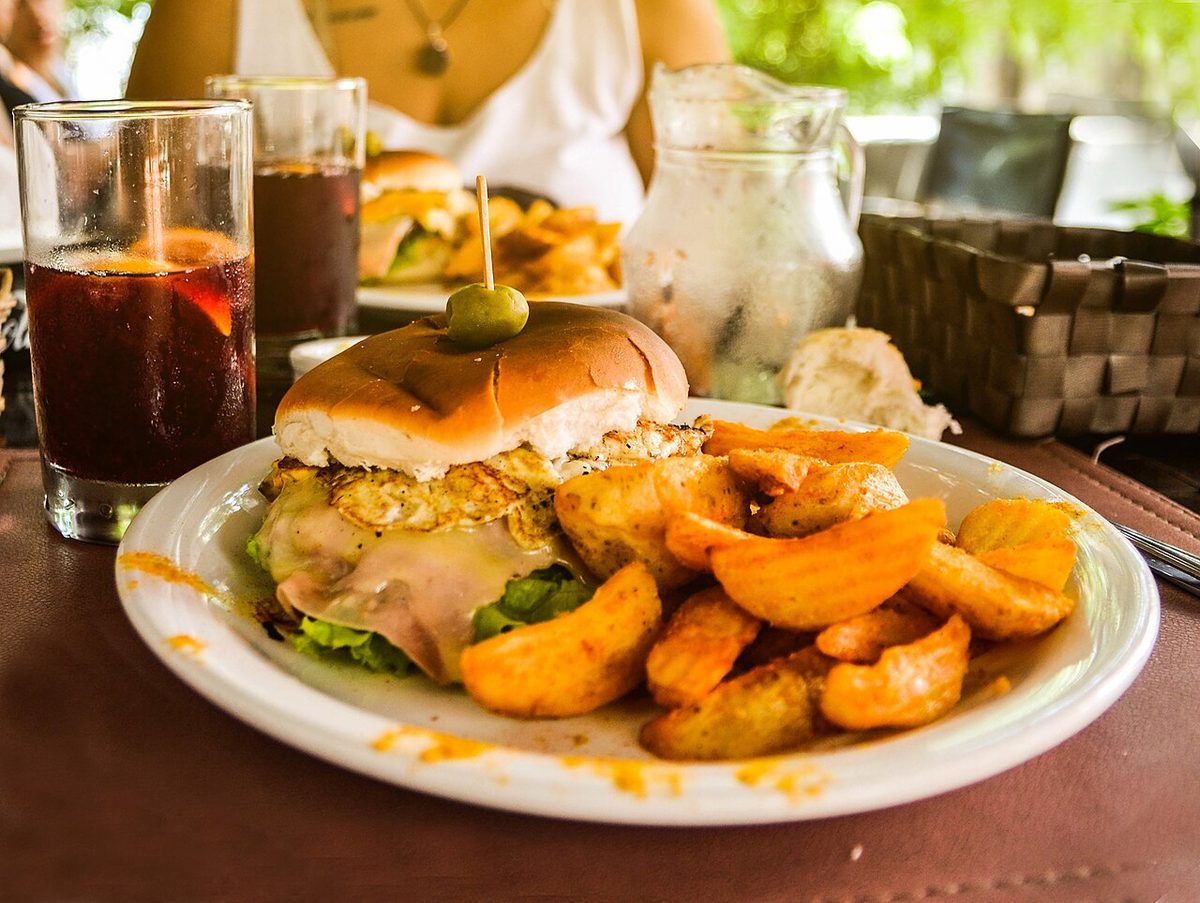
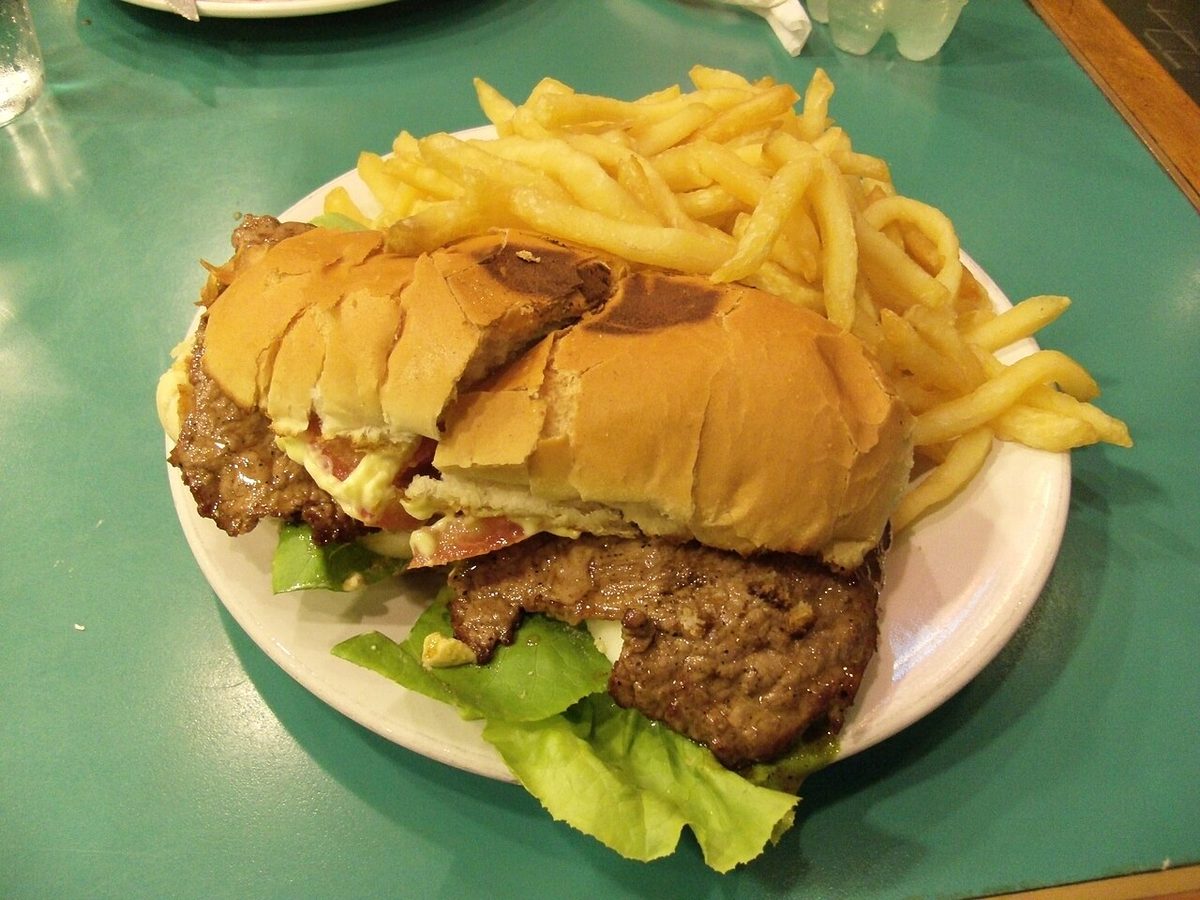
A chivito (pronounced chee-VEE-toh) is Uruguay’s national sandwich: a thin, tender slice of grilled beef tenderloin layered with ham, melted mozzarella, bacon, a fried or boiled egg, lettuce, tomato, olives and mayonnaise, all stacked inside a soft warmed roll. It is the country’s answer to the hamburger, and once you have had a good one, a plain burger feels a little lonely. You will find it everywhere, from highway truck stops to white-tablecloth restaurants on the coast.
This guide is for travelers, not cooks. If you want to know what a chivito actually is, where the strange goat name comes from, how to tell a chivito al pan from a chivito al plato, where to eat a genuinely good one, and roughly what you should expect to pay, you are in the right place. For the wider context, this is one of the cornerstones of Uruguayan food as a whole, alongside the country’s beef obsession and its quieter rituals.
One quick gloss before we go further, because I will use these words a lot. A parrilla (pah-REE-zha) is a grill restaurant, the place most Uruguayans go for serious meat. A lomo is the beef tenderloin, the cut at the heart of a proper chivito. And mozzarella here is usually the soft, mild local kind, what menus sometimes call muzzarella. Keep those three in your back pocket.
| The chivito at a glance | What to know |
|---|---|
| What it is | Grilled beef tenderloin sandwich with ham, cheese, bacon, egg, lettuce, tomato, olives, mayo |
| Born | Punta del Este, mid-1940s, at a bar run by Antonio Carbonaro |
| Chivito al pan | The sandwich, in a roll, usually with a mountain of fries |
| Chivito al plato | The same fillings, no bread, plated with fries, fried/boiled egg and often Russian salad |
| Chivito canadiense | The fully loaded version (bacon, egg and the works); “canadiense” refers to the ham, not Canada |
| Typical price | Around 350-700 Uruguayan pesos (roughly US$9-17) last I checked; cheaper at neighborhood bars, dearer in Punta del Este |
| Best hunting grounds | Old Montevideo bars, Pocitos and Carrasco parrillas, and the coast around Punta del Este |
| Portion size | Frequently enough for two; order one and a salad before you order two |
Where the chivito came from (and why it is named after a goat)
Here is the part that trips up every first-timer. Chivito literally means “little goat” or “kid.” There is no goat in it. None. The name is one of the great accidents of South American food, and the story is genuinely worth knowing before you order.
Rewind to the mid-1940s, in Punta del Este, then a glamorous summer resort on Uruguay’s southern coast. A man named Antonio Carbonaro ran a small bar on the peninsula. The most repeated version of the tale puts the year around 1944 to 1946, at a spot remembered as El Mejillon. One evening a woman arrived, hungry and in a hurry, and asked for chivito, roast kid goat, the way she ate it back home in the Argentine north.
Carbonaro had no goat. The kitchen was winding down. But he was not the kind of man to send a paying customer away, so he improvised: he buttered a roll, laid in a slice of ham and a good slab of grilled beef, and handed it over as her “chivito.” She loved it. Word spread. He kept the cheeky name, and a sandwich named after an animal it does not contain went on to become the most Uruguayan thing you can eat.
By some accounts Carbonaro eventually sold a thousand a day. Over the decades the recipe grew, gaining cheese, bacon, egg, lettuce, tomato and olives, until it reached the towering form you meet today. I love that the national dish was born from a cook refusing to disappoint a stranger. It tells you something about the country.
One useful note for context: in neighboring Argentina, a similar steak sandwich exists under the name lomito, and actual barbecued kid goat is still a real asado dish there. So the confusion was reasonable. It just produced something far more famous than anyone intended. If you want to understand why beef sits at the center of the national identity, the chivito is exhibit A, and it is a recurring theme in what Uruguay is known for.
The anatomy of a chivito: what is actually inside
People call the chivito a steak sandwich, which is true but undersells it. A burger has maybe four moving parts. A full chivito has nine or ten, and the magic is in how they layer. Let me take you through it from the grill up.
The steak (lomo) is the whole point
At the base sits a thin slice of grilled beef, ideally lomo, the tenderloin. Some cheaper places use a thin churrasco (a flat grilled steak from another cut) and that is fine, but a real chivito uses lomo, pounded or sliced thin so it cooks fast and stays tender. This is the soul of the thing. If the beef is dry or chewy, the rest of the sandwich cannot save it. Uruguay raises a lot of grass-fed cattle, and you can taste it; the beef here has a clean, mineral flavor that holds its own under all that topping.
Ham, cheese, bacon: the savory middle
On top of the steak go a slice of ham and a blanket of melted mozzarella, the soft local kind that goes stringy and mild rather than sharp. Then bacon, usually streaky and crisped on the same grill. This is the part that makes the chivito feel decadent rather than merely large. The cheese binds everything; the ham adds salt; the bacon adds crunch and smoke. Remove any one of the three and you would notice.
The egg, the salad, the finishing touches
Crowning the stack is an egg, either fried (my preference, for the runny yolk) or hard-boiled and sliced. Then come the fresh elements that keep the whole thing from collapsing into pure richness: lettuce, sliced tomato, and olives, usually green, sometimes black. Mayonnaise is near-universal; mustard turns up often. Some kitchens add roasted red peppers, raw or fried onion, beetroot, even a few peas. The roll underneath should be soft and, crucially, warmed. A cold, dense roll is the single most common way a chivito goes wrong.
Chivito al pan vs chivito al plato vs chivito canadiense
Menus in Uruguay will throw three versions at you, and the names confuse almost every visitor. Here is the plain-English breakdown, because choosing well genuinely changes your meal.
Chivito al pan
This is the classic: the chivito as a sandwich, served al pan (in the bread). You get the full stack inside a roll, almost always with a heap of fries and sometimes a separate little bowl of potato salad too. (Yes, two potato dishes with one sandwich. Nobody in Uruguay finds this strange. I have stopped fighting it.) The al pan version is the one to order if you want the full handheld experience and the structural challenge of trying to bite through all those layers at once.
Chivito al plato
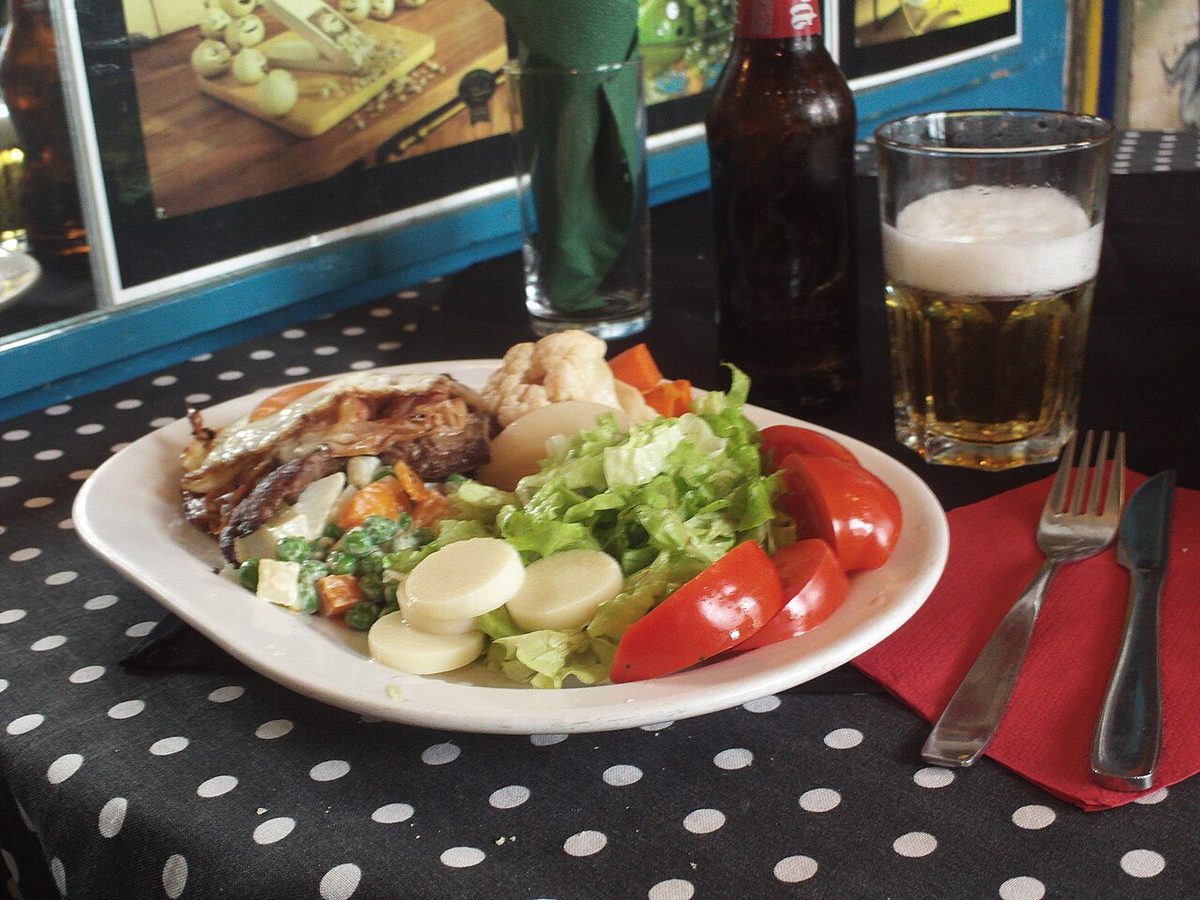
Order it al plato (on the plate) and the bread disappears. You get the same fillings, the steak, ham, cheese, bacon, egg, plated and arranged rather than stacked, with fries and frequently a scoop of Russian salad (a mayo-bound mix of potato, carrot and peas). Many Uruguayans consider this the more refined way to eat a chivito, and it is genuinely a different dish: knife-and-fork, no soggy-bread risk, and easier to share. If you are not in the mood to wrestle a sandwich, go al plato.
Chivito canadiense
Now the one that sounds like it involves Canada. It does not. A chivito canadiense is the fully loaded version, the works, with bacon and all the trimmings piled on. The “canadiense” comes from a type of ham used in Uruguay called jamon canadiense; the name stuck and now broadly signals “the deluxe one.” If you see “canadiense” on a menu, read it as the maximalist chivito. It can be served al pan or al plato. My honest take: it is the best version to order once, for the full experience, and slightly too much to order every time.
How a chivito is different from a sandwich or a burger
Travelers reasonably ask whether a chivito is just a fancy steak sandwich or a Uruguayan burger. It is neither, quite, and the distinction matters once you have eaten one.
Compared with a hamburger, the obvious difference is the meat: a chivito uses a whole thin slice of grilled tenderloin, not ground beef. The texture is completely different, more like cutting into a small steak than biting a patty. And where a burger keeps things relatively restrained, a chivito throws ham, cheese, bacon and egg at you all at once. It occupies the same cultural role a burger does in the United States, the everyday, anytime, everyone-loves-it meal, but the build is far more elaborate.
Set against a standard sandwich, the difference is ambition and heat. A chivito is hot, griddled, and assembled to order, closer to a plated meal than to something you grab cold from a counter. It is also genuinely large. You will routinely see two, three, even four people splitting one, and even quartered, each piece can be hard to get your mouth around. Treat it as a meal in itself, not a snack.
The one honest drawback worth saying out loud: a chivito is rich. Nutrition counts vary, but a loaded one runs well past 900 calories and is heavy on fat and salt. It is a glorious thing to eat. It is not a light lunch, and ordering one each at a table of four is a rookie mistake that ends in groaning and leftovers.
Where to eat the best chivito in Montevideo
Every Uruguayan has a fiercely held opinion about where to find the best chivito, and arguing about it is a national pastime. I will not pretend to have settled the debate. What I can do is point you at the kinds of places that consistently deliver, and name a few that have earned their reputations.
Montevideo is the obvious starting point, and it is also where you will eat your way through the rest of the city’s food scene; if you are building a wider list, our guide to the best restaurants in Montevideo covers the territory beyond sandwiches. For the chivito specifically, here is where I steer people.
Old downtown bars
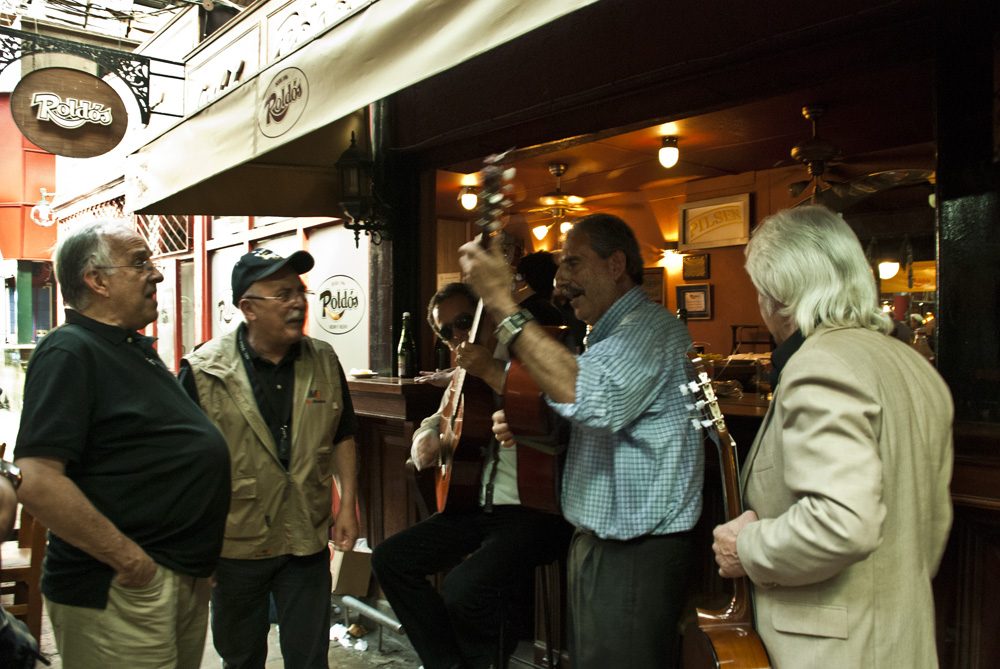
Bar Facal, on the corner of 18 de Julio and Yi, has been pouring drinks and feeding the city since the late 1800s, and it is a fine, atmospheric place to eat a chivito where generations of Montevideanos have eaten theirs. La Pasiva, a long-running local chain, does a reliable, well-priced chivito al pan and is a good safe bet when you just want a solid one without a pilgrimage. These places trade on tradition, and the chivito is exactly the dish to order in them.
Pocitos, Punta Carretas and Carrasco
Head into the leafier neighborhoods and the parrillas get serious. Bar Arocena in Carrasco is a classic, famous for its chivitos and open around the clock, which makes it a lifesaver for late arrivals and jet-lagged appetites. Specialist spots that put the word “chivito” right in their name, the kind locals will send you to in Pocitos and Punta Carretas, are usually a safe sign you are about to eat well. As a rule, a neighborhood parrilla full of Uruguayan families on a Sunday is a better bet than anything with a tourist menu in four languages.
Mercado del Puerto
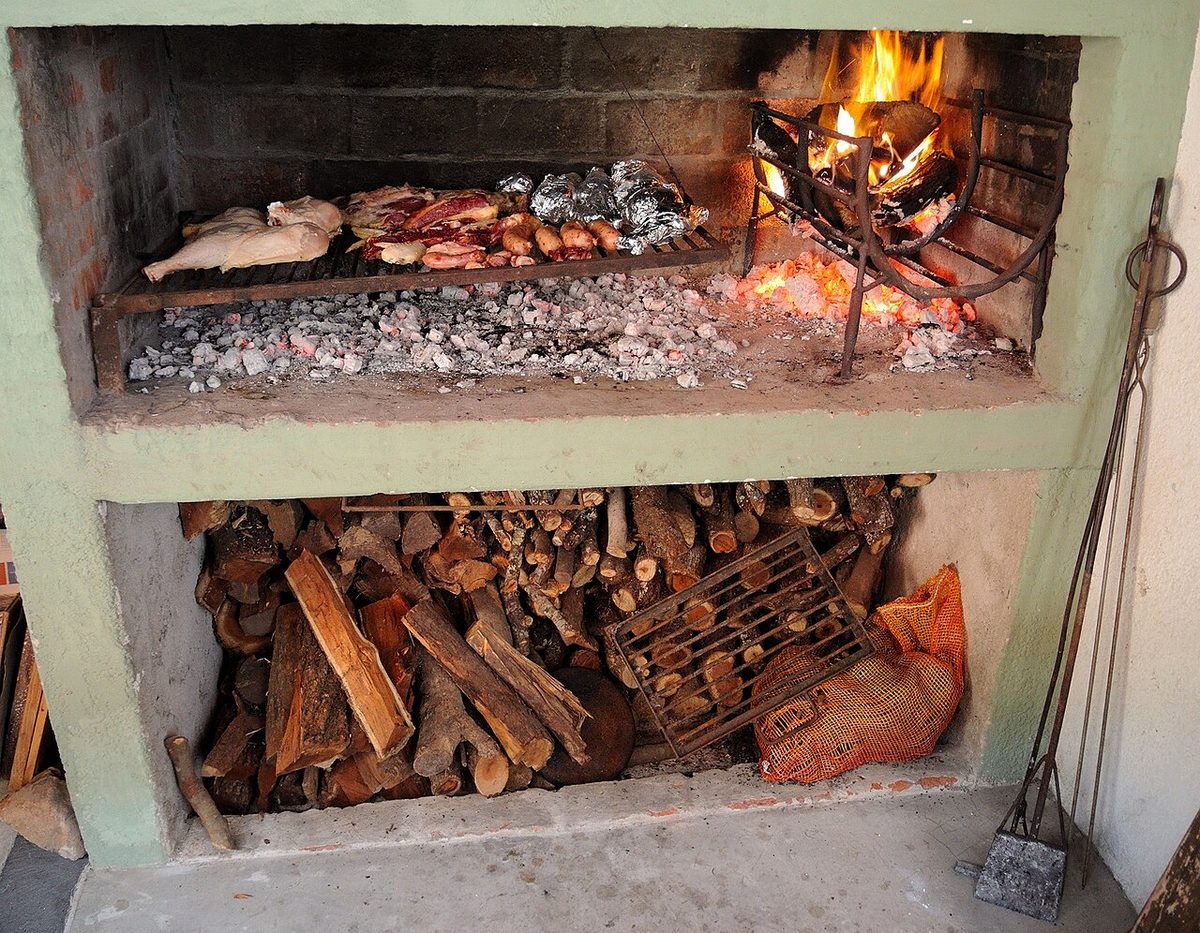
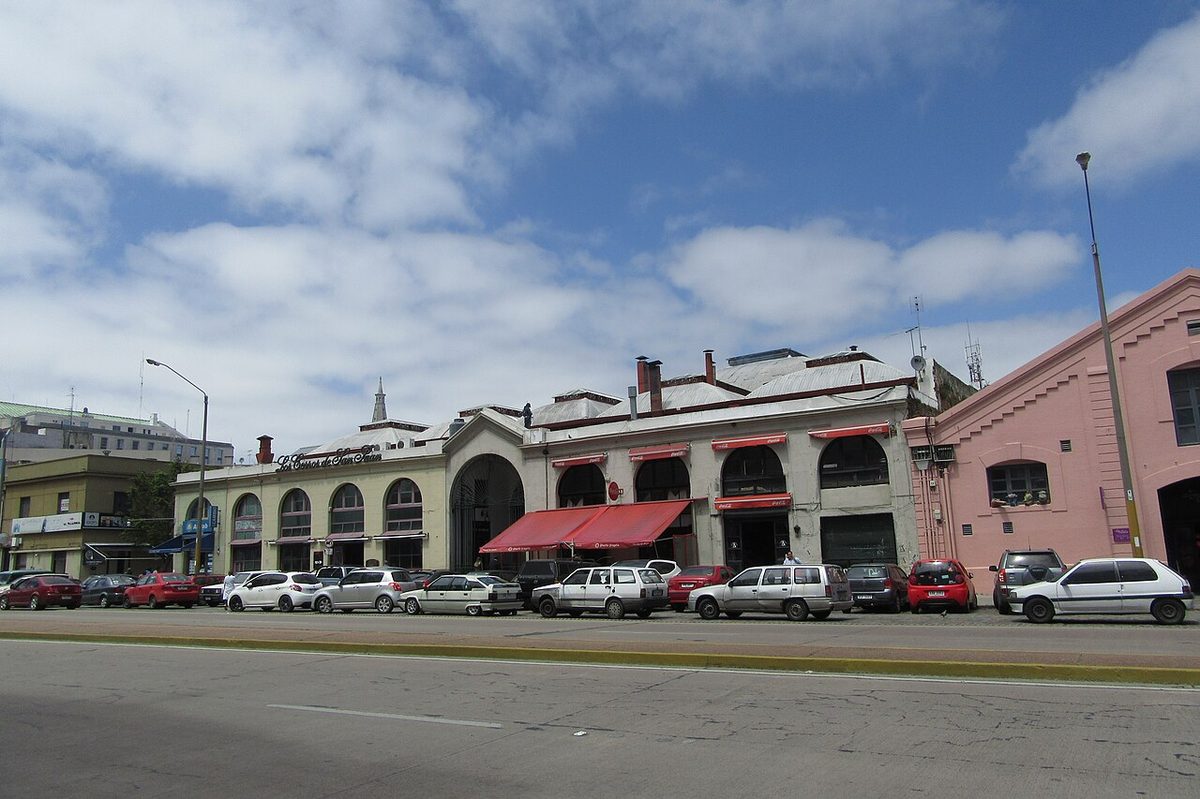
No conversation about Montevideo and grilled meat skips the Mercado del Puerto, the old port market that is now a cathedral of asado, all wood smoke and sizzling parrillas under an iron roof. It is touristy, yes, and prices run higher than a neighborhood bar. But it is a genuine spectacle, and a chivito eaten at the counter while you watch the grill cooks work is a real Montevideo experience. Go for the atmosphere as much as the sandwich, and you will not feel shortchanged.
Eating chivito beyond Montevideo
The chivito was born on the coast, so it would be strange to stop at the capital. Three other places are worth knowing about.
Punta del Este, the sandwich’s birthplace, takes its chivitos seriously, and you will find excellent ones from the peninsula out to the beach towns; if you are headed that way, our roundup of Punta del Este restaurants will help you choose. Just brace yourself, because Punta is the priciest place in the country to eat almost anything, chivitos included. In the high-summer resort towns of Jose Ignacio and La Barra you can pay close to coastal-tourist prices for what is, ingredient for ingredient, the same sandwich you would get cheaper in town.
Colonia del Sacramento, the photogenic old smuggling town across the river from Buenos Aires, also does a good chivito, and it pairs well with a slow afternoon wandering the cobbles; see our notes on where to eat in Colonia. And honestly, some of the best chivitos I have eaten came from unglamorous roadside parrillas on long drives, the kind of place truckers stop. If you are doing any amount of driving in Uruguay, keep an eye out for a busy grill with a gravel parking lot. That is often where the good stuff hides.
How to order a chivito (and how much to pay)
Ordering is simple once you know the three words. Decide if you want it al pan (sandwich) or al plato (plated, no bread), decide if you want the loaded canadiense or a more standard build, and you are basically done. If you want the egg fried rather than boiled, ask for huevo frito; most places will happily oblige.
A few hard-won tips. First, share. One chivito and a green salad is a genuinely satisfying lunch for two normal appetites. Second, ask for the bread warmed if you have any Spanish at all; it transforms the al pan version. Third, if you cannot finish it, take it away. Uruguayans are relaxed about leftovers and nobody will judge you. And fourth, do not order one as a light bite before dinner. It is dinner.
On price, let me hedge honestly, because Uruguay’s currency moves and menus change. Last I checked, a chivito at a normal Montevideo bar or parrilla ran somewhere around 350 to 700 Uruguayan pesos, call it roughly US$9 to US$17, with the loaded al plato versions at the top of that range. Budget chains can come in under that; a basic chivito al pan with fries might be US$8 or 9. In Punta del Este and the chic beach towns you can pay noticeably more for the same thing. If you are trying to gauge overall trip costs, this fits into the bigger picture of whether Uruguay is expensive, and the short version is that a chivito is one of the better-value filling meals you can buy here.
Variations and modern takes
The classic chivito is fixed in most people’s minds, but kitchens do play. You will run into a chivito de pollo, made with chicken instead of beef, which exists mainly for people who do not eat red meat and which I find misses the point a little, though it is perfectly nice. Some places offer a chivito completo that just means everything on it. Roasted peppers, sauteed onions, beetroot and peas all show up regionally as extras.
In Montevideo’s more design-forward restaurants you will occasionally see a chivito reimagined: artisanal bread, fancier cheese, a tweaked sauce, a gourmet markup. Some of these are excellent. Some are a worse version of the original at twice the price. My rule is that the chivito is a humble, generous, slightly chaotic dish at heart, and the best ones lean into that rather than trying to make it elegant. If a menu describes its chivito in three adjectives and charges accordingly, lower your expectations slightly.
Which chivito is right for which traveler
The chivito flexes to fit almost any kind of trip, and how you approach it can depend on who you are traveling with.
Solo travelers should order one chivito al plato and not feel obliged to finish it; plated is easier to pick at, and bar counters are friendly places to eat alone. Couples can split a single canadiense and a salad and walk away happy and a few pesos richer. Families traveling with kids will find the chivito an easy win, since most children happily demolish the steak, ham and cheese and ignore the olives; one sandwich often feeds an adult and a small child. And anyone watching their budget should treat the chivito as a strategic move: it is filling, satisfying and good value, the kind of meal that lets you eat well without overspending, which matters if you are stretching a longer itinerary. A chivito and a coffee can carry you through a long sightseeing afternoon in Montevideo or on one of the easy day trips from the capital.
Chivito: your questions answered
What is a chivito made of?
A classic chivito is built on a thin slice of grilled beef tenderloin (lomo), topped with ham, melted mozzarella, bacon, a fried or boiled egg, lettuce, tomato, olives and mayonnaise, all in a soft warmed roll. Mustard, roasted peppers and onions sometimes join the party. It is usually served with fries, and often with potato salad too.
Why is the chivito called “little goat” if it has no goat?
Blame a hungry traveler. In 1940s Punta del Este, a customer asked a bar owner named Antonio Carbonaro for chivito, roast kid goat, the way she ate it in northern Argentina. He had no goat, so he improvised a beef-and-ham sandwich, kept the name as a joke, and it stuck. The chivito has been beef, not goat, ever since.
What is the difference between a chivito al pan and al plato?
Al pan means “in the bread,” so you get the chivito as a sandwich in a roll, with fries. Al plato means “on the plate,” so the same fillings, the steak, ham, cheese, bacon and egg, arrive plated with no bread, usually alongside fries and Russian salad. Al plato is the knife-and-fork version, and many Uruguayans consider it the more refined choice.
How big is a chivito and can one person finish it?
A full chivito is large, frequently enough for two. You will see groups splitting one, and even cut into quarters each piece can be hard to bite through. A normal eater can finish a standard chivito, but the loaded canadiense and the al plato versions often defeat people. My advice: order one between two and add a salad before you commit to two sandwiches.
Is a chivito the same as a Uruguayan burger?
No. A chivito uses a whole thin slice of grilled tenderloin, not a ground-beef patty, so the texture is closer to cutting into a small steak. It also piles on ham, cheese, bacon and egg, which a burger does not. The chivito fills the same everyday cultural role a burger does in the United States, but it is a more elaborate, plate-sized affair.
How much does a chivito cost in Uruguay?
Prices move with the currency, but last I checked a chivito at a regular Montevideo bar ran roughly 350 to 700 Uruguayan pesos, about US$9 to US$17, with loaded al plato versions at the top end. Budget chains can dip below that. Punta del Este and the fashionable beach towns charge noticeably more for essentially the same sandwich.
Final thoughts
Of all the food Uruguay will put in front of you, the chivito is the one I send people to first. It is not subtle and it is not light, but it is honest, generous and completely of this place, a sandwich born from a cook who refused to turn a stranger away and grew into a national emblem.
Order one al plato if you want to eat like a local, split a canadiense if you want the full glorious excess, and do it at a busy neighborhood parrilla rather than a tourist trap. Then sit back and watch the waiter smile when you tap out two-thirds of the way through. We have all been there. It is part of the ritual, and it is one of the great cheap pleasures of traveling in this small, beef-loving country.
Credits & sources
Sources & further reading
- Chivito (sandwich) on Wikipedia for the ingredient list, origin and variations
- Guru’Guay: The history of the chivito, a locally written account of where it came from
- Lonely Planet’s Uruguay guide for broader food and travel context
Photo credits
All images via Wikimedia Commons: Chivito Al Pan Uruguayo by TitiNicola (CC BY-SA 4.0); Chivito Al Plato Uruguayo by Ypsilon from Finland (CC0); Parrilla Grill Montevideo by Fedaro (CC BY-SA 3.0); Mercado Del Puerto Montevideo Parrilla by Felipe Restrepo Acosta (CC BY-SA 4.0); Chivito Canadiense Uruguay by Alt alt facts (CC BY-SA 3.0).