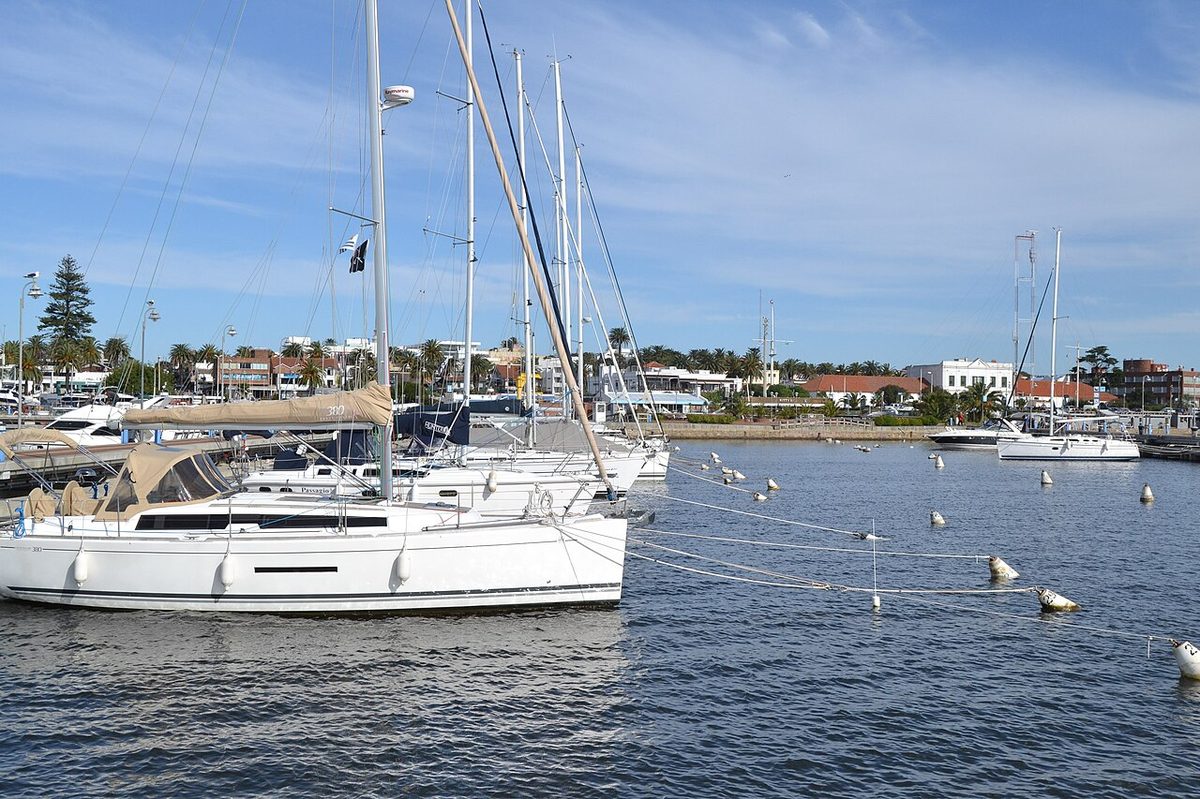
Jose Ignacio: Uruguay’s Chicest Beach Village (2026)
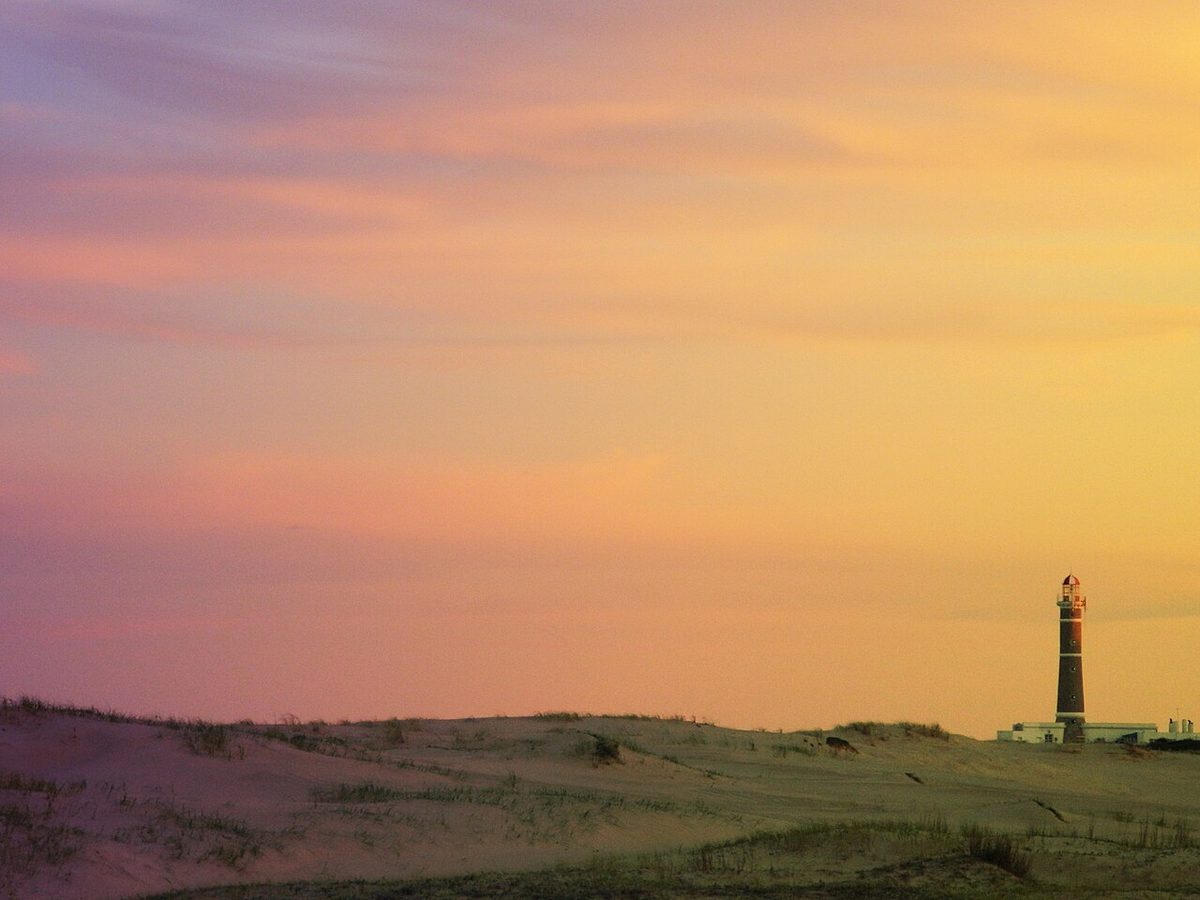
Jose Ignacio Uruguay was the one place on the coast I kept hearing about, and the first time I drove out here I almost missed the turn. There is no grand entrance, no archway, no billboard announcing that you have arrived at one of South America’s most coveted summer addresses. Just a low sign, a single roundabout, and then a sandy spur of land sticking out into the Atlantic with a striped lighthouse at the end of it. I parked, walked down toward the water in the late afternoon, and watched a woman in a linen dress carry her sandals past a fish shack while a Range Rover idled beside a horse tied to a fence post. That contradiction, in about thirty seconds, told me everything about the place.
So here is the short version. José Ignacio, Uruguay, is a tiny, deliberately understated beach village on the country’s Atlantic coast, roughly 30 to 40 minutes’ drive east of Punta del Este. It trades on barefoot luxury rather than the glass-tower glamour of its bigger neighbor: low whitewashed houses, two beaches, one famous lighthouse, a legendary beach restaurant, and a summer crowd that flies in from Buenos Aires, New York and Milan to be seen not being seen. It is gorgeous, expensive in season, and very quiet the rest of the year.
Where José Ignacio sits, and why the geography matters
Most articles about this village skip the map, which is a mistake, because the geography is the whole story. José Ignacio sits in the Maldonado department, on a small headland that pokes out into the ocean about 40 kilometers east of Punta del Este. If you are coming from Punta, you drive east along the coast road and pass through a sequence of balnearios first. (A balneario is simply a seaside resort settlement, the Uruguayan word for a beach town strung along the shore.)
You leave Punta del Este proper, cross the wavy undulating bridge into La Barra, keep going through La Barra’s surf-and-nightlife strip, roll past the quieter Manantiales, and then the development thins out. The land gets emptier. Pine and eucalyptus give way to dunes. After 20 minutes of this you reach the José Ignacio roundabout, and the village itself begins. That ordering matters because it explains the vibe: by the time you arrive, you have already passed the loud party towns. José Ignacio is what is left when the high-rises run out of road.
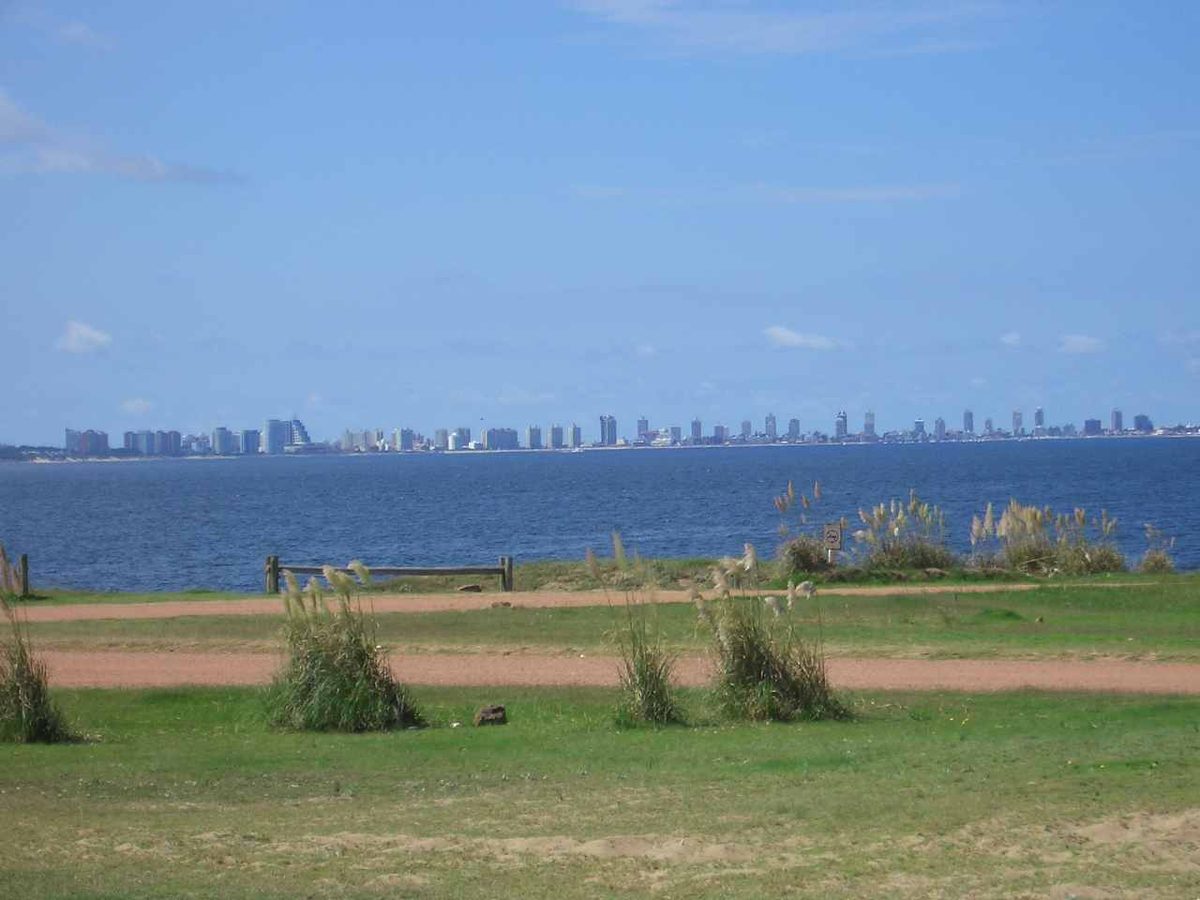
The contrast with Punta del Este is the entire point, and it is intentional. Punta del Este is a wall of apartment towers, casinos, marinas and traffic, a genuinely fun and slightly brash resort city. José Ignacio is its opposite number: no high-rises (there is effectively a height limit baked into how the place was built and protected), no chain hotels, dirt and sand streets in parts, and a planning ethos that prizes low-key over flashy. People who can afford to stay literally anywhere choose here precisely because it does not look like money. That is the trick of the place. It is enormously expensive to look this casual.
José Ignacio, Uruguay at a glance
| What | The short answer |
|---|---|
| Location | Atlantic coast, Maldonado department, Uruguay |
| Distance from Punta del Este | ~40 km / 30–40 min by car, east via La Barra & Manantiales |
| Vibe | Understated, barefoot-luxury; low-rise; quiet; design-conscious |
| Beaches | Playa Brava (ocean side, surf) & Playa Mansa (calm side, sunsets) |
| Best for | Couples, design lovers, slow beach days, a splurge weekend |
| Peak season | S. Hemisphere summer, Dec–Feb; January is the crush |
| Need a car? | Yes, realistically. Buses exist but are limiting |
| Honest catch | Pricey in summer; half-asleep and partly closed off-season |
The lighthouse and the village itself
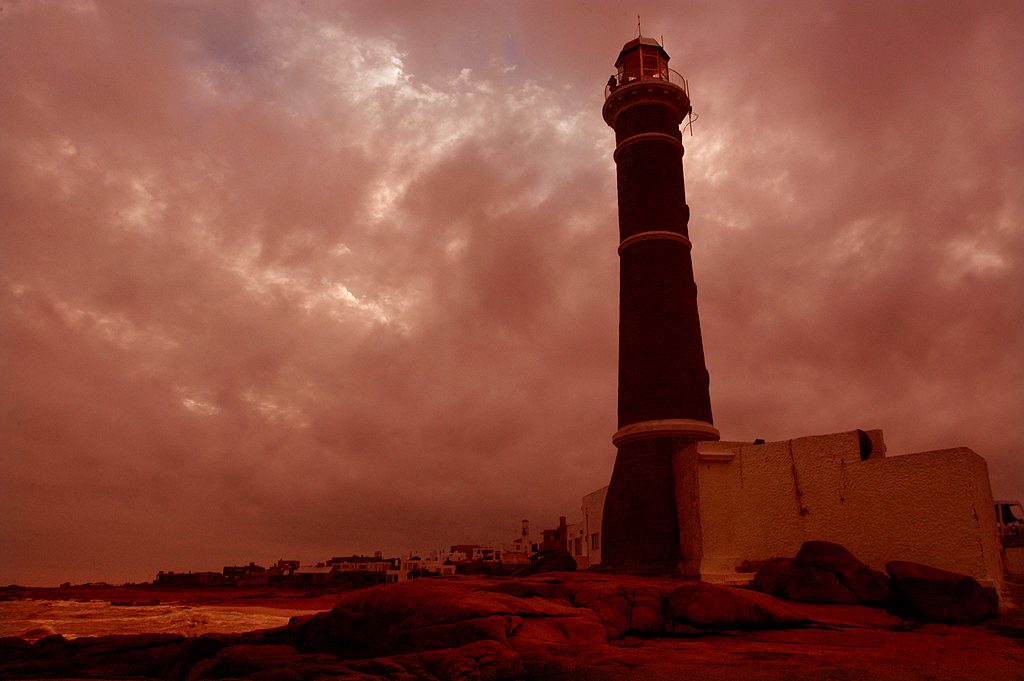
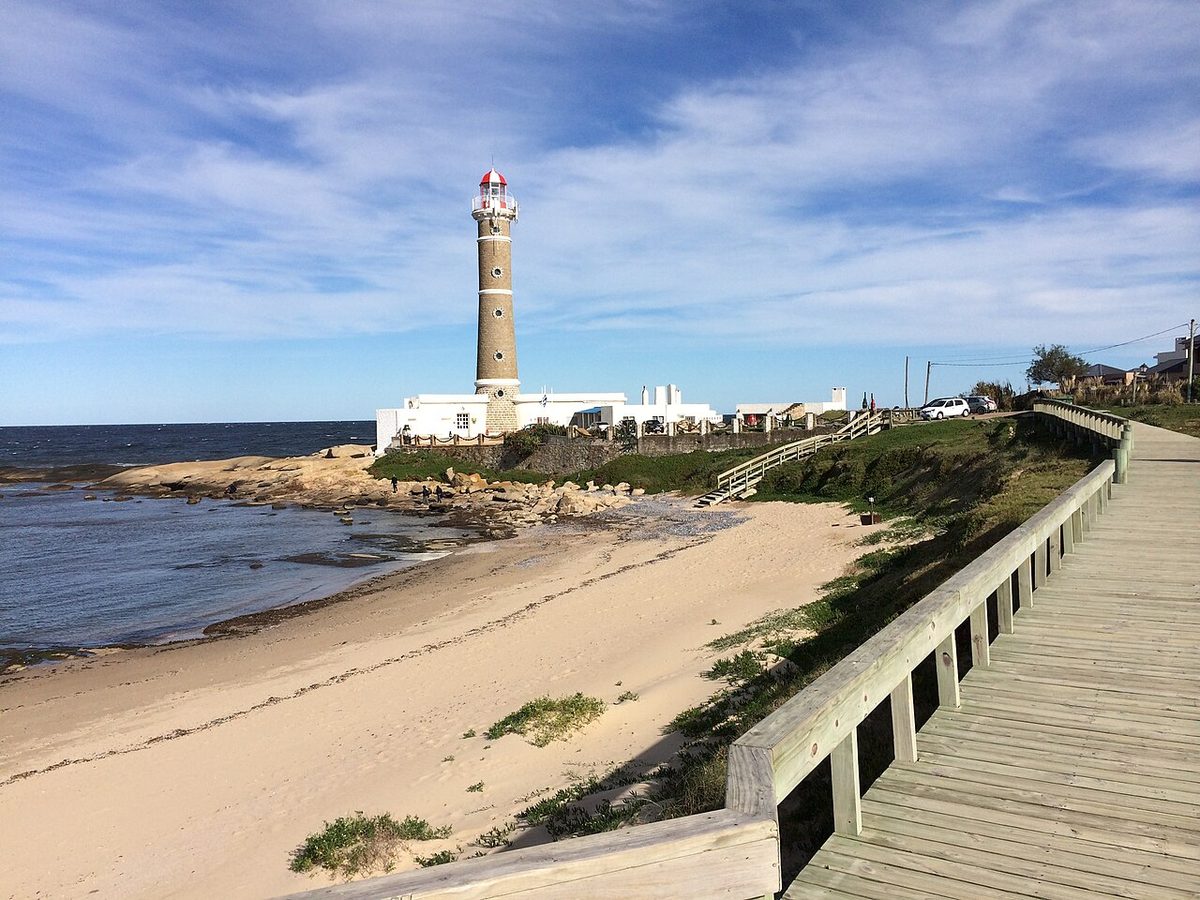
Everything in José Ignacio orients around the Faro de José Ignacio, the lighthouse that stands at the tip of the headland. It is the village’s logo, its meeting point and its best photograph. Built in the early twentieth century, the white tower with its single dark band is the thing you will recognize from every magazine spread about the place, and unlike a lot of postcard landmarks, you can actually go inside. For a small fee you climb the tight spiral stairs to the gallery at the top, and from there you get the full lay of the land: the two beaches curving away on either side, the scatter of houses, the dunes, the ocean going on forever.
Climbing it is genuinely worth doing once, though I will give you the honest drawback now rather than later: the opening hours are short and seasonal, the staircase is narrow and not built for crowds, and in peak summer you may queue in the sun for a view you could mostly get by standing at the base. Go early in the day or skip the climb and just admire it from the rocks. The lighthouse looks better from the outside than most things do from any angle.
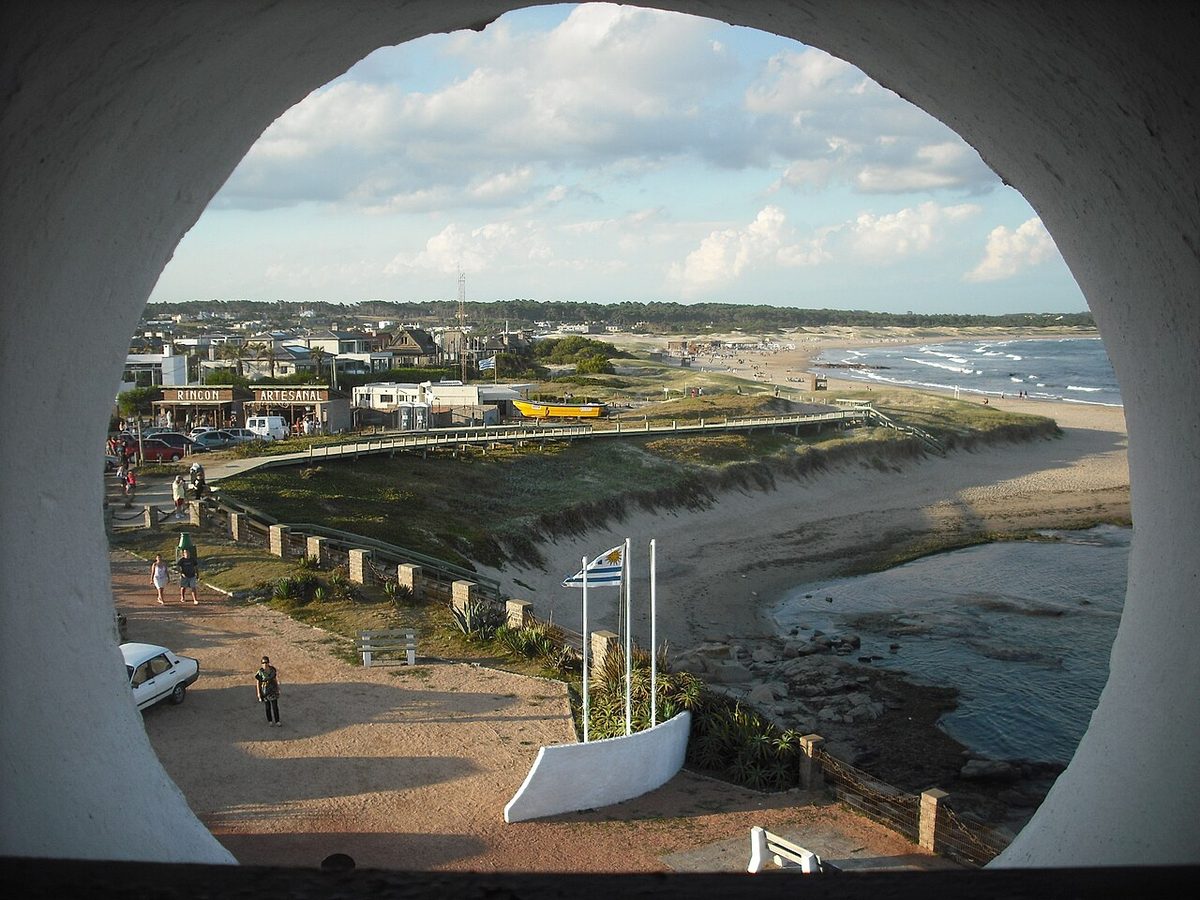
Around the lighthouse, the village is small enough to walk end to end in fifteen minutes. There is the old church near the point, a cluster of little shops and galleries, a few paradores (a parador is a casual beach restaurant or bar, often right on the sand), and streets of discreet houses behind hedges and dune grass. You will not find a strip of bars or a promenade of souvenir stalls. What you find instead is restraint, which sounds dull written down and is, in person, the entire appeal. The rambla here is not a grand seafront boulevard like Montevideo’s; it is a modest coastal lane. (A rambla in Uruguay is the road or walkway that runs along the water.)
The two beaches: Brava versus Mansa
Like much of this coast, José Ignacio has a “wild” side and a “calm” side, and the village sits on the headland between them. Knowing which is which will make or break your day, so this is the practical bit.
Playa Brava (the ocean side)
Brava faces the open Atlantic, and the name tells you the temperament. (“Brava” means rough or fierce; “mansa” means tame or gentle.) This is the side with real waves, the side where surfers and kitesurfers go, and the side that gets the bigger swell and the stronger wind. The sand is wide and the water is properly oceanic, which means cold, lively and not always ideal for small children or casual floaters. It is the more dramatic of the two beaches and, not coincidentally, the one La Huella sits on. If you want surf lessons, this is where you take them.
Playa Brava in José Ignacio shares a name with the more famous Playa Brava back in Punta del Este, the one with the giant hand sculpture rising out of the sand, so do not confuse the two when you are searching for directions. The honest drawback of Brava here is the cold water and the undertow; it is a beach for walking, watching and surfing more than for long lazy swims.
Playa Mansa (the calm side)
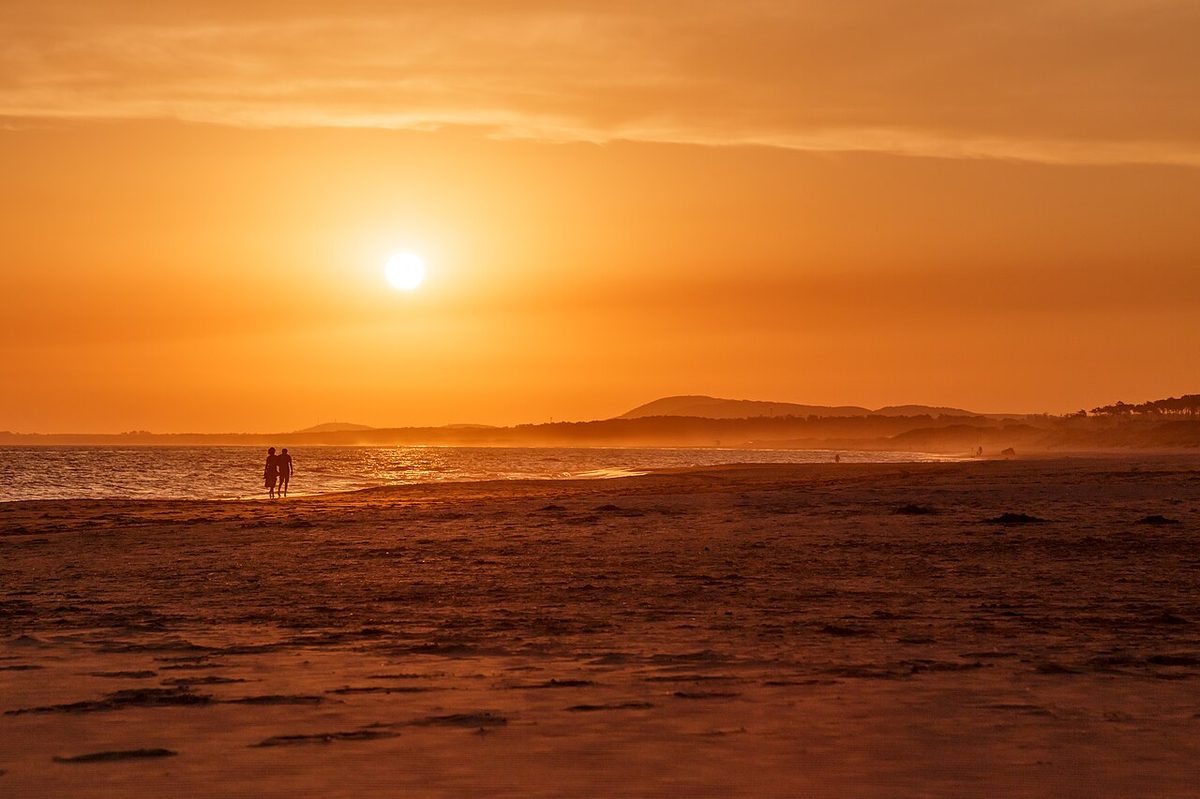
Mansa faces the bay side, sheltered from the open ocean, and behaves accordingly. The water is calmer and a touch warmer, the waves are gentle, and this is where families settle in and where everyone gathers for the sunset. Because the headland angles the way it does, the calm side catches the light beautifully in the evening, and watching the sun drop from Mansa with a drink in hand is, unironically, one of the best free things to do in the whole country.
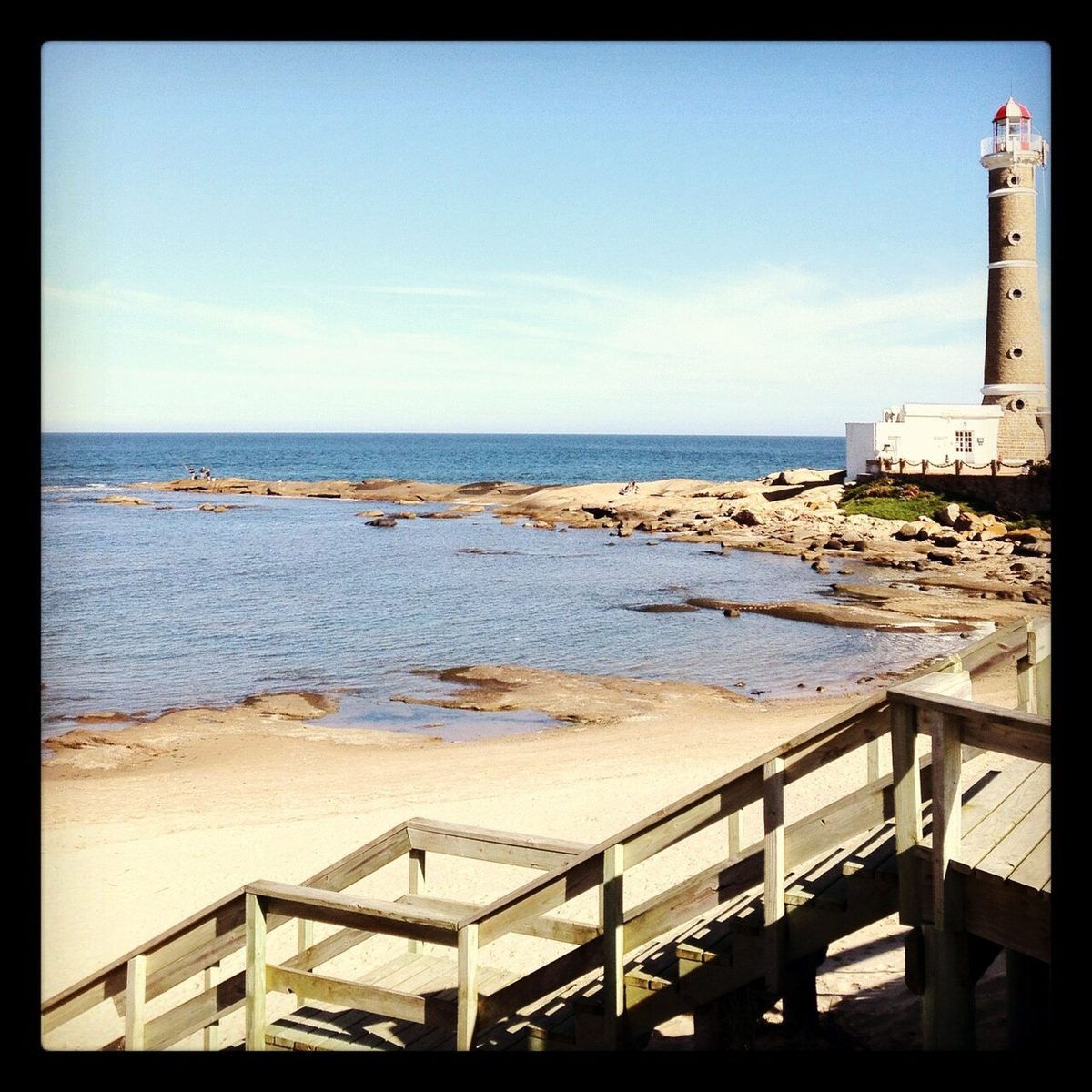
The catch with Mansa is simply popularity: in January the sunset spots fill up, the nearby paradores charge a premium for that exact view, and the prettiest stretches near the village can feel claimed. Walk a few hundred meters away from the main access point and you reclaim some space. Both beaches are public, as all Uruguayan beaches legally are, so nobody can fence you off the sand no matter how grand the house behind it. For the wider picture of how this coast’s beaches compare, our guide to the best beaches in Uruguay and the dedicated rundown of Punta del Este beaches are worth a read before you pick a base.
Things to do in José Ignacio (beyond lying on the sand)
Let me be honest about expectations. José Ignacio is not an activities destination in the theme-park sense. The “doing” here is gentle, and that is by design. But there is more than enough to fill a slow few days.
Surfing and lessons head the list for anyone who wants to be active. Playa Brava’s break is forgiving enough for beginners with an instructor and interesting enough for people who already surf, and there are small local schools that run lessons and rent boards by the hour through the summer. The drawback is seasonality again: outside the warm months, options dwindle and the water gets bracing.
Sunset drinks are practically a civic ritual. Toward evening the village migrates to the calm side or to a parador deck, and the unofficial schedule of the day is set by when the sun hits the horizon, not by any clock. Bring a layer; the wind picks up after dark even in summer.
Galleries, shops and design are a real draw if that is your thing. The village has long attracted artists and designers, and the little shops near the lighthouse sell a mix of artisan goods, ceramics, woven textiles and the sort of expensive simple linen that the whole place runs on. It is browsing, not buying-spree shopping, and prices reflect the postcode.
Yoga, riding and slow stuff round it out. You will find yoga and wellness sessions in season, horseback riding along the dunes and through the hinterland, and a general culture of doing very little with great commitment. If your idea of a holiday is back-to-back excursions, you may get restless. If it is reading on the sand and eating well, you will be delighted. For ideas that stretch beyond the village, our broader things to do in Uruguay guide covers the rest of the country.
The lighthouse, covered above, is the one box-ticking sight, and the day trip inland to Garzón (more on that below) is the best half-day excursion within reach.
Eating, and the La Huella phenomenon
You cannot write about José Ignacio without La Huella, the parador on Playa Brava that did more than anything else to put this village on the international map. It is, by reputation, one of the best beach restaurants in the world: open decks over the sand, ponchos draped on the chair backs for when the wind turns cool, wood-fired fish and grilled meat, and a famous dulce de leche dessert that arrives looking like a small volcano. (Dulce de leche is the caramelized milk spread that Uruguayans and Argentines put on, and in, nearly everything.)
The scene is the food’s equal. Lunch runs absurdly late by northern standards, with the fashionable hour closer to four in the afternoon, and dinner drifts toward midnight. The crowd is a mix of Argentine media faces, models, polo players and whichever international names are summering nearby, and after ten at night the place tips from restaurant into something closer to a party. It manages, somehow, to stay genuinely good rather than coasting on its fame, which is rarer than it should be.
Now the honest drawback: in January you will not get a table at La Huella without booking well ahead, the bill is steep, and the very buzz that makes it famous can make a quiet dinner impossible. It is a special-occasion experience, not a casual drop-in, at least in high season. José Ignacio’s wider dining scene is deep and deserves its own treatment, so rather than half-cover it here I would point you to our Punta del Este restaurants guide, which runs all the way out to José Ignacio, for the full list. For the bigger context of what you will actually be eating in this country, the Uruguayan food guide explains the asado-and-seafood culture the whole coast is built on.
The wine country and the Garzón hinterland
One of the smartest things you can do from José Ignacio is leave it for an afternoon and drive inland. The land behind the coast, around the village of Garzón, has quietly become Uruguay’s most talked-about wine and food district, and it is roughly 40 minutes away on increasingly familiar roads.
Garzón is associated above all with the chef Francis Mallmann, whose open-fire cooking and restaurant in the tiny town drew the first wave of food pilgrims, and with the large nearby winery that put Uruguay’s Tannat grape in front of an international audience. (A bodega is a winery.) Tannat is the country’s signature red, dark and tannic, and tasting it at the source, surrounded by vineyards and olive groves, is a completely different experience from drinking it on a beach deck. There is a smaller coastal winery closer to José Ignacio too if you would rather not drive far.
My honest caveat for the Garzón excursion: it is at its best in season, the headline restaurant is a serious splurge and books up, and you genuinely need a car and a sober driver to do it properly, since the whole point is the wine. Out of season, several places shutter entirely. If wine is the reason you are coming to this corner of Uruguay, read our full Uruguay wine guide first; the Garzón area is the headline act but far from the only one.
When to go, and the January-only reality nobody warns you about
This is the section I wish someone had written before my first visit, so I will be blunt. José Ignacio is a summer place, and “summer” in the Southern Hemisphere means roughly December to February, with January as the absolute peak. In January the village is at full tilt: every parador open, every house occupied, the famous crowd in residence, sunsets shoulder to shoulder, and prices at their most eye-watering.
December and February are the smart compromise. The weather is still warm, the place is fully alive, and you dodge the worst of the January crush and the very top of the pricing. Late February in particular can be lovely, with summer warmth lingering and the crowds beginning to thin.
Shoulder months, roughly March to April and November, are quieter and gentler, and the village starts to feel like the fishing settlement it used to be. The trade-off is that some restaurants and shops begin to close or cut their hours, and the social scene that defines the place largely packs up and goes home.
Off-season, from around May to October, is where the honest warning lands hardest. Yes, it is peaceful and cheap and beautiful in a stark way. It is also, in large part, closed. Many restaurants shut completely, hotels reduce service or lock the doors, and what is charming in a guidebook can feel slightly desolate in person, especially midweek in winter. Some travelers love it for exactly that emptiness. Just go in knowing what “off-season” really means here: not a quieter version of the same village, but a different, dormant one. To line this up against the rest of the country’s seasons, see our best time to visit Uruguay guide and the dedicated Uruguay in summer overview.
Getting there, the car question, and what it costs
Practicalities decide whether a José Ignacio trip is a joy or a logistical headache, so plan this part properly.
Getting there usually starts from Punta del Este, which is the regional hub and where most visitors land or base themselves first. From Punta it is about 40 kilometers and 30 to 40 minutes by car along the coast road through La Barra and Manantiales. There is a public bus along the coast — the regional CODESA service runs the route and is genuinely cheap — but it is infrequent, drops you near the village rather than at your door, and leaves you stranded the moment you want to reach a beach, a restaurant or the wineries that are not within walking distance.
Which brings me to the car. You really do need one. This is the single most useful piece of advice in this article. José Ignacio rewards the ability to drive to the calm beach for sunset, out to Garzón for lunch, back to La Barra for a night out, and home again whenever you like. Without a vehicle you are tied to taxis, which are pricey in season and not always available, or to a thin bus schedule. Rent a car for this stretch of coast even if you would not bother elsewhere in Uruguay.
On cost, set expectations high. In peak summer José Ignacio is one of the most expensive places in South America. Accommodation in particular can be startling — boutique hotels and beach houses command serious money in January, and the few rooms that exist get booked months ahead. Meals at the marquee restaurants are a splurge. The flip side is that the beaches, the lighthouse views, the sunsets and the walks are all free, so it is possible to enjoy the village hugely while spending big on only one or two experiences. Where you base yourself is the biggest single decision; some visitors stay in José Ignacio itself for the full immersion, while many sleep in Punta del Este or the calmer towns in between and drive over for the day. Our where to stay in Uruguay guide walks through the trade-offs, and a dedicated José Ignacio hotels guide goes deeper on the village’s own (limited, pricey) lodging if you are set on sleeping here.
For wider trip-building, José Ignacio slots neatly into a longer coastal loop. It pairs naturally with Punta del Este and the inland wine country, and you can see how it fits a full route in our Uruguay itinerary guide.
How José Ignacio fits with Punta del Este
Think of these two as a pair rather than rivals. Punta del Este gives you the towers, the nightlife, the casinos, the shopping and the famous hand sculpture rising from the beach; José Ignacio gives you the quiet, the design, the long sunsets and the sense of getting away from all of that. The clever play is to base near Punta for convenience and variety and treat José Ignacio as the slow, scenic counterpoint a short drive east. The full picture of the region lives in our Punta del Este guide, the parent to this article, and if you are drawn to design landmarks, the cliffside Casapueblo on the other side of Punta is the region’s other unmissable building.
If you are still deciding whether this whole corner of the country earns a place on your map, our roundups of the best places to visit in Uruguay and the country’s quieter hidden corners put José Ignacio in context. It is one stop in a small country that punches well above its size.
Jose Ignacio Uruguay: your questions answered
Is José Ignacio worth visiting?
Yes, if you want a calm, design-led, scenic beach village and you are visiting in the warm months. It is one of the prettiest, most relaxed spots on Uruguay’s coast, with two good beaches, a famous lighthouse and excellent food. The caveats are cost and timing: it is expensive in summer and largely closed in winter, so the experience depends heavily on when you go.
How far is José Ignacio from Punta del Este?
About 40 kilometers, or roughly a 30-to-40-minute drive east along the coast road. You pass through La Barra and Manantiales on the way. There is an infrequent public bus that covers the route cheaply, but a car is far more practical for actually getting around once you arrive, especially for beaches and the inland wine country.
What is the best time to visit José Ignacio?
December to February is high season, with January the busiest and priciest. For the best balance, aim for December or late February: warm weather, the village fully open, but with fewer crowds and slightly saner prices than peak January. Shoulder months are quieter still, while winter (May to October) is peaceful but partly shut down.
Do you need a car in José Ignacio?
Realistically, yes. The village itself is walkable, but everything beyond it — the calm-side beach, the wineries around Garzón, nights out in La Barra, and your hotel if it is on the outskirts — is much easier with a car. Buses are infrequent and taxis are expensive and scarce in peak season, so renting a vehicle for this part of the coast is the sensible move.
Is José Ignacio expensive?
In peak summer, very. It is among the priciest destinations in South America for accommodation and high-end dining, particularly in January. That said, the beaches, lighthouse views, sunsets and walks cost nothing, so you can enjoy the village deeply while splurging on only one or two experiences. Visiting in the shoulder season lowers prices considerably.
What is the difference between José Ignacio and Punta del Este?
Punta del Este is a large, lively resort city of high-rises, casinos and nightlife. José Ignacio is a small, low-rise, deliberately understated beach village about 40 minutes east. One is energetic and built-up; the other is quiet and design-conscious. Many travelers visit both, basing near Punta for convenience and driving to José Ignacio for slower, more scenic days.
Final thoughts
What stays with me about José Ignacio is not the celebrities or the price tags, which the magazines fixate on. It is the light at the end of the day on the calm side, the lighthouse going dark against an orange sky, the particular pleasure of a place that has the money to be flashy and chooses not to be. Go in summer, rent a car, eat one extravagant meal, watch a lot of sunsets, and accept that you are paying a premium for a village that wants to feel like it costs nothing. Just do not turn up in July expecting the postcard. Come when it is awake, and it is one of the loveliest small places on this whole continent.
Credits & sources
Sources & further reading
- Air Mail — High Times in José Ignacio (the rise of La Huella and the village’s transformation)
- Tripadvisor — José Ignacio, Maldonado Department travel overview
- Rome2Rio — Punta del Este to José Ignacio travel options & distances
Photo credits
All images via Wikimedia Commons: Faro Jose Ignacio Lighthouse by Giuliana Pezzutti (CC BY-SA 3.0); Jose Ignacio Village Beach Houses by Vince Alongi from Delta, B.C., Canada (CC BY 2.0); Jose Ignacio Coastal Landscape by Rosina Peixoto (CC BY-SA 3.0); Jose Ignacio Playa Brava Surf by Eduardo.terian (CC BY-SA 3.0); Jose Ignacio Mansa Calm Beach by Lorisstragliotto (CC BY-SA 3.0); Jose Ignacio Sunset Ocean by Casaseneleste (CC BY-SA 4.0).