Montevideo to Punta del Este: 4 Ways to Get There (2026)

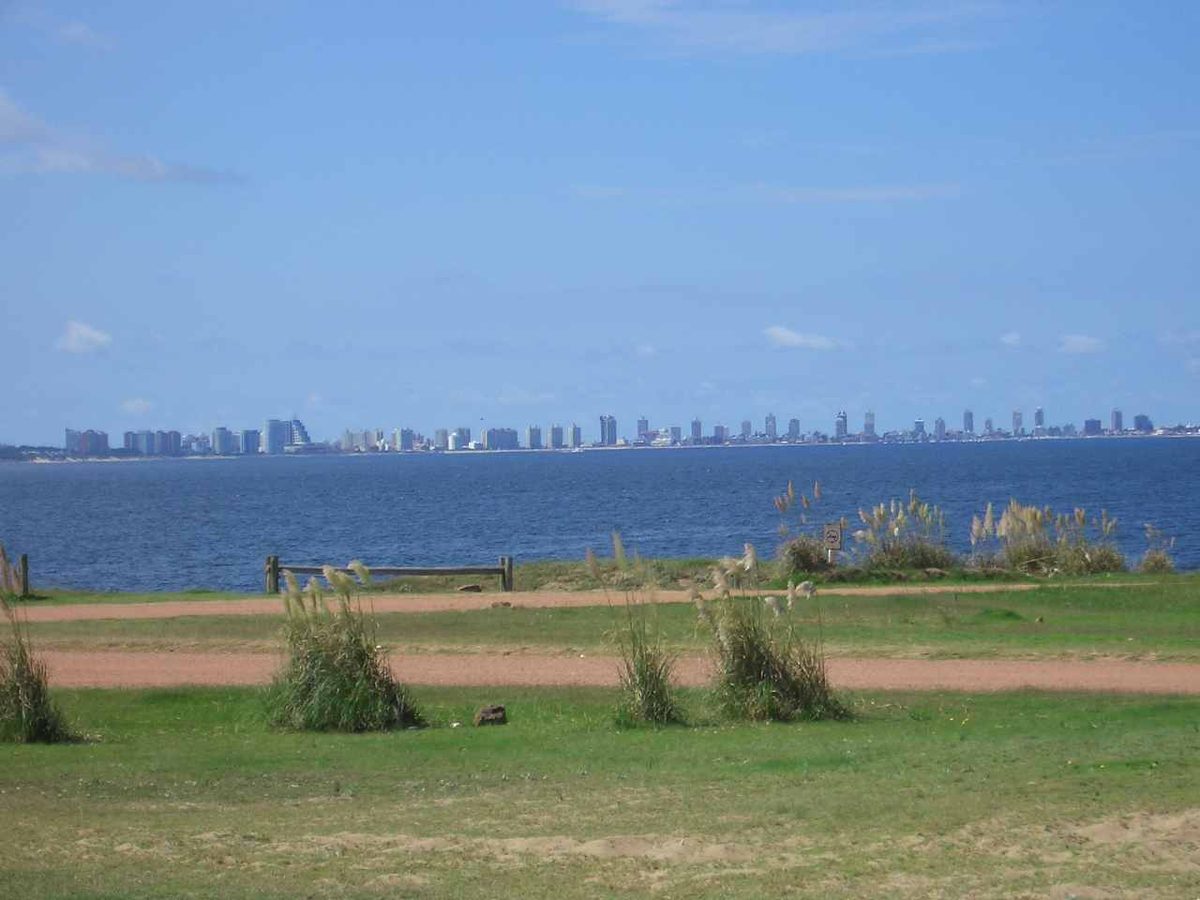
The first time I made the trip from Montevideo to Punta del Este, I overthought it completely. I priced out a rental car, hovered over a private transfer, and then a friend who lives in the capital just laughed and said: take the bus, it leaves every twenty minutes. She was right. Two hours later I was watching the high-rises of the peninsula come up over the dashboard of a COT coach, having paid less than a restaurant lunch.
Since then I’ve done this route more ways than I can count, in both directions, in high summer and in grey off-season drizzle. Each method has its moment. This guide walks through all four, with the honest trade-offs nobody puts in the brochure.
So here is the short version. The trip from montevideo to punta del este covers roughly 130 to 140 kilometres east along the coast, and it takes about two hours whether you take the bus or drive yourself. The cheapest and easiest option for most travelers is a direct bus from the Tres Cruces terminal, running constantly through the day for under fifteen US dollars. Driving gives you freedom; a private transfer gives you door-to-door comfort; flying is mostly a niche.
That covers the headline. The rest of this is about choosing well, because the “right” answer genuinely depends on your luggage, your group, your budget, and how much you want to stop along the way.
Getting your bearings: the route from Montevideo to Punta del Este
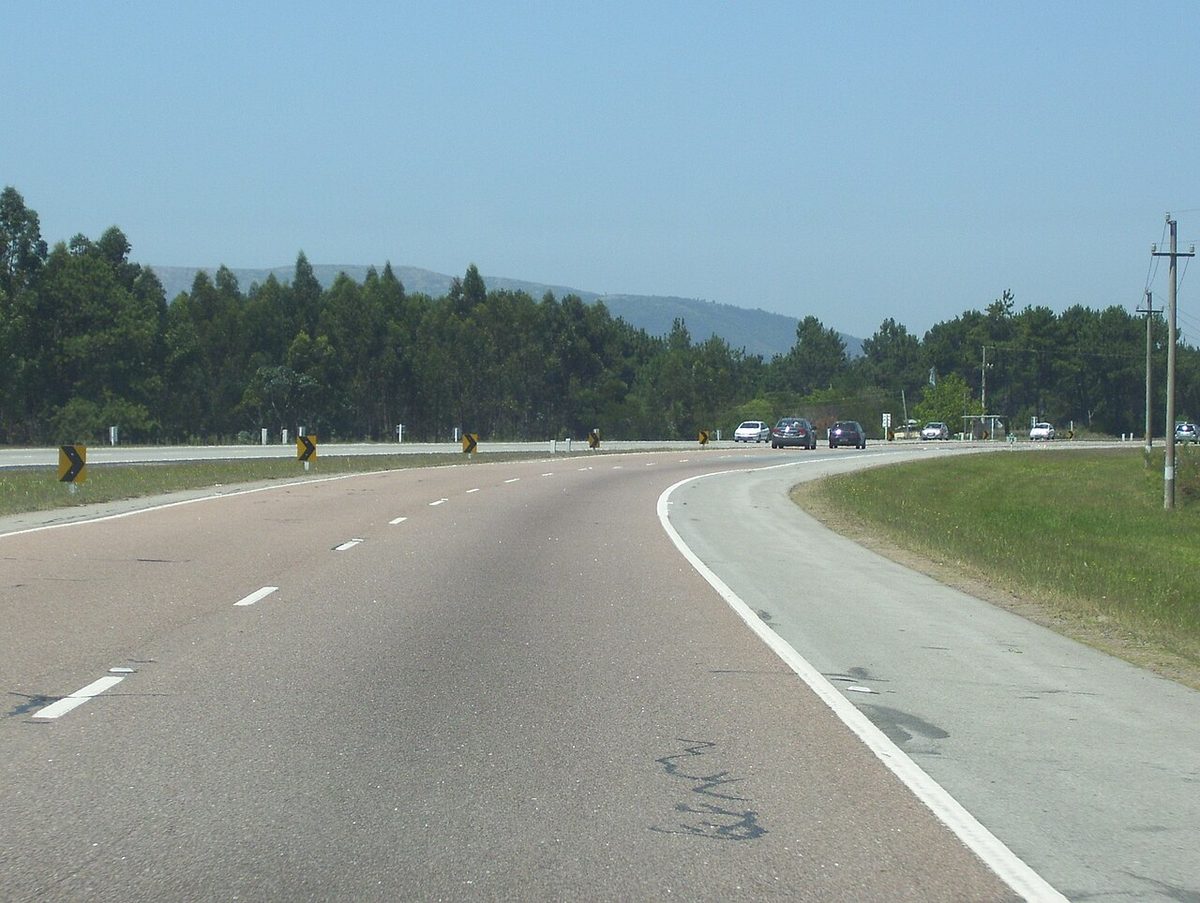
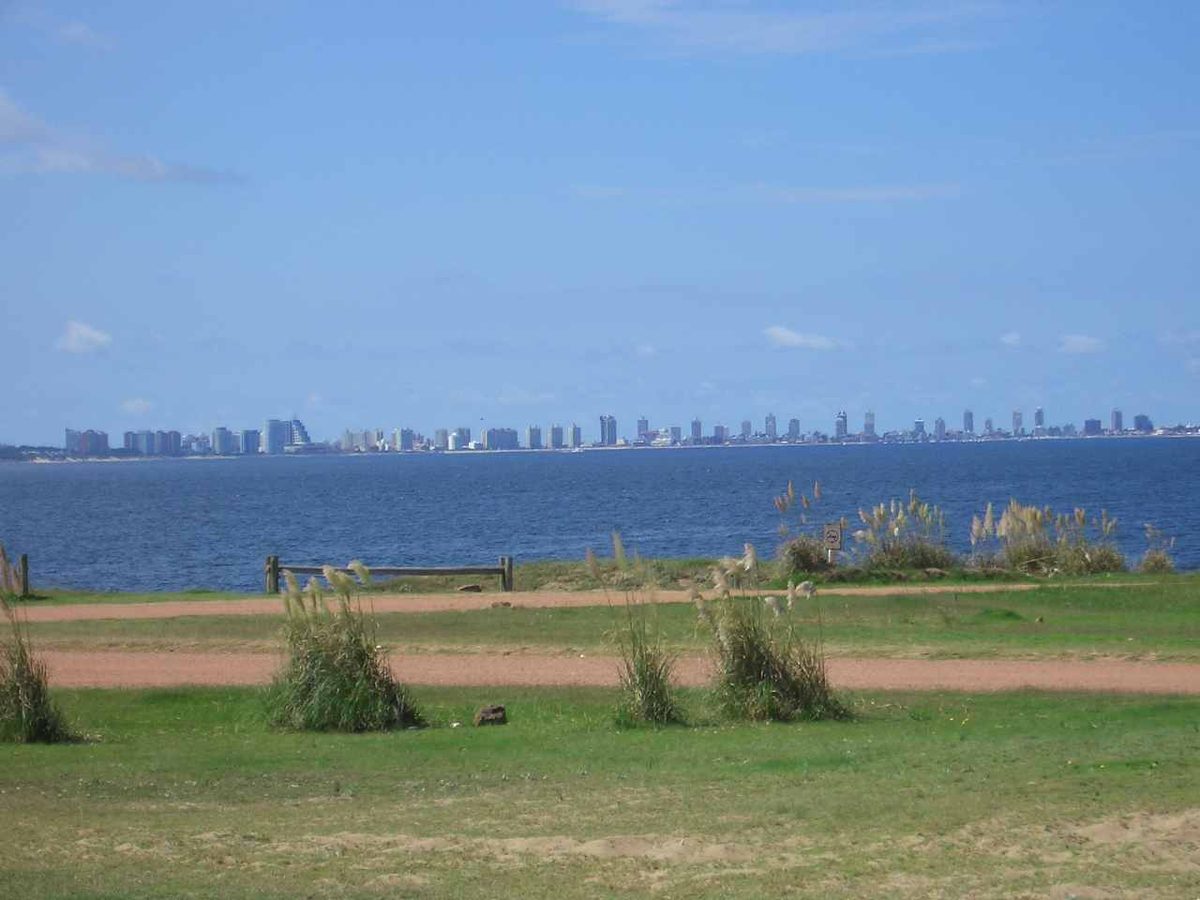
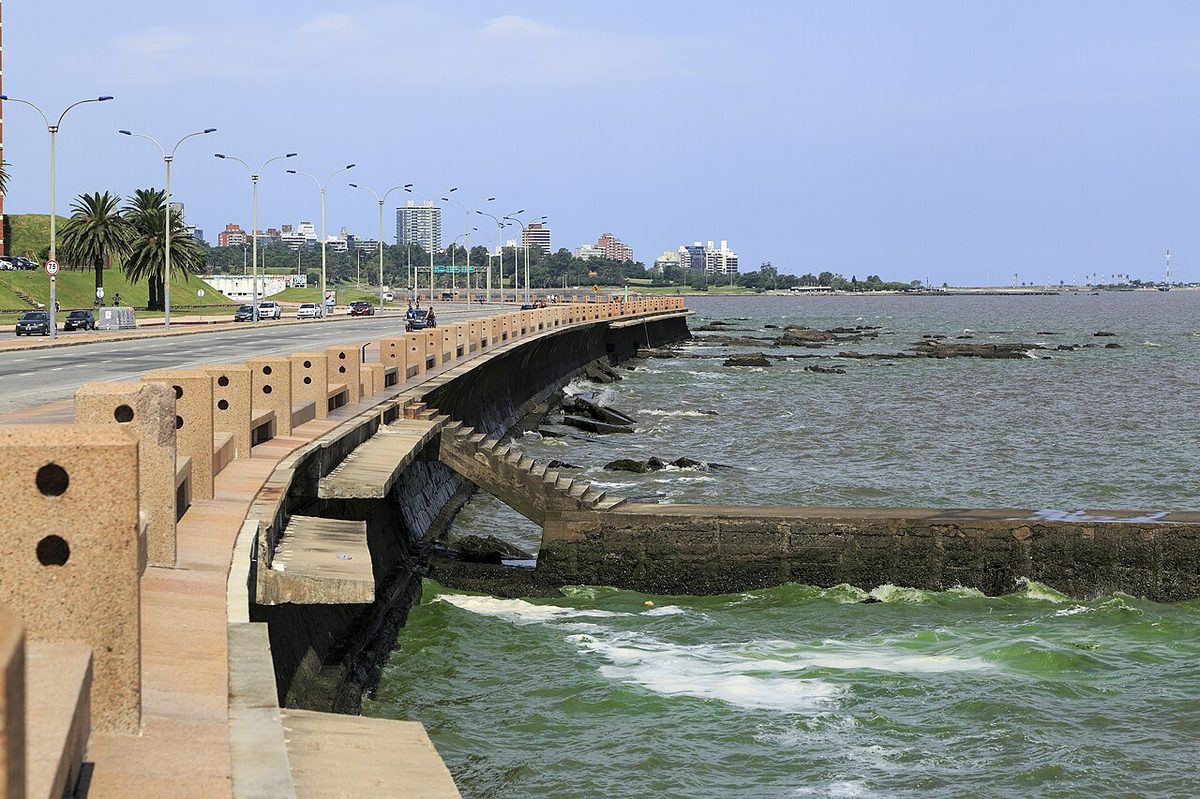
Before the four modes, a quick map in your head. Punta del Este sits on a slim peninsula on Uruguay’s Atlantic coast, in the department of Maldonado (the accent matters in print, never in a web address). Montevideo, the capital, is back to the west. Between them runs the coast, and the road that hugs it is the Ruta Interbalnearia — literally the “between-the-beach-resorts highway.”
Most online distance tools put the drive at 132 to 134 kilometres door to door, give or take depending on exactly where you start and finish. That is genuinely short. You could leave Montevideo after a late breakfast and be on the sand in Punta del Este before lunch.
Geography also explains why almost everyone arrives the same way. There is no train worth taking and no regular passenger ferry between the two. The corridor is a road corridor. Buses, cars, and transfers all follow more or less the same tarmac east — Ruta 1 and the Interbalnearia out of the city, then the branch onto Ruta 93 and into Maldonado. The only people who skip the road entirely are flying, and as you’ll see, that’s a smaller club than you’d think.
One more orientation note on names, because the signs and ticket counters use the Spanish. Tres Cruces is Montevideo’s main bus station (the name means “three crosses,” after the neighbourhood). Peaje means toll. Ripio is loose gravel, which you’ll only meet if you wander off the main highway onto a side road. Learn those three words and the rest of this trip reads itself.
At a glance: comparing the four ways from Montevideo to Punta del Este
Here is the whole decision on one screen. Prices are hedged on purpose — fares shift with season, fuel, and exchange rate, and Uruguay runs a real summer surge. Treat these as “roughly what I last paid,” not a quote.
| Mode | Typical time | Approx cost | Best for | Honest drawback |
|---|---|---|---|---|
| Bus (COT, Copsa, Turil) | 2 to 2.5 hours | Around US$8–14 one way | Solo travelers, budgets, anyone without a car | Sells out in peak summer; you still need a taxi at the far end |
| Rental car / self-drive | About 2 hours | From ~US$35–60/day + tolls + fuel | Families, road-trippers, anyone exploring beyond town | Parking in Punta is scarce and pricey in high season |
| Private transfer / shuttle | ~1h40 to 2 hours | Around US$100–250 per vehicle | Groups, lots of luggage, late or early arrivals | The priciest option by far for one or two people |
| Flying (via Laguna del Sauce) | Flight ~40 min + ground time | Highly variable; often US$100+ | Connecting from far away in peak season | Few flights, seasonal, and you still drive the last 20 km |
If you read only that table and stopped, you’d do fine. But the detail is where the real decisions hide, so let’s take each one properly.
By bus: the default way to get to Punta del Este
Buses are how this route is meant to be travelled, and it’s what I recommend to most first-timers. The service is frequent, cheap, comfortable, and almost comically reliable. Uruguay’s long-distance bus network is one of the quiet pleasures of the country, and this is its busiest leg.
Companies, terminal, and how often they run
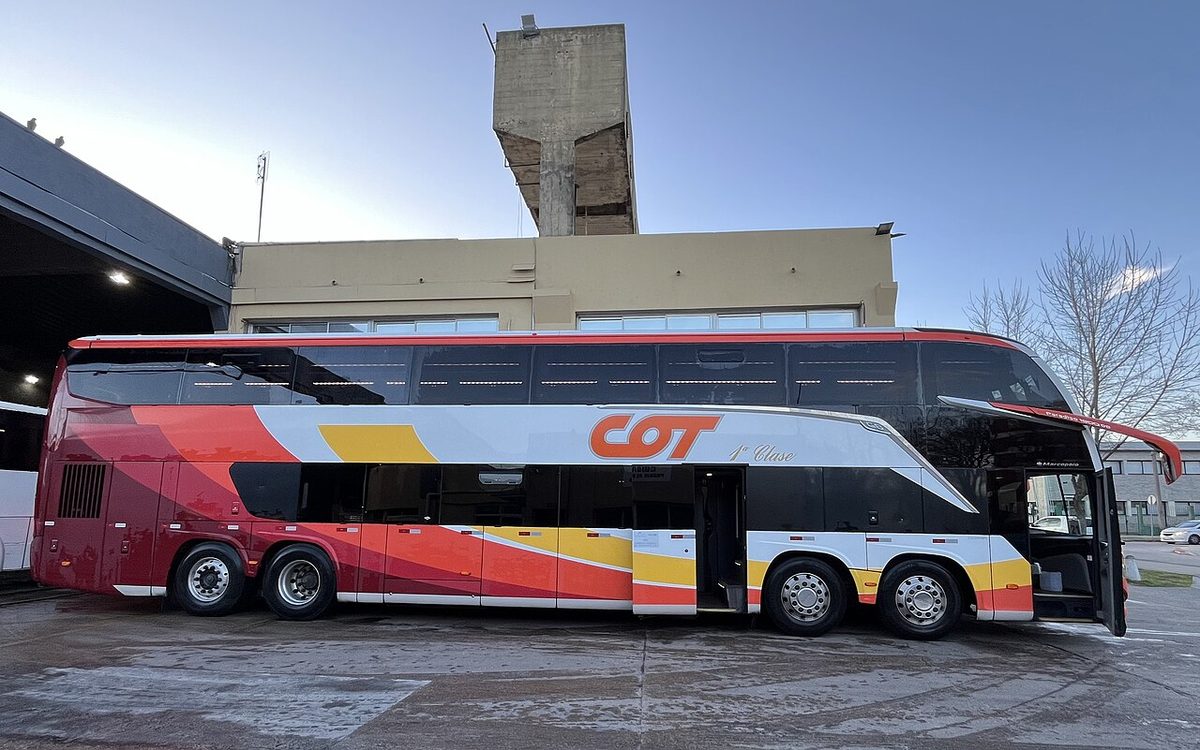
Three names handle nearly all the traffic: COT, Copsa, and Turil. COT and Copsa run the most frequent departures; Turil tends to offer slightly fewer, sometimes more direct, services. All of them leave from the same place — Tres Cruces, Montevideo’s main bus station, a modern multi-level terminal east of the old centre with shops, cafés, ATMs and luggage storage.
Frequency is the headline feature. Across the operators combined, a bus to Punta del Este leaves Tres Cruces roughly every twenty to thirty minutes through the day. You rarely need to plan around a timetable in the way you would elsewhere; you turn up, buy a ticket for the next departure, and go. Some services are marked directo (direct), others stop in coastal towns like Atlántida, Pan de Azúcar or Piriápolis, which adds a little time.
Cost, tickets, and the summer catch
Fares are low. Last I checked, a one-way ticket sat somewhere around US$8 to US$14 depending on the operator and how direct the run is. You can buy at the company counters inside Tres Cruces, and most lines also sell online if you’d rather lock in a seat in advance.
Advance booking is where the season matters. Uruguay’s summer is the Southern Hemisphere summer — December through February, peaking hard around the New Year and through January, when Punta del Este fills with Argentine and Brazilian holidaymakers. In that window, buses genuinely sell out, especially on Friday afternoons heading east and Sunday evenings coming back. Outside summer you can be far more casual and simply show up.
Arrival in Punta is at the Terminal de Ómnibus de Punta del Este, near the base of the peninsula and a short taxi ride from most hotels.
The honest drawback: the bus drops you at the terminal, not your door. If you’re staying out in La Barra or José Ignacio, or you’re hauling a surfboard and three suitcases, you’ll still need a taxi or a local bus for the last stretch — and in peak season those add up. For deeper detail on intercity buses across the country, that’s pillar territory; here I’m keeping it to this one route.
By rental car: driving the Ruta Interbalnearia yourself
Driving is what I choose when Punta del Este is a base rather than a destination — when I want to chase beaches up the coast, drive out to Casapueblo at sunset, or carry on to José Ignacio without checking a timetable. The road itself is easy and, for stretches, genuinely lovely.
The route and the road quality
Out of Montevideo you pick up Ruta 1 and the Ruta Interbalnearia heading east, then branch onto Ruta 93, which carries you into Maldonado and on to Punta del Este. It’s a dual carriageway for most of the way, well signposted, and the kind of road where you settle into a cruise and watch the coastal towns tick by. Speed limits run up to about 110 km/h on the highway sections, dropping through built-up areas — and Uruguayan police do enforce them.
Surface quality on the main route is good. The only time “ripio” — loose gravel — becomes relevant is if you detour onto smaller side roads toward a specific beach; some of those are unpaved, and a low rental car will not thank you. Stick to the numbered routes and you’ll never see gravel.
Tolls, fuel, and parking
You’ll pass tolls (peajes) on the Interbalnearia. Uruguay moved its toll system to fully automated, free-flow electronic collection a couple of years back, so you no longer stop at a booth — cameras read your plate. A reputable rental company builds toll handling into the contract; ask exactly how they bill it before you drive off, because the mechanics vary by agency. Per pass, expect something on the order of a few US dollars.
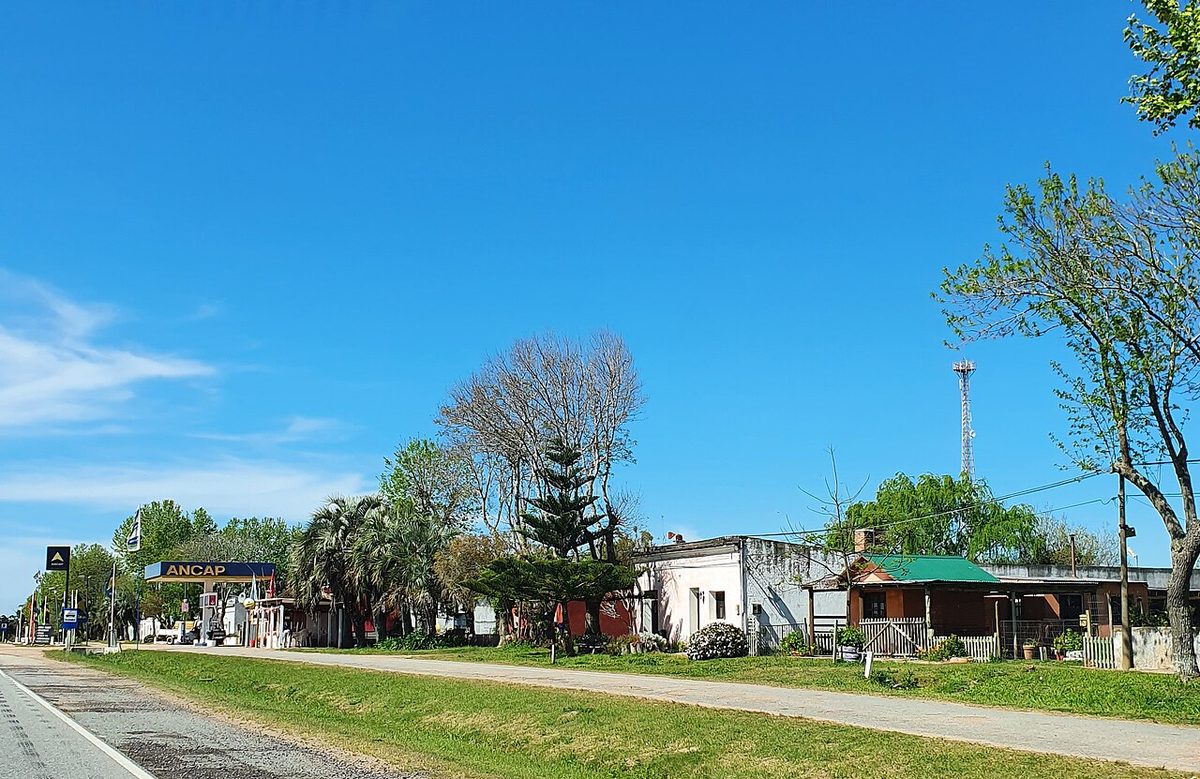
Fuel stations are plentiful along the main route, so there’s no need to top up nervously. Petrol in Uruguay isn’t cheap by regional standards, which is worth factoring in.
Parking is the real catch, and it deserves a warning. In Punta del Este in high summer, parking near the port, the marina and the popular beaches gets genuinely scarce and expensive. A car that felt like freedom on the highway can feel like a liability once you’re circling for a spot in January.
The honest drawback: exactly that parking squeeze, plus the cost stack. Between the daily rental, tolls, fuel and possibly paid parking, driving solo can cost several times what the bus would. The freedom is real, but so is the bill. For the full picture on renting a car and the paperwork involved, that’s a separate national guide — I’m not duplicating it here.
By private transfer or shuttle: door to door
Private transfers are the option I reach for in two specific situations: arriving on a late flight with a tired group, or travelling with enough luggage and people that splitting one fare actually makes sense. A driver meets you, loads the bags, and takes you straight to your accommodation — no terminal, no taxi at the far end, no timetable.
What it costs and how to arrange it
This is the premium choice, and the price reflects it. For a private vehicle running from Montevideo — most often booked from Carrasco airport — you’re typically looking at something in the range of US$100 to US$250 for the car, depending on vehicle size, company, and how far into Maldonado you’re going. Crucially, that’s usually per vehicle, not per person, which is what makes it pencil out for four people far better than for one.
Arranging one is easy. Many Montevideo and Punta hotels will organise a transfer for guests; dedicated transfer and “remise” (private car-with-driver) companies operate online and at Carrasco; and taxis are available at the airport too, though for a long intercity run a pre-booked transfer with a fixed price is usually calmer than a metered taxi. Always confirm the fare in writing before you set off.
Why and when it’s worth it
Comfort is the whole proposition. You get a direct, door-to-door ride at the time you choose, which is a real gift after a long-haul flight or at an odd hour when buses thin out. With a family — car seats, strollers, a week’s worth of beach gear — the saved hassle can justify the spend on its own.
The honest drawback: for a solo traveler or a couple, this is simply the most expensive way to make a cheap journey. You can pay ten to twenty times the bus fare for what is, fundamentally, the same two hours on the same road. The maths only turns friendly as the group grows.
By air: the Punta del Este airport question
Flying sounds glamorous and is, for this specific route, mostly impractical — but it’s worth understanding because the airport situation confuses a lot of visitors. Punta del Este has its own international airport: Capitán de Corbeta Carlos A. Curbelo International Airport, better known as Laguna del Sauce (airport code PDP). It sits about 20 kilometres northwest of the peninsula, near the lagoon it’s named for.
The reality of flying in
Here’s the nuance that catches people out. A direct flight specifically from Montevideo’s Carrasco (MVD) to Laguna del Sauce (PDP) is barely a thing — the hop is so short that scheduled service is sparse, seasonal, and often not daily. The airport comes alive mainly in the summer high season and for seasonal international and regional connections, plus private aviation, which Punta del Este attracts in quantity.
So in practice, the overwhelming majority of international visitors do not fly into Punta del Este directly. They fly into Montevideo’s Carrasco International Airport — Uruguay’s main gateway, with the broadest set of connections — and then continue east by road. Which loops you straight back to the first three options in this guide: from Carrasco you grab a bus, pick up a rental, or take a pre-booked transfer for the roughly two-hour run to the coast.
If you do land at Laguna del Sauce, remember the airport is not in Punta del Este. You’ll still cover that last 20 kilometres by taxi, transfer or hire car to reach the peninsula itself.
The honest drawback: low frequency and seasonality make flying unreliable as your primary plan, and the short distance means the time saved over driving is marginal once you add airport faff at both ends. For nearly everyone, “arriving by air” really means arriving at Carrasco and then taking the road. The country-wide arrivals picture is its own pillar guide.
Which option should you choose?
All four work. The best one is the one that matches how you’re actually travelling, so here’s how I’d steer different people.
Solo travelers and budget trips: take the bus, full stop. It’s cheap, frequent and reliable, and you do not need a car to enjoy Punta del Este itself. Buy ahead only if you’re going in peak summer.
Couples on a short break: usually the bus too, unless you specifically want to range up and down the coast. If your plan is to base in town and walk to the beach, a car is more burden than benefit once parking enters the picture. The peninsula is small enough that the beach, the port and its seafood grills and casual chivito counters all sit within a short walk of a central hotel.
Families and groups: here the maths flips. A rental car or a split private transfer often beats four-plus separate bus tickets, and the door-to-door convenience with kids and luggage is worth real money. If you’ll explore beyond the peninsula, lean car.
Road-trippers and explorers: rent the car. If José Ignacio, La Barra, Casapueblo and the beaches beyond are on your list, self-driving the Interbalnearia is the whole point, and the freedom pays for the parking headaches.
Late or awkward arrivals: book a private transfer. Stepping off a long flight into a waiting car beats hunting for the last bus of the night, and the premium buys genuine peace of mind.
Practical tips and the return trip
Don’t forget you have to come back. The good news is the route works identically in reverse — the same buses run Punta del Este to Montevideo all day from the Punta terminal, and if you flew into Carrasco you’ll likely want to be back near the capital for your departure. Build a buffer on the return in summer, when Sunday-evening traffic and full buses are both real.
A few more things I’ve learned the hard way. Carry some Uruguayan pesos in cash even if you mostly tap a card; small terminal purchases and tips like it. Tag your bag clearly for the bus hold. Arrive at Tres Cruces a good thirty minutes before departure in high season — the terminal gets busy. And a little Spanish goes a long way at the ticket counters, even though tourist-facing staff often speak some English.
For planning the wider trip, it’s worth thinking about when to visit Uruguay and roughing out a Uruguay itinerary before you lock in transport, since the season changes everything from prices to whether the bus is full.
Montevideo to Punta del Este: your questions answered
How long does it take to get from Montevideo to Punta del Este?
Plan on about two hours by any road option. Driving yourself is the quickest at roughly 1 hour 45 minutes to 2 hours, while buses run closer to 2 to 2.5 hours depending on how many coastal stops the service makes. Private transfers fall in between. Traffic in peak summer can stretch all of these.
What is the cheapest way to get to Punta del Este?
The bus, by a wide margin. A one-way ticket from Tres Cruces sits roughly around US$8 to US$14, against US$35-plus a day for a rental once you add fuel and tolls, and US$100 or more for a private transfer. For one or two people without much luggage, nothing comes close to the bus on price.
Do I need to book the Montevideo to Punta del Este bus in advance?
Usually no, but it depends on the season. Outside summer you can turn up at Tres Cruces and buy a ticket for the next departure, since buses leave every twenty to thirty minutes. In peak summer — late December through January, plus busy weekends — services genuinely sell out, so booking ahead online or at the counter is wise.
Is it better to take the bus or drive from Montevideo to Punta del Este?
It comes down to your plans. Take the bus if you’re on a budget, travelling solo or as a couple, and basing yourself in town — it’s cheaper and removes the parking problem. Drive if you’re a family or group, have heavy luggage, or want to explore the coast beyond the peninsula at your own pace.
Can you fly from Montevideo to Punta del Este?
Technically yes, into Laguna del Sauce airport (PDP) near Punta del Este, but it’s rarely worth it. Direct flights from Carrasco are sparse and seasonal, the distance is short, and you still drive the last 20 kilometres. Most visitors fly into Montevideo’s Carrasco airport and continue east by bus, car or transfer instead.
Where do buses to Punta del Este leave from in Montevideo?
From Tres Cruces, Montevideo’s main long-distance bus terminal, located east of the city centre. It’s a large, modern station with multiple companies — COT, Copsa and Turil among them — selling tickets to Punta del Este. You can reach Tres Cruces easily by local bus or taxi from anywhere in the city.
Final thoughts
For all my early overthinking, this is one of the simplest journeys in Uruguay. Two hours of coast separate the capital from the country’s most famous beach town, and you have four good ways to cross it. The bus will serve most travelers beautifully; a car earns its keep if you’re exploring; a transfer buys comfort when you need it; flying is a footnote for a lucky few.
Pick the one that fits your luggage and your group, leave a little extra time in peak summer, and you’ll be on the sand in Punta del Este before you’ve finished your podcast. Once you’re there, the rest of the coast is waiting — and most of it is an easy hop further along the same road.
To go deeper on where you’re heading, our full guide to Punta del Este covers the town itself, and you can branch out to the beaches of Punta del Este, the clifftop landmark of Casapueblo, the village of José Ignacio, and the surf town of La Barra. For the city you’re leaving, see our guide to Montevideo, and for sorting out arrivals into the country, getting to Uruguay and our general Uruguay travel tips.
Credits & sources
Sources & further reading
- Terminal Tres Cruces, Montevideo — official site for the main bus station, with operators and services.
- COT — one of the principal bus companies on the Montevideo–Punta del Este route, with timetables and online tickets.
- Ruta Interbalnearia — background on the coastal highway that links the two destinations.
Photo credits
All images via Wikimedia Commons: Tres Cruces Terminal Montevideo by JacobinoWunsh (CC BY-SA 4.0); Ruta Interbalnearia Coastal Highway by CITY MVD (CC BY-SA 3.0); Cot Long Distance Coach Uruguay by Marinna (CC BY-SA 4.0); Punta Del Este Skyline Arrival by a Wikimedia Commons contributor (CC BY-SA 3.0); Uruguay Road Sign Toll by CITY MVD (CC BY-SA 4.0); Montevideo Rambla Cityscape by Falk2 (CC BY-SA 3.0 de).
1 comment