La Barra: Punta del Este’s Bohemian Side (2026)
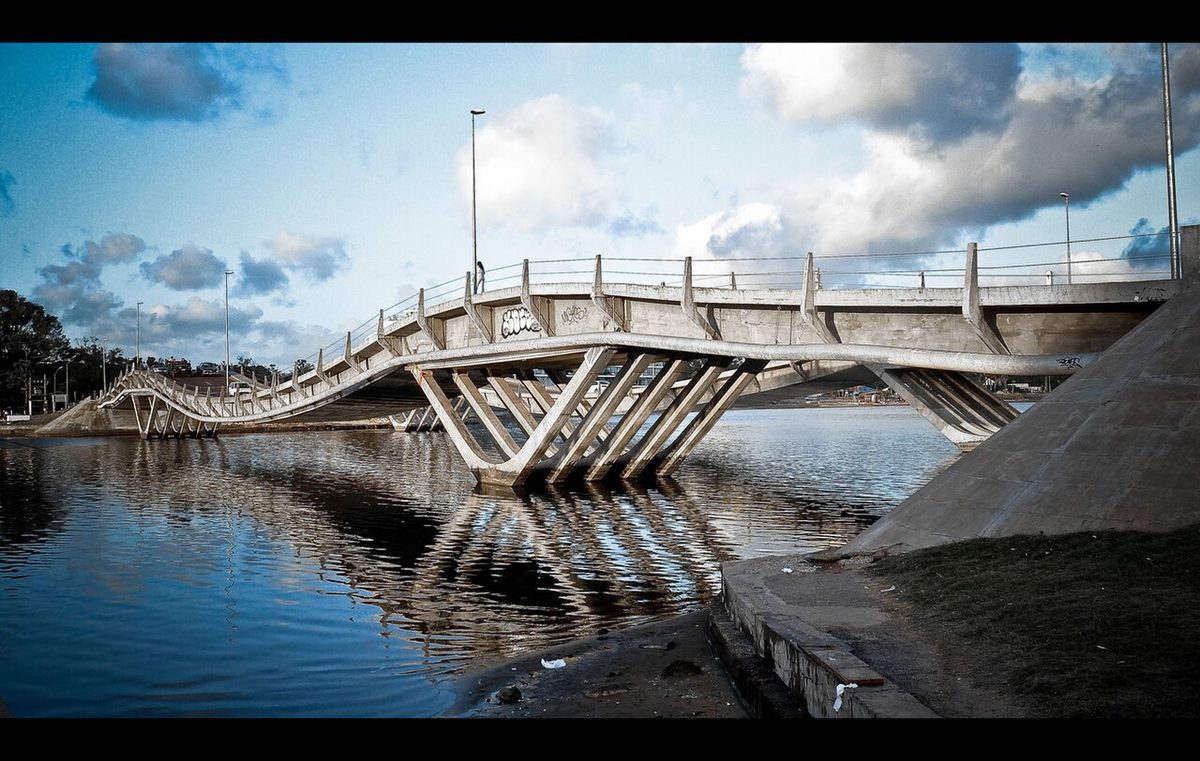
The first time I drove into La Barra, I nearly spilled my coffee. Not from the scenery — from the bridge. You roll up onto this low concrete ribbon over the Maldonado stream, and the road dips, then lifts, then dips again, and your stomach does a small hop each time, like the gentlest rollercoaster in South America. The locals in the car next to me weren’t even looking up. They’d felt it a thousand times. I had to do a U-turn at the far side and drive back over just to feel it twice.
La Barra Uruguay is the artsy, design-minded, slightly younger beach town just east of Punta del Este, separated from it by the Maldonado stream and connected by a famous undulating bridge that physically bounces as you cross. Officially La Barra de Maldonado, it trades Punta’s high-rise glamour for galleries, low-slung design shops, surf beaches, and a nightlife that runs until sunrise in January. It sits about 12 kilometers from downtown Punta del Este.
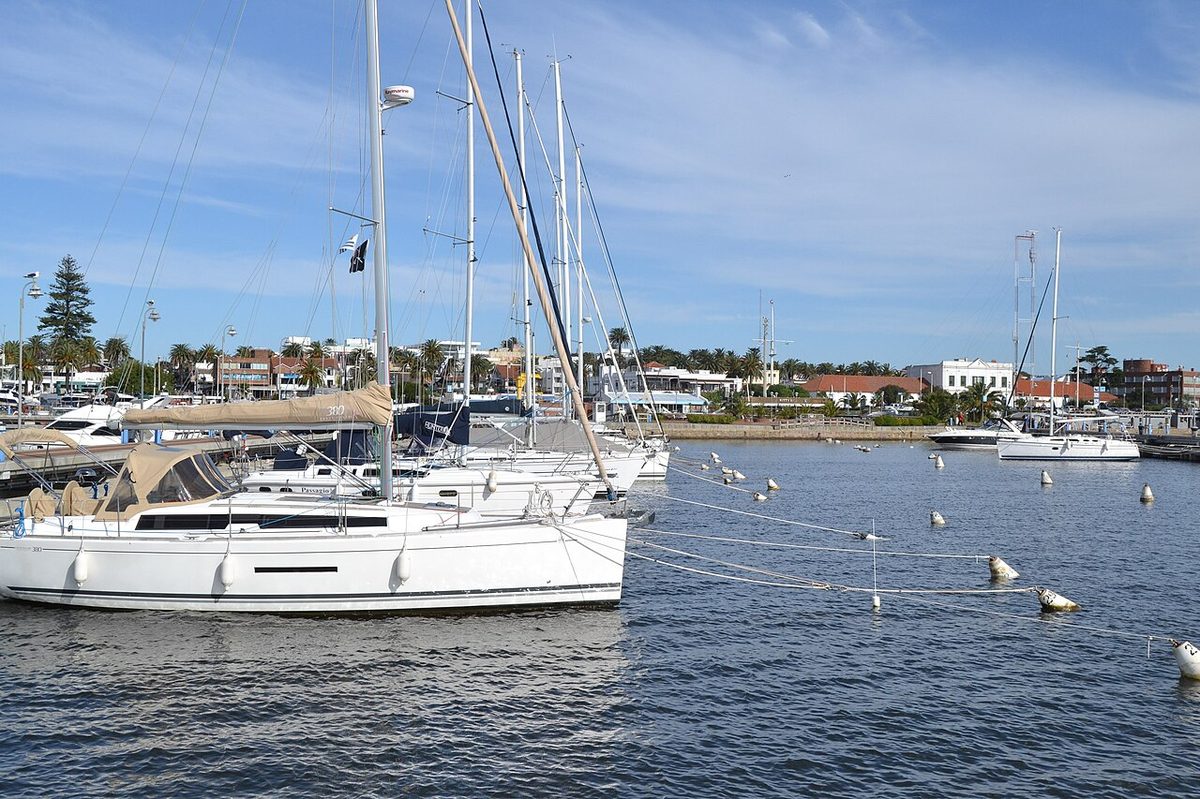
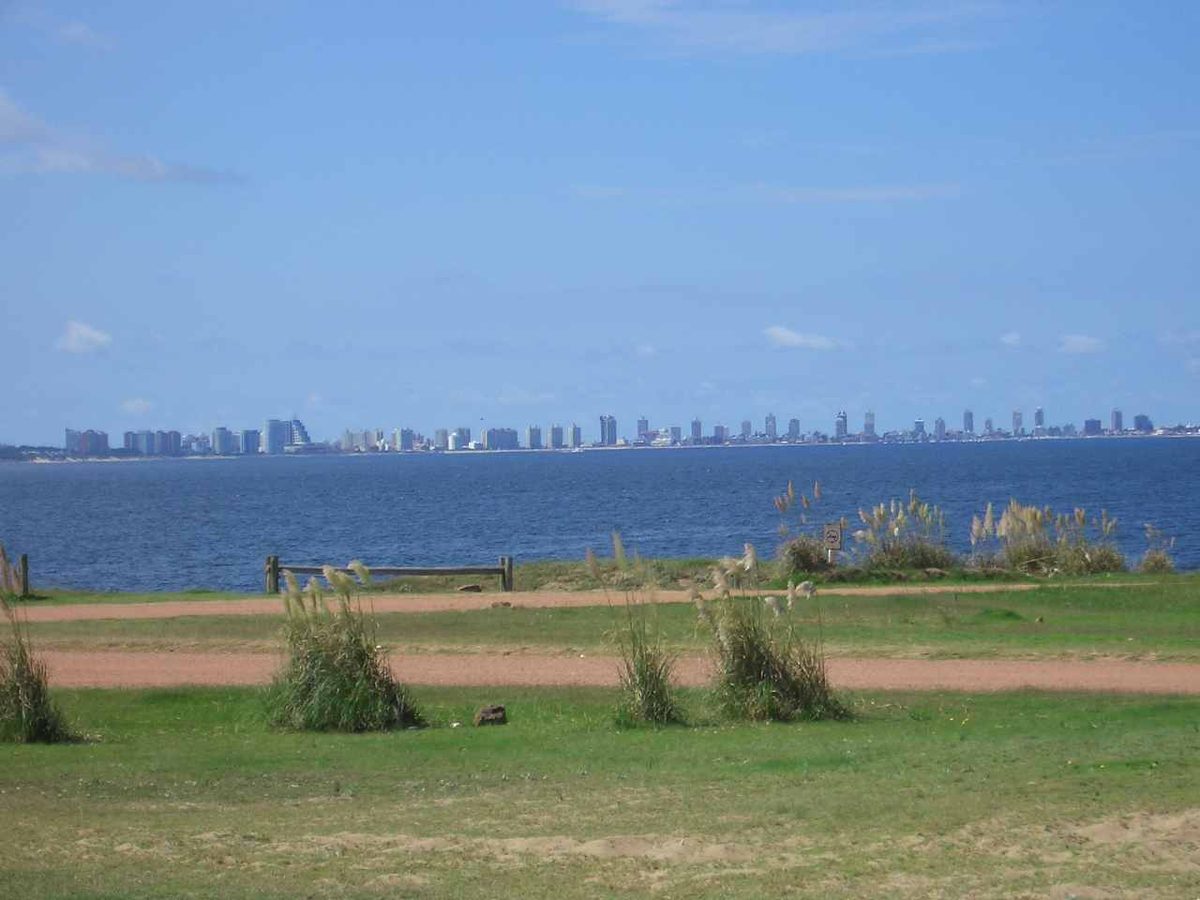
Think of this stretch of coast as a spectrum. At one end you have Punta del Este proper: towers, casinos, marina, valet parking. At the other end, half an hour east, you have José Ignacio: thatched roofs, candlelit dinners, and a deliberate refusal to build anything tall or loud. La Barra sits in the middle, and not just geographically. It’s where the energy of Punta meets the studied cool of the eastern coast, and the result is its own thing entirely — scruffier than José Ignacio, hipper than Punta, and proud of it.
This guide is the version I wish I’d had on that first drive: where La Barra actually is and why that bridge moves, what the scene is really like, the two beaches worth your towel, how it stacks up against José Ignacio, and the honest catches — the January noise, the high-season prices, the bridge that becomes a parking lot on a hot Saturday.
La Barra, Uruguay at a glance
| Detail | What to know |
|---|---|
| Location | La Barra de Maldonado, on Ruta 10, just east of Punta del Este across the Maldonado stream |
| Distance from Punta del Este | About 12 km / roughly 15–20 minutes by car (longer in January traffic) |
| Vibe | Bohemian, design-forward, younger, surf-and-art crowd; daytime mellow, late-night loud in peak season |
| Beaches | Montoya and Bikini — open Atlantic, surf-friendly, beach clubs (paradores) in summer |
| Known for | The undulating “wavy” bridge, art galleries, design shops, surf, and summer nightlife |
| Best for | Surfers, design lovers, night owls, and travelers who find Punta too built-up and José Ignacio too quiet |
| Best season | December–February is peak (Southern Hemisphere summer); January is the loud, expensive height; March and late November are the sweet spots |
A quick vocabulary note before we go further, because Uruguayans use a few words you’ll see on every sign. A parador is a beach club — a restaurant-bar built right on the sand, often with loungers and music. A balneario is a beach resort town or beach district. The rambla is the coastal road or promenade that runs along the water. And the star of this whole article, the puente ondulante, literally means “undulating bridge.” Keep those four in your back pocket.
Where La Barra is, and the story of the wavy bridge
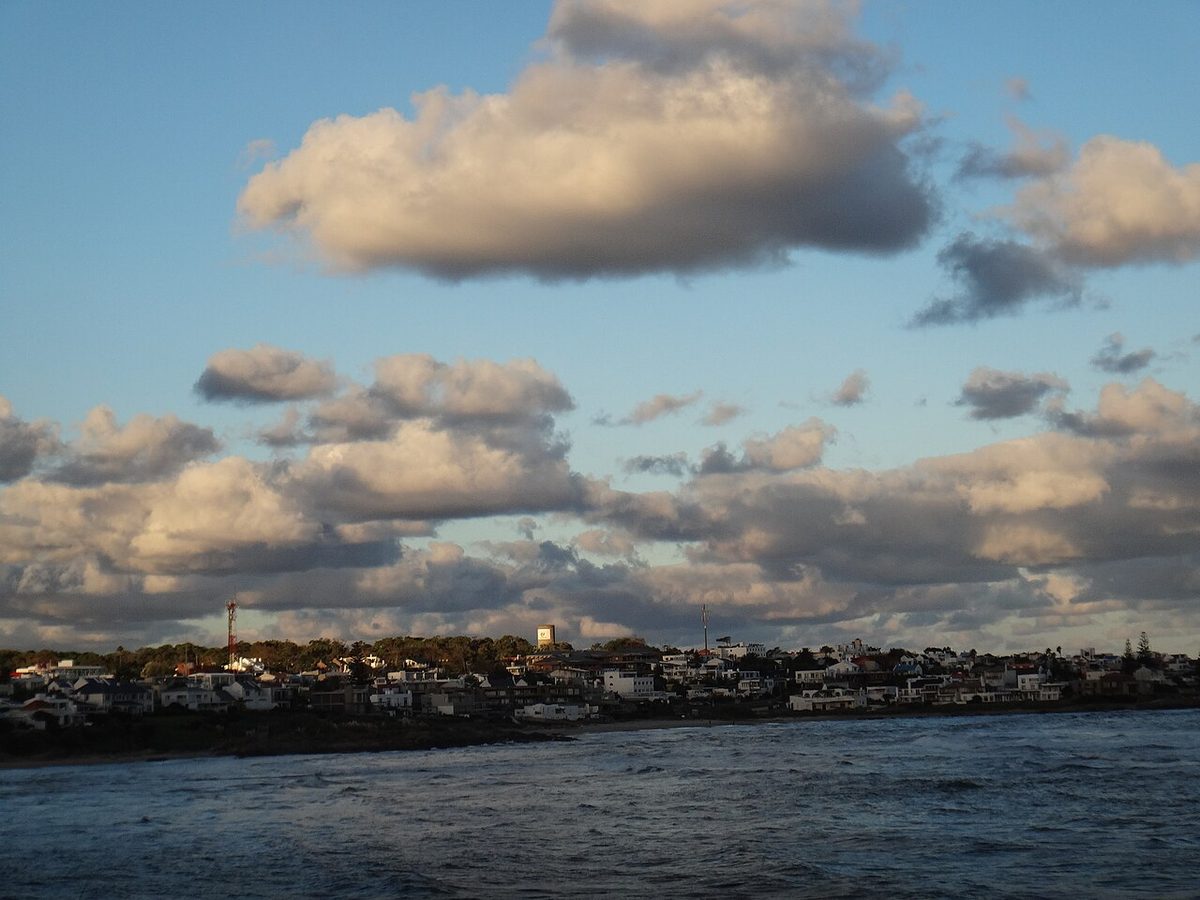
Geography first. La Barra de Maldonado sits on the eastern bank of the Arroyo Maldonado, the stream that drains into the Atlantic right where the calm western waters of Punta del Este give way to open ocean. Ruta 10 — Route 10 — is the spine of the whole eastern coast, and it runs straight through the middle of town. Cross the bridge from Punta, and within a couple of minutes you’re on La Barra’s main drag, lined with shops, ice-cream parlors, restaurants, and the occasional gallery with a sculpture out front.
Now, the bridge. This is the thing everyone photographs and almost nobody explains properly, so here’s the real story.
Why does the bridge wave?
Officially it’s the Leonel Viera Bridge, named for the man who built it, though everyone just calls it the puente ondulante or “el puente de La Barra.” It’s what engineers call a stressed-ribbon bridge — a continuous, thin band of concrete strung between supports like a taut hammock, dipping in the middle of each span and rising over the piers. That dip-and-rise profile is the wave. It isn’t decorative. It’s the natural shape a cable takes when you hang it and then turn it into a road.
The bridge is roughly 150 meters long, with a main span of about 90 meters flanked by two shorter spans of around 30 meters each. Two slim piers stand in the water. Because the deck is so thin and the spans dip between the supports, a moving car rides up and over each crest, and that’s the bounce you feel. People exaggerate it — you’re not airborne — but it’s real, and on the original span it’s noticeable enough to make first-timers laugh.
Who built it, and why it made him famous
Here’s the part I love. The bridge was designed and built between 1963 and 1965 by Leonel Viera, a man who had no formal training in architecture or civil engineering. He was, by trade, a builder and a problem-solver, and the crossing had defeated others before him — two earlier bridges at the same spot had been destroyed by floods and storms over the years. Viera’s solution was so clever it ended up in engineering textbooks.
His method went like this. After stringing the main cables across the stream, his crews laid precast concrete tiles along them to form the deck. Then — and this is the trick — they piled sandbags on top of the tiles to stretch the cables tight, poured concrete into the gaps between the tiles while everything was under load, and only then removed the sandbags. Taking the weight off compressed the whole concrete ribbon, locking it into a stiff, durable structure. Viera essentially pioneered a construction sequence that’s now standard for this kind of bridge worldwide. The man taught himself, solved a problem the professionals couldn’t, and became a national name for it. He died in 1975; the bridge has outlived him by half a century.
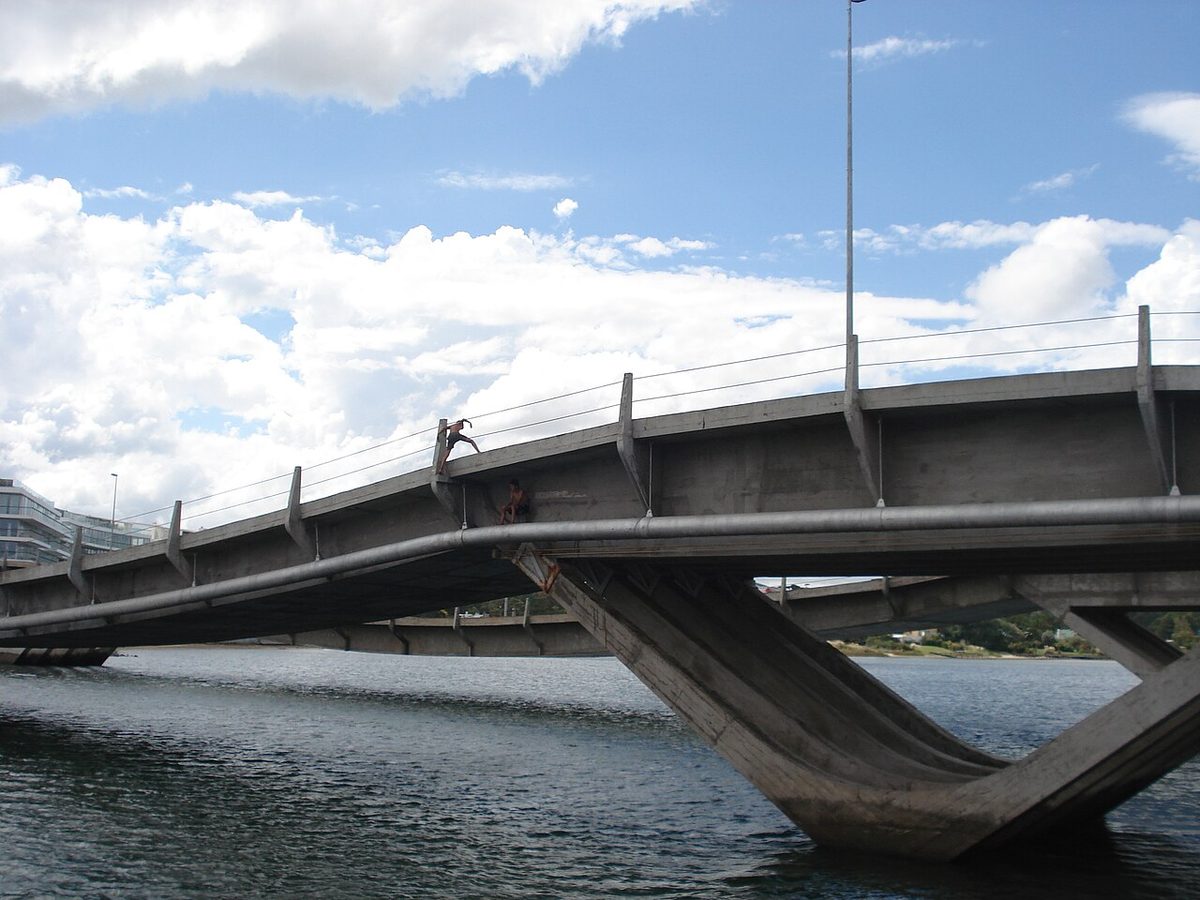
One detail that confuses visitors: there are actually two parallel ribbons now. In 1998 the authorities twinned the bridge, building a second span about 20 meters upstream to carry traffic the other direction, because the single original was choking on summer volume. So today you cross on one ribbon and return on the other. Drive over the older span if you can — it’s the bouncier of the two.
A small honest note: the bridge is also La Barra’s worst traffic chokepoint. On a hot January afternoon, when everyone in Punta decides to drive east to the beach clubs at the same time, the approach can back up into a slow crawl, and the romance of the wave wears thin somewhere around the tenth minute of idling. More on timing that later.
The scene: galleries, design shops, and a nightlife that doesn’t quit
What makes La Barra La Barra isn’t only the bridge or the beaches — it’s the mix of people and the way the town flips character between day and night. By day it’s a low-rise, walkable strip with a strong creative streak. By summer night it becomes one of the loudest corners of the entire Uruguayan coast.
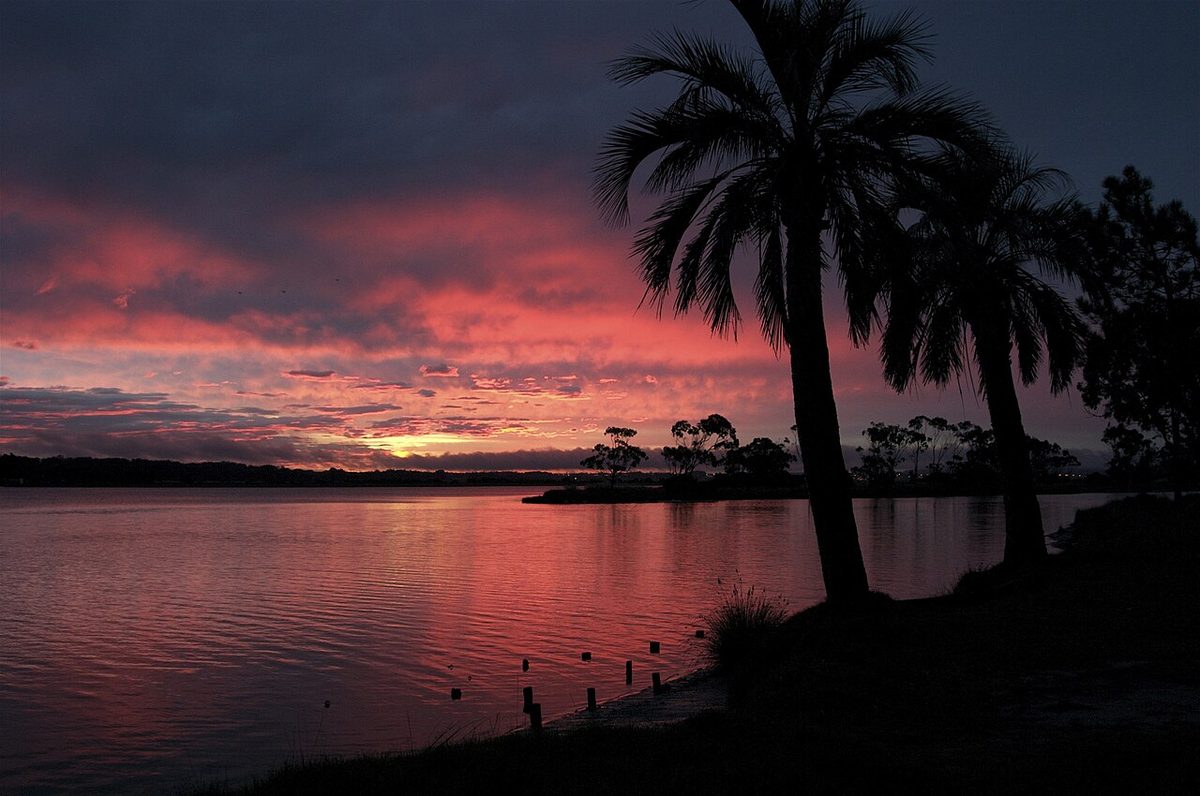
Galleries and design first. La Barra has long pulled in artists, architects, and shop owners who wanted to be near Punta’s money without being inside Punta’s glass towers. The result is a main drag and a few side streets dotted with contemporary-art galleries, furniture and homeware studios, ceramics shops, and the kind of clothing boutique that sells one perfect linen shirt and a stack of straw hats. Some are open year-round; many run on a summer rhythm and shutter or go quiet from April. It’s the sort of place where you go out for an ice cream and come home having priced a hand-thrown bowl you didn’t need.
Then there’s the contrast that defines the area. Punta del Este, just across the water, is vertical and polished — buildings stacked along the rambla, a casino, the marina. José Ignacio, half an hour east, is horizontal and hushed — low houses, big skies, no clubs by design. La Barra refuses both. It keeps the buildings low like its eastern neighbor but keeps the energy high like its western one. You’ll find a design gallery and a sushi counter and a club that opens at 1 a.m. within the same three blocks. The same logic runs through the restaurants along this stretch of coast, where Fasano’s hotel dining room sits a few minutes from clay-oven pizza at Elmo toward Manantiales.
Nightlife: the honest version
Let’s be straight about the nightlife, because it’s a genuine reason people come and a genuine reason others should stay away. In peak season — late December through January, and especially the first three weeks of January — La Barra and the neighboring strip toward Manantiales become a serious party zone. Beach clubs that serve lunch quietly in November turn into open-air dance floors by February. The sunset-cocktails crowd at Bikini Beach drifts to bars and clubs that fill up after midnight and empty out at dawn. DJs, models, Argentine and Brazilian vacationers, the whole scene.
If that’s what you want, you’ve found your town. If it isn’t, here’s the drawback stated plainly: in January, the noise is real, and if you book accommodation on or near the main drag, you will hear it. I’d happily spend a January night out in La Barra. I would not want to sleep beside the main strip in January. Pick a place a few streets back from the action, or base yourself in quieter Manantiales or toward José Ignacio and visit La Barra for the evening. Outside peak season — say, March onward or before mid-December — the volume drops dramatically and the town turns gentle and almost sleepy, which many people, me included, prefer.
The beaches: Montoya and Bikini
La Barra’s two main beaches face the open Atlantic, which means real waves, real surf, and water that’s cooler and livelier than the protected bay beaches back in Punta. This is the surf heart of the Punta del Este area, with consistent sandbanks that throw up clean lefts and rights.

Playa Montoya
Montoya is the one I’d point a first-timer to. It’s a long, open stretch just east of the town center with dependable surf and a summer beach-club scene that’s lively without tipping fully into chaos. Surf schools set up here because the waves are consistent enough for beginners on the right day and punchy enough to keep experienced surfers interested. In summer the paradores along the sand fill with loungers and lunch crowds; out of season it goes quiet and wide and you can walk for ages with the beach mostly to yourself. Montoya manages a balance that’s hard to find — it’s social in January and serene in April.
One caveat: because it’s open ocean, the surf that makes Montoya fun also makes it a beach to respect. On big-swell days the shore break and currents are no joke, and lifeguard coverage thins out sharply outside summer. If you’re not a confident swimmer, watch where the locals go in and stay between the flags when they’re up.
Playa Bikini
Bikini Beach, a little farther along toward Manantiales, is the see-and-be-seen one. It started life as a pure surf spot — good, consistent waves — and over the years morphed into a fashionable hangout fringed with stylish beach bars, a sushi-and-cocktails kind of place where the sunset session at the paradores is as much about the crowd as the surf. It’s where the models-and-celebrities reputation of La Barra comes from. The waves are still there; so are the cameras.
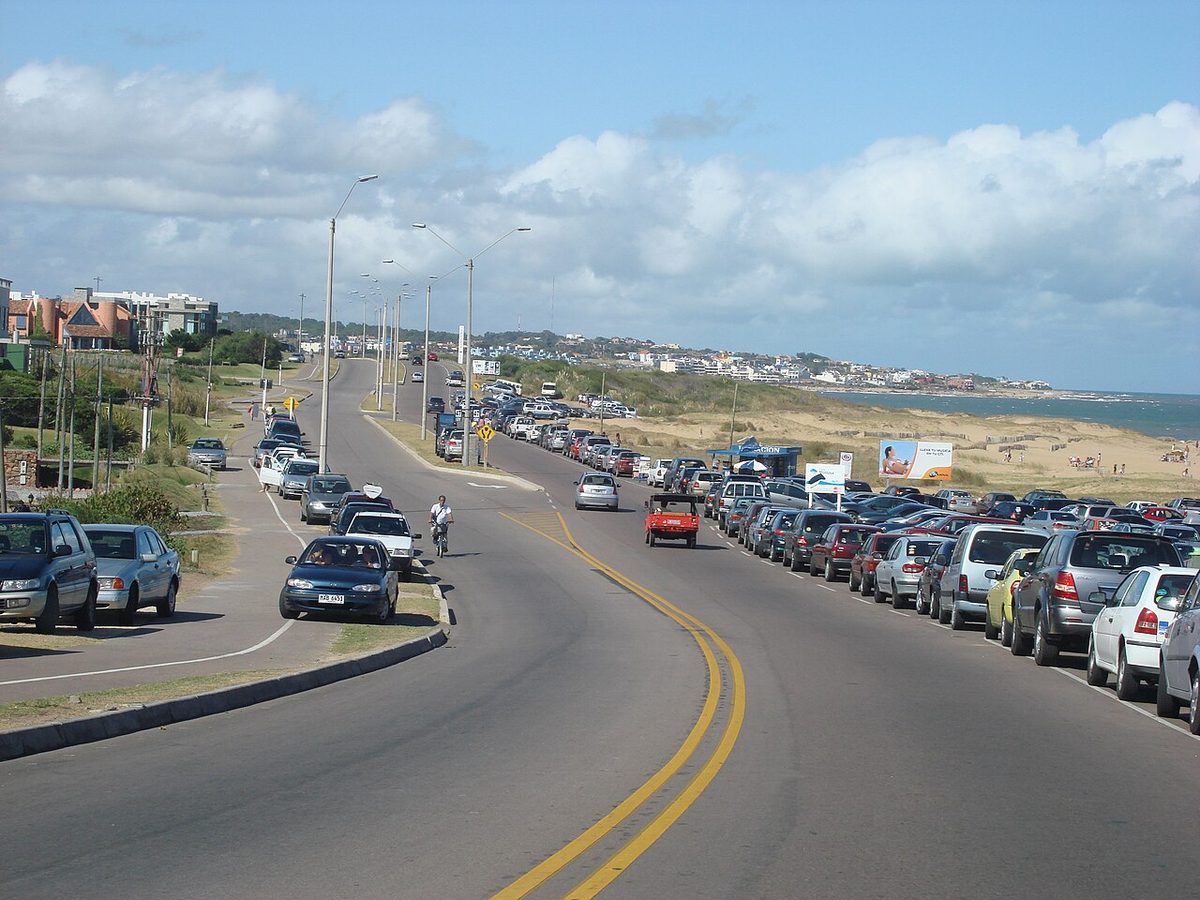
The honest note on Bikini: in high summer it can feel more about the scene than the swim, and the prices at the trendiest paradores reflect it. A round of cocktails on the sand at peak hour will not be cheap. If you’re there for the surf and the sand rather than the spectacle, go in the morning before the party crowd arrives, or visit in the shoulder season when it reverts to being a very good, much calmer beach.
I’m keeping the beach coverage focused here on purpose. The wider Punta del Este coastline — the calm Mansa and Brava beaches, the family spots, the surf breaks beyond La Barra — deserves its own deep treatment, and you’ll find it in our full guide to the beaches of Punta del Este, plus a national overview in our roundup of the best beaches in Uruguay.
Things to do in La Barra beyond the sand
You can fill a La Barra day without ever lying on a towel. Here’s what’s worth your time.
Cross the bridge on foot. Everyone drives it; few walk it. Park on one side and stroll across the older span for the best feel of the wave underfoot and a clean view down the Maldonado stream toward the sea. Early morning light is best, before the traffic builds.
Browse the galleries and design shops. Spend an hour wandering the main drag and the streets just off it. Even if you buy nothing, La Barra’s shops are a window into Uruguay’s contemporary design scene — clean lines, natural materials, a quiet confidence. Our overview of Uruguayan culture gives useful context for what you’re looking at.
Visit a quirky museum. La Barra is home to an eccentric little museum complex — a Museum of the Sea heavy on maritime curiosities, beach-resort history, oddball collectibles, and an insectarium with thousands of specimens. It’s the kind of gloriously strange roadside attraction that’s perfect for a cloudy afternoon or restless kids.
Take a surf lesson. Even if you’ve never stood on a board, a morning lesson at Montoya is a genuinely good time, and the local schools are used to nervous beginners. Worst case, you fall off a lot in warm-ish water with a good story to tell.
Day-trip to the icons next door. La Barra is a perfect base for the Punta del Este greatest hits. La Mano — the giant fingers rising out of Brava beach — is a short drive west. So is Casapueblo, the white sculptural building-turned-hotel-and-museum at Punta Ballena, best caught at sunset. Boats out to the sea lion colony on Isla de Lobos leave from the Punta del Este harbour, fifteen or twenty minutes back over the bridge. For more ideas across the country, our guide to things to do in Uruguay casts a wider net.
La Barra vs José Ignacio: which one is for you?
This is the comparison everyone planning the eastern coast wrestles with, so let’s settle it honestly. La Barra and José Ignacio are often described as twins, and in a sense they are — both reject Punta’s high-rise glamour, both go quiet in winter and electric in summer, both attract a moneyed, design-conscious crowd. But they reject Punta in opposite directions, and that difference is everything.
José Ignacio, about 30 minutes farther east, is the quiet-luxury one. It’s a tiny former fishing village built around a lighthouse, with low houses, dirt-edged lanes, and famously no nightclubs or loud bars — the residents have actively kept them out. Dinner there is the event: candlelit, slow, often spectacular, often eye-wateringly expensive in January. It’s a place couples and families go to switch off. I covered it in full in our guide to José Ignacio.
La Barra is the social, creative, slightly rowdier sibling. It has the galleries and the design shops, the surf beaches, and crucially the nightlife that José Ignacio refuses to allow. It’s livelier, younger on average, less polished, and more affordable around the edges (though the best paradores aren’t cheap anywhere on this coast).
Here’s how I’d actually choose. Want long candlelit dinners, total quiet, and a place to read on the beach undisturbed? José Ignacio. Want surf in the morning, a gallery crawl in the afternoon, and the option of dancing till dawn? La Barra. Traveling with a mix of people who want different things? Base in La Barra — it’s close enough to Punta’s amenities and a manageable drive from a José Ignacio dinner, so it covers the most ground. Want to sleep in absolute silence in January? Neither’s main strip; pick a house set back from both.
For a country-wide view of where these towns fit, our best places to visit in Uruguay guide places them in context, and the where to stay in Uruguay guide helps with the lodging decision more broadly.
When to go to La Barra
Timing makes or breaks a La Barra trip more than almost anywhere else in Uruguay, because the town’s personality swings so hard with the calendar. Remember that the seasons are flipped — this is the Southern Hemisphere, so summer runs December to February.
Peak summer (late December to February, especially January): the full show. Hot days, packed beaches, every parador open, nightlife roaring, and the highest prices of the year. Also the most traffic, the most noise, and the most crowded bridge. If the scene is the point, come now — just book early and sleep away from the strip.
Shoulder season (March, and late November to mid-December): my favorite. Warm enough to swim and surf, beaches still pleasant, many places still open, but prices ease and the volume drops. March in particular catches the warmth of summer with a fraction of the crowd.
Off-season (April to October): quiet, cooler, and many businesses closed or on reduced hours. The bridge is still there, the surf still rolls, and the town is peaceful to the point of sleepy. Lovely for a contemplative visit, frustrating if you wanted the buzz. Our guides to the best time to visit Uruguay and Uruguay in summer go deeper on the seasonal trade-offs.
Planning your visit: getting there, cars, and costs
A few practical things to get right.
Getting there and getting around
La Barra is about 12 kilometers east of downtown Punta del Este — roughly 15 to 20 minutes by car outside peak hours, longer when the bridge backs up. Local buses run from Punta’s main terminal and take around 15 to 20 minutes; they’re cheap and frequent in summer, sparser off-season. From Montevideo, it’s roughly a two-hour drive east along the coast; from Punta del Este’s airport (Capitán Corbeta C.A. Curbelo, often just “Laguna del Sauce”), it’s a short transfer of well under an hour.
Should you rent a car? For La Barra specifically, my honest answer is: it helps a lot, especially if you want to range east to José Ignacio or explore the surf beaches beyond town, but it isn’t essential if you’re staying put. The catch is parking — in January, finding a spot near the beach clubs or the main drag at peak hours is genuinely difficult, and the bridge traffic can sap the joy out of a short hop. If you’re basing in La Barra and mostly walking to the beach and dinner, you might skip the car and use buses, taxis, or ride apps for the occasional trip to Punta. Our Uruguay itinerary guide shows how La Barra slots into a longer coastal route, car or not.
Where to base yourself
La Barra has guesthouses, rental houses, and boutique stays rather than the big hotel towers you’ll find in Punta. Staying in La Barra puts you walking distance from the beaches and the scene, which is the whole point — just choose a place a few streets back from the main drag if you value sleep in summer. Alternatively, base in Punta del Este for more hotel choice and visit La Barra by day and night, or base east toward Manantiales for a calmer perch with quick access to both Bikini Beach and the José Ignacio dinner circuit. The broader pros and cons live in our complete Punta del Este guide.
What it costs
Be ready for this: in January, the eastern coast of Uruguay is expensive — among the priciest stretches in all of South America at peak. Accommodation rates spike, the fashionable paradores charge accordingly, and a casual lunch on the sand can cost what a proper dinner would inland. Prices here are best treated as “around” figures because they move with the season and the exchange rate, but the pattern is reliable: January is dear, the shoulder season is noticeably gentler, and the off-season is cheap but quiet. If budget matters and you still want the surf and the bridge and the galleries, come in March. You’ll get most of the magic at a fraction of the cost. For the wider trade-offs, see our take on Uruguay’s quieter, lesser-known corners.
La Barra Uruguay: your questions answered
Is La Barra worth visiting?
Yes, especially if Punta del Este feels too built-up and José Ignacio too sleepy. La Barra gives you the wavy bridge, real surf at Montoya and Bikini, a genuine art-and-design scene, and serious summer nightlife, all in a low-rise, walkable town. It’s not a secret — it’s well-known and can be crowded in January — but it earns its reputation. Come in the shoulder season for the best balance.
How far is La Barra from Punta del Este?
La Barra is about 12 kilometers east of downtown Punta del Este, which is roughly a 15-to-20-minute drive outside peak hours. Local buses from Punta’s main terminal cover it in a similar time and run frequently in summer. The one variable is the bridge: on hot January afternoons, traffic over the Leonel Viera bridge can stretch the trip out considerably, so allow extra time.
Why does the bridge in La Barra wave?
Because it’s a stressed-ribbon bridge — a thin band of concrete that dips between its supports and rises over them, so a moving car rides up and over each crest. The undulating shape isn’t decorative; it’s the natural curve of the hanging structure. Self-taught builder Leonel Viera designed it this way in the early 1960s, pioneering a construction method now used worldwide. Locals call it the puente ondulante.
La Barra or José Ignacio — which should I choose?
Choose La Barra for surf, galleries, and nightlife in a livelier, slightly more affordable town. Choose José Ignacio, about 30 minutes farther east, for quiet luxury, long candlelit dinners, and no clubs by design. La Barra makes the better base if your group wants variety, since it’s close to Punta’s amenities and a manageable drive from a José Ignacio dinner. José Ignacio wins for pure tranquility.
Is La Barra a good place to surf?
It’s the surf hub of the Punta del Este area. Montoya and Bikini beaches face the open Atlantic and produce consistent, well-shaped waves, with surf schools set up for beginners and sandbanks that keep experienced surfers happy. Conditions are best respected on big-swell days, when currents are strong and lifeguard coverage thins outside summer. Morning sessions are calmest, before the beach-club crowd arrives.
When is the best time to visit La Barra?
March, or late November to mid-December, hits the sweet spot — warm enough to swim and surf, most places open, but with lower prices and far fewer crowds than peak. January is the loud, expensive height of the season, ideal if you want the full nightlife scene and don’t mind the noise and traffic. April to October is quiet and cool, with many businesses closed or on reduced hours.
Final thoughts
La Barra rewards travelers who know what they’re after. Show up in January expecting silence and you’ll be cranky; show up expecting a party and you’ll be thrilled. Show up in March wanting surf, galleries, a strange little museum, and a bridge that bounces, and you’ll wonder why it isn’t more famous. The town threads a line that’s genuinely rare on this coast — looser than José Ignacio, more characterful than Punta, and held together by that improbable concrete ribbon a self-taught builder strung across a stream sixty years ago. Drive over it slowly. Then drive back and do it again. I always do.
Credits & sources
Sources & further reading
- Leonel Viera Bridge — Wikipedia (engineering, dimensions, and construction history of the wavy bridge)
- Puente Leonel Viera — Structurae (technical record of the stressed-ribbon design)
- La Barra / José Ignacio — Welcome Uruguay (regional tourism overview and local history)
Photo credits
All images via Wikimedia Commons: Puente Ondulante La Barra Bridge by Joao Vicente (CC BY 2.0); La Barra Maldonado Ruta 10 Street by Rosina Peixoto (CC BY-SA 3.0); Leonel Viera Bridge La Barra by yonolatengo (CC BY 2.0); La Barra Punta Del Este Coast Scene by https://www.flickr.com/photos/ciiiiro/ (CC BY 2.0); Playa Montoya La Barra Surf Beach by Rosina Peixoto (CC BY-SA 4.0); La Barra Maldonado Stream Mouth Coast by anibal amaro (CC BY 3.0).