La Mano de Punta del Este: Visiting the Hand in the Sand (2026)
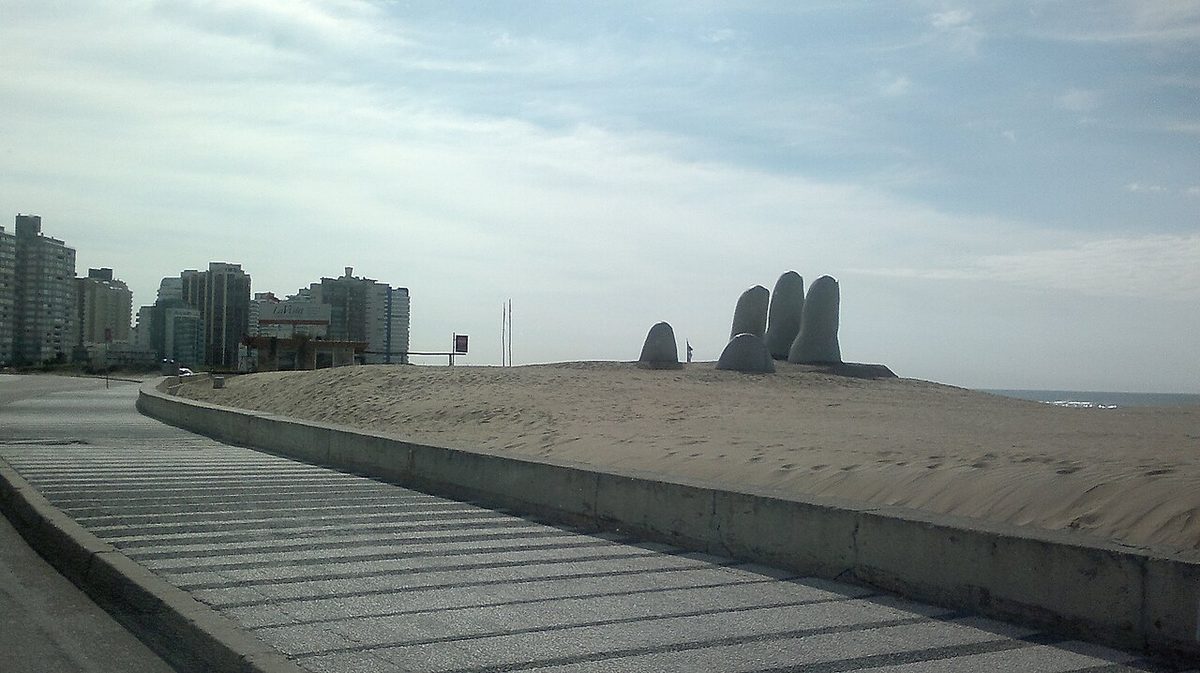
The first time I walked up onto Playa Brava at first light, the beach was empty except for a man with a fishing rod and a dog that clearly owned the place. And there they were: five enormous concrete fingers pushing up out of the sand, tilted toward the Atlantic, looking for all the world like someone very large was going under and had one last reach left. I had seen the photos. Everyone has. Standing there alone with la mano punta del este, before the tour vans and selfie queues arrived, was a completely different thing.
That hand ended up on every Uruguay postcard, every “best of South America” listicle, and a fair number of fridge magnets. It is also genuinely worth your time, which is not something I say about every famous photo-stop. Here is everything I have learned about visiting it — the history, the meaning, the exact spot, and the honest truth about the crowds.
The short version: what is la mano punta del este?
La mano punta del este is a giant sculpture of a human hand and five fingers emerging from the sand on Playa Brava, the wild Atlantic-facing beach in Punta del Este, Uruguay. The Chilean artist Mario Irarrázabal built it in 1982 as a warning about the sea. It goes by several names — “Los Dedos” (The Fingers) and officially “Monumento al Ahogado” (Monument to the Drowned). It is free, on the open beach, and always accessible.
That is the version you can read out to your travel companions. The longer version is much more interesting, and it answers the questions people actually have once they are standing in front of it: why is it here, who made it, what is it supposed to mean, and how do you get a photo without forty strangers in the frame.
Getting your bearings
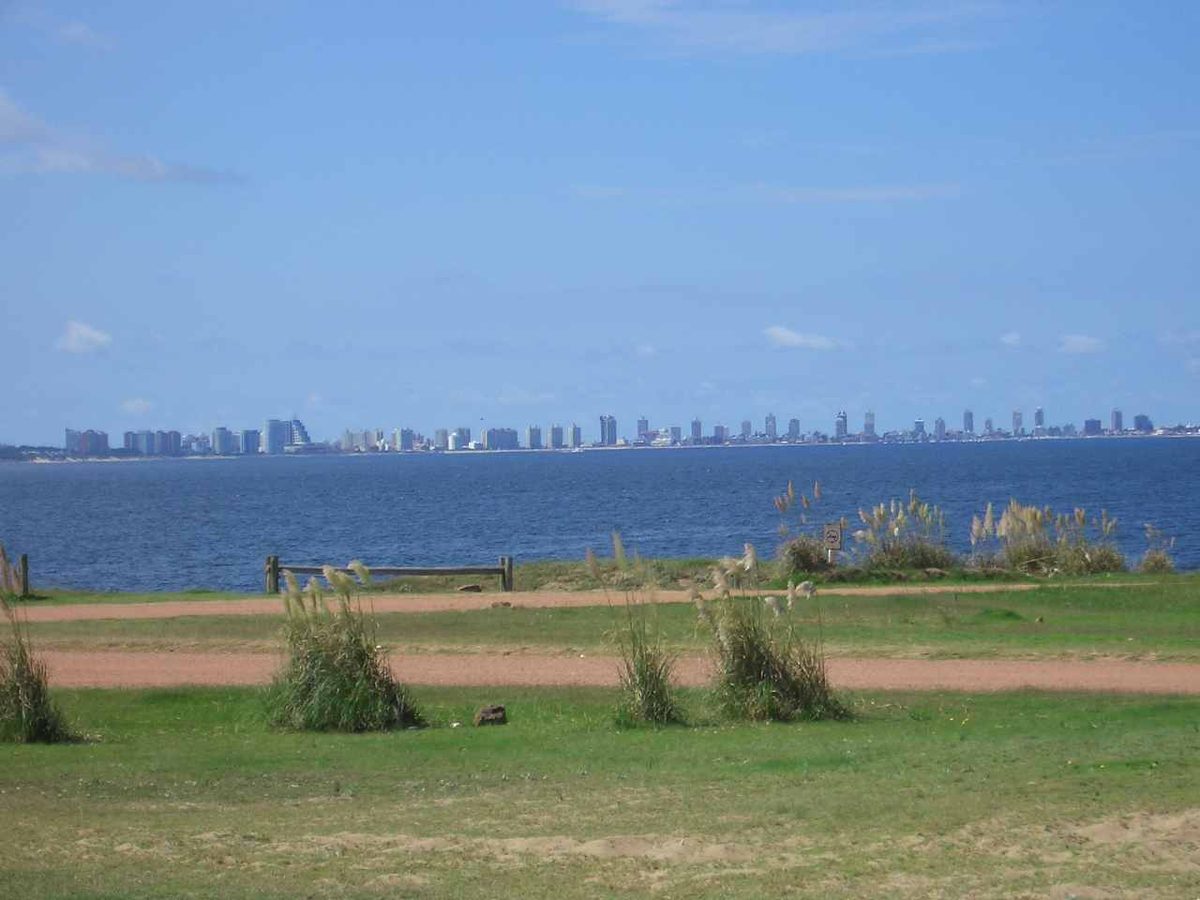
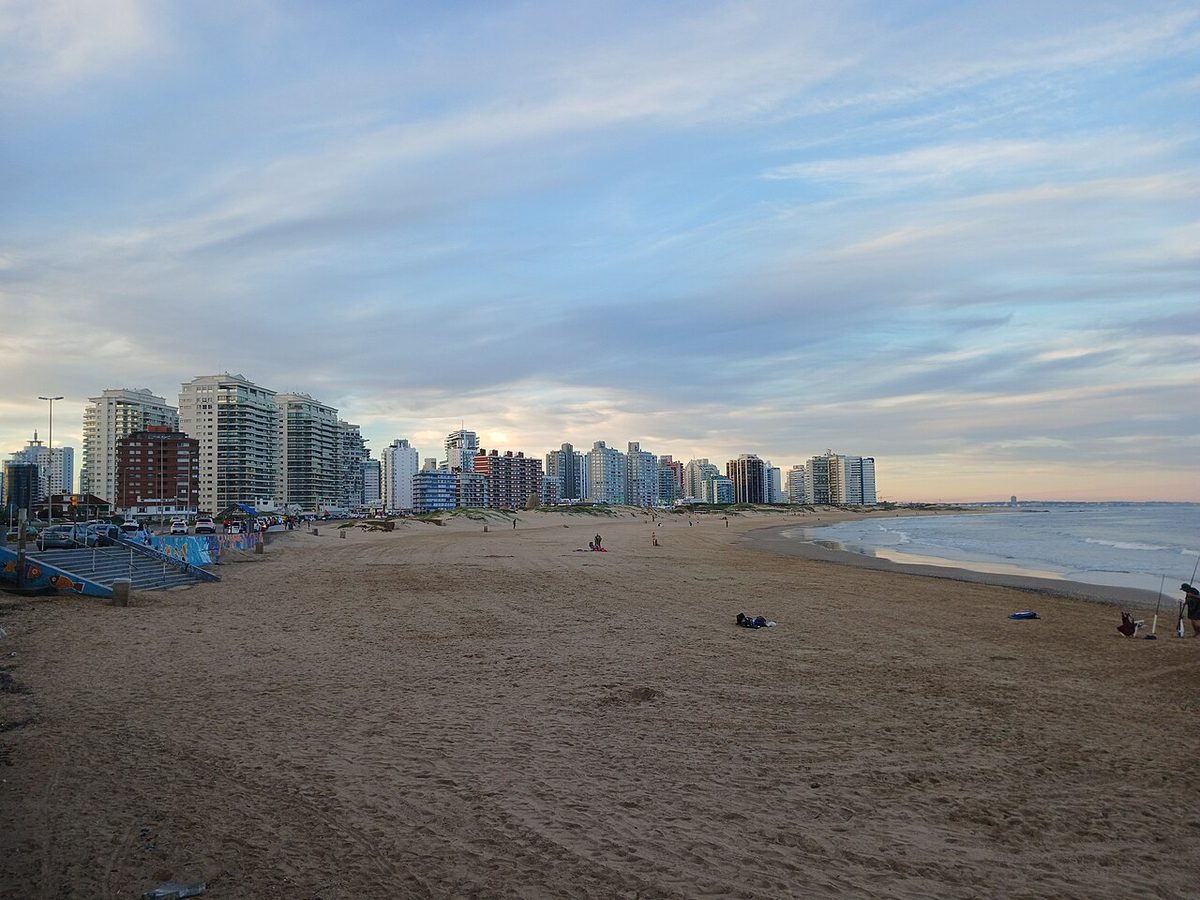
Punta del Este sits at the tip of a narrow peninsula on Uruguay’s southern coast, in the department (province) of Maldonado, about a two-hour drive east of Montevideo. The town has two faces, and the geography matters here. On the western, river-facing side is Playa Mansa — “mansa” meaning tame or calm — where the water is flat and sheltered. On the eastern, ocean-facing side is Playa Brava — “brava” meaning fierce, rough, wild — where the open Atlantic comes in with real surf.
La Mano lives on Playa Brava, and that is not an accident. The whole point of the sculpture is tied to which beach it sits on, which I will get to. For orientation: it is at the start of Playa Brava, near where the beach begins on the peninsula side, at a spot locals call Parada 1.
A quick word on “parada,” because you will see it everywhere down here. A parada is a numbered beach access point — literally a “stop” — and Uruguayans use them as addresses for the coast. “I’ll meet you at Parada 12” is a completely normal thing to say. Playa Brava’s paradas count up as you move east along the sand, and La Mano sits right at the low number, Parada 1, which is also the closest one to the town center and the bus terminal.
La Mano de Punta del Este at a glance
| Detail | What to know |
|---|---|
| Location | Playa Brava, Parada 1, Punta del Este, Maldonado, Uruguay |
| Cost | Free — it sits on a public beach |
| Opening hours | Always open, 24/7, no gate or ticket |
| Built | February 1982 |
| Artist | Mario Irarrázabal (Chilean sculptor) |
| Other names | Los Dedos, Monumento al Ahogado (Monument to the Drowned), Hombre emergiendo a la vida |
| Material | Concrete and plastic, reinforced with steel bars and metal mesh |
| Best time for photos | Early morning (dawn) or late afternoon, off-peak season |
| How long to visit | 15–30 minutes; longer if you wait out the queue |
What it actually is — and why it has five names
Let me clear up the naming, because it confuses almost everyone and the confusion is half the fun.
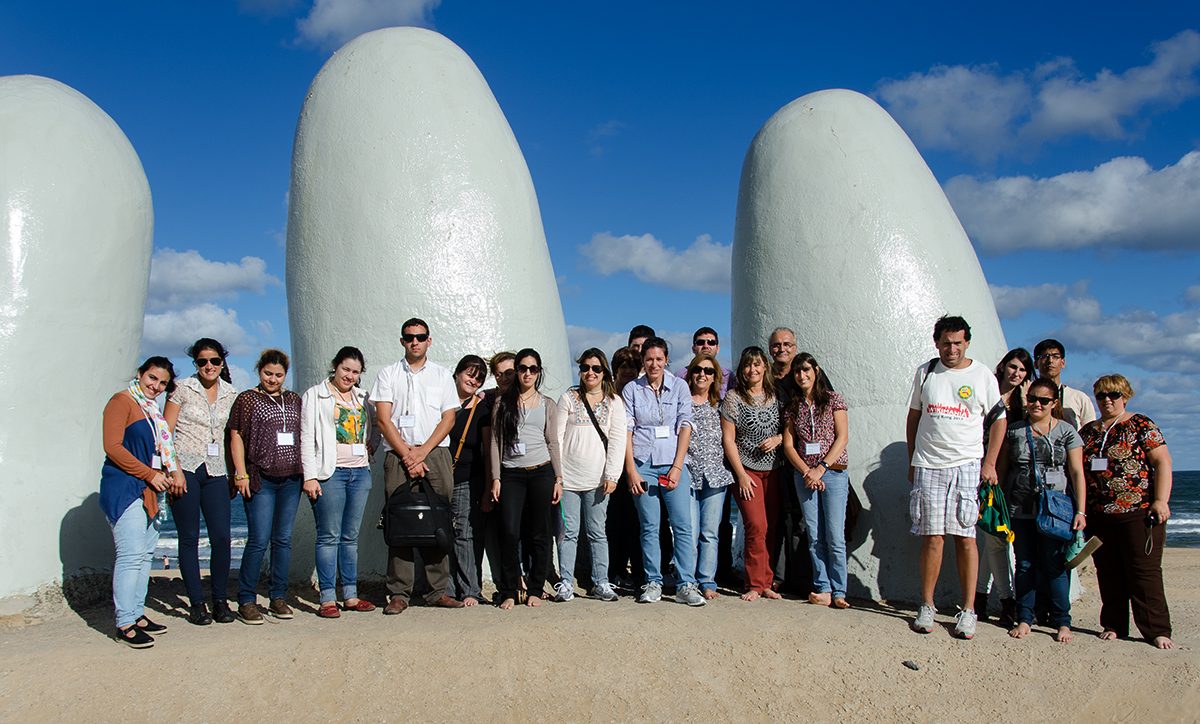
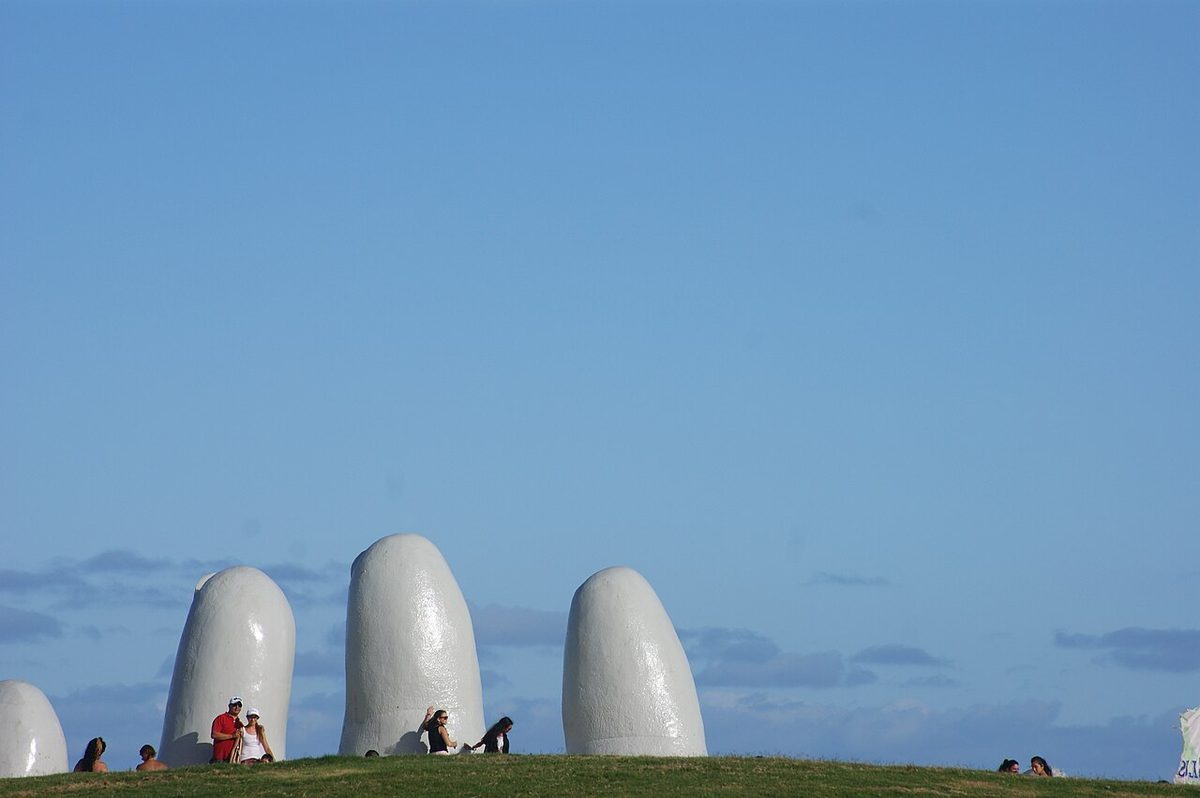
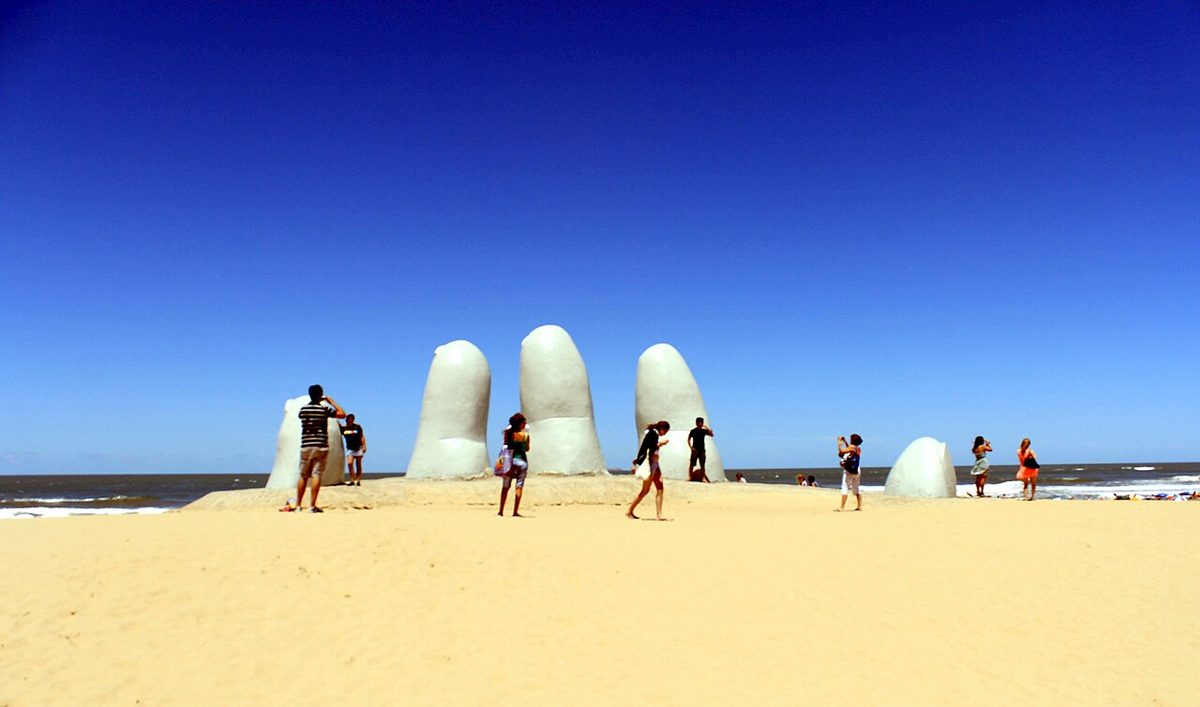
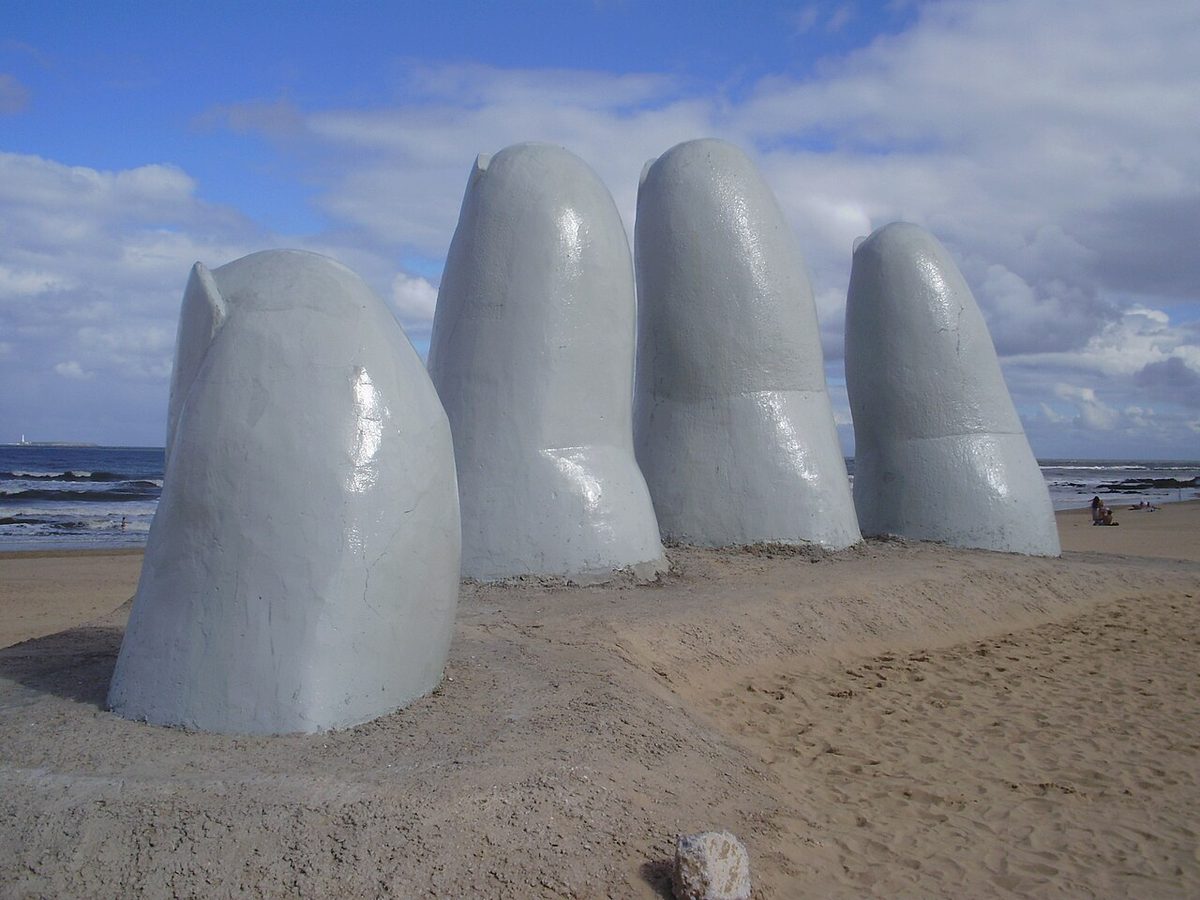
The thing you are looking at is a sculpture of a partially buried hand: four fingers and a thumb, rising out of the sand at an angle, large enough that an adult can comfortably lean against the longest finger or perch on the knuckles. There is no full body. There is no arm. Just the hand and fingers, reaching up, as if the rest is buried below.
Now, the names. Officially, on paper, the work is titled Monumento al Ahogado — the Monument to the Drowned. That is the grim, formal name, and it tells you the original intent. But almost nobody calls it that on the street. Most Uruguayans say Los Dedos, “The Fingers,” which is plain and descriptive. English-speaking visitors and most travel writing call it The Hand, or in Spanish La Mano. You will also occasionally see it called Hombre emergiendo a la vida — “Man Emerging into Life” — and Monumento los Dedos.
Here is the part I find lovely: the artist himself, Mario Irarrázabal, has said over the years that he would simply prefer it be called “the Hand.” Not the drowned man, not the fingers, not man emerging into life. Just the Hand. After everyone spent decades layering meaning onto his sculpture, the man who made it landed on the simplest possible name. There is something very honest about that.
So if you are wondering which name is “correct” — they all are. The hand sculpture uruguay is so famous for goes by whichever name the speaker grew up with. Use whichever you like.
How big is it, really?
Photos play tricks with scale, so people are often surprised on both counts. It is big enough to be impressive and to climb on — the tallest fingers rise well above head height, and you will see people sitting up on the thumb for photos. But it is not a skyscraper. It does not loom over the beach from a distance the way some monuments do. You come up over the sand and there it is, human-scaled in a way that makes the “drowning” idea land harder. This is a hand the size of a giant’s, not a building.
The artist: Mario Irarrázabal and the six days that made him famous
Mario Irarrázabal is a Chilean sculptor, and in the summer of 1982 he was not yet famous. He came to Punta del Este for the first edition of an event called the International Meeting of Modern Sculpture in the Open Air — a gathering where artists from several countries were invited to make large outdoor works along the coast. Nine sculptors took part. Irarrázabal was the youngest of them.
The story of how the hand ended up on the beach is better than the usual origin myth, because it is a little petty and very human. The sculptors were assigned spots on a public square, and a dispute broke out over who got which location. While the others argued, Irarrázabal quietly took his idea down to the sand and started building there instead. He brought a scale model of the hand and improvised the rest, fighting the wind and the sand as he went.
Then comes the detail I love most. He had the entire summer to finish. He did it in six days.
Working against the strong southeast wind that Punta del Este gets, he built the fingers from concrete and plastic, reinforced inside with steel bars and metal mesh, and finished with a coating designed to resist the weather. Six days, a borrowed patch of beach, a dispute he sidestepped — and he produced the thing that would become the single most recognizable image in the country.
The kicker: every other sculpture from that 1982 event is long gone. Irarrázabal’s hand is the only one that stayed. It has never moved from its original spot, and it has stood there, largely untouched, for more than four decades. The work that the youngest artist made in the fewest days, after losing the argument over the good spots, is the one that outlived all the rest.
It made him internationally known, and it became his signature. He returned to the idea of the emerging hand again and again throughout his career, which is why you can find his hands on three other continents — more on those further down.
What does it mean? The symbolism of the drowning hand
Ask why the hand is here and you get an answer rooted in the water itself.
Remember Playa Brava — the fierce beach, the open Atlantic, the real surf. The waves on this side of the peninsula are strong, and the currents can be dangerous for casual swimmers. Up the coast toward La Barra the waves got even rougher, better suited to surfers than to families wading in. Irarrázabal’s original idea was straightforward and dark: a hand “drowning,” reaching up out of the water and sand, as a warning to swimmers not to underestimate this sea.
That is the literal reading, and it is the one the official name preserves — Monument to the Drowned. The fingers are the last thing you see of someone going under. Placed at the edge of a beach that genuinely can pull you out, it works as a kind of memento mori in concrete: respect the water.
But — and this is why the multiple names exist — the sculpture refused to stay that grim. Over the decades people read it the opposite way too. The same image of a hand pushing up out of the ground can be read not as someone sinking but as someone rising: emerging, being born, clawing back up to the surface and to life. That reading gave it the name “Hombre emergiendo a la vida,” Man Emerging into Life. Death and birth in the same five fingers, depending on which way you decide the hand is moving.
I think that ambiguity is exactly why it has lasted. A simple “danger, rough water” sign would have been forgotten. A hand that can be either drowning or being born — that you stand in front of and project your own mood onto — is the kind of thing people drive across a country to photograph. Children climb on it laughing while the official plaque calls it a monument to the drowned, and nobody finds that strange. The sculpture holds both ideas at once.
Where exactly is la mano punta del este, and how to get there
The hand is at Parada 1 of Playa Brava, at the eastern, ocean side of the Punta del Este peninsula, near where the beach starts closest to the town. If you are anywhere in central Punta del Este, you are very close.
Here are the realistic ways to reach it.
On foot. If you are staying in the town center or near the port, walking is genuinely the easiest option. It is roughly a five-minute walk from the bus terminal and the port area over to the sculpture. The peninsula is small and flat, and you can stroll along the rambla — the seafront promenade road that rings the coast — straight to it. Honestly, in high season, walking is faster than dealing with a car.
By car. Driving is straightforward; the hand sits right by the coastal road and is well known to every local. The catch is parking, which I will cover in the planning section below. Short version: it is free but it can be a hunt in January.
Taxi or rideshare. Cheap and simple if you are not in the center. Just say “Los Dedos” or “La Mano” and any driver will know exactly where you mean. No further explanation needed.
By bus. Coming from elsewhere in the area — from Maldonado, the larger working city just inland, or from along the coast — local buses bring you to the Punta del Este terminal, and from there it is the short walk described above.
For the wider picture of getting around the peninsula and what else clusters near here, our complete guide to Punta del Este lays out the town, its neighborhoods, and how the pieces fit together.
The best time to visit — and the honest truth about photos
Now the part everyone actually wants to know, because the gap between the photos you have seen and the reality on a busy day is wide.
The dreamy shots — empty sand, soft light, the hand alone against the sky — are real, but they are taken at specific times. Here is how the crowds actually work.
Time of day
Go at dawn. I mean it. Early morning is the single biggest lever you have. At first light the beach is nearly empty, the light is soft and warm and coming in low off the Atlantic, and you can walk right up to the fingers, take all the time you want, and get shots with nobody in them. This is when those magazine images get made.
Late afternoon into the golden hour before sunset is the second-best window. The light is gorgeous and the harsh midday glare is gone, though you will have more company than at dawn.
Midday is the worst of it. From late morning through mid-afternoon, especially in summer, the sculpture is mobbed. The sun is high and flat, which is also the least flattering light, so you get the double penalty of crowds and bad shadows.
Time of year
This matters as much as time of day. Uruguay is in the Southern Hemisphere, so summer runs December through February, and that is peak season on this coast. January is the absolute height — Argentines and Brazilians pour into Punta del Este, the population multiplies, and Los Dedos is one of the most photographed objects in the country during exactly those weeks.
In peak January, even at a reasonable hour, expect a genuine queue. People line up, more or less politely, to take turns getting their photo with the hand, and unless you are there at dawn there will be strangers in your frame no matter what. It is busy, it is windy as often as not, and it is the price of visiting the most famous landmark in Uruguay during the one month everyone else also visits.
The shoulder seasons are your friend. Visit in spring (roughly October–November) or autumn (March–April) and you get pleasant weather with a fraction of the crowds. For a fuller breakdown of what each season actually feels like on the coast, see our guide to the best time to visit Uruguay, and if you are set on the summer trip, Uruguay in summer covers the peak-season reality in more depth.
One honest drawback
Here is the candid note I promised. If your only window is a January midday — say you are on a day trip and that is when you arrive — you will not get the postcard. You will get a fine snapshot with several other tourists in it, a bit of a wait, and probably wind in your hair. That is genuinely okay. The sculpture is still worth seeing, and there is something funny and human about the scrum of people all wanting the same shot. But manage your expectations: the empty, glowing version requires either a 6 a.m. alarm or a visit outside high season. There is no trick that gets you a deserted beach at noon on January 15th.
Photo tips that actually help
A few things I have learned standing out there with a camera:
- Shoot from below. Crouch down and shoot up at the fingers against the sky. It exaggerates the scale and cleans up your background — sky instead of crowds.
- Use the gaps. Frame between two fingers, or have someone “held” in the hand, to play with the perspective.
- Backlight at golden hour. With the low sun behind the hand you can get a clean silhouette of the fingers, which sidesteps the crowd problem entirely.
- Be patient and kind in the queue. In peak season everyone is angling for the same composition. A little turn-taking goes a long way, and people will generally clear your frame for a few seconds if you ask.
- Mind the wind and sand. Brava earns its name. On a gusty day, protect your lens — blowing sand is the real enemy here, more than the crowds.
The sister hands around the world
Here is the fact that surprises most visitors: the Punta del Este hand is not the only one. Irarrázabal liked the image so much, and it brought him such acclaim, that he built versions of it elsewhere — which means the thing you are photographing on Playa Brava has siblings on multiple continents.
The Uruguay hand came first, in 1982. After that:
- Madrid, Spain (1987). A version of the hand was made for the Spanish capital — the first of the replicas, five years after the original.
- The Atacama Desert, Chile (1992). This is the famous one, and arguably even more striking than the original. Called the Mano del Desierto — the Hand of the Desert — it stands 11 metres (about 36 feet) tall, alone in the empty Atacama beside the Pan-American Highway, roughly 60 km south of Antofagasta. In the middle of one of the driest places on Earth, a single giant hand rises out of the sand. There, the meaning shifted: the desert hand is read as a memorial to the victims of human rights abuses under Chile’s Pinochet-era military dictatorship, its exaggerated size emphasizing human vulnerability and helplessness. Same artist, same gesture, a far heavier subject.
- Venice, Italy (1995). Another version followed in Venice, the most recent of the well-known group.
So when you stand on Playa Brava, you are looking at the original of a small family of hands scattered across Uruguay, Spain, Chile, and Italy. If you have seen a giant hand emerging from sand anywhere in your travels and felt a flicker of déjà vu — this is probably why. The one in front of you is where it all started.
Planning your visit: parking, accessibility, and what to combine it with
The sculpture itself takes very little time to see — fifteen to thirty minutes is plenty to walk around it, take your photos, and absorb it. Because it is so quick, the smart move is to fold it into a larger morning or afternoon on this side of the peninsula. Here is the practical detail.
Parking
Parking near La Mano is free — there are no meters dedicated to it, and the streets and lots around Parada 1 are open. The honest catch is availability. In low and shoulder season you will find a spot near the beach with no trouble. In peak summer, and especially in January, parking anywhere central in Punta del Este becomes a genuine hunt, and the spaces near such a popular landmark fill fast. My advice: if you are visiting at dawn, drive — you will park right there with the beach to yourself. If you are visiting midday in summer, leave the car and walk or take a taxi, because circling for parking will cost you more time and patience than the visit is worth.
Accessibility
Be realistic here: it is a sculpture on a beach, which means sand. The hand sits on the open sand of Playa Brava, so reaching it up close involves walking across soft ground, which is hard going for wheelchairs, strollers, and anyone with limited mobility. You can see it perfectly well from the firmer ground and the promenade at the edge of the beach — the view from there is still excellent and the scale still reads — but getting right up to touch the fingers means crossing sand. There is no boardwalk to the sculpture itself. Plan accordingly, and if mobility is a concern, a clear photo from the rambla edge may be the better play.
Combine it with Playa Brava and the beaches
Since you are already standing on it, make a morning of the beach. Playa Brava is a fine stretch of sand in its own right — the surf that inspired the sculpture is genuinely good, there are beach bars and umbrella rentals in season, and the surfer culture here is real. It is not the beach for a gentle family swim (that is Playa Mansa, on the calm side), but for walking, watching the waves, and a coffee with a view, it delivers. Our guide to the beaches of Punta del Este breaks down Brava, Mansa, and the rest so you can plan which side suits your day, and the wider best beaches in Uruguay guide puts them in national context.
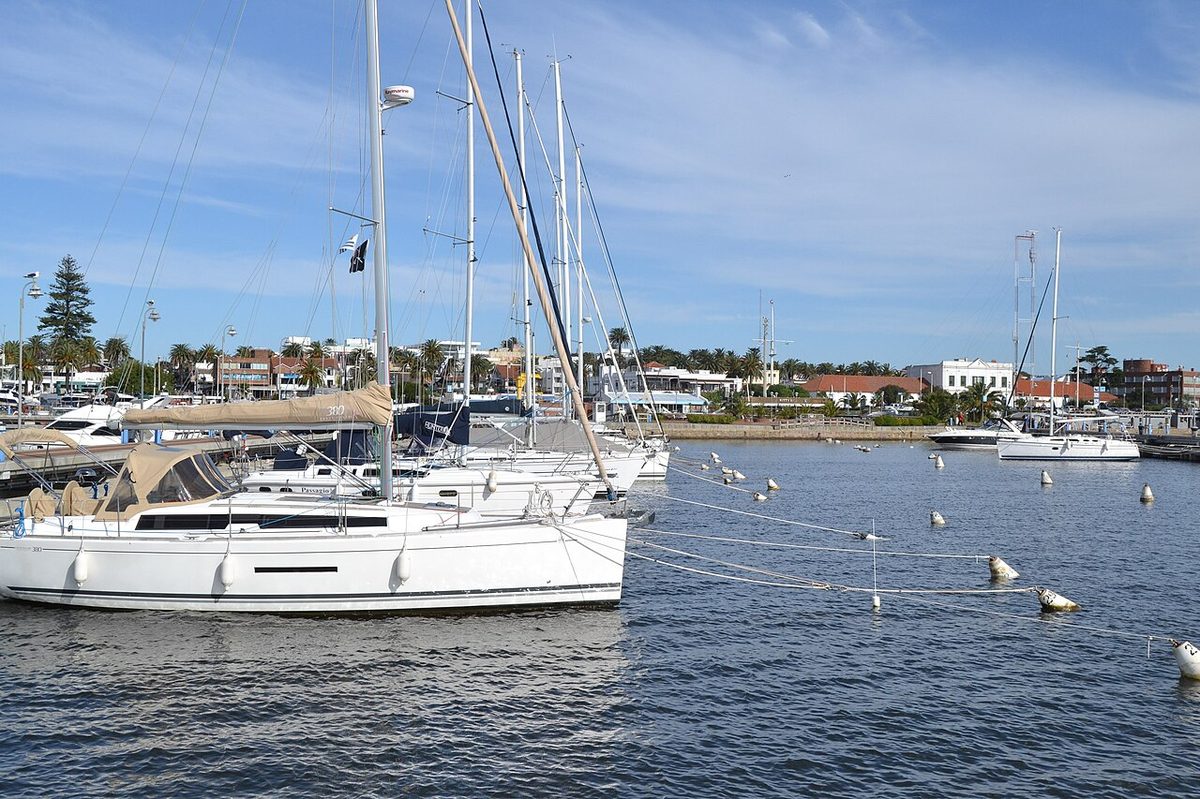
Beyond the beach, the hand pairs naturally with the other landmarks on the peninsula — the port, the lighthouse, the marina full of yachts. A short drive west along the coast brings you to Casapueblo, the white cliffside building of the late artist Carlos Páez Vilaró, which is the other essential Punta del Este sight and a story for its own article. And out east are the famous beach towns of La Barra and José Ignacio. None of those are far. For a sense of how to string these together over a few days, our Uruguay itinerary guide and the broader list of things to do in Uruguay will help you build the trip around it.
If you are still sorting out where to base yourself for all this, our where to stay in Uruguay overview covers the main options across the country, peninsula included.
La Mano de Punta del Este: your questions answered
Where is the hand sculpture in Punta del Este?
The hand is on Playa Brava, the Atlantic-facing beach, at Parada 1 — the beach access point closest to the town center, near the bus terminal and port. It stands directly on the open sand. From central Punta del Este it is about a five-minute walk, and any taxi driver will take you there if you simply ask for “Los Dedos” or “La Mano.”
Is it free to visit La Mano?
Yes, completely free. La Mano sits on a public beach with no gate, no ticket, and no fence. You can visit at any hour of the day or night, all year round. There is nothing to book and nobody to pay. The only “cost” is the parking hassle in peak summer, and even parking itself is free — it is finding a space in January that is the challenge.
Who made the hand and what does it mean?
Chilean sculptor Mario Irarrázabal built it in 1982. Its official name, Monumento al Ahogado, means “Monument to the Drowned,” and the original idea was a warning about Playa Brava’s dangerous waters — a hand going under as a caution to swimmers. Over time it gained a second reading as a hand emerging into life, so it now carries both meanings: drowning and rebirth.
Why is it called Los Dedos?
“Los Dedos” simply means “The Fingers” in Spanish, and it is the everyday name most Uruguayans use, because that is plainly what you see — five fingers in the sand. The sculpture has several names (Monumento al Ahogado officially, La Mano and The Hand commonly, Hombre emergiendo a la vida poetically), but Los Dedos is the one you will hear most on the street locally.
What is the best time to photograph the hand?
Dawn, without question. At first light the beach is nearly empty, the light is soft, and you can get shots with no crowds. Late afternoon into golden hour is the second-best window. Avoid midday in summer, when the sculpture is mobbed and there is often a queue to take photos. Visiting in spring or autumn rather than peak January also dramatically thins the crowds.
How long do you need at La Mano?
The sculpture itself takes about 15 to 30 minutes — enough to walk around it, climb on the fingers, and take your photos. In peak season, factor in extra time for the queue, which can add a wait. Because the visit is so short, most people combine it with time on Playa Brava or the rest of the peninsula rather than making a separate trip of it.
Are there other hands like this elsewhere?
Yes. Irarrázabal built versions in Madrid (1987), the Atacama Desert in Chile (1992, the famous 11-metre Mano del Desierto), and Venice (1995). The Punta del Este hand, from 1982, is the original that started the series. The Atacama one is the most dramatic, standing alone in the desert as a memorial to victims of Chile’s military dictatorship.
Final thoughts
Some famous photo-stops are a letdown in person — smaller, sadder, more crowded than the image promised. La Mano is not one of them. Yes, it can be mobbed; yes, January at noon will test your patience; yes, it is “just” a hand on a beach. But it is a hand that has stood through forty-plus years of weather and tourists, made in six improvised days by the youngest sculptor in the room after he lost the argument over the good spots, holding two opposite meanings at once. That is a lot of story for a free stop you can walk to from the bus station.
Go early. Watch the light come up off the Atlantic. Have the fingers to yourself for ten minutes before the day fills up. Then go get a coffee on Playa Brava and let everyone else line up. That, in my experience, is how you do Los Dedos right. The Hand lands on every list of what Uruguay is known for, and it slots neatly into a run of the country’s quieter lesser-known corners.
Credits & sources
Sources & further reading
- La Mano de Punta del Este — Wikipedia (history, names, construction, and the 1982 sculpture meeting)
- Mano del Desierto — Wikipedia (the sister hand in Chile’s Atacama Desert)
- The Hand of Punta del Este — Amusing Planet (background on the artist and the build)
Photo credits
All images via Wikimedia Commons: La Mano Punta Del Este Wide by Paola15 (CC BY-SA 3.0); Los Dedos Fingers Closeup by Fedaro (CC BY-SA 3.0); La Mano With People Scale by Rosina Peixoto (CC BY-SA 3.0); La Mano Sunrise Punta Del Este by Davi Sanchez (CC BY 2.0); Playa Brava Punta Del Este Context by NaBUru38 (CC BY-SA 4.0); La Mano Side View by María Cecilia (CC0).