Where to Stay in Uruguay: Areas, Towns & Hotels for Every Trip (2026)

Deciding where to stay in Uruguay comes down to picking the right base: Montevideo for city culture and food, Punta del Este or José Ignacio for beach glamour, Rocha’s villages for off-grid Atlantic coast, Colonia for colonial-era romance, and an estancia or the Salto hot springs for everything in between. Here’s how to choose.
I’ve slept in most corners of this country — in a Ciudad Vieja mansion conversion with fifteen-foot ceilings, a Punta del Diablo cabin where the shower ran lukewarm and nobody cared, a José Ignacio posada I still think about, and a Florida-department estancia where dinner was whatever came off the fire. The short version of everything I’ve learned: Uruguay’s accommodation question is really a geography question. The hotels themselves are mostly small, mostly family-run, and mostly good. What changes everything is where you put yourself, and in which month. Get the area right and a US$80 posada feels like a steal; get it wrong and a US$400 resort feels like a mistake.
Where to Stay in Uruguay at a Glance
Five regions cover practically every trip. Here’s the comparison I wish someone had handed me before my first visit:
| Area | Best for | Typical double (high / low season) | Honest drawback |
|---|---|---|---|
| Montevideo | First and last nights, food, culture, year-round reliability | US$70–150 / US$60–110 | It’s a working capital, not a resort — some blocks are scruffy |
| Punta del Este & La Barra | Beach + nightlife + restaurants, big hotel choice | US$200–500+ / US$70–140 | January prices and crowds are genuinely silly |
| José Ignacio & Manantiales | Barefoot luxury, food-driven trips, couples | US$400–900 / US$150–300 | Hard to enjoy without a car; eye-watering in season |
| Rocha coast (La Paloma to Punta del Diablo) | Surf, nature, budgets, the anti-resort crowd | US$60–150 / many places closed | Much of it shuts entirely from roughly April to November |
| Colonia del Sacramento | Romantic overnights, history, Buenos Aires connections | US$90–200 / US$70–130 | One night is usually enough; weekends book out |
| Estancias & the interior | Gaucho culture, riding, total quiet | US$150–300 pp full board, year-round | You’ll need wheels and advance booking; no walk-ins |
| Salto & the termas | Hot-spring soaking, families, winter trips | US$70–160, steadiest in winter | Functional resort rooms; it’s about the pools, not the pillows |
Prices are my honest ballparks from recent trips and current listings, hedged with “around” for a reason — the gap between January and June on this coast is bigger than anywhere else I’ve traveled.
How to Decide: Three Questions Before You Book
1. Which month are you traveling?
Nothing shapes a Uruguay accommodation decision more. From Christmas through January, coastal Uruguay operates at Argentine-holiday intensity: minimum stays of five to ten nights are common in Punta del Este and José Ignacio, and the best small places sell out by October. February is busy but saner. March is the insider’s month — warm sea, open restaurants, prices down 30–50%. Between April and November, much of Rocha and a surprising amount of La Barra and José Ignacio simply close; Montevideo, Colonia, the estancias and the termas carry the winter. I’ve written a full month-by-month breakdown in my guide to the best time to visit Uruguay, but the one-line version is: if you’re coming December–February, book beds before flights.
2. Will you have a car?
With a rental car, the whole coast and interior open up — you can sleep in a vineyard, an estancia, or a village with one general store. Without one, base yourself in Montevideo, Punta del Este, Colonia or La Paloma, all of which buses serve frequently and cheaply (details in my getting to and around Uruguay guide). José Ignacio, Garzón, the estancias and the smaller termas are all car-or-nothing in practice. Cabo Polonio is the strange exception: nobody drives in — you park at the highway and ride a 4WD truck over the dunes, which is half the fun.
3. What’s the trip actually about?
Food and culture point you to Montevideo with a Colonia overnight. Beach-first trips split by personality: polished (Punta del Este), fashionable-quiet (José Ignacio, Manantiales), or wild (Rocha). Wine people should add a night in Carmelo or near Garzón — sleeping at a winery is one of Uruguay’s best moves, covered in my Uruguay wine guide. And if the idea of a working ranch appeals at all, commit a night or two to an estancia; it’s the most Uruguayan thing you can do with a bed.
Montevideo: Neighborhood by Neighborhood
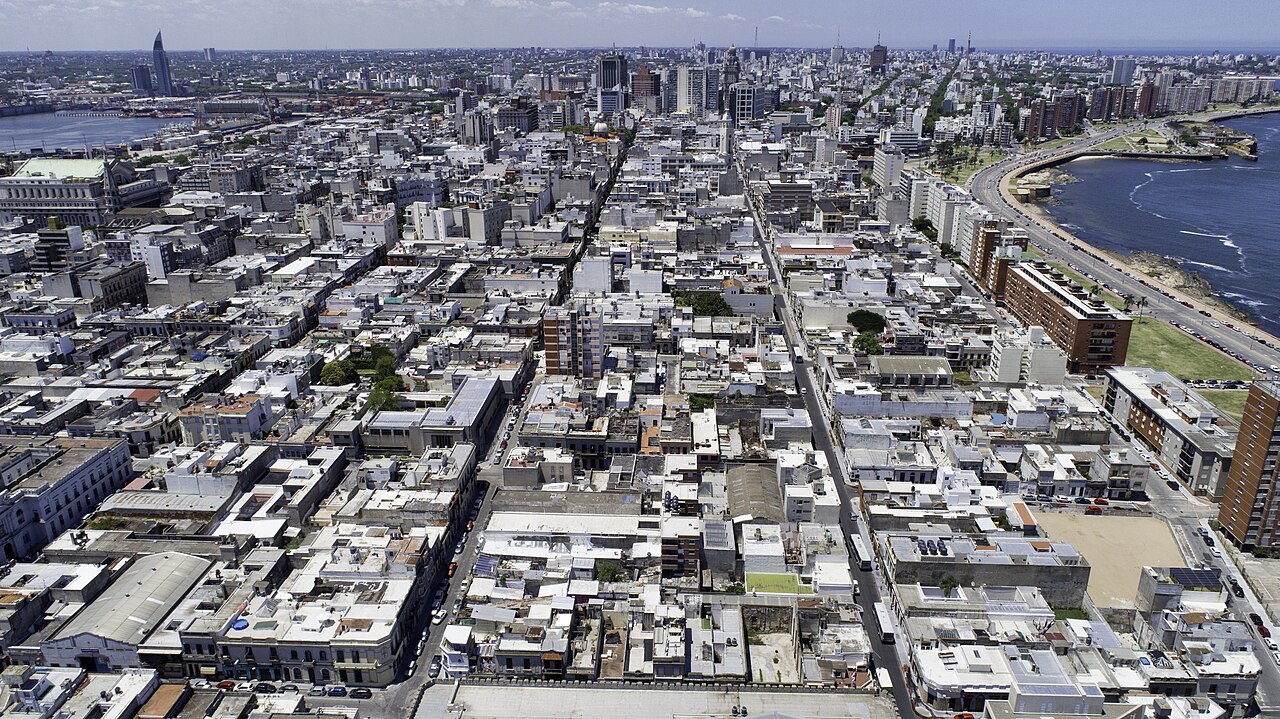
Most visitors start and end in the capital, and barrio choice matters more here than hotel choice. Montevideo is long and coastal — 20-plus kilometers of rambla connect quite different neighborhoods — and a bad match costs you taxi money and atmosphere. My full Montevideo guide covers what to do once you’re settled; here’s where to actually sleep.
Ciudad Vieja — for atmosphere and first-timers who want to walk everywhere
The old town has the city’s best concentration of boutique hotels in restored 19th-century buildings, plus the Mercado del Puerto, the port, and most of the museums. Doubles in the good small places run around US$90–150. I love staying here — mornings before the office crowd arrives are quietly magical. The honest drawback: it empties after dark outside the main restaurant streets, and a few blocks toward the port get sketchy at night. Stick near Plaza Zabala or Sarandí and you’re fine; just take cabs late rather than wandering.
Centro & Cordón — for budgets and longer stays
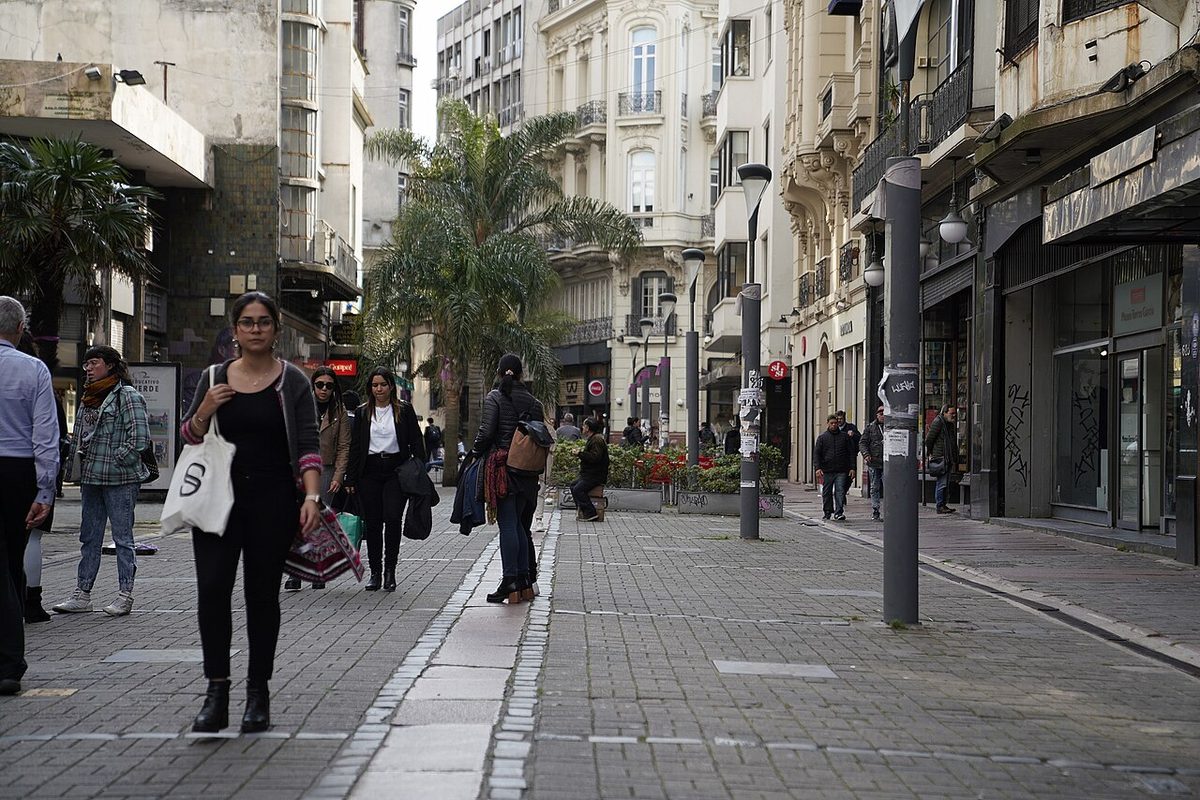
The downtown grid along Avenida 18 de Julio holds the chain hotels, the apart-hotels and the better hostels, usually 20–40% cheaper than equivalent beds in Ciudad Vieja or Pocitos. Cordón, just east, has quietly become the city’s nightlife-and-coffee district, and staying near Mercado Ferrando puts more good casual restaurants within three blocks than anywhere else in the country — my Uruguayan food guide has the specifics. Drawback: the architecture is workaday and 18 de Julio itself is noisy until late.
Pocitos & Punta Carretas — for the beach-city combination
This is where I send most people on a first visit. Leafy residential streets, the city beach, runners on the rambla at all hours, the safest feel in town, and solid mid-range hotels around US$80–140. Punta Carretas adds the shopping mall (a converted prison, genuinely) and the golf course; Pocitos adds the beach itself. The drawback is the flip side of the appeal: it’s pleasant rather than characterful, and you’ll taxi 15 minutes to Ciudad Vieja for sightseeing.
Carrasco — for a leafy, upscale landing
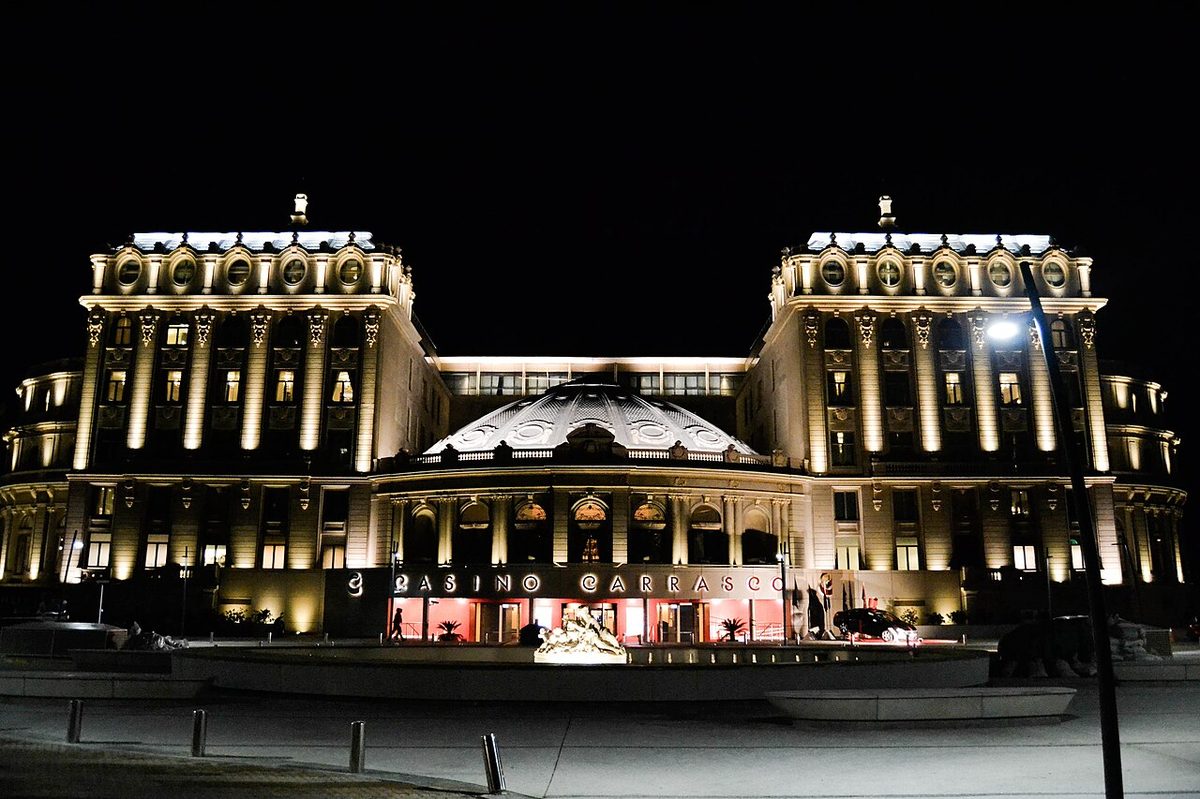
Out by the airport, Carrasco is mansion territory with wide lawns, a famous landmark hotel-casino, and a calm, suburban rhythm. It suits travelers arriving late, leaving early, or who simply prefer trees to traffic. Around US$120–250 for the good options. Drawback: you’re 20–30 minutes by car from everything central, and nightlife is one polite strip of restaurants.
One Montevideo tip that saves money: the city barely has a high season. Outside Carnival week and the odd conference, rates hold steady year-round, so it’s the one place you can book late without penalty — useful flexibility when the coast is dictating your dates. During Carnival in February, though, book well ahead and expect a lively soundtrack.
Punta del Este and the Maldonado Coast
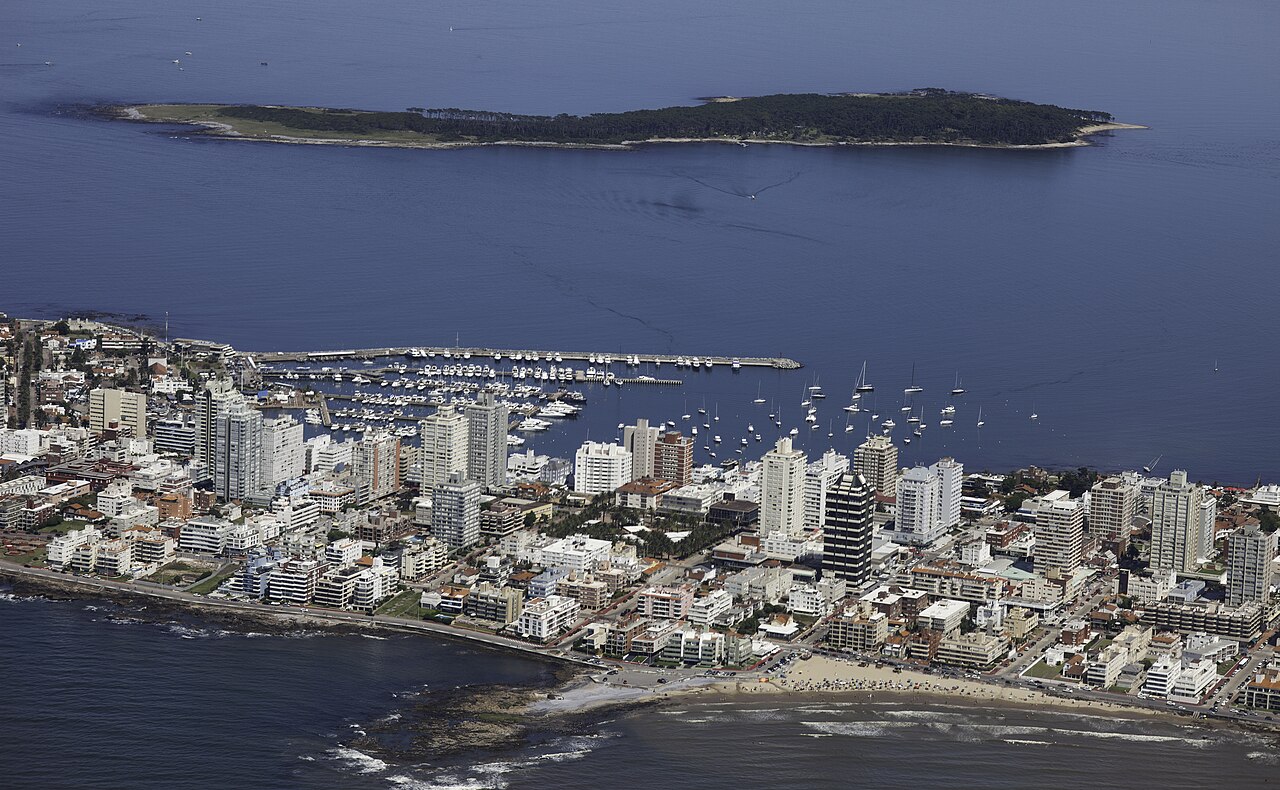
“Punta del Este” on a booking site can mean anything along 60 kilometers of coast, and the sub-areas could hardly be more different. I’ve broken down the beaches themselves in my Punta del Este guide; this is the accommodation logic.
The Península — walkable, high-rise, convenient
The pointy end of town is towers, the marina, casinos and the only part of the coast where you can do everything on foot: beach on both sides (calm Mansa one block west, surfy Brava one block east), restaurants, bus terminal, supermarkets. Hotels range from tired three-stars at around US$80 in shoulder season to full resort pricing in January. It’s the right call for travelers without a car and for anyone who likes their beach town to feel like a city. The drawback: between April and November whole blocks of shuttered holiday apartments give it a melancholy, out-of-season feel, and in January it’s elbow-to-elbow.
Playa Mansa & the rambla suburbs — for families
West along the calm bay, the Mansa side is apartment-hotel territory with gentle water, wide sand and easy parking. Less scene, more space, and usually 20–30% cheaper than the equivalent bed on the península. If you’re traveling with small kids, this is the zone — the Brava side’s waves are the reason it’s called “brave.”
La Barra — for the young and the social
Across the famous wavy bridge, La Barra is beach clubs, galleries, and summer nightlife that starts at 2am. Accommodation is small posadas, design hotels and rental houses in the pines; think around US$150–350 in season for the good ones. I find it the most fun base on this coast in January and early February — and close to pointless from May to October, when most of it hibernates. One more honest note: sleep a few blocks back from the main road, because summer traffic noise is real.
Manantiales & Bikini Beach — the in-between
Ten minutes further east, Manantiales has quietly become my favorite compromise on the whole Maldonado coast: walkable to a proper beach scene, excellent restaurants, but smaller and calmer than La Barra. A handful of upscale posadas and apart-hotels, plus houses in the dunes. Prices sit just below José Ignacio levels, which is to say high in January and reasonable in March.
José Ignacio — barefoot luxury, booked months out
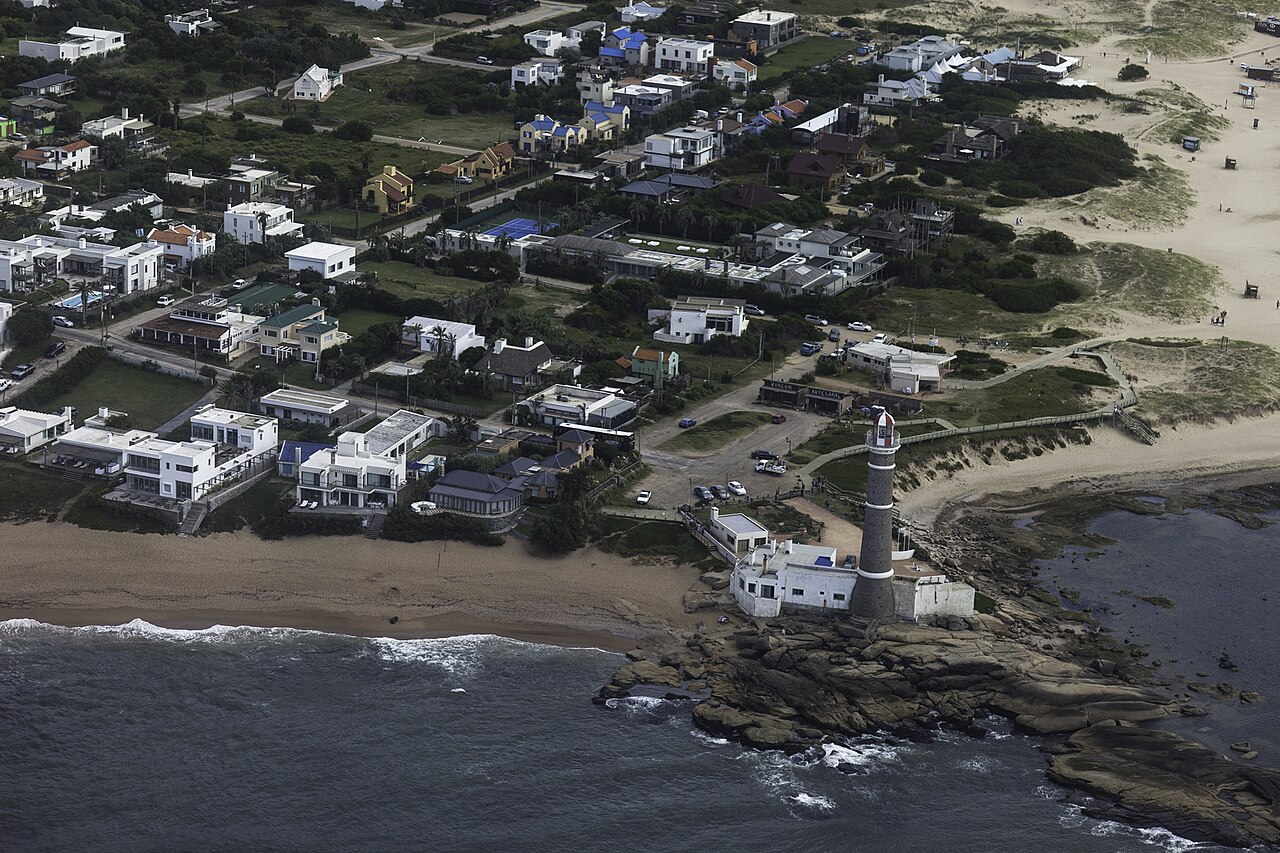
A fishing village of maybe 300 permanent residents that somehow holds the highest accommodation prices in the country. The formula: low whitewashed posadas, no buildings over two stories, two beaches (calm Mansa, surfable Brava), a lighthouse, and a restaurant scene with serious international weight. In January you’re looking at US$500–900 a night at the famous places, often with week-long minimums, and Decembers sell out by southern-hemisphere spring. Come in March or November instead: the village is still open, the light is extraordinary, and rates drop to merely expensive. The honest drawbacks: you need a car for everything beyond the village, and if you’re not into long lunches and beach walks there’s deliberately nothing else to do. That’s the product. Our guide to José Ignacio hotels goes property by property, from the Vik trio to the lighthouse posadas.
Piriápolis — the budget seaside time capsule
Forty minutes west of Punta del Este, Piriápolis is a 1930s resort town under a string of hills, with an old grand hotel, a long rambla, and family hotels at half of Punta’s prices — around US$60–110 for perfectly decent rooms in summer. It’s where Uruguayan families holiday. Nightlife is an ice cream and a walk; that’s either the drawback or the entire point, depending on your stage of life.
Garzón and the wine hinterland — one special night
Twenty miles inland, the once-sleepy rail town of Garzón now anchors Uruguay’s most glamorous countryside: olive groves, vineyards, and a tiny plaza with one famous restaurant-inn where rooms cost what they cost (think US$600+, meals included) and book out far ahead. The smarter-money version is one of the wine lodges and country posadas scattered between Garzón and the coast — vineyard views for a fraction of the price. If that idea appeals, the wine-country accommodation section of my Uruguay wine guide goes deeper.
The Rocha Coast: Uruguay’s Wild East
East of José Ignacio the money thins out and the coast gets better — emptier, wilder, cheaper. Rocha department is my favorite part of the country, enough that I wrote a separate Rocha guide, and its four main villages have four distinct accommodation personalities. In high summer it also sprouts domes and safari tents, which our guide to glamping in Uruguay rounds up. The shared fine print: this is a summer coast. From roughly Easter to November the majority of posadas, hostels and restaurants close completely, and finding an open bed takes research.
La Paloma — the practical one
The only Rocha town with a real year-round economy: a port, a bus terminal with direct Montevideo services, supermarkets, and a spread of family hotels, cabins and a couple of surf hostels. Around US$60–120 for doubles in summer. It’s the best no-car base on the wild coast and the best winter fallback. The drawback is that the town itself is functional rather than pretty — you come for the beaches around it, not the streetscape.
La Pedrera — the stylish one
One bluff-top main street ending at a view that earns the clichés, with boutique posadas and design cabins tucked into the trees. In January it’s fashionable and full; book by October. In March it’s close to perfect. By June it’s maybe three open businesses. Expect around US$100–180 in season for the places worth having; the honest drawback is that summer weekend nights get loud along the main street — choose a cabin in the lanes if you value sleep.
Cabo Polonio — the off-grid one
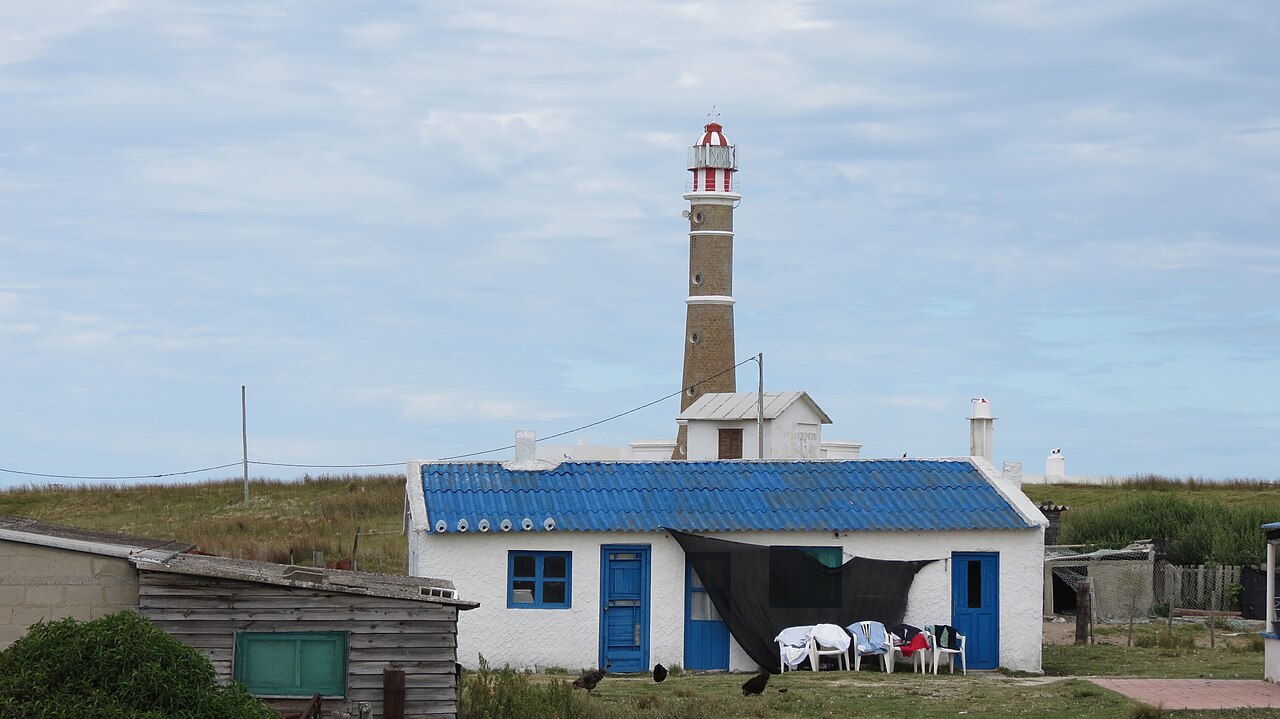
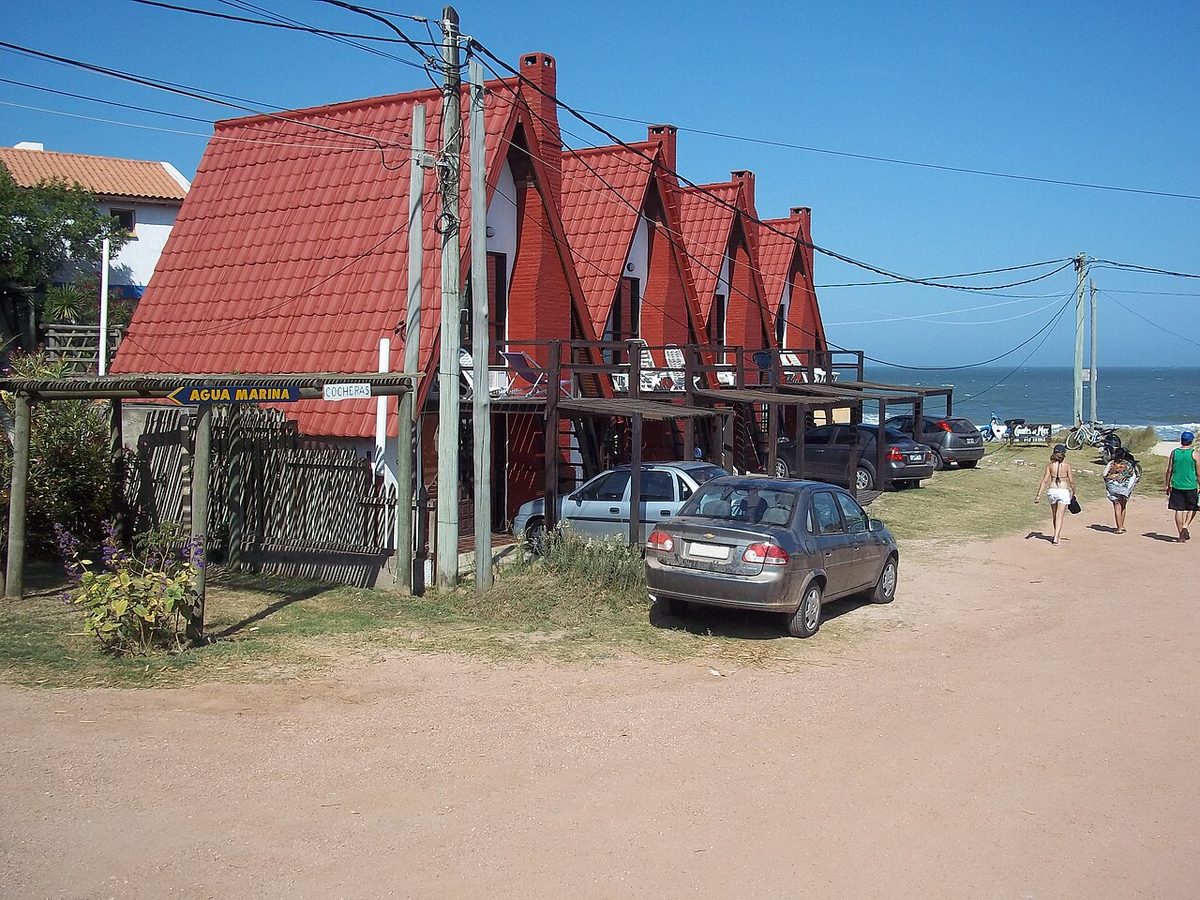
No road, no grid electricity, no ATMs: you cross the dunes in a 4WD truck from the highway terminal and arrive in a scatter of fishermen’s shacks around a lighthouse and a sea lion colony. Accommodation is rustic posadas and rooms lit by candles and solar panels, roughly US$50–120, some with shared bathrooms, plus a famous hostel scene. Hot water is a maybe; star visibility is a certainty. I’d argue one or two nights here belong on any list of essential things to do in Uruguay — but know yourself: if “no hairdryer” reads as a crisis rather than a feature, day-trip it from La Pedrera instead.
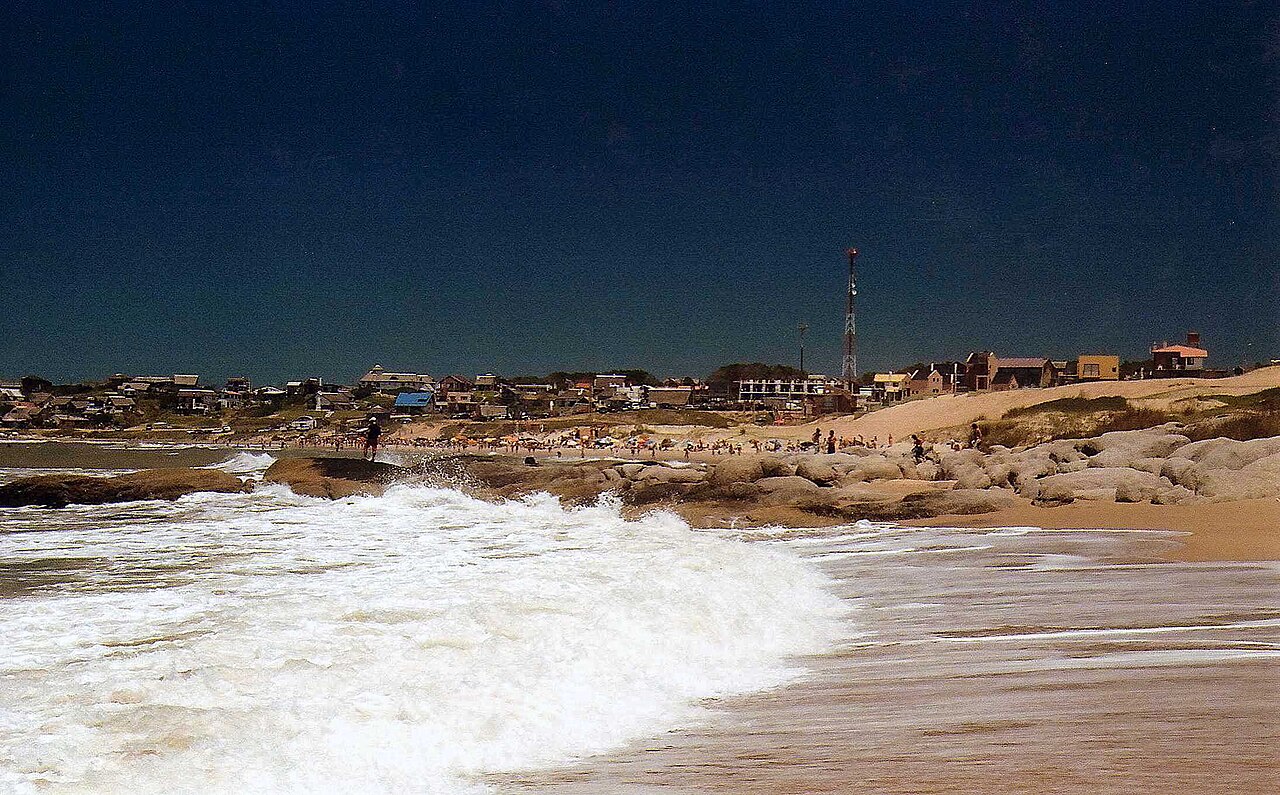
Punta del Diablo — the backpacker one growing up
A fishing village turned bohemian beach town near the Brazilian border, all sandy lanes, painted cabins and surf. The hostels are among South America’s best-loved, cabins for groups are abundant (around US$70–150 in summer), and the January population multiplies by something like twenty. Santa Teresa national park, with its fortress and forested campsites, starts just north — the beaches there made my best beaches in Uruguay list. Drawbacks: January crowds have outgrown the village’s plumbing and parking, and shoulder-season closures are nearly as total as Cabo Polonio’s.
Colonia del Sacramento and the Western Riverside
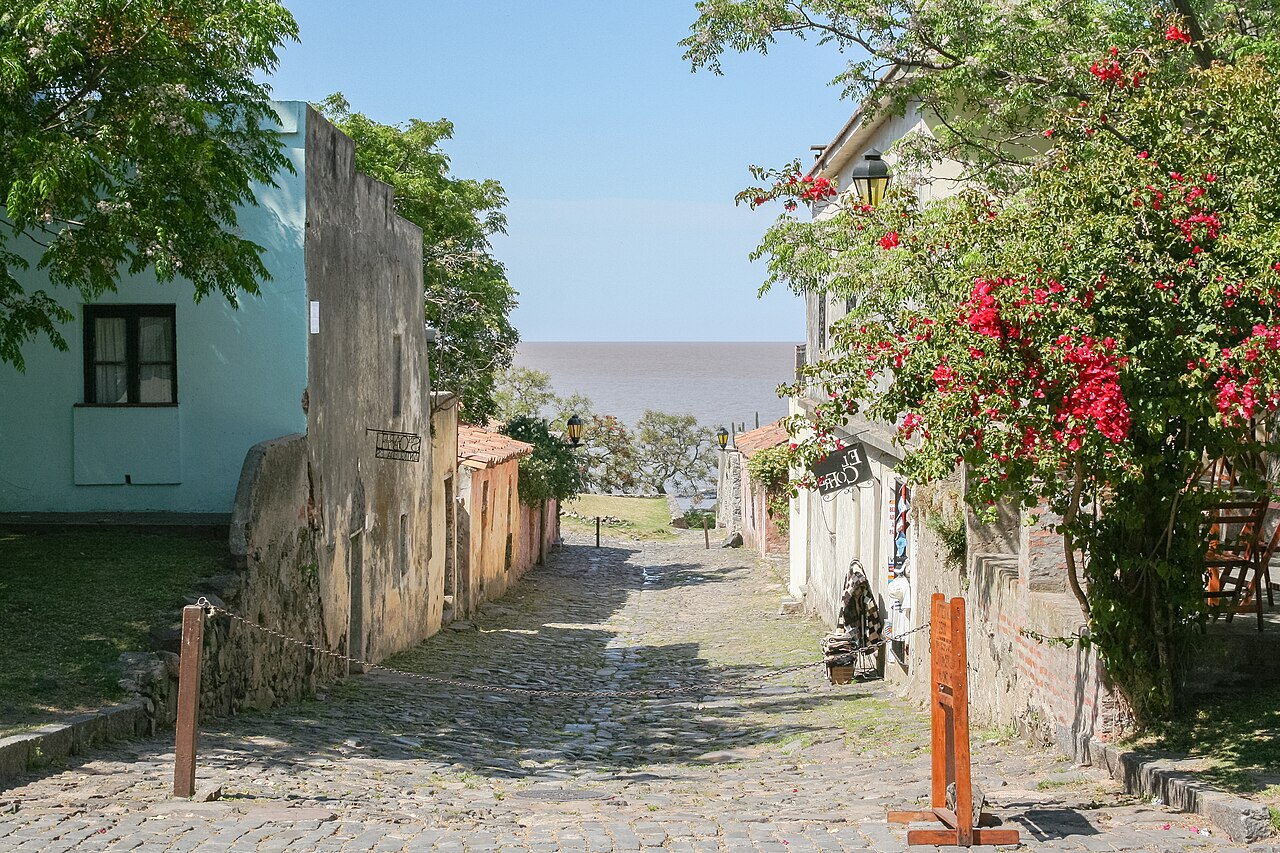
Most people see Colonia as a day trip off the Buenos Aires ferry, which is precisely why staying overnight is such a good move: after the last boat leaves, the UNESCO-listed Barrio Histórico goes quiet, the lanterns come on, and you get one of South America’s loveliest townscapes nearly to yourself. The accommodation fits the setting — colonial houses converted to posadas of six to twenty rooms, several with courtyard fig trees and river views, mostly US$90–200. Book the historic quarter itself rather than the modern town, and book ahead for any weekend, all year; Argentine couples keep Colonia busy every Friday and Saturday regardless of season. The honest drawback: one night really is enough for the sights, and restaurant prices run high for what arrives. My Colonia del Sacramento guide has the full picture.
An hour north, riverside Carmelo is the quieter, winier alternative — a small town amid vineyards with one five-star resort, several wine lodges, and almost no tourists between harvests. It pairs beautifully with Colonia for a two-night western loop on any Uruguay itinerary.
Estancias: Sleeping in Gaucho Country
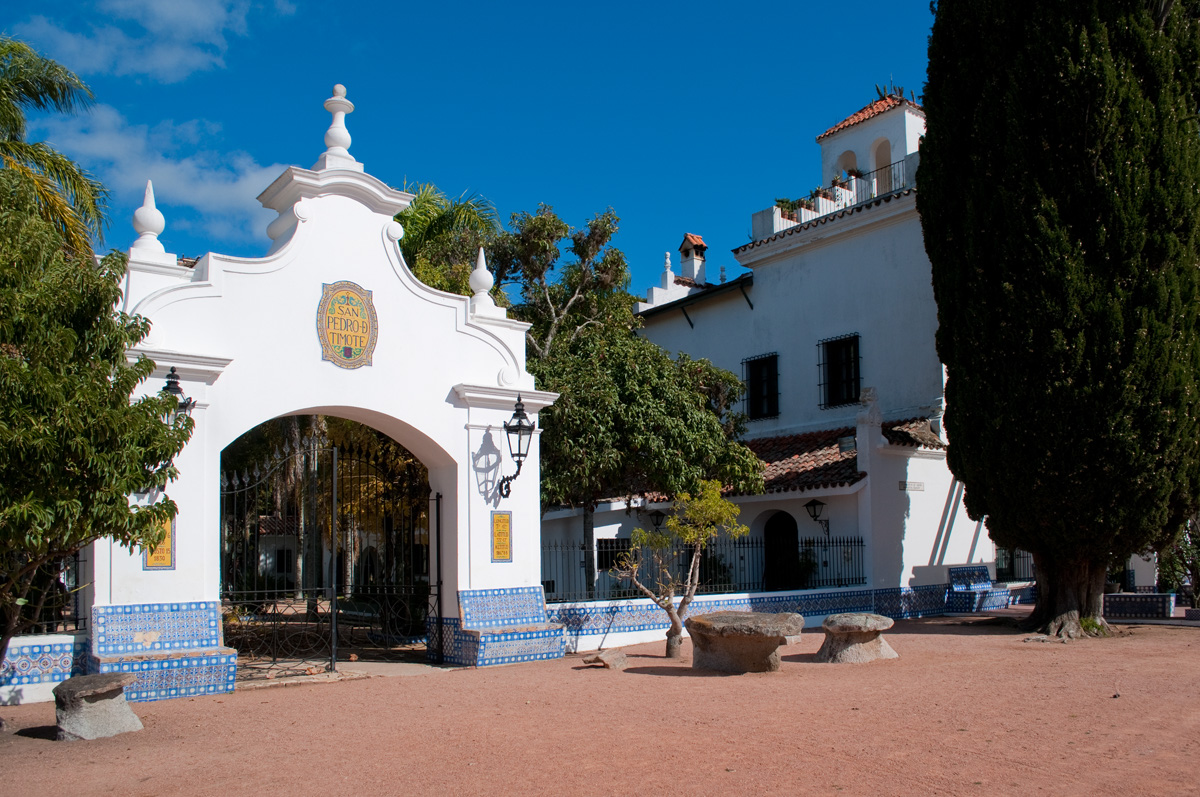
The interior — Florida, Lavalleja, Tacuarembó, Paysandú and the rest of the grassland departments — holds Uruguay’s most distinctive stays: working cattle ranches with guest rooms. The format is usually full board: all meals (asado features heavily), horseback riding, and whatever the ranch is actually doing that day, from moving cattle to shearing. Prices mostly run around US$150–300 per person with everything included, which compares well with an ordinary hotel plus three restaurant meals and an excursion. A few things I’d want you to know before booking: these are family operations that need emailing or WhatsApping in advance (no walk-ins, often no slick booking engines); riding ability is welcome but never required; and distances are real — the deepest ranches sit two or three hours up dirt roads, though several excellent ones lie within 90 minutes of Montevideo or the Maldonado beaches. The drawback is built in: evenings are fire, wine, stars and silence. If you need a town within walking distance, this isn’t your night out.
Salto, Paysandú and the Termas
Running up the Río Uruguay in the northwest, a chain of geothermal springs feeds purpose-built resort complexes — Daymán and Arapey near Salto, Guaviyú and Almirón near Paysandú. The accommodation truth: rooms are plain, beds are firm, and nobody minds, because you’re there to soak. Many properties wrap unlimited thermal-pool access into the rate, and asking for the package with termas included is the single best value move in the region. Around US$70–160 covers most options, from motel-style rooms at the pool edge to the smarter spa hotels at Arapey. This is also Uruguay’s one region where winter is high season — steam rising off 38°C water into cold June air is the whole show, and it’s a genuinely great family stop. Drawback: the towns themselves offer a quiet evening at best, and you’re five-plus hours from the Atlantic beaches, so treat the termas as a destination, not a detour.
The Bases Nobody Writes About (But Should)
Atlántida and the Costa de Oro — Montevideo’s local beach secret
The 70 kilometers of pine-backed coast between Montevideo and Punta del Este barely appear in English-language guides, and that’s exactly their charm. Atlántida, the main town, is a faded-elegant 1940s resort with a famous eagle-shaped stone house on the dunes, year-round bakeries, and family hotels and cabañas at some of the lowest beach prices in the country — usually around US$50–90. The water is river-meets-sea rather than full Atlantic surf, the crowd is overwhelmingly Uruguayan, and a frequent highway bus puts you in Montevideo in 45 minutes. The drawback is honest enough: it’s a suburban beach, not a wild one, and dinner options are modest. But for a slow week with kids on a budget, or a base for day-tripping the capital without paying capital prices, it quietly works.
Maldonado city — the Punta del Este price hack
Maldonado, the unglamorous departmental capital ten minutes inland from Punta del Este, shares the bus terminal’s local lines, the supermarkets and the hospital — and rents beds at roughly half the peninsula’s January rates. Stay here and you trade beach-at-the-door for a 15-minute bus or cheap taxi, which in peak season is a trade thousands of Argentine families happily make. It’s also where the area’s workers actually live, so the restaurants along the plaza are priced for locals. If Punta in January otherwise breaks the budget, this is the workaround. Don’t expect charm; expect value.
Minas and the Lavalleja hills — for walkers
Two hours northeast of Montevideo, Minas sits in the closest thing Uruguay has to hill country: rocky sierras, swimming holes, and the Salto del Peniténte waterfall. A handful of country posadas and hill-farm stays (around US$80–150) serve travelers who want walking and horses without committing to a full estancia program. It pairs naturally with the Punta del Este coast, which sits under an hour south, making a neat city–hills–beach loop for a second visit to the country.
How Locals Book (and How You Should)
One thing that surprises first-time visitors: a meaningful slice of Uruguayan coastal accommodation never appears on the big international platforms. Family cabaña complexes in Rocha, half the posadas in smaller towns, and almost all summer houses rent through local channels — the owner’s Instagram, a WhatsApp number passed around, or town rental agencies (inmobiliarias) that still run Saturday-to-Saturday summer contracts the way they have for decades. Practical consequences for you:
- If a town looks “sold out” online for January, it probably isn’t. Message two or three local inmobiliarias or the tourism office; whole categories of beds never reach Booking.com.
- WhatsApp is the national booking engine. Owners respond fast, in friendly Spanish (or game English), and a 20–30% deposit by bank transfer is the normal handshake. It feels informal; it’s how the country works.
- Direct booking often beats platform pricing by 10–15%, since commissions are real money for a six-room posada. Ask “¿mejor precio reservando directo?” and see what happens.
- For January, locals booked in winter. The Saturday-to-Saturday summer-rental market for houses moves between June and September. By the time international sites show scarcity, the good houses went months ago.
The flip side: paying a stranger’s WhatsApp deposit requires judgment. Stick to places with a traceable history — an active Instagram with years of posts, a listing in the municipal tourism registry, or a recommendation from a guide you trust — and you’ll be in good company.
Where I’d Think Twice
A guide that only says nice things isn’t a guide, so, gently: a few mismatches I see travelers make. Booking a Punta del Este high-rise in July expecting a beach holiday — you’ll get empty towers and closed restaurants; go to the termas or Montevideo instead. Booking Cabo Polonio sight-unseen for a week when one or two candlelit nights was the romantic dose; sand and no hot water lose their poetry around day four for most people. Treating Montevideo’s Centro at night as a strolling district — it’s fine, but it’s not Pocitos; take the cab. And committing the whole trip to one luxury property in José Ignacio without a car: even paradise needs a grocery run, and the village’s three streets are quicker to exhaust than its price tag suggests. None of these are disasters — they’re just avoidable with ten minutes of honest planning.
Decoding Uruguayan Accommodation Types
Booking sites flatten everything into “hotel,” but the local categories tell you a lot about what you’ll get:
- Posada — a small, owner-run guesthouse, usually under twenty rooms, usually with breakfast included and the owner’s personality everywhere. The best beds in Colonia, Rocha and José Ignacio are nearly all posadas.
- Apart-hotel — studio apartments with hotel services; a Montevideo and Punta del Este specialty. The kitchenette plus weekly rates make them the value play for stays over three nights.
- Cabañas — freestanding cabins, usually rented whole, dominant in Rocha and the pine suburbs. Great for groups; quality swings from architect-designed to plywood, so look at every photo.
- Estancia turística — a working ranch with guest rooms and full board, as above.
- Hostels — a strong, sociable network, including some of South America’s best beach hostels in Punta del Diablo, Cabo Polonio and La Paloma; dorms around US$15–25, many with private rooms that undercut nearby posadas.
- Hotel de campo / wine lodge — country hotels on vineyards or olive farms, concentrated around Carmelo and Garzón.
Two booking notes worth money. First, foreigners paying for lodging with a foreign card are generally exempt from Uruguay’s 22% VAT on accommodation — the discount should appear automatically at legitimate hotels, and it’s worth confirming the quoted rate is the tax-free one. Second, summer rentals along the coast traditionally run Saturday to Saturday through local agencies, and whole-house rentals often beat hotel pricing for four people or more — more practicalities like this in my Uruguay travel tips.
Where to Stay in Uruguay by Traveler Type
| You are… | Base(s) I’d book | Why |
|---|---|---|
| First-time visitor, 5–7 days | Montevideo (Pocitos) + Colonia + Punta del Este or Rocha | The classic triangle; easy buses; two nights each |
| Beach purist | La Pedrera or Punta del Diablo (summer); José Ignacio (if budget allows) | Best sand-to-crowd ratios in the country |
| Family with kids | Playa Mansa apart-hotel + a termas resort | Calm water, kitchens, thermal pools — low-stress logistics |
| Couple, special trip | José Ignacio or Manantiales + Colonia overnight + one estancia or wine lodge | Three different kinds of romance in one week |
| Backpacker | Montevideo (Cordón) + La Paloma + Cabo Polonio + Punta del Diablo | Hostel network is excellent and buses connect all four |
| No car, short trip | Montevideo + Punta del Este península | Everything walkable, frequent buses between them |
| Food & wine traveler | Montevideo (Ciudad Vieja) + Carmelo or Garzón area | Markets and parrillas, then sleep among the vines |
| Winter visitor (Jun–Aug) | Montevideo + Colonia + Salto termas | The three places that don’t hibernate |
The Practical Part: Booking, Timing, Money
When to book what
For January on the coast: reserve by September or October, especially José Ignacio, La Pedrera and anything small and well-reviewed. February: a month or two ahead. March–April and November–December: a few weeks ahead, less for Montevideo. Estancias and termas: two to four weeks ahead year-round works, though summer weekends at the termas fill with regional families. Colonia: any weekend needs lead time; midweek rarely does.
What things cost, honestly
Uruguay is not a cheap country — expect Southern European prices, not Andean ones. But the seasonal swing is your lever. The same La Barra posada that wants US$300 in mid-January quotes around US$120 in late March; José Ignacio drops by half or more; even Montevideo softens slightly in winter. If your dates are flexible, March is the sweet spot for the entire coast: sea still warm, doors still open, prices fallen, crowds gone. I’d take late March in José Ignacio over peak January anywhere on this coast, and it isn’t close.
Minimum stays and the January reality
Peak-season minimums catch people out every year: five, seven, even ten nights at small coastal places between Christmas and mid-January. If you only want two nights of Punta del Este in early January, the larger península hotels are your realistic option — the charming small places committed to week-long bookings months earlier.
Safety and neighborhoods
Uruguay is the safest country in South America by most measures, and accommodation choice reflects that more than it needs to drive it. The one genuine adjustment: in Montevideo, favor Pocitos/Punta Carretas or the better blocks of Ciudad Vieja, and use taxis late at night downtown. Everywhere else discussed here, the main nighttime hazard is a dark dirt lane and your own luggage.
Where to Stay in Uruguay: FAQ
What is the best area to stay in Uruguay for a first visit?
Split your nights: two or three in Montevideo (Pocitos for comfort, Ciudad Vieja for atmosphere), one in Colonia del Sacramento, and the rest on the coast that matches your style — Punta del Este for convenience, Rocha for wildness. That triangle gives a first-timer the city, the history and the beach in one trip.
Should I stay in Punta del Este or José Ignacio?
Punta del Este if you want walkability, hotel choice, nightlife and a no-car trip; José Ignacio if you want quiet luxury, food, and beach-house atmosphere and have a car plus a healthy budget. In March, when prices drop, José Ignacio wins for almost everyone. In July, both are quiet — but Punta at least stays open.
How many days do you need in Montevideo?
Two full days covers the old town, a market lunch, the rambla and a parrilla dinner without rushing; three lets you add Cordón’s cafés and a football match or day trip. Most itineraries are better spending extra nights on the coast or at an estancia than adding a fourth city night.
Is accommodation in Uruguay expensive?
By South American standards, yes — January beach rates rival Mediterranean resorts, and José Ignacio exceeds them. Off-peak it’s reasonable: solid Montevideo doubles around US$70–110, Rocha cabins around US$60–100, and the VAT exemption for foreign cards takes a meaningful slice off. The seasonal swing is the whole game.
Where should I stay in Uruguay without a car?
Montevideo, Punta del Este’s península, Colonia and La Paloma are all genuinely easy by bus, and Cabo Polonio is car-free by design (everyone arrives on the dune trucks). José Ignacio, Garzón, the estancias and the smaller termas effectively require wheels.
Do hotels in Uruguay close in winter?
On the Rocha coast and in La Barra/José Ignacio, many close completely from around Easter to November. Montevideo, Colonia, Punta del Este’s península, the estancias and the termas operate year-round — and the termas are actually at their best in winter.
Are estancias worth it for non-riders?
Yes. Riding is the headline activity but never compulsory — the real product is the rhythm: fire-cooked meals, mate at sunrise, birdlife, and silence you can hear. Tell the owners you don’t ride and they’ll plan around it without blinking.
Final Thoughts
Where to stay in Uruguay is really a question of which Uruguay you’re after — and the good news is that the country is small enough to collect two or three of them in a single trip. My standing advice: anchor in Montevideo, add one night you’ll remember forever (an estancia, a vineyard, a candlelit room in Cabo Polonio), and put your beach money in March rather than January. Whatever you book, book the small family-run place over the chain when you can; the owners are the country’s best travel guides, and breakfast comes with opinions. For what to do once you’ve unpacked, start with my guide to the best things to do in Uruguay.
Credits & sources
Sources & Further Reading
- Uruguay Ministry of Tourism — official registry of tourist accommodation and estancias
- Guru’Guay: Best unique hotels in Uruguay — long-running local reviews of owner-run properties
- Termas del Uruguay (official) — the hot-springs complexes of Salto and Paysandú
- Wikipedia: Tourism in Uruguay — background and visitor statistics
Photo Credits
“04. Playa Pocitos Pano.jpg” by Elemaki, Wikimedia Commons, CC BY 3.0 • “Ciudad Vieja de Montevideo aéreo.jpg” by Fedaro, Wikimedia Commons, CC BY-SA 4.0 • “Punta del Este Skyline Aerial Photography-2.jpg” by Jimmy Baikovicius, Wikimedia Commons, CC BY-SA 2.0 • “Lighthouse – Faro José Ignacio.jpg” by Jimmy Baikovicius, Wikimedia Commons, CC BY-SA 2.0 • “Colonia del Sacramento3 – Uruguay.jpg” by Diego Delso, Wikimedia Commons, CC BY-SA 3.0 • “Faro Polonio.JPG” by El Chancho Mimoso, Wikimedia Commons, CC BY-SA 3.0 • “Playa, Punta del Diablo, Rocha, Uruguay – panoramio.jpg” by rodoluca, Wikimedia Commons, CC BY-SA 3.0 • “Estancia San Pedro del Timote 1.jpg” by Nicolas Barriola, Wikimedia Commons, CC BY-SA 3.0
About Uruguay Tourism Guide
We’re an independent travel guide to Uruguay, built on first-hand research, repeat visits and an unreasonable enthusiasm for this small country. We don’t sell tours and hotels don’t pay to appear here; recommendations reflect our honest experience. Details like prices and opening arrangements change — always confirm directly before traveling.