Glamping in Uruguay: Domes, Tents & Beach Hideaways (2026)
The wind found a gap in the dome’s canvas seal around 3 a.m., and I lay listening to the Atlantic work a beach I couldn’t see. No streetlight. No hum of a fridge. Just surf, wind, and the creak of a geodesic frame in the gusts. I’d paid a fair bit to sleep in a tent, and I’d do it again tomorrow.
That’s the deal with going under canvas here: you trade a hotel’s reliable comforts for the dunes at your feet and nothing between you and the sea.
So, the short version. The glamping Uruguay scene is small, seasonal, and concentrated on the wild eastern coast — geodesic domes (locals say domos), safari and bell tents, and a few eco-camps near beaches like Punta del Diablo, La Pedrera and Valizas, plus polished dome retreats nearer Punta del Este. Most run December to February or March, many are off-grid or solar, and you book direct or via Airbnb. It is not Patagonia-scale, and that’s the point.
Some of it is genuinely lovely. Some of it is a damp tent and a long walk to a shared bathroom. After a few seasons doing this up and down Rocha and the eastern beaches, I’ve learned which is which, and I’ll be honest with you about both.
This guide is about the structures where the building is the experience: domes, tents, yurts, treehouses, barefoot beach hideaways. Want a proper hotel with a concierge? That’s a different page, and I’ll point you to it. After a beach house to rent for a fortnight? Also different. This is the canvas-and-solar end of things, told straight.
Who this guide is for (and who it isn’t)
I’m assuming you’re drawn to the idea of sleeping somewhere that feels closer to the landscape than a room ever could — a dome with a clear panel over the bed, a bell tent on a wooden deck above a lagoon, a yurt tucked into pine forest a hundred metres from the surf. You’re willing to accept some friction for that: a generator that cuts out, a cold-water rinse, a sandfly bite or six. If that sounds like a fair swap, you’re in the right place.
If you want predictable comfort — consistent hot water, climate control, a front desk — you’ll be happier in a design hotel or a beach-house rental, and there’s no shame in that. I cover the upscale boutique end over on unusual and design-led hotels in Uruguay, and the José Ignacio scene specifically in my guide to where to stay in José Ignacio. This page stays in its lane: structures where the structure is the whole point.
Uruguay glamping at a glance
A rough map of the landscape before we get into detail. Prices are per night for two in peak summer and move around a lot with the dollar, the season and how far ahead you book, so treat every figure as “ballpark, last I checked” rather than gospel.
| Camp / type | Area | Structure | Season | Rough price band (2 ppl/night) |
|---|---|---|---|---|
| Los Domos Glamping | Punta del Diablo (Playa Grande) | Solar geodesic domes | Roughly Nov–Mar | Mid (~US$120–200) |
| Big Bang Nature Stays | Sauce de Portezuelo (nr Punta del Este) | Designer domes, AC + heating | Most of the year | High (US$300+, often more) |
| Folk Glamp Tents | José Ignacio (Laguna Anastasio) | 5m bell tents on decks | Mainly Dec–Feb/Mar | High (José Ignacio rates) |
| Pueblo Barrancas | La Pedrera (km 227.5, Ruta 10) | Yurt in pine forest | Mainly summer | Mid |
| Eco Camping Valizas | Barra de Valizas | Eco-camp / bring or hire tent | Summer; quiet shoulder | Budget |
| Santa Teresa NP campgrounds | Coast nr Punta del Diablo | Vast forested campground | Year-round, summer-busy | Budget (national-park fees) |
Two things this table won’t tell you. First, the small operators open and close with the season and sometimes between seasons — a dome camp that ran last summer may not run this one, so confirm directly before you build a trip around it. Second, “glamping” in Uruguay covers everything from a five-star dome with a hot tub to a patch of grass with a power point. Know which end you’re booking.
Domes, tents or eco-cabins? Pick your structure first
Before you pick a town, pick a structure, because they’re genuinely different experiences and people get this wrong all the time.
Geodesic domes (domos)
The dome is the poster child of Uruguayan glamping, and for good reason. A domo is a rigid geodesic shell — usually a PVC or canvas skin stretched over a metal frame — often with a transparent panel angled at the night sky. Inside you typically get a real bed, a proper (if compact) bathroom, sometimes a wood stove or a fan. They handle wind far better than a tent and feel solid in a way canvas never quite does.
One honest drawback: a dome with a big clear panel turns into a greenhouse on a still, sunny summer afternoon. The good ones have shade sails, cross-ventilation or AC. The budget ones don’t, and a January siesta inside one can be genuinely unpleasant. Ask about ventilation before you book, not after.
Safari and bell tents
Canvas on a wooden platform, often with a real bed and rugs, sometimes a private deck and firepit. Bell tents (the round, single-pole kind) and safari tents (the bigger, ridge-pole kind) are the most “camping-like” of the glamping options — you hear everything, you feel the weather, and that’s either the charm or the problem depending on your temperament.
Drawback: canvas and Rocha’s coastal weather are not natural allies. A run of damp, windy days can leave bedding clammy and the whole tent smelling of wet canvas, and there’s not much the host can do about it. Tents are best booked for the dependable heat of January, not the volatile shoulder months.
Eco-cabins, yurts and treehouses
The middle ground. A yurt or a small eco-cabin gives you walls and a roof that shrug off weather, while still feeling a world away from a hotel — think reclaimed wood, solar panels, a deck, a hammock. The yurt at Pueblo Barrancas near La Pedrera, set back in pine forest a short walk from the beach, is a good example of the type: rustic but weather-proof, with a hot shower and a fridge.
Drawback: this is the least “wild” end of glamping, so if your fantasy is canvas walls and the surf right there, an eco-cabin can feel like a slightly rustic room rather than an adventure. You’re paying for the setting more than the structure.
Glamping the Rocha wild coast, town by town
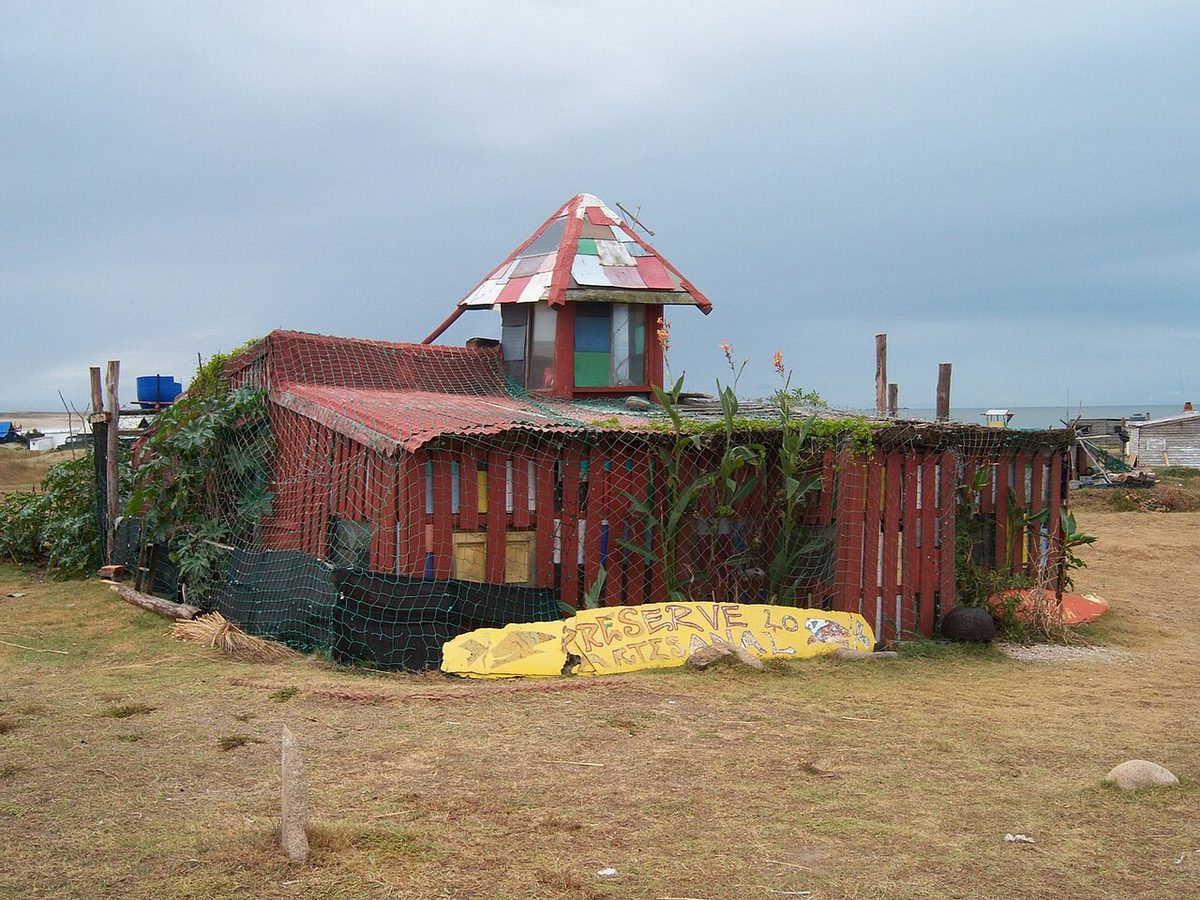
Rocha is the department that owns the wild end of Uruguay’s Atlantic shore, and it’s where most of the country’s real glamping lives. Its beaches are backed by dunes and pine, its balnearios — the little beach-resort hamlets that string along the coast — mostly stay low-rise and low-key. Here’s how the glamping breaks down place by place.
Punta del Diablo
If you want a dome on a working surf coast with a village attached, Punta del Diablo is the obvious pick. It started as a fishing village, grew into a backpacker and family summer town, and it has the clearest concentration of dome glamping anywhere in the country. The best-known is Los Domos Glamping, a cluster of solar-powered geodesic domes set roughly a hundred metres back from Playa Grande, each with a double bed, a full little bathroom and a private terrace looking toward the ocean. They run on solar for power and water and even recycle greywater, which tells you the ethos.
What I like: you’re a short walk from the sand and a slightly longer one from the village’s restaurants and the fishing-port end, so you get wildness and dinner. What to know: Punta del Diablo in January is busy — the population multiplies many times over — and “back from the beach” also means back from the breeze, so a still hot day can sit heavy on a dome. For the wider picture of the town, see my guide to Punta del Diablo.
Cabo Polonio
Cabo Polonio is the one everybody asks about, so let’s be precise. It is a genuinely off-grid village inside a national park: no public electricity grid, no mains water, no paved streets, and — this matters — no driving in. You leave your car at the park entrance on Ruta 10 and ride a high-clearance 4×4 dune truck over the médanos to reach it, about twenty minutes of lurching through sand. That truck is the only motorised way in or out.
Here’s the catch for glampers: tents are not permitted inside Cabo Polonio National Park, so true pitch-your-own glamping isn’t a thing here. What you get instead are rustic cabins, eco-lodges and hostels, many running on solar panels, wind turbines or small generators, with rainwater or well water. It’s “off-grid” as a lifestyle rather than “glamping” as a product — closer to barefoot beach-shack living than to a designer dome. If that’s the dream, lean in; if you wanted a tent on a deck, look elsewhere. I go deep on logistics in my Cabo Polonio guide.
La Pedrera and Barra de Valizas
La Pedrera is the bohemian one — a clifftop village that’s quiet most of the year and packed for a few weeks around New Year. Glamping here leans toward yurts and eco-stays in the pine, like Pueblo Barrancas at km 227.5 on Ruta 10, rather than big dome camps. It’s a lovely base if you want surf, a relaxed scene and a structure that handles weather. More on the town in my La Pedrera guide.
Valizas, a little further up the coast, is rawer and cheaper. The standout for the canvas-and-campfire crowd is Eco Camping Valizas, ten hectares where you bring (or sometimes hire) a tent and get power points, potable water, showers and fire pits among the trees. It’s not glamping in the hot-tub sense — it’s proper camping with a conscience — but it’s the gateway to the dunes and the walk to Cabo Polonio, and the vibe is unbeatable if you’re the right kind of traveller. Background in my Barra de Valizas guide.
Drawback for this whole stretch: the bugs. Pine forest plus lagoons plus warm, still evenings equals mosquitoes, and the dunes and damp grass bring sandflies (the locals call the biting ones jejenes). Dusk is their hour. I’ll come back to this, because it’s the single most underestimated part of glamping here.
La Paloma, Aguas Dulces and Santa Teresa
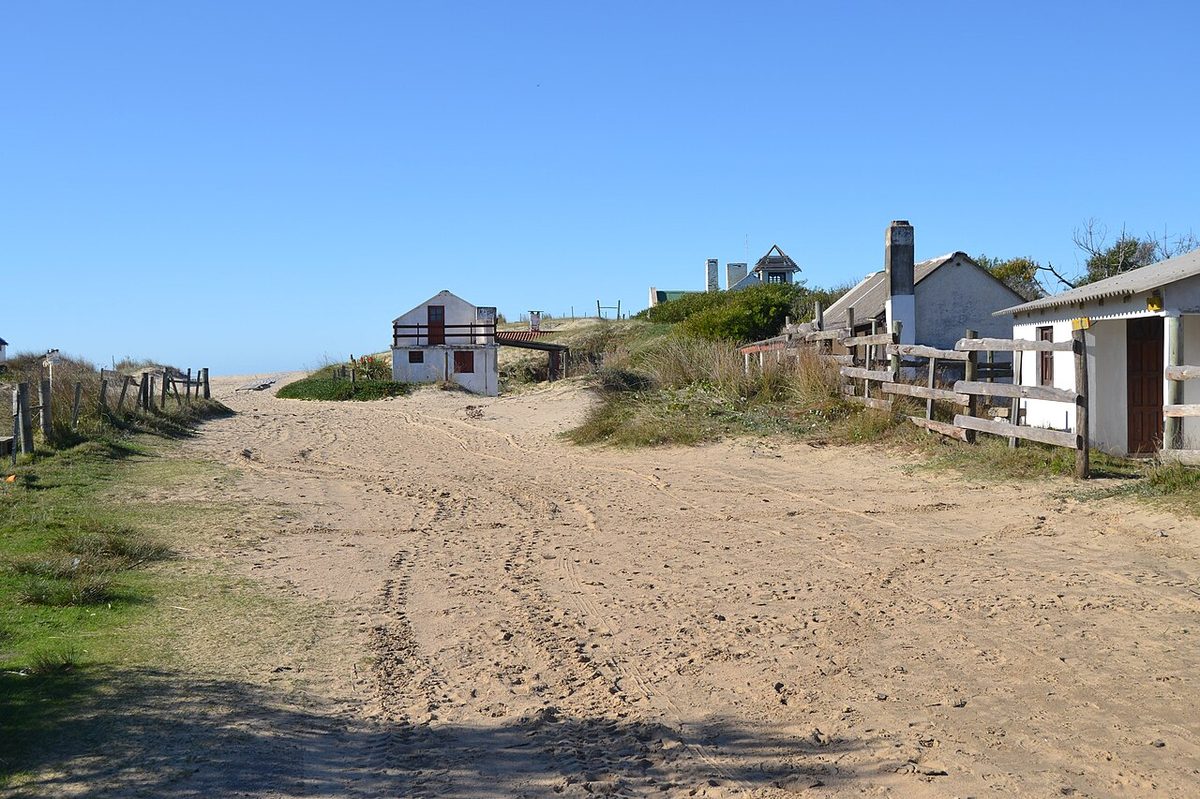
Rounding out Rocha: La Paloma is the most developed beach town of the bunch and works better for cabins and apartments than for dome glamping — useful as a supply-and-services base, covered in my La Paloma guide. Aguas Dulces is a sleepy fishing-shack hamlet near Valizas, more rustic rental than organised glamping. And Santa Teresa National Park, just south of Punta del Diablo, runs one of the largest and best-loved campgrounds in the country — thousands of shaded sites under planted forest, a colonial fort, and beaches a short walk away. It’s camping rather than glamping, but if you’ve got your own kit it’s hard to beat for the price. Without a tent, the cheapest roof on this coast is a dorm bed; our guide to the best hostels in Uruguay runs from Montevideo to Punta del Diablo.
José Ignacio and the eastern beaches
Move west from Rocha into Maldonado and the tone shifts. José Ignacio is the chic one — a tiny lighthouse village of sandy lanes that the fashion crowd adopted, where dirt roads are a deliberate brake on mass tourism. Glamping here is rarer and pricier, and it skews toward polished tents over rough domes.
The clearest example is Folk Glamp Tents, a small set of five-metre bell tents pitched on wooden decks above Laguna Anastasio, each with its own terrace and firepit, breakfast included, with kayaks on the lagoon and horse riding laid on. It’s glamping with a José Ignacio price tag and a José Ignacio crowd — lovely, but don’t expect Valizas rates. The honest note: it’s a lagoon-side, not beachfront, setup and a fair drive from the village centre, so you’re trading the famous beach for calm water and quiet. For the village itself, see my José Ignacio guide.
One clarification, because the marketing blurs it: several of the “nature lodges” around José Ignacio — the kind set on private acreage with olive groves and a laguna — are really boutique hotels rather than glamping, even when they lean rustic-luxe. Beautiful, but they belong in the hotels conversation. If a “glamping” listing turns out to have solid walls, a restaurant and a front desk, that’s your clue it’s crossed the line into hotel territory; I cover those in the José Ignacio stays guide.
Countryside and wine-country glamping
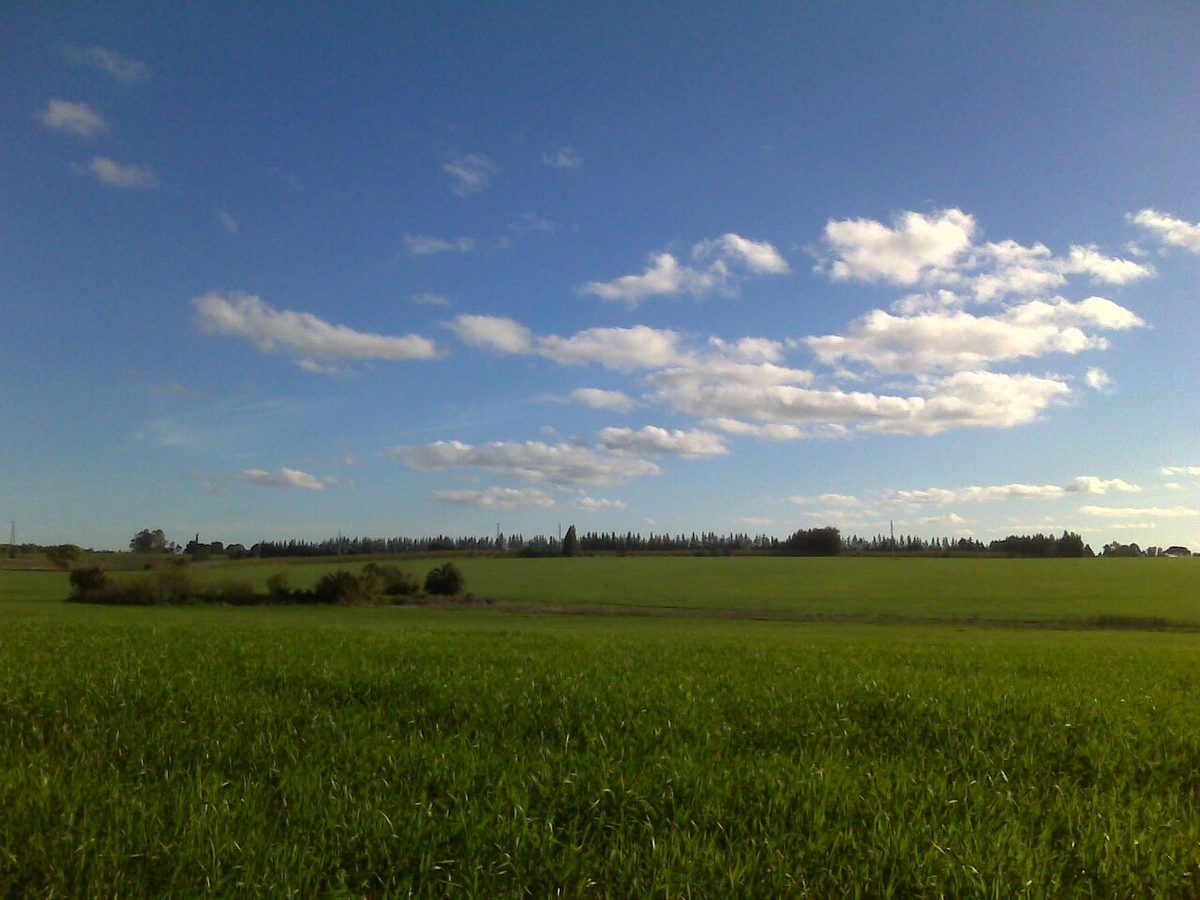
Not all of it is coastal. Inland, a scattering of estancias (working ranches) and wineries have added domes, tents or eco-cabins so you can sleep among the vines or out on the rolling campo — the open grassland that covers most of the interior. The appeal is different from the coast: enormous skies, dark nights perfect for stargazing, an asado (the slow wood-fired barbecue that’s practically a national rite) cooked by your hosts, and the deep quiet of the countryside instead of surf.
Big Bang Nature Stays, near Sauce de Portezuelo just outside Punta del Este, is the most polished example of the genre even though it sits closer to the coast than the deep interior — twelve custom domes in pine forest above a near-deserted beach, with AC, heating, woodstoves in some, and communal art, yoga and lounge domes. It made the National Geographic Traveller Luxury Collection in 2025, which gives you a sense of the level (and the rate). It’s about as far from roughing it as glamping gets.
Drawback for countryside glamping generally: you need a car. These places sit down long stretches of ripio — the loose gravel-and-dirt roads that lace the interior — with no shop, no taxi and no walking to dinner. Wonderful if you’ve planned for it, a logistical headache if you haven’t. If you’re routing a wider trip, my Uruguay itinerary helps you slot a night or two of campo glamping in without backtracking.
What “off-grid” actually means out here
This is the section the booking sites skip, and it’s the one that decides whether you have a great trip or a miserable one. Glamping in Uruguay is frequently off-grid or half-off-grid, and the marketing photos never show the trade-offs. Let me.
Power
Plenty of camps run on solar, sometimes topped up by a generator. In practice that means power is finite and timed. Lights and a phone charge, yes; a hairdryer, a kettle and an air conditioner running all afternoon, probably not. Some places cut the generator overnight, so the fan dies at midnight and the fridge with it. Pack a power bank, charge everything by day, and don’t assume a socket means unlimited juice.
Water and bathrooms
Hot water is the variable that catches people out. Solar-heated water is fantastic after a sunny day and feeble after a cloudy one, and a run of grey weather can mean cold rinses. Some domes have private bathrooms; budget camps share blocks a walk away across the dark and the dew. Neither is a dealbreaker — just know which you’re getting, because “private bathroom” versus “shared block” is the difference between two completely different holidays.
Bugs — read this twice
The single most underestimated thing about glamping on this coast is the insect life. Warm, still summer evenings near water bring mosquitoes, and the dunes and damp grass bring sandflies — the tiny biting jejenes whose bites itch for days. Canvas isn’t a sealed barrier the way a hotel room is. Bring serious repellent (something with a high DEET or icaridin content), cover up at dusk, and treat any mention of “we provide an insect vaporiser” as a reason to book, not a red flag. Domes seal better than tents; both still let some in.
Weather and sand
Rocha’s coast gets wind, and it gets sudden rain. A dome shrugs off a gale; a bell tent makes you live through it. Sand gets into everything — the bed, the bag, the bathroom — and that’s just the tax for sleeping in the dunes. And when a storm rolls in, an off-grid camp can lose power and turn a romantic night into a long, dark, damp one. None of this should stop you. It should just stop you from being surprised.
The honest value question
Here’s my one blunt drawback for the whole category: glamping in Uruguay is not cheap for what it physically is. A good dome in peak season can cost as much as a comfortable hotel room with none of the hotel’s reliability. You are paying for the setting and the novelty, not the thread count. If you value those, it’s worth every peso. If you secretly just want a nice room, you’ll feel the gap.
Glamping by traveller type, and the practical stuff
Couples
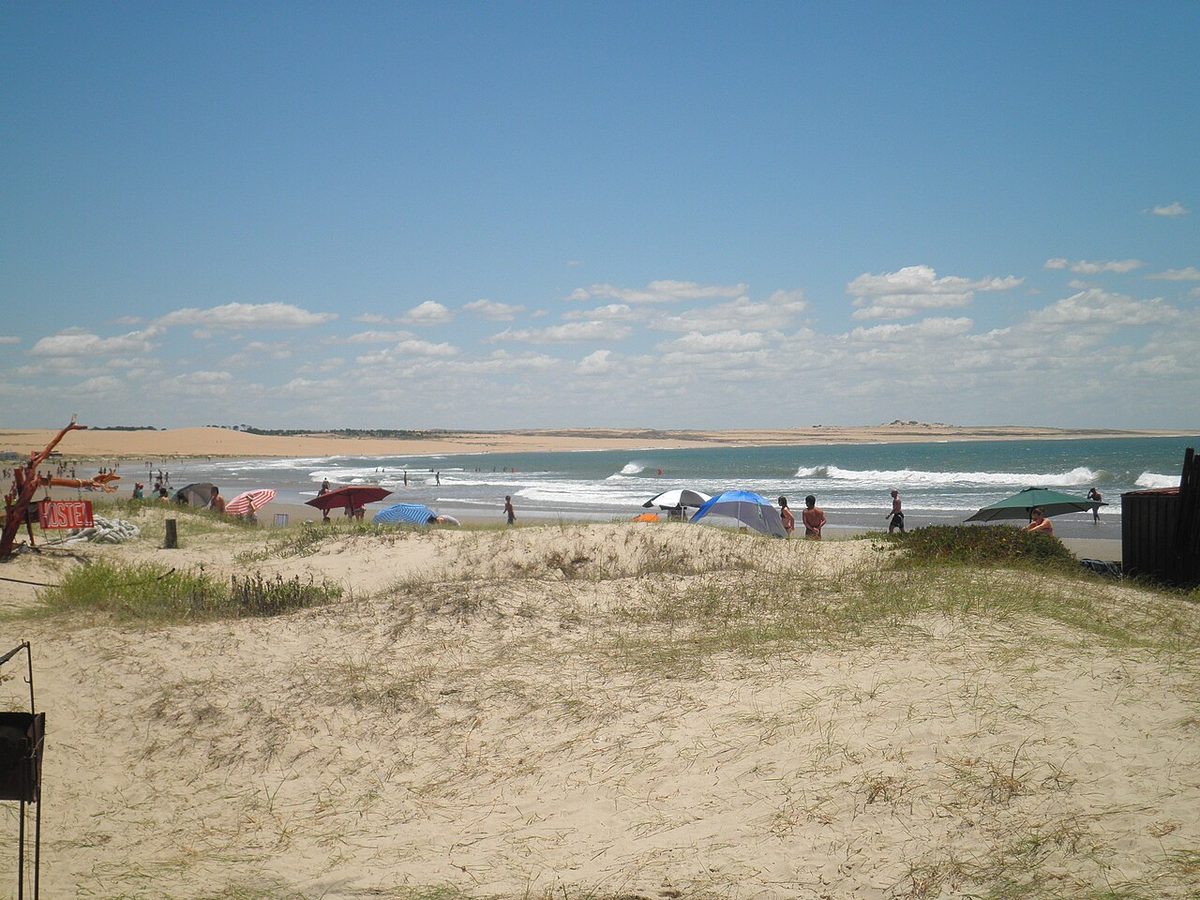
This is where glamping shines. A dome with a clear panel over the bed, a private deck, a bottle of Tannat (Uruguay’s signature red) and the surf fifty metres away is a genuinely romantic night, and the better couple-focused domes — Los Domos in Punta del Diablo, the polished domes at Big Bang — lean right into it. Book a two-person dome with its own bathroom, not a shared-facility tent, and you’ll get the version you’re picturing. One caveat: thin canvas means thin privacy from neighbours, so ask how far apart the units sit.
Families
Glamping with kids works best at the more structured camps and the big national-park campgrounds, where there’s space to run and other families around. Smaller two-person dome setups aren’t built for a family of four, and the off-grid quirks (no AC, shared bathrooms, bugs at dusk) test small children harder than adults. Santa Teresa’s campground, or a roomier eco-cabin, beats a delicate designer dome for a family week.
When to go
Peak is December to February, when the heat is dependable, the camps are all open, and the coast is alive — and also when prices peak and Punta del Diablo and La Pedrera fill with Argentines and Brazilians. The sweet spot, if you can take the gamble, is the shoulder: late November or March, when it’s warm enough, far cheaper and far quieter. The risk is weather and closures — many small camps simply shut from around April, and a cold snap can make a tent grim. Winter glamping on this coast is for the hardy and the well-insulated only. My best time to visit Uruguay guide breaks the seasons down properly, and the Uruguay in summer guide covers the peak weeks.
How to get there
You really want a car for glamping here. The camps sit off the highway down ripio tracks, supplies are a drive away, and public transport, while it exists, leaves you stranded at the gate. The big exception is Cabo Polonio, where the car is useless past the park entrance and the 4×4 dune truck takes over. Buses from Montevideo do reach the main Rocha towns — Punta del Diablo, La Paloma — if you’re travelling light and basing yourself in one place. For the regional lay of the land, see my Rocha guide and the wider Uruguay beach towns overview.
What to pack
A head torch. A power bank, fully charged. Serious insect repellent and something to soothe the bites you’ll get anyway. A warm layer even in summer, because the coast cools off hard after dark. Sandals you don’t mind soaking. Cash, because card machines and off-grid camps are not friends and the nearest ATM may be an hour away. And low expectations about phone signal, which is the whole point.
Glamping Uruguay: your questions answered
Is there glamping in Uruguay?
Yes, though the scene is small and seasonal. You’ll find geodesic domes, bell and safari tents, yurts and eco-cabins concentrated on the eastern Atlantic coast — around Punta del Diablo, La Pedrera and Valizas in Rocha, plus polished options near José Ignacio and Punta del Este. Most run from roughly November to March, and many are off-grid or solar-powered.
Where are the glamping domes in Uruguay?
The clearest cluster of dome (domo) glamping is in Punta del Diablo, in Rocha, where camps like Los Domos sit solar-powered just back from the beach. There are designer domes near Punta del Este (Big Bang Nature Stays at Sauce de Portezuelo) and scattered dome and yurt stays around La Pedrera and the wider eastern coast. Confirm directly, as small camps open and close seasonally.
Can you camp in Cabo Polonio?
Not in tents — pitching is not permitted inside Cabo Polonio National Park. Instead you sleep in rustic cabins, eco-lodges or hostels in the village, most running on solar or generators with rainwater or well water. You can only reach Cabo Polonio by an authorised 4×4 dune truck from the Ruta 10 park entrance; private cars stop at the gate.
How much does glamping cost in Uruguay?
It varies widely. A basic eco-camp tent pitch runs cheap; a mid-range dome in Punta del Diablo might be around US$120 to US$200 a night for two in summer; and a designer dome near Punta del Este or a bell tent in José Ignacio can run several hundred. Prices swing hard with the dollar and the season, so treat any figure as a ballpark and book early for peak weeks.
When is the best time for glamping in Uruguay?
December to February is peak — warmest, liveliest, everything open, but priciest and busiest. The shoulder months of late November and March are the sweet spot: warm enough, cheaper and far quieter, with the risk of cooler weather and some camps already closed. From around April through winter, most coastal glamping shuts down, and tents become a cold proposition.
What should I know before booking glamping in Uruguay?
Three things. Off-grid means limited power, variable hot water and sometimes shared bathrooms — check exactly what’s included. Bring strong insect repellent, because mosquitoes and sandflies are real here. And bring (or hire) a car, since most camps sit down gravel roads far from shops and transport. Cabo Polonio is the exception, reached only by dune truck.
Final thoughts
Glamping here is not a polished, predictable product, and I’d be lying if I sold it as one. It’s a small, seasonal, slightly improvised scene strung along one of the emptiest coasts in South America, and the reward is exactly proportional to your tolerance for sand in the bed and a generator that quits at midnight.
Get it right — a solid dome, the dependable heat of January, a car in the drive and repellent in the bag — and you’ll have a night you remember for years: the Atlantic in the dark, a sky thick with stars, and nothing between you and it but a thin shell of canvas and the dunes. Get it wrong and you’ll wish you’d booked a room. Go in clear-eyed, pick your structure to match your patience, and lean into the wildness rather than fighting it. That’s the whole trick.
Still deciding where to base yourself? Start with the parent guide to where to stay in Uruguay for the full range of options, then come back here when the canvas-and-stars version wins out.
Credits & sources
Sources & further reading
- Guru’Guay on Big Bang Nature Stays — a detailed local write-up of one of the country’s best-known dome retreats.
- Wikivoyage: Cabo Polonio — practical, regularly updated notes on reaching and staying in the off-grid village.
- Tripadvisor reviews: Eco Camping Valizas — recent traveller reports on the Valizas eco-camp.
Photo credits
All images via Wikimedia Commons: Rocha Coast Dunes Uruguay by Andrés Franchi Ugart… (CC BY-SA 3.0); Cabo Polonio Cabin Uruguay by Miriam Edith Leal (CC BY-SA 4.0); Valizas Dunes Rocha Uruguay by Own work (CC BY-SA 4.0); Cabo Polonio Beach Uruguay by Tekove (CC BY-SA 3.0); Uruguay Countryside Campo Pampas by Gonzalo Acuña (CC BY-SA 3.0).