Casapueblo: Uruguay’s Most Famous Building (Sunset Guide) (2026)
The first time I drove out to Punta Ballena, I almost missed the turn. You come along the coast road west of Punta del Este, the land rises into a green headland, and then this great white thing appears on the cliff like something that grew there rather than something that was built. I pulled over before I’d even decided to. That is the effect it has on people, and it is the reason I keep going back.
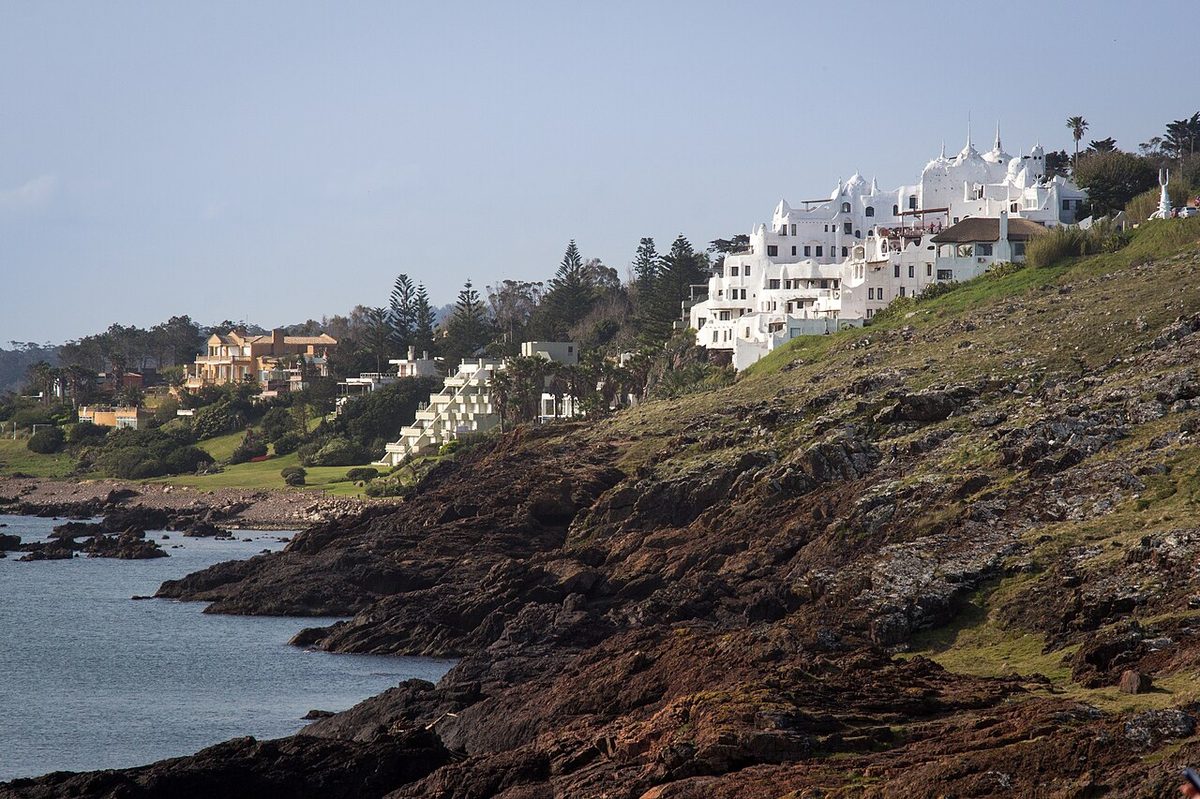
So here is the short version. Casapueblo is a sprawling, blinding-white, Mediterranean-style structure perched on the cliffs at Punta Ballena, about 13 kilometres west of Punta del Este on Uruguay’s Atlantic coast. The Uruguayan artist Carlos Páez Vilaró hand-built it over more than three decades as a “habitable sculpture” — no straight lines, no original plans — and it now holds his museum and studio, a hotel, art galleries and a clifftop café. It is most famous for its sunset ceremony.
Most visitors come for one afternoon and an evening. They climb through the white terraces, look at the art, drink something overpriced on a balcony over the sea, and wait for the sun to drop into the water while a recording of the dead artist’s voice reads a poem to it. It sounds strange written down. In person it is one of the few genuinely moving “tourist experiences” I know of in Uruguay, and I have stood through it more than once.
This guide covers what Casapueblo actually is, the remarkable man who built it, what you’ll find inside today, the sunset ceremony in detail, and the unglamorous logistics — how to get there, what it costs, when to go, and the honest drawbacks nobody puts on the postcard. If you’re planning a wider trip, it slots naturally into a day around Punta del Este, so I’ll point you back to that whenever the wider region matters.
Casapueblo at a glance
| Detail | What to know |
|---|---|
| Location | Punta Ballena, Maldonado Department, on the cliffs above the Atlantic |
| Distance from Punta del Este | About 13 km west — roughly a 15–20 minute drive |
| What it is | Artist’s hand-built “habitable sculpture”: museum/studio, hotel, café and galleries |
| Built by | Carlos Páez Vilaró, over more than 30 years (begun 1958) |
| Museum hours | Open daily, year-round, roughly 10am until sunset/closing |
| Ticket price | Around $U 600 general / $U 500 residents and over-65s; under-12s free (hedged — confirm current rates) |
| Sunset ceremony | “Ceremonia del Sol” every evening, beginning a few minutes before the sun sets |
| Arrive for sunset | 40–60 minutes early to get a spot on the terraces |
| How long to visit | 1 hour for the museum alone; 2–3 hours if you stay for the ceremony |
| Best season | Southern-hemisphere summer (Dec–Feb) for warmth; shoulder months for fewer crowds |
What Casapueblo actually is
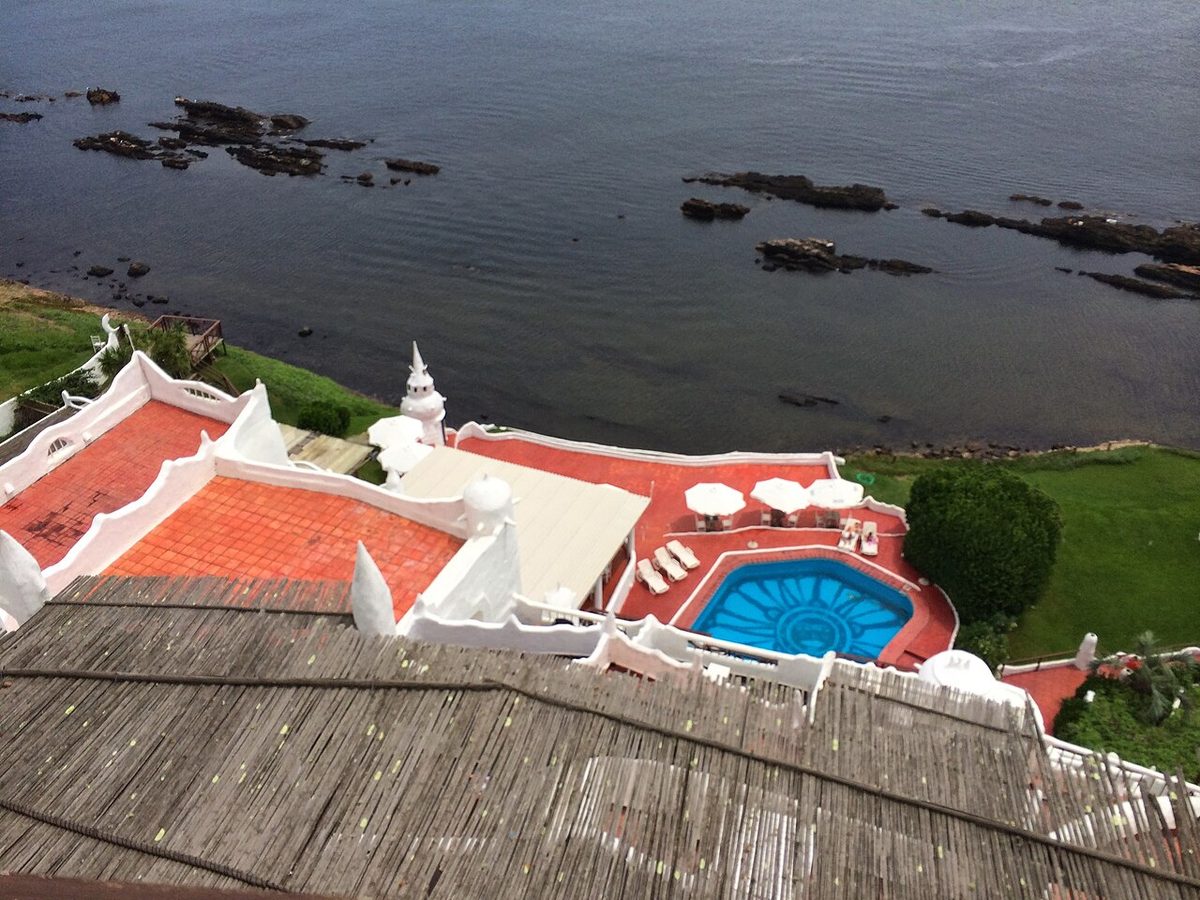
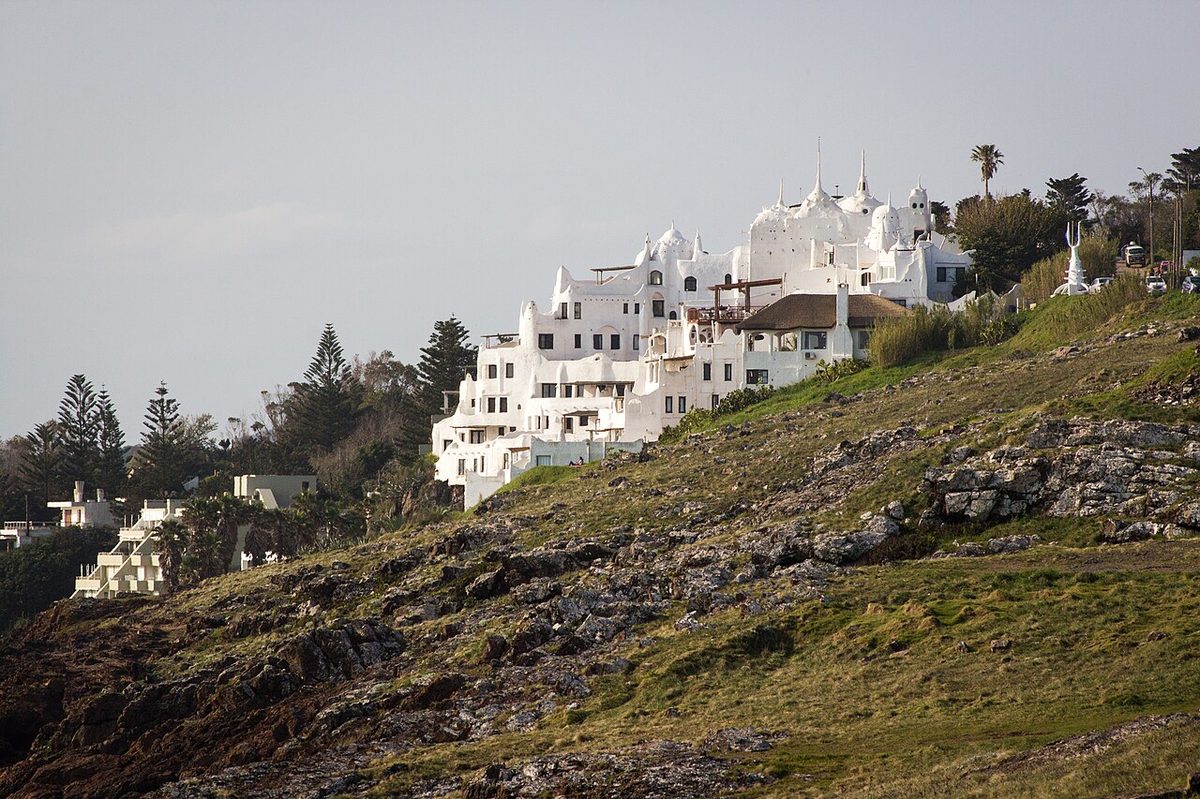
Calling Casapueblo a “building” undersells it, and calling it a “museum” misses the point. It is one continuous sculpture you can walk through, thirteen floors of whitewashed cement and stucco poured and modelled by hand over a cliff face, with domes, archways, tunnels, narrow passages and terraces stacked on top of each other like something coral built rather than something an architect drew.
There are, famously, almost no straight lines. Vilaró described the place as built in “open warfare against the straight line,” and he meant it. Walls curve and lean. Steps wander. Doorways are rounded. The whole thing is painted that relentless, eye-aching white that throws the blue of the sky and the sea into sharp relief — the colour combination that has made it one of the most photographed structures in South America.
People reach for comparisons. The obvious one is Santorini, the white cliffside villages of the Greek islands, and the resemblance is real enough that first-time visitors say it out loud. Vilaró himself preferred a homelier image: the nest of the hornero, the rufous ovenbird native to Uruguay, which builds a domed mud nest shaped like a little clay oven. He talked about building with the logic of a horno de pan — a bread oven — rounded and made by hand and grown outward bit by bit. Once you’ve heard that, you can’t unsee it.
The structure sits on Punta Ballena, “Whale Point,” a rocky headland that juts into the Atlantic west of the main Punta del Este peninsula. The setting does half the work. You are high on a cliff with open ocean to the west, which is exactly why the sunsets here became the whole institution’s calling card. For the wider lay of the land — the beaches, the famous hand sculpture, the resort town itself — the Punta del Este guide covers the area in full.
Carlos Páez Vilaró: the man who built Casapueblo by hand
You cannot really understand Casapueblo without understanding the person who made it, because the place is less a house than a self-portrait poured in cement. Carlos Páez Vilaró was Uruguay’s most famous artist of the twentieth century, and an almost ridiculously prolific one — painter, muralist, ceramicist, sculptor, writer, composer and filmmaker, who seemed determined to try every medium that existed.
His range was extraordinary. He painted what was billed as the world’s longest mural, “Raíces de la Paz” (Roots of Peace), in Washington in 1960. He made ceramics after a meeting with Pablo Picasso in France encouraged him into the medium. He shot documentary films in Africa. He painted the sails of Uruguay’s naval training ship, the Capitán Miranda, and even the national airline’s aircraft and police vehicles. The man’s instinct was to paint on anything that stood still long enough.
Casapueblo was his masterwork and his obsession. The story starts in 1958, when Vilaró first came to Punta Ballena and was captivated by a headland that, at the time, had no trees, no roads, no electricity and no water. He bought a plot, put up a tin shack to store salvaged doors and windows, and with the help of friends and local fishermen built a wooden studio he called La Pionera — The Pioneer. That little wooden atelier is the seed the whole white mountain grew from.
How it was built: no plans, no straight lines
Then he started covering it in cement and modelling it with his hands, the way you’d work clay. He added rooms the way you’d add carriages to a train — often when friends announced they were coming to stay. Domes, passages, tunnels and terraces accreted year by year. There were no blueprints because he didn’t work from any. The whole thing was improvised, expanded “in unpredictable ways,” for more than three decades.
One detail I love. When the local municipality eventually asked Vilaró for the building’s plans, he didn’t have any — there had never been any. An architect friend reportedly had to spend a month studying the structure just to draw up plans that already-existing reality after the fact. That is the opposite of how buildings get made, and it tells you everything about the place.
His own line is the one carved into the legend: “I built it as if it were a habitable sculpture, without plans, above all at the urging of my own enthusiasm.” Construction is usually dated at around 36 years of continuous work, though Vilaró kept tinkering essentially until the end of his life. He lived here, worked here, and died here in 2014, at 90. The honest caveat for art purists: some find the sheer volume of output uneven, more enthusiasm than rigour. I’d say that misses what he was doing. Casapueblo isn’t a collection of masterpieces. It’s one big one you stand inside.
The Andes crash and the Páez Vilaró family
There is a thread of real tragedy and survival running through this family, and it’s woven into the building itself. In October 1972, Vilaró’s eldest son, Carlos “Carlitos” Páez Rodríguez — then eighteen — boarded Uruguayan Air Force Flight 571 to Chile with a rugby team and their friends. The plane crashed high in the Andes on 13 October. It is the disaster the world knows from the book and films Alive and, more recently, Society of the Snow: the survivors who endured more than two months at altitude in the wreckage and, infamously, were eventually forced to eat the bodies of the dead to stay alive.
While the official search was called off, Vilaró refused to accept that his son was dead. He travelled into the mountains himself, hiring guides and small planes, chasing leads across the cordillera, and never gave up. Carlitos was among the sixteen survivors rescued some seventy-two days after the crash. He went on to become an author and motivational speaker, and is a grandfather today.
Inside Casapueblo there is a tribute to that survival. Knowing the story changes how the place reads. A father who would not stop searching, who built a whole white world by hand over a cliff facing the sun — there’s a stubbornness and a faith in those two facts that feel like the same trait expressed two ways.
The Museo-Taller: inside the museum and studio
The public heart of Casapueblo is the Museo Taller — the Museum-Workshop — which occupies the centre of the great construction and shows the work of its creator. This is what your entrance ticket buys you, and it’s the part most day-trippers come for alongside the sunset.

Your route winds through several exhibition rooms — named for figures Vilaró admired, including a Pablo Picasso room and a Nicolás Guillén room — plus terraces and a small cinema where they screen documentaries about his life and work. You’ll see paintings, ceramics and sculptures from different phases of a very long career, and objects he hauled back from travels all over the world and literally embedded into the walls. Part of the pleasure is architectural rather than curatorial: you’re moving through arcades, passageways and stairwells that are themselves the main exhibit.
Plan on about an hour for the museum proper if you’re moving at a normal pace, more if you linger over the terraces and the views, which you will. It is not an enormous museum — much of the overall complex is the hotel and is not open to the public — but it doesn’t need to be. The honest drawback: if you come expecting a major fine-art collection on the scale of a national gallery, you’ll be underwhelmed. Come for the man, the place and the setting, not for a deep survey of masterpieces, and you’ll leave happy.
For where this fits in the country’s wider artistic life — candombe drumming, the murals, the broader culture Vilaró drew from and contributed to — the Uruguay culture guide is the place to go, and Casapueblo is one of the headline stops on any things-to-do-in-Uruguay list for good reason.
Staying at the hotel and eating at the café
Plenty of people don’t realise you can actually sleep here. Casapueblo isn’t only a museum — a large part of the complex is the Club Hotel Casapueblo, an apartment-hotel with rooms, suites and apartments built in the same white, curving, no-straight-lines style as the rest. There’s a pool, a sauna, a bar, and a restaurant called Las Terrazas (The Terraces) that follows the look of the original construction.
Waking up inside the sculpture, with the Atlantic out the window and the terraces to yourself before the day-trippers arrive, is a genuinely special thing — guests describe it as once-in-a-lifetime, and I don’t think that’s only marketing. If you want the sunset ceremony without fighting the crowd for a square metre of railing, being a hotel guest is the cheat code. Room rates swing wildly by season; budget options have appeared from somewhere around the low US$90s a night in quiet months, but expect serious premiums in peak January. The honest drawback: this is a quirky, decades-old artist’s building, not a slick five-star resort. Some rooms are dated, layouts are eccentric by design, and “boutique character” and “would benefit from a refurbishment” can describe the same room depending on your mood. Go for the romance of the place, not for crisp luxury. It is also one of the stays in our round-up of the most unique hotels in Uruguay.
For day visitors, the café is the Taberna del Rayo Verde — the Tavern of the Green Ray, named for the rare optical flash sometimes seen as the sun dips below the sea horizon. It serves a varied menu, and the entire reason to sit there is the view: the sea, the hills, and the white architecture curving away around you. The drawback is the obvious one — you are paying view prices. Coffee, drinks and snacks cost more than they would in town, and at peak hours table space near the railing is fiercely contested. I treat it as renting a seat for the sunset rather than as a meal, and that framing makes the bill easier to swallow. If you’d rather plan your nights elsewhere on the coast, the where-to-stay-in-Uruguay guide lays out the options.
The sunset ceremony at Casapueblo: the Ceremonia del Sol
This is the thing. If Casapueblo is famous for one experience above all, it’s the Ceremonia del Sol — the Sun Ceremony — and it’s the reason the terraces fill up every clear evening of the year.
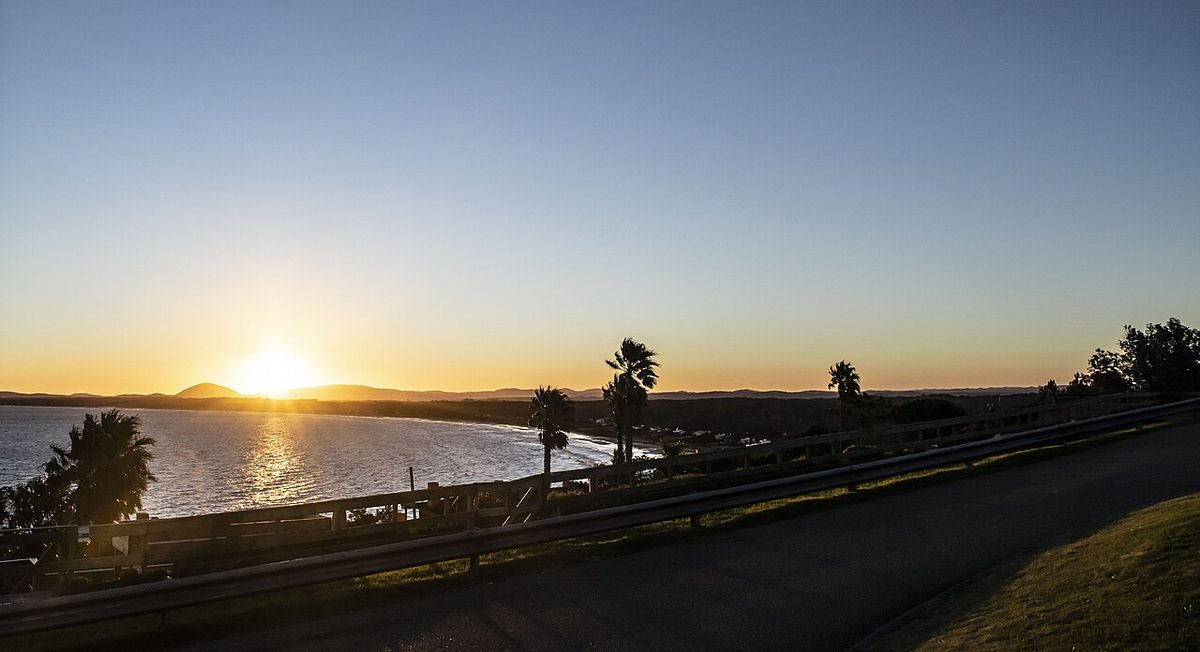
Held every evening since 1994, the ceremony begins a few minutes before the sun reaches the horizon. The crowd gathers on the west-facing terraces, conversation drops to a murmur, and then over loudspeakers comes the recorded voice of Carlos Páez Vilaró himself, reading a poem he wrote to the sun. The recording is timed to run roughly as long as it takes the sun to sink into the Atlantic, so the words and the light fade out together. Vilaró called Casapueblo “La Casa del Sol” — the House of the Sun — and the poem is addressed to the sun as an old friend.
The text is unashamedly romantic. The sun is described carrying “a belly loaded with boiling gold” to share among towns and villages and the forgotten poor; the sun as “the golden bread on the poor man’s table.” It ends with a farewell — goodbye Sun, tomorrow I’ll wait for you again, Casapueblo is your house, which is why everyone calls it the house of the sun. Read on a page it can seem overwrought. Heard out loud, in Spanish, in the man’s own gravelly voice, with hundreds of strangers gone quiet and the sky going orange over the water — it lands. Even people who don’t speak a word of Spanish tend to feel it. Locals only half-joke that the ceremony has become a kind of secular, ecumenical mass.
Now the honest part, because the experience is real but so are its frustrations. The terraces get packed. On a clear summer evening you’ll be shoulder to shoulder with people jostling, holding phones overhead and edging for camera angles, and the contemplative spell the poem is reaching for fights a losing battle against the scrum. The official advice is to arrive at least 40 minutes early to get a position; on busy nights I’d give it a full hour. And a hard-won tip from people who’ve done it many times: don’t bolt the instant the sun is down. The crowd evaporates within minutes, everyone racing for the car park, and for the next half hour before closing you can have the terraces and that gorgeous fading light almost to yourself for photos. The best images of the place often come after the ceremony, not during it. If the crush puts you off, this coast keeps one other sunset ritual on a similar scale and charges nothing for it: at the same hour, the village of José Ignacio further east walks down to its calm-side beach with a drink in hand.
How to get to Casapueblo and what tickets cost
Getting here is straightforward, and you’ve got a few options depending on how you’re travelling. Casapueblo sits about 13 km west of Punta del Este at Punta Ballena, signposted off the coast road.
By car is easiest. It’s roughly a 15–20 minute drive from central Punta del Este. You head west along the coast, follow signs up onto the Punta Ballena headland, and there’s parking on site, though it fills fast in the hour before sunset in summer. A taxi or rideshare from Punta del Este runs about the same time and is the simplest option if you’d rather not drive the winding final approach in fading light.
By bus is the budget route. Local buses serve Punta Ballena from Punta del Este and Maldonado — line 30 is the one most often cited, with others in the 20s also covering the area. The catch is timing: service is geared to daytime, and the last departures can be earlier than the sunset, which is exactly when you want to be here. Check the current return schedule before you commit to the bus, or you may find yourself stranded after the ceremony with no easy way back. For a fuller picture of moving around the region, the things-to-do guide and your Uruguay itinerary planning will both help.
Tickets, hours and prices
The museum is open every day of the year, generally from 10am until around sunset/closing, with hours stretching later in summer when the sun sets late. Admission, last I checked, ran about $U 600 (Uruguayan pesos) for general public, around $U 500 for residents and visitors over 65, and free for children under 12. Prices change, and international ticket resellers list their own (often higher) rates with skip-the-line and tour add-ons, so treat any figure here as a ballpark and confirm before you go.
One thing worth knowing: the ticket gets you the museum, the terraces and the ceremony, but the building closes shortly after sunset. This isn’t a place to linger into the night — once the light’s gone, so is everyone. Plan your visit around the daylight and that final golden half-hour. For timing your whole trip to the country, including how sunset hours shift across the seasons, see the best-time-to-visit-Uruguay guide.
Planning your visit: best time, season and a sensible plan
When you come matters more than people expect, mostly because of two variables: crowds and the time of sunset.
Season first. Remember this is the southern hemisphere, so the warm, long-day season runs December to February, peaking in January when Punta del Este is at its most crowded and most expensive. That’s when the terraces are fullest and the sunset ceremony most of a crush. If you can travel in the shoulder months — say late October to early December, or March into April — you get milder crowds, gentler prices and a place that’s still very much open (the museum runs year-round). The trade-off is that the sun sets earlier and the weather is less reliably beach-warm. I tend to prefer the shoulder season here precisely because the ceremony feels less like a stampede.
Sunset time is the other thing to nail down. It shifts substantially across the year — late and lingering in midsummer (well into the evening in December and January), much earlier in winter. Because the whole experience is built around the sun hitting the horizon, you can’t just show up at a fixed hour. Check the local sunset time for your exact date, then work backwards: arrive 40–60 minutes before that, leaving time to see the museum first and claim a spot on the terrace.
A plan that works well: come in the late afternoon, do the museum and galleries unhurried while the light is still high, get your café drink or your railing position locked in maybe an hour before sunset, sit through the ceremony, then hang back for photos as the crowd drains away. That fills two to three hours and times your exit for after the worst of the traffic. If you’re building a Punta del Este day, you can pair Casapueblo’s evening with the town’s beaches earlier in the day, and a stop at La Mano — the giant hand emerging from the sand — on the way through. For ranking it against the country’s other coastlines, the best-beaches-in-Uruguay guide is worth a look.
One last honest note. Casapueblo is genuinely worth the trip, but it is firmly on the tourist trail, and in peak season it can feel like it. Manage your expectations about the crowds, the prices and the climb up and down those handsome but stair-heavy white terraces — they’re not the easiest going for anyone with mobility issues, and there’s a fair amount of up and down — and you’ll get the magic without the disappointment. It remains, for my money, one of the most distinctive places to visit in the whole country, which is why it turns up on every best-places-to-visit list and in any honest accounting of what Uruguay is known for.
Casapueblo: your questions answered
Is Casapueblo free to visit?
No. There’s an entrance fee to see the museum, terraces and sunset ceremony — last I checked around $U 600 for general public, roughly $U 500 for residents and over-65s, and free for under-12s. Prices change and ticket resellers charge more, so confirm current rates. If you’re staying at the hotel or dining there, access to parts of the complex may be included.
Who built Casapueblo and why?
The Uruguayan artist Carlos Páez Vilaró built it, by hand, over more than three decades from 1958 onward. He intended it as his studio and summer home — a “habitable sculpture” facing the sea — and kept expanding it without plans for the rest of his life. It grew into his masterwork, and he lived, worked and died there in 2014.
When does the Casapueblo sunset ceremony start?
The Ceremonia del Sol begins a few minutes before the sun reaches the horizon, every evening, year-round. Because sunset time shifts dramatically across the seasons — late in summer, early in winter — there’s no fixed clock time. Check the local sunset time for your date and arrive 40 to 60 minutes beforehand to claim a spot on the terraces, as it gets very crowded.
How long should I spend at Casapueblo?
Budget about an hour for the museum and galleries alone. If you’re staying for the sunset ceremony, plan on two to three hours total — time to see the art, settle on a terrace or café table well before sunset, sit through the ceremony, and linger for photos afterward. The building closes shortly after the sun goes down, so it’s an afternoon-into-evening visit.
Can you stay overnight at Casapueblo?
Yes. A large part of the complex is the Club Hotel Casapueblo, an apartment-hotel with rooms, suites and apartments, a pool, a bar and the Las Terrazas restaurant, all in the same white curving style. Staying over lets you enjoy the terraces and sunset without the day-tripper crowds. Rates swing hugely by season — cheaper in quiet months, expensive in peak January.
How do I get to Casapueblo from Punta del Este?
It’s about 13 km west at Punta Ballena, roughly a 15–20 minute drive. A car or taxi is easiest, with parking on site that fills before sunset. Local buses (line 30 and others) serve the area on a budget, but daytime-oriented schedules mean the last return can leave before sunset — check return times carefully so you’re not stranded.
Final thoughts
Few buildings anywhere are really worth driving out of your way to stand inside, and fewer still are worth waiting around all afternoon to watch the sun set over. Casapueblo is both. It’s a white cliffside dream that one stubborn, talented man spent half his life modelling by hand, and the daily ritual at its centre — a recorded poem read to the sinking sun — turns a pretty view into something people genuinely remember years later.
Go in with clear eyes about the crowds and the café prices, time your arrival to the season’s sunset, and hang back for that quiet golden half-hour after the masses leave. Do that and you’ll see why this strange, beautiful place stays near the top of every list of things to do around Punta del Este — and why I keep finding reasons to make the drive.
Credits & sources
Sources & further reading
- Casapueblo official site (Museo Taller) — history, the Ceremonia del Sol and visiting information from the museum itself.
- Casapueblo on Wikipedia — construction history, architecture and the connection to the 1972 Andes crash.
- Club Hotel Casapueblo — official hotel site for rooms, rates and staying on the cliff.
Photo credits
All images via Wikimedia Commons: Casapueblo White Exterior Wide by Joel Diplan (CC BY 3.0); Casapueblo Terraces Against Sky by Romerito Pontes from São Carlos (CC BY 2.0); Casapueblo Curves Detail by Joel Diplan (CC BY 3.0); Casapueblo Cliff Sea Setting by Romerito Pontes from São Carlos (CC BY 2.0); Casapueblo At Sunset by Ezarate (CC BY-SA 4.0); Punta Ballena Maldonado Coast by Cleant (CC BY 3.0).