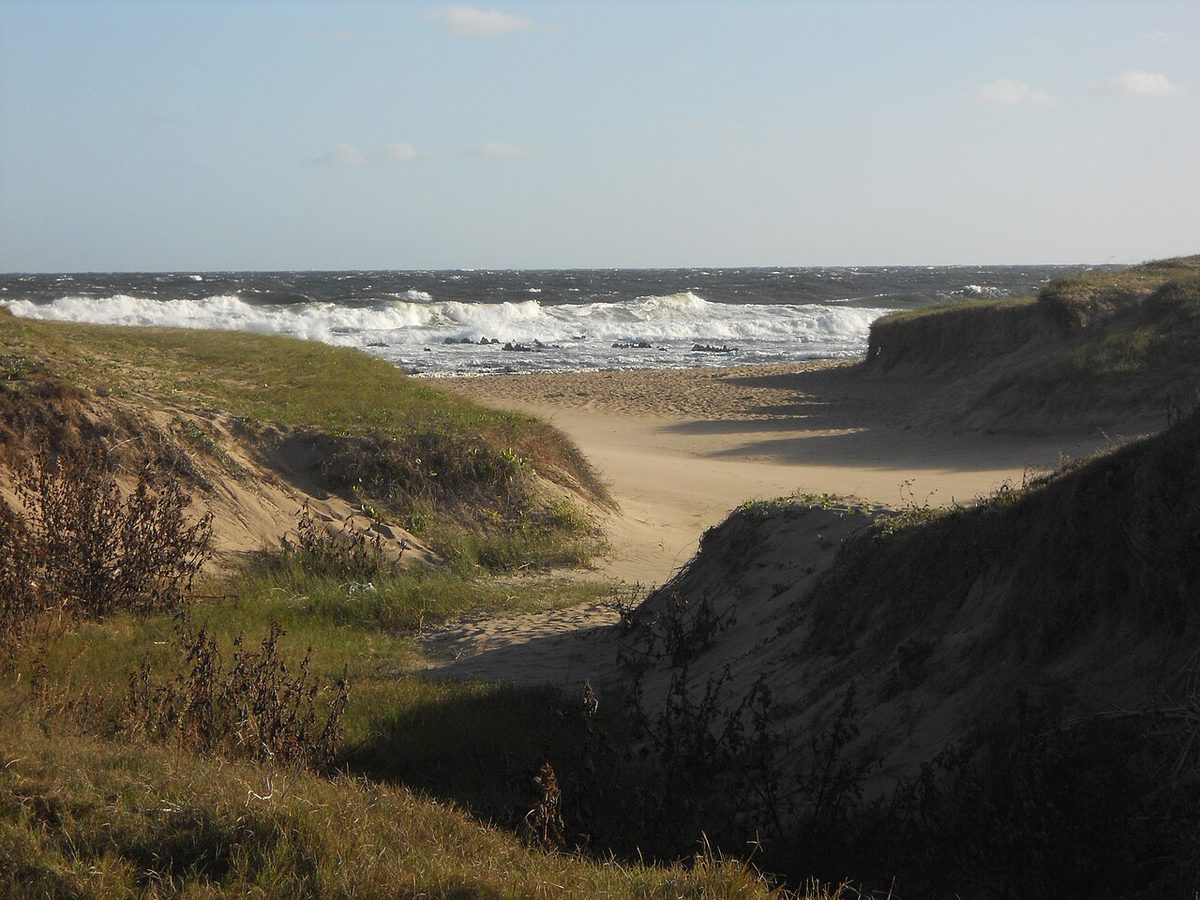
Best Beaches in (and Near) Montevideo (2026)
The city where the beach is right downtown
The first time I stayed in Montevideo, I almost skipped the coast entirely. I’d come for the old town, the markets, the steak. Beaches felt like something you drove east for. Then on my second afternoon I walked ten minutes from my flat in Pocitos, turned a corner, and there it was: a wide curve of pale sand, kids playing football, old men passing a gourd of mate, and the river stretching flat to the horizon.
I’ve been back many times since, and the beaches in Montevideo are no longer an afterthought for me. They’re one of the most underrated things about the city.
The beaches in Montevideo run along a single ribbon of waterfront from Parque Rodó in the west out to Carrasco in the east. The headliners are Pocitos (the postcard one), Ramírez, Buceo, Malvín, Honda and Carrasco. None will out-glamour Punta del Este, but they’re free, walkable, genuinely pleasant for a swim or a sunset, and they’re right there in the city.
What this guide covers
This is the city-beaches guide. I’ll walk you along the rambla (the riverside promenade) from west to east, beach by beach, with honest notes on which ones are good for swimming, which are better for a run or a sunset, how to get to each by bus, and the one thing about Montevideo’s water that nobody warns you about. Then I’ll point you just outside the city limits, east toward the Costa de Oro and west toward the Cerro, in case you want sand with a bit more space.
For the wider coast and the famous resort towns, I link out to siblings throughout, and if you’re still deciding which way to head out of town, my guide to Punta del Este or the Rocha coast makes that call first. But if you’re staying in the capital and want to know where to put your towel down tomorrow, this is the page.
Montevideo beaches at a glance
Here’s the quick version before we get into detail. I’ve listed them roughly west to east, the way the rambla runs.
| Beach | Vibe | Best for |
|---|---|---|
| Playa Ramírez | Closest to downtown, next to Parque Rodó | First-timers, families, shallow paddling, sunsets |
| Playa Pocitos | The iconic city beach, framed by apartment towers | Swimming, people-watching, beach football |
| Puerto del Buceo | Marina and jetty, not a swimming beach | A walk, boats, the cemetery and Naval Museum nearby |
| Playa Buceo / Malvín | Wide, flat, sporty, kitesurfers | Running, kitesurfing, space to spread out |
| Playa Honda (Punta Gorda) | Small, deeper water, occasional waves | Stronger swimmers, the rare Montevideo surf day |
| Playa Carrasco | Long, quiet, upscale, casino across the road | Long walks, a calmer day, more open sand |
First, understand the rambla (and the “sea” that’s actually a river)
You can’t talk about beaches in Montevideo without talking about the rambla, the coastal promenade that strings them all together. It runs more than 22 km in one uninterrupted line along the waterfront, and locals treat it as the city’s communal back garden. People run it, cycle it, skate it, walk dogs on it, and most of all sit on its low wall at dusk drinking mate (the bitter herbal tea Uruguayans carry everywhere in a gourd with a metal straw). If you do one thing on the coast, make it an evening rambla walk. I’ve written more about the promenade itself in my full guide to the Rambla de Montevideo.
Now the thing nobody warns you about. That huge body of water is not the sea. It’s the Río de la Plata, the world’s widest river estuary, and it’s brown. Some days, when the wind comes from the right direction, the water turns greenish and looks properly oceanic. Other days it’s the colour of weak coffee. Uruguayans cheerfully call it “el mar” (the sea) anyway, and they swim in it happily all summer.
Here’s the honest part: the brown colour is sediment, not sewage. The river carries silt down from a continent’s worth of catchment, and that’s what tints the water. It is not, on a normal day, dirty in the way it looks. That said, water quality does swing, and I’ll come back to exactly when you should and shouldn’t get in.
The city beaches, west to east
Let’s walk the coast properly. Each of these beaches has its own character, and the differences matter more than you’d expect for a strip of sand that all faces the same river.
Playa Ramírez: the gateway beach by Parque Rodó
Ramírez is the closest real beach to the city centre, tucked against Parque Rodó, the leafy park with the small old-fashioned funfair. That makes it the natural first beach for anyone staying downtown or in the Ciudad Vieja (old town). You can be there in a short bus ride or a longish walk, and there’s plenty to do beyond the sand if the kids get restless.
The water here is shallow and gentle, which makes it genuinely good for small children paddling. The sand is soft, there are food stands, and in summer there are lifeguards. It’s also one of the best spots in the city to watch the sun go down over the water, because the coast curves just enough to give you an open western view.
My one honest gripe: because it’s the most central and most accessible beach, Ramírez gets busy and a bit scruffy on hot summer weekends, and being so close to the port end of the city, it’s the beach where I’m fussiest about checking the water-quality status before swimming. For a stroll and a sunset, though, it’s hard to beat for convenience. If you’re building a wider plan around the city, my Montevideo itinerary slots a rambla afternoon in nicely.

Playa Pocitos: the one on all the postcards
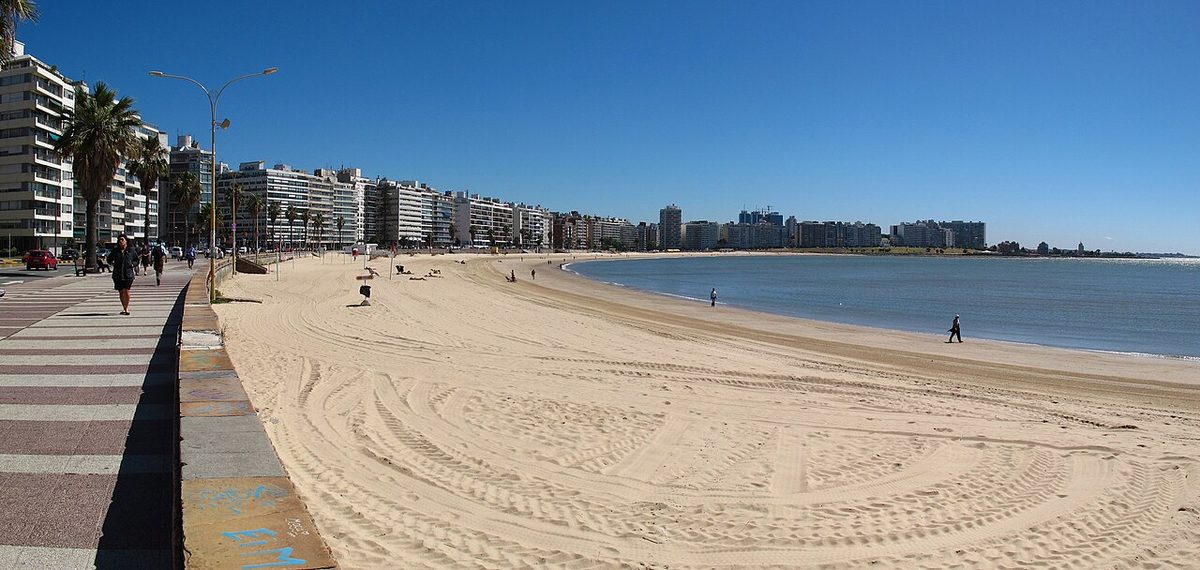
If you’ve seen a photo of a Montevideo beach, it was almost certainly Pocitos. This is the iconic city beach, a long, wide arc of fine white sand curving around a shallow bay, backed by a solid wall of apartment towers that gives the whole scene a look people compare to Nice or Tel Aviv. It’s the beach I send first-timers to, and the neighbourhood around it is where a lot of visitors choose to base themselves.
The sand at Pocitos is genuinely lovely, fine and pale and soft underfoot. The water is reasonably deep a little way out, so the swimming is better here than at the shallower beaches, and lifeguards patrol in season. There’s a permanent energy to the place that I like: groups playing beach football and volleyball year-round, a beach-football stadium that goes up for the summer, runners and skaters streaming past on the rambla, and food stands (locals call them paradores) selling cold drinks and snacks.
Two practical notes worth more than the gushing you’ll read elsewhere. First, the playa de los Pocitos scene is at its best in the morning and late afternoon. That’s because of my one honest drawback: those gorgeous apartment towers throw a long shadow across most of the sand for the last few hours of daylight, so the beach loses its sun earlier than you’d want. Stake out a spot in the morning if you’re after a full day of rays. Second, this is the neighbourhood I most often recommend for visitors, with the rambla on your doorstep and good restaurants behind it; see my notes on where to stay in Montevideo if you want to wake up near the water.
Puerto del Buceo: the marina you walk to, not swim at
Keep heading east from Pocitos and you reach the Buceo marina, a pretty little harbour full of yachts and sailboats with a jetty you can walk out along. I’m including it precisely so you don’t make the mistake of swimming here: the small beach by the marina has a known water-quality issue and is not for getting in. It’s a destination for the walk, not the water.
What it’s good for is a pleasant amble from Pocitos, a look at the boats, and a couple of genuinely worthwhile detours nearby. The Buceo Cemetery on the rise above the water is Montevideo’s quietly grand answer to Buenos Aires’ famous Recoleta, and almost nobody visits it. The Naval Museum sits at this end of the coast too, with exhibits on the 1939 Battle of the River Plate and the scuttling of the Graf Spee just offshore. There’s also a skate park here if you’ve got teenagers in tow. It’s one of those stretches that rewards curiosity more than a towel.

Playa Buceo and Playa Malvín: wide, flat and sporty
Just past the marina the coast opens out into a long, low, flat run of sand that takes in Playa Buceo and then Playa Malvín. These are the city’s sports beaches. The sand is broad and firm, which makes the stretch popular with runners, and the steady wind off the river turns Malvín into Montevideo’s kitesurfing hub. On a breezy summer afternoon you’ll see a row of kites pulling people across the water, and it’s a genuinely good show even if you’re only there to watch.
Malvín is one of the busier beaches in the city, in a good way. It draws families, couples and groups of friends, the sand is wide enough that it rarely feels packed, and there’s a proper resto-style parador serving meals and drinks rather than just ice creams. Just offshore sits the Isla de las Gaviotas, a small bird reserve you can look out at while you swim. The water is calm and the gradient gentle.
The honest drawback for both: that same flatness that’s perfect for kicking a ball or going for a run means the water stays shallow for a long way out, so if you want to actually swim rather than wade, you’ll be walking a while before it’s deep enough. These are beaches for movement, not for plunging in. They’re a good fit if you’re travelling with little ones, which is its own art; I keep a running set of notes on visiting Uruguay with kids for exactly this kind of low-stakes, wide-open beach day.

Playa Honda and the Punta Gorda beaches: small, deep, occasionally surfable
At Punta Gorda the coast finally does something different. This little headland holds a cluster of small beaches, the best known being Playa Honda, whose name literally means “deep.” And it is, by Montevideo standards. The water drops away faster here than anywhere else on the city coast, partly sheltered by a natural barrier of rocks, which makes it the spot stronger swimmers gravitate to when the shallow beaches feel like a paddling pool.
Honda is also the one beach in Montevideo where a surfer might actually find a wave. Don’t get excited; this is a river, and “surf” here means the occasional rideable swell on the right day, not a reliable break. But it does happen, and you’ll sometimes see boards in the water. There’s a petrol station across the road that does a roaring trade in cold drinks and snacks, which tells you something about how the locals use the place.
Right alongside sit Playa Verde and Playa de los Ingleses, both small, both with a more natural feel thanks to the dunes and greenery, and both with what I think are the prettiest sunsets on the city coast because the rocky bays give you a clean horizon. The Full sailing centre here rents boats and boards and runs windsurfing and sailing lessons at fair prices, which is worth knowing if you want to get out on the water rather than just into it. My one gripe with Punta Gorda: the beaches are genuinely small, so on a hot summer weekend you feel the crowds far more than you would on roomy Malvín or Carrasco.
Playa Carrasco: the long, quiet, slightly posh one
Out at the eastern edge of the city, where the rambla bends inland around the grand old Casino Carrasco, you reach Playa Carrasco. This is the longest of the city beaches and, for my money, the most relaxing. Carrasco is Montevideo’s most affluent neighbourhood, full of big houses and a few boutique hotels, and because so many residents have their own pools, the beach itself is often surprisingly empty. If you want space and a long, uninterrupted walk on open sand, this is where to come.
The sand is fine and white, the water is a touch saltier and fresher than the central beaches because you’re further east toward the open estuary, and the whole stretch feels calmer and more spacious. The restored Sofitel Casino Carrasco across the road gives the area a certain old-world polish, and there are good cafés behind the beach for an unhurried lunch.
Honest drawback, and it’s a real one: out of season Carrasco can get scruffy, with debris washing up and the sand left uncleaned, and you may occasionally come across umbanda offerings (Afro-Brazilian religious gifts, sometimes including food or even a dead chicken) left at the water’s edge. In summer it’s well kept; in winter, manage your expectations. For the rest of the year it’s a beautiful place for a walk regardless of whether you swim.

Swimming, water quality and staying safe
Time for the candid practical stuff, because this is where most beach guides go quiet.
When is the water actually safe to swim?
On a normal summer day, the central beaches are fine to swim in, brown colour and all. The catch is rainfall. After heavy rain, urban runoff and the occasional stormwater overflow can push bacteria levels up, and that’s when you get temporary advisories warning against swimming at certain beaches. My simple rule: if there’s been a big downpour in the previous day or two, I stay out of the water, or at least move east to Carrasco and Punta Gorda, which tend to recover faster and sit further from the city’s outflows.
The good news is you don’t have to guess. The Intendencia de Montevideo (the city government) tests the beaches regularly through the season and publishes the status of each one, including any “no swimming” calls. Before a swim, especially after rain, it’s worth a quick check; I’ve linked the official beach-status page in the sources below. Take that over any blog (including this one) for same-day conditions.
Swimming conditions, beach by beach
Quick honest summary if you mainly care about getting in the water. Pocitos and Honda give you the best actual swimming, Pocitos for its depth and Honda for being deeper still. Ramírez, Malvín and Buceo are shallow and gentle, better for kids and waders than for proper swimming. The Buceo marina beach is off-limits for swimming entirely. Carrasco is good and a touch cleaner-feeling, but further out. There are lifeguards on the main beaches in summer, and the river has no real tide and rarely any meaningful waves, so it’s a forgiving place to swim by ocean standards.
A quick word on safety
Montevideo is a relatively safe city by regional standards, and the beaches themselves are sociable, public and well used. The usual city-beach common sense applies: don’t leave your phone and wallet unattended on your towel while you swim, keep valuables to a minimum, and be a bit more alert on the quieter, emptier stretches and after dark. The rambla is busy and pleasant well into the evening in summer, but I wouldn’t leave bags lying around anywhere. For a broader feel of the capital beyond the sand, my Montevideo city guide covers neighbourhoods and getting around.
Getting to the beaches by bus
You don’t need a car for any of this. Montevideo’s bus network reaches the whole coast, and a ride costs only a couple of dollars or so, last I checked. Pay the driver in cash or tap a local STM card if you have one.
The simplest mental model: lots of buses run along or down to the rambla, and you just need one heading toward the neighbourhood you want. For Pocitos, plenty of lines drop you within a block or two of the sand. For Malvín, line 21 is a reliable one that runs out to the Rambla de Malvín stop. For the long haul east to Carrasco, the DE1 is handy, running from the old town through Pocitos and along the rambla all the way to the casino. Apps like Moovit are genuinely good in Montevideo and will give you the current line and stop for wherever you’re staying, so I lean on those rather than memorising routes. Walking and cycling work too; the rambla is flat the whole way, and many hotels and hostels rent or lend bikes.
Beaches near Montevideo: where to go for more
Love the city beaches but want a bit more space, cleaner water or a proper seaside-town feel? You don’t have to go far. Two directions, depending on your mood.
East: the Costa de Oro
Head east past Carrasco and you cross into Canelones and the start of the Costa de Oro, the “Gold Coast,” a string of low-key beach towns lined with pine and eucalyptus that runs all the way toward Piriápolis. The water gets saltier, cleaner and more genuinely sea-like the further you go. The unofficial capital of this stretch is Atlántida, about 45 km out and an easy bus or drive, with its calm Mansa and rougher Brava beaches and a famously odd eagle-shaped building on the sand. I’ve written it up in full in my guide to Atlántida, and for the wider strip see my overview of Uruguay’s beach towns. If you’d rather chase the bigger resort scene, Piriápolis sits a little further along. Any of these makes an easy day trip from Montevideo.
West: the Cerro and Santiago Vázquez
Far fewer visitors go west, which is part of the appeal. At the foot of the Cerro, the hill that gives the city half its name, Playa del Cerro gives you a totally different view: the full Montevideo skyline across the bay. Keep going to the western edge of the department and you reach Santiago Vázquez, a sleepy town on the Santa Lucía river with wetlands, native woodland and a new lookout tower (74 steps up for a wide view over the marshes and the channel). It’s not a swimming destination so much as a scenic, birdy, get-out-of-the-city one. Worth it if you’ve already done the eastern beaches and want something quieter.
Best beach for sunsets, swimming and a quiet day
Because people always ask me to just pick, here’s how I’d choose. For the best sunset, I send people to Punta Gorda (Honda, Verde or Ingleses) or to Ramírez for the open western view. For the best swim, Pocitos for depth with a crowd, Honda if you want it deeper and quieter. For a quiet day with room to breathe, Carrasco every time. And for a first taste with the kids and the funfair right there, Ramírez. You genuinely can’t go too wrong, because they’re all five minutes from a coffee and a bus stop.

Beaches in Montevideo: your questions answered
Are the beaches in Montevideo good for swimming?
Yes, on a normal day. The water is the Río de la Plata estuary, so it’s brownish from river sediment rather than sea-blue, but it’s swimmable and calm with no real tide or waves. Pocitos and Playa Honda offer the best depth for actual swimming. Avoid getting in for a day or two after heavy rain, and check the city’s beach-status page if in doubt.
Why is the water brown at Montevideo’s beaches?
The colour comes from sediment carried by the Río de la Plata, the world’s widest river estuary, not from pollution. On windy days the water can turn green and look more like the sea; on calm days it looks like a river. Locals call it “el mar” (the sea) and swim happily all summer. It’s the river, not dirt.
Which is the best beach in Montevideo?
Pocitos is the iconic choice and the one most visitors love, with fine white sand, decent swimming and a lively scene framed by apartment towers. But Carrasco wins for a quiet, spacious day, Malvín for sport and kitesurfing, and the Punta Gorda beaches for sunsets. The “best” depends on whether you want energy, space or a swim.
Can you swim at Pocitos beach?
Yes. Playa Pocitos is the main city beach and one of the better spots in Montevideo for swimming, with water that’s reasonably deep a little way out and lifeguards on duty in summer. The sand is soft and white. Note that the apartment towers behind it cast a long shadow over much of the beach in the late afternoon, so go in the morning for full sun.
How do I get to the Montevideo beaches?
By bus, easily. Many lines run along or down to the rambla; for Pocitos almost anything heading that way works, line 21 reaches Malvín, and the DE1 runs east to Carrasco. A ride is only a couple of dollars or so. Walking and cycling along the flat 22 km rambla are great options too, and apps like Moovit give current routes.
When is the best time to visit Montevideo’s beaches?
The Uruguayan summer, roughly December to March, is when the water is warm enough to swim, the lifeguards are on duty and the beaches are at their liveliest. December and March are a little quieter than peak January. For a stroll or a sunset, the rambla is lovely year-round. See my notes on the best time to visit Uruguay and on Uruguay in summer.
Final thoughts
Don’t come to Montevideo expecting a beach holiday, and don’t leave without spending an afternoon on the sand either. That’s the balance I’ve landed on after years of visits. The city beaches won’t replace a trip east to the real coast, but they’re free, friendly, walkable from almost anywhere central, and they’re woven into daily life in a way that resort beaches never are. Sit on the rambla wall at sunset with a coffee, watch half the city do the same, and you’ll understand why locals guard their scruffy, brown-watered, thoroughly lovable coast so fiercely. For more ways to fill your days, my guide to things to do in Uruguay picks up where the sand ends, and the city beaches make a fine warm-up for the wider best beaches in Uruguay.
Credits & sources
Sources & further reading
- Intendencia de Montevideo — Estado de playas (official beach-status and water-quality page)
- Rambla of Montevideo — overview and 22 km length (Wikipedia)
- Guru’Guay — local rundown of Montevideo’s beaches
Photo credits
All images via Wikimedia Commons: Playa Pocitos Montevideo Aerial by Elemaki (CC BY 3.0); Playa Ramirez Parque Rodo by NaBUru38 (CC BY-SA 3.0); Puerto Del Buceo Marina by Fedaro (CC BY-SA 4.0); Playa Malvin Kitesurf by Marcelo Campi (CC BY-SA 3.0); Playa Carrasco Montevideo by Marcelo Campi from Costa de Oro, Uruguay (CC BY-SA 2.0); Rambla Montevideo Sunset by Marinna (CC BY-SA 4.0).