Punta del Este or Rocha? Choosing Your Uruguay Coast (2026)

The first time I tried to explain Uruguay’s coast to a friend back home, I drew a line on a napkin. On the left I wrote “money.” On the right I wrote “no electricity.” Crude, but it got the point across. Drive two hours east of Montevideo and you hit the marinas, the high-rises and the valet parking. Keep driving and the pavement starts to fray, the towns shrink, and eventually you reach a village you can only enter by climbing onto a truck that lurches across sand dunes.
Punta del Este vs Rocha is the choice that line was really about: two faces of one coast, and most people only have time to commit to one. So let me help you commit.
Punta del Este vs Rocha: the short answer
Choose Punta del Este for the polished “glam coast” — restaurants, nightlife, marinas, services and a beach scene with valet parking. Choose Rocha for the wild coast — Cabo Polonio off the grid, surf villages, sea lions and rustic posadas (small family-run inns). Punta is comfort and convenience at a price. Rocha is rough edges, lower costs and quiet. Pick the mood, not the map.
What this guide covers
I’m going to put these two stretches of shoreline side by side and compare them on the things that actually shape a trip: the vibe, what you’ll spend, how crowded it gets, where you’ll sleep, how you’ll eat, and how you get around once you arrive. Then I’ll match each coast to the kind of traveler you are, and finish with a “do both” route for the greedy among you — which, honestly, includes me.
This is a head-to-head, not an encyclopedia. I won’t re-describe every town in full; where you want the deep dive, I’ll point you to it. If you’d rather see the whole menu of options first, the full guide to Uruguay’s beach towns lays out every balneario one by one. And the master guide to the best beaches in Uruguay is the parent this comparison sits under. (A balneario is a seaside resort town — the word covers everything from a glitzy resort to a cluster of summer shacks.)
Punta del Este vs Rocha at a glance
Here’s the whole argument compressed into one table. If you read nothing else, read this — then come back for the why.
| Dimension | Punta del Este (glam coast) | Rocha (wild coast) |
|---|---|---|
| Department | Maldonado | Rocha |
| Distance from Montevideo | ~135 km / about 2 hrs | ~250–340 km / 3–4.5 hrs |
| Overall vibe | Polished, social, see-and-be-seen | Rustic, bohemian, low-key |
| Signature spot | José Ignacio’s chic minimalism | Cabo Polonio off the grid |
| Cost (high season) | High to eye-watering | Moderate; budget options easy |
| Crowds in January | Intense, dressed-up | Busy but barefoot |
| Where you sleep | Hotels, towers, design villas | Posadas, cabañas, hostels, camping |
| Food | Famous restaurants, full range | Seafood shacks, simpler menus |
| Getting around | Easy; Uber, taxis, good roads | Harder; car helpful, some ripio |
| Nightlife | Real clubs, beach bars, late | Bonfires, boliches, drum circles |
| Best for | Comfort, dining, families with means | Surfers, backpackers, nature lovers |
| One honest drawback | Pricey and can feel showy | Services thin; less polish |
Now let’s unpack each row, because the table flattens some genuinely interesting nuance. (Ripio, by the way, is loose gravel road — you’ll meet plenty of it in Rocha, and your rental-car contract has opinions about it.)
Vibe: glam coast vs wild coast
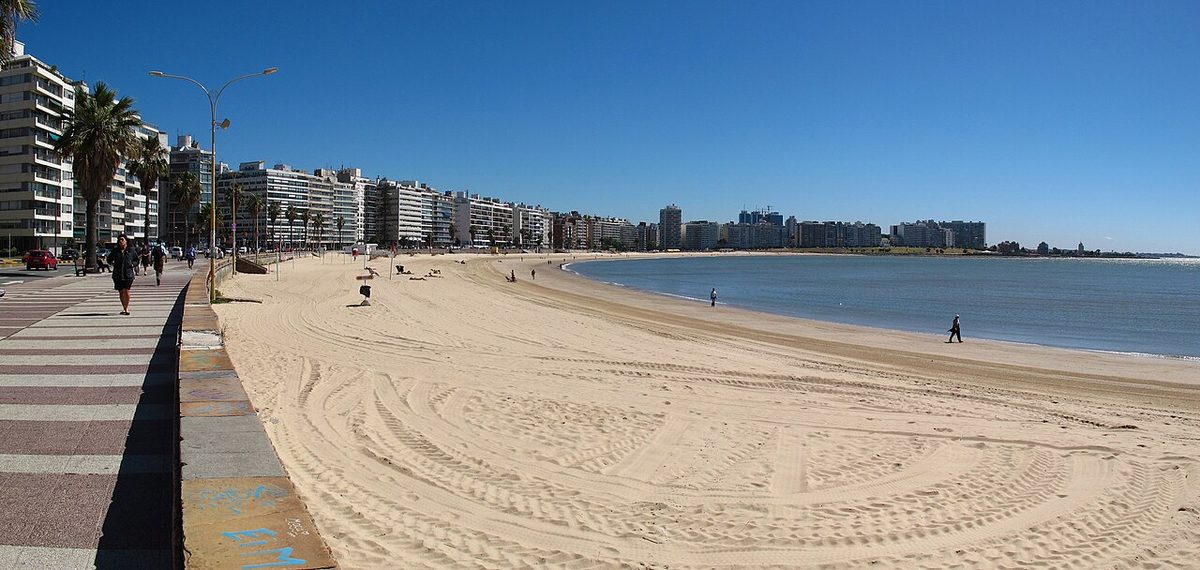
Start with feel, because everything else follows from it. Punta del Este is where Argentina and Brazil’s well-off have summered for generations, and it shows in the grooming. The beaches fill with people who clearly dressed for the beach. Yachts sit offshore. Gorlero, the main drag, hums with ice-cream queues, currency exchanges and shop windows. The famous concrete fingers of La Mano rise out of Playa Brava, and there’s a steady, pleasant pressure to look like you’re having a good time. I enjoy Punta enormously. I also need a day or two afterward to recover from it.

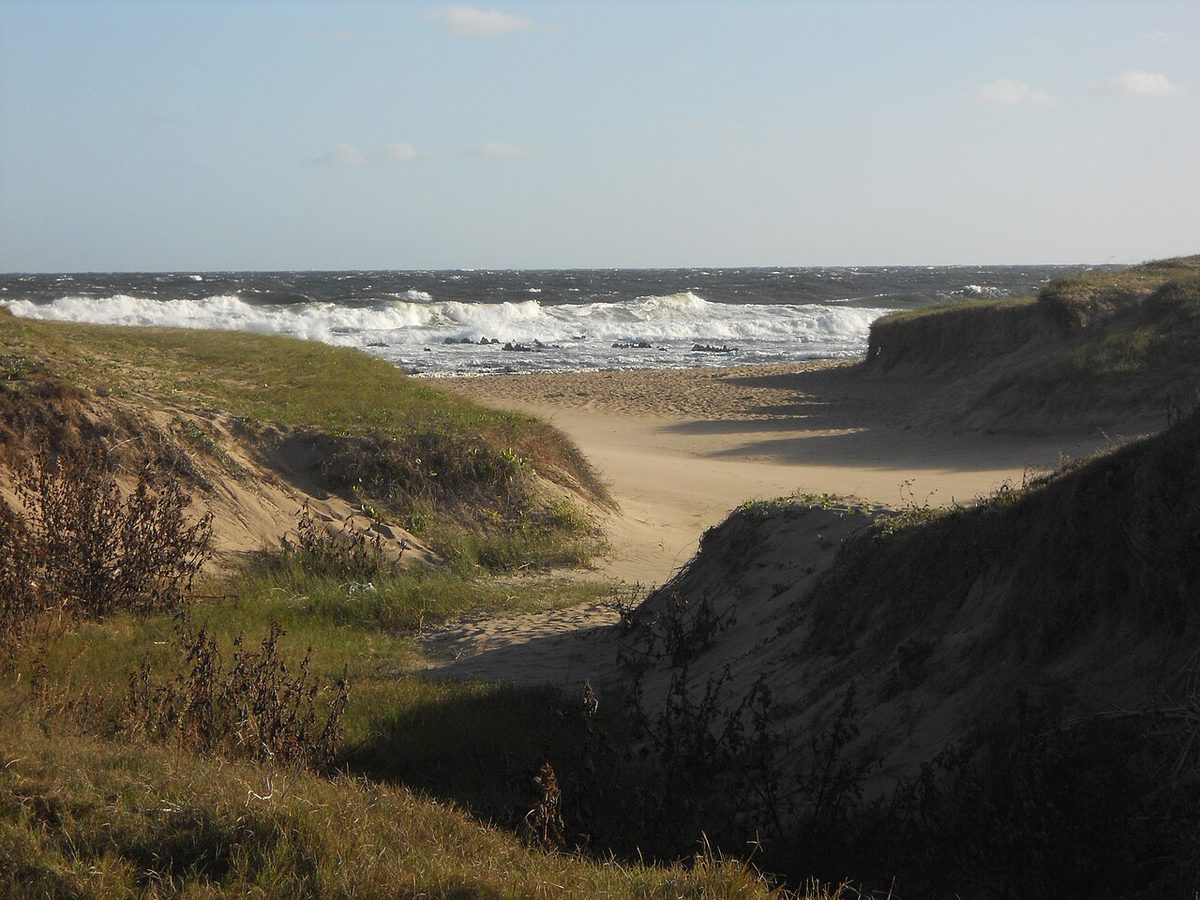
Rocha is the opposite nervous system. Nobody is performing. In Cabo Polonio the streets are sand, the lighthouse is the tallest thing for miles, and the social highlight is a bonfire that the whole village drifts toward after dark. La Pedrera empties to almost nothing in winter and fills with surfers and students in summer. Punta del Diablo, a former fishing village, still pulls its red and blue boats up onto the sand each morning. You will be sandy, salty and slightly underdressed the entire time, and that is the point.
One quick frame I find useful: Punta sells you a good time, and Rocha lets you find your own. For the polished version with all its restaurants and marinas, the dedicated guide to Punta del Este goes deep. For the rough-edged counterpart, start with the guide to Rocha.
The José Ignacio question
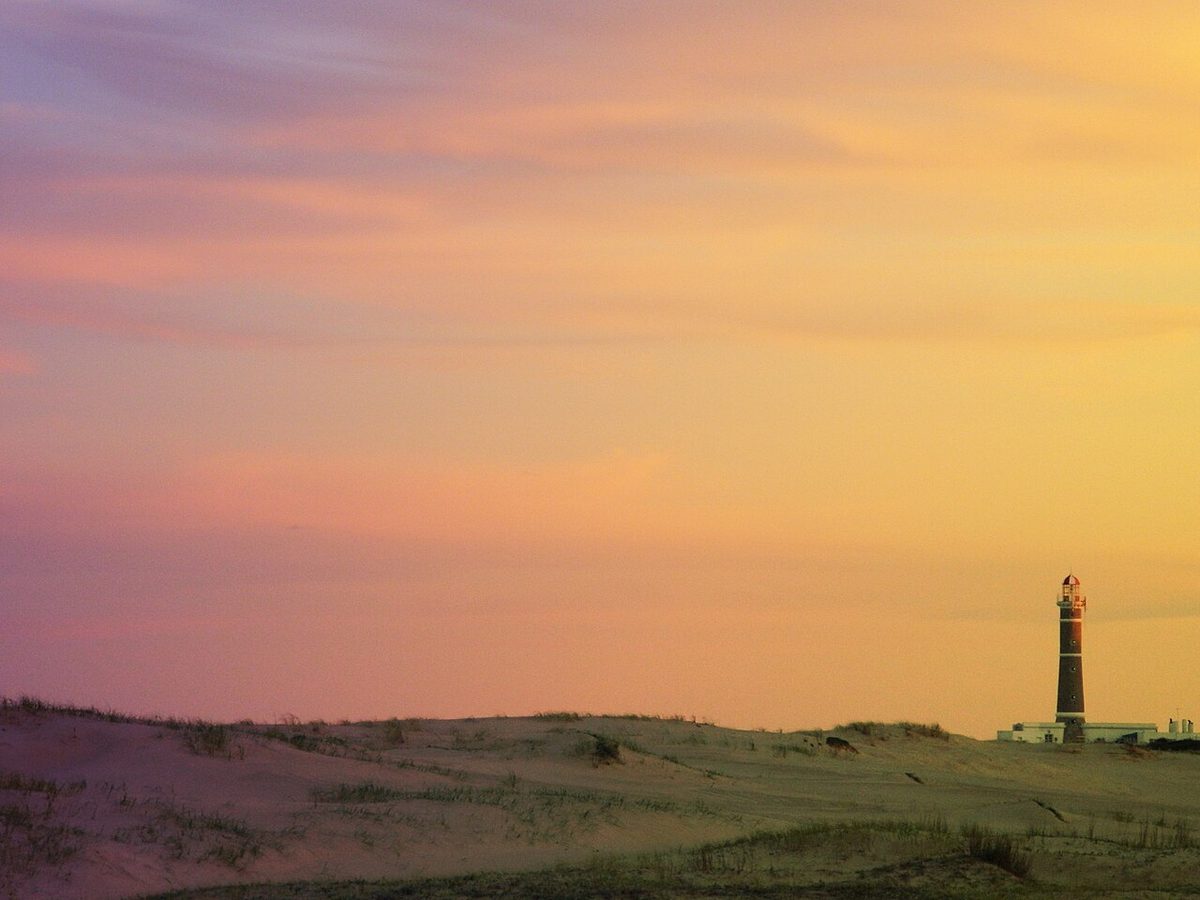
There’s a wrinkle worth naming. The chicest part of the glam coast, José Ignacio, looks rustic. Low whitewashed houses, sand streets, a wooden lighthouse, a beach restaurant (La Huella) that everyone photographs. People call it “barefoot luxury,” and they call it gypset, and they are paying handsomely for the privilege of appearing not to.
So if your fantasy is understated and natural-looking, you might assume José Ignacio is your Rocha. It is not. It’s the most expensive square kilometre on the whole coast wearing linen. Real rusticity — the kind with no card readers and a generator that cuts out — lives further east. The José Ignacio guide is worth reading precisely so you know which kind of “simple” you’re buying.
Geography: how far east is east?
Distance is the quiet deciding factor, and it trips people up. Punta del Este sits about 135 km east of Montevideo — comfortably two hours on a good dual carriageway. The town’s peninsula is the official spot where the wide brown River Plate hands over to the open Atlantic, which is why the water turns greener and the surf picks up the further east you go. West of that line you are swimming in river rather than ocean, which is exactly how the city beaches in Montevideo feel: flat, calm and brown-green.
Rocha is not a town; it’s an entire department, and its coastline runs for well over a hundred miles east all the way to the Brazilian border. That means “Rocha” can be a three-hour drive (La Paloma) or closer to four and a half (Punta del Diablo, near Santa Teresa). The wild coast is genuinely further out, and the last legs get slower as the roads narrow.
Practically: Punta works as a long weekend from Montevideo. There’s also a middle option this comparison skips over: Piriápolis, the coast’s oldest resort town, sits about 45 km short of Punta and trades both the glamour and the wildness for green hills and a calm family bay. Deep Rocha really wants you to commit several days, ideally with a car, or you’ll spend your holiday on buses watching the scenery rather than standing in it. If you’re stitching this into a bigger loop, the Uruguay itinerary guide shows how the coast fits with Colonia, Montevideo and the interior.
Cost: what you’ll actually spend
This is where the two coasts separate hardest. Punta del Este in January is one of the priciest places in South America, full stop. A peak-summer apartment near the beach can run into the hundreds of dollars a night, the marquee restaurants charge accordingly, and even a coffee on Gorlero carries a resort markup. Last I checked, a mid-range hotel room in high season sat in the rough neighbourhood of US$200–400, with the José Ignacio villas climbing into a different stratosphere entirely.
Rocha is the relief valve. A clean room in a family-run posada in Punta del Diablo or La Paloma often runs a fraction of Punta’s rates — I’ve paid well under US$100 in shoulder season — and hostels and campgrounds drop it further. Seafood comes off the boat rather than off a wine list. Even Cabo Polonio, despite the novelty premium of being unreachable by car, stays cheaper than a comparable night in Punta.
Two honest caveats. First, prices everywhere on this coast roughly double in peak January, so “cheap Rocha” is relative. Second, Rocha’s savings come with friction: fewer card readers, the occasional cash-only posada, and a 4×4 truck fare to even reach Cabo Polonio. Budget for that. A broader where-to-stay overview is useful for sanity-checking what your money buys region by region.
Crowds and timing
Both coasts are seasonal animals, but they crowd differently. Punta del Este in late December through February is a genuine scene — packed beaches, booked restaurants, traffic on the rambla, and the kind of energy that’s thrilling for a few days and exhausting by the end of a week. (The rambla is the seafront promenade road that runs along most Uruguayan beach towns.) Outside that window, Punta deflates fast; by May a lot of it is shuttered and you can have Playa Mansa nearly to yourself.
Rocha crowds too, but it stays barefoot about it. Cabo Polonio and Punta del Diablo fill with Uruguayan and Argentine families plus a backpacker wave in January, and La Pedrera throws the biggest Carnaval party on the coast at the end of February. The difference is texture: even busy, Rocha feels like a campground, not a catwalk. My favourite move is to go either coast in early December or March — warm enough to swim, calm enough to breathe, and noticeably cheaper.
Where to stay
Accommodation tells the whole story in miniature. In Punta you choose between high-rise apartment towers along the rambla, full-service hotels, and the design villas of La Barra and José Ignacio. It’s a real hotel market with real concierge desks, which matters if you want room service and a pool and zero logistics. I’ve broken down the neighbourhoods — peninsula versus Mansa versus Brava versus La Barra — in the where to stay in Punta del Este guide, and the buzzy in-between strip gets its own treatment in the La Barra guide.
Rocha is posadas, cabañas (simple cabins, often self-catering), hostels and tents. In Cabo Polonio you might sleep in a rented fisherman’s shack lit by candles and a solar panel, with a composting toilet and the ocean as your white noise. It’s wonderful and it is not for everyone — if you need reliable hot water and a hairdryer, you’ll be happier one town over in La Paloma, which has more conventional lodging while keeping the laid-back feel.
One honest drawback for Rocha: in peak season the good posadas book out months ahead, and there’s far less inventory to fall back on than in Punta. Reserve early or arrive flexible.

Cabo Polonio vs Punta del Este: the purest contrast
If you want the two coasts distilled into a single matchup, it’s Cabo Polonio vs Punta del Este. These two places are barely an hour and a half apart by road, and they might as well be on different planets.
Punta is towers, valet, sushi and a marina full of boats with names. Cabo Polonio is a cluster of off-grid cabins on a windswept point, reachable only by a chunky 4×4 truck that grinds across roughly seven kilometres of shifting dunes from Route 10 — about a twenty-minute ride, sitting on bench seats or, if you’re lucky, the roof. There are no cars in the village, no mains electricity, and no running water beyond what people pump and store. Fewer than a hundred people live there year-round.
What you get for that inconvenience is rare. A working 1881 lighthouse you can climb. A colony of sea lions hauled out on the rocks below it, so many that the brown bodies blur into the brown stone. Night skies with no light pollution. A sense, increasingly hard to buy, of having gone somewhere that hasn’t been smoothed over for you. Cabo Polonio sits inside a protected national park, as does Santa Teresa further east; the Uruguay national parks guide explains the rules and what’s protected.
The honest drawback of Cabo Polonio is simply that it asks something of you — the truck fare, the lack of an ATM, the candlelit inconvenience. If your idea of a holiday is having needs met instantly, Punta will love you back more. If you’d trade a hot shower for a sky full of stars, the truck is waiting.
Food and drink
Punta del Este is a serious eating town. You get the full range — celebrated parrillas (grill restaurants), modern tasting menus, sushi, Italian, beach clubs that double as restaurants, and José Ignacio’s famous La Huella turning grilled fish into an event. If dining out is central to your trip, the glam coast simply has more, and better, and later.
Rocha eats simpler and, to my taste, often more memorably. The move is fresh seafood at a shack near the boats — the catch landed that morning, grilled without ceremony, eaten with your feet near the sand. Punta del Diablo does this beautifully. You won’t find a tasting menu in Cabo Polonio, but a plate of seafood ravioli in a candlelit cabin while a stranger plays guitar is its own kind of fine dining. Bring cash. And learn to accept mate — the bitter herbal tea, sipped through a metal straw from a shared gourd — if a local offers, because in Rocha that’s the whole social contract.
Getting around
Mobility is where Rocha quietly punishes the unprepared. In and around Punta del Este everything is easy: Uber works, taxis are plentiful, the roads are paved and well signed, and you can happily skip a rental car if you’re staying central. It’s the low-friction option, and for a short comfortable trip that counts for a lot.
Rocha rewards a car and tolerates buses. The main coastal route is paved, but the spurs out to individual beaches turn to ripio — that loose gravel — and ride-share thins out the further east you go. Buses connect the major towns reliably and cheaply, but they run on their own schedule and won’t get you to a dawn surf break. Cabo Polonio is the exception that proves the rule: you can’t drive in at all, you park at the entrance and take the dune truck, full stop.
If your trip is built around waves rather than restaurants, note that Rocha is also Uruguay’s surf heartland — La Pedrera and Punta del Diablo especially. The surfing in Uruguay guide covers breaks, seasons and boards, including the surfboard surcharge on that Cabo Polonio truck.
Which coast should you choose?
Enough comparison — let me just tell you who belongs where. Find yourself below.
Choose Punta del Este if you’re…
A first-timer who wants the famous version of Uruguay’s coast. A couple who likes dressing up for dinner. A family that wants a pool, a lifeguarded beach and a pharmacy within walking distance. Anyone short on time, traveling without a car, or unwilling to gamble on hot water. And frankly, anyone who just wants to be comfortable and isn’t precious about it costing more. Punta delivers reliably; that reliability is the whole product.
Choose Rocha if you’re…
Maybe you’re a surfer, a backpacker, or a romantic who finds catwalk beaches tiring. Someone chasing nature — sea lions, dunes, empty sand, dark skies. A traveler on a budget who’d rather spend on time than on towels. Anyone who’s already done Punta and wants the other Uruguay. If “no electricity” reads as a feature rather than a warning, Rocha is yours, and you probably knew that three paragraphs ago.
Families, specifically
Both work, differently. Punta is the easy family choice — calm Playa Mansa for little ones, services everywhere, zero logistics. Rocha suits families with slightly older, sturdier kids who’ll love the truck ride, the sea lions and the campground freedom, provided the grown-ups have made peace with rustic bathrooms. La Paloma is the sweet spot: Rocha’s nature, more of Punta’s conveniences.
Can’t decide? Do both.
Here’s my actual recommendation if you have a week or more: don’t choose. The two coasts are close enough to chain together, and the contrast is half the pleasure. Go glam first, then wild — ending on a beach with no cars is a far better finale than ending in a traffic jam on Gorlero.
| Day(s) | Base | Coast | What you do |
|---|---|---|---|
| 1–2 | Punta del Este | Glam | La Mano, Playa Brava & Mansa, dinner on the peninsula, a night out |
| 3 | José Ignacio | Glam | Lunch at La Huella, the lighthouse, slow beach afternoon |
| 4 | La Paloma / La Pedrera | Transition | Drive east, first taste of the wild coast, surf check |
| 5 | Cabo Polonio | Wild | Dune truck in, lighthouse, sea lions, bonfire under the stars |
| 6–7 | Punta del Diablo | Wild | Fishing-village seafood, Santa Teresa park, empty beaches |
That’s roughly a week, all driving east, never doubling back — you can carry on into Brazil from Punta del Diablo or loop home. If you’ve only got a long weekend, do Punta and a day trip; if you’ve got two, pick one coast and go deep rather than rushing both. For more route ideas tying in the rest of the country, a fuller itinerary is your friend, and the beach-by-beach breakdown of Punta is its own deep dive.

Punta del Este vs Rocha: your questions answered
Is Rocha cheaper than Punta del Este?
Generally yes, and sometimes dramatically so. Rocha’s posadas, hostels and campgrounds undercut Punta’s hotels and villas, and its seafood-shack meals cost a fraction of the glam coast’s marquee restaurants. The gap narrows in peak January, when everywhere spikes, but for the same budget you’ll live noticeably better in Rocha — just expect fewer card readers and bring more cash than you think you need.
How do you get to Cabo Polonio?
You can’t drive in. From Route 10 you reach a park entrance, then board a high-clearance 4×4 truck that crosses roughly seven kilometres of dunes and beach — about a twenty-minute ride. You pay a round-trip fare per person, with a surcharge for surfboards, and you park your own car at the entrance for a daily fee. Walking in is possible but takes a couple of hot hours.
Is Punta del Este worth it, or just expensive?
It’s both, and whether it’s “worth it” depends on what you value. If you want great restaurants, real nightlife, reliable comfort and zero logistics, Punta delivers all of it consistently — that’s genuine value. If you came for empty, wild beaches and authenticity, you’ll feel the markup and the show, and Rocha will serve you better for less. Match the place to the mood.
Which coast is better for families?
Punta is the lower-effort family choice: calm Playa Mansa, lifeguards, pharmacies and pools within reach, no car required. Rocha suits families with sturdier, older kids who’ll love the dune truck, sea lions and campground freedom — as long as the adults accept rustic bathrooms. La Paloma splits the difference nicely, offering Rocha’s nature with more conventional, kid-friendly services.
Can I visit both Punta del Este and Rocha in one trip?
Easily, and I recommend it. They’re close — Cabo Polonio is only about ninety minutes by road from Punta — so a week lets you do the glam coast first and the wild coast second without backtracking. Start in Punta and José Ignacio, transition through La Paloma, then finish off-grid in Cabo Polonio and Punta del Diablo. The contrast is the whole point.
Is the wild coast safe?
Rocha is generally very safe, in line with Uruguay overall — petty theft is the main concern, mostly in crowded summer spots. The real risks are practical: strong Atlantic currents, limited services, thin medical facilities in the smallest villages, and patchy connectivity in Cabo Polonio. Swim where locals swim, carry cash and any medication you need, and don’t rely on your phone working off the grid.
Final thoughts
Back to that napkin. The line I drew was a caricature, but the choice it captured is real: Punta del Este sells you comfort and a scene, and Rocha sells you space and quiet, and both are honestly worth the trip. If I had one weekend and wanted ease, I’d go to Punta. If I had one week and wanted to feel something, I’d point the car east and keep going until the road turned to sand.
And if you can swing it, refuse the binary entirely. Do the glam, then go wild. The whiplash between a marina dinner on Tuesday and a bonfire under a dark sky on Friday is the most Uruguayan thing this coast can give you — one small country holding two completely different ideas of the sea, an easy drive apart.
Credits & sources
Sources & further reading
- Cabo Polonio — Wikipedia (national park, off-grid status, access by dune truck)
- Punta del Este — Wikipedia (location, the River Plate–Atlantic dividing point)
- Santa Teresa National Park — Wikipedia (protected coast and campgrounds in eastern Rocha)
Photo credits
All images via Wikimedia Commons: Punta Del Este Vs Rocha Coast by Paulo JC Nogueira (CC BY-SA 3.0); La Mano Punta Del Este by Paola15 (CC BY-SA 3.0); Jose Ignacio Lighthouse Uruguay by Giuliana Pezzutti (CC BY-SA 3.0); La Pedrera Rocha Uruguay by Scann (CC0); Cabo Polonio Lighthouse Rocha by CyntiaVeiga (CC BY-SA 3.0); Punta Del Diablo Fishing Boats by rodoluca (CC BY-SA 3.0).

1 comment