Surfing in Uruguay: Best Spots, Seasons & Surf Schools (2026)
The first time I paddled out at La Aguada, in La Paloma, it was a grey morning in late April and the water bit through a borrowed wetsuit that did not quite fit. I caught maybe two waves and swallowed a lot of the Atlantic. But somewhere between the cold and the empty lineup and the long left peeling off the sandbank, I understood why people quietly obsess over this coast. Uruguay does not market itself as a surf destination. That is exactly the point.
Surfing in Uruguay means consistent Atlantic beach breaks strung along the Rocha and Maldonado coasts, cold-but-manageable water, and lineups that stay refreshingly uncrowded for most of the year. The best waves run from autumn through winter, roughly March to October, when southern groundswells line up with offshore winds. Bring a 3/2 wetsuit minimum, a 4/3 for the cold months, and low expectations about crowds. You will not fight for waves here.
What this guide covers
I am keeping this tight and surf-focused. You will get the best surf spots broken down by region, an honest read on the surf season and water temperatures, what wetsuit you actually need month to month, where to find surf schools and board rental, and a breakdown of which breaks suit beginners versus experienced surfers. I will also cover the practical stuff nobody mentions: getting between spots, what the surf towns feel like, and when to just stay in bed.
This is not a general beach guide. If you want the wider picture of where to swim, sunbathe and stay, my overview of the best beaches in Uruguay covers that ground, and the deep dive on the Rocha coast goes town by town. If you are weighing up where to base yourself, I have compared the coast’s beach towns head to head on price, crowds and atmosphere. Here, it is all about the waves.
Uruguay surf spots at a glance
Before the detail, here is the quick version. I have ranked these the way I think about them when I am deciding where to point the car on a given swell. “Level” is a rough guide; every beach break shifts with sand and swell size, so a beginner spot on a small day becomes serious on a big one.
| Surf spot | Region | Best for | Best season |
|---|---|---|---|
| La Aguada / Los Botes (La Paloma) | Rocha | Beginner to advanced | Autumn & winter (Apr–Sep) |
| La Pedrera (Playa del Barco, Desplayado) | Rocha | Intermediate to advanced | Autumn & spring (Mar–May, Sep–Nov) |
| Punta del Diablo (La Viuda) | Rocha | All levels, depends on day | Autumn & spring |
| Playa Brava (Punta del Este) | Maldonado | Intermediate | Autumn & winter |
| Montoya & Bikini (La Barra) | Maldonado | Beginner to intermediate | Year-round, best in shoulder seasons |
| José Ignacio | Maldonado | Intermediate | Autumn & winter |
| Costa de Oro beach breaks (Atlántida, La Floresta) | Canelones | Beginner | Summer & autumn |
The best surf spots in Uruguay, region by region
Almost all of Uruguay’s real surf sits east of Punta del Este, where the Río de la Plata finally gives way to open Atlantic. West of there, along the river, you can still ride waves on a big south swell, but locals will tell you the “real” ocean starts at Punta. I agree with them. The further east you go toward Brazil, the more exposed the coast becomes and the more consistent the swell.
Rocha: the surf heart of Uruguay
If you only have time for one stretch, make it Rocha. This is the department (Uruguay’s version of a state or province) where the coast turns wild, the towns get smaller and scruffier, and the waves get serious. La Paloma, La Pedrera and Punta del Diablo are the three names every Uruguayan surfer says first, and they are all within an hour or so of each other.

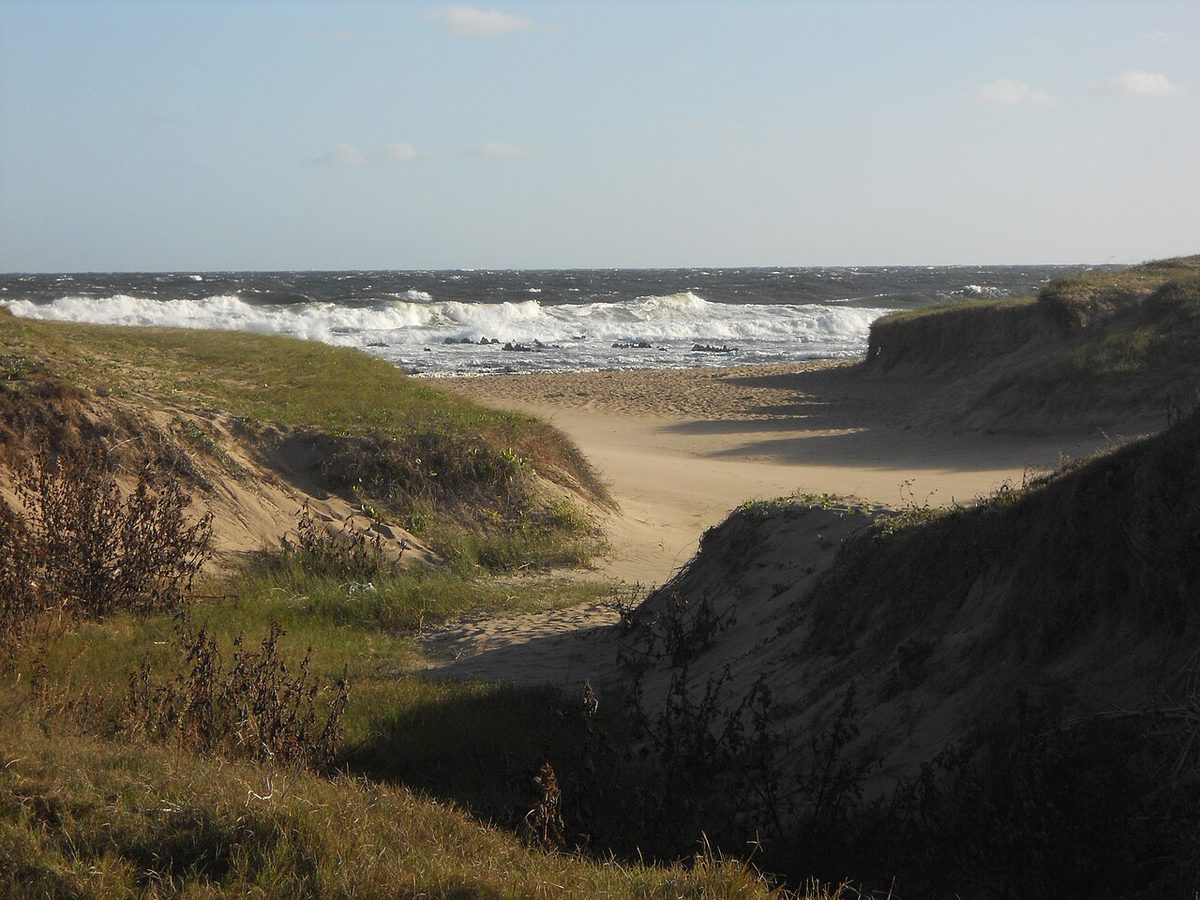
La Paloma is my pick for a base. The town sits on a small cape that pokes into the Atlantic, which is the whole trick: when the wind ruins one beach, you drive five minutes to the other side and it is clean. There are nearly 10 kilometres of surfable beach here. La Aguada, on the east side, is the reliable one. It holds sandbank peaks that work for beginners on smaller days and turn into proper tubular waves when the swell fills in. Los Botes (“the boats”, named for the fishing skiffs that pull up there) and nearby Zanja Honda break over a stone reef and can throw waves up to two metres, which puts them firmly in intermediate-and-up territory. The one honest drawback: La Paloma in January and February fills with Uruguayan and Argentine holidaymakers, and the mellow beaches get genuinely busy. Come outside summer and you may share La Aguada with a dozen people, total.
La Pedrera is 15 minutes northeast up coastal Route 10 and feels like a different planet. Smaller, artsier, fewer services. Its claim to fame is right-handers. Playa del Barco, named for a Taiwanese tuna boat that wrecked on the sand in 1971, serves up some of the best right-hand waves in the country when conditions align, including a heavy spot the locals call “The Thunder” that is strictly for experienced surfers. Desplayado is another standout right that breaks off a rocky bottom into a long sand-bank ride. The drawback at La Pedrera is access on bigger days: you often have to time the sets and jump in off the rocks, and the currents are no joke. This is not a place to learn.
Punta del Diablo is the postcard fishing village near the Brazilian border, all weathered wooden houses and dogs asleep in the road. La Viuda (“the widow”) is the main surf beach, with multiple peaks down the sand that stay rideable for a good while and take on a tubular shape in the right wind. The bottom is mixed rock and sand depending where you sit. Waves run here year-round, but the sweet spots are September to November and March to May. The catch is that Punta del Diablo‘s swell window is fussy: it really wants a strong easterly to fire, and when that is absent the whole area can go flat for days. Just up the coast, the breaks inside Santa Teresa National Park (Pesqueros is the known one) reward anyone willing to walk a bit for empty peaks.
Worth knowing: between Punta del Diablo and La Paloma sits Cabo Polonio, an off-grid hamlet inside a nature reserve with no cars and generator-only power. It hides genuinely good beach breaks, and you may share the lineup with sea lions from the colony there. It is a mission to reach and there is no board rental to speak of, so treat it as a bucket-list day for surfers who already have their own gear.
Punta del Este and the Maldonado coast
This is the glossy resort city, the “Monaco of South America” tag and all the high-rises that go with it. It is also, genuinely, where Uruguay’s surf scene is busiest and most organised. The convenience is real even if the glamour is not your thing.

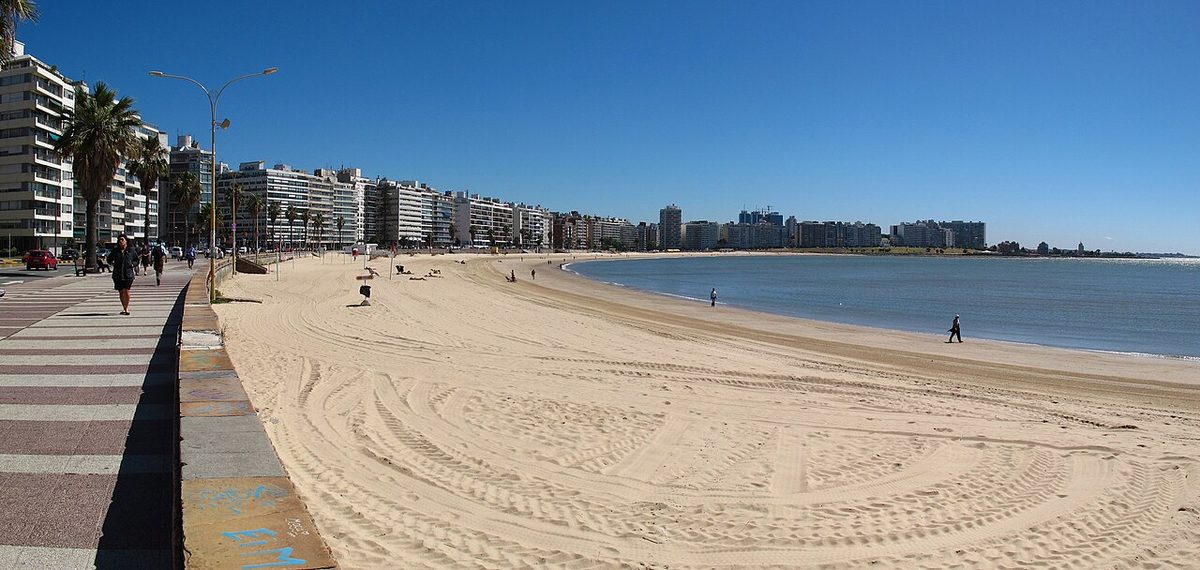
Playa Brava (“the rough beach”) is the famous one, right in town below the giant concrete fingers of the La Mano sculpture. It is an exposed beach break that picks up the most swell of the city beaches and suits confident intermediates. The flip side of that exposure: when a big southerly hits, Brava closes out and gets messy fast. Around the point, Playa Mansa (“the calm beach”) faces the river and stays gentle, which makes it useless on flat days but a fine place for a first-ever lesson.
Head a few minutes northeast to La Barra and you reach my favourite Maldonado zone for actually progressing. Montoya and Bikini are consistent beach breaks with peaks spread along the sand, friendlier than Brava and home to most of the area’s surf schools. They handle small-to-medium swell beautifully and only get heavy when it is properly pumping. Further east again, José Ignacio trades crowds for class: a chic little village with two beaches, a mellow bay side and an Atlantic side that produces clean intermediate waves on the right swell. The drawback across all of Maldonado is the summer scene. From late December to February the lineups, the parking and the prices all spike hard. For surfing, the shoulder seasons crush summer. For more on the town itself, see my guides to Punta del Este and José Ignacio.
The Costa de Oro: where to learn near Montevideo
West of Punta del Este, the “Golden Coast” of Canelones is a string of low-key balnearios (small seaside resort towns) like Atlántida, La Floresta and Piriápolis just beyond it. The waves here are smaller and less consistent because the coast is partly shielded by the river mouth, but that is precisely what makes them good for beginners. Gentle, forgiving, and an easy day trip from the capital. If you are based in Montevideo and want to dip a toe in without committing to the long drive east, this is your stretch. The honest limitation: serious surfers will find it underwhelming, and on many summer days it is more of a longboard-cruise situation than a real session. Read up on Atlántida and Piriápolis if you want to combine learning to surf with a relaxed beach-town base.
Surf season and water temperature: when to go
Here is the thing that surprises first-timers. The best surf season in Uruguay runs opposite to the tourist season. Peak holiday months are the southern summer, December through February, when the beaches are packed and the ocean is often glassy and small. The waves show up later, when the crowds leave and the air turns cold.
Autumn and winter, roughly March to October, are when southern-hemisphere groundswells march up from the South Atlantic and light up the exposed Rocha beaches. Mornings often bring offshore winds that hold the waves clean for a few hours before the onshore sea breeze fills in. April and May, and again September and October, are the sweet spots for me: the swell is consistent, the water has not yet hit its coldest, and you can still feel your hands at the end of a session. Deep winter (June to August) delivers the biggest, most powerful swell of the year, but you pay for it in cold.

On water temperature, do not let anyone tell you Uruguay is warm. The Atlantic here is cool to genuinely cold. Summer water peaks somewhere around 20 to 22°C at its warmest, usually late January. It drops steadily through autumn, and by deep winter, July and August, it sits low, commonly in the 11 to 14°C range and occasionally colder after offshore winds drag deeper water up. When I checked the La Aguada reading on a mid-June morning recently it was hovering around 14°C, which is typical for the start of winter. For a wider seasonal picture beyond the water, my notes on Uruguay’s weather and the best time to visit put the surf calendar in context with everything else.
What wetsuit you actually need
Get the rubber right and Uruguay is comfortable nearly year-round. Get it wrong and you will cut sessions short, shivering. My rough guide, by season:
- Summer (Dec–Feb): a 3/2 full suit covers most mornings and windy afternoons. On the warmest, calmest days you might get away with a 2mm top or a shorty, but the water is rarely tropical, so I default to the 3/2.
- Autumn (Mar–May): a 3/2 early in autumn, stepping up to a 4/3 by May as the water cools. This is the season where having both pays off.
- Winter (Jun–Aug): a 4/3 is the minimum I would surf in, and many locals run a 5/3 with neoprene boots and gloves through the coldest weeks of July. A hood is worth packing for windy days. Cold hands are what end winter sessions, not cold bodies, so do not skip the gloves.
- Spring (Sep–Nov): back down to a 4/3 early, then a 3/2 as things warm. Spring is underrated; good swell, thinning crowds, improving water.
If you are flying in, bring your own suit. Rental wetsuits exist at the bigger surf schools but selection thins out fast in the cold months, and a clammy, ill-fitting rental in 13°C water is genuinely miserable. I learned that the hard way at La Aguada.
Surf schools and board rental
Uruguay’s surf-school scene is seasonal and informal, which is both its charm and its frustration. In summer, especially around La Barra, La Paloma and Playa Brava, schools pop up right on the sand offering group and private lessons plus board and wetsuit rental by the hour or day. Out of season, many shrink to a single instructor working by appointment, or close entirely until the holiday crowd returns.

A few practical notes from booking lessons here over the years. La Barra (Montoya and Bikini) has the densest cluster of schools and the gentlest learning waves near Punta del Este, so it is where I send first-timers based in Maldonado. La Paloma’s schools cluster around La Aguada and are a good bet in Rocha. Prices move around with the season and the peso, but as a rough sense of scale, a group lesson last I checked ran somewhere around 25 to 40 US dollars including board and wetsuit, with private lessons higher. Board rental on its own is cheaper, often around 10 to 20 dollars for a half day. Treat those as ballpark, not gospel, and confirm on the spot.
One honest warning: do not assume you can rock up in mid-winter and find a school open. If you are a beginner set on lessons, time your trip for the shoulder seasons (October, November, March, April) when schools are running but the worst of the cold and the crowds have eased. If you are an experienced surfer bringing your own board, none of this matters and the empty winter lineups are the whole reward.
Getting around the surf coast
The surf is spread out, and the spots are not all walkable from one base, so transport matters. The cheapest option is the long-distance bus network, which is genuinely good in Uruguay and connects Montevideo to Punta del Este, La Paloma, La Pedrera and Punta del Diablo. The catch is that buses do not chase swell. Once you are in a town, you are reliant on local buses, bikes or your feet to reach individual beaches.
For real surf-chasing, a rental car is worth every peso. The freedom to wake up, check the wind, and drive to whichever beach is offshore that morning is the difference between scoring and striking out, especially around La Paloma’s cape where the right beach changes hour to hour. Coastal Route 10 links the Rocha spots, though stretches are ripio (unpaved gravel road) that get rough, so a higher-clearance car helps and you should slow right down. If you are sorting logistics, my guide to getting to Uruguay covers arrival and onward options, and the broader things to do in Uruguay roundup helps fill the flat days.
Beginners versus experienced surfers
Uruguay can be a brilliant place to learn or a humbling place to get worked, depending on where and when you paddle out. The coast does not have one difficulty level; it has dozens, shifting with the sand and the swell. Match the spot to your ability and you will have a great trip.
If you are learning
Stick to the gentle, sandy beaches in small-to-medium swell. La Mansa in Punta del Este, the La Barra beaches (Montoya, Bikini) on a small day, La Aguada in La Paloma when it is not maxing, and the forgiving Costa de Oro beaches near Atlántida are all good classrooms. Take a lesson, rent a soft-top, and go in the shoulder season when schools are open and the water is bearable. Avoid La Pedrera and the reef peaks at Los Botes and Zanja Honda until you genuinely know what you are doing; the rock bottoms and currents there are unforgiving.
If you are experienced
The reward in Uruguay is empty, quality waves, and you find them by being mobile and patient. La Pedrera’s right-handers (Playa del Barco, Desplayado), the reef peaks around La Paloma, Playa Brava on a clean day, and the wilder breaks around Cabo Polonio and Santa Teresa all deliver when the swell and wind cooperate. Winter brings the most power. Bring your own quiver, a warm suit, and a willingness to drive. Check a forecast tool like Windguru or Surf-Forecast the night before, because conditions swing quickly and a flat day here is genuinely flat. The local championship circuit (the Campeonato scene) is small but real, and the standard of the best Uruguayan surfers is higher than the country’s low profile suggests.
Surfing in Uruguay: your questions answered
Is Uruguay good for surfing?
Yes, with a caveat. Uruguay has consistent Atlantic beach breaks, a long coastline, and lineups that stay uncrowded most of the year, which is a real draw. It is not a warm-water, perfect-barrel destination, and flat spells happen. But for surfers who like cool water, space in the water, and an unpolished scene, the Rocha coast in autumn and winter is genuinely rewarding.
When is the best time to surf in Uruguay?
Autumn through winter, roughly March to October, is the prime surf season, when southern groundswells are most consistent and mornings often blow offshore. April, May, September and October balance good waves with water that has not yet hit its coldest. Deep winter, June to August, brings the biggest, most powerful swell, but you will need a thick wetsuit and the resolve to handle the cold.
Where are the best surf spots in Uruguay?
The Rocha coast is the heart of it: La Paloma (La Aguada, Los Botes), La Pedrera (Playa del Barco, Desplayado) and Punta del Diablo (La Viuda). Around Punta del Este, Playa Brava, the La Barra beaches of Montoya and Bikini, and José Ignacio all work well. Beginners do best on the gentler Costa de Oro beaches near Atlántida, west toward Montevideo.
How cold is the water for surfing in Uruguay?
Cold enough to need a wetsuit nearly year-round. Summer water peaks around 20 to 22°C in late January. It drops through autumn and bottoms out in July and August, commonly around 11 to 14°C and sometimes colder. Plan on a 3/2 suit in summer, a 4/3 in autumn and spring, and a 4/3 or 5/3 with boots and gloves in the depths of winter.
Can beginners learn to surf in Uruguay?
Absolutely, if you pick the right spot and season. The La Barra beaches near Punta del Este, La Mansa, La Aguada on calmer days, and the mellow Costa de Oro breaks are all good for learning. Surf schools run mainly in summer and the shoulder seasons, offering lessons plus board and wetsuit rental. Time your trip for October to December or March to April and avoid the rocky reef peaks until you have the basics down.
Do I need to bring my own surfboard to Uruguay?
Not necessarily, but it helps. Surf schools and shops in the busier towns rent boards through summer and the shoulder seasons, and you will find soft-tops easily enough for learning. Out of season, rental dries up, so experienced surfers chasing winter swell should bring their own quiver and a warm suit. Wetsuit rental exists but selection in the cold months is poor, so I would pack your own rubber regardless.
Final thoughts
What keeps pulling me back to surf in Uruguay is not the size of the waves; it is the feeling that you have the ocean to yourself. Paddle out at La Aguada on a crisp autumn morning, or chase the offshore around La Paloma’s cape, or stand on the empty sand at La Pedrera reading the sets before you jump in off the rocks, and the whole low-key, slightly stubborn character of this coast makes sense. The water is cold and the swell can vanish for days. But when it lines up and there is nobody out, Uruguay rewards the surfers who bothered to show up. Bring the right wetsuit, rent a car, watch the wind, and go east.
Credits & sources
Sources & further reading
- Turismo Rocha — official guide to surf beaches in La Paloma
- Surf-Forecast — La Aguada water temperature and wetsuit guide
- Stormrider Surf Guides — Uruguay spots and seasons
Photo credits
All images via Wikimedia Commons: Surf La Paloma La Aguada Uruguay by Lilian Villanueva (CC BY-SA 3.0); La Pedrera Rocha Uruguay Coast by Scann (CC0); Playa Brava Punta Del Este Uruguay by NaBUru38 (CC BY-SA 4.0); Surf Uruguay Atlantic Wave by TitiNicola (CC BY-SA 4.0); Rocha Uruguay Surf Beach by Andrés Franchi Ugart… (CC BY-SA 3.0).