Weather in Uruguay: Climate & Seasons Explained (2026)

The first thing that surprised me about Uruguay was how often I needed a jacket in what was technically summer. I landed in Montevideo one December expecting wall-to-wall heat and got two glorious 30°C beach days followed by a grey, blowing afternoon where the wind came off the Río de la Plata and dropped the temperature ten degrees in an hour. That whiplash, more than any single number on a chart, is the thing to understand before you pack.
Uruguay weather is temperate and oceanic, not tropical: four real seasons that run opposite to the Northern Hemisphere, summers around 28–30°C (82–86°F) from December to February, mild winters near 14–15°C (57–59°F) from June to August, and rain spread fairly evenly all year. The Atlantic keeps extremes rare but makes the weather changeable and the humidity high.
I’ll give you the full picture here. A month-by-month table you can actually plan around (temperatures in °C and °F, rainfall, sea temperature), the four seasons at a glance, the climate zones from the Atlantic coast to the warmer Litoral northwest, the winds with the funny names, the brutal summer sun, and exactly what I’d pack in each season. For a deeper month-picking guide, I link up to the parent best time to visit Uruguay overview throughout.
Uruguay weather at a glance: the month-by-month table
Here’s the data I wish someone had handed me on day one. These are long-run climate normals (1991–2020) for Montevideo, the capital and the fairest single baseline for the country, since most visitors land there and a large share of the population lives along that southern coast. Read the interior as a few degrees warmer by day in summer and a touch colder at night in winter, and the northwest Litoral as hotter still.
| Month | Avg low | Avg high | Sea temp | Rain (mm) | Rainy days | Feel |
|---|---|---|---|---|---|---|
| January | 18°C / 64°F | 28°C / 82°F | 23°C / 73°F | 95 | 6 | Hot, peak beach |
| February | 18°C / 64°F | 28°C / 82°F | 23°C / 73°F | 105 | 7 | Hot, still summer |
| March | 16°C / 61°F | 26°C / 79°F | 22°C / 72°F | 110 | 6 | Warm, easing |
| April | 14°C / 57°F | 22°C / 72°F | 19°C / 66°F | 113 | 7 | Mild autumn |
| May | 10°C / 50°F | 18°C / 64°F | 16°C / 61°F | 86 | 6 | Cool, jacket |
| June | 8°C / 46°F | 15°C / 59°F | 13°C / 55°F | 91 | 7 | Mild winter, damp |
| July | 7°C / 45°F | 14°C / 57°F | 11°C / 52°F | 93 | 6 | Coldest month |
| August | 8°C / 46°F | 17°C / 63°F | 11°C / 52°F | 87 | 7 | Cold, brightening |
| September | 9°C / 48°F | 18°C / 64°F | 12°C / 54°F | 85 | 7 | Cool spring, windy |
| October | 12°C / 54°F | 21°C / 70°F | 15°C / 59°F | 102 | 7 | Mild, blooming |
| November | 14°C / 57°F | 24°C / 75°F | 18°C / 64°F | 94 | 7 | Warm, lovely |
| December | 16°C / 61°F | 27°C / 81°F | 21°C / 70°F | 100 | 7 | Hot, summer starts |
A few honest caveats about that table. The averages hide the swings: a January day can sit at a pleasant 26°C and then a heat wave shoves it past 35°C (95°F), or a southerly blows through and you’re reaching for a sweater at night. July looks survivable at 14°C by day, and it is, but the damp Atlantic air makes it feel several degrees colder than the same temperature would in a dry climate. Numbers are the start of the story, not the end of it.
The four seasons, the other way round
Because Uruguay sits below the equator at around 30 to 35 degrees south, its calendar of seasons is flipped from Europe and North America. If you’re escaping a northern winter, you’re arriving in a Uruguayan summer, which is exactly the trick that makes the country such a good December-to-February sun destination. I’ll keep this short here and send you to the dedicated guides for each season as they come; this page is the climate anchor, not the deep dive.
Summer (December to February)
Hot and bright, with Montevideo highs around 28°C (82°F) and interior towns pushing into the low 30s. The sea warms to a swimmable 22–23°C (72–73°F), and the coast from Pocitos to the best beaches in Uruguay fills up, peaking hard between Christmas and about January 10. Afternoon thunderstorms roll through, mostly in the north, but they rarely last more than a day or two.

Autumn (March to May)
My favourite season, honestly. March still feels like late summer, April turns T-shirt-by-day and jacket-by-night, and the light goes golden over the vineyards. You can still swim into April because the ocean holds its summer warmth. The one drawback is rain: March and April are statistically the wettest months in Montevideo, so build in a flexible day or two. The other autumn date to watch is Semana de Turismo, the Easter week Uruguay renamed Tourism Week, when the whole country travels at once and the coast books out whatever the sky is doing.
Winter (June to August)
Mild by the thermometer, cold by feel. Daytime highs of 14–15°C (57–59°F) sound gentle, but the humidity and wind cut through you, and many older buildings have minimal heating. It almost never snows on the plains; the last real Montevideo snowfall was in 1930. Bright blue-sky days are common between fronts, and the interior runs noticeably warmer and drier than the coast.
Spring (September to November)
Reawakening countryside, blooming jacaranda, baby animals on the estancias, and steadily warming days from a cool, windy September to a properly warm November. Spring is gorgeous and underrated, though it’s the most changeable season of the lot, with cold snaps that can ambush you well into October. Pack for two seasons at once.
Climate zones: coast, interior, and the warmer Litoral
Uruguay is small and flat, so people assume one weather fits all. It mostly does, compared with a country that has mountains or deserts, but there are three patterns worth knowing, and they change what you pack and when you go.
The Atlantic and Río de la Plata coast
From Colonia through Montevideo and east to Punta del Este and Rocha, the water dominates. Summers are tempered by sea breezes, so the coast is a degree or two cooler than the interior on a hot day; Punta del Este’s average summer high is only about 26°C (79°F). The flip side is humidity and wind: the coast is the dampest, breeziest part of the country, and Maldonado and Punta sit near 70–75% humidity much of the year.
The interior and the centre
Inland towns like Durazno, Florida and Tacuarembó lose the ocean’s moderating hand. Summer days run hotter, often 30–31°C (86–88°F), and winter nights run colder, with frost more common and records around -7 to -8°C (17 to 19°F) in the central-south. The trade-off is that winter days inland often feel warmer and drier than the clammy coast, which is why Uruguayans head to the campo (countryside) in the cold months.
The Litoral northwest
Up along the Uruguay River, the Litoral departments of Salto and Paysandú are the warm corner of the country. Salto’s average January high is about 33°C (91°F), and the region’s heat records reach 41°C (106°F). Winters here are milder and drier than anywhere else, which, combined with the thermal hot springs, makes the northwest a genuinely good cold-season escape when the coast is grey.

Wind, humidity, and the changeable sky
If there is one thing the glossy travel pages undersell about Uruguay weather, it’s the wind. The country is essentially a tilted plain with no mountains to block anything, sitting where Atlantic moisture meets cold air sweeping up from the south. Fronts move through fast, and the sky can flip from cloudless to blowing in a couple of hours. I find it bracing; some visitors find it relentless. You should know it’s coming either way.
The pampero
The pampero (a cold, dry wind that bursts up from the southwest across the Argentine pampas) is the big one. It arrives behind a cold front, usually most often between roughly May and August, and it can drop the temperature sharply in a single afternoon, sometimes with a short violent squall, then leave behind crisp, brilliantly clear skies. After a pampero blows through is often the most beautiful light you’ll see all winter.
The sudestada
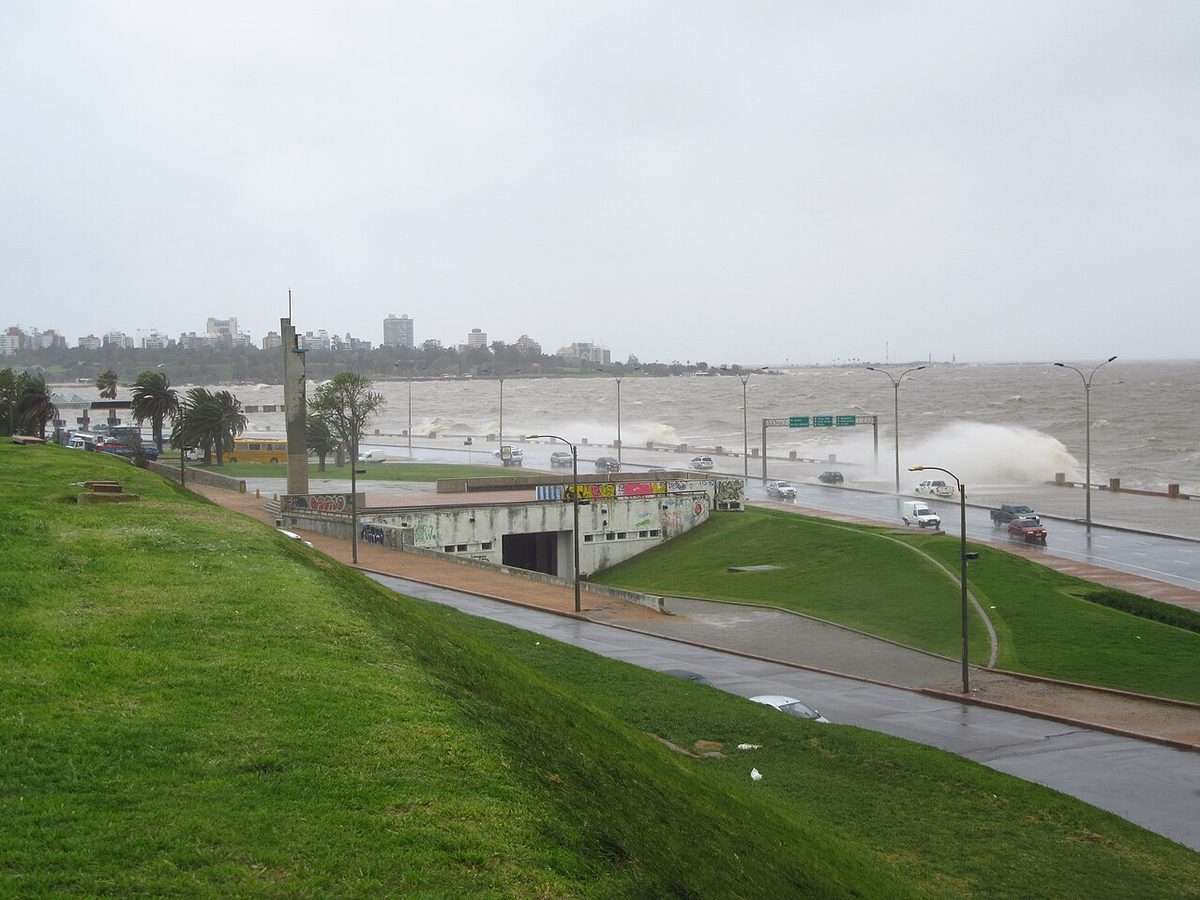
Its opposite number is the sudestada, a wet, persistent southeasterly that piles moisture onto the Río de la Plata coast. A sudestada brings cloud, drizzle or steady rain, rough grey water and occasional coastal flooding along the Montevideo rambla (the long waterfront promenade). These are the genuinely miserable stretches, and they can hang around a couple of days, most commonly in autumn and winter. They pass; they’re just not beach weather.
Humidity
Humidity runs high year-round, sitting around 60% in the driest summer months and climbing past 75% in winter, higher still right on the coast. In summer it can make a hot day feel heavier. In winter it does the cruel thing of making a mild 12°C (54°F) day feel like it’s hovering near freezing once you add wind. The single most useful thing I can tell you about a Uruguayan winter is that you dress for how it feels, not for what the app says.
Rain: no real dry season
Rain in Uruguay is spread remarkably evenly across the year, which is unusual and worth planning around. Montevideo gets roughly 1,165 mm (about 46 inches) annually over around 80 rainy days, and no month is truly dry; even the lowest months still see five to seven wet days. The good news is that rain tends to come in bursts (a thunderstorm, a passing front) rather than long grey weeks. It’s rare to lose more than a couple of days in a row.
Geography shifts the totals. The south and coast sit around 1,100 to 1,200 mm a year, the centre-north climbs to 1,300 to 1,400 mm, and the far north around Rivera tops 1,600 mm (63 inches). Autumn, especially March and April, is the wettest stretch on the coast, while the western Litoral actually dries out in winter. There’s no monsoon and no reliable bone-dry season, so I always pack a light rain layer no matter the month.
Summer sun and the UV problem
Here’s the drawback nobody warns you about loudly enough: the summer sun in Uruguay is fierce. The UV index regularly hits 11 or 12 (the “extreme” band) in December and January, partly because of the latitude and the long summer days, partly because the ocean and the open sky give you nowhere to hide. I’ve watched unprepared visitors go lobster-red on their first afternoon at Montevideo‘s beaches.
Take it seriously. High-factor sunscreen reapplied through the day, a hat, sunglasses, and shade between roughly noon and 4 pm are not optional in midsummer. Long daylight helps you here too, with around 14 hours from dawn to dusk in December, so there’s plenty of gentler late-afternoon and early-evening sun for the beach once the worst of the UV has passed. Treat the middle of the day with respect and you’ll be fine.
What to pack and how to plan around the weather
Packing for Uruguay is really an exercise in layering, because the day-to-night swing and the sudden fronts mean a single outfit rarely carries you through. Whatever the season, I bring a light, packable rain shell and at least one warm layer. The weather here rewards people who can add or shed a layer in five minutes and punishes anyone who committed hard to “it’s summer, I’ll be fine.”
Summer (December to February)
Light, breathable clothing, swimwear, and proper sun protection do most of the work: high-SPF sunscreen, a brimmed hat, sunglasses. Throw in a sweatshirt or light jacket for the evenings and the occasional southerly that cools things down, plus a small umbrella or rain shell for afternoon storms. Linen and cotton beat synthetics in the humidity.
Autumn and spring (March to May, September to November)
This is true layering season: T-shirts for the warm middle of the day, a sweater and a jacket for cool mornings and evenings, and a rain layer you’ll probably use. Closed shoes plus one pair of sandals covers most days. Don’t trust a single forecast for a shoulder-season trip; the weather is at its most changeable here, so pack for both warm and cool and you’ll be ready for whatever the week throws at you.
Winter (June to August)
Pack like it’s a damp European autumn rather than a deep freeze: a warm jacket, sweaters, long trousers, a scarf, and a genuinely waterproof layer. Heating in homes and smaller hotels can be patchy, so warm sleepwear and good socks earn their place in the bag. If you’re heading to the hot springs or the interior, you’ll want swimwear and warm clothes in the same suitcase.
Planning tips that actually matter
- Pick your season by purpose. Beaches and heat mean December to February; mild sightseeing and wine country mean the shoulder seasons; budget and quiet mean winter. The parent best time to visit Uruguay guide breaks this down month by month.
- Build in a flex day. A sudestada or a wet front can write off a beach day, so keep an indoor option (a museum, a parrilla lunch, a long mate by the window) in your back pocket. Mate is the bitter herbal tea Uruguayans carry everywhere, and a parrilla is a wood-fired grill restaurant.
- Check the wind, not just the temperature. A 24°C day with a hard southerly feels nothing like a still one. Local forecasts flag wind for a reason.
- Mind the holiday peak. Weather and crowds compound between late December and mid-January, when the coast is hottest and busiest at once.
For more on getting yourself there and around in each season, the getting to Uruguay guide and our general Uruguay travel tips cover the logistics, and the things to do in Uruguay roundup has plenty of weather-proof options for the days the sky misbehaves.

Uruguay weather: your questions answered
What is the weather like in Uruguay?
Temperate and oceanic, with four distinct seasons that run opposite to the Northern Hemisphere. Summers (December to February) are hot, around 28–30°C (82–86°F); winters (June to August) are mild near 14–15°C (57–59°F) but feel colder due to humidity. Rain falls fairly evenly all year, and the Atlantic keeps extremes rare but conditions changeable and windy.
Is Uruguay hot all year round?
No. Uruguay is not tropical. Summer is genuinely hot and great for the beach, but winter is cool, with daytime highs around 14°C (57°F) and chilly, damp nights. Spring and autumn sit in between at a mild 17–21°C (63–70°F). Anyone expecting year-round heat will be caught out by the winter, especially on the humid coast.
Does it snow in Uruguay?
Almost never. Snow on the lowland plains is extraordinarily rare; Montevideo’s last real snowfall was in 1930. Light sleet very occasionally falls in the south, and the few hilly areas near 500 m can see a dusting, but it doesn’t settle anywhere most travellers go. Winter nights can drop to freezing inland, with frost, but actual snow is essentially a non-event.
Does it rain a lot in Uruguay?
It rains a fair amount, around 1,165 mm (46 inches) a year in Montevideo, spread across roughly 80 days with no true dry season. The saving grace is that rain usually arrives in bursts (a storm or a passing front) rather than long grey stretches, so it’s uncommon to lose more than a day or two in a row. Autumn is the wettest stretch on the coast.
What is the hottest month in Uruguay?
January is the hottest month, with average highs around 28°C (82°F) in Montevideo and into the low-to-mid 30s in the interior and the Litoral northwest. Heat waves can push the thermometer past 35°C (95°F), and records reach 39°C on the coast and 41°C (106°F) in the western departments. February runs a very close second.
What is winter like in Uruguay?
Mild on paper, cold in practice. June to August brings daytime highs of 14–15°C (57–59°F), but the humidity and southerly wind make it feel meaningfully colder, and many buildings aren’t well heated. Expect plenty of bright blue-sky days between fronts, six to seven hours of daily sunshine, and warmer, drier conditions if you head inland or to the northern Litoral.
Can you swim in Uruguay outside summer?
Often, yes, if you don’t mind brisk water. The sea holds its summer warmth into autumn, so swimming is comfortable through March and into April, when it sits around 19°C (66°F). Locals will think you’re mad by then; many northern-hemisphere visitors are perfectly happy. By winter the water drops to about 11°C (52°F), which is bracing-bordering-on-painful.
When is the best time to visit Uruguay for weather?
For beaches and reliable heat, December to February. For mild, pleasant sightseeing with fewer crowds, the shoulder seasons (March to April, October to November) are hard to beat, with the caveat that they’re the most changeable. Winter suits budget travellers and hot-springs trips. See the full month-by-month breakdown in our best time to visit Uruguay guide.
Final thoughts
Spend a week here and you stop thinking of Uruguay weather as a single fact and start reading it as a temperament: oceanic, changeable, generous with sunshine but quick to turn, never tropical and never truly extreme. The country gives you real seasons, a warm summer sea, golden autumns, and winters that are gentler than the latitude suggests, all in a place small enough to chase the better weather across in an afternoon.
My one piece of advice, after all the tables and numbers: pack a layer and a rain shell whatever the month, watch the wind as closely as the temperature, and respect that summer sun. Do that, and the only surprises left are the good ones. For the natural side of all this weather, our guides to Uruguay’s national parks and the wider things to do will help you make the most of whatever sky you get.
Credits & sources
Sources & further reading
- INUMET – Instituto Uruguayo de Meteorología (Uruguay’s national meteorological service; official forecasts and climate data)
- Climates to Travel – Uruguay climate normals (city-by-city 1991–2020 temperature and rainfall data)
- Wikipedia – Climate of Uruguay (overview of Köppen classification, winds and regional patterns)
- Wikipedia – Pampero (wind) (background on the cold southwesterly front)
Photo credits
All images via Wikimedia Commons: Montevideo Rambla Clear Day by Ermell (CC BY-SA 4.0); Punta Del Este Beach Summer by NaBUru38 (CC BY-SA 4.0); Uruguay Countryside Campo by Gonzalo Acuña (CC BY-SA 3.0); Rio De La Plata Stormy Weather by Felipe Restrepo Acosta (CC BY-SA 4.0); Uruguay Autumn Vineyard by Emagp03 (CC BY-SA 4.0).