Tango in Montevideo: Milongas & the La Cumparsita Story (2026)
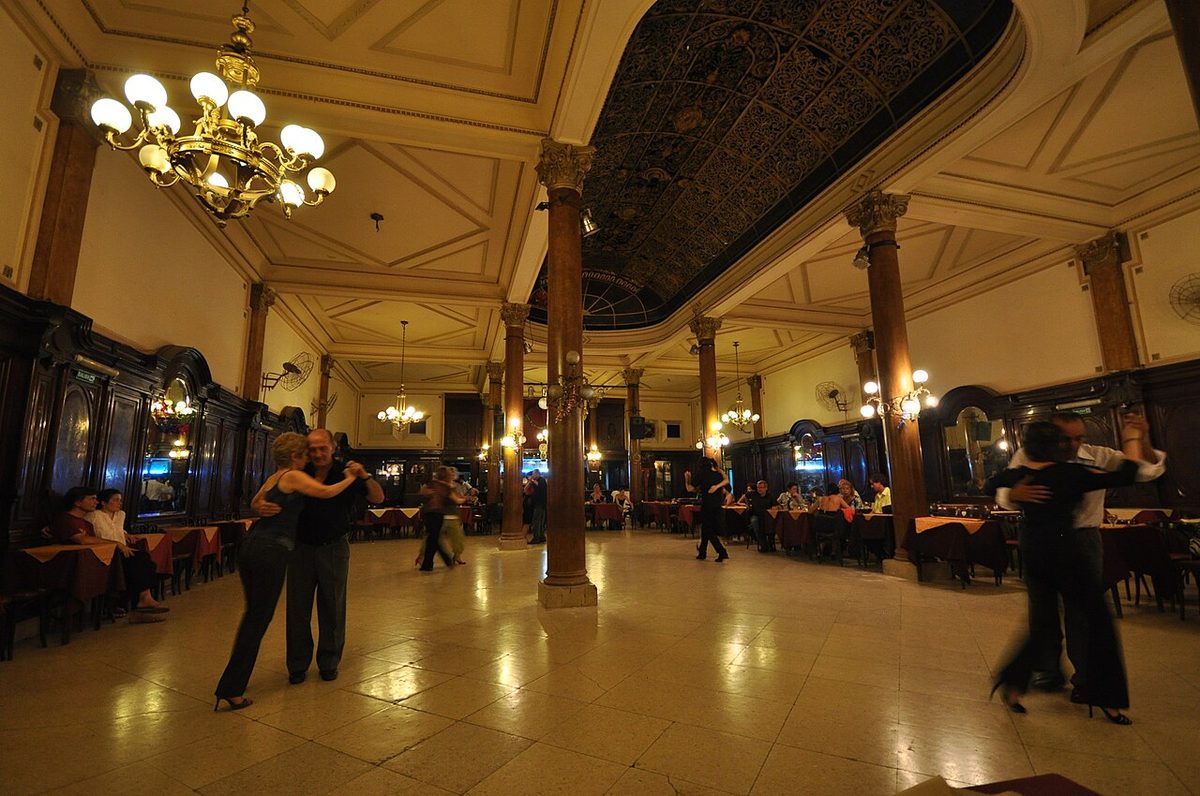
The first milonga I ever walked into in Montevideo, I went planning only to watch. I lasted about twenty minutes before a woman in flat shoes nodded at me across the floor, and that was that. Nobody cared that I was a beginner. Nobody cared that I was foreign. In Buenos Aires I’d have been ignored for a year; here I was dancing badly within half an hour, and a stranger was fixing my embrace mid-song.
That’s the thing the guidebooks miss. Tango in Montevideo is the friendlier, smaller, more forgiving half of a heritage that crosses the Río de la Plata, the wide brown river that separates Uruguay from Argentina. The world’s most famous tango, “La Cumparsita,” was written here by a Montevideo student. Yet most English-language coverage hands the entire dance to Buenos Aires and forgets Uruguay invented half of it. This guide fixes that: the story, the milongas (the social tango dances where people actually go to dance), the etiquette, and how to experience it yourself.
I’ll cover who tango really belongs to, the “La Cumparsita” origin story and the café where it premiered, the Carlos Gardel birthplace fight, and a current, honest rundown of where you can watch or dance, what it costs, and the codes you’ll need to know. One caveat up front, which I’ll come back to: this scene is small. That is the whole point, and also the one real drawback.
| Milonga / venue | Typical nights | Vibe | Best for |
|---|---|---|---|
| Joventango (Mercado de la Abundancia) | Mon, Tue, Fri, Sat from ~21:30 | Traditional, local, welcoming | First-timers and watchers |
| “La Lunera” (at Joventango) | Mondays | Relaxed, low-key | Easing in on a quiet night |
| Baar Fun Fun (Ciudad Vieja) | Most nights; show-leaning | Historic bar, tourist-friendly | Atmosphere, a drink, live sets |
| El Chamuyo (Ciudad Vieja) | Varies; check ahead | Eclectic, younger crowd | Mixing tango with other dances |
| Open-air milongas (parks, rambla) | Summer weekends | Casual, free, sociable | Warm-weather visitors |
Who does tango actually belong to?
Say “tango is Argentine” to a Montevideano and watch their face. The honest answer is that tango is rioplatense — born in the port neighborhoods on both banks of the Río de la Plata in the late 1800s, among immigrants, dockworkers and the children of freed slaves. Buenos Aires and Montevideo grew up as twin cities across the same water, sharing musicians, sheet music and dancers who took the overnight boat back and forth. The dance didn’t respect the border, because for most of the people who made it, the border barely existed.
What changed was scale. Buenos Aires is roughly ten times Montevideo’s size, and over the twentieth century it turned tango into an export industry: the shows, the academies, the airport-souvenir version. Montevideo kept tango as something locals do for themselves. That’s why a milonga here feels less like a performance and more like a neighborhood dance. The music is the same. The river is the same. Only the marketing budgets differ. If you search for tango Uruguay online you’ll mostly turn up Buenos Aires results by mistake, which is precisely the gap this guide exists to close.
If you want the wider picture of how tango sits alongside candombe, murga and the rest of the country’s traditions, the guide to Uruguayan culture is the place to start. Tango is one thread in a surprisingly dense cultural weave for a country this size.
The “La Cumparsita” story: a student, a café, and a march
Here’s the fact that ends every argument. In early 1916, an architecture student in Montevideo named Gerardo Matos Rodríguez — eighteen, broke, nicknamed “Becho” — wrote a little march for his student federation. He couldn’t really read or write music well, so a friend helped him jot it down. The title meant “the little parade,” from comparsa, a carnival troupe.
Matos Rodríguez had the sheet music carried to the orchestra leader Roberto Firpo, who was playing at a café called La Giralda. Firpo looked at the scrawled march, decided it could work as a tango, slowed it down, grafted on a couple of passages from his own pieces, and played it. The piece that came out of that café became “La Cumparsita” — the single most recorded, most recognized tango in the world. You have heard it. Everyone has heard it. It plays at the end of nearly every milonga on Earth as the signal to go home.
The strange part of the story is how little money it made its composer for years. Matos Rodríguez sold the rights cheaply, then spent decades in lawsuits trying to claw back authorship after Argentine lyricists added the famous words and the song went global. He eventually won recognition. He died in Montevideo in 1948, and in 1998 Uruguay’s parliament declared “La Cumparsita” the country’s official cultural and popular anthem. For a tune dashed off by a teenager for a student parade, it has done remarkably well.
A word on the lyrics, because they trip people up. The version everyone hums is instrumental, but there are sung versions too, and they don’t share one set of words. Matos Rodriguez wrote his own melancholy lyric — a parade of endless miseries circling a dying man — while the Argentine writers Pascual Contursi and Enrique Maroni penned a different, more popular set beginning “Si supieras.” That split fed decades of the royalty fight: whose song was it, the Uruguayan composer’s or the Argentine lyricists’? The melody, at least, was never in doubt. It’s Montevideo’s.
Where it happened: the Tango Museum and the Giralda site
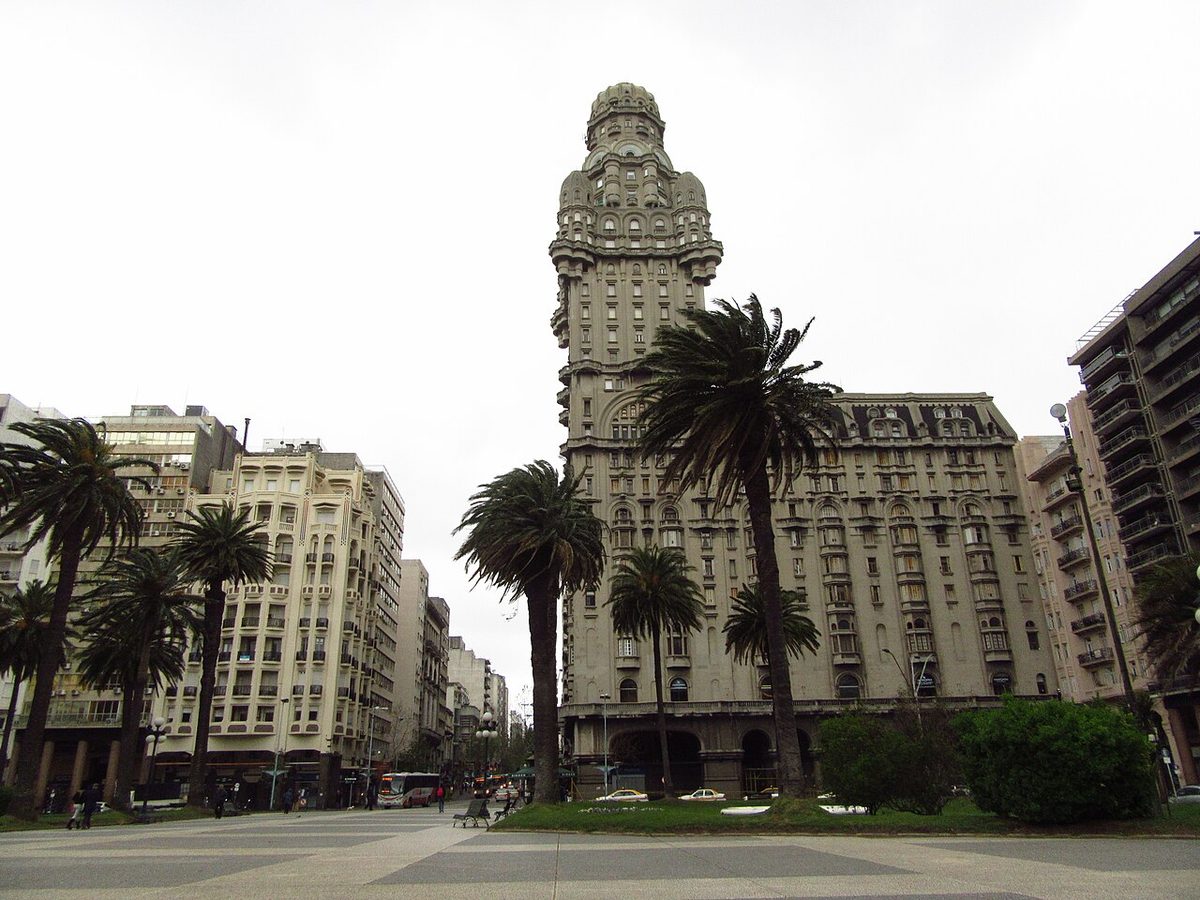
Café La Giralda is long gone, but the spot is not. It sat on the ground floor of what is now the Palacio Salvo — the tall, slightly mad 1928 tower on Plaza Independencia that was, briefly, the tallest building in South America. On that ground floor today you’ll find the Museo del Tango “La Cumparsita,” a small museum built to look like a 1900s café, with old victrolas, shellac records that still play, the history of Uruguayan tango on the walls, and a statue of Matos Rodríguez at work. A plaque marks the site as the birthplace of “La Cumparsita.”
It is genuinely small — half an hour, maybe forty-five minutes if you read everything — and the opening hours wobble, so check before you go. But standing on the actual floor where the most famous tango in the world first got played, in a tower that dominates the city’s main square, is worth the short detour. It’s a five-minute walk from the eastern edge of Ciudad Vieja, Montevideo’s old town and the heart of the tango scene. For what else is packed into that neighborhood, see the Ciudad Vieja guide.
Carlos Gardel: the birthplace fight Uruguay refuses to lose
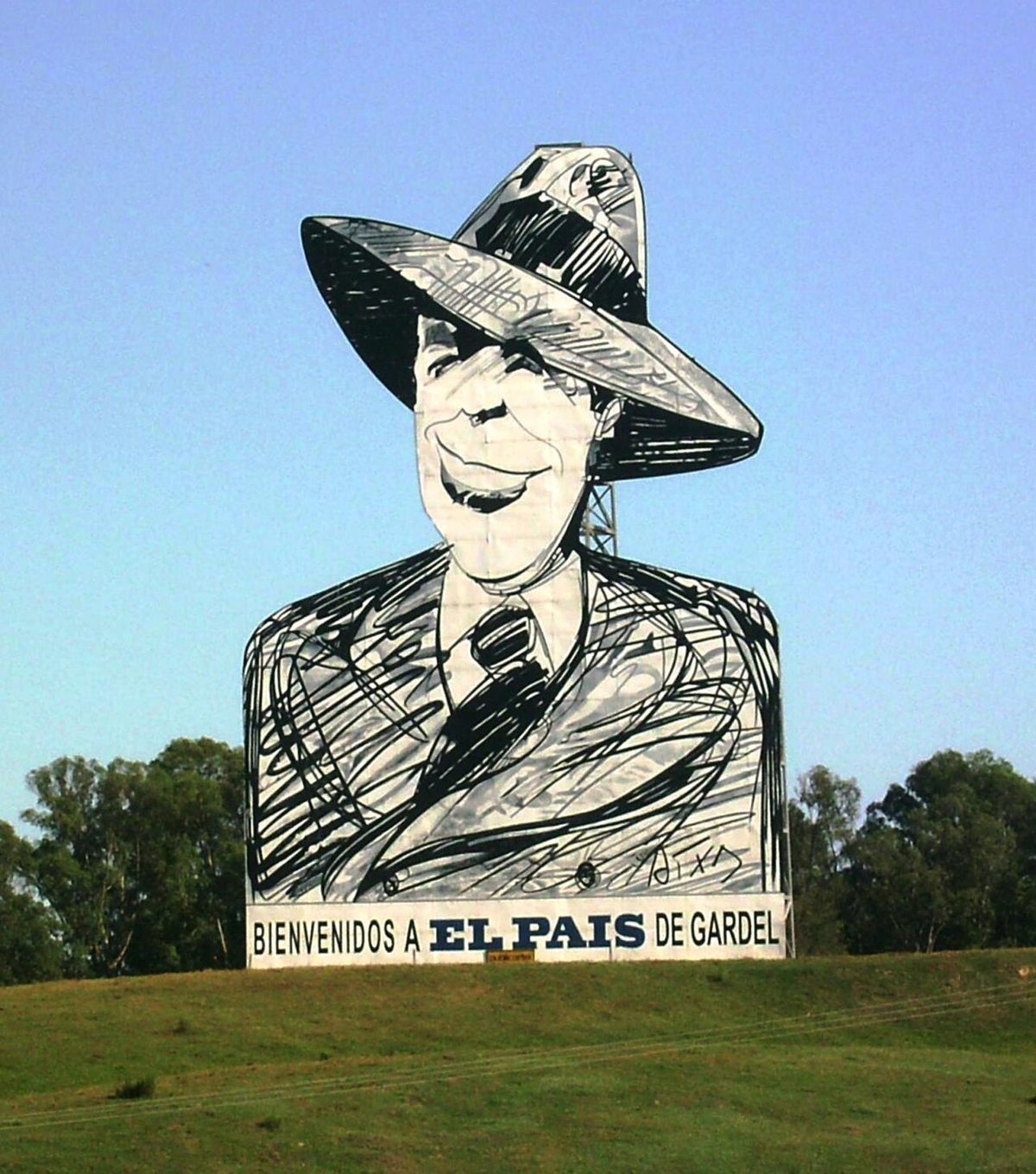
Tango’s greatest voice belongs to Carlos Gardel — the singer whose face still hangs in cafés across the Río de la Plata, who died in a plane crash in 1935 at the height of his fame, and whose nationality has been argued about ever since. France says Toulouse. Argentina claims him as its own. And Uruguay insists, loudly, that he was born in Tacuarembó, a town in the cattle country of the north.
The Uruguayan version goes like this: Gardel was born in 1887 at a country estate near Tacuarembó, the son of a powerful local colonel, and the French birth records were a later cover story. In the hills at Valle Edén, a short drive from Tacuarembó, there’s a Carlos Gardel Museum dedicated entirely to making that case. Most serious scholars side with Toulouse and a birth date of 1890, citing French baptismal records and Gardel’s own immigration paperwork. The evidence leans against Uruguay.
But here’s what I’ll say after a few of these conversations: it doesn’t matter who’s right. The Gardel dispute is part of the culture now — a small country’s stubborn refusal to concede a single inch of tango to its giant neighbor, told with such conviction that you half want them to win. If you’re heading inland, the Valle Edén museum is a strange, sincere, very Uruguayan pilgrimage.
The milongas: where to watch and dance
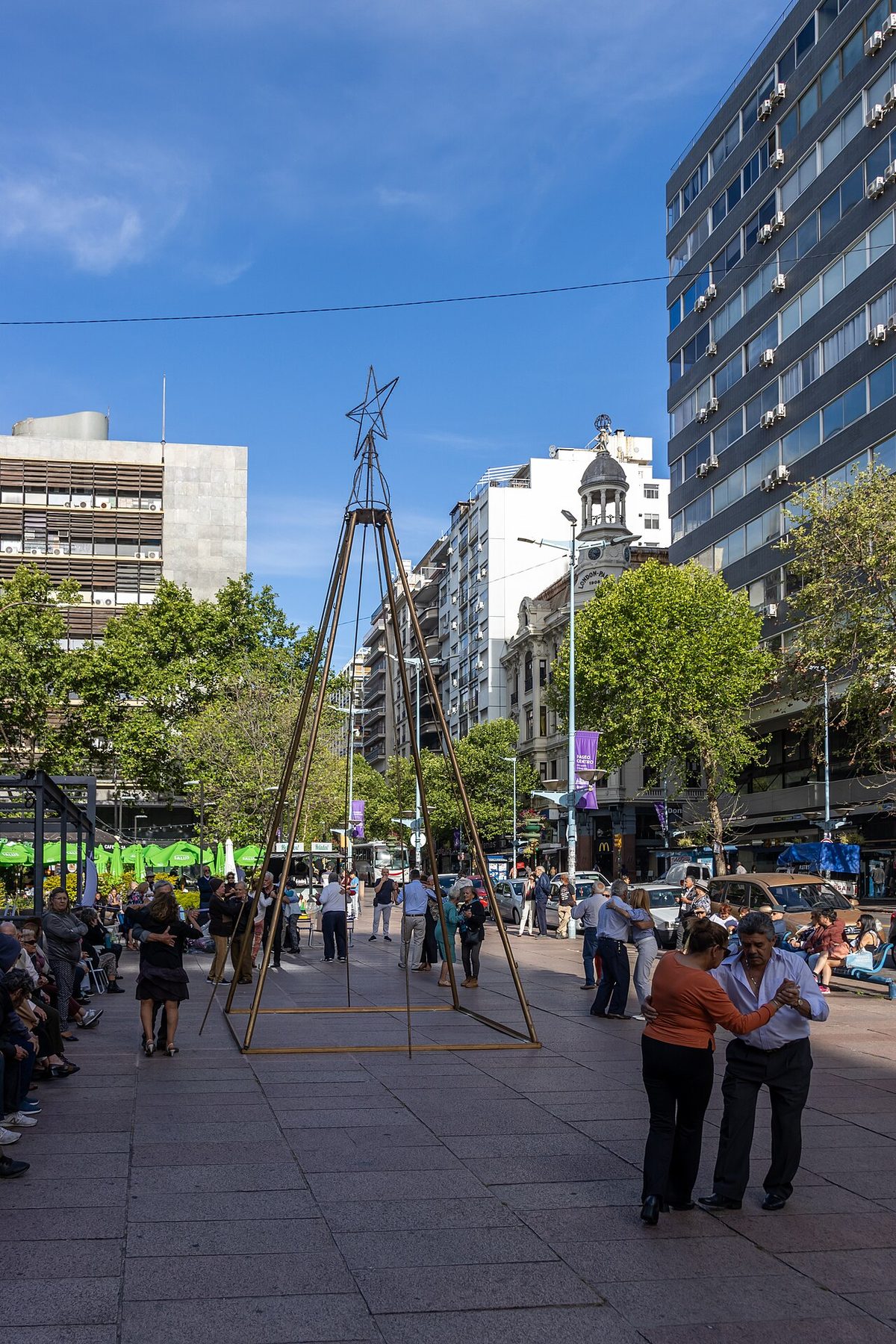
A milonga is the social dance itself — an evening where people gather to dance tango (and the faster cousin dances, the milonga rhythm and the vals) in a set of tandas, blocks of three or four songs by the same orchestra. Between tandas a snippet of unrelated music called the cortina, the “curtain,” clears the floor so partners can change. Montevideo has at least one milonga almost every night of the week, and a handful of venues anchor the scene.
Joventango at the Mercado de la Abundancia
If you only do one tango thing in Montevideo, make it this. Joventango is a long-running tango association that holds its milongas inside the Mercado de la Abundancia, an old market building near the center. The crowd is local and across-the-board in age, the welcome is warm, and nobody will pressure you to dance — you can sit at the edge with a drink and just watch, which here is completely normal. Milongas typically run Mondays, Tuesdays, Fridays and Saturdays from around 21:30; the relaxed Monday session is known as “La Lunera.” Saturdays often bring a live tango band, and there are professional shows on some nights. This is the place I send first-timers and non-dancers alike.
Baar Fun Fun, Ciudad Vieja
Fun Fun is an institution — a bar and tango haunt founded in 1895, where Gardel himself is said to have drunk. Important detail: the original spot near the old central market closed, and Fun Fun relocated. Last I checked it was operating in Ciudad Vieja, around Ciudadela near the Teatro Solis, leaning more toward dinner-and-show evenings than a pure dancers’ milonga. Because it has moved before, confirm the current address and program before you go rather than trusting an old listing. It’s atmospheric and historic; just know it’s more “watch with a drink” than “old-school floor.”
El Chamuyo and the rest
El Chamuyo, also in Ciudad Vieja, is the more eclectic, younger-skewing room — tango at its core but open to forro, samba and other dances, with a real stage and space for around a hundred people. Beyond these, the scene rotates through clubs, cultural centers and crumbling old social halls, and in summer there are open-air milongas in the parks and along the rambla, the long waterfront promenade. Schedules shift constantly. The single best move is to ask at Joventango, or check venues’ social media that week, because a printed list goes stale fast.
The honest drawback
Here it is, plainly: Montevideo’s tango scene is small. On a given night you might have three or four milongas to choose from, not the thirty you’d find across the river. Some nights a venue is quiet, or a listed milonga simply didn’t happen. If you arrive expecting Buenos Aires’s sheer volume and spectacle, you’ll feel the difference. But the smallness is exactly why the welcome is warmer, the floor is roomier, and a beginner gets pulled in instead of frozen out. You’re trading scale for intimacy. I think it’s a good trade — just go in knowing the deal.
How to experience tango as a visitor
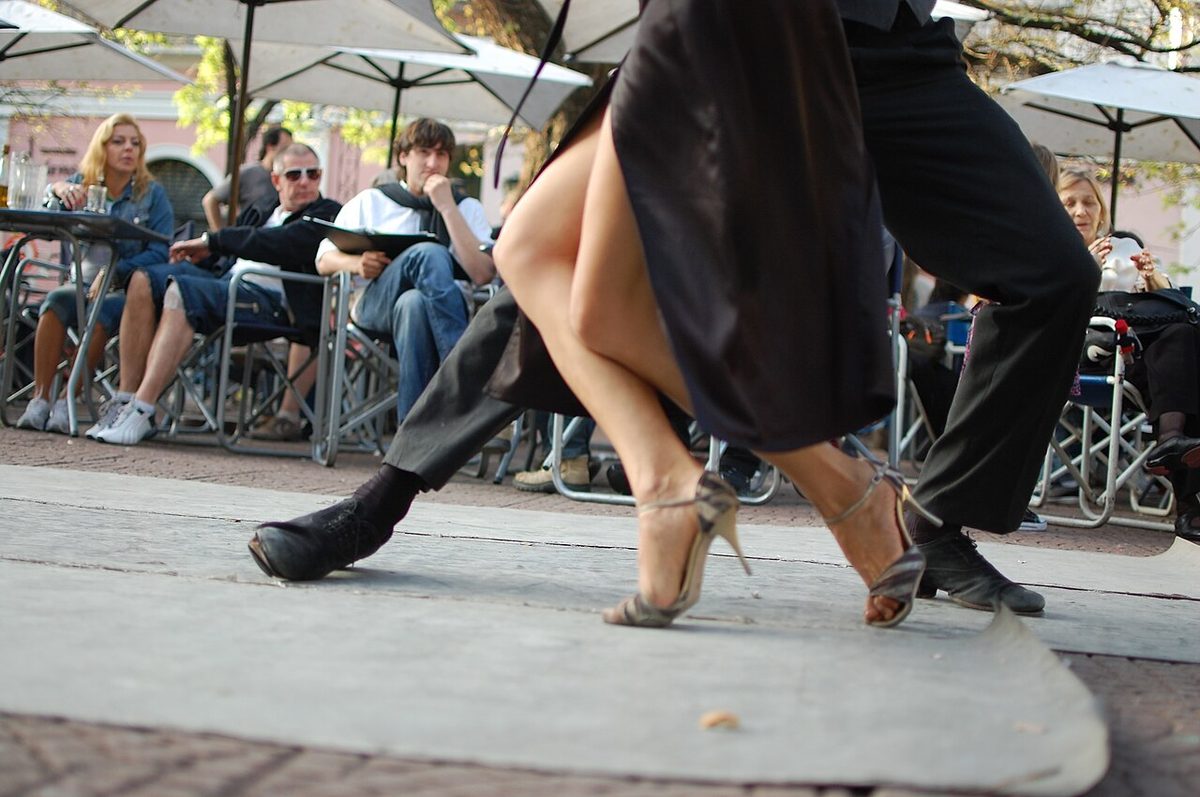
You do not need to dance to enjoy a milonga. Watching is a legitimate, expected thing to do here, and it’s the gentlest way in. But a few customs will make the night go smoothly, sitting or stepping onto the floor.
The cabeceo and the codes
The big one is the cabeceo — the “little nod.” Partners are invited to dance from across the room with eye contact and a tilt of the head, not by walking up and asking out loud. If someone holds your gaze and nods, and you nod back, you’ve agreed to dance; if you don’t want to, you simply look away, no awkward verbal rejection required. It’s a quietly brilliant system once you trust it. A few more codes: you dance a full tanda (those three or four songs) with one partner, not a single song; you move counterclockwise around the floor in a loose lane and don’t cut across the middle; and the night ends when “La Cumparsita” plays. That last one is universal across the Río de la Plata — when you hear it, the milonga is closing.
Classes for beginners
Take a class before you try a milonga. Joventango runs affordable group classes most afternoons and evenings, Monday through Saturday, for beginners and intermediates, and a class often gets you free or discounted entry to that night’s milonga. Private teachers are easy to find too, and because the scene skews welcoming, a one-hour group lesson is enough to give you the basic walk and the embrace so you’re not completely lost. Don’t aim to be good. Aim to be able to keep time and not collide with anyone.
One practical tip the lessons rarely mention: dress is relaxed here. Across the river some milongas expect proper shoes and a certain polish; in Montevideo you’ll see dancers in trainers, in jeans, straight from work. Bring smooth-soled shoes if you have them, because rubber soles grip the floor and fight the pivots, but nobody is going to turn you away over an outfit. Show up clean, show up on time for the class, and you’re fine.
Costs, timing and neighborhoods
Tango is one of the cheapest nights out you’ll have in a country that isn’t always cheap. Milonga entry runs from free to roughly 150 Uruguayan pesos — under five US dollars — usually paid at the door. Classes are similarly modest. On timing: milongas start late and peak later. Weeknight milongas open around 21:30 and weekends around 22:30, but the floor doesn’t really fill until 23:00 or later, and weekend dancing can run until 4am. Show up at the official start time and you may be nearly alone. Geographically, most of what matters sits in or beside Ciudad Vieja, the old town, with Joventango just inland near the center — all walkable or a short taxi ride, though I’d take a cab back late at night.
One last pairing worth making: if you’re timing a trip around live performance, tango and Uruguay’s other great street tradition overlap in the calendar. The country’s raucous carnival theater, murga, peaks in summer, and the two together make for a serious music-and-dance trip. They’re very different animals — tango intimate and codified, murga loud and political — but both tell you something true about this city.
Tango in Montevideo: your questions answered
Was tango really invented in Uruguay or Argentina?
Both, and neither alone. Tango grew up in the port districts on both banks of the Rio de la Plata in the late 1800s, shared between Montevideo and Buenos Aires from the start. It’s most accurate to call it rioplatense — of the river region. Buenos Aires made it bigger and more commercial, but Uruguay’s claim is genuine, anchored by “La Cumparsita,” written by a Montevideo student.
Where can I see tango in Montevideo without dancing?
Go to a milonga and watch — it’s completely normal to sit, drink and observe. Joventango at the Mercado de la Abundancia is the friendliest spot for this, with local dancers and no pressure to join in. Baar Fun Fun leans toward dinner-and-show evenings if you’d rather watch a staged performance. Both sit in or near Ciudad Vieja, the old town.
What is “La Cumparsita” and why does it matter?
It’s the most famous tango ever written, composed in 1916 by Montevideo student Gerardo Matos Rodriguez and first played at Cafe La Giralda, on the site now occupied by the Tango Museum in the Palacio Salvo. It’s played to close milongas worldwide and was declared Uruguay’s official cultural anthem in 1998. For the wider context, the things Uruguay is known for guide covers more.
Do I need to speak Spanish to go to a milonga?
No. The dance is the language, and the cabeceo — inviting a partner with eye contact and a nod — needs no words at all. Basic Spanish helps for buying entry or asking about the night’s schedule, and a class beforehand smooths everything. People at Montevideo milongas are used to curious foreigners and tend to be welcoming rather than cliquey.
When do milongas happen and how much do they cost?
Milongas in Montevideo run almost every night of the week. Weeknights start around 21:30 and weekends around 22:30, but the floor fills later, often after 23:00, and can run to 4am. Entry ranges from free to about 150 pesos — under five US dollars — paid at the door. Taking a class often gets you in free. Timing your visit well helps; see the best time to visit Uruguay.
Was Carlos Gardel born in Uruguay?
Uruguay says yes — in Tacuarembo in 1887 — and there’s a museum at Valle Eden making the case. Most scholars say he was born in Toulouse, France, in 1890, citing French records and his own paperwork. The evidence leans toward France, but the dispute is now part of the culture, told with such conviction that it’s become a story worth hearing on its own terms.
Final thoughts
Tango here is not a show you buy a ticket for, though you can. It’s a thing the city does for itself on a Monday night in a market hall, and the door is open to you. Come for the “La Cumparsita” story and the strange little Tango Museum on Plaza Independencia; stay for a milonga where a stranger fixes your posture and means it kindly. Pair it with a wander through Montevideo proper, a meal at the Mercado del Puerto, and a night of candombe drumming, and you’ll understand why this small city guards its half of tango so fiercely. It earned it. If you want help slotting it into a wider trip, the things to do in Uruguay guide is a good next stop.
Credits & sources
Sources & further reading
- Wikipedia: “La Cumparsita” — origin, composition and the long authorship dispute.
- Guru’Guay: Tango dancing in Montevideo — a local English-language guide to the milonga scene and why it’s friendlier than Buenos Aires.
- Museo del Tango “La Cumparsita” — the museum on the old Cafe La Giralda site in the Palacio Salvo.
Photo credits
All images via Wikimedia Commons: Tango Dancers Milonga Montevideo by Jorge Láscar from Australia (CC BY 2.0); Palacio Salvo La Giralda Montevideo by Felipe Restrepo Acosta (CC BY-SA 4.0); Carlos Gardel Pais De Gardel by Gardelisimo (CC0); Milonga Montevideo Plaza Tango by Photograph by Mike Peel (www.mikepeel.net). (CC BY-SA 4.0); Tango Dance Steps Detail by Brian Barbutti (CC BY 2.0).