Murga: Uruguay’s Carnival of Satire & Song (2026)
The first time it happened I was at a tablado in the Cordón neighbourhood, mate going cold in my hand, when a chorus of grown men in painted faces began to sing — and the crowd around me laughed, then a verse later went quiet. I understood maybe one word in five. The man beside me translated the punchlines a beat too late. I had no idea what they were skewering, but I could feel that something real was being said.
Murga Uruguay-style — carnival theatre of satire and song — is a chorus of roughly fifteen costumed performers who spend forty-five minutes singing biting political and social commentary, backed by three drummers. It is the most popular category of the longest carnival on earth, performed every summer in Montevideo. Funny, furious and worth the effort.
This is the deep guide. I will explain what murga actually is, how a show is built, where the sound comes from, why it became the coded voice of resistance under the dictatorship, who the legendary groups are, and — the part most articles skip — how you, a visitor, can actually get to a tablado and watch one. For the bigger picture of the season around it, I lean on our companion guides rather than repeating myself; this page is about murga and murga alone.
| The four parts of a murga show | What happens |
|---|---|
| Presentación / saludo | The opening. The murga introduces itself, sets the theme of the year, and greets the audience — the famous “buenas noches” entrance. |
| Cuplé | The middle act. Self-contained satirical sketches, often built around characters, that take aim at politics, scandals and society. |
| Popurrí (popurrí) | A fast medley stitching the year’s events together with rapid-fire jokes and shifting melodies. |
| Retirada / despedida | The farewell. Usually the emotional high point — a sweeping choral goodbye that audiences sing along to and remember for years. |
What is murga, exactly?
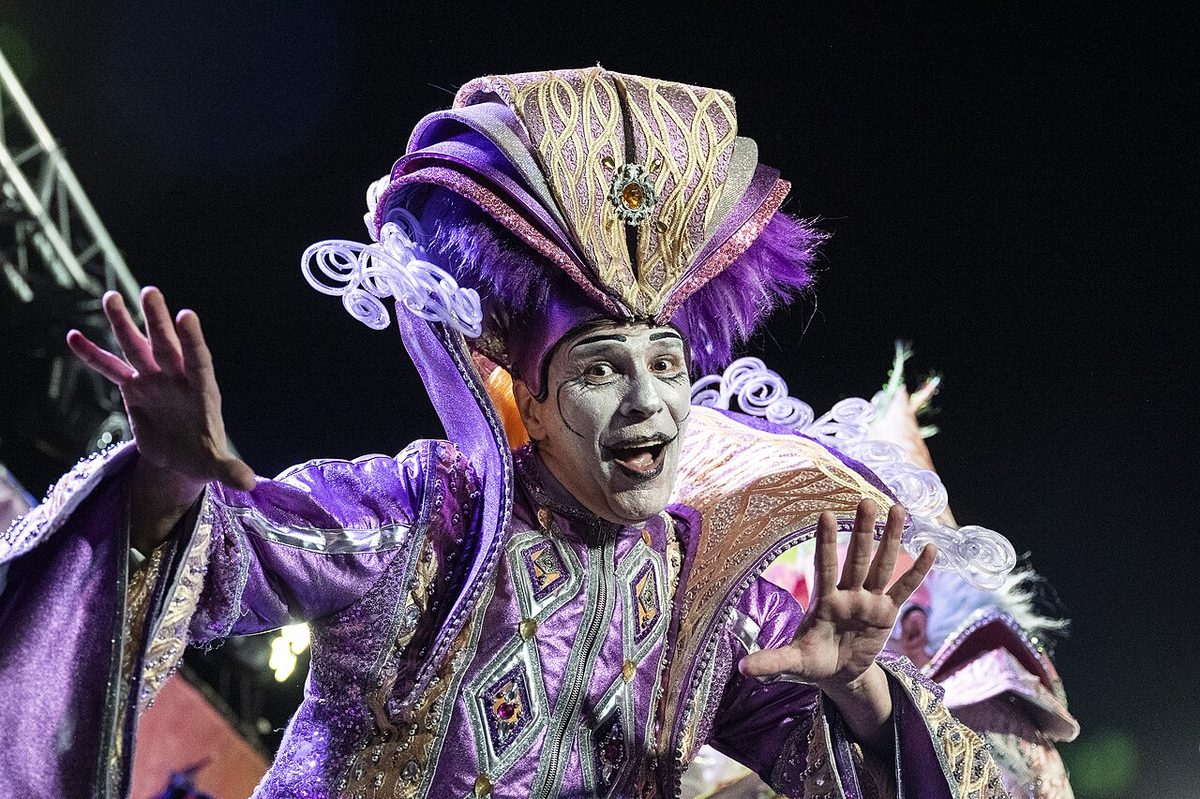
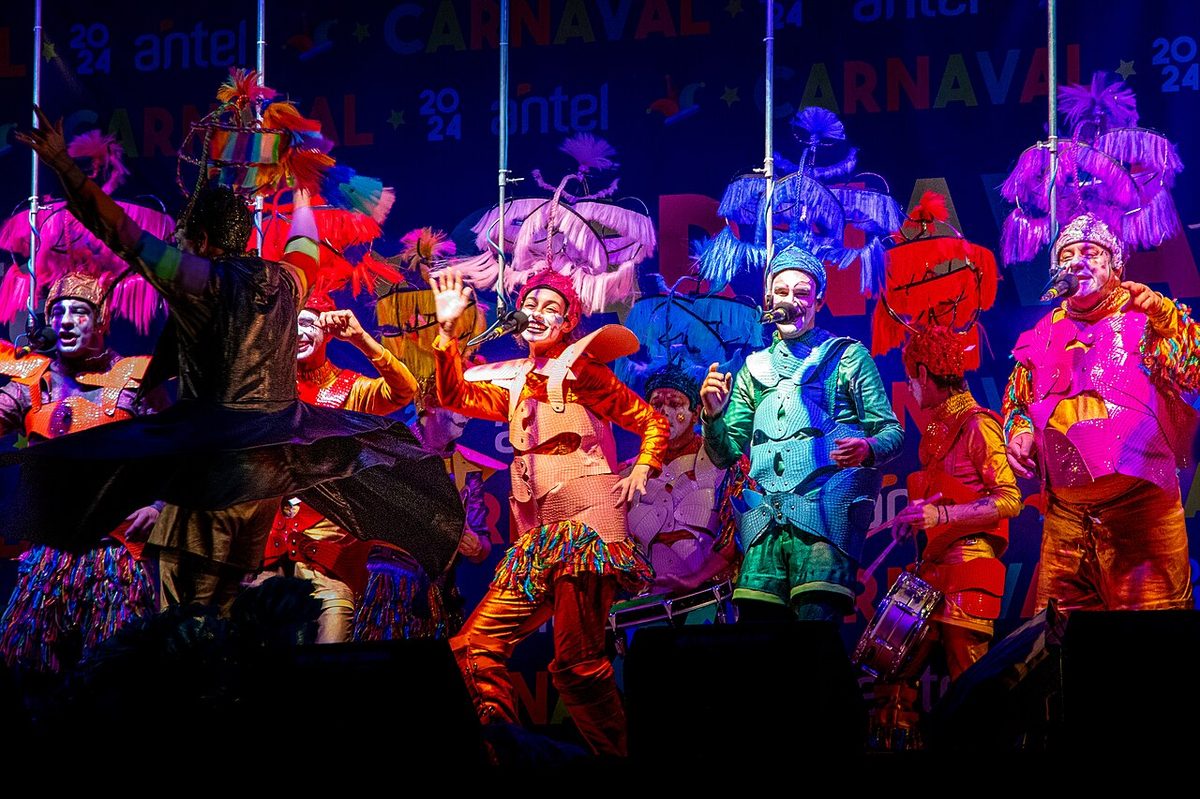
Murga (a satirical musical-theatre genre, pronounced MOOR-ga) is best described as a singing newspaper with a grudge. A group of around fifteen to seventeen performers — historically all men, though that is slowly changing — takes a bare stage in elaborate, jester-like costumes and clown-bright face paint, and over about three-quarters of an hour delivers a scripted show of choral songs and heightened, sung speech. The subject is always the same in spirit and never the same in detail: the past year in Uruguay and the world, retold as comedy, outrage and lament.
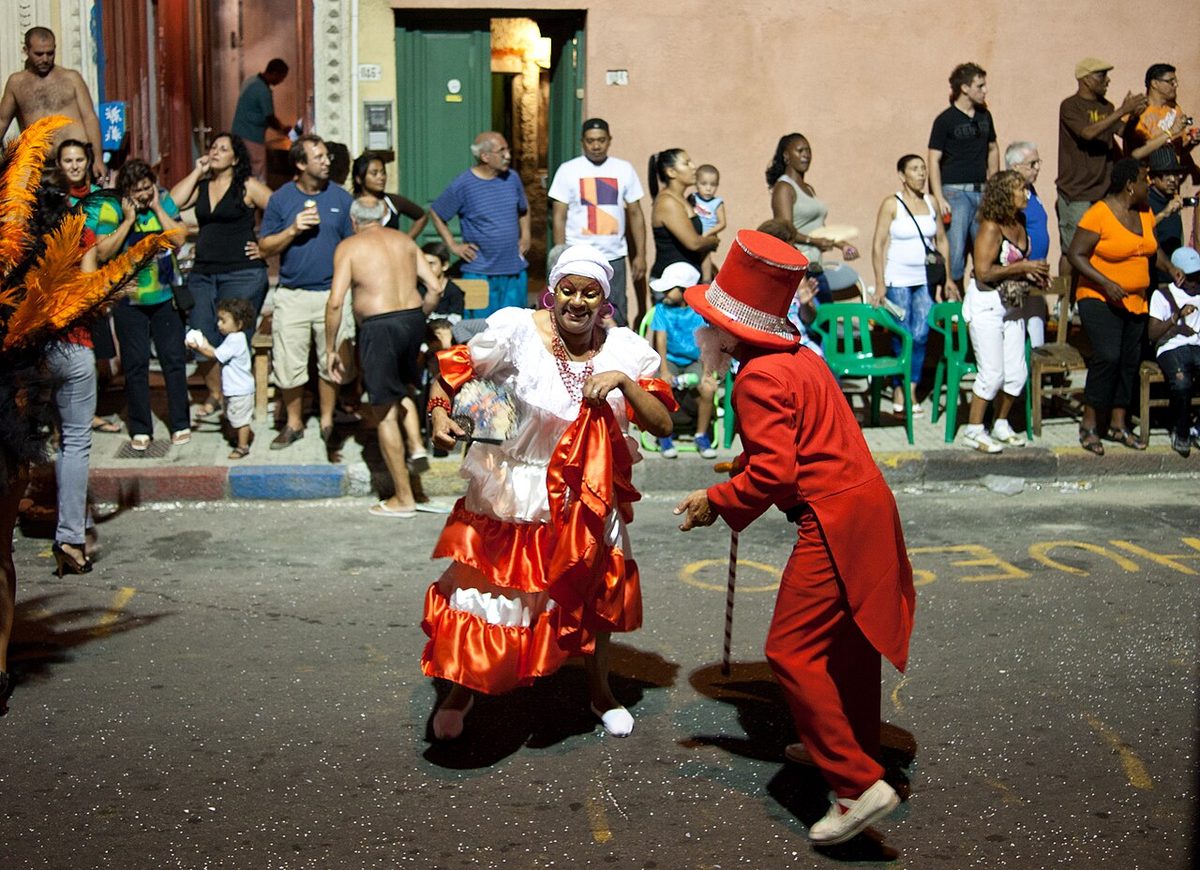
It is not a parade and it is not a dance. If you are picturing feathers and floats sliding down an avenue, you are picturing the wrong thing — that is closer to the candombe drumming processions, which I cover separately. Murga is theatre. People sit (or stand) and face a stage, the way you would for a play, except the “play” is a chorus that sings almost everything and means most of it.
The roots run back to Cádiz in southern Spain. The popular story — cherished even if the edges are smoothed — is that a troupe of Spanish performers got stranded in Montevideo in the early 1900s and, to pay their way home, did the only thing they knew: they formed a murga and sang at carnival. Their group was called “La Gaditana Que Se Va” (the Cádiz girl who’s leaving). They left; the form stayed. A century on, the Spanish cousin (the chirigota) and the Uruguayan murga have drifted into genuinely different art forms.
The sound: coro and batería
Close your eyes at a tablado and murga is unmistakable. The voices are loud, nasal and pitched high, with little softening of volume — a deliberately raw, almost shouting choral attack that locals will tell you should give you goose bumps when fifteen throats land a chord together. The chorus (the coro) sings in polyphony, splitting into as many as five vocal parts, so a single line can bloom into a wall of harmony and then snap back to unison for a punchline.
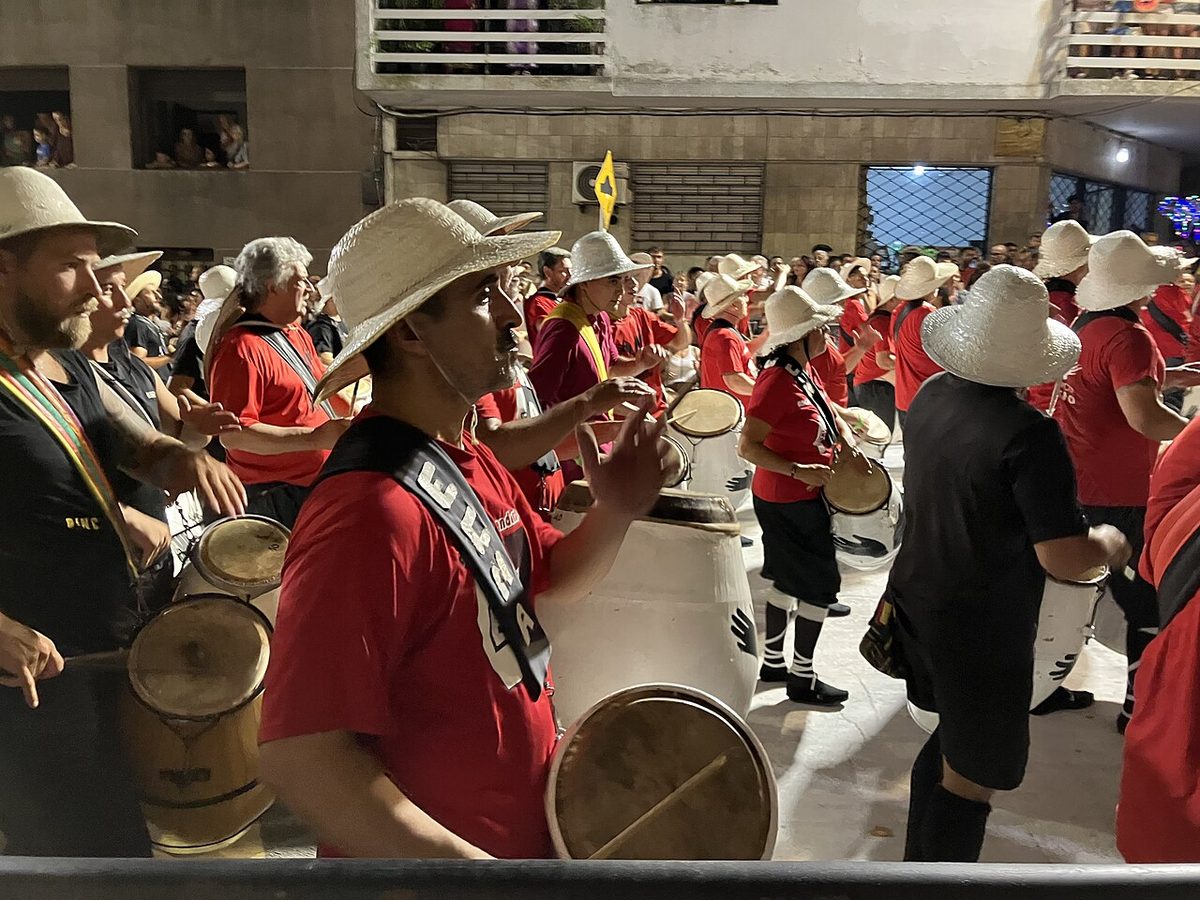
Underneath sits the batería — the percussion trio, and it is only ever three instruments. The bombo is a shallow bass drum worn at the waist and struck horizontally, laying down the heartbeat. The redoblante is a snare drum that rattles and drives the tempo. The platillos are clashing cymbals that punctuate and accent. That is the entire engine: no guitars, no keyboards, no brass. Three drummers and a wall of voices, and out of that minimal kit comes a sound that has been borrowed by some of Uruguay’s biggest popular musicians, from Jaime Roos to Rubén Rada to the rock band No Te Va Gustar.
The drummers usually stand at the back or off to one side, the singers pushed to the front where the words live. Staging is sparse on purpose. There are no sets to speak of and few props. Everything you are meant to look at is on the faces and in the voices, and everything you are meant to think about is in the lyrics.
How a murga show is built
A murga performance is not a string of unrelated songs — it is a single forty-five-minute arc with a fixed dramatic shape, the same four movements I put in the table above. Knowing the structure helps enormously, because even when the language outruns you, you can feel where you are in the show.
Presentación and cuplé
It opens with the presentación, or saludo — the entrance. The group bursts on, greets the crowd (the long, ringing “buenas noches” is practically a genre signature), and lays out the theme it has chosen for the year. Then come the cuplés: the comic heart of the show, self-contained sketches usually hung on a character or a conceit, where the satire gets sharpest. This is where a murga will impersonate a politician, stage an absurd scenario, and twist it into commentary that has the audience howling.
Popurrí and retirada
The popurrí is a medley — a quick, shape-shifting run through the year’s headlines, melodies changing every few bars, jokes arriving faster than you can process. And then the retirada (also called the despedida), the farewell. This is almost always the emotional summit: a grand, sweeping choral goodbye, often turning from comedy to something close to tenderness or defiance. The best retiradas become standards. People know them by heart and sing them back. The opening and closing songs are the ones that get played on the radio all carnival long, and a few historic ones — like the Saludo of the group Araca La Cana from 1937 — are treated as national heirlooms.
Murga and the dictatorship: comedy as resistance
To understand why Uruguayans treat murga as something closer to sacred than to silly, you have to know what it did between 1973 and 1985, the years of the civic-military dictatorship. The regime censored everything. Murga scripts had to be submitted in advance and approved; censors sat in on shows to make sure the groups sang the approved words and nothing else. Direct political satire — the entire point of the form — was effectively banned.
So the murguistas (the performers) did what censored artists have always done: they went underground in plain sight. Open criticism became metaphor. A whole vocabulary of coded images grew up — light, home, the coming of spring — that everyone in the audience understood to mean freedom, exile and the hope that the regime would end. Groups like Araca La Cana carried an unmistakable opposition stance through allegory. A song about waiting for spring was a song about waiting for democracy, and the censor could not quite prove it, and the crowd knew exactly what it meant.
That is the weight a murga carries even now. When the dictatorship fell, the form came roaring back uncensored, and the memory of those years is still in the music — the reason a comic choir can turn a stadium silent. It is not just a spectacle. It was, for a decade, one of the few public voices a frightened country had.
The Concurso Oficial at the Teatro de Verano
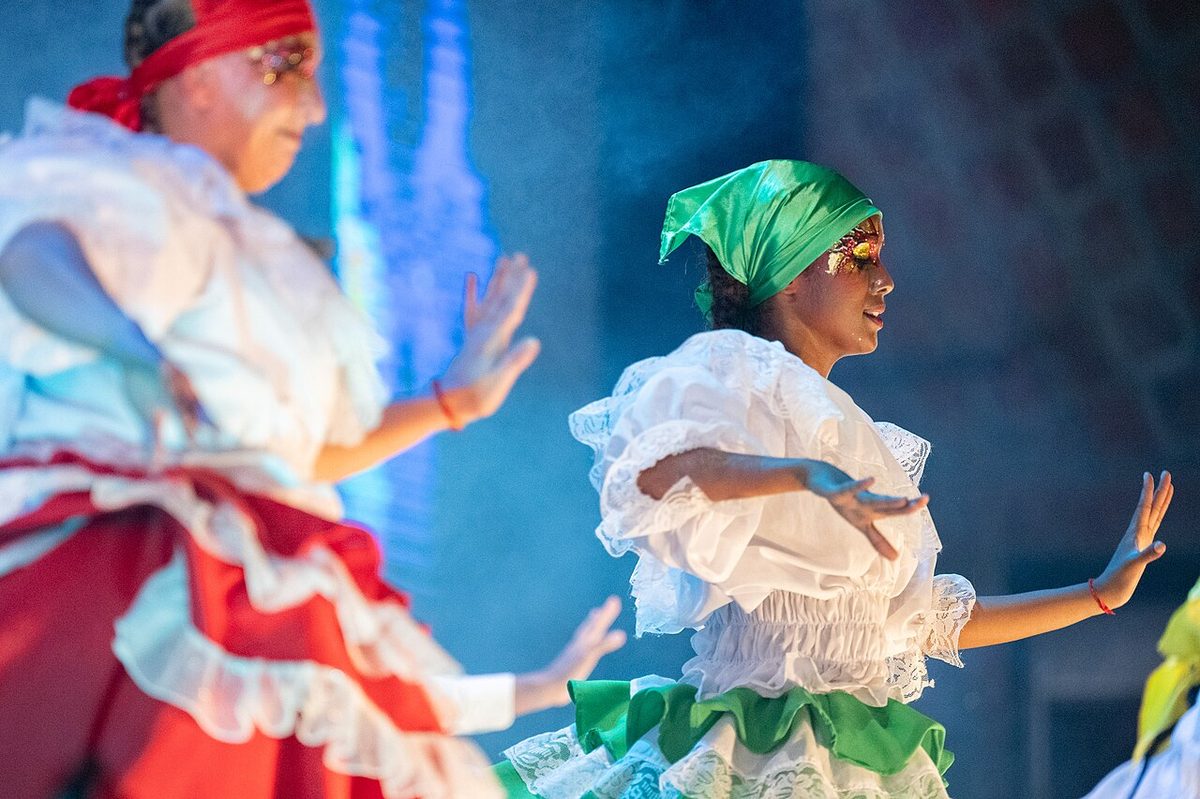
Everything builds toward the Concurso Oficial de Carnaval — the official competition — staged at the Teatro de Verano Ramón Collazo, an open-air amphitheatre on the rambla in the Parque Rodó neighbourhood. From late January, dozens of groups across several categories compete over more than forty nights for the annual title, judged on song, costume, theme and staging. In the 2026 edition the competition fielded forty groups in total, nineteen of them murgas — by far the largest category — which tells you everything about where Uruguay’s heart is.
The prize money is real and the secrecy is intense; groups rehearse their shows for months behind closed doors so rivals can’t steal material, and the competition is televised nationally. Winning the murga title is a genuine cultural event. If you want the single most polished, highest-stakes murga of your life, the Teatro de Verano during the concurso is where you’ll find it — though, as I’ll explain, it is not necessarily where you’ll feel it most.
The famous murgas
Murga has stars, and Uruguayans argue about them the way other countries argue about football clubs. A few names you’ll hear constantly:
| Murga | Why it matters |
|---|---|
| Agarrate Catalina | The international breakout, led by Tabaré Cardozo and (formerly) his brother Yamandú. Ambitious, dark, theatrical shows that have toured Latin America and Europe and pulled new audiences to the form. |
| Falta y Resto | A heavyweight founded by Raúl Castro, long associated with social conscience and some of the most quoted lyrics in the genre. A reference point for what murga can say. |
| La Mojigata | One of the newer groups credited with revolutionising carnival — sharp, contemporary writing that helped push the form forward without losing its bite. |
| Curtidores de Hongos | A classic, historic name — one of the old guard the modern scene grew out of, still spoken of with deep respect. |
Others — Araca La Cana, Contrafarsa, Queso Magro — come up just as often depending on who you’re talking to. If a Uruguayan finds out you’re curious about murga, ask them their favourite. You will get a passionate answer and probably a phone full of clips.
What surprised me most is how far murga leaks beyond carnival. Its rhythms and that nasal, full-throated choral attack turn up in mainstream Uruguayan music all year round, and a great retirada will be hummed at bus stops in March the way a pop hit is hummed elsewhere. Children learn the songs. Politicians dread the verses written about them. For a form that lives on temporary stages for six weeks a year, murga has an outsized grip on the national imagination — it is genuinely one of the things Uruguay is known for, alongside its beef, its beaches and its football.
Murga joven: the next generation
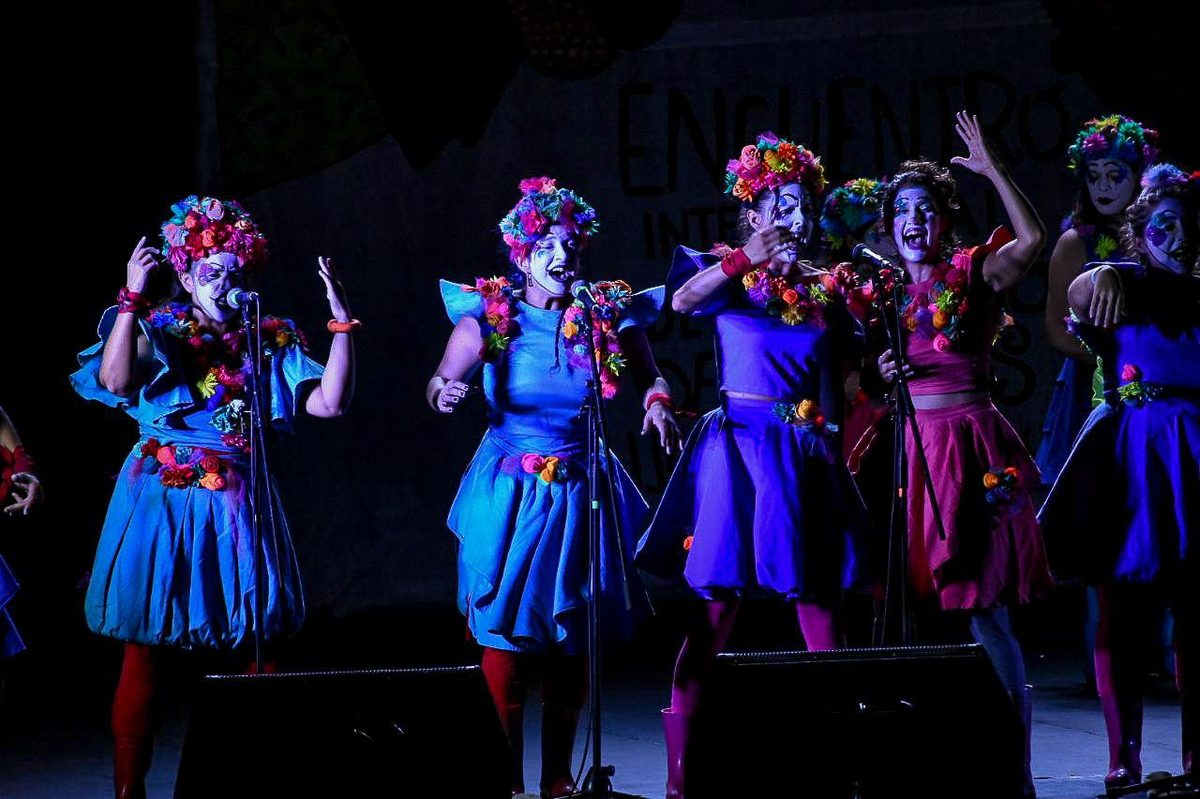
The form is not a museum piece. Murga joven (young murga) is a parallel youth movement and competition — its own Encuentro de Murga Joven in Montevideo — where younger, often less traditional groups experiment with the genre. It has been the seedbed for a lot of the energy and several of the groups that later broke into the senior competition, and it is where you can watch murga evolving in real time: looser, more inclusive, sometimes more openly political, and increasingly a space where women perform a tradition that was overwhelmingly male for most of its history.
How to actually see murga as a visitor
Here is the practical core, because knowing what murga is does you no good if you can’t find one. To catch murga Montevideo locals love, you have to know how the season works. It runs from late January to early March — the world’s longest carnival — and there are two very different ways to watch.
The tablados: where murga really lives
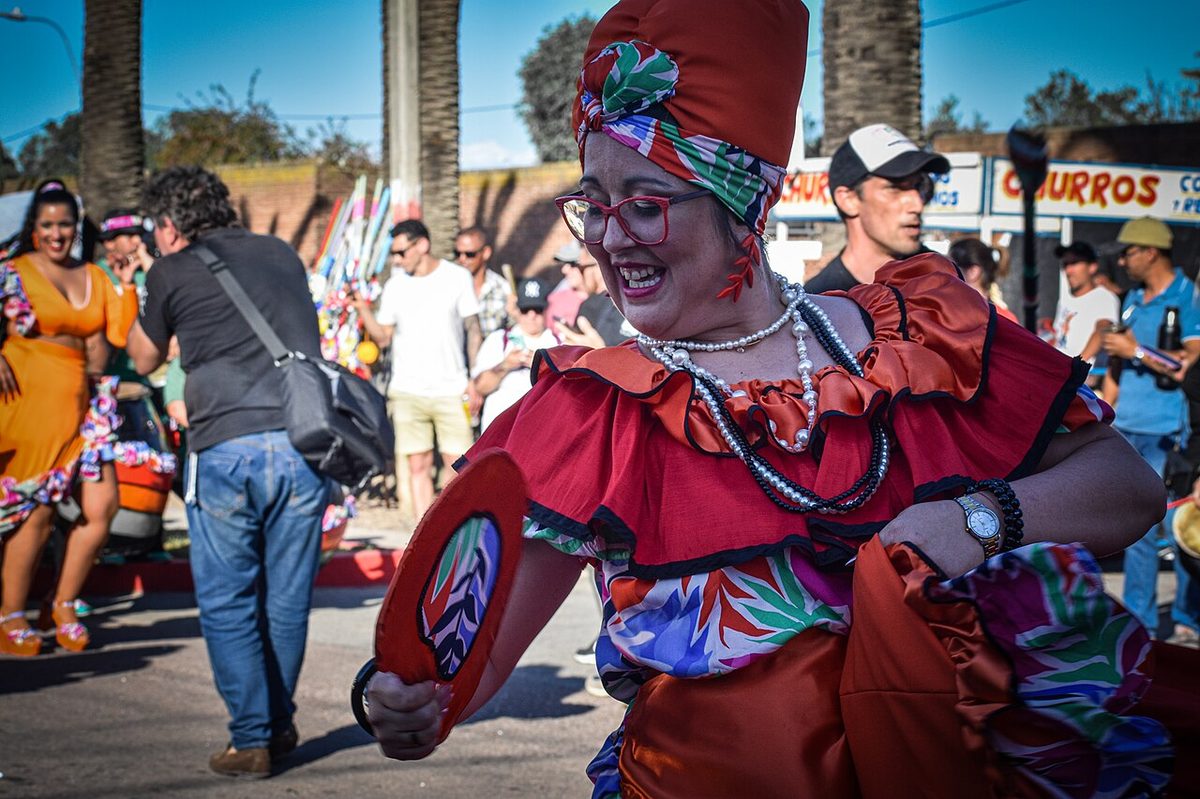
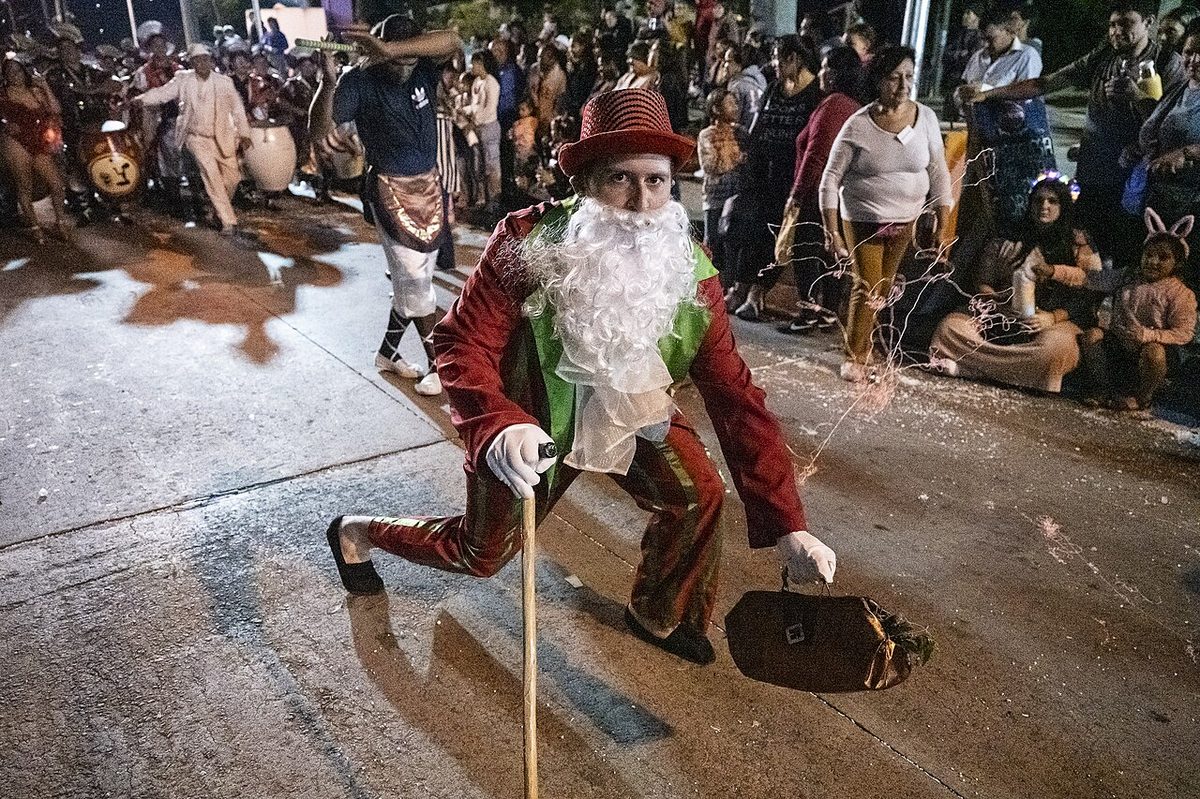
A tablado is a temporary neighbourhood stage, thrown up on a street, a plaza or a club courtyard for the carnival weeks. The tablados Montevideo sets up are scattered right across the city, so there’s almost always one near you. This is the soul of it. Most tablados run several groups a night — typically four to seven acts, a mix of murgas and other categories — so you sit through a whole evening’s programme rather than a single show. The atmosphere is local and unfussy: families, folding chairs, thermoses of mate, kids underfoot. Tickets are cheap, sometimes only a few hundred pesos, and you buy them at the gate. Some tablados are free or close to it.
You’ll find listings during the season through the city’s carnival channels and the organisers’ sites; ask at your guesthouse, because the circuit shifts and the best neighbourhood tablados are word-of-mouth. If you only do one murga thing, make it a tablado, not the televised final. The competition is more polished; the tablado is more alive.
The Teatro de Verano: the big stage
For the official competition, you buy tickets to the Teatro de Verano in Parque Rodó — these are more expensive and sell out for the marquee nights, especially the finals. The production values are higher and you may catch the famous groups at their absolute peak. It is a grand night out. Just know you’re seeing murga as a contest, with judges and a scoreboard, rather than as a neighbourhood ritual.
A couple of logistics worth flagging. Shows start late by northern-hemisphere standards — often 9pm or later — and run into the small hours, so plan your night and your ride home accordingly; taxis and apps work fine but get busy at chucking-out time. Bring layers even in summer, because the open-air venues cool down after midnight. And if carnival is the reason you’re timing the whole trip, build it into a wider plan using our Uruguay itinerary so you’re not stuck in Montevideo for the entire six weeks waiting for the one show you want to see.
If you arrive before carnival
Come in early-to-mid January and you can do something even the official guides love: go to a rehearsal. Groups practise in local clubs, sports centres and open-air parks in the weeks before the season, and locals turn up with their families to watch, mate in hand. No costumes, no make-up, no tickets — just the raw music being built. It’s one of the most genuinely Uruguayan evenings you can have.
The honest drawback
I have to be straight with you, because most articles won’t be: a huge amount of murga is lost on a foreigner, and no amount of enthusiasm fixes that on its own. The entire art form is built on dense, specific, of-the-moment references to Uruguayan politics, scandals and personalities, sung at speed in thick Rioplatense Spanish stuffed with local slang. Even fluent Spanish speakers from elsewhere miss the jokes. You will hear the crowd erupt and have no idea why.
The fix is simple and worth it: go with a local who can lean over and translate the punchlines, or book one of the carnival tours run by guides who specialise in exactly this. Someone whispering “okay, that’s the finance minister, and that line is about the bus strike” turns a beautiful but baffling concert into the sharpest comedy you’ve seen all year. Don’t try to crack murga cold. Bring a translator-friend, and the wall comes down.
Murga Uruguay: your questions answered
What is murga in simple terms?
Murga is a Uruguayan carnival genre of musical theatre: a chorus of around fifteen costumed performers, backed by three drummers, who sing forty-five minutes of satirical commentary about the past year’s politics and society. Think of it as a singing, joking, occasionally heartbreaking newspaper editorial performed in clown make-up. It is the most beloved category of the wider Montevideo carnival.
Where can I see murga in Montevideo?
Two places. Neighbourhood tablados — temporary street stages across the city, cheap and full of locals — are where murga feels most real, with several groups a night. The Teatro de Verano in Parque Rodó hosts the official televised competition, which is more polished and more expensive. Both run from late January into early March. See our Montevideo city guide for getting around.
What’s the difference between murga and the candombe drumming?
They’re different art forms within the same carnival. Murga is stage theatre — a singing chorus performing satire. Candombe is Afro-Uruguayan drumming, and the great drum processions are the Desfile de Llamadas, where comparsas (drumming-and-dance troupes) parade through the streets. You watch murga sitting down; you watch the llamadas from the kerb as they pass.
Do I need to speak Spanish to enjoy murga?
You’ll enjoy the sound, the costumes and the energy regardless. But the content — the satire that is the whole point — relies on fast Uruguayan Spanish and very local references, so most of the jokes will pass you by without help. Go with a local friend or a specialist carnival guide who can translate the punchlines in real time. It transforms the experience completely.
When is the best time to come for murga?
Carnival runs late January to early March, peaking in February. Arrive in early-to-mid January and you can also catch open rehearsals, which are free and wonderful. February is high summer and busy, so plan ahead — our guides to the best time to visit Uruguay and Uruguay in summer cover the practical timing and weather.
Is murga only in Montevideo?
Montevideo is the heartland and where the big competition and the densest tablado circuit are. Smaller carnivals and murga groups exist elsewhere in the country, but if murga is your goal, base yourself in the capital. It’s one of the most distinctive of all the things to do in Uruguay and a centrepiece of what the country is culturally known for.
Final thoughts
Murga rewards effort like few things I’ve experienced as a traveller. On the surface it’s a loud choir in face paint; underneath it’s a hundred years of a small country talking to itself out loud — laughing at power, grieving its losses, and refusing to shut up, even when shutting up was the law. You won’t catch every joke. You don’t need to. Stand at a tablado, feel the chorus land a chord, watch the faces around you, and bring someone who can let you in on the rest. It is, for my money, the truest window there is into Uruguayan culture — and a reason in itself to time a trip around carnival.
Credits & sources
Sources & further reading
- Uruguay Natural (Ministry of Tourism) — Murga
- Guru’Guay — Carnival in Uruguay: what is murga?
- Teatro de Verano — official carnival venue, Montevideo
- Wikipedia — Murga
Photo credits
All images via Wikimedia Commons: Murga Uruguay Chorus Tablado by a Wikimedia Commons contributor (CC BY-SA 4.0); Murga Bateria Percussion by Berna Gaitán Otarán (CC BY-SA 4.0); Teatro De Verano Concurso Oficial by Ignacio Turell (CC BY-SA 4.0); Tablado Barrio Montevideo Stage by a Wikimedia Commons contributor (CC BY-SA 4.0); Murga Costumes Makeup Detail by Mediared (CC BY-SA 4.0).