Montevideo Carnival: The World’s Longest Party (2026)
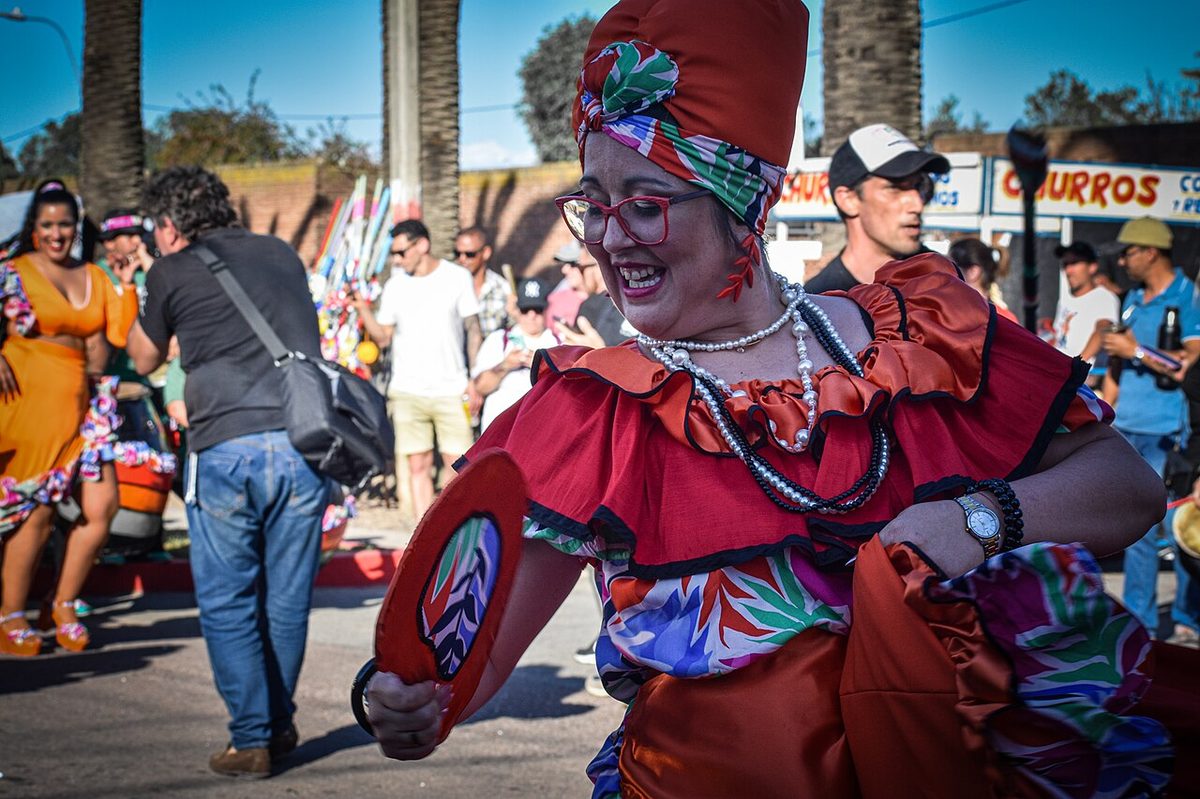
My first taste of it was a tablado in the Prado on a warm February night: a friend put a litre of beer in my hand and I watched a murga of seventeen men in painted faces sing a forty-minute show that was half opera, half stand-up comedy, half political rant. The crowd knew every word. I knew none of them. Best night I’d had in months.
Montevideo Carnival is the longest carnival in the world: a roughly 40-day season running from late January into early March, with exact dates that shift annually. It’s not one event but dozens, including an opening parade, a months-long competition at an open-air theatre, nightly neighbourhood stages, and five performance categories. This is your full planning guide.
Think of this article as the umbrella. I’ll walk you through how the season is structured, what the five categories actually are and how they differ, how ticketing really works (it’s stranger than you’d guess), and and where to watch as a culture obsessive, a family, or someone with just one free night in town. I keep two of the biggest set-pieces light here on purpose: the candombe drumming tradition and the famous Desfile de Llamadas each deserve their own deep-dive, so I link out rather than repeat myself. What you’ll get instead is the full shape of the season and honest, first-hand advice on how to actually attend.
One thing to set expectations early. If you arrive picturing Rio de Janeiro, you’ll be confused. Uruguay carnival is more spread out, more local, less of a single televised spectacle and more of a forty-night habit the whole city falls into. That’s exactly why I love it, and it’s also the one real drawback I’ll be honest about throughout. Carnival here rewards people who lean in, not people who want one tidy headline event.
| Event | Rough timing | Where | Tickets |
|---|---|---|---|
| Desfile Inaugural (opening parade) | Last Thursday of January, ~7:30pm | Avenida 18 de Julio, Plaza Independencia to Plaza Cagancha | Free to stand; paid grandstand seats via Abitab |
| Escuelas de Samba parade | Day after the opening parade (late Jan) | 18 de Julio | Free to stand |
| Concurso Oficial (official competition) | Late Jan to early March, ~3 rounds, most nights | Teatro de Verano Ramón Collazo, Parque Rodó | Numbered seats via Tickantel / box office |
| Desfile de Llamadas (candombe parade) | First or second Thursday and Friday of February | Isla de Flores, Barrio Sur and Palermo | Free to stand; paid grandstands via Abitab |
| Neighbourhood tablados | Nearly every night, late Jan to early March | Parks and plazas across the city | Around USD 10 or less; some free/subsidised |
| Museo del Carnaval | Year-round, Wed-Sun 11:00-17:00 | Ciudad Vieja, on the rambla | Low entry fee; summer tablado in its courtyard |
How the season is actually structured
Here is the mental model that finally made it click for me. Montevideo Carnival has three layers running in parallel for about six weeks, and you can dip into any of them on any given night.
Layer one is the big street parades: the opening Desfile Inaugural and, a couple of weeks later, the Desfile de Llamadas. These are the postcard moments, the ones with floats, drums and grandstands. Layer two is the Concurso Oficial de Agrupaciones Carnavalescas, the official competition, where groups compete over several rounds at one fixed venue. Layer three is the tablados, the neighbourhood open-air stages (tablado simply means “stage” or “platform”), where the same competing groups tour the city performing their shows night after night. Most visitors only ever hear about layer one. The locals live in layers two and three.
Because the whole thing is keyed to the southern-hemisphere summer rather than to Lent, the dates move every year and the season can stretch or shrink depending on the weather. As a rough anchor: the opening parade lands on the last Thursday of January, the Llamadas fall in the first half of February, and the competition grinds on through to its finals in late February or early March. If you’re trying to pin exact 2026 dates, cross-check the official city calendar close to your trip, and have a look at our wider guide to what Uruguay is like in summer for context on the season as a whole.
The Desfile Inaugural: opening night on 18 de Julio
Everything kicks off with the Desfile Inaugural, the inaugural parade, on the last Thursday of January. It runs down Avenida 18 de Julio, the city’s main artery, usually starting around 7:30pm and pushing from Plaza Independencia toward Plaza Cagancha. Floats, giant puppets, dancers and a procession of carnival groups parade past for hours. The next night, the Escuelas de Samba (samba schools) take the same route in their own Brazilian-inflected parade.
Honestly? The opening parade is my least favourite of the headline events. It’s long, it’s heavy on sponsor banners and advertising floats, and it can feel more like a corporate procession than a performance. If you happen to be in town, go and soak up the atmosphere for an hour from the free pavement crowd. But I wouldn’t build a trip around it. The Llamadas and the competition shows are where the real artistry lives. Avenida 18 de Julio is worth a daytime wander anyway if you’re exploring Montevideo for the first time.
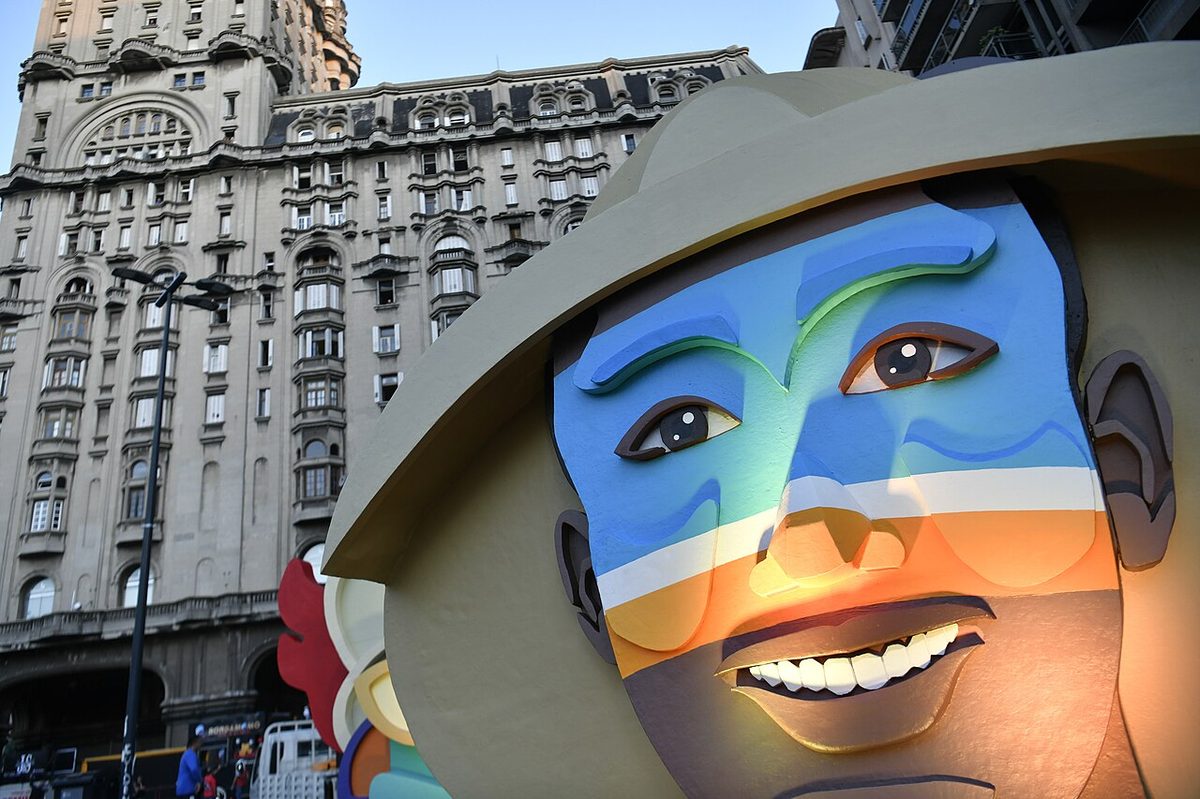
Practical note for opening night: you can watch free from the pavement, but you’ll be standing for a long time and the good spots fill up. Paid grandstand seats are sold through Abitab (more on that machine below). Pickpocketing is rare here by big-city standards, but it’s still a dense crowd at night, so keep your phone zipped away. Uruguay generally feels calm and safe, and if that’s on your mind our take on whether Uruguay is safe goes deeper.
The Concurso Oficial: the beating heart of it all
If you take one thing from this guide, take this: the competition is the real carnival. The Concurso Oficial de Agrupaciones Carnavalescas (the official contest of carnival groups) is where the season is won and lost, and where you’ll see the most polished, ambitious work. Around forty groups compete across several elimination rounds, and the whole thing is treated with the seriousness of a national sporting championship. People argue about the results in cafés for weeks.
It all happens at the Teatro de Verano Ramón Collazo, an open-air amphitheatre in the Parque Rodó neighbourhood, right by the rambla (the rambla is Montevideo’s long waterfront promenade). Carnival people half-jokingly call it the “Templo de Momo,” the Temple of Momo, after the mythological figure of carnival. It seats somewhere north of five thousand on numbered chairs, and on a good night with a beloved murga on stage, the place roars.
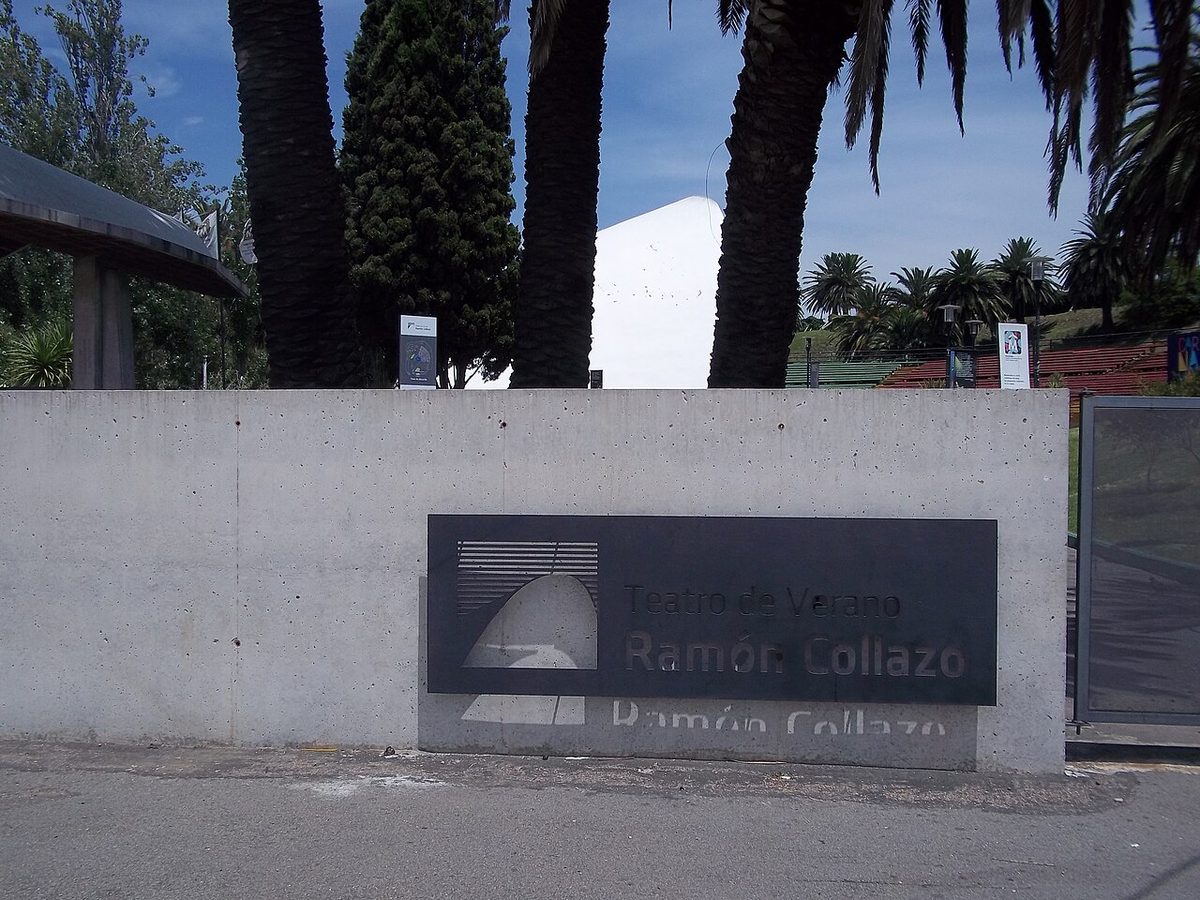
A competition night is long. Several groups perform back to back, each with a show that can run forty-five minutes or more, so you’re easily looking at four or five hours and a finish well after midnight. That’s not a complaint, it’s a warning: pace yourself, bring a layer for when the river breeze picks up, and don’t plan anything energetic for the next morning. The crowd treats it like a marathon picnic, and so should you.
Where the tablados fit in
While the competition runs at the Teatro de Verano, the same groups fan out across the city to perform at tablados, the open-air neighbourhood stages that pop up in parks, plazas and car parks for the season. This is carnival at its most democratic. A tablado night is cheaper, more relaxed, and closer to how Uruguayans have always experienced carnival: in their own barrio, with neighbours, kids and a thermos of mate.
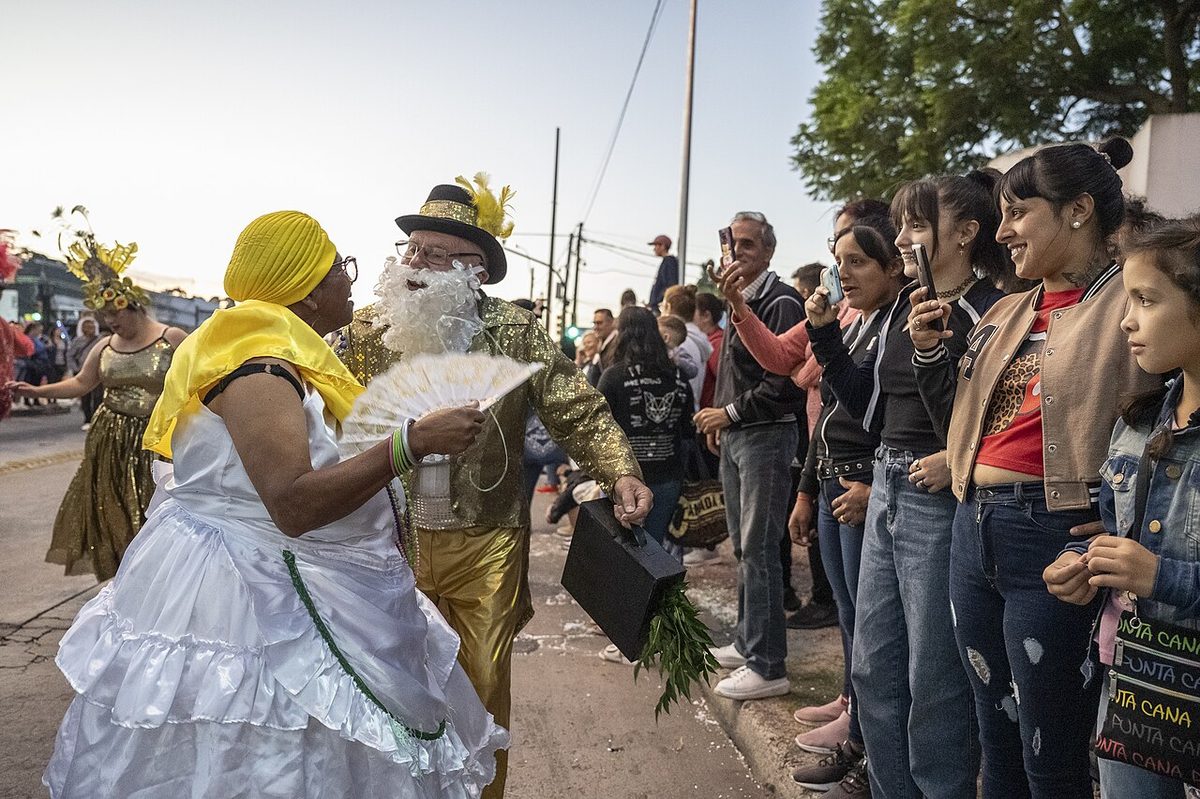
The catch is that line-ups change every single night and the quality varies wildly. One evening you might catch three of the best murgas in the country; the next, at a different stage, a string of amateur acts and a lot of dead air. Locals check the daily listings obsessively to figure out which tablado has the strongest bill that night. The bigger, better-known tablados, often in neighbourhoods like the Prado or Malvín, are your safest bet, and a few of the largest sell advance tickets through Abitab. Smaller ones you simply pay at the gate. For more context on how Montevideo’s neighbourhoods string along the coast, our guide to the Rambla of Montevideo is a good companion read.
The five carnival categories, decoded
This is the part most English-language guides skip, and it’s exactly what you need to enjoy a show. The competition is split into five categories, and once you can tell them apart, every night makes more sense. Here’s my plain-English take on each, in the order I’d rank them for a first-timer.
Murgas: the soul of it
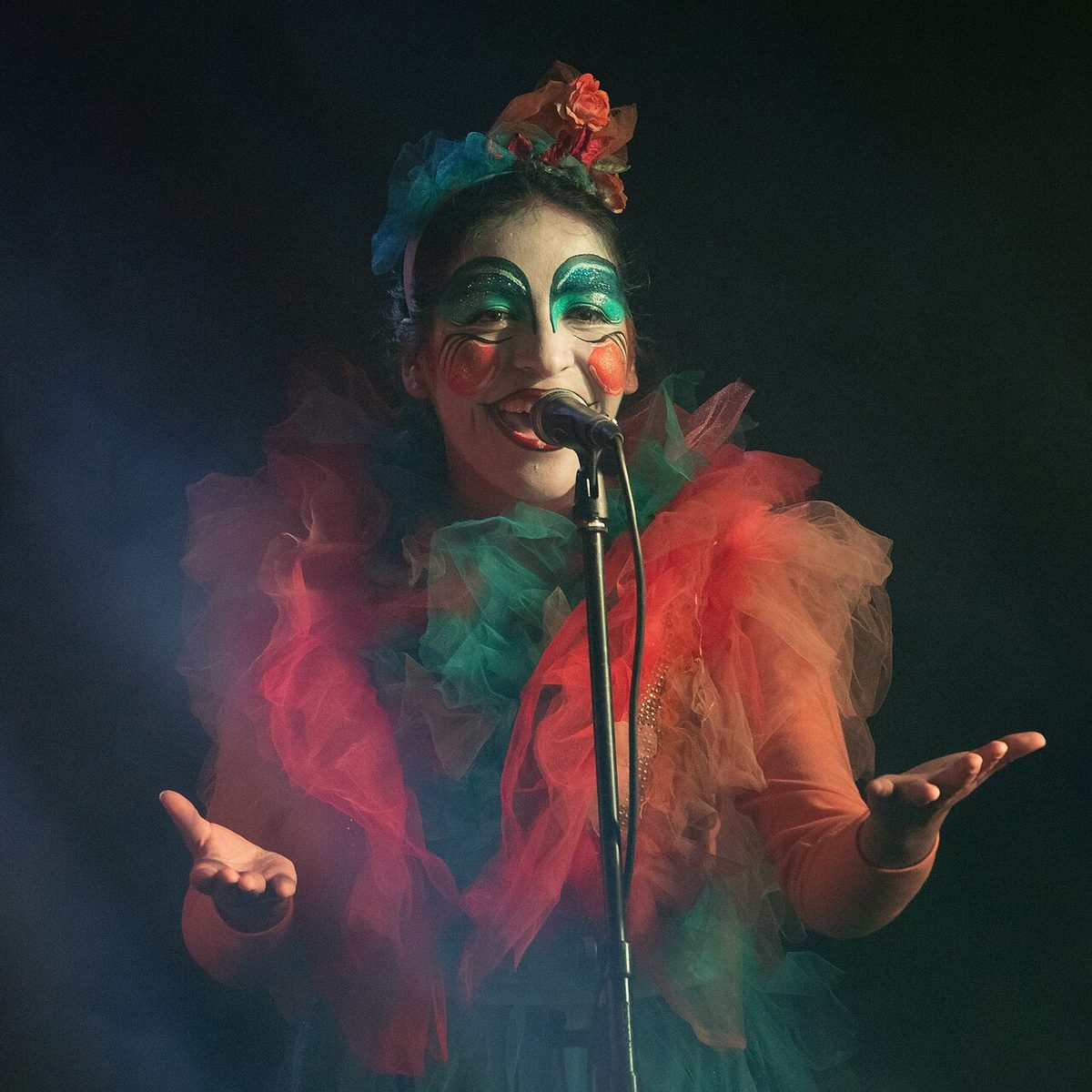
Murga (a uniquely Uruguayan musical-theatre form with distant roots in Cádiz, Spain) is the category most people fall in love with. Picture a chorus of fourteen to seventeen performers in elaborate costumes and heavy painted faces, backed by just three percussion instruments: bass drum, snare and cymbals. They sing in tight harmony, but the show is really a piece of theatre, satirising the past year’s politics, scandals and absurdities. It is sharp, emotional and frequently very funny. The catch for foreigners is obvious: it’s all in rapid-fire Spanish, packed with local references, and a lot of the jokes will sail past you. I still get goosebumps at the big choral finales even when I miss half the words. Murga has its own long story, and I dig into it properly in our dedicated murga article (link in the further reading below).
Comparsas and candombe: the drums
Comparsas (troupes that perform candombe, the Afro-Uruguayan drumming-and-dance tradition) bring the thunder. These are the groups behind the famous Llamadas parade, built around the rolling polyrhythm of the tamboril drums and a cast of traditional dancing characters. In the competition they’re officially the “sociedades de negros y lubolos.” I’m keeping candombe deliberately brief here because it deserves its own deep-dive, and the Desfile de Llamadas does too. Both are linked in the further-reading section so you can go properly down that rabbit hole.
Parodistas: theatre with a punchline
Parodistas lean hardest into staging and storytelling. They take a historical episode, a film, or a famous figure and build an elaborate, often lavish theatrical parody around it, complete with scenery and costume changes. There’s singing, but the spectacle and the narrative carry the show. If you like big production values, this is your category, and it can be easier to follow than murga because the visual story does a lot of the work.
Humoristas: the comedians
Humoristas are exactly what they sound like: the comedy specialists. Less focused on the choral singing of a murga, they’re after laughs above all, often with surreal premises and rapid sketches. As with murga, the humour is verbal and intensely local, so this is the category where a language barrier bites hardest. Go with a Uruguayan friend who can lean over and translate the best lines.
Revistas: feathers and dance
Revistas round out the five. These are the music-and-dance spectacles, the closest thing Montevideo has to the glitter-and-feathers image people associate with Rio, with big choreographed numbers and showgirl-style costumes. They have the most freedom in choosing themes, and they’re a crowd-pleasing, easy-to-enjoy watch even if you don’t speak a word of Spanish.
The Museo del Carnaval: carnival when it’s not carnival
Visiting outside the season, or just want the backstory before the shows? The Museo del Carnaval in Ciudad Vieja (Montevideo’s old town) is the one place that makes sense of everything I’ve described above. It sits on the rambla at Rambla 25 de Agosto de 1825, a short walk from the port market, and it’s packed with the costumes, drums, masks and history of all five categories. Seeing a murga costume up close, with its layers of fabric and hand-painted detail, gave me a whole new respect for the performers sweating inside them for forty minutes.
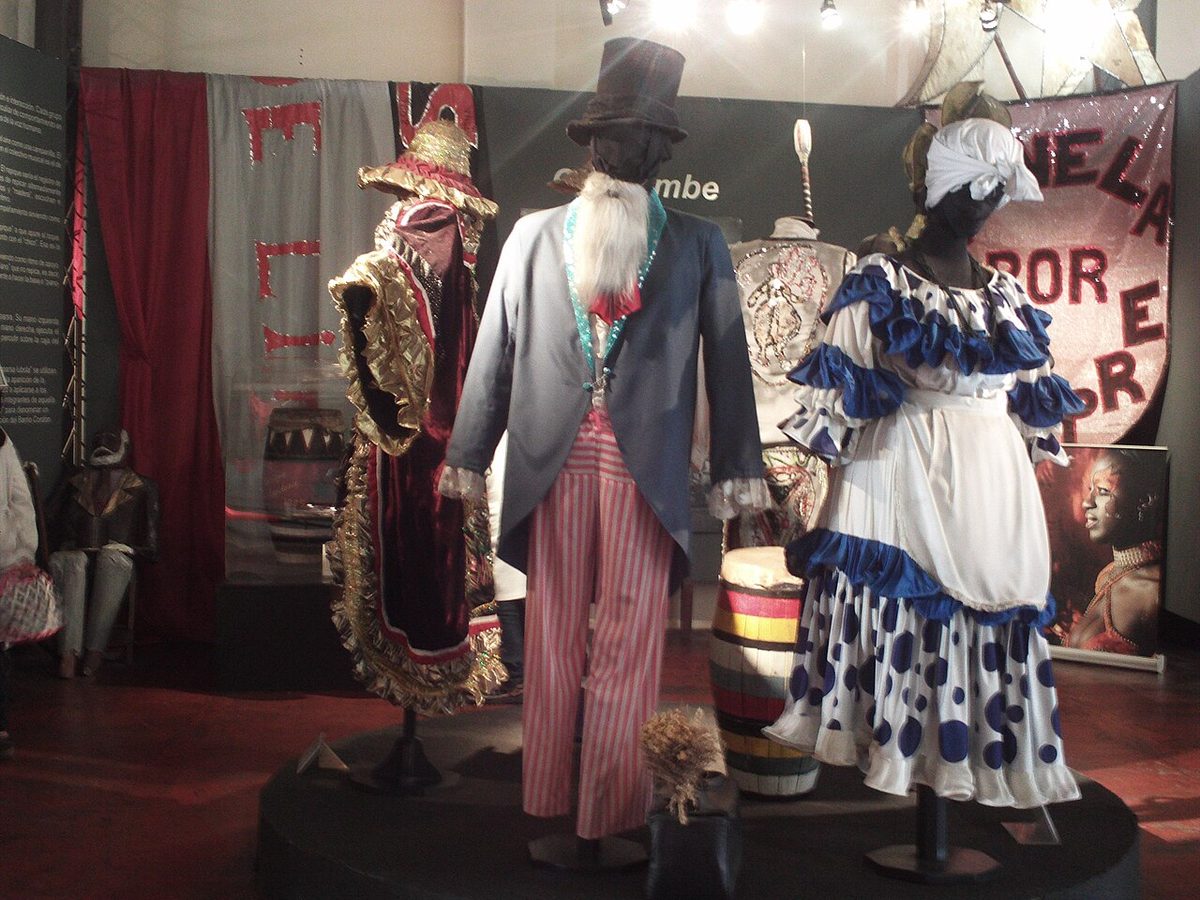
Opening hours run Wednesday to Sunday, roughly 11:00 to 17:00, and entry is cheap. Here’s the lovely twist: in summer, the museum’s own courtyard becomes a tablado, co-run with the neighbourhood, so you can watch live carnival groups in an intimate Old City setting rather than a giant amphitheatre. It’s one of my favourite recommendations for anyone nervous about the late, crowded big venues. Pair it with a wander around Ciudad Vieja and lunch at the nearby Mercado del Puerto and you’ve got a perfect carnival-themed day even in the off-season.
Tickets, money and the genuinely odd mechanics
Now the practical stuff, because this trips people up more than anything else. Ticketing for Montevideo Carnival is split across two systems, and one of them is gloriously old-fashioned.
For the official competition at the Teatro de Verano, seats are numbered and increasingly sold online and by phone through Tickantel, with a box office at the venue too. Easy enough. For the big street parades (the Desfile Inaugural and the Llamadas) and several of the larger tablados, tickets have traditionally been sold through Abitab, a chain of payment-and-lottery shops you’ll see all over Uruguay. The quirk: those have historically been cash-only, bought in person at an Abitab counter, often up until 5pm the day before the event. No app, no international card, no buying from abroad. You have to physically be in Uruguay with pesos in hand.
Prices, last I checked, are wonderfully low by international standards. Reckon on around USD 10 or less for a parade grandstand seat or a tablado, and some neighbourhood tablados are government-subsidised and cheaper still, or free. Bring small bills; many smaller venues only take cash at the gate. If you want the full picture on payments and ATMs before you go, our rundown of money and currency in Uruguay covers it, and whether Uruguay is expensive sets expectations on overall costs.
My honest take: don’t stress too much about the big-parade tickets. Outside the very biggest nights they rarely sell out, and you can always watch the parades free from the street. The thing actually worth pre-planning is which tablado or competition night to attend, because the line-ups, not the tickets, are what make or break the evening.
Where to watch, by the kind of traveller you are
Carnival rewards different plans for different people. Here’s how I’d steer you depending on what you’re after.
If you want the deepest, most authentic night
Go to a competition night at the Teatro de Verano on a date when a top murga or comparsa is performing, and accept that you won’t catch every joke. Buy a numbered seat through Tickantel, take a jacket, and treat it as a long, glorious endurance event. This is carnival at its most serious and skilled.
If you’re travelling with family or kids
Pick a neighbourhood tablado, especially one of the bigger, well-reviewed ones, or the intimate stage at the Museo del Carnaval. Shows start earlier, the mood is gentle, and Uruguayan carnival is famously family-friendly: kids roam around with painted faces while parents picnic. It’s a world away from the adults-only intensity people imagine. If you’re planning a wider family trip, our guide to visiting Uruguay with kids has more.
If you only have one free night
Message a local or check the daily tablado listings, find the stage with the strongest line-up that evening, and just go. Even a single tablado will give you murga, maybe a comparsa, and a proper taste of the thing. Don’t agonise; the spontaneity is half the charm. While you’re sorting your itinerary, our broader list of things to do in Uruguay and the dedicated Montevideo itinerary will help you slot carnival into the rest of your days.
If you want the famous parade spectacle
Time your visit for the Desfile de Llamadas in early February. It’s the candombe parade everyone photographs, and it earns its reputation. I keep it brief here because it has its own dedicated guide, but if drums and dancers down a narrow Barrio Sur street are your dream, that’s the night to chase.
Weather, timing and surviving the late nights
Practical realities worth planning around. Carnival falls in the height of Uruguay’s summer, so days are hot and humid and evenings are usually warm, but the river breeze off the Río de la Plata can turn cool late at night, especially at the open-air Teatro de Verano. Bring a light layer. Rain is the season’s wild card: tablados and parades are routinely postponed when it pours, with the Llamadas in particular often pushed to the same days a week later. Build slack into your plans and don’t book a non-refundable onward flight for the morning after the show you most want to see.
Late starts are the other adjustment. Shows here run on Uruguayan time, meaning things kick off later than you’d expect and finish past midnight. Embrace the siesta-and-late-dinner rhythm rather than fighting it. For the bigger picture on climate and the best window to come, see our notes on the best time to visit Uruguay and the country’s weather through the year.
The one honest drawback
Let me be straight with you, because too many articles won’t be. Montevideo Carnival is not Rio, and if you come expecting a single, overwhelming, photogenic spectacle, you may leave a little underwhelmed. It is spread thin across six weeks and dozens of venues; there’s no one night that captures the whole thing, and a lot of the magic is verbal and deeply local. The shows are in fast Spanish, layered with references to Uruguayan politicians and pop culture you’ve never heard of, and without a local friend or some homework, a chunk of it will pass you by. That diffuse, insider-y quality is precisely what makes it feel authentic rather than packaged, but it does ask more of you than a turn-up-and-gawp festival. Come curious, plan a couple of specific nights, and you’ll get it. Come passive, and you might just see some men in face paint shouting in a language you don’t speak.
Montevideo Carnival: your questions answered
When is carnival in Uruguay, and what are the dates?
Carnival in Uruguay runs for roughly 40 days from late January into early March, and the exact dates shift every year because the season is tied to the southern summer rather than to Lent. As a rule of thumb, the opening parade is the last Thursday of January and the Llamadas fall in early February. Always check the official Montevideo calendar close to your travel dates.
How much do Montevideo Carnival tickets cost?
Tickets are cheap by global standards. A grandstand seat at a parade or a spot at a tablado typically runs around USD 10 or less, last I checked, and some neighbourhood tablados are subsidised or free. Competition seats at the Teatro de Verano are sold through Tickantel; parade and big-tablado tickets have traditionally been cash-only at Abitab shops inside Uruguay.
Is Montevideo Carnival worth visiting, or should I go to Rio instead?
They’re different animals. Rio is one massive, concentrated spectacle; Montevideo is a 40-night, deeply local season with five performance categories and barely any tourists. If you want feathers-and-floats on a single night, Rio wins. If you want something authentic, affordable and uncrowded that rewards curiosity, Montevideo is genuinely special. I’d happily return to the latter every year.
What’s the difference between the Desfile Inaugural and the Llamadas?
The Desfile Inaugural is the season’s opening parade down Avenida 18 de Julio in late January, with floats and all five categories, but heavy on sponsor banners. The Desfile de Llamadas, in early February, is the candombe-only parade through Barrio Sur and Palermo, built around drumming troupes. The Llamadas is the more thrilling, photogenic of the two by a distance.
Do I need to speak Spanish to enjoy it?
It helps a lot, honestly. Murga and humorista shows are verbal, fast and crammed with local references, so without Spanish you’ll miss much of the wit. That said, comparsas (candombe drumming) and revistas (dance spectacles) are visual and musical, so they translate fine. Go with a Uruguayan friend if you can, and lean toward the drum-and-dance categories if language is a barrier.
Where should I stay for carnival in Montevideo?
Base yourself centrally so you can reach the Teatro de Verano in Parque Rodó and the Ciudad Vieja tablados without long late-night journeys. Neighbourhoods near the centre and the rambla put you within easy reach of most venues. Our guide to where to stay in Montevideo breaks down the best areas for first-time visitors.
Final thoughts
Stripped to its essence, my advice is simple. Don’t treat Montevideo Carnival as a box to tick on one big night; treat it as a season to dip into, and choose your nights with a little intention. Catch one competition show at the Teatro de Verano for the artistry, one neighbourhood tablado for the local warmth, and if your timing allows, the Llamadas for the drums. Bring a jacket, bring cash, bring patience for the late starts, and ideally bring a Uruguayan friend or at least a willingness to not understand everything.
Years on, the thing I remember isn’t a single float or finale. It’s the feeling of being folded into something the whole city does together for six weeks every summer, almost entirely for itself rather than for visitors. That’s rare. It’s also, to me, exactly what makes this small country worth understanding more broadly, which is what our wider guide to Uruguayan culture is all about. Carnival is the loudest, longest expression of it.
Credits & sources
Sources & further reading
- Museo del Carnaval, official City of Montevideo page (museum, hours and history)
- Teatro de Verano Ramón Collazo, official venue site (competition programme and tickets)
- Guru’Guay on Montevideo carnival (long-running local English-language guide)
- Uruguayan Carnival overview on Wikipedia (history and category background)
Photo credits
All images via Wikimedia Commons: Montevideo Carnival Parade Crowd by Fcoriaph (CC BY 4.0); Desfile Inaugural 18 De Julio by Santiago Mazzarovich (CC BY-SA 4.0); Teatro De Verano Ramon Collazo by Ganímedes (CC BY-SA 3.0); Neighborhood Tablado Stage by a Wikimedia Commons contributor (CC BY-SA 4.0); Murga Performer Montevideo by Original: Camilo Lopez-Moreira
Derivative work: Radomianin (CC BY-SA 4.0); Museo Del Carnaval Ciudad Vieja by Ypsilon from Finland (CC0).
