Semana Criolla: Montevideo’s Gaucho Rodeo Week (2026)
The first thing that hit me at El Prado was the smell. Woodsmoke and grilling beef, horse, leather, crushed grass, and somewhere underneath it all the sugary tang of frying dough. I had walked in expecting a folk concert with some horses attached. What I got was a working slice of the Uruguayan countryside transplanted into a Montevideo park for a single week, complete with men in baggy trousers arguing about bloodlines and a kid no older than ten leading a saddled horse through the crowd as if it were a bicycle.
Put simply, the semana criolla is Uruguay’s biggest celebration of gaucho culture, held every year during Semana de Turismo (the country’s secular name for Easter week). The flagship event, the Semana Criolla del Prado, runs on the Rural del Prado grounds in Montevideo and draws more than 200,000 people. At its heart are the jineteadas, traditional horse-riding competitions, surrounded by folk music, criollo food, and rural craft stalls. The dates move each year with Easter.
A gaucho, for the uninitiated, is the South American cowboy of the pampas and rolling grasslands, a figure roughly as central to Uruguayan identity as the cowboy is to the American West, only still very much alive. Criollo means, loosely, “of the land here,” native-born, the rural Creole culture that grew out of Spanish settlers and the open range. The semana criolla takes that whole world, the horses and the asado and the guitar music, and parks it for a week in the capital.
What the Semana Criolla actually is
Strip away the romance and you have a week-long fair on the grounds of the Asociación Rural del Uruguay, in the Prado neighbourhood north of Montevideo’s centre. The Intendencia de Montevideo (the city government) has organised it since 1925, which makes it nearly a century old and one of the oldest fixtures on the country’s events calendar. The 2026 edition was the 99th. English-language coverage is thin, so if you have searched for “Criolla Week Uruguay” and found almost nothing, that is why; the country itself has run the festival under its Spanish name, Semana Criolla, since the 1920s.
It is, structurally, three things happening at once on the same site. There is the ruedo, the ring where the jineteadas (the bronco-riding contests) take place. There is a large stage where folclore acts and bigger-name musicians play through the night. And there is everything in between: rows of food stalls, artisan tents, displays of rural trades, bars, and a fairground feel that runs from late afternoon until very late. Families come in the daytime; the music crowd builds after dark.
What surprised me is how genuinely rural it feels despite being inside a capital city of 1.3 million. The riders are real, many of them from the interior, from places like Tacuarembó and Cerro Largo. The horses are real working stock. The asado smoke is real. This is not a museum re-enactment; it is the countryside coming to town, which is exactly what its founders intended back in the 1920s when they built a national story around Uruguay’s rural roots and even hired a film crew to record the spectacle for cinemas at home and abroad.
| What you’ll find | Where / when | Good to know |
|---|---|---|
| Jineteadas (the riding contests) | The ruedo (ring), afternoons | The main draw; seated tribune costs extra |
| Folclore and live music | Main stage, evening into night | National and regional acts; more than 1,000 artists across the week |
| Criollo food | Food stalls throughout | Asado, choripán, tortas fritas; cash helps |
| Artisan and rural stalls | Across the grounds, all day | Leatherwork, mate gear, knives, woollens |
| Payadores and folk dance | Smaller stages and peñas | Improvised sung verse; quieter, worth seeking out |
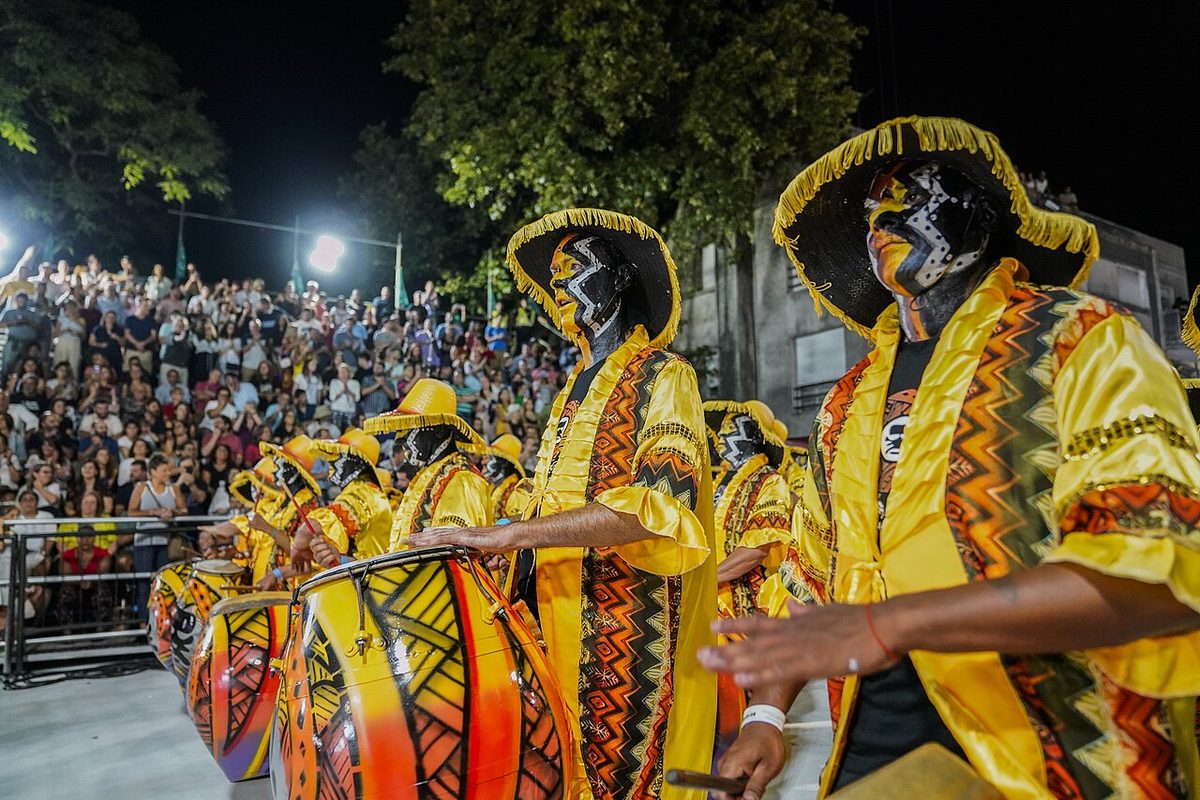
If you only know Montevideo for its summer Carnival, the candombe drums and the murga choirs, the semana criolla is the other half of the city’s festive year and a completely different register. Carnival is coastal, Afro-Uruguayan, urban. The criolla is inland, gaucho, rural. Both are core Uruguayan culture, and seeing both tells you more about the country than any guidebook chapter.
A short history: why the gauchos came to town
The festival was born in April 1925, organised by the city’s festivities commission on the Rural Association’s Prado grounds. That timing was not an accident. By the 1920s Uruguay was urbanising fast, the open-range gaucho life was already fading into nostalgia, and there was a deliberate effort to build a national identity that honoured the country’s rural roots. Putting horsemen and country skills on display in the capital, where most of the population now lived, was a way of saying: this is who we are.
There is a layer of politics worth knowing. Uruguay’s early-twentieth-century reformers, led by President José Batlle y Ordóñez, built one of the most aggressively secular states in the Americas. The official calendar stripped the religious names off Christian holidays. Holy Week became Semana de Turismo, “Tourism Week,” Christmas became the Día de la Familia, and so on. I dig into that whole secularising story in the guide to Semana de Turismo; the short version is that the country gave itself a week off in autumn and pointedly declined to call it Easter.
The semana criolla slotted neatly into that secular week. Instead of religious processions, Montevideo got gauchos. Nearly a hundred years later the arrangement holds: while much of Latin America observes Holy Week with solemnity, Uruguay watches bronco riders and eats fried dough. It is a very Uruguayan kind of holiday, and it tells you something about how the country sees itself.
When does it happen? The Easter problem
This is the single most confusing thing about planning a visit, so let me be plain. The semana criolla runs during Semana de Turismo, and Semana de Turismo tracks the Christian Holy Week, which is a moveable feast tied to the lunar calendar. That means the dates jump around the calendar every year, landing anywhere from late March to late April.
Take 2026: the Semana Criolla Montevideo hosts each year, now in its 99th edition, ran from 29 March to 5 April. In other years it has fallen weeks later. So if you are building a trip around it, do not assume a fixed date. Work out when Easter falls that year, and the criolla will sit in the week leading up to it. Uruguay’s autumn (March to May) is, for what it is worth, one of the nicer times to be in the country anyway, mild and gold-leaved; the autumn season guide covers what else is going on. For the broader question of timing a trip, the best-time-to-visit overview is the place to start.
The jineteadas: eight seconds of chaos
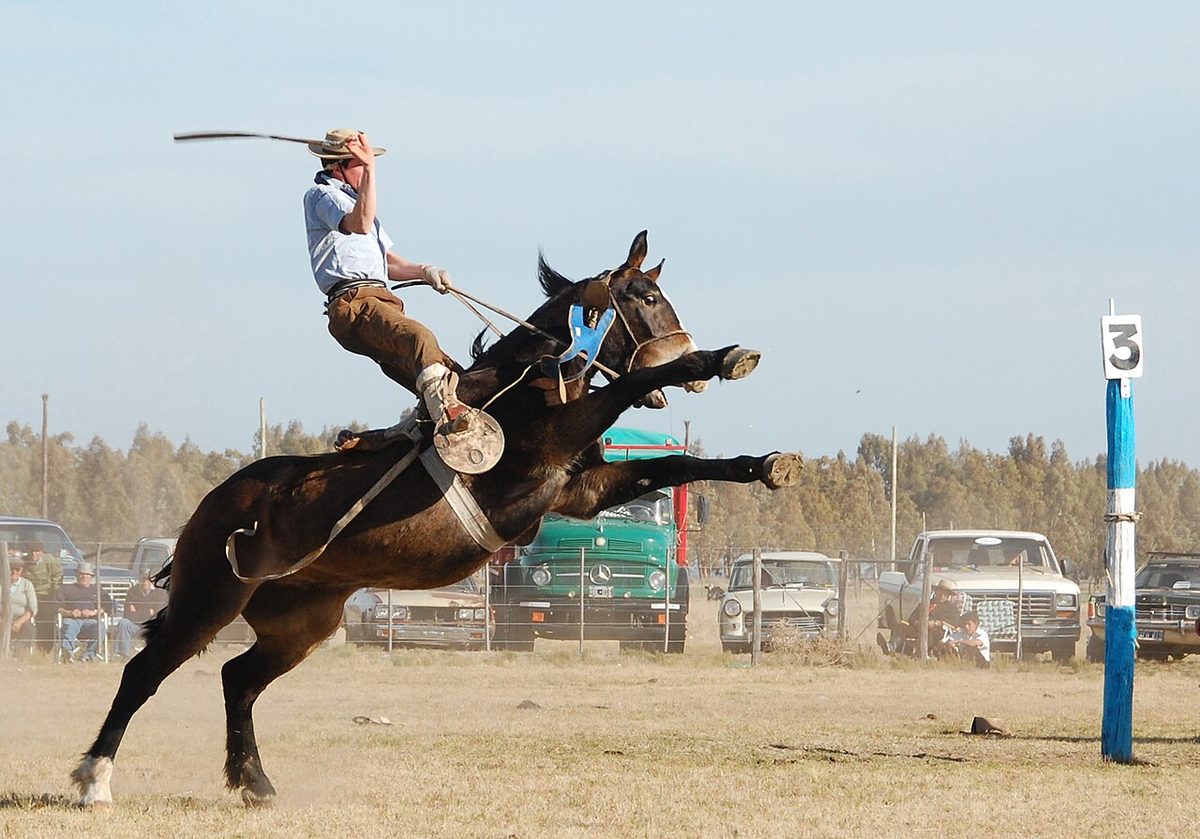
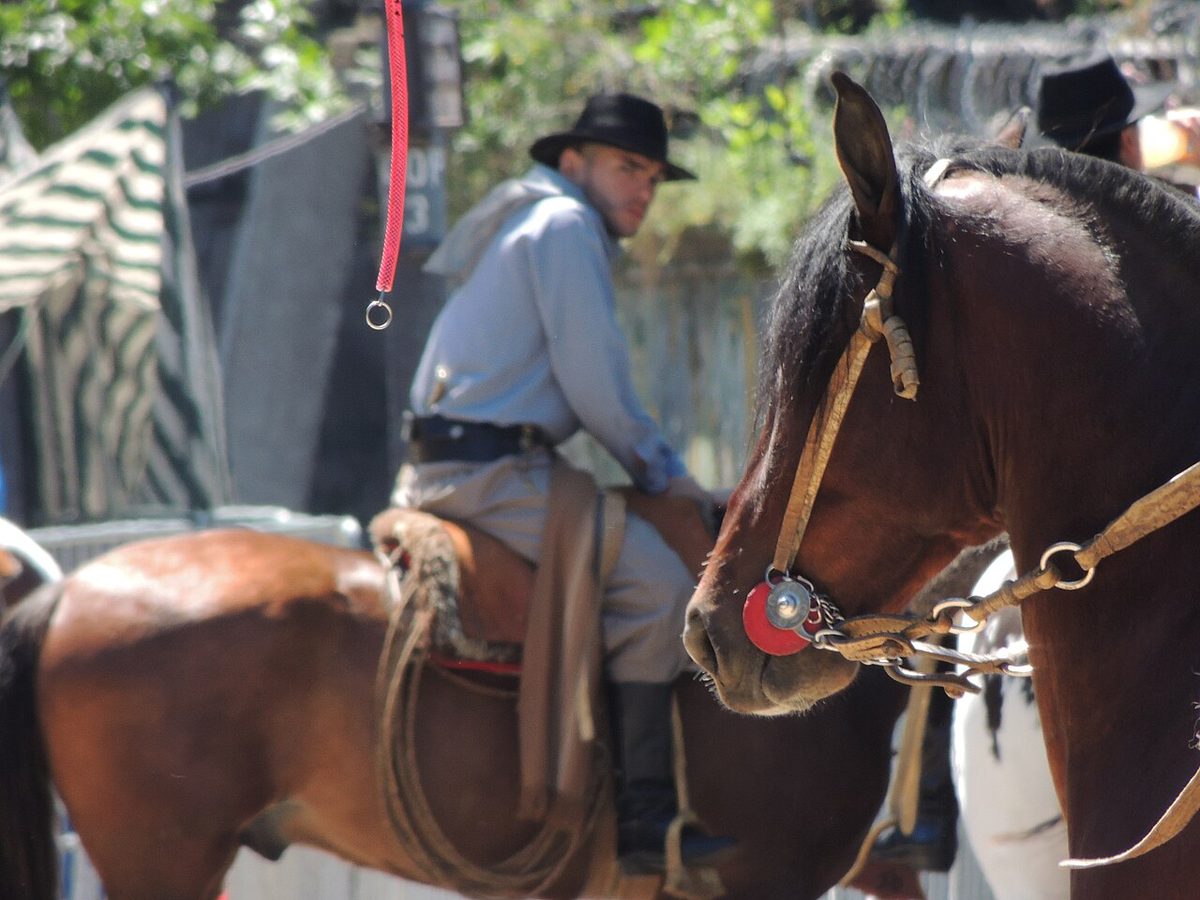
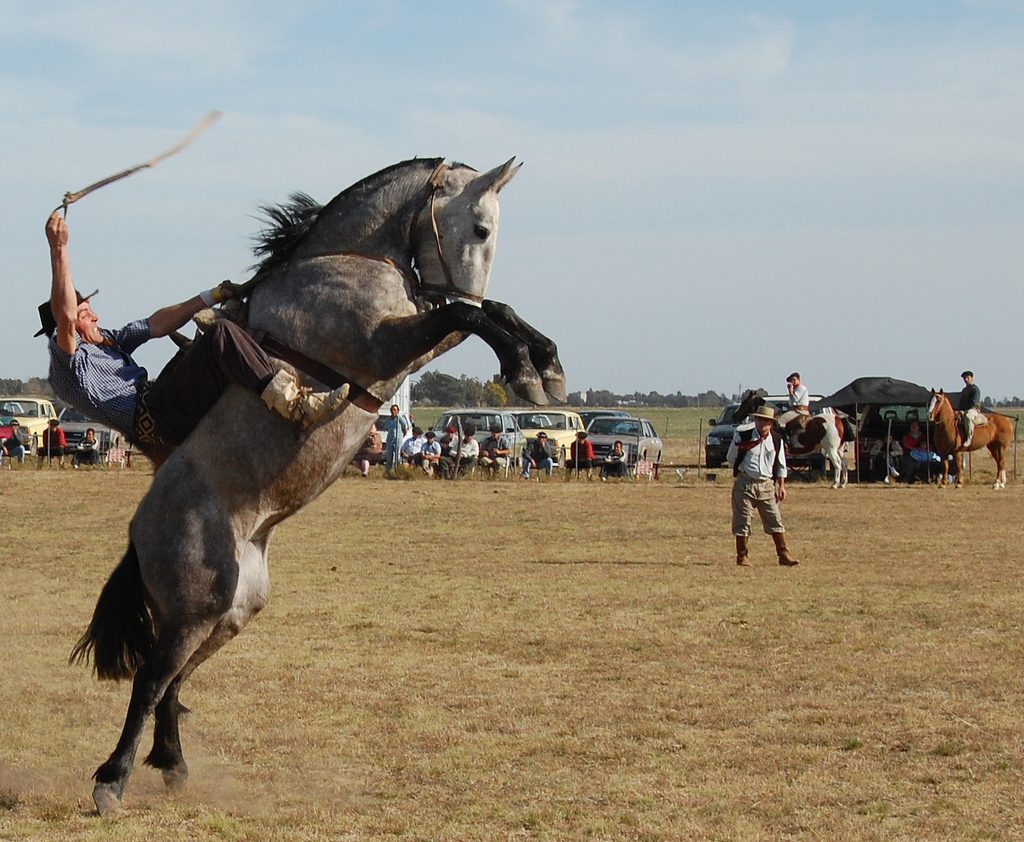
The jineteada (the bronco-riding contest, sometimes called doma, “breaking” or “taming”) is the beating heart of the whole thing, and it is the reason a lot of people come. A wild or barely-handled horse is released from the chute with a rider on its back, and the rider has to stay mounted, riding the bucking animal with style, for a set number of seconds while a jury scores the performance.
It is short, violent-looking and genuinely skilful. The rider cannot just cling on; the judging rewards how he moves with the horse, how he uses his legs and the rebenque (the gaucho riding crop), how upright and controlled he stays through the bucking. Get thrown before the bell and you are out. Ride it clean and the crowd, packed into the wooden tribunes around the ring, roars.
The categories, decoded
The contests are split into categories that differ mainly in what, if anything, the rider gets to hold onto and how long he must last. The names are pure rural Spanish and worth glossing, because the announcer will rattle them off and you will otherwise be lost:
| Category | What it means | Ride time |
|---|---|---|
| Crina limpia | “Clean mane” / bareback, holding only the mane; the hardest | about 8 seconds |
| Gurupa (grupa surera) | Ridden with a sheepskin pad strapped over the rump | about 12 seconds |
| Basto con encimera | Ridden on a basic saddle frame with a leather pad | about 12 seconds |
Crina limpia, riding bareback with nothing but a fistful of mane, is the one the purists watch for. Twelve seconds on a saddle frame is hard enough; eight seconds on a bucking horse with no saddle at all is something else. Riders come not only from across Uruguay but from Argentina, Brazil, Paraguay and Chile, because this are a regional tradition that crosses borders. The jineteadas Uruguay fields draw some of the best riders in South America, and that cross-border rivalry sharpens the competition.
A word on the language: people call this whole discipline the destreza criolla, “Creole skill,” and in 2006 Uruguay’s parliament recognised it by law as a national sport, in a unanimous vote backed by every party. Hold that fact; it matters for the debate further down.
Gaucho dress, skills and the people-watching
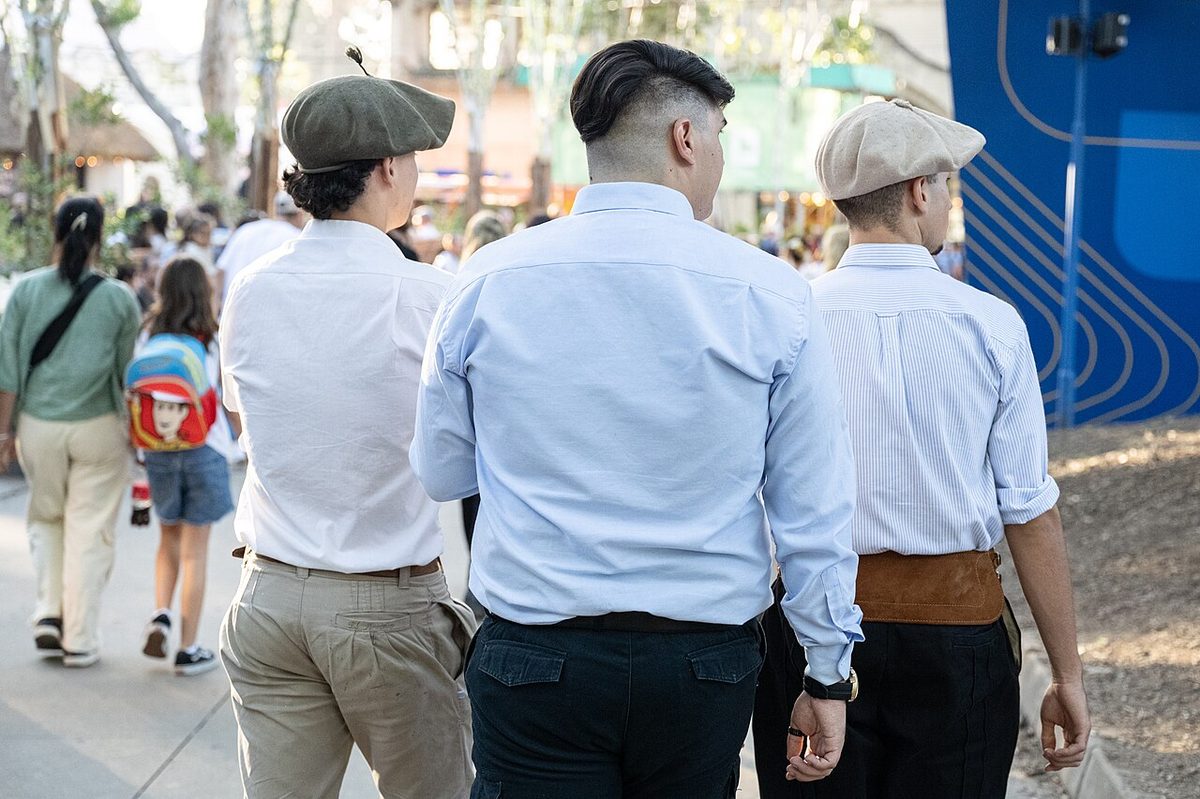
Half the pleasure of the criolla is just looking at people, because a serious chunk of the crowd turns out in full traditional dress and they wear it without a trace of costume-party self-consciousness. This is what their grandfathers wore to work.
The men favour bombachas, the wide, pleated trousers gathered at the ankle that gauchos wear for riding, tucked into leather boots. On the head, a boina, the soft beret borrowed long ago from Basque immigrants. Around the waist, a wide belt, often studded with coins, and slipped into the back of it the facón, the long gaucho knife that is part tool, part tableware, part statement. Add a neckerchief, sometimes a poncho against the autumn evening chill, and you have the look. Women wear long full skirts and blouses for the folk dances. It is dignified rather than flashy, and it photographs beautifully.
Beyond the riding, you will see the wider repertoire of country skills on display: lassoing, horse handling, the patient craft of breaking a young horse the slow way, demonstrations of rural trades. It is, in effect, the living version of the estancia (ranch) culture you can also experience first-hand on a working estancia stay out in the countryside.
The food: asado, choripán and a paper bag of tortas fritas
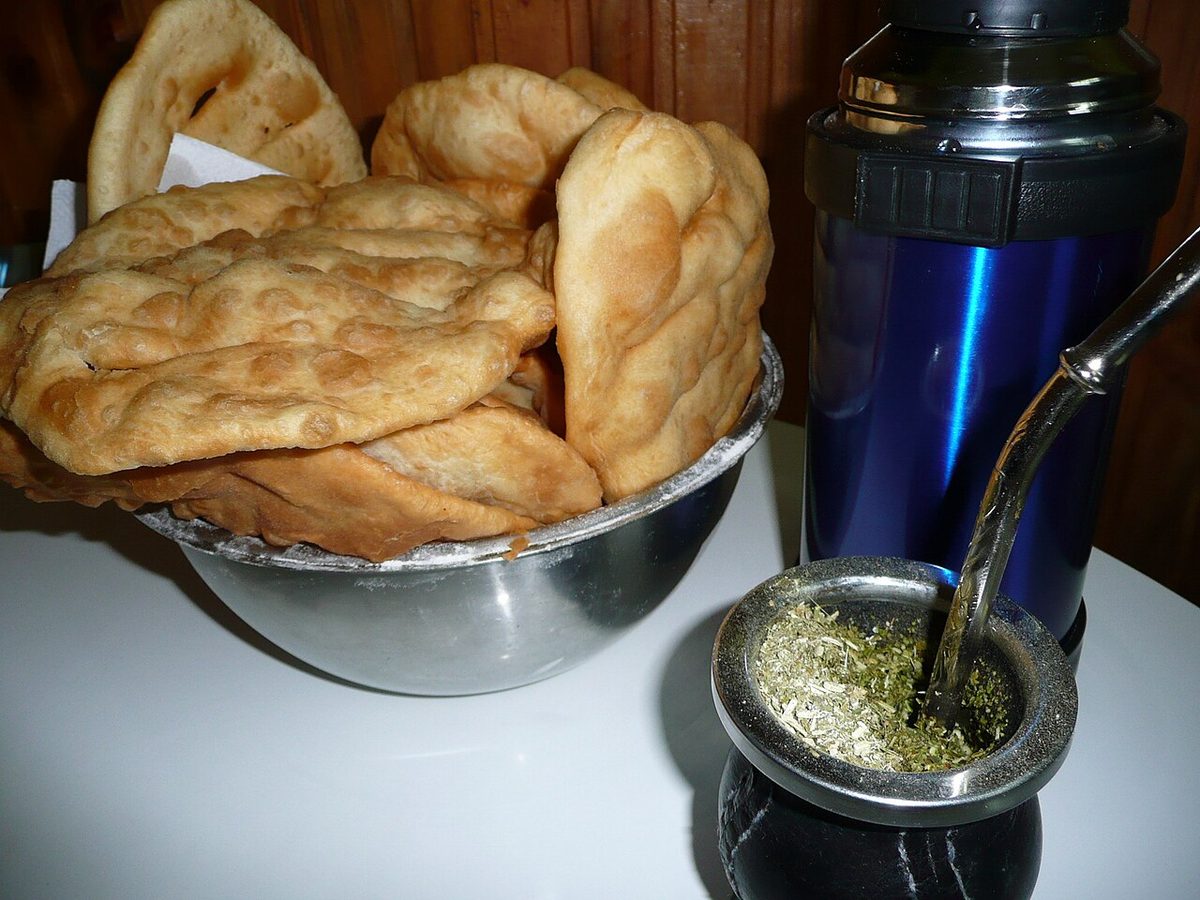
If you came to Uruguay for the beef, the criolla is a happy place. The food here is criollo country cooking, cheap, smoky and unfussy, and you eat it standing up with grease on your fingers.
The centrepiece is asado, the Uruguayan barbecue, beef cooked slowly over wood embers, which is close to a national religion here. I unpack the whole ritual in the guide to Uruguayan asado, but at the criolla the fast version is the choripán: a grilled chorizo sausage split into a bread roll, the country’s great street-food handshake. Then there is the torta frita, a flat disc of fried dough, faintly salty, eaten warm from a paper bag, traditionally made on rainy days and sold everywhere here regardless of weather. For something sweet there are pasteles and dulce de leche in everything.
Wash it down with mate, the bitter green tea Uruguayans carry everywhere in a gourd, or a cold beer or a glass of tannat, the country’s signature red. If the food at the festival whets your appetite, the broader Uruguayan food guide and the street-food rundown will tell you what else to chase down across the country.
The music: folclore, peñas and the payadores
After dark the centre of gravity shifts from the ring to the stage. The musical heart of the criolla is folclore, Uruguayan and regional folk music, all guitars, accordions and the rolling rhythms of the milonga and the chamarrita. Across the week more than a thousand artists pass through, from local folk groups to national headliners, and the bigger nights pull large crowds who stay until the small hours.
The part I would not miss, though, is quieter. A payador is an improvising folk singer, a kind of gaucho bard who makes up rhyming verse on the spot, often duelling with another payador, trading sung insults and clever lines while a guitar keeps time. It is an oral tradition that goes back centuries across the River Plate region, and watching two of them spar, even with imperfect Spanish, is mesmerising. Seek out the smaller stages and the peñas, the informal music gatherings, away from the main concert. That is where the older soul of the festival lives.
The hard part: the animal-welfare debate
I am not going to skip this, because if you are the kind of traveller who thinks about it, you should walk in with your eyes open. The jineteadas are the subject of a real and ongoing argument in Uruguay, and reasonable people land on opposite sides of it.
The case against is straightforward. Animal-welfare groups argue that making a horse buck through fear and stress, sometimes with a strap, is cruelty dressed up as heritage. Horses have died in the ring; two deaths during the 2019 contests at the Rural del Prado triggered a petition, signed by more than 92,000 people, to strip the jineteada of its national-sport status. “It is not culture, it is torture,” the protesters chant. Critics also point out that animal cruelty carries almost no legal teeth in Uruguay, and they want the practice banned in Montevideo first, then nationwide.
On the other side, the case is made just as firmly by the people who ride. They frame it as destreza criolla, a skill and a sport with deep roots, not gratuitous cruelty. A jury member and vet I read quoted put it bluntly: the horse “defends itself for eight seconds,” and the rest of the day “it is eating good forage, it is in a comfortable place, living a pleasant life.” Organisers insist the rules forbid mistreatment outright, that riders are disqualified if abuse is detected, and that safety measures are taken. Riders add a harder argument: many of these untamed horses would otherwise be sent to slaughter, since a rancher will not feed a useless animal for sentiment.
Where does that leave you? I am not going to tell you what to think. The deaths are real; so is the centuries-old tradition and the genuine care many riders show their animals. Some visitors watch the jineteadas with no qualms; others skip the ring entirely and enjoy the music, food and crafts, which is easy to do, since the festival is far bigger than the riding. You can absolutely have a full criolla day without setting foot in the ruedo. Decide for yourself, and respect that Uruguayans are still arguing about it too.
The honest drawback
Setting the welfare question aside, here is my one practical gripe: the semana criolla is busy, dusty and not built for the comfort-seeking tourist. On a big evening you are sharing the grounds with tens of thousands of people, the queues for the popular food stalls drag, the ground turns to churned dust or mud, and the seating in the ruedo is hard wooden bench. The English-language signage is essentially nonexistent, and almost nobody around you will be a foreign visitor, which is part of the charm but means you are on your own working out what is happening. Come for the atmosphere, not the creature comforts, and you will not be disappointed.
Planning your visit
Getting there
The festival is held on the Rural del Prado grounds, with the main entrance on Avenida Lucas Obes, in the Prado neighbourhood a few kilometres north of central Montevideo. It is an easy ride from downtown: a local bus, an Uber or a taxi will get you there in fifteen to twenty-five minutes depending on traffic. On big nights ride-hailing surges and traffic clogs near the entrance, so I would budget extra time and consider walking the last stretch. If you are based in the city centre, the Montevideo city guide covers the lay of the land, and Uber works reliably in Uruguay if you would rather not puzzle out the buses.
Tickets and money
Entry is cheap by international standards. In 2026 general admission ran about 295 Uruguayan pesos (a few US dollars), children under five went free, and the opening day was free for everyone. A general ticket gets you onto the grounds and into the food, music and stalls. If you want a seat in the tribunes around the ring to watch the jineteadas properly, that costs extra, with prices that climbed by section from the cheaper stands up to the official box; you can pay the difference at booths inside if you decide to upgrade once you are in. Bring cash. While cards work in parts of Montevideo, the festival stalls run largely on pesos, and a working sense of the local currency and money situation will save you hassle.
What a day looks like
My advice is to go twice if you can, once by day and once by night, because they are different festivals. Arrive in the afternoon for the jineteadas and the full run of stalls in daylight, when families are about and the rural-skills displays are easiest to follow. Eat early, before the food queues build. Then either stay on as the stage lights come up and the folclore crowd arrives, or come back another evening specifically for the music. The grounds get going in the late afternoon and run very late.
Going with kids
It is a genuinely family-friendly event, and Uruguayan families treat it as one; you will see prams, grandparents and toddlers on shoulders everywhere in the daytime. The space, the animals and the food are all a hit with children, and under-fives get in free. The honest caveats: the jineteadas can distress sensitive kids (and parents), the late-night music hours are not for little ones, and the crowds and dust on peak evenings are a lot for a small child. Daytime is the sweet spot. For broader trip planning with children, the Uruguay with kids guide is worth a look.
Fitting it into a trip
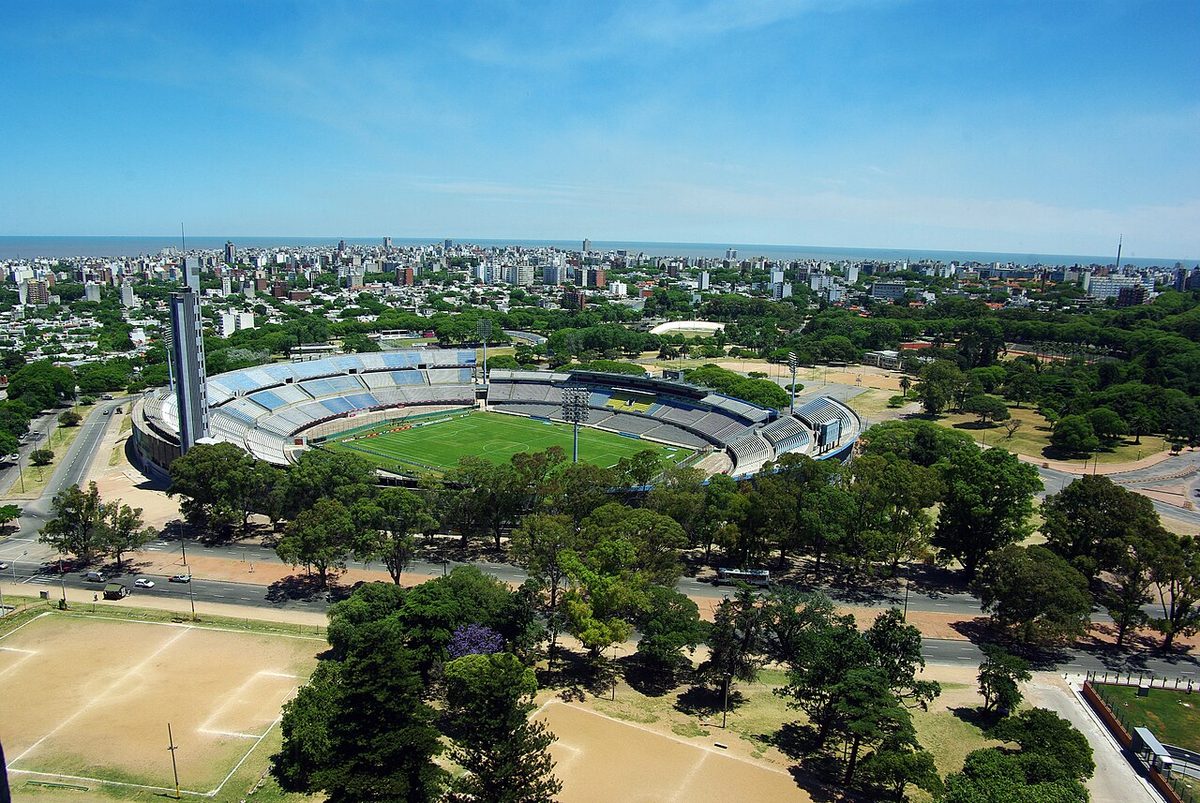
The criolla pairs naturally with the rest of a Montevideo stay and with the wider rhythm of Semana de Turismo, when much of Uruguay is on holiday and on the move. If you are slotting it into a longer route, the Uruguay itinerary guide and the list of things to do across the country will help you build the days around it. And if your trip happens to coincide with a Uruguay match, be warned that football here is its own form of national devotion; the Uruguay football guide explains why a fixture at the Estadio Centenario can swallow a whole city’s attention.
Semana Criolla: your questions answered
When is the Semana Criolla held?
It runs during Semana de Turismo, Uruguay’s secular name for Easter week, so the dates move every year with the moveable date of Easter, landing anywhere from late March to late April. The 2026 edition ran 29 March to 5 April. Work out when Easter falls that year, and the criolla sits in the days around it.
Where does the Semana Criolla del Prado take place?
On the Rural del Prado grounds, the showgrounds of the Asociación Rural del Uruguay, in the Prado neighbourhood of Montevideo, with the main entrance on Avenida Lucas Obes. It is a few kilometres north of the city centre, roughly fifteen to twenty-five minutes by bus, taxi or Uber depending on traffic and the size of that night’s crowd.
What are the jineteadas?
Jineteadas are traditional gaucho bronco-riding contests and the centrepiece of the festival. A rider must stay mounted on a bucking, semi-wild horse for a set number of seconds, usually eight to twelve depending on the category, while a jury scores his style and control. Riders come from across Uruguay and neighbouring countries to compete.
Are the jineteadas cruel to the horses?
It is genuinely contested. Animal-welfare groups call it cruelty and have petitioned to ban it after horses died in the ring. Riders and organisers call it heritage and a regulated sport, say mistreatment brings disqualification, and argue many untamed horses would otherwise be slaughtered. Some visitors skip the ring and enjoy the rest; you can decide for yourself.
How much does it cost to get in?
Very little. General admission in 2026 was around 295 Uruguayan pesos, a few US dollars, with under-fives free and the opening day free for all. A seat in the tribunes to watch the jineteadas costs extra, priced by section. Bring cash, as the food and craft stalls largely run on pesos rather than cards.
Is the Semana Criolla suitable for children?
Yes, in the daytime. Uruguayan families bring children of all ages for the animals, food and space, and under-fives get in free. The caveats: the bronco riding can upset sensitive children, the late-night music hours suit adults, and peak evenings get crowded and dusty. Aim for an afternoon visit if you are bringing little ones.
Final thoughts
I went in sceptical, half-expecting a sanitised folk show, and left with dust on my boots and a paper bag of cold tortas fritas in my jacket pocket. The semana criolla is not polished or tourist-friendly, and the welfare debate around the jineteadas is real and unresolved. But it is one of the most honest windows into who Uruguayans are that I have found anywhere in the country, the rural soul of a nation that lives mostly in the city, brought to town for one week a year.
Go with low expectations of comfort and high tolerance for crowds, bring cash and curiosity, and make up your own mind about the ring. Pair it with the music, the asado smoke and an hour watching two payadores trade verses, and you will understand something about Uruguay that no beach town or wine tour will teach you. That, to me, is reason enough to time a trip around a holiday whose dates refuse to sit still.
Credits & sources
Sources & further reading
- Descubrí Montevideo (official Montevideo tourism) – Criolla del Prado
- Intendencia de Montevideo – Semana Criolla
- SWI swissinfo.ch / EFE – the jineteadas welfare debate
Photo credits
All images via Wikimedia Commons: Jineteada Uruguay Semana Criolla by tucul_photo (CC BY-SA 2.0); Gaucho Uruguay Caballo Jineteada by Facndo (CC BY-SA 4.0); Doma Jineteada Gaucho Uruguay by tucul_photo (CC BY-SA 2.0); Tortas Fritas Asado Criollo Uruguay by adrian, https://www.flickr.com/photos/acanti/ (CC BY 2.0); Semana Criolla Del Prado Montevideo by Ignacio Turell (CC BY-SA 4.0).