Uber, Taxis & Getting Around Montevideo (2026)
The first time I tested Uber in Uruguay, I was standing on the curb at Carrasco airport doing what I do in most cities: I opened the app, watched a little car icon drift toward me, and waited. And waited. The driver called, sounded oddly nervous, and asked me to walk out to a side road away from the terminal. I didn’t understand why then. I do now, and it’s the single most useful thing I can tell you about ride-hailing here, so I’ll come back to it.
Working out how to get around a new city is the part of a trip that quietly makes or breaks the first day. So let me save you the guesswork I did across several visits, comparing apps, flagging taxis, fumbling with bus cards, and asking locals which option they actually use.
Yes, Uber works in Uruguay. Uber in Uruguay runs reliably in Montevideo and in Punta del Este, alongside Cabify and DiDi, with traditional metered taxis and a solid city bus network filling the gaps. Outside those two hubs, app coverage thins fast, so smaller towns lean on taxis and remises. This guide covers all of it, honestly.
What you’ll get below: how ride-hailing apps work here and roughly what they cost; how to pay (card versus cash); how the white-and-yellow taxis operate; how to ride Montevideo’s city buses with an STM card; how airport transfers really work; and how all of this changes the moment you leave the capital. Intercity travel and renting a car each have their own deep dives, which I’ll link as we go, this is strictly about short hops and getting around town.
Getting around Montevideo at a glance
Here’s the quick comparison I wish someone had handed me on arrival. Costs are hedged on purpose, fares and exchange rates move, and the peso wobbles, so treat these as ballpark figures from my most recent trips rather than gospel.
| Option | How you pay | Typical cost (short city hop) | Best for |
|---|---|---|---|
| Uber / Cabify / DiDi | Card in app (cash possible on some) | Around 200–500 UYU across central neighborhoods | No-Spanish convenience, transparent pricing, night rides |
| Street taxi (metered) | Cash, increasingly card | Roughly similar to apps; airport runs more | Hailing on the spot, when your data is down |
| City bus (ómnibus) | STM card or cash to driver | About 52 UYU with card, 64 UYU cash (boleto, 2026) | Cheapest travel, long straight routes, the rambla |
| Remise / private transfer | Booked ahead, cash or card | Fixed quote, often 1,200–1,800 UYU airport–center | Airport pickups, late arrivals, zero hassle |
| Walking | Free | Free | Ciudad Vieja, the waterfront, most of downtown |
Note the word “ómnibus”, that’s what Uruguayans call a city bus, not “autobús” and rarely “colectivo”. You’ll see it on every stop sign and route map, so it’s worth tucking away early.
Uber and ride-hailing apps in Uruguay
Ride-hailing arrived in Montevideo back in 2015, to noisy protests from the taxi unions, and it has since settled into ordinary daily life. Today you have three serious apps to choose from in the capital, and I keep all three installed because prices and wait times genuinely shift between them depending on the hour.
Uber is the one most visitors already have, and it works exactly as you’d expect: set your pickup pin, enter the destination, see the price before you confirm. The interface is in English if your phone is. Wait times in central Montevideo are usually short, a few minutes in neighborhoods like Pocitos, Punta Carretas or Ciudad Vieja, longer if you’re out in a quiet residential pocket late at night.
Cabify is the Spanish-founded competitor and, in my experience, the one locals reach for when they want a slightly more polished car or a fixed quote that won’t surge. It shows the full fare up front rather than a range, which I find calming when I’m watching pesos. It also accepts cash on many rides, useful if your card gets fussy abroad.
DiDi rounds out the trio and tends to undercut the other two on price, especially for short trips. The trade-off, and there’s always one, is that driver availability can be patchy outside peak hours, so a cheap quote sometimes comes with a longer wait or a cancellation. I treat DiDi as my first check and the others as backup.
One honest caveat across all three: surge pricing is real here. Friday and Saturday nights, rain, and the end of a big match at the Estadio Centenario will push fares up noticeably. If the multiplier looks silly, wait ten minutes or walk a couple of blocks toward a busier avenue and re-check, prices often soften once you’re away from the crush.
How much does Uber cost in Montevideo?
I won’t quote you a precise fare, because anyone who does is guessing, the app is the only honest answer. But for orientation: last I checked, a short hop across central Montevideo, say Ciudad Vieja to Pocitos, ran somewhere around 250–400 UYU, and a 5 km ride hovered near 400 UYU before surge. A reference figure Uber itself publishes puts a typical 5 km Montevideo ride at roughly 390 UYU, which tracks with what I’ve paid.
Compared with home, that’s cheap. Compared with the local bus, it’s many times more, the bus is barely a dollar. Where apps really earn their keep is the combination of a known price, a tracked route on the map, and not needing a word of Spanish. If you reserve a ride in advance (you can book up to 30 days ahead), you lock the price, which is handy for an early flight.
Paying: card versus cash
Default to a card loaded in the app. It’s the whole point, no haggling, no rummaging for change, an electronic receipt, and a fare that can’t quietly inflate. Bring a card with no foreign-transaction fee if you can; otherwise your bank may tack on a couple of percent. The app charges in Uruguayan pesos and your issuer converts at a fair rate.
Cash is accepted on Cabify and DiDi for many rides, and sometimes via “Uber Taxi”, but you’ll need small bills, because a driver holding 2,000 pesos rarely has change for it. My rule: card by default, a few hundred pesos in coins and small notes as backup for the odd cash-only car or a dead phone.

Taxis in Montevideo: the old-school option
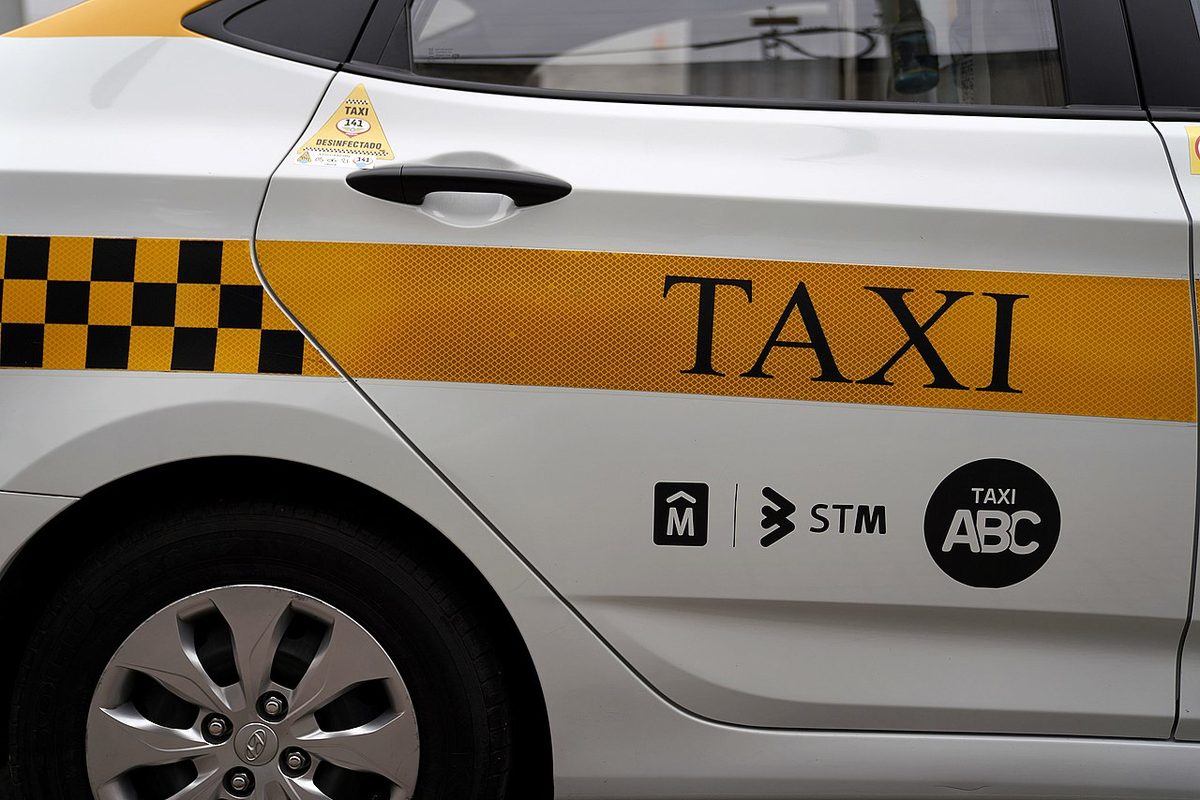
Long before the apps, Montevideo ran on its taxis, and they’re still everywhere. You’ll spot them instantly: white cars with a yellow roof and a yellow stripe down the side. A small red light glowing in the windshield means the cab is free, that’s your signal to flag it. If the light’s off, it’s taken.
Hailing one on the street is genuinely easy on the main avenues, raise a hand, and on busier corners you’ll rarely wait long. You can also phone a radio-taxi company or have your hotel call one, which is what I do for an early start or a specific pickup time.
Fares run on a meter (“taxímetro”), so there’s no negotiating. Here’s the local quirk worth knowing: historically Montevideo taxis used a printed fare chart called a “libreta”, the meter shows a number of units, and the driver reads the corresponding peso price off the booklet, adjusting when official rates change. Many cabs now show the actual peso amount directly, but if you see the driver glance at a laminated card to total your fare, that’s the libreta system, not a scam. Expect small legitimate surcharges for luggage, late-night hours, and sometimes a booked pickup.
Make sure the meter is running from the start. The honest drawback with street taxis, versus an app, is that a small minority will take a scenic route or “forget” the meter with an obvious tourist, the same risk you’d manage in any city. If the meter isn’t on, ask for it (“¿Puede poner el taxímetro?”) or wave the cab on and grab the next one.
On tipping: Uruguayans largely don’t tip taxi drivers, and no one expects 20 percent. Rounding up to the next convenient note, or leaving the coins, is plenty and warmly received. Many cabs now take cards, but I keep cash handy for taxis since card readers aren’t universal.
Montevideo public transport: buses and the STM card
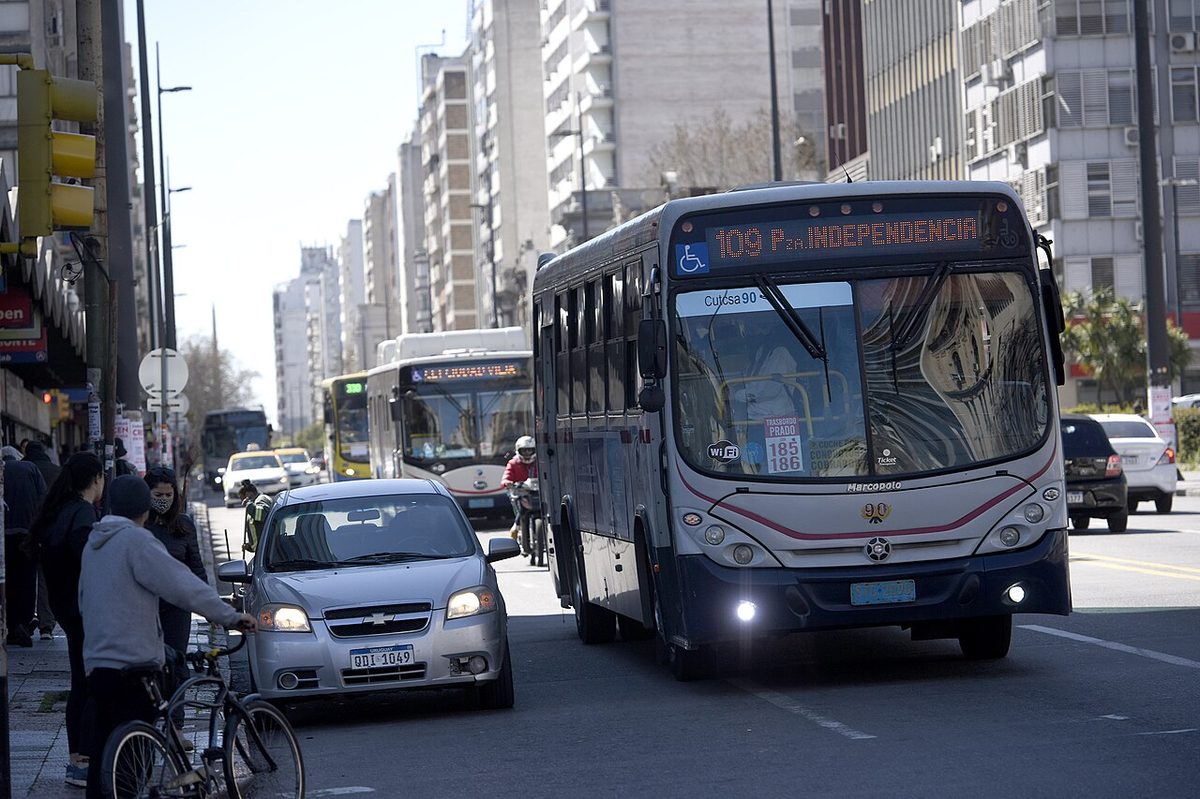
Montevideo’s bus system is the backbone of how the city actually moves, and once it clicks, it’s a cheap, oddly pleasant way to get around, especially the routes that run the length of the rambla, the long waterfront promenade that traces the river’s edge. Several companies operate under one integrated fare system, with CUTCSA being the big red-and-white one you’ll see most.
There are two ways to pay. The simplest for a quick visit is cash directly to the onboard conductor (most buses have a second staffer who handles fares), bring small change, because they won’t break a large note. A single cash boleto (ticket) ran about 64 UYU in early 2026.
The cheaper, smoother way is the STM card (Sistema de Transporte Metropolitano), Montevideo’s rechargeable transit card. Tap on, pay a discounted fare, around 52 UYU per boleto versus the cash price, and crucially the card unlocks free or cheap transfers within a time window, so a one- or two-hour ticket lets you change buses without paying twice.
Getting and using an STM card as a visitor
You can pick up an STM card at official customer-service points around the city by showing your passport; the first issue of the basic card is typically free, and you then load credit onto it (minimum top-up around 100 UYU). Recharge at kiosks, designated shops, and service centers, plenty of corner stores display the STM sticker.
Is it worth it for a few days? If you’ll ride buses more than a handful of times, yes, the per-trip saving and free transfers add up, and tapping is faster than counting coins. For one or two rides total, cash is simpler and you skip the errand. That’s the honest call: the card rewards frequency, not a single hop.
The apps that make buses painless
What finally made the bus system legible to me wasn’t the card, it was the apps. The official one is Cómo Ir, built by the Intendencia de Montevideo (the city government). Type where you are and where you’re going, and it plots the exact lines, stops, and walking bits, with real-time bus positions on the map. It’s free and it’s the locals’ tool.
Moovit does the same job with a more international interface and “get off here” alerts, which I love when I don’t know the neighborhood and can’t see street signs from a crowded bus. Between the two, you can ride buses confidently on day one without speaking to anyone. Google Maps also has decent transit directions in Montevideo, though I find the dedicated apps more reliable on live arrivals.

Airport transfers: the Carrasco catch nobody warns you about
Remember my nervous Uber driver from the opening? Here’s the explanation. Carrasco International Airport (MVD), Montevideo’s main gateway, sits just outside the city limits in the neighboring department of Canelones. Ride-hailing apps are licensed to operate in the department of Montevideo, not Canelones, which means a driver doing an official app pickup at the terminal can be fined. Some will still come, but they may ask you to walk a short distance off airport property to a spot where they’re more comfortable, or they may simply cancel.
Drop-offs to the airport are generally far less fraught than pickups, taking an Uber to catch your flight is usually fine. It’s the inbound pickup, the moment you land, that’s the awkward one. So plan your arrival deliberately:
Official airport taxis and remises are the cleanest option. A remise is a pre-booked private car with a fixed quote agreed in advance, no meter anxiety, and the desks are right there in arrivals. You’ll pay more than an app would charge, but it’s reliable at any hour and the price is locked.
Pre-arranged transfers from your hotel or a booking service work the same way and put a named driver with a sign at the door, my pick after a long-haul flight when I have zero patience.
Ride-hailing can still work, and many travelers use it without drama, just understand the jurisdiction issue, follow the in-app pickup instructions exactly, and have a backup in mind if your driver gets cold feet. Uber has at points partnered with a local radio-taxi operator to smooth airport rides, so check what the app offers on the day.
If you’re landing in Punta del Este instead, the equivalent airport is Laguna del Sauce, where apps and taxis both operate, an Uber to town has run noticeably cheaper than the metered taxi when I’ve compared. For the full breakdown of flights and arrival logistics, see my guide to flights and getting to Uruguay by air, and for the big-picture overview of every way into the country, the getting to Uruguay pillar pulls it all together.
Getting around outside Montevideo
This is where I have to be straight with you, because a lot of guides aren’t. The polished app experience you get in the capital does not extend evenly across the country. Coverage thins, and in places it disappears.
Punta del Este is the clear exception. As the country’s marquee resort, it has working Uber and Cabify plus plenty of taxis, and getting around by app is realistic there, particularly in and around the peninsula and toward Maldonado. In peak summer (December–February) demand spikes and waits lengthen, but the service exists and locals use it. My honest caveat: distances between the beaches, José Ignacio, and the inland spots are real, and app costs add up fast over a week, which is exactly why some visitors still rent a car for Punta. For where this fits, the Punta del Este guide goes deeper.
Colonia del Sacramento, Piriápolis, and the smaller coastal and interior towns are a different story. App availability is sparse to nonexistent, you may open Uber and find no cars at all. What these places do have is local taxis (often a single radio-taxi number that everyone uses), remises, and your own two feet, Colonia’s historic quarter, for one, is tiny and best walked. Ask your accommodation for the local cab number on arrival; that’s the move.
If you’re weighing whether to skip rental wheels entirely and lean on apps, taxis, and buses, that’s its own real question, and I’ve tackled it head-on in whether you need to rent a car in Uruguay. For hopping between cities, ride-hailing isn’t the tool at all, the country’s excellent long-distance coach network is, covered in my guide to traveling Uruguay by bus.

Which option fits your trip?
Different travelers want different things from getting around, so here’s how I’d steer a few common types based on what I’ve watched work.
First-timer with no Spanish: live in the apps. The map, the fixed-ish price, and the silent door-to-door ride remove every friction point, and you’ll never mime a destination at a confused driver. Keep the bus apps for cheap daytime runs along the rambla once you’ve found your feet.
Solo traveler, especially at night: ride-hailing is my default after dark, the tracked route and shareable trip status are genuine safety features, and you can have a friend follow your ride. Montevideo feels relaxed by big-city standards, but the ordinary precautions apply: ride apps over flagging an unmarked car late at night, and keep your bag on your lap, not on the seat.
Budget backpacker: the bus is your friend, and it’s barely more than a dollar a ride. Get the STM card, learn two or three lines near your hostel, and use Cómo Ir for everything else. You can cross the whole city for the price of a coffee.
Couple or family staying central: you may barely need motorized transport at all. From a base in Ciudad Vieja or Pocitos, much of Montevideo is walkable, and an occasional app ride covers the rest. See where to stay in Montevideo to pick a neighborhood that keeps you on foot, and the Montevideo itinerary for how the sights string together.
A practical note that touches all of them: have mobile data. Every option above, hailing a ride, reading bus arrivals, mapping a walk, depends on a working connection. A cheap local SIM or an eSIM bought before you fly is the unsung hero of getting around here, because curbside Wi-Fi is not a plan.
And don’t underestimate walking. Montevideo rewards it, the rambla alone is a multi-mile waterfront stroll, and the lanes of Ciudad Vieja the old town, are made for wandering. When hunger hits, the Mercado del Puerto with its wall of parrillas (grills sizzling with beef) is a short ride or walk from the center, and the city’s wider food scene is mapped in my roundup of the best restaurants in Montevideo.
Uber in Uruguay: your questions answered
Is Uber cheaper than a taxi in Montevideo?
Usually marginally, and the gap has narrowed. The bigger wins with Uber are price transparency and not handling cash, you see the fare before you commit, and there’s no meter to watch. On surge nights a metered taxi can actually undercut the app, so when prices spike it’s worth a quick glance at both.
Can I use Uber from Carrasco airport?
Sometimes, with friction. The airport lies in Canelones department, where ride-hailing isn’t licensed, so app drivers risk fines on pickups and may ask you to walk off-property or may cancel. For a stress-free arrival, an official airport taxi or a pre-booked remise with a fixed price is the safer bet, especially late at night.
Do I need cash for taxis and buses in Uruguay?
For buses, yes if you’re paying the conductor, bring small notes and coins, though an STM card lets you tap instead. Many taxis now take cards, but not all, so keep some pesos on hand. Ride-hailing apps run on your card by default, which is the easiest cashless route across the board.
Does Uber work in Punta del Este?
Yes. Uber and Cabify both operate in Punta del Este and nearby Maldonado, and they’re a normal way to get around the resort, including from Laguna del Sauce airport. Expect longer waits and higher prices in the December-to-February peak, and remember that distances out to José Ignacio add up, which nudges some visitors toward a rental car.
What’s the best app for Montevideo buses?
Cómo Ir, the official city app, is the most accurate for live bus positions and route planning, and it’s what locals use. Moovit is the friendlier choice if you want an English interface and “time to get off” alerts. Use either with cash or an STM card and the bus network becomes genuinely easy.
Is it safe to take taxis and Ubers in Montevideo?
Broadly, yes, Montevideo is one of the calmer capitals in the region. Ride-hailing adds tracked routes and trip-sharing, which I lean on after dark. With street taxis, make sure the meter runs and use the official white-and-yellow cabs rather than an unmarked car. Standard city sense, keep valuables close, applies, but this isn’t a place that feels on edge.
How much should I tip a taxi or Uber driver?
Little to nothing is the local norm. Uruguayans typically round a taxi fare up to a convenient note or leave the loose change rather than calculating a percentage. In the apps you can add a small tip if a driver was helpful, but it’s entirely optional and no one will expect it. Don’t overthink it.
Final thoughts
Getting around Montevideo is, honestly, one of the easier parts of a Uruguay trip, once you know the few local wrinkles. Keep Uber, Cabify, and DiDi on your phone for door-to-door convenience and night rides; grab an STM card and the Cómo Ir app if you’ll lean on the cheap, reliable buses; flag the white-and-yellow taxis when you just need a cab now; and treat walking as a real option in a compact, waterfront-hugging city that rewards it.
Save your only real worry for the airport, where the Canelones jurisdiction quirk makes a pre-booked remise or official taxi the calmer choice for your inbound ride. Everywhere else in the capital, you’ve got options stacked on options.
Step outside Montevideo and Punta del Este, though, and recalibrate, the apps fade, the local taxi number becomes gold, and intercity coaches take over the heavy lifting. Plan for that shift and you’ll move around this small, walkable, unhurried country with barely a hitch. Montevideo, the capital itself, is the easiest place in Uruguay to be carless, and a fine place to start.
Credits & sources
Sources & further reading
- Intendencia de Montevideo, official STM bus fare schedule
- Uber, official Montevideo city guide and fare estimator
- CUTCSA, fares and information for Montevideo’s main bus operator
Photo credits
All images via Wikimedia Commons: Taxi Montevideo Calle by Intendencia de Montevideo (CC BY-SA 4.0); Omnibus Cutcsa Montevideo by Andrea Mazza (CC BY-SA 3.0); Rambla Montevideo Bus by Ermell (CC BY-SA 4.0); Ciudad Vieja Montevideo Calle by Felipe Restrepo Acosta (CC BY-SA 4.0); Avenida 18 De Julio Montevideo by Artigas Pessio (CC BY-SA 4.0).


1 comment