Uruguay Without a Car: How Far Can Buses Take You? (2026)

The first time I crossed Uruguay end to end, I never once sat behind a steering wheel. I came in on the ferry from Buenos Aires, walked off into Colonia’s old town, and spent the next two weeks moving by bus, by the occasional taxi, and on foot. Some legs were a dream. One or two made me mutter under my breath at a windswept bus shelter. This guide is the honest tally of both.
Plenty of people ask the same thing before booking, and it is the question this guide answers: can you really do uruguay without a car?
Can you really travel Uruguay without a car?
Yes, you can travel uruguay without a car and see most of the highlights, because Montevideo, Colonia, Piriápolis, and the main Punta del Este coast are all linked by frequent, comfortable intercity buses through the Tres Cruces hub. Where it gets hard is the deep Rocha coast, wine country, and interior estancias, which often need a car or a paid transfer for the last stretch.
That is the short version. The rest of this article is the long version, because “yes, but” is doing a lot of work in that sentence.
Here is who this is for. If you are a first-time visitor weighing a rental against bus fares, a solo traveler who would rather not drive on unfamiliar roads, a budget backpacker, or someone who simply does not want the hassle of parking in Punta in January, read on. I will go destination by destination, give you realistic car-free itineraries, compare the costs and time against renting, and be candid about the places where going car-free turns from easy to genuinely annoying.
For the mechanics of how the buses, ferries, and ride apps actually work, I lean on the dedicated guides throughout rather than re-explaining each one. My job here is the verdict and the route-by-route reachability.
The car-free verdict at a glance
Before the detail, a snapshot. This table is the thing I wish I had pinned to my phone on that first trip. “Car-free?” means how realistic it is to get there and get around once you arrive, using only buses, taxis, ride apps, and your own two feet.
| Destination | Car-free? | How you get there | Honest note |
|---|---|---|---|
| Montevideo | Easy | City buses, taxis, ride apps, walking | The rambla makes long stretches walkable; buses cover the rest |
| Colonia del Sacramento | Easy | Ferry or bus, then walk the old town | No Uber in town; regular taxis only, and few of them |
| Piriápolis | Easy | Direct bus, then walk the seafront | Compact and flat; one of the most car-free-friendly resorts |
| Punta del Este | Easy | Direct bus every 30 min, then local buses | Local buses thin out off-season; distances between beaches are real |
| Maldonado / San Carlos | Easy | Local Codesa buses from Punta | Frequent in summer, sparser in winter |
| José Ignacio | Doable | Coast bus or bus to Punta then connection | Last few kilometres can mean a taxi; service drops off-season |
| La Paloma / La Pedrera | Doable | Direct long-distance bus | Towns are spread out; you will walk or taxi between spots |
| Punta del Diablo | Doable | Direct bus (around 5 hours from Montevideo) | Quiet and walkable in town; isolated once you arrive |
| Cabo Polonio | Hassle | Bus to the highway, then mandatory 4×4 over dunes | No private cars allowed at all; the truck is the only ride in |
| Wine country (Carmelo) | Hard | Bus to town, then taxi or tour to wineries | Vineyards sit kilometres apart; a car or guided tour is near-essential |
| Interior estancias | Hard | Pre-arranged transfer, usually | Most working ranches assume you drive or they collect you |
| Coast in winter (May–Sept) | Variable | Reduced bus frequency | The same routes exist but run far less often; plan around timetables |
If your trip stays in the top half of that table, you genuinely do not need a car. If it dips into the bottom rows, keep reading, because that is where the real decisions live.
What is genuinely easy car-free
Let me start with the good news, because it is most of the news. The spine of Uruguay tourism, Montevideo down to the Punta del Este coast and west to Colonia, is one of the easiest car-free regions I have travelled in South America.
Montevideo: a walking-and-bus city
You do not want a car in Montevideo. You want the rambla, that long waterfront promenade that runs for kilometres along the river-sea, and you want the city buses for everything beyond it. A standard fare last I checked was around 50 to 55 pesos, roughly a dollar and a bit, paid in cash to the driver or with the local STM card.
Buses here are frequent and Google Maps reads them accurately, which is not something I can say everywhere on the continent. Between the bus network, cheap taxis, and ride-hailing, you can reach any neighbourhood without thinking twice. For the nuts and bolts of fares, apps, and which card to buy, the deep dive on ride-hailing and taxis in Uruguay covers it better than I can in a paragraph.
The one honest drawback: at night, in the quieter Ciudad Vieja streets, I would rather call a car than wait alone at a stop. That is a small caveat in a city that is otherwise a car-free pleasure.
Colonia del Sacramento: made for feet
Colonia might be the most car-free-friendly town in the country. If you arrive on the ferry from Buenos Aires, the UNESCO-listed old town is a flat ten-minute walk from the terminal. Cobblestones, sycamores, the lighthouse, the river at the end of every lane. You will not want wheels here; they would only get in the way.
Getting to Colonia from Montevideo is equally painless. Direct buses run the route in roughly two and a half hours, and the dedicated Montevideo to Colonia guide lays out the schedules and operators. Once you are there, the whole historic quarter is yours on foot.
Here is the catch, and it is worth knowing before you arrive: there is no Uber in Colonia. None. If you need to reach a hotel on the edge of town or the bus terminal with heavy bags, you are relying on regular street taxis, and there are not many of them. They also cost more than you would expect. Inside the old town it does not matter at all. Beyond it, plan ahead.

Piriápolis: the quiet car-free champion
If I had to send a nervous first-timer to one car-free beach town, it would be Piriápolis. The whole place is built along a curving seafront promenade, backed by a grand old hotel and a hill or two. Direct buses from Montevideo drop you near the centre, and from there everything, the beach, the restaurants, the little port, is a walk away.
It is flat, compact, and the kind of town where you settle into a rhythm of swimming, eating a chivito (the loaded steak sandwich that is Uruguay’s national dish), and walking it off. The full picture lives in the Piriápolis travel guide, but for car-free purposes, just know it works beautifully.
The honest drawback: Piriápolis is sleepy. If you want nightlife and crowds, this is not it, and the bus connections to the surrounding sierra are thin. As a walkable base, though, it is hard to beat.
Punta del Este and the inner coast
Punta is the easy one everyone knows. Buses leave Montevideo’s Tres Cruces terminal roughly every half hour and reach Punta in about two to two and a half hours. The Montevideo to Punta del Este route guide has the timetable detail, and the broader Punta del Este guide covers what to do once you land.
Within the Punta area, local Codesa buses connect Maldonado, San Carlos, the peninsula, and stretch all the way to Piriápolis and out toward José Ignacio. In high summer they run often. You can string together a genuinely car-free coastal holiday on these.
The drawback is distance. Punta sprawls. The peninsula, La Barra, and the far beaches are not a casual stroll apart, so you will be combining local buses with the odd taxi, and in the off-season those local buses thin out noticeably. It is doable, but it is not Colonia-on-foot easy.
What is a hassle or near-impossible car-free
Now the candid part. Uruguay public transport coast coverage is excellent for the resort towns, but it has clear edges, and pretending otherwise would set you up for a bad afternoon. Here is where car-free travel gets hard.
Cabo Polonio: the famous last-mile problem
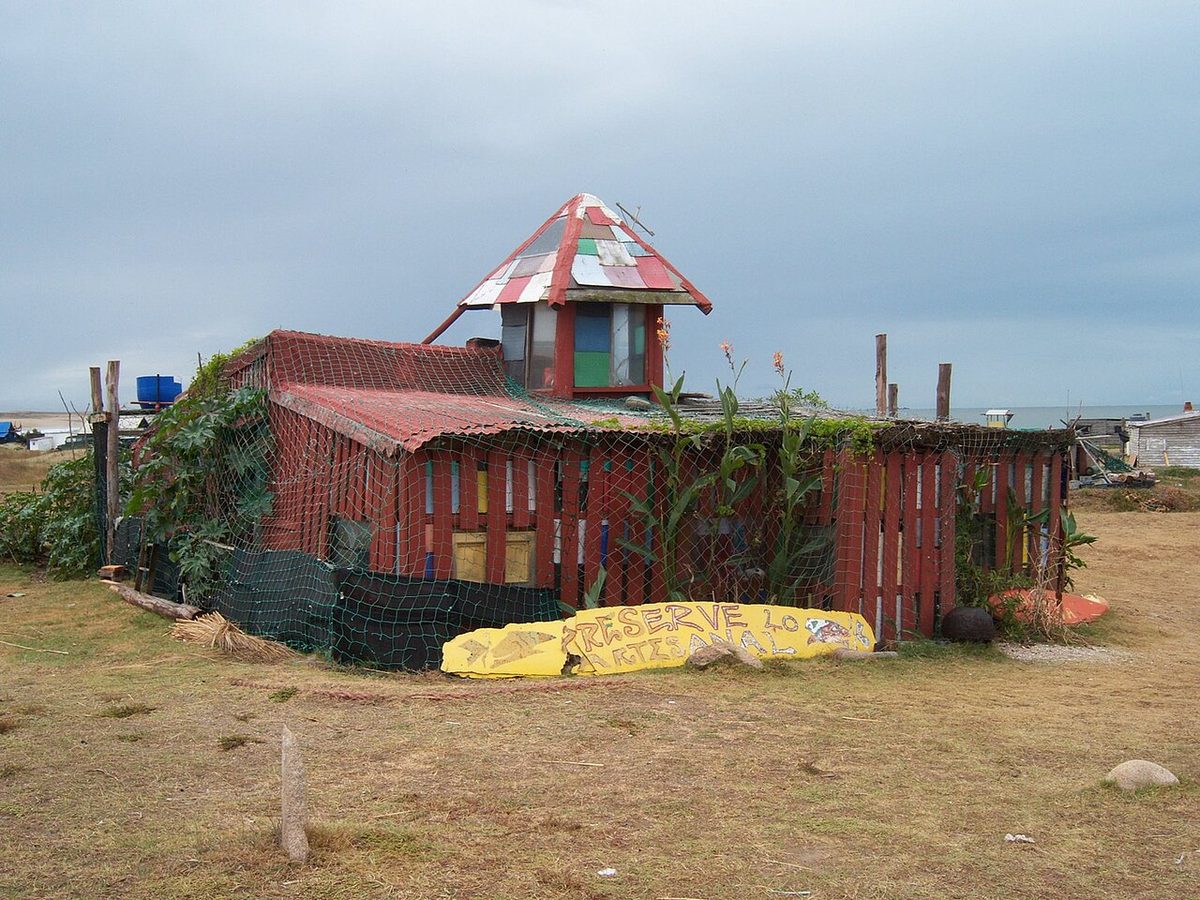
Cabo Polonio is the destination that breaks people’s car-free assumptions, and it does so in a way that is actually charming once you understand it. No private vehicles are allowed in. Not yours, not a rental, not a taxi. The village sits inside a national park behind a wall of shifting dunes, off the grid, and the only way in is on foot or by the official 4×4 trucks.
So the journey looks like this. A long-distance bus on the Rocha coast drops you at the highway entrance, the Portal del Cabo visitor centre, not in the village. From there you buy a ticket and pile into a chunky all-terrain truck that grinds over the dunes for about half an hour. When I went, the trucks ran roughly hourly from early morning until early evening, with a couple of late departures in peak season, but those times shift and you should treat any schedule you read, including mine, as approximate.
You can walk in instead, several kilometres across sand, which sounds romantic until you are doing it with a backpack in the afternoon sun. The truck is the sane choice for most. None of this makes Cabo Polonio inaccessible car-free. It makes it a destination with a mandatory paid transfer at the end, and that distinction matters for your planning and your budget.
The honest drawback: this is the single most logistically fiddly place on the Uruguayan coast. Build in buffer time, because missing the last truck back to the highway means missing your onward bus.
The deep Rocha coast off-season
La Paloma, La Pedrera, and Punta del Diablo are all reachable by direct bus, and in summer the Rocha coast hums. The catch is twofold. First, these towns are spread out, so once you arrive you will walk or taxi between the beach, your guesthouse, and dinner, and taxis in small Rocha towns are not always sitting there waiting. Second, and more importantly, the off-season changes everything.
From roughly May through September, the same routes exist but run far less often. A summer service that left every couple of hours might drop to a handful of departures a day, or pause certain connections entirely. I have stood in a near-empty Rocha town in winter watching my carefully planned connection simply not be a thing that day. It is not that car-free becomes impossible off-season; it is that the timetable becomes the boss of your trip, and spontaneity disappears.
José Ignacio: glamorous but awkward
José Ignacio is the chic little lighthouse village everyone photographs. Getting near it car-free is fine; the coast buses and connections from Punta will get you to the area. Getting precisely to it, and moving around once there, is where it frays. The last few kilometres can mean a taxi, ride apps are unreliable this far out, and the village is small with restaurants and beaches scattered along the point. In peak summer you can manage. Shoulder season, you will feel the gaps.
Wine country and Carmelo
This is where I will be bluntly honest: do not plan a car-free wine tour of western Uruguay expecting it to be easy. You can bus to Carmelo, the riverside hub of the Tannat-growing region, in a few hours from Montevideo or about an hour from Colonia. The town itself is walkable. But the wineries are the point, and they sit kilometres apart down rural roads with no bus serving them.
Your realistic car-free options are a hired taxi for the afternoon, a pre-booked winery transfer, or an organised tour. All of those work, and several wineries will arrange pickup if you are staying or dining with them. What does not work is showing up expecting to hop between vineyards on public transport. If wine country is a major goal, this is the strongest single argument for a rental, and the guide to renting a car in Uruguay is worth a read before you decide.
Interior estancias and the empty middle
Uruguay’s interior, the rolling cattle country of working estancias (ranches), is built around the car and the horse, not the bus. Long-distance buses connect the inland towns, but the ranches themselves are typically down a dirt road well outside town. Most estancias that host guests assume you will drive or they will arrange to collect you from the nearest terminal. If a farm stay is on your list, ask the property directly how they handle car-free arrivals before you book. Some are gracious about it. Some quietly expect a rental.
Realistic car-free itineraries
Theory is one thing. Here are three routes I would actually run car-free, scaled to different trip lengths. Each one stays inside what the buses can comfortably do.
The long weekend: Montevideo and Colonia
Fly into Montevideo, or arrive by ferry. Spend two days in the capital walking the rambla, eating your way through the Mercado del Puerto, and using city buses for the longer hops. Then take a direct bus or the fast ferry across to Colonia for a night, where you do not touch a vehicle at all beyond your own feet. Bus back, or ferry onward to Buenos Aires. Zero rental needed, zero stress, and you have seen two of the country’s signature places.
One week: the easy coast
Start in Montevideo for two nights. Bus to Piriápolis for a night, walking the seafront and slowing down. Continue by bus to Punta del Este for three nights, using local Codesa buses to reach Maldonado and the nearer beaches. If you are there in high summer, add a day trip toward José Ignacio by coast bus, accepting a taxi for the final stretch. Every leg here is a comfortable, frequent bus ride. This is the itinerary I recommend to most first-timers who want sun, sand, and no driving.
Two weeks: pushing into Rocha
Take the one-week coast plan and extend it east. From Punta, bus deeper into Rocha to La Paloma or Punta del Diablo for a few nights of wilder, quieter beach. Add Cabo Polonio as a one or two-night adventure, factoring in the 4×4 truck and the buffer time it demands. This is the most ambitious car-free trip I would cheerfully endorse, with one condition: do it between roughly November and March. Attempt the same route in winter and the thinning timetables will fight you the whole way.
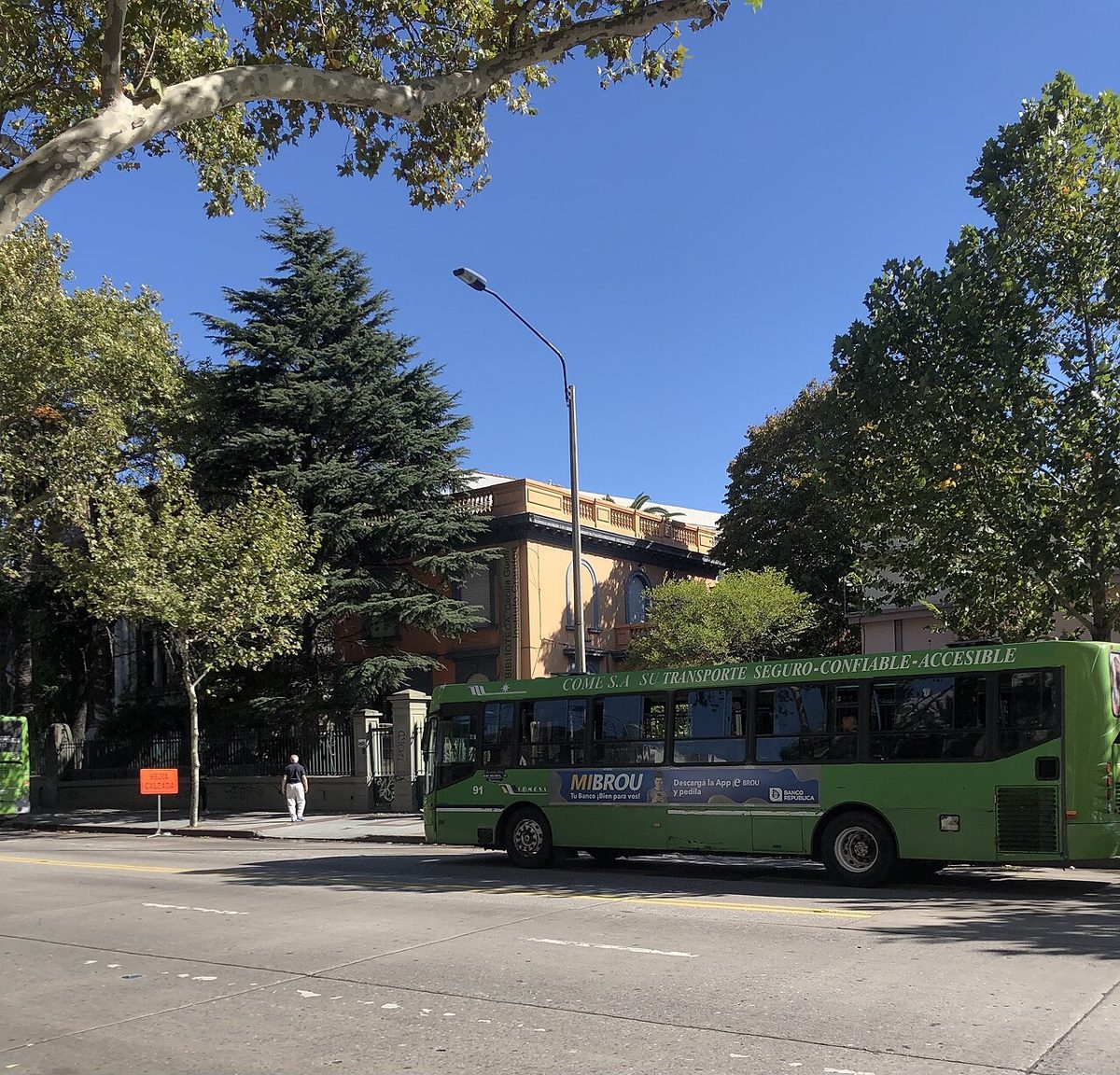
What you will notice is that none of these itineraries reach into wine country or the interior. That is deliberate. Those regions are where I stop pretending the bus is enough. For everything on the coast spine, though, the intercity network does the heavy lifting, and the full guide to travelling Uruguay by bus is your reference for booking and operators.
Costs and time: car-free versus renting
The honest comparison is not as one-sided as either camp claims, so let me lay it out.
On pure cost, going car-free wins for solo travellers and couples who stick to the coast. Intercity bus fares are modest, often in the range of a dozen to twenty-odd US dollars for the big routes like Montevideo to Punta or Colonia, last I checked, and city buses are about a dollar. A rental, by contrast, stacks up daily charges, insurance, fuel, and parking, and Uruguayan fuel is not cheap. For two people doing a coastal loop, the buses are clearly the lighter spend.
The maths flips for groups and for the hard-to-reach regions. Four people splitting a rental can undercut four sets of bus tickets, and once you add the taxis, transfers, and tours that car-free travel to wine country or estancias requires, the cost gap narrows or disappears. A car you have already paid for makes those last-mile problems vanish.
On time, the car usually wins for flexibility but not always for the headline journey. The Montevideo–Punta bus is genuinely quick and frequent; you would not save much driving it, and you would lose the freedom to nap or work. Where the car buys real time is in the gaps: reaching a vineyard, a remote beach, or a ranch without waiting for a timetable that might not cooperate.
My rule of thumb: if your trip is coast-focused and you are one or two people, go car-free and pocket the savings. If you are a group, chasing wine country, or travelling in winter when buses thin out, price a rental seriously. Many travellers split the difference, basing themselves car-free and renting for just the two or three days they need to roam the interior.
| Factor | Car-free favours it when… | Renting favours it when… |
|---|---|---|
| Cost | Solo or a couple, coast-focused | A group of three or four splitting one car |
| Reach | Montevideo, Colonia, the resort coast | Wine country, estancias, remote beaches |
| Season | Summer, when buses run often | Winter, when timetables thin out |
| Effort | You would rather not drive abroad | You want door-to-door flexibility |
| Sustainability | You want a lighter footprint | Not really a factor |
Tips for getting around Uruguay without driving
A handful of things I learned the slightly hard way, so you do not have to.
Book the big intercity routes ahead in summer. The Tres Cruces terminal is the country’s beating transport heart, and on a January weekend the popular Punta and Colonia departures sell out. Off-season you can usually walk up and buy on the spot.
Carry small cash for city buses and the Cabo Polonio trucks. Cards are increasingly accepted on intercity services, but local fares and the dune transfer want cash, and small Rocha towns can have a single ATM that only works in summer.
Treat ride apps as a Montevideo-and-Punta tool, not a countrywide one. They work well in the big centres and evaporate the moment you reach somewhere like Colonia or the deep coast. The ride-hailing guide spells out exactly where coverage holds up.
Use the bus as a feature, not a chore. Uruguayan intercity coaches are comfortable, often with reclining seats and decent views of the rolling pampa. I have done some of my best trip-planning and napping on them. The reframe helps when a journey runs long.
Mind the off-season. I will keep hammering this because it catches people: winter timetables on the coast are a fraction of summer’s, and the further east you go, the more it bites.
Car-free by traveler type
The right answer changes depending on who you are, so here is the quick read for a few common travellers.
Solo travellers, this country is a gift. Buses are safe, the routes are simple, and you are never far from help. Going car-free also means you are not navigating foreign roads alone, which many solo visitors prefer. The dedicated notes on solo travel in Uruguay are worth a look, but the headline is: car-free suits solo travel here very well.
Couples chasing beaches, you are the ideal car-free case. Base yourselves on the coast spine, ride the buses between towns, and save the rental budget for an extra dinner or two.
Families with young kids, weigh it carefully. The buses are fine for the main routes, but the last-mile gaps, dragging a stroller across Cabo Polonio’s sand or waiting for a Rocha taxi, are harder with children. A rental for the trickier days can be worth the sanity.
Groups of friends and wine-and-interior seekers, do the maths on a rental. The moment your plans leave the coast spine or your headcount hits four, the car starts to make sense.
Uruguay without a car: your questions answered
Is Uruguay easy to travel without a car?
For the coast and the main cities, yes, easily. Montevideo, Colonia, Piriápolis, and the Punta del Este region are all linked by frequent, comfortable buses, and the towns themselves are walkable. It gets hard only when you head into wine country, remote estancias, or the deep coast in winter, where buses thin out or do not reach the final stretch.
How do I get from Montevideo to the beaches without driving?
Buses from the Tres Cruces terminal in Montevideo run to every major coastal town. Punta del Este departures leave roughly every half hour and take around two to two and a half hours. Piriápolis, La Paloma, and Punta del Diablo all have direct services too. Once you arrive, local buses, taxis, and walking handle the rest.
Can you get to Cabo Polonio without a car?
Yes, but with a twist: no private vehicles are allowed in at all. You take a bus to the highway entrance at the Portal del Cabo, then ride an official 4×4 truck over the dunes for about half an hour. The trucks run roughly hourly through the day in season. You can also walk in across the sand if you are feeling hardy.
Is Uber available across Uruguay?
Ride-hailing works well in Montevideo and the Punta del Este area, but it is patchy or absent elsewhere. Colonia, notably, has no Uber at all, only regular street taxis, and the deep coast is unreliable for apps. Treat ride-hailing as a big-city convenience rather than a countrywide guarantee, and keep a taxi number handy in smaller towns.
How much does car-free travel in Uruguay cost?
For a solo traveller or couple on the coast, it is cheap. Major intercity bus fares often run from a dozen to around twenty US dollars, and city buses are about a dollar, last I checked. That undercuts a rental once you factor in insurance, fuel, and parking, though groups of four splitting a car can come out even or ahead.
Is it safe to travel Uruguay by bus?
Uruguay is one of the safer countries in South America for bus travel. Intercity coaches are comfortable and reliable, terminals like Tres Cruces are well-run, and routes are straightforward. Normal travel sense applies, watch your bags, keep valuables close, but I have never felt unsafe on a Uruguayan bus, day or night, on the main routes.
Should I rent a car for Uruguay wine country?
If wine country is a real priority, lean toward yes. Carmelo’s wineries sit kilometres apart on rural roads with no bus service, so car-free visits mean hired taxis, transfers, or organised tours. Those work, but they add cost and rigidity. A rental, even just for the wine-region days, removes the friction entirely.
Final thoughts
Two weeks in, stepping off my last bus back into Montevideo, I had no regrets about skipping the rental. The coast spine of this country is a genuine car-free pleasure, the buses are better than you expect, and the towns reward people who arrive slowly and on foot.
What I would tell my past self is simply this: be honest about where you are going. If your Uruguay is Montevideo, Colonia, and the beaches, leave the car at the rental desk and enjoy the ride. If it reaches into wine country, the interior, or the deep coast in winter, plan for the gaps, or rent for just those days. The country makes car-free travel easy right up until it does not, and knowing exactly where that line falls is the whole game.
Start with the parent guide to getting to Uruguay for the big-picture arrival logistics, then let the route guides fill in the rest. And if all you do is bus the coast and walk the rambla, you will still have seen the best of the place. For ideas on where those beaches actually are, the rundown of the best beaches in Uruguay pairs nicely with this car-free plan.

Credits & sources
Sources & further reading
- Rocha tourism board: Cabo Polonio entry and exit schedules
- COT: intercity bus timetables and fares
- Tres Cruces bus station overview
Photo credits
All images via Wikimedia Commons: Tres Cruces Terminal Montevideo by NaBUru38 (CC BY-SA 4.0); Colonia Del Sacramento Calle by Banfield (CC BY-SA 3.0); Cabo Polonio Dunes Lighthouse by Miriam Edith Leal (CC BY-SA 4.0); Omnibus Uruguay Coast Road by JacobinoWunsh (CC BY-SA 4.0); Piriapolis Rambla Seafront by Andrés Franchi Ugart… (CC BY-SA 3.0).