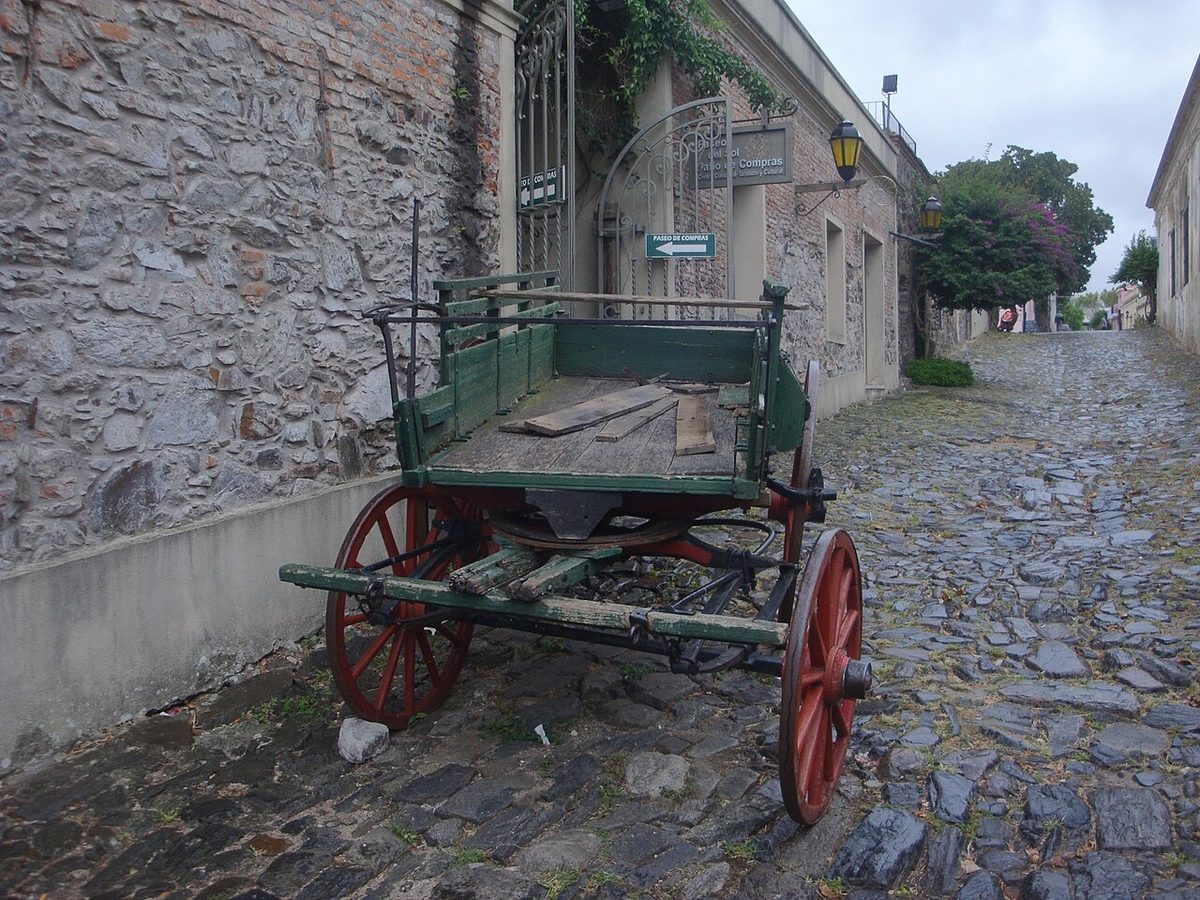
Montevideo to Colonia: How to Get There & Is It Worth It (2026)

The bus pulled out of Terminal Tres Cruces on a grey Tuesday morning — the first leg of a journey montevideo to colonia del sacramento that I’d been putting off for no good reason. Thirty minutes later Montevideo’s low-rise suburbs gave way to something quieter: flat green fields, a few cattle, the faint silver line of the Río de la Plata appearing and disappearing through the window. Two hours after that I stepped off in Colonia del Sacramento into warm afternoon light, the cobblestones of the Barrio Histórico barely ten minutes’ walk from where the bus had stopped.
It remains one of the simplest, most satisfying journeys I’ve made in South America.
The quick answer: how to get from montevideo to colonia del sacramento
The best way to make the trip from montevideo to colonia del sacramento is by direct bus. Two companies — COT and Turil — run frequent services from Terminal Tres Cruces in Montevideo to the Terminal de Ómnibus in Colonia. Direct departures take around 2 hours 20 minutes; slower services that stop along Ruta 1 can take up to 3 hours. Tickets run roughly 400–550 UYU (around USD 10–14). Budget travellers and solo visitors should take the bus. Drivers get the same journey in about 2 hours 15 minutes. Remises (private car hires) cost considerably more and don’t add meaningful time savings.
This guide covers every option in detail — schedules, how to book, what the journey is like, and whether it’s worth combining both cities in one trip.
Who this guide is for
You’re planning a day trip to Colonia from Montevideo, or you want to spend a night or two before catching the ferry to Buenos Aires. Maybe you’re building a broader Uruguay itinerary and wondering whether Colonia fits. Possibly you’re doing 3 days in Uruguay and want to squeeze in both cities. This guide lays it all out plainly so you can decide.
For the full picture of how Uruguay connects to the wider region, see our getting to Uruguay overview.
At a glance: Montevideo to Colonia del Sacramento
| Option | Duration | Approximate cost | Frequency | Best for |
|---|---|---|---|---|
| Bus (direct, COT / Turil) | 2h 20min | 400–550 UYU (≈ USD 10–14) | Every 2–3 hours, 5am–10pm | Solo travellers, budget trips, day-trippers |
| Bus (stops at Colonia Valdense, etc.) | 2h 50min–3h | 400–500 UYU (≈ USD 10–13) | Multiple departures daily | Flexible travellers happy to add an hour |
| Car rental / own car | 2h 15min | Fuel ≈ USD 15–20 + rental | Anytime | Families, those making stops along Ruta 1 |
| Remis (private car hire) | 2h 15min | USD 70–120+ | On demand | Groups sharing cost, maximum comfort |
| Terminal in Montevideo | Terminal Tres Cruces (Bulevar Artigas & Bulevar España) | |||
| Arrival point in Colonia | Terminal de Ómnibus Colonia del Sacramento (10 min walk to old town) | |||

By bus: the most practical way
The bus is the obvious choice for most travellers, and it earns that status honestly. The road between Montevideo and Colonia del Sacramento — mostly Ruta 1, running south-west along the Río de la Plata — is well-maintained, flat, and largely traffic-free. You sit back, watch the countryside, and arrive without the stress of parking in a city whose old streets were not designed for motor vehicles.
Terminal Tres Cruces: where to catch the bus
All long-distance buses from Montevideo depart from Terminal Tres Cruces (Tres Cruces terminal), a large modern bus terminal near the junction of Bulevar Artigas and Bulevar España. It’s attached to a shopping mall, which means food options, ATMs, luggage storage, and toilets before you board. From central Montevideo (Ciudad Vieja, the rambla, or Pocitos), the terminal is roughly a 15–20 minute taxi or Uber ride.
The terminal has ticket counters for both COT and Turil side by side on the main floor. You can buy in person or — increasingly convenient — online or via the companies’ apps. Worth knowing: Terminal Tres Cruces is a well-run, safe facility. I’ve waited here for late buses more than once and never felt anything other than comfortable.
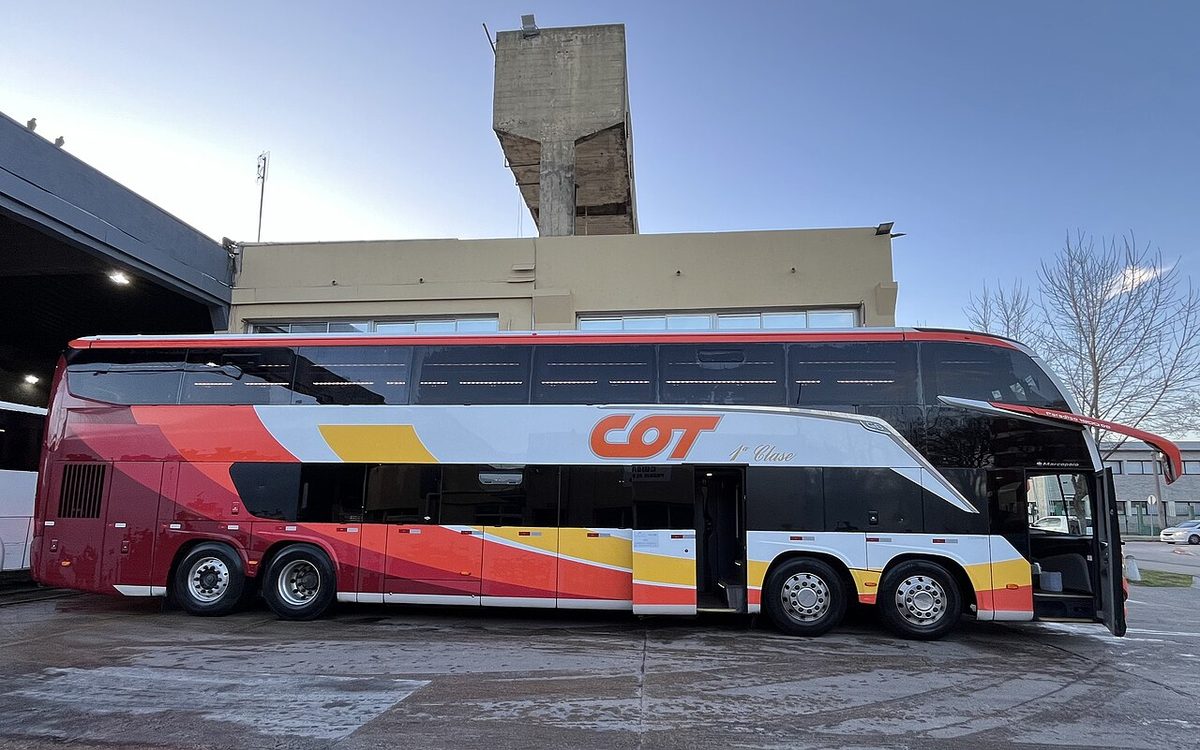
COT: the main operator
COT (Compañía Oriental de Transportes) is the dominant carrier on the Montevideo–Colonia route and the one I’d recommend by default. Their direct services cover the 177km in around 2 hours 20 minutes. Buses are modern single-deckers with reclining seats, air conditioning, onboard WiFi (adequate for browsing, not for streaming), and a small WC. The drawback: COT’s website and app are in Spanish only, and navigating them without some Spanish — or Google Translate — takes a moment of patience.
A typical COT direct schedule (subject to change — verify at cot.com.uy before you travel):
- Direct departures: roughly 7:45, 9:30, 11:30, 13:30, 15:30, 17:30
- Semi-direct (more stops, 2h 50min): 5:00, 6:00, 7:45, 9:30, 11:30, 13:30, 15:30, 17:30, 19:30, 21:00, 22:00
Prices run approximately 400–550 UYU one-way (roughly USD 10–14 at 2026 rates). Book a day or two ahead for weekend travel and during Carnaval; the 11:30 departure in particular fills up fast on Saturdays.
Turil: the alternative
Turil is the second operator on this route, with services roughly every 3 hours throughout the day. Coaches are of a similar standard to COT — long-distance motor-coaches, not city buses — and arrive at the same Terminal de Ómnibus in Colonia. The one practical issue with Turil: their website is Spanish-and-Portuguese only, and when booking online it’s not always obvious whether you’re selecting a direct service or the slower one that makes every stop. Look for the word “directo” next to your departure time, or ask at the counter.
Turil is an equally valid choice. I’ve taken both; the journey experience is essentially the same. COT simply runs more direct departures.
Buying tickets
Three options:
- At the terminal — Walk up to the COT or Turil counter at Terminal Tres Cruces and buy on the spot. Works fine for weekday travel or early morning departures that fill slowly. The staff speak basic English.
- Online — cot.com.uy and turil.com.uy both allow online booking. You’ll need to navigate menus in Spanish; Google Translate on your phone handles this easily. You can select seats.
- Third-party platforms — Checkmybus and Rome2rio aggregate departures and link through to booking, which can simplify comparison if you’re still deciding on times.
What the bus journey is like
Honest assessment: pleasant but not spectacular. The first twenty minutes take you through Montevideo’s outskirts — industrial sheds, car dealerships, the kind of urban edge-land that every Latin American city produces. Then Ruta 1 opens up, and the landscape turns agricultural: rolling fields, eucalyptus plantations, the occasional flock of sheep. The Río de la Plata appears on your right as you near Colonia. It’s wide enough to look more like open sea than a river.
The bus seats are comfortable and the AC runs cold (bring a layer in winter). WiFi works intermittently. Most passengers are Uruguayan locals commuting between cities, a smattering of backpackers, and tourists doing the Colonia–Buenos Aires hop.

Arriving in Colonia
The Terminal de Ómnibus in Colonia del Sacramento is compact and easy to navigate. Luggage storage is available by the hour (paid in Uruguayan pesos, around USD 3–5 for a half-day), useful if you want to drop bags and walk into the old town unencumbered. The ferry terminal for Buenos Aires is about 5 minutes on foot from the bus station. The Barrio Histórico — the UNESCO-listed old colonial quarter with its cobbled lanes, Portuguese lighthouse, and 17th-century walls — is around 10 minutes’ walk.
There are no taxis or transfers necessary from the terminal unless you’re heading to accommodation on the far edge of town.
By car: the scenic option
Driving from Montevideo to Colonia del Sacramento takes roughly 2 hours 15 minutes and covers around 177km. The route is almost entirely Ruta 1, a good two-lane highway heading south-west from the capital. Google Maps keeps trying to route you via smaller roads — ignore it; Ruta 1 is faster and better maintained.
Route and stops along the way
The drive itself is relaxed. There’s one noteworthy stop: Colonia Valdense, a Waldensian colony about 40km before Colonia del Sacramento, with its distinctive church and Swiss-Italian heritage. Worth a 20-minute stretch if you’re in no rush. Some drivers also stop at Nueva Helvecia (a small Swiss-German settlement known for its cheese) before continuing to Colonia.
Fuel costs depend on your vehicle; budget around USD 15–20 for a standard car doing the round trip. There are petrol stations at regular intervals on Ruta 1.

Parking in Colonia del Sacramento
This is the honest drawback of driving: parking in the Barrio Histórico itself is limited, and the cobblestone streets are genuinely narrow. Most visitors park on the streets just outside the old quarter (along Calle Washington Barbot or near Parque Manuel Lobo) and walk in. It is free in most areas. During summer weekends and public holidays, spots fill by 11am. If you’re staying overnight, check whether your posada has parking — many of the better ones do.
Car rental from Montevideo
All major rental agencies (Hertz, Europcar, Localiza) operate at Carrasco International Airport (MVD) and in the city centre. Expect to pay USD 40–80 per day for a basic vehicle, plus fuel. Driving in Uruguay requires a valid driving licence from your home country; an International Driving Permit is recommended but rarely demanded in practice. Note that you cannot cross into Argentina in a rented Uruguayan car without specific cross-border documentation — which is fine if your trip is entirely within Uruguay, but worth knowing if you’re continuing to Buenos Aires by road.
By remis or taxi
A remis is a private car hire — less a taxi (which you hail on the street) and more a pre-booked, fixed-price transfer. For a door-to-door service between Montevideo and Colonia del Sacramento, expect to pay USD 70–120+, depending on the company and vehicle size. The journey time is the same as driving yourself: around 2 hours 15 minutes.
For solo travellers this makes no financial sense compared to a USD 12 bus ticket. For a group of four sharing the cost, or for travellers with significant luggage, it becomes more reasonable. Book through your hotel or via apps like Uber (which in Uruguay sometimes connects you with remis-style longer journeys) or local companies such as Radio Taxi Montevideo.
Comparing the options
| Bus | Car | Remis | |
|---|---|---|---|
| Cost (approx) | USD 10–14 | USD 15–20 fuel + rental | USD 70–120 |
| Duration | 2h 20min–3h | 2h 15min | 2h 15min |
| Flexibility | Fixed schedule | Depart any time; make stops | Depart any time |
| Luggage | Overhead + hold | Boot | Boot |
| Parking needed | No | Yes (limited in old town) | No |
| Best if you… | Travel solo or as a couple | Have family, or want Ruta 1 stops | Travel in a group and value ease |
What to do once you arrive in Colonia del Sacramento
The city is small enough to cover on foot in a day, though that selling point also means you should set realistic expectations. This is a town of 27,000 people with one standout neighbourhood: the Barrio Histórico, the colonial-era quarter that earned its UNESCO World Heritage status in 1995. Reading up on the town’s contested colonial past before you walk it makes the ruins and the odd street plan far more interesting. Within that compact grid of cobbled streets you’ll find the Portuguese lighthouse (climb it for river views), the ruins of the 17th-century Convento de San Francisco, the Calle de los Suspiros (Street of Sighs), and several small museums. Outside the old town, the riverside promenade and the municipal beach are pleasant but unremarkable.
For eating in Colonia, the old town’s restaurants skew touristy in price but decent in quality. Local fish — pejerrey, dorado — and chivito sandwiches are worth seeking out. Mate (Uruguay’s ubiquitous herbal drink, served in a hollowed gourd with a metal straw) appears everywhere; accept any offer to share.
The complete Colonia del Sacramento guide covers the sights, food, and accommodation in much more depth.

Combining Montevideo and Colonia in one trip
The most common itinerary is a day trip — leave Montevideo on the 9:30 or 11:30 bus, arrive by early afternoon, spend 3–5 hours in the old town, and catch a late afternoon or evening bus back. This works, but it leaves little margin for error and forces you to skip lunch properly or rush the museums.
A better option: stay one night in Colonia. This lets you catch the old town in the golden evening light (when most day-trippers have left), enjoy a leisurely dinner, and spend the following morning exploring before catching the noon bus back to Montevideo. The accommodation options in Colonia range from character-filled colonial posadas to simple guesthouses; check our where to stay in Colonia del Sacramento guide for specifics.
If you’re arriving via Argentina — a common route through the region — it’s easy to do Buenos Aires, Colonia by ferry, then a bus to Montevideo. We’ve covered this in our Colonia day trip from Buenos Aires piece, which is the reverse of this journey. For the broader multi-country loop, our Argentina and Uruguay itinerary maps it all out.
Colonia is also a natural add-on when doing day trips from Montevideo — it’s by far the easiest and most rewarding of the options within a 3-hour radius.
Planning your visit: when to go and how long to spend
Colonia del Sacramento is pleasant year-round, but the seasons shape the experience meaningfully:
- December–February (Uruguayan summer): Warmest and busiest. Buses fill up, especially on weekends. The Barrio Histórico gets crowded by noon. Book tickets at least 2 days ahead; accommodation well in advance.
- March–May (autumn): My personal recommendation. Warm enough for comfortable walking, fewer day-trippers, better light for photography. The city is at its unhurried best.
- June–August (winter): Cool (8–15°C) and quiet. Some smaller restaurants reduce hours. The old town feels almost deserted on weekday mornings — peaceful, if you dress for it.
- September–November (spring): Increasingly warm and busy. Easter Week brings significant crowds; Carnaval (February) makes Montevideo a destination in itself, so the timing around those dates affects the whole trip.
For day-trippers, a minimum of 4 hours in Colonia is realistic. For an overnight trip, 1 night plus 2 half-days is ideal. Longer than that and you’ll exhaust the Barrio Histórico’s sights, though the town’s relaxed pace suits those who want to read, eat, and drink mate by the river. See our broader Montevideo travel guide for ways to fill the rest of your trip.
Montevideo to Colonia del Sacramento: your questions answered
How long does the bus from Montevideo to Colonia del Sacramento take?
Direct services (COT, several times daily) take around 2 hours 20 minutes. Semi-direct buses that stop at Colonia Valdense and other towns along Ruta 1 take 2 hours 50 minutes to 3 hours. The difference matters if you’re connecting to a ferry to Buenos Aires — build in at least 90 minutes at the Colonia terminal before your ferry boarding time.
How much does the bus from Montevideo to Colonia cost?
Tickets run approximately 400–550 Uruguayan pesos one-way, which works out to roughly USD 10–14 at 2026 exchange rates. Prices fluctuate with the UYU–USD rate; check cot.com.uy or turil.com.uy for current fares when booking. Third-party sites often list prices in USD for easier comparison but may add a small booking fee.
Do I need to book the bus in advance?
For weekday travel in the low season (May–November), you can usually buy at the terminal on the day. For weekend departures, peak summer (December–February), public holidays, or the popular 11:30 and 13:30 direct services, book 1–2 days ahead. The 11:30 departure is consistently the busiest — I’ve arrived 45 minutes early and found it already half-full. Online booking via cot.com.uy is straightforward if you can navigate a little Spanish.
Is Colonia del Sacramento worth visiting from Montevideo?
Yes, with one honest caveat: it’s a small town, and if you expect a packed city-break itinerary, you’ll exhaust it by mid-afternoon. What Colonia does exceptionally well is atmosphere — the Barrio Histórico’s cobblestoned streets, bougainvillea walls, and wide river views reward slow walking and lingering lunches. Travellers who want museums, nightlife, and variety are better served staying in Montevideo. Those who want a genuine colonial time-warp beside the Río de la Plata will not be disappointed. It is, without question, one of the best day trips from Montevideo.
Where exactly does the bus arrive in Colonia del Sacramento?
At the Terminal de Ómnibus Colonia del Sacramento, located at the corner of Manuel Lobo and Rivadavia, a short walk from both the Barrio Histórico and the Buquebus/Seacat ferry terminal to Buenos Aires. There are toilets, luggage storage, a small cafe, and ticket counters at the terminal. No taxi or transfer is needed to reach the old town unless you have heavy luggage or limited mobility.
Can I drive from Montevideo to Colonia del Sacramento?
Yes, and it’s a straightforward drive of around 177km via Ruta 1, taking approximately 2 hours 15 minutes. The road is well-maintained and mostly flat. The drawback is parking in Colonia’s Barrio Histórico, where streets are narrow, cobblestoned, and congested on weekends. Most drivers park on the edge of the old quarter and walk in. Rental cars are available at Carrasco Airport and Montevideo city centre; standard rates run USD 40–80/day before fuel.
Is there a ferry from Montevideo to Colonia del Sacramento?
There is no direct passenger ferry between Montevideo and Colonia del Sacramento on the Uruguayan side. Ferries do operate between Buenos Aires (Argentina) and Colonia — operated by Buquebus and Seacat — which is the most common way travellers arrive in Colonia if coming from Argentina. If you want to combine all three cities, the standard loop is Montevideo by bus to Colonia, then Colonia by ferry to Buenos Aires, or the reverse. Our Buenos Aires to Colonia day trip guide covers the ferry leg in detail.
Final thoughts
The journey from Montevideo to Colonia del Sacramento is one of the easiest inter-city trips in South America. Two hours on a comfortable bus, a ticket that costs less than a restaurant lunch, and you’re standing in one of the continent’s most photogenic colonial towns. The bus — COT direct is my consistent recommendation — handles everything you need it to: punctual, air-conditioned, good legroom, and it drops you five minutes from the ferry terminal if Buenos Aires is next on your list.
Driving suits families or anyone who wants to make stops along Ruta 1. A remis makes sense for a group of four splitting the cost. For solo travellers and couples, the bus wins on every metric that matters.
Take the early bus to make the most of your day. Stay overnight if you can. Wander the Barrio Histórico after the day-trippers leave. Drink mate by the river. Come back to Montevideo with a sunburn and a posada business card you’ll keep meaning to return with.
For everything else about Colonia, the Colonia del Sacramento complete guide is where to start.
Credits & sources
Sources & further reading
- COT (Compañía Oriental de Transportes) — official timetables and online booking
- Turil — official timetables and booking
- UNESCO World Heritage — Barrio Histórico of the City of Colonia del Sacramento
- Rome2rio: Montevideo to Colonia del Sacramento — aggregated transport options and real-time fares
Photo credits
All images via Wikimedia Commons: Terminal Tres Cruces Montevideo by Iván Iparraguirre (CC BY-SA 3.0); Ruta 1 Uruguay Highway Colonia by butiacero (CC BY-SA 3.0); Colonia Del Sacramento Old Town Gate by User:HalloweenHJB (CC BY-SA 3.0); Colonia Del Sacramento Lighthouse Barrio Historico by Heretiq (CC BY-SA 3.0); Rio De La Plata Colonia Riverfront by Banfield (CC BY-SA 3.0); Cot Bus Uruguay Colonia by Marinna (CC BY-SA 4.0).