Barrio Histórico: Walking Colonia’s UNESCO Quarter (2026)
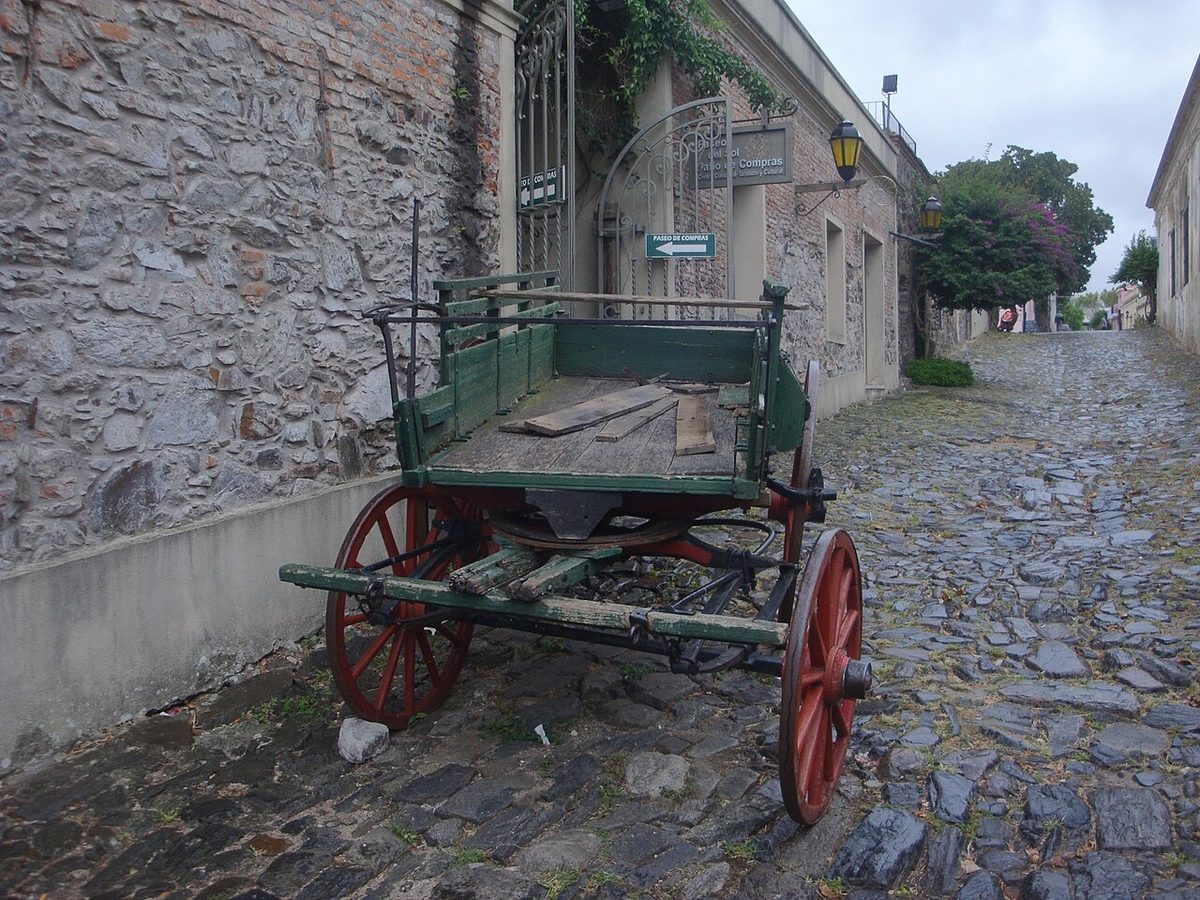
The ferry from Buenos Aires had barely docked when I found myself standing at the Portón de Campo, the old city gate, looking down a street so unchanged it felt like a stage set. But it wasn’t performance — the cracked plaster walls, the terracotta roof tiles, the lanterns going green with age: all of it real, all of it lived in. That first ten minutes in the barrio historico colonia del sacramento told me I was somewhere worth slowing down for.
What is the Barrio Histórico of Colonia del Sacramento?
The Barrio Histórico (historic quarter — Uruguay’s term for its protected colonial core) of Colonia del Sacramento is a 19-hectare peninsula on the eastern bank of the Río de la Plata, inscribed as a UNESCO World Heritage Site in 1995. It is the only surviving example of Portuguese urban planning in South America, a tightly packed grid of cobblestone lanes, single-storey colonial houses, riverside bastions and 17th-century ruins that you can walk end to end in under two hours. This barrio historico colonia del sacramento guide covers every street, site, eating option and practical detail you need to do it justice.
Who this guide is for
This article suits anyone making the Buenos Aires to Colonia day trip, spending a night or two in Colonia, or threading it into a longer Argentina and Uruguay itinerary. It is written from boots-on-the-ground visits, not compiled from other articles. I have walked these streets multiple times in different seasons and I’ll tell you when something isn’t worth your time as well as when it is.
Barrio Histórico at a glance
| Highlights | Calle de los Suspiros, Puerta de la Ciudadela, Plaza Mayor, Faro de Colonia, Convento de San Francisco ruins, Basílica del Santísimo Sacramento, Municipal Museum cluster |
|---|---|
| Walking time to cover it | 90 minutes at pace; 3–4 hours if you stop at every site and take coffee |
| Entry | The quarter itself is free to enter. The lighthouse costs around UYU 100 (roughly USD 2.50). Museum cluster pass ~UYU 300 (USD 7) for eight small museums |
| Best time to go | 7–9 am (empty streets, golden light) or 4–6 pm (warm light, cooler air). Avoid midday in summer |
| What to wear | Sturdy flat shoes — cobblestones are beautiful but uneven and slippery when wet |
| UNESCO designation year | 1995 (inscribed under Criterion iv) |
A brief, violent history
Portugal founded Nova Colonia do Santíssimo Sacramento in 1680, placing it on a small peninsula facing Spanish Buenos Aires across the Río de la Plata — a body of water so wide here it looks more like sea than river. The location was a provocation. Spain wanted the land, Portugal held it, and over the following century the city changed hands no fewer than seven times, each occupation leaving its mark on the architecture, the street plan and the ruins still visible today.
What makes Colonia’s layout unusual is its refusal of the “checkerboard” grid mandated by Spain’s Laws of the Indies. The streets curve and narrow and open unexpectedly — because they were laid out by Portuguese town-planners following the topography rather than a bureaucrat’s ruler. When Uruguay achieved independence in 1828, the city was already old. It slowly fossilised into exactly the kind of photogenic, low-rise, rough-plastered perfection that draws visitors today.
For a full picture of the city beyond the barrio, the Colonia del Sacramento complete guide covers neighbourhoods, transport and accommodation across the whole town.

barrio historico colonia del sacramento: the streets
Calle de los Suspiros
No street in Uruguay is photographed more often than Calle de los Suspiros (Street of Sighs — literally “sighs,” and the name fits the mood). It runs for about 50 metres between the Plaza Mayor and the river wall, paved with the original rounded stones that have been smoothed by three centuries of footfall. The houses on either side date from the early 18th century: low, whitewashed, with two-sloped roofs that show Portuguese influence clearly. Some have terracotta pots of geraniums on the sills. A few are simply ruins, which adds rather than subtracts.
The origin of the name is genuinely disputed. One account holds that condemned prisoners were marched down this lane to the cells near the water. Another says it refers to the sighs of sailors leaving their sweethearts after shore leave. A third theory points to the gusts of river wind that channel through the narrow space. All three are plausible; none is proven. I prefer the ambiguity.
The honest drawback: the street is extremely short. Once it fills up with tour groups around mid-morning, moving through it is awkward and the photography is ruined. Go at 7 am or wait until after 5 pm.
Calle Comercio
Running parallel to the river on the southern edge of the quarter, Calle Comercio is less famous than Calle de los Suspiros but easier to actually walk. The buildings here show more variety — some Portuguese-era, some rebuilt in the 19th century, some cheerfully painted in ochre and terracotta, some left in bare stone. A handful of small restaurants and artisan shops occupy the ground floors. This is where local workers eat lunch rather than where tourists go specifically to eat, which means the food is cheaper and the welcome more genuine.
The street connects the Plaza Mayor to the lighthouse end of the peninsula, making it a natural return route after you’ve walked down toward the water.

The key sites in the Barrio Histórico
Puerta de la Ciudadela
The Puerta de la Ciudadela (Gate of the Citadel) is the formal entrance to the Barrio Histórico from the modern town. What you see today is a partial reconstruction — the original Portuguese gate, built in 1745, was partly demolished by Spanish forces and what survived was restored in the 20th century. The stone archway frames a view down into the quarter, and just inside it you can see sections of the original 17th-century fortification walls running to either side.
Allow ten minutes here to inspect the walls up close. The stonework is genuinely old, rough and thick, and you can appreciate both the military logic of the placement and the quality of the original construction. The drawbridge mechanism no longer operates but the iron fittings are still there.
Plaza Mayor
The Plaza Mayor (main square) sits at the geographic and social heart of the Barrio Histórico. It is not a grand square in the Buenos Aires or Lima sense — it’s modest, tree-shaded, surrounded by single-storey colonial houses and the odd café table spilling onto the cobbles. A well in the centre dates to the colonial period. Cats, apparently unconcerned by history, tend to occupy the warm stones around it.
On weekend mornings a small craft market sets up around the plaza. The quality is variable — there’s plenty of mate gourd sets (mate is Uruguay’s national caffeine ritual, a bitter herbal drink consumed from a gourd through a metal straw) alongside some genuinely good leatherwork and ceramics. Prices are negotiable if you speak Spanish.
The plaza is also the central node for the eight small museums that operate on a single combined ticket. The Museo Municipal is the most substantive, with colonial-era artefacts, fossils and navigational equipment. The Casa de Nacarello, a preserved 18th-century Portuguese house a minute’s walk away, is the most atmospheric. The Museo Portugués covers maps, furniture and domestic objects from the Portuguese period. None is large. Give them ninety minutes total, not more.
Faro de Colonia (the lighthouse)
The lighthouse — faro in Spanish — is 26 metres tall, built in 1857 from the stones of the ruined Convento de San Francisco that had stood on the same spot since the 1690s. It is the highest point in the Barrio Histórico, which is not saying a great deal given that the quarter is largely flat, but the view from the top of the spiral staircase is genuinely worth the climb and the small entry fee.
From the top you look west across the Río de la Plata — on clear days you can see the Argentine shore, and on extremely clear winter mornings the Buenos Aires skyline is faintly visible some 50 kilometres away. You look east over the terracotta rooflines of the barrio itself, which is the better photograph. The staircase is iron, narrow and steep: not recommended if you have difficulty with heights or confined spaces.
One honest drawback: the lighthouse keeps variable hours and has been known to close without warning for maintenance. Check the gate is open before assuming you can climb — if it’s shut, the ruins below are still worth your time.

Ruins of the Convento de San Francisco
The stone skeleton of the Convento de San Francisco stands immediately beside the lighthouse, roofless and open to the sky, with the lighthouse rising from what was once the convent’s bell tower. The Franciscan convent was one of the first permanent buildings the Portuguese erected here, started in the 1690s. It was damaged in multiple sieges, partially rebuilt, and eventually stripped for its stone when the lighthouse was constructed in the 19th century.
What remains — three walls of a nave, some archways, the base of columns — is genuinely evocative. Grass grows between the flagstones. The river is visible through the openings. If you’ve come to Colonia for the layers of history rather than just the pretty streets, this is the spot to linger. There is no entry charge and no signs telling you what to think. You can sit on the wall and drink your takeaway coffee here. I have, repeatedly.
Basílica del Santísimo Sacramento
The Basílica del Santísimo Sacramento faces the Plaza Mayor from its western side. The current structure dates largely to 1808, though it was built over earlier Portuguese foundations that go back to the earliest years of the settlement. The exterior is white-painted, the bell tower visible from across the quarter.
Inside, the church is cooler than the streets and calmer than the museums. The interior is whitewashed and relatively spare by South American colonial church standards — no gold leaf extravaganza, which suits the modest scale of the town. Mass is still held regularly; if you arrive during a service, wait outside or enter quietly and sit at the back. The church is free to enter outside service times.
Portón de Campo and the fortification walls
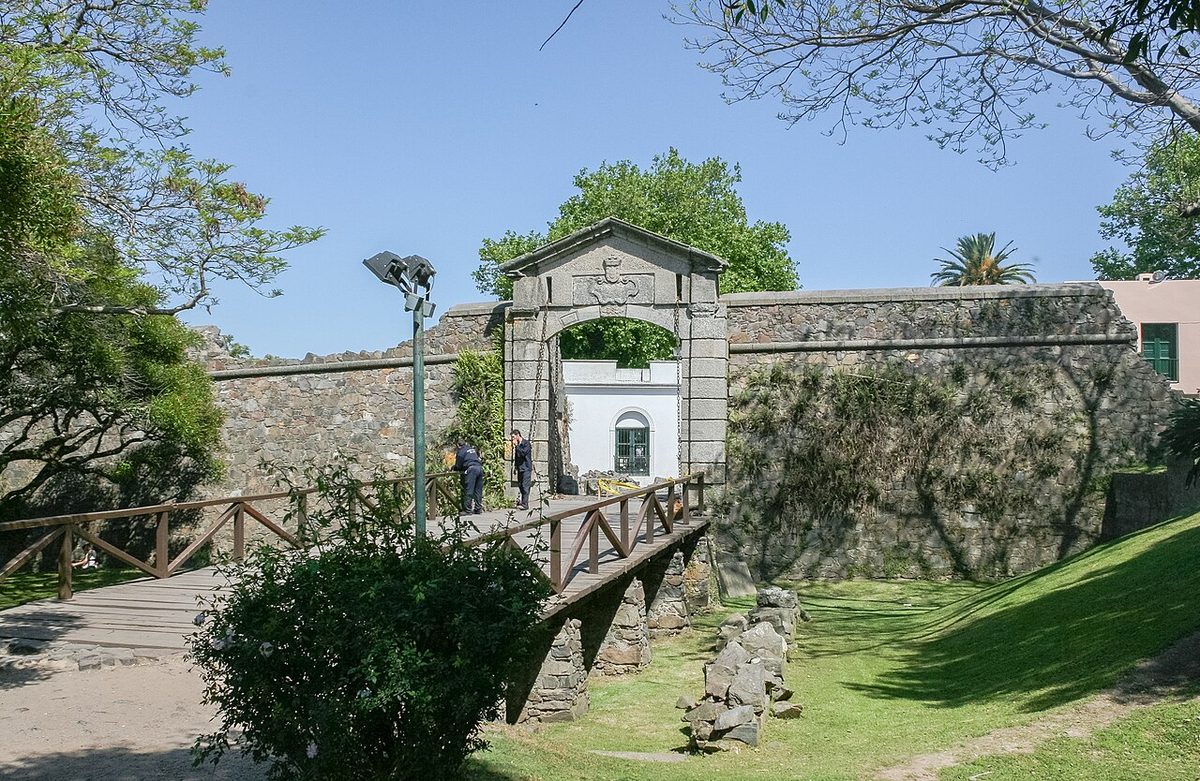
The Portón de Campo (Field Gate) at the northern entry to the quarter is where most visitors enter from the ferry terminal and the main town. The walls here are the most intact section of the colonial fortifications, running in a low arc around the landward side of the peninsula. Walking along their tops — or the path below them — gives a good sense of the original military design, with the Río de la Plata on three sides and a single defended approach on the fourth.
The moat that once protected the gate is now a depression filled with vegetation, but the outline is clear. The gatehouse itself is a solid Portuguese masonry structure, and the cannon emplacements just inside still hold their original artillery pieces, though whether they are originals or later additions depends on which guide you ask.

Where to eat and drink in the Barrio Histórico
Eating inside the Barrio Histórico comes with a straightforward trade-off: location and atmosphere are excellent, value for money is not always. The most tourist-facing restaurants on and around Plaza Mayor charge Buenos Aires prices for food that is often adequate rather than memorable. That said, a few places are genuinely worth your time and money.
Parrilla El Portón
A parrilla (Uruguayan wood-fired grill restaurant) near the gate entrance, with outdoor tables and a menu built around Colonia beef, which is good. The chivito — Uruguay’s iconic sandwich of beef, ham, egg, cheese and various additions — is better here than in most of the plaza-facing spots. It is cash-only and closes early, usually around 9 pm. The drawback is that the seating can be cramped at peak times and the outdoor tables get dusty when traffic passes.
El Drugstore
On Calle Vasconcellos, El Drugstore occupies a converted pharmacy and is one of the quarter’s better-known spots for coffee and light meals. The interior is a pleasing mix of old fittings and mismatched furniture. Good for a mid-morning coffee and pastry between sites. The drawback: it can feel performatively vintage and the prices reflect the Instagram traffic rather than the cooking.
Serrano Café
For river views, Serrano Café has a rooftop terrace that earns its reputation. Sit up there with a cortado (espresso with a small amount of milk, the standard coffee order in Uruguay) on a clear afternoon and the view west over the water is as good as anything in the barrio. The food is secondary to the setting, but the coffee is properly made. On busy weekends a queue for the terrace forms; arrive before noon or after 3 pm.
Las Tres Marías
On Plaza Mayor itself, Las Tres Marías is a reliable lunch option — traditional Uruguayan food, decent wine list, outdoor seating on the square. The service is unhurried to the point of occasionally maddening slowness, which is either a charm or a frustration depending on your schedule. Order the grilled fish if it’s on the daily specials: the Río de la Plata pejerrey (silverside) is good when fresh.
A suggested walking route
Enter via the Puerta de la Ciudadela from the modern town. Walk south on Calle de Portugal past the early colonial house façades. Turn right onto Calle de los Suspiros and walk the full length down to the river wall — this takes about four minutes if you don’t stop, much longer if you do. Turn left along the river path and you’ll reach the lighthouse and Convento ruins in another five minutes. Climb the lighthouse if it’s open. Return east past the convent to the rambla (riverside promenade), which is a good place to stop and drink something while watching the river. Work back north via Calle del Comercio to the Plaza Mayor. Visit the Basílica and at least one museum. Exit via the Portón de Campo, walking the fortification walls on the way.
Total distance: under two kilometres. Total time: from 90 minutes (fast, site-by-site) to a full day if you eat, drink and linger properly. The full-day version is the better choice.


Practical planning
Getting there
From Buenos Aires, the fast ferry (Buquebus, Colonia Express or Seacat) takes around one hour to 75 minutes. Book in advance for weekends and public holidays — the boats fill up. From Montevideo, the drive is roughly two hours on the Ruta 1 coastal road, or a 2.5–3 hour bus ride with COT or Turil from Montevideo’s bus terminal. Full transport options are covered in the Getting to Uruguay guide and in the piece on day trips from Montevideo.
When to visit
The Barrio Histórico is year-round. Summer (December to March) brings heat, humidity and the biggest crowds — particularly on Argentine holiday weekends when the ferries are packed and the quarter feels congested. March to May and September to November are the best months: mild temperatures, smaller crowds, the jacaranda and bougainvillea still in some colour. Winter (June to August) is quiet, cool and occasionally foggy, which gives the cobblestones and ruins a particular atmosphere that suits them. The light on a clear winter morning is extraordinary.
How long do you need?
A day trip from Buenos Aires gives you five to six hours on the ground, which is enough to see everything in the barrio if you move purposefully. Staying one night changes the experience significantly — the quarter empties of day-trippers by late afternoon and becomes a different, quieter place. I compare posadas inside and outside the walls if you decide to stay. For a broader Uruguay itinerary or a 3-day Uruguay trip, Colonia is the logical first stop coming from Argentina before heading to Montevideo.
Money and practicalities
Some cafés and small restaurants in the barrio are cash-only or prefer it. The ferry terminal has ATMs. The Uruguayan peso (UYU) is the local currency; Argentine pesos are not accepted as a rule, though some businesses near the ferry terminal may take them informally. Prices in tourist-facing restaurants inside the barrio are quoted in pesos but mentally priced for Argentine visitors, meaning they feel moderate to expensive for Uruguayan standards.
The cobblestones are uneven and slippery when wet. Flat-soled shoes or proper walking shoes are not a suggestion but a genuine requirement. Several visitors I’ve seen attempt the streets in heels have looked miserable.
Photography
The best light is in the first hour after sunrise for Calle de los Suspiros (the sun comes from the east and angles down the street) and the last hour before sunset for the lighthouse and rambla views west over the river. Midday light is harsh and flat. If you’re visiting on a day trip from Buenos Aires and the ferry arrives at midday, use the midday hours for museums and lunch, then photograph in the late afternoon before catching an evening boat back.
Barrio Histórico Colonia del Sacramento: your questions answered
Is the Barrio Histórico of Colonia del Sacramento free to visit?
The quarter itself costs nothing to walk through — there is no entry fee to enter the streets or the plaza. Individual sites charge modest fees: the lighthouse is around USD 2.50, and the combined museum pass covering eight small museums is around USD 7. The Basílica del Santísimo Sacramento is free. You can spend a rewarding half-day in the barrio spending almost nothing beyond food and drink.
How long does it take to walk the Barrio Histórico?
The whole quarter can be crossed on foot in under 15 minutes end to end. A complete tour of all the main sites — Puerta de la Ciudadela, Calle de los Suspiros, lighthouse, convent ruins, Plaza Mayor, Basílica and the museum cluster — takes a minimum of 90 minutes at a reasonable pace. Add meals, coffee stops and unhurried browsing and a full day is easily filled.
What is Calle de los Suspiros and why is it famous?
Calle de los Suspiros (Street of Sighs) is a 50-metre cobblestone lane dating to the early 18th century, connecting the Plaza Mayor area to the river wall. It is famous for its near-perfect preservation of Portuguese colonial architecture: low whitewashed houses with two-sloped roofs, rounded cobblestones and a narrow width that feels untouched by the last 300 years. The name’s origin is disputed — prisoner executions, sailors’ farewells and river winds are all proposed explanations. It is the most photographed street in Uruguay.
Can you climb the lighthouse in Colonia del Sacramento?
Yes, when it is open. The Faro de Colonia (1857) has a spiral iron staircase of approximately 100 steps leading to a viewing platform 26 metres above street level. The views extend over the barrio’s rooftops to the east and across the Río de la Plata to the west, with Buenos Aires visible on clear days. Entry costs around UYU 100 (approximately USD 2.50). The lighthouse keeps variable hours — it has been known to close for maintenance without notice, so check at the gate on arrival.
What is the best time of day to visit the Barrio Histórico?
Early morning — the first hour after sunrise — gives you near-empty streets and the best photography light on Calle de los Suspiros. Late afternoon from about 4 pm onwards is the next best option, with warm light and a cooling temperature. Midday is the worst time: harsh light, maximum crowds (especially if ferries from Buenos Aires have just arrived) and the heat in summer months. If you’re on a day trip with no choice about arrival time, use the midday hours for museums and lunch.
Are the museums in the Barrio Histórico worth visiting?
The eight-museum cluster is worth the combined ticket price if you have two hours to spare. The Museo Municipal and the Casa de Nacarello are the strongest — the former for its colonial artefacts and fossils, the latter for its preserved 18th-century domestic interior. The Museo Portugués is good for historical maps. The others are small and can be walked through quickly. None is a world-class museum experience; together they provide a solid grounding in Colonia’s history and are genuinely atmospheric in their colonial-era buildings.
Is Colonia del Sacramento worth visiting as a day trip from Buenos Aires?
Yes, convincingly so. The fast ferry crossing takes around an hour, the barrio is compact enough to cover in a day, and the contrast with Buenos Aires — scale, pace, architecture, sound level — is striking. The main risk of a day trip is arriving mid-morning with everyone else on the Buenos Aires ferry and leaving on the last boat, missing the barrio at its quietest and most atmospheric. If you can, take an early crossing and a late return, or stay one night. The Buenos Aires to Colonia day trip guide covers the logistics in full detail.
Final thoughts
The Barrio Histórico of Colonia del Sacramento is one of those places that rewards patience more than rushing. It is small enough that you can see it all in a morning, but it doesn’t give up its atmosphere on that timescale. The cobblestones need to be walked slowly. The convent ruins need to be sat with. Calle de los Suspiros needs to be seen empty, which means getting up early.
It is also a living place, not a museum piece, even if it sometimes looks like one. People live in those whitewashed houses. Locals walk their dogs on the rambla at dusk. The Basílica holds services for its congregation, not just for tourists. That ordinariness — the way real life continues inside a UNESCO World Heritage Site — is part of what makes the barrio genuinely affecting rather than merely picturesque.
For context on how this fits into the wider country, the best places to visit in Uruguay overview and the things to do in Uruguay guide are both good starting points. And if Colonia has whetted your appetite for more of this small, unhurried country, the Uruguay itinerary will help you plan what comes next.
Credits & sources
Sources & further reading
- UNESCO World Heritage Centre — Historic Quarter of the City of Colonia del Sacramento (Site 747)
- Welcome Uruguay — History of Colonia del Sacramento
- Wikipedia — Calle de los Suspiros
- Colonia UY — Calle de los Suspiros: historia, leyendas y arquitectura
Photo credits
All images via Wikimedia Commons: Barrio Historico Colonia Del Sacramento Gate by Diego Delso (CC BY-SA 3.0); Calle De Los Suspiros Colonia by Banfield (CC BY-SA 3.0); Plaza Mayor Colonia Del Sacramento by Ypsilon from Finland (CC0); Faro Colonia Del Sacramento Lighthouse by Heretiq (CC BY-SA 3.0); Convento San Francisco Ruins Colonia by TiziPro22 (CC BY-SA 4.0); Basilica Santisimo Sacramento Colonia by Carlos E. Gonzalez (CC BY-SA 3.0); Barrio Historico Colonia Overview by ogwen (CC BY-SA 3.0).