Birdwatching in Uruguay: Lagoons, Wetlands & 450+ Species (2026)
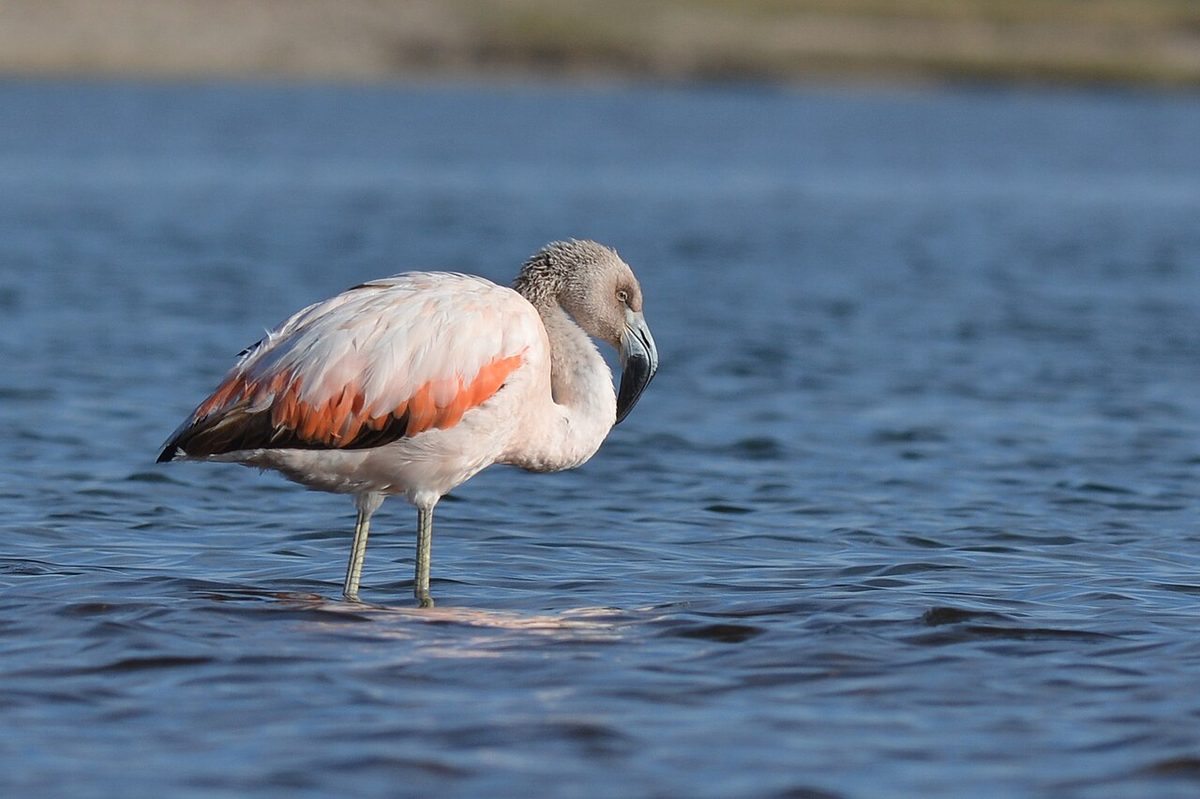
The flamingos didn’t move for a long time. I was crouched on the inner shore of Laguna de Rocha, an hour after sunrise, fingers cold around a thermos of mate, watching a loose pink line of two hundred birds stand in the shallows like they had nowhere better to be. Then the whole flock tipped into a slow shuffling feed. The light came up gold off the lagoon. A southern lapwing screamed behind me, and I sat there learning, again, to be patient.
Birdwatching Uruguay rewards stillness over adrenaline: a grassland-and-wetland scene with more than 450 recorded species, anchored by coastal lagoons in Rocha where Chilean flamingos, black-necked swans and dozens of shorebirds gather, best from spring through summer. No Andean endemics, no cloud forest. Just big open skies, easy sightlines, and birds you can actually watch.
This guide is for travelers who want to plan real days in the field — where to go, what you’ll see, when to come, and how to do it with or without a guide. I’m writing as someone who birds for pleasure, not a checklist machine, and I’ll flag the honest downside of every place I send you.
| Site | Department | Habitat | Star species | Best season |
|---|---|---|---|---|
| Laguna de Rocha | Rocha | Brackish coastal lagoon (Ramsar) | Chilean flamingo, black-necked swan, coscoroba | Sep–Feb |
| Laguna Garzón | Rocha / Maldonado | Coastal lagoon & sandbar | Terns, gulls, shorebirds, flamingos | Oct–Mar |
| Laguna de Castillos | Rocha | Lagoon & ombú woodland | Spoonbill, herons, screamer | Sep–Feb |
| Bañados del Este | Rocha / Treinta y Tres | Marshland biosphere reserve | Southern screamer, saffron-cowled blackbird | Oct–Mar |
| Esteros de Farrapos | Río Negro | River islands & floodplain (Ramsar) | Waterfowl, raptors, kingfishers | Sep–Dec |
| Santa Lucía wetlands | Canelones / Montevideo | River-mouth marsh near the capital | Waders, rails, herons | Sep–Apr |
| Cabo Polonio & coast | Rocha | Dunes, rocky points, ocean | Petrels, terns, oystercatchers | Year-round |
Why Uruguay punches above its size for birds
Numbers first, because they surprised me too. This is a country roughly the size of England or the state of Washington, and it has logged over 450 species — somewhere around 480 on the national list now, with two or three new records added most years. That’s about a quarter of Brazil’s avifauna in a country forty-odd times smaller, and close to half of Argentina’s list in a fraction of the area.
Geography does the heavy lifting. Uruguay sits on a seam where the Pampas grasslands meet Atlantic Forest influences from the northeast, with brackish coastal lagoons, the vast La Plata estuary, palm savannas and gallery forest all packed into a short drive. The land is open. There’s almost no dense canopy to hide birds in, which means you spend less time straining at silhouettes and more time actually watching behavior. That openness is what makes birdwatching Uruguay so beginner-friendly: the birds rarely hide.
Honest drawback, stated up front: if your dream list is glittering tanagers and hummingbirds, Uruguay will feel muted. The palette here is grassland browns, marsh greens, the pink of flamingos and the black-and-white of monjitas and screamers. It’s a subtle, patient birding scene. The payoff is access and views, not a parade of jewels.
The best birding sites in Uruguay
Most of the headline birding clusters in the east, in Rocha department, where a chain of coastal lagoons runs parallel to the Atlantic. I’ll start there, then move west and toward Montevideo so you can see how a route fits together. These are the places I’d actually drive to, in roughly the order I’d prioritize them.
Laguna de Rocha
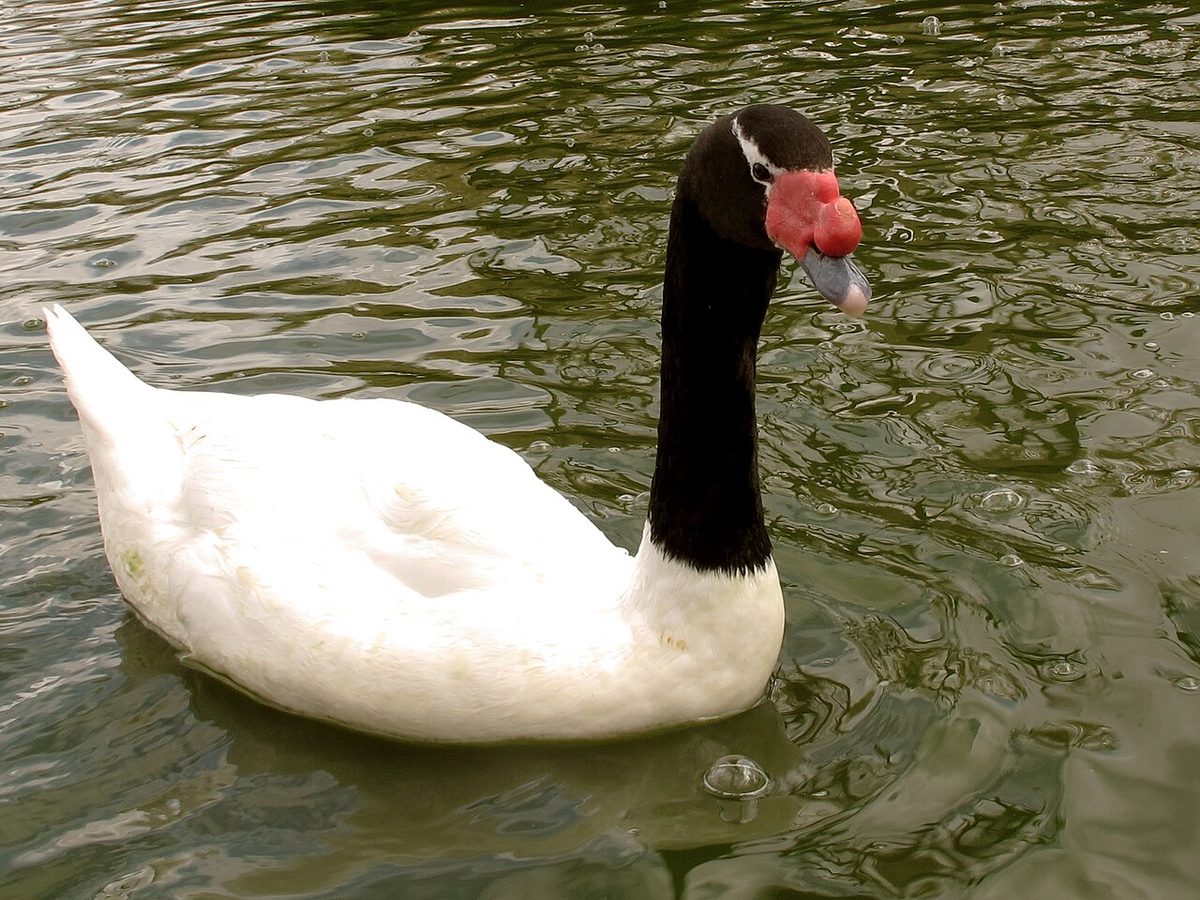
If you do one site, do this one. Laguna de Rocha is a brackish lagoon separated from the Atlantic by a sandbar that opens and closes with the seasons, and it’s a Ramsar wetland of international importance — designated in 2015. BirdLife flags it as an Important Bird Area for its populations of coscoroba and black-necked swans (cisne de cuello negro), Chilean flamingos (flamenco austral), buff-breasted sandpipers, straight-billed reedhaunters and black-and-white monjitas.
What that means in the field: huge mixed flocks. I’ve stood on the inner shore and scanned flamingos, both swan species, herons, ibises and a churning mass of migratory shorebirds in a single sweep of binoculars. The flamingos are the draw, and they’re usually present in good numbers from roughly September into February. The lagoon supports well over 200 species across the year.
Getting there is easy by Uruguayan standards. It sits just southwest of the city of Rocha, around a 30-minute drive, and roughly two and a half to three hours east of Montevideo on Route 9. There’s a ranger presence and a modest visitor setup on the La Paloma side. The honest drawback: the best shoreline viewpoints sit at the end of sandy, unsigned tracks, and after rain a low-clearance rental car will struggle. Come with a bit of clearance, or come with someone who knows the turns.
Laguna Garzón
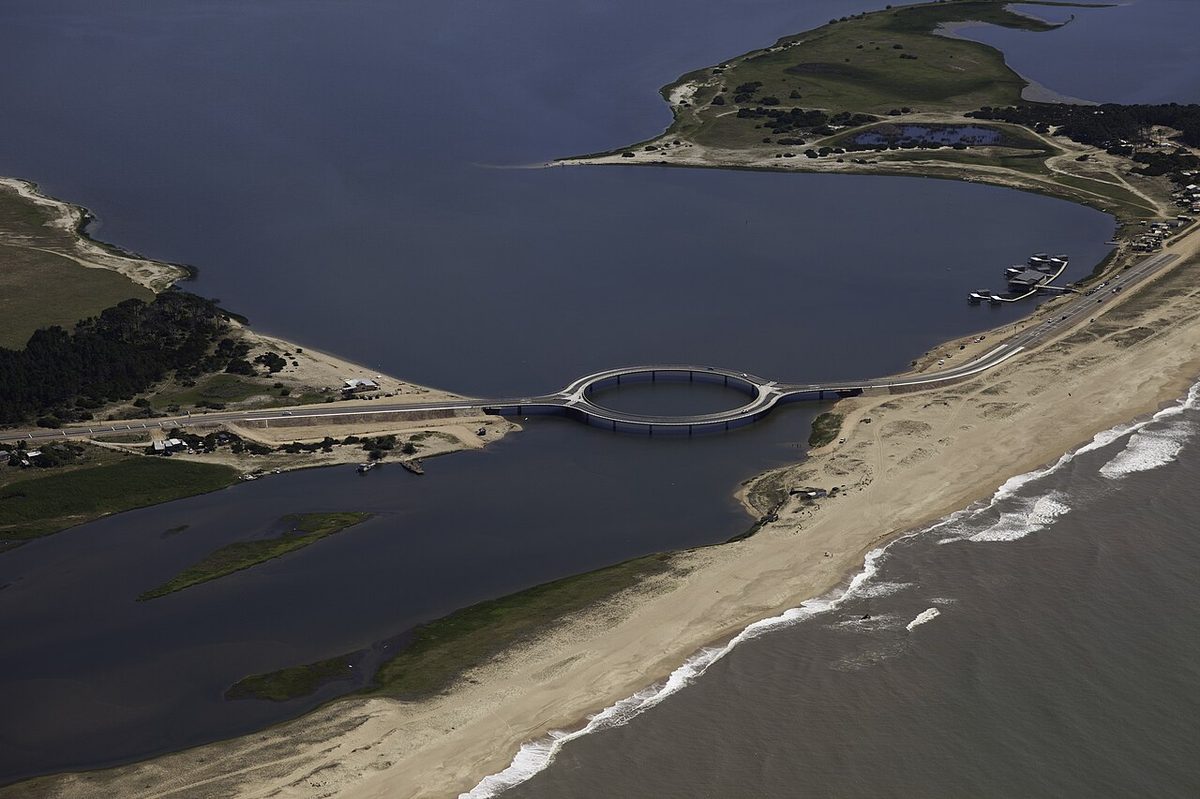
Garzón straddles the line between Rocha and Maldonado, and most travelers know it for the circular bridge that floats across its mouth. For birders, the bridge is a bonus — it gives you a slow, legal place to pull over and glass the water and the sandbars on both sides. You can read more about that crossing in our guide to the Laguna Garzón bridge, which doubles as one of the easier birding pull-offs on the whole coast.
The lagoon itself is shallower and more open than Rocha, and the exposed sand and mudflats pull in terns, gulls, oystercatchers and migrant shorebirds. Snowy-crowned terns (a southern-South-America specialty) work the channel. Flamingos drift in too, though usually in smaller groups than at Rocha. Early morning, before the day-trippers and kite-surfers arrive, is the window.
People are the drawback here. Garzón has become fashionable — there’s development creeping up both shores, and on a summer weekend the bridge is busy with cars stopping for photos. Bird it at dawn, on a weekday if you can, and you’ll have the sandbars largely to yourself. By eleven it’s a different place.
Laguna de Castillos and the Bañados del Este
North and east of Rocha, the landscape softens into the Bañados del Este — bañado meaning marsh or wetland — a sprawling biosphere reserve of seasonally flooded grassland that’s one of the most important wetland systems in southern South America. Laguna de Castillos sits within this zone, fringed by groves of ombú trees and reached from the road to Cabo Polonio.
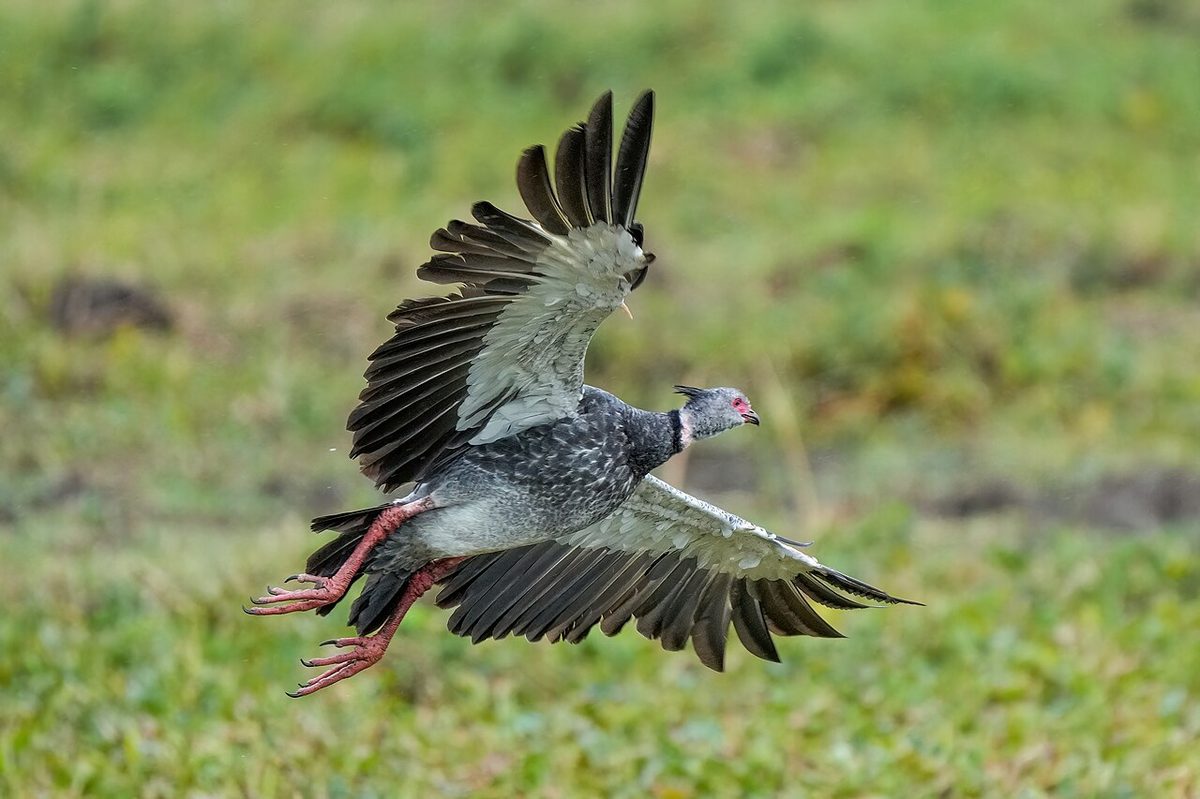
This is screamer country. The southern screamer (chajá), a big goose-sized bird with a haunting two-note call that genuinely carries across the marsh, is one of the signatures here. You’ll also find roseate spoonbills, several heron and egret species, whistling-ducks, and — if you’re lucky and patient — the globally endangered saffron-cowled blackbird in the wet grasslands. The Bañado de los Indios area has a recognized observation point worth seeking out.
I love this zone, and I’ll be straight about the catch: it’s diffuse. There’s no single car park and boardwalk that delivers the marsh to you. The rewarding spots are spread along back roads, some require a boat trip (the ombú forest excursion on Laguna de Castillos is the classic), and water levels swing the birding from spectacular to quiet depending on the season and rainfall. This is the part of Uruguay where a local guide earns their fee fastest.
Esteros de Farrapos
Swing to the far west, on the Río Uruguay above the city of Fray Bentos, and you reach Esteros de Farrapos e Islas del Río Uruguay — another Ramsar site and national park, built around a maze of low river islands and floodplain. It’s the most “river-and-wetland” of the major sites, and it feels different from the salt-edged eastern lagoons.
Birding here leans toward waterfowl, kingfishers, raptors quartering the islands, and a strong supporting cast of marsh and riverside species. Because it’s off the standard tourist track, you’ll often have it almost to yourself. It pairs naturally with the grassland and gallery-forest birding of the northwest if you’re building a longer loop.
The downside is plain logistics. Farrapos is a long way from the coastal resorts — figure four hours-plus from Montevideo — and getting onto the islands really wants a boat and a contact who runs them. As a self-driver you can bird the riverbank and the access roads productively, but you’ll see the place at half strength compared with someone who gets you out on the water.
Santa Lucía wetlands, on Montevideo’s doorstep
Here’s the site that surprises people. You don’t have to drive to Rocha to get into serious wetland birding. The Santa Lucía river-mouth marshes, where the river meets the Río de la Plata just west of Montevideo, are barely half an hour from the city center, and a good morning here can turn up a long list of waders, rails, herons and waterfowl. The Playa Penino reserve on the Canelones side is the usual entry point.
For anyone short on time — a cruise stop, a layover, a weekend — this is the highest-value patch in the country relative to effort. Local birders rack up impressive day counts in the metro area, mixing these wetlands with the coast and a scrap of woodland. You can fold it into a wider city visit; our Montevideo travel guide covers getting oriented in the capital.
The honest note: it’s an urban-edge wetland, and it looks like one. Pylons, distant industry, a bit of litter at the margins. The birds don’t mind and neither did I, but if you’re expecting pristine wilderness 25 minutes from a capital city, recalibrate. Come for the species, not the scenery.
Cabo Polonio and the open coast
Beyond the lagoons, Uruguay’s Atlantic edge is its own birding habitat — dunes, rocky points, surf and the open ocean past it. Cabo Polonio, the off-grid settlement reached by 4×4 across the dunes, doubles as a seawatching spot and a base for the rocky-shore birds: South American oystercatchers, several tern species, and gulls working the kelp line. The sea-lion colony on the rocks is a bonus the non-birders in your group will thank you for.
Offshore is where it gets genuinely special, in winter especially. Take a boat out, or scan from a headland on a blowy day, and pelagic species enter the picture — albatrosses and petrels that drift up from the sub-Antarctic. This is the one part of the Uruguayan year where June and July outperform spring. If the ocean interests you, our piece on whale watching in Uruguay covers the same coast from the marine-mammal angle, and the two pair well on a winter trip.
The catch with the coast is exposure and access. Cabo Polonio has no road — you ride in on a sanctioned dune transport — and the seawatching is entirely at the mercy of wind and swell. A flat calm day can be quiet; a gale brings the birds but soaks your optics. For the practical mechanics of visiting the settlement, see our full guide to Cabo Polonio.
Headline species to look for
You won’t catch everything in one trip, and you shouldn’t try. But a handful of birds define the Uruguayan experience, and knowing what to want makes the watching better. Here’s my shortlist, with the Spanish names you’ll hear from local guides and on signage.
Chilean flamingo (flamenco austral). The signature bird of the eastern lagoons. Near-threatened globally, locally abundant at Rocha and present at most coastal lagoons in season. A flock feeding in low light is the image you’ll carry home.
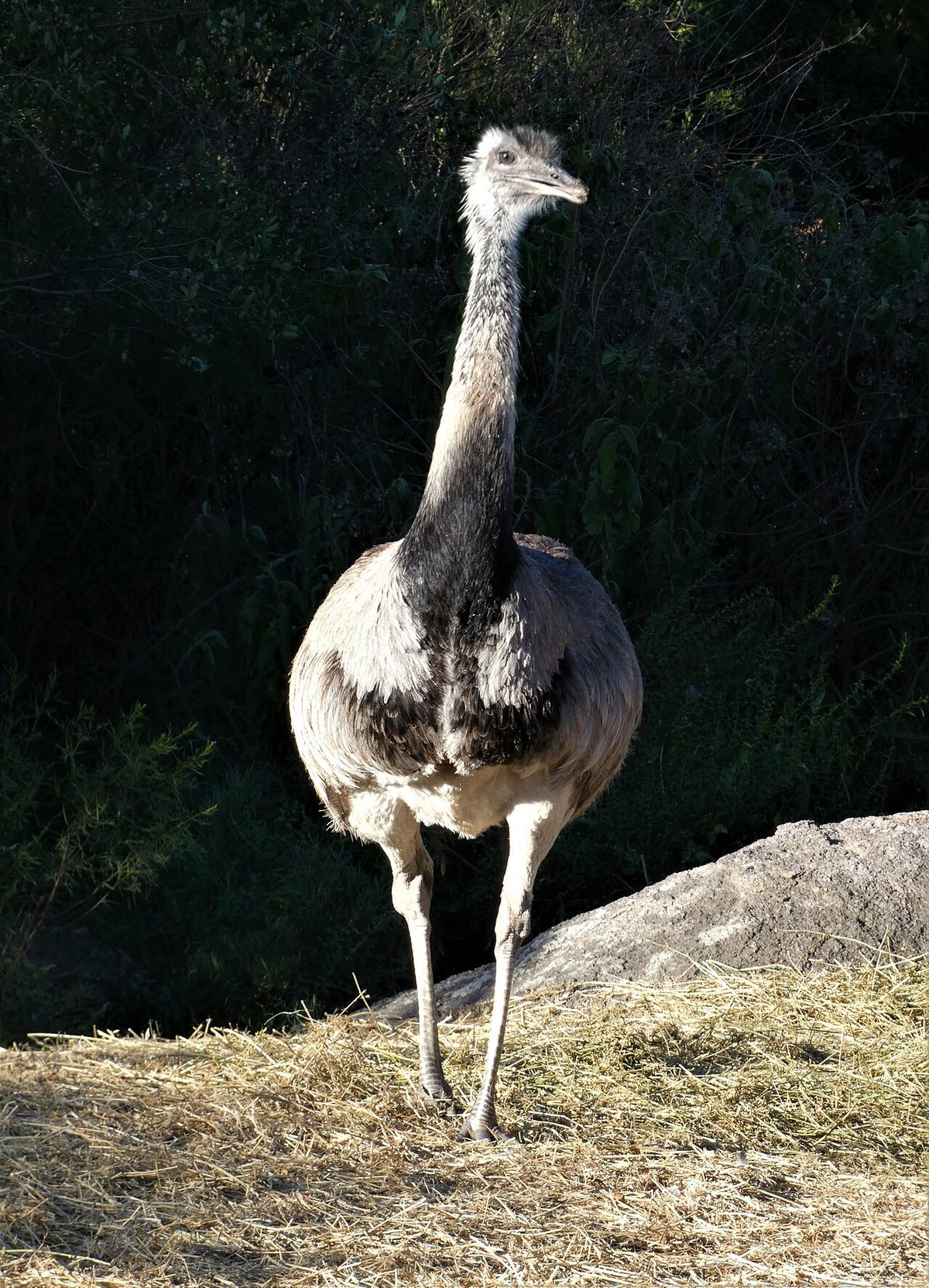
Greater rhea (ñandú). The ñandú is a greater rhea — a big, flightless, ostrich-like grassland bird, and the closest thing Uruguay has to charismatic megafauna with feathers. You see them on estancias and open country, often in family groups, the males shepherding stripy chicks. Few things say “Pampas” faster.
Southern screamer (chajá). The chajá is a southern screamer, goose-sized, marsh-loving, and impossible to ignore once it calls. Common in the Bañados del Este. The name in Guaraní mimics the sound. Once you’ve heard a pair duetting across a flooded field, you’ll recognize it anywhere.
Black-necked swan (cisne de cuello negro). Elegant, unmistakable, and reliable on the larger lagoons, often alongside the all-white coscoroba swan. Rocha is the stronghold.
Roseate spoonbill and herons. Spoonbills sweeping the shallows, plus a deep bench of herons, egrets and ibises, give the wetlands their everyday richness. The whistling-herons and the great egret are easy; the rarer rails take work.
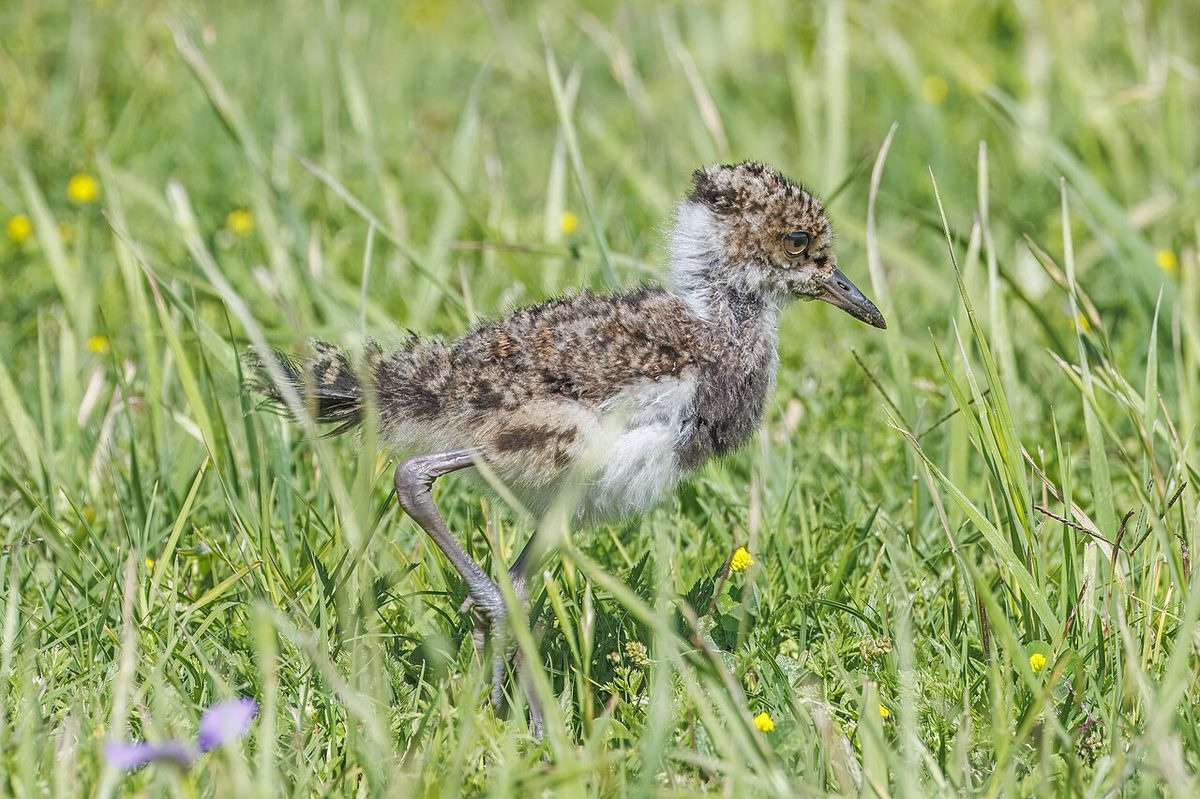
Southern lapwing (tero). The tero is a southern lapwing — Uruguay’s most conspicuous bird, frankly. It’s everywhere: parks, fields, the airport lawn, screaming at anything that moves. It’s also the unofficial national bird and a genuinely handsome wader once you stop taking it for granted.
Burrowing owl. Small, long-legged, active by day, standing sentinel at burrow mouths in open ground. Common in the countryside and weirdly easy to photograph for an owl.
The grassland specialties. For serious listers, the prizes are the threatened Pampas-grassland birds: saffron-cowled blackbird, black-and-white monjita, Pampas meadowlark, and the “capuchino” seedeaters like the marsh seedeater. Uruguay is one of the better places on earth for several of these. They’re seasonal, localized, and usually want a guide — but they’re the reason hardcore birders book the trip.
Seasons and migration: when to come
Timing matters more here than at a tropical site, because so much of the action is migratory and seasonal. Three windows are worth knowing.
Spring into early summer (September to early December) is the prime season, and it’s not close. Birds are breeding, territorial and vocal, which makes both finding and identifying them far easier. Migrants are arriving from the north. This is when the flamingo flocks build, the grassland specialties sing, and a good day can roll past a hundred species. If you only have one slot, pick this one.
Late summer into early autumn (late February to early April) is the quieter sibling. Activity drops, but birds gather in family groups and mixed flocks, southern migrants begin to filter in, and the weather is gentle. Good for a relaxed trip, less ideal for chasing singing grassland rarities.
Winter (June to early August) is underrated and genuinely different. Daylight is shorter and it’s cool, but southern-South-America migrants are fully in, and the coast turns on for pelagics — albatrosses and petrels offshore. If seabirds are your thing, winter beats spring. For a fuller breakdown of conditions month by month, see our guide to the best time to visit Uruguay, and the dedicated piece on Uruguay in spring if you’re aiming for peak season.
One climate note that helps planning: Uruguay sits entirely in the temperate zone. No malaria, no yellow fever, no real tropical-disease worry, and few dangerous animals to fret about in the field. Heat and sun in midsummer are the main hazards, and they’re easily managed.
Guides, gear and eBird
You can absolutely bird Uruguay independently, and for the marquee lagoons and the Santa Lucía wetlands, self-guiding works fine. Where a guide changes the math is the grassland specialties and the diffuse interior wetlands — birds that are seasonal, localized, and often sitting on private estancia land you can’t reach alone. A good local guide buys you access and a shortcut to the difficult species. Worth it for a target trip; optional for a general one.
Costs move around, so treat these as ballpark. Last I checked, a private full-day guided birding outing ran somewhere in the region of a couple hundred US dollars for the day depending on the operator, distance and group size, and multi-day set tours are priced like any specialist nature trip. Aves Uruguay, the national ornithological society, is a sound starting point for reputable contacts, and there’s now a proper field guide — Birds of Uruguay in the Helm series — which didn’t exist in English a few years ago and changes the self-guiding game.
Gear. Binoculars are non-negotiable; 8×42 is the sweet spot for these open, bright habitats. A scope earns its weight at the lagoons, where birds sit far out across the water. Pack sun protection seriously — the summer sun is fierce and there’s no shade on a sandbar — plus a light rain layer, insect repellent for the marshes, and footwear you don’t mind getting muddy. Roads to the best viewpoints are unsealed; mind your rental’s clearance.
eBird. Use it. Uruguay’s eBird coverage (region code UY) has grown a lot, and the hotspot maps for Laguna de Rocha, Santa Lucía and the Rocha lagoons will show you recent sightings, access points and bar charts of what’s around when. I plan most self-guided mornings straight off recent eBird checklists. It’s the single most useful free tool for a trip here.
Access, etiquette and a note on the land
Much of Uruguay’s best birding happens on or beside working land — estancias, grazing marsh, private lagoon frontage. The protected areas are real and signposted, but the network is lighter-touch than a North American or European park system, with fewer boardwalks, hides and interpretive centers. Manage expectations: you’re birding a landscape, not a facility.
Simple etiquette goes a long way. Ask before crossing onto private land — Uruguayans are generally warm about it if you ask. Close gates behind you. Keep your distance from breeding flocks; flushing flamingos for a photo costs them energy and ruins the view for the next person. Stick to existing tracks in the dunes and marshes, which are more fragile than they look. And carry out everything you carry in. The ranger presence is thin, so the standard is mostly self-policed.
For the bigger picture of how these reserves fit together, our overview of Uruguay’s national parks is the parent guide to this whole topic, and the broader Uruguay wildlife guide covers the mammals, reptiles and marine life you’ll meet alongside the birds. If you want to combine birding with low-key walking, the country also has modest hiking and trail options in the sierras and canyons — worth a search once you’re planning the ground.
Build a birding route
How you stitch a birdwatching Uruguay trip together depends on your time and your obsession level. A few templates I’d actually use.
The short stop (1–2 days, based in Montevideo). Hit the Santa Lucía wetlands at dawn, work the city coast for terns and gulls, and if you have a second morning, push east toward the first lagoons. Highest reward for least driving. Perfect for a cruise day or a layover.
Coastal classic (4–6 days, Montevideo to Rocha). This is the route most visitors should take. Base a few nights on the Rocha coast and bird Laguna de Rocha, Laguna Garzón and Laguna de Castillos, with a Cabo Polonio day for the shore and the sea-lions. Our Rocha coast itinerary lays out the driving and where to sleep, and La Paloma makes a practical lagoon-side base.
Full loop (10+ days, serious listers). Add the west and northwest — Esteros de Farrapos, the gallery forests and the grassland sites for the threatened Pampas specialties — onto the coastal classic, ideally with a guide for the interior legs. This is the version that gets you to 200-plus species and the rarities. Staying at an estancia for a night or two puts you on the grassland at dawn, which is exactly where the ñandú and the meadowlarks are.
Whatever shape your trip takes, build the lagoons around early mornings and don’t over-schedule. The single best decision I made birding Uruguay was leaving time to sit. For ideas beyond the birds, our roundup of things to do in Uruguay rounds out a mixed-interest trip.
Birdwatching Uruguay: your questions answered
How many bird species are there in Uruguay?
More than 450, and the working national total is now around 480, with two or three new species added in most years. That’s roughly a quarter of Brazil’s avifauna and close to half of Argentina’s, packed into a country a fraction of their size. On a well-planned multi-day trip you can realistically record 150 to 250-plus species.
Where is the best place to see flamingos in Uruguay?
Laguna de Rocha, on the Atlantic coast in Rocha department, is the standout. It’s a Ramsar wetland that holds significant numbers of Chilean flamingos (flamenco austral) alongside black-necked and coscoroba swans, best from roughly September to February. Laguna Garzón and other coastal lagoons hold flamingos too, usually in smaller groups.
When is the best time for birdwatching in Uruguay?
Spring into early summer, September to early December, is prime: birds are breeding, vocal and easy to find, and migrants are arriving. Late February to early April is a quieter second window. Winter (June to August) is best for offshore pelagics like albatrosses and petrels. Avoid expecting tropical-style activity in midwinter inland.
Do I need a guide to go birding in Uruguay?
Not for the major lagoons or the Santa Lucía wetlands near Montevideo — those self-guide well, especially with eBird and the new Birds of Uruguay field guide. A guide pays off for the threatened grassland specialties and the diffuse interior wetlands, which are seasonal, localized and often on private estancia land you can’t access alone.
Is Uruguay good for birdwatching compared to Brazil or Argentina?
For sheer species count and flashy tropical birds, no — Uruguay can’t match them. What it offers instead is exceptional access, open habitats with easy sightlines, short drives between sites, safety, and a real shot at several globally threatened Pampas-grassland birds. It’s a patient, rewarding grassland-and-wetland scene rather than a rainforest spectacle.
What are the must-see birds in Uruguay?
The Chilean flamingo, greater rhea (ñandú), southern screamer (chajá), black-necked swan, roseate spoonbill and the ever-present southern lapwing (tero) define the experience. Serious listers chase the saffron-cowled blackbird, black-and-white monjita, Pampas meadowlark and marsh seedeater — threatened grassland birds for which Uruguay is one of the best destinations.
Final thoughts
Stillness is the skill this country teaches. I came to Uruguay expecting a quick supporting act to the bigger South American birding names, and I left thinking the opposite — that the ease of it, the open light, the way a lagoon hands you flamingos and swans and a churn of shorebirds in one calm sweep, is exactly the point. You don’t fight the landscape here. You settle into it.
Go in spring if you can, build your days around early mornings at the lagoons, lean on eBird, and don’t rush. Done right, birdwatching Uruguay style is unhurried by design. The birds are unpredictable and the rarities won’t always show. But the ordinary magic — a tero screaming overhead, a ñandú leading chicks across the grass, two hundred flamingos deciding all at once to feed — that part rarely lets you down.
Credits & sources
Sources & further reading
- eBird — Uruguay (region UY): hotspots, recent sightings and bar charts
- Aves Uruguay — the national ornithological society
- Ramsar Sites Information Service — Laguna de Rocha
- BirdLife International — Rocha Lagoon Important Bird Area factsheet
Photo credits
All images via Wikimedia Commons: Flamingos Laguna De Rocha by Santifernandez2009 (CC BY-SA 3.0); Black Necked Swan Uruguay by jacilluch (CC BY-SA 2.0); Southern Screamer Chaja by Giles Laurent (CC BY-SA 4.0); Greater Rhea Nandu Uruguay by Enrique González (CC BY 4.0); Laguna Garzon Uruguay by Jimmy Baikovicius from Montevideo, Uruguay (CC BY-SA 2.0); Southern Lapwing Tero by Charles J. Sharp (CC BY-SA 4.0).