Barra de Valizas & Aguas Dulces: The Coast Time Forgot (2026)
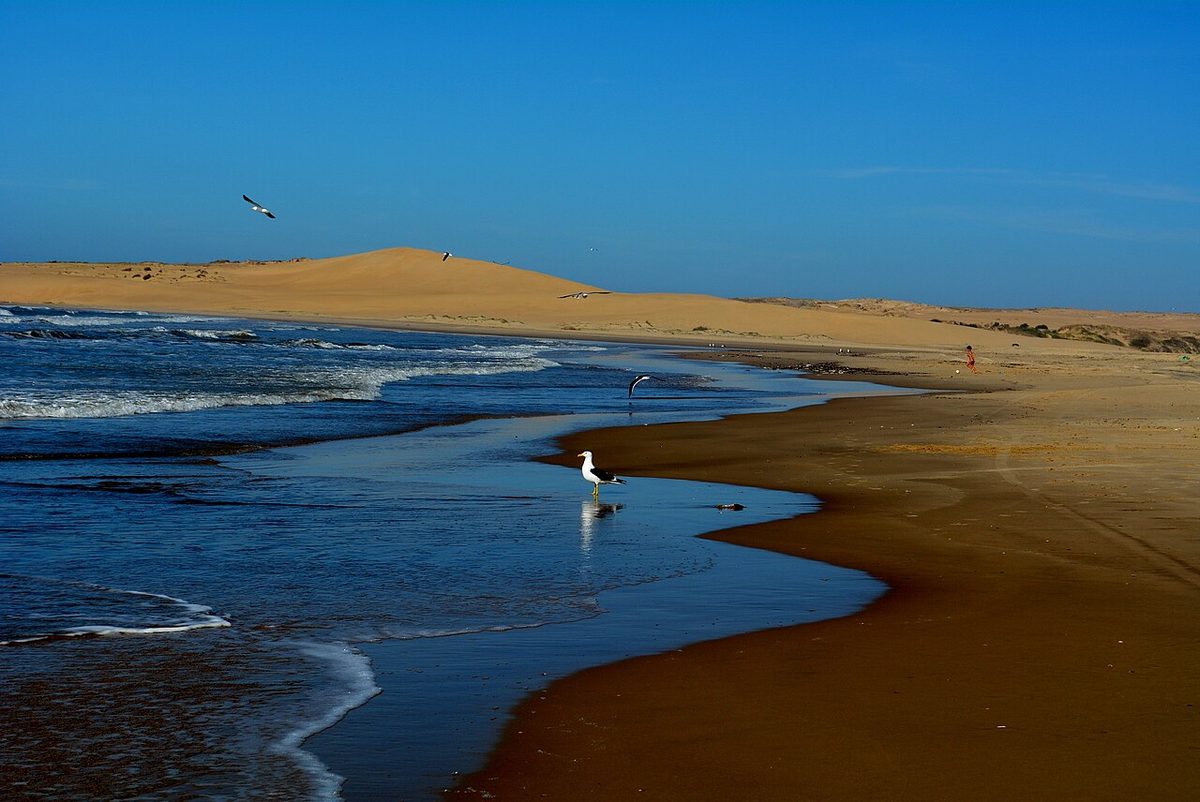
The dirt road into Barra de Valizas is the first hint that you are leaving something behind. The pavement quits a few kilometres back, near Route 10, and what is left is ripio — loose, washboard gravel that rattles the car and slows everyone to a crawl. Then the sand starts to win. Houses lean into dunes. A horse stands in the middle of the street, unbothered. And somewhere ahead, past the last of the low wooden cabins, a wall of pale sand rises forty metres into the sky like something that wandered in from the Sahara and forgot to leave.
I came for those dunes. I stayed for the quiet, the fried fish, and the strange feeling that a clock somewhere had simply stopped.
Barra de Valizas is a tiny, off-grid-feeling fishing village (a balneario, in local terms — a small seaside resort) on the Atlantic coast of Rocha, in eastern Uruguay. It is famous for enormous sand dunes, a bohemian summer camping scene, and a long walk across the sand to Cabo Polonio. Together with its scruffier neighbour Aguas Dulces just up the coast, it is the most rustic stretch of the whole Rocha shoreline.
What this guide covers
This is a guide to two villages and the wild coast between them: Barra de Valizas (everyone just calls it Valizas) and Aguas Dulces, about seven kilometres north. I will walk you through the giant dunes, the legendary hike to Cabo Polonio, the artisan-and-camping summer scene, the river mouth and its little boats, where to eat and sleep, and — because somebody has to say it — the genuine downsides of going somewhere this far off the grid.
That puts it inside the wider region I cover in my guide to Rocha, Uruguay. If you have not picked a base yet, start there; if Valizas is already on your list, read on.
Valizas and Aguas Dulces at a glance
| Detail | The short version |
|---|---|
| Where | Atlantic coast of Rocha, eastern Uruguay; ~265–270 km from Montevideo |
| The two villages | Barra de Valizas (dunes, hike, camping) & Aguas Dulces (seafood beach town), ~7 km apart |
| Famous for | Forty-metre sand dunes, the dune walk to Cabo Polonio, sandboarding, a bohemian summer |
| Permanent population | Valizas ~330 year-round; multiplies many times over in January |
| Best time to go | Late December to March (everything open); November & April for calm shoulder season |
| Get there | Bus to Castillos then local connection, or your own car down a final ripio road |
| Stay | Campsites, hostels and simple cabañas; rooms from around US$27, houses averaging ~US$55–60 |
| The dune walk | Valizas to Cabo Polonio, ~2–3 hours, tide-dependent arroyo crossing, guide recommended |
| Honest warning | Minimal services, little to no ATM, wind and mosquitos, mostly shut off-season |
Valizas and the dunes
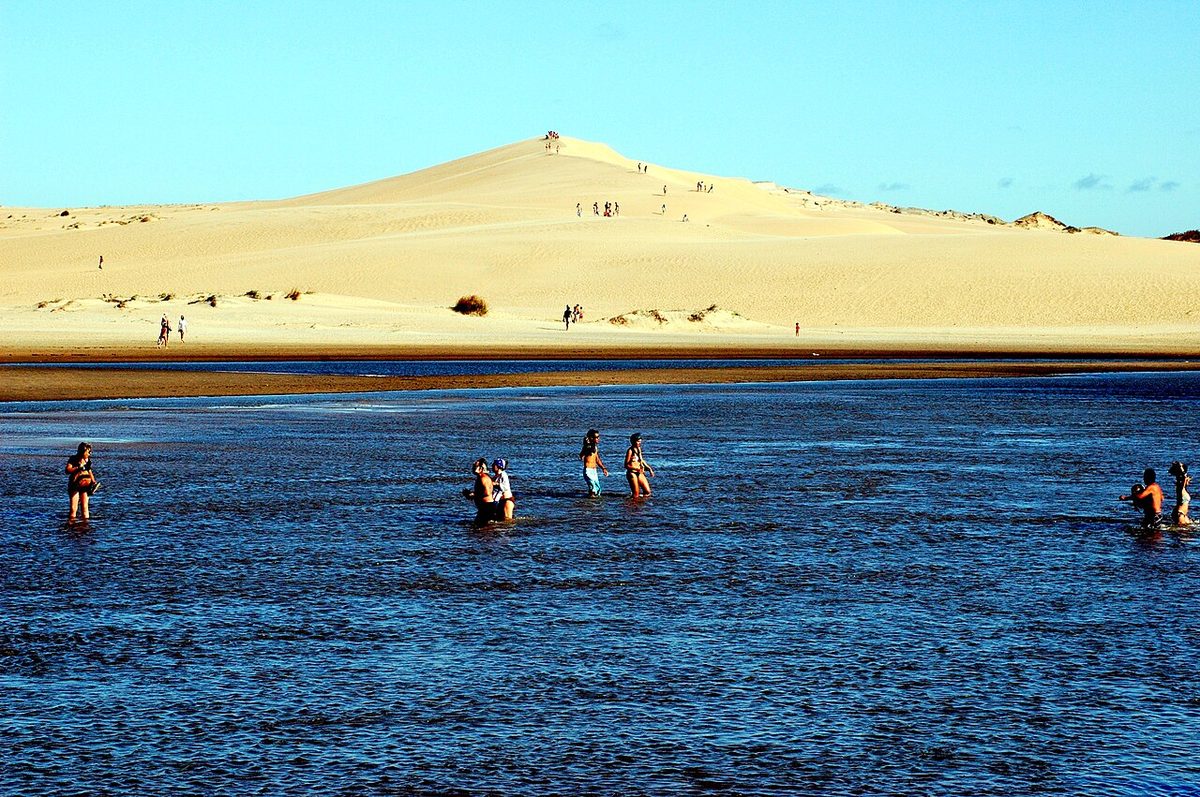
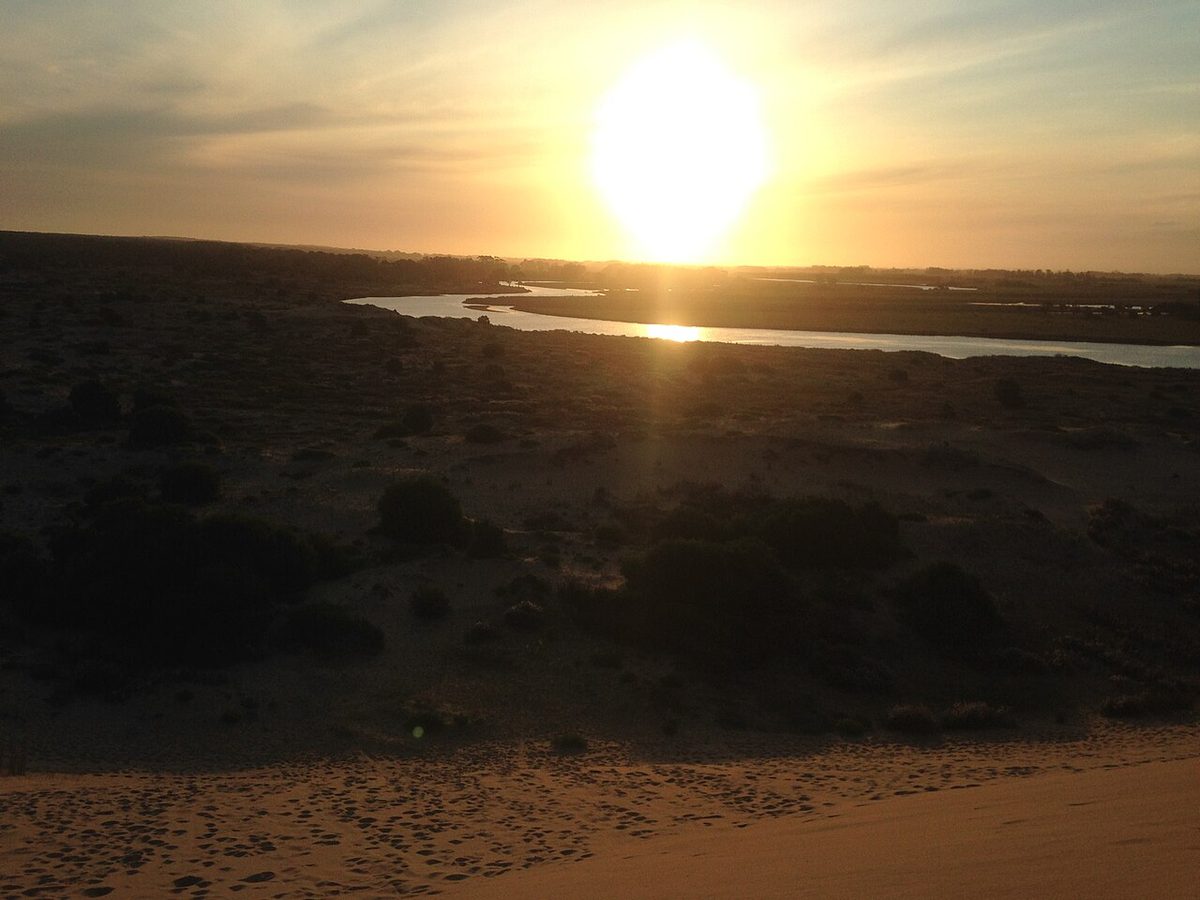
Stand on the beach at Valizas and the geography sorts itself out quickly. The village is built right into the sand on one side; the Atlantic, with surprisingly punchy waves, rolls in on the other; and to the south, across the river, the dunes begin and do not really stop until Cabo Polonio. These are among the biggest dunes in Uruguay, climbing to around forty metres. The largest has a name — El Gran Vali — and locals will point you toward it with a kind of pride.
Sandboarding is the obvious thing to do here, and Valizas takes it seriously; in summer you can rent a board cheaply from someone at the beach and spend an afternoon trudging up and sliding down. Expect to pay around 300–500 Uruguayan pesos (roughly US$8–12) for a board for a stretch of the day, though prices are informal and worth confirming on the spot. A word of honest warning: climbing a forty-metre dune in full sun is genuinely hard work, and the reward is over in about ten seconds. Bring water and lower your expectations about elegance.
Honestly, the dunes are extraordinary just to walk into for their own sake. Cross to the far bank of the arroyo and within minutes the village disappears behind you and you are alone in what feels like a small desert pressed up against the sea. Sunset up there, with the light going gold and the wind smoothing the ridges, is the kind of thing people remember for years. It is free, and it is the single best reason to come.
The arroyo and the river mouth
The arroyo — the Valizas stream — is the village’s defining feature and its small daily drama. It snakes down from the Laguna de Castillos inland and meets the sea just south of the houses, and whether you can simply walk across it depends entirely on the water level and the tide. Some days it is shallow enough to wade in shorts. Other days, after rain or on a high tide, it is too deep and you need a boat.
That is where the boatmen come in. Local fishermen run little crossings back and forth in wooden launches, and the going rate is tiny — usually a little over one US dollar per person, paid in pesos. It is one of those low-key, gloriously analogue arrangements that sums up the place: no schedule, no ticket booth, just a man with a boat who will take you across when you turn up. The river mouth is also a fine spot to watch the fishing boats and, at dawn, the birds.
Fishing
Valizas is a working fishing village before it is anything else, and that has not changed even as the bohemians and sandboarders arrived. You will see boats hauled up on the sand and nets drying in yards. Surfcasting from the beach is popular — corvina and brótola are common catches — and if you ask around you can sometimes arrange to go out with a local. The honest caveat: this is informal and seasonal, so do not arrive expecting a slick charter operation. Half the appeal is that there isn’t one.
The dune walk from Valizas to Cabo Polonio
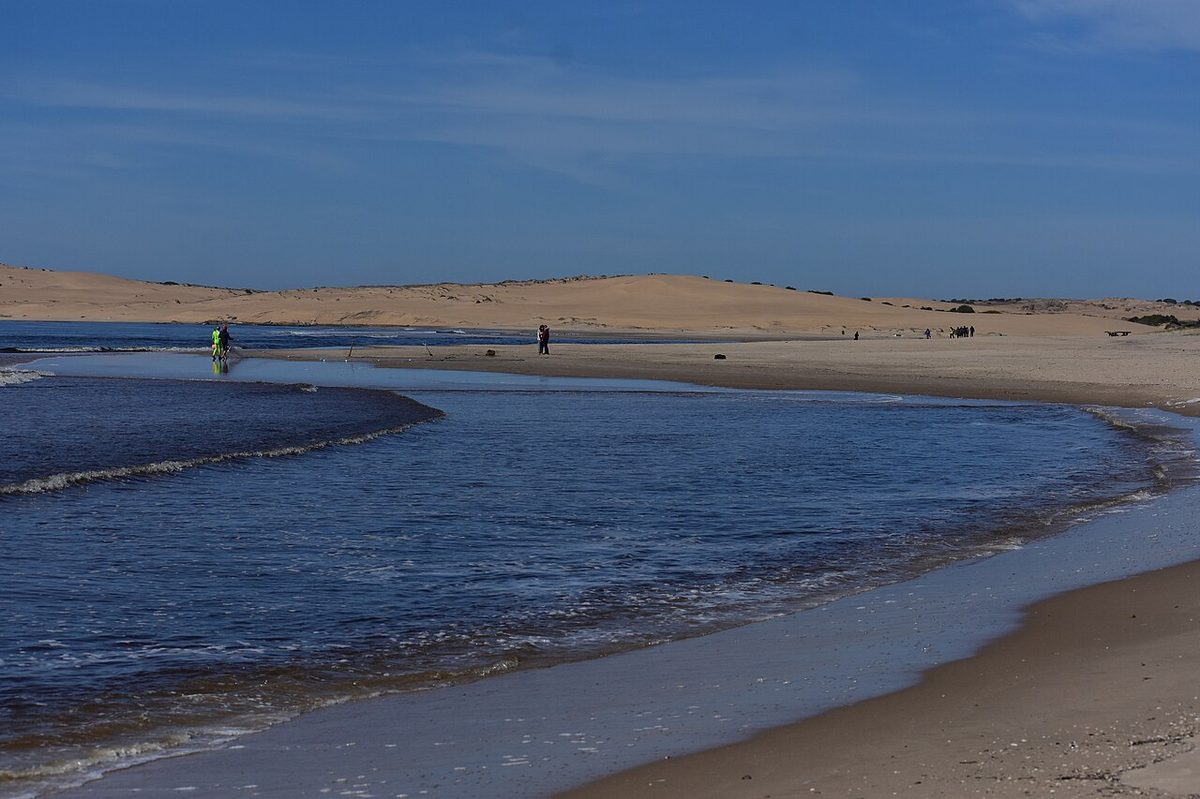
This is the trip people travel a long way for, and it deserves its reputation. The walk from Valizas to Cabo Polonio crosses an unbroken field of giant, wind-sculpted dunes — roughly two to three hours of pale sand, big sky, and ocean. There are no roads, no signs, and (mostly) no other people. It is, for my money, one of the best half-day walks in the country.
How long, how hard, which route
There are two ways to do it, and they are genuinely different experiences. The direct route straight over the dunes is the shorter line — about seven kilometres — and the more punishing, since you are constantly climbing and dropping through soft sand; fit walkers knock it out in a bit over an hour, but most people take longer. The coastal route, hugging the firm sand at the water’s edge, runs up to ten kilometres but is far easier underfoot and lets you cool off in the sea along the way. Mapping apps tend to log the whole thing at around eight kilometres and rate it moderate, averaging a couple of hours. Whichever you pick, you start by crossing the arroyo — on foot if it is low, or in one of those little boats if it is not.
Tides, timing and a guide
Three things make or break this walk. First, the tide: the coastal route only works comfortably at low or mid tide, when there is firm sand to walk on, so check the tide times before you set off. Second, the sun: there is no shade whatsoever out there, so leave early in the morning, carry far more water than you think you need, and slather on sunscreen. Third, navigation: the dunes shift and look identical in every direction, and it is genuinely easy to lose your bearings, which is why a local guide is recommended — especially if you are doing the direct dune route rather than simply following the shoreline. Guided walks are easy to arrange in the village in season.
Cerro de la Buena Vista
If you want to add a climb, the route can take in Cerro de la Buena Vista, billed as the highest point on the Uruguayan coast. From the top you get a long view back over the zigzagging arroyo, the Laguna de Castillos, and the ocean — a proper reward for the legs. From there it is roughly another six kilometres of sand and sky down to Cabo Polonio.
Doing it the other way, or not at all
You can of course walk it in reverse, starting in Cabo Polonio, and plenty do. If a multi-hour sand slog is not your idea of a holiday, there is no shame in skipping it: Cabo Polonio is reachable by the big 4×4 trucks that run across the dunes from the highway, and my guide on how to get to Cabo Polonio lays out every option. The walk is the romantic way in. The truck is the sensible one. Both get you to the same lighthouse.
The village and the camping scene
For most of the year Valizas is home to only a few hundred people. Then summer arrives and the population multiplies into the thousands, much of it under canvas. The place has drawn artisans, musicians and assorted free spirits for decades, and in January the village takes on a gentle, slightly chaotic festival energy: someone selling handmade jewellery on a blanket, a guitar going somewhere after dark, woodsmoke and the smell of frying fish drifting between the cabins.
Camping is the soul of it. There are organised campsites — campings, in the local sense of fenced sites with basic facilities — as well as a long tradition of pitching more freely. La Comarca de Valizas, out near the Route 10 entrance to the village, is the more comfortable, leafy option with plenty of space, a little removed from the beach. If you have never camped your way along a coast before, this is a forgiving place to start, because the whole village runs at the speed of a campsite anyway. One honest drawback: in peak summer the popular sites fill up and can get loud and busy, and the ground near the river attracts mosquitos at dusk, so bring repellent and, ideally, earplugs. For a bigger campground with more facilities, Santa Teresa National Park further up the coast has a vast forest site near the Brazilian border.
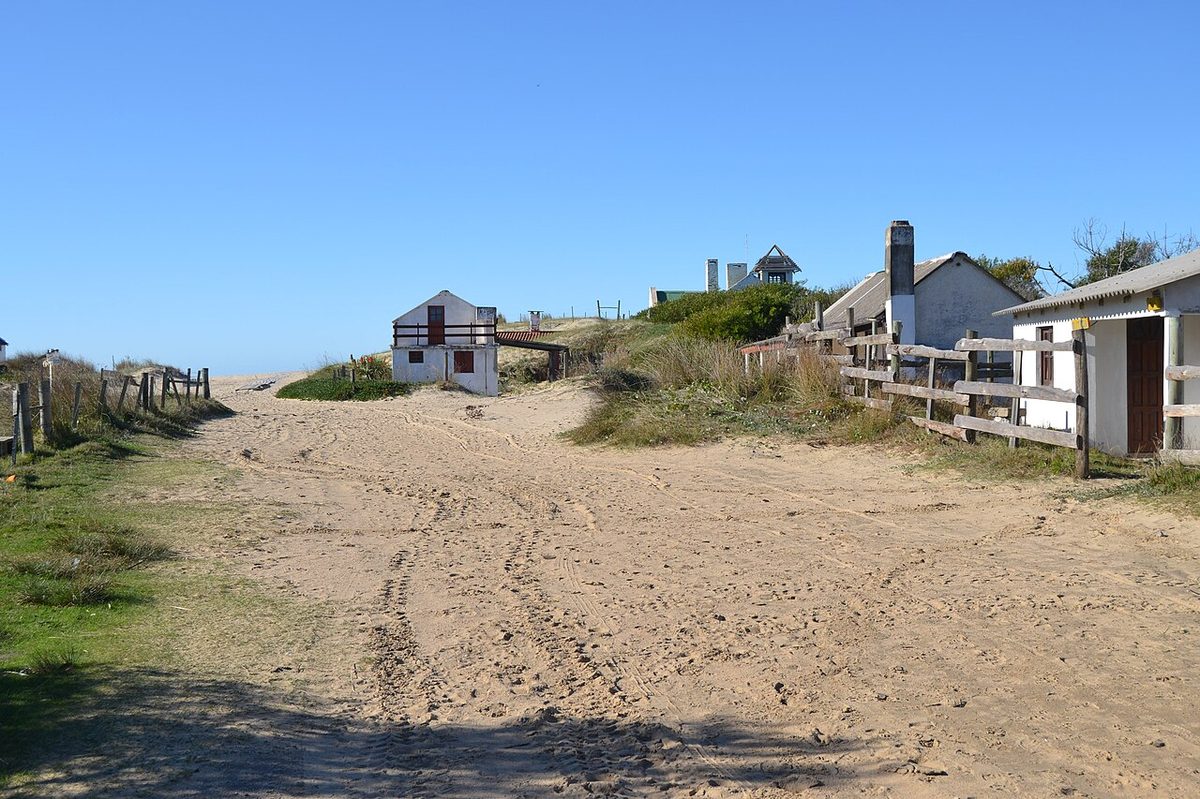
If tents are not your thing, Valizas still feels worlds away from the polished resort towns. There are no big hotels, no chain anything, and the nightlife is a beach bar and a bonfire rather than a club. That is precisely the point. If you want the same coast with more polish, La Pedrera, the clifftop village further south, is the stylish alternative. For a sense of how it compares with its livelier neighbours, my round-up of Uruguay’s beach towns sets the whole coast side by side.
Aguas Dulces: the seafood town up the coast
About seven kilometres north along the shore sits Aguas Dulces, and it has a different flavour again — a simple, old-school seafood beach town that sits roughly between La Paloma and Punta del Diablo on the map. Where Valizas is all dunes and dropouts, Aguas Dulces is fishing boats pulled up on a wide beach, a raised wooden boardwalk threading over the sand, and a cluster of brightly painted little beach cottages and stalls just off it.
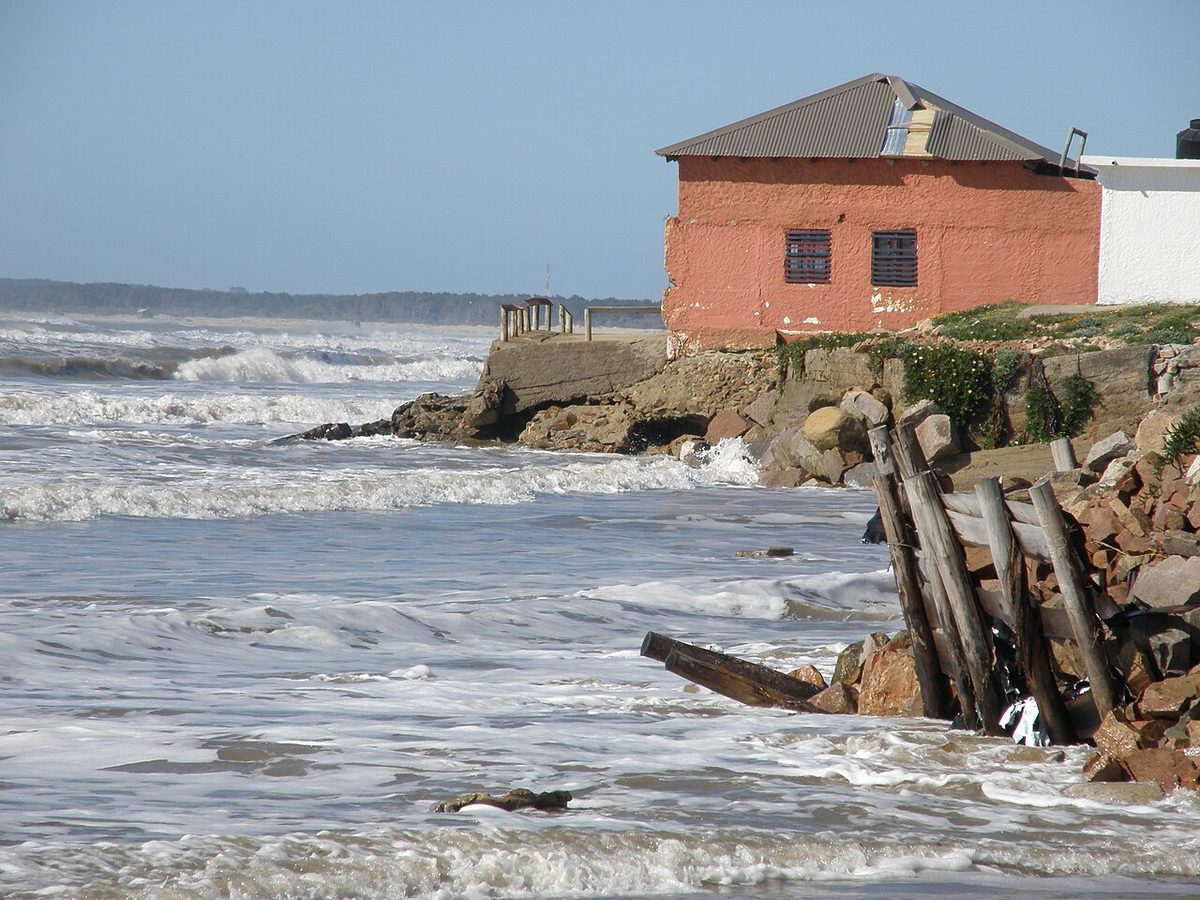
The boardwalk is the signature sight, perfect for a slow, lamp-lit stroll once the day-trippers have gone home. The waves are mellow and fine for a casual swim, and at low tide the rockier stretches open up into tide pools full of small marine life. In summer a little surf school rents boards on the beach. It is the kind of place where you eat fresh fish at a plastic table, watch the boats come in, and do approximately nothing else.
Let me be candid, because the brochures will not be: Aguas Dulces is charmingly scruffy rather than pretty-pretty. The sand and streets can be a bit littered in high season, the wind blows hard and often, and the surf is inconsistent. If you want manicured, go elsewhere. If you want genuine, unpolished and cheap, you will love it. For me it is the laid-back, slightly shabby middle child of the Rocha coast, and I mean that fondly.
Eating and sleeping
Where to eat
Food in both villages is simple, seasonal and built around the sea. Expect grilled and fried fish, fresh shellfish, the odd pizza, and the national hero sandwich, the chivito, at informal places that may not bother with a menu. In Aguas Dulces the seafood spots near the boardwalk are the move; in Valizas, the beach restaurants open up in summer and serve the day’s catch with the sand more or less in the room. Prices are low by Uruguayan standards. The honest catch: outside the high season, many of these places simply close, so in spring or autumn you may find your dining choices narrow to one or two spots, or to whatever you cook yourself.
Where to stay
Accommodation here is simple but real, and it splits into three honest tiers. Budget travellers go for hostels and campsites — Valizas Hostel sits a short walk from the beach with breakfast and a garden, Larica Hostel is another easy walk from the sand, and Hostel Lo de Milton throws in free bikes and parking. Rooms can start from around US$27 in low season. The middle tier is the cabañas — small self-catering cabins — such as the Patasuelo cabins about 700 metres from the beach, with air conditioning, WiFi and a garden barbecue; a whole house averages somewhere around US$55–60 a night. The most comfortable camping is La Comarca de Valizas near the village entrance.
Two things to flag before you book. First, almost everything is seasonal: in winter, a good share of the cabins and hostels shut entirely, so book ahead and confirm the place is actually open. Second, WiFi exists but is patchy, and you should not count on a strong connection if you need to work. For the bigger picture across the country, my guide to where to stay in Uruguay covers every region and budget.
Planning your trip: getting there, when to go, who it suits
Getting to Valizas and Aguas Dulces
Valizas sits about four kilometres off Route 10, roughly 265 to 270 kilometres from Montevideo. With your own car the drive is straightforward until the last stretch, which turns to ripio — that loose gravel I mentioned — so take it slowly and do not expect to arrive spotless. By bus, you generally ride a long-distance coach toward Castillos (the nearest proper town, with the area’s main services) and pick up a local connection from there; Aguas Dulces, being right on Route 16’s access, is a little easier to reach directly. If you are stringing together several stops along this coast, my Uruguay road trip guide maps a sensible route.
When to go
High season runs from late December through to Tourism Week in March or April, and that is the only time everything — restaurants, campsites, board rental, lifeguards, the WiFi — is reliably switched on. January is the peak, busy and buzzy and best booked ahead. My favourite window is the shoulder: November, or March into early April, when the weather can still be warm, the crowds thin out, and the dunes are all yours, with the trade-off that some businesses keep short hours. The broader timing question is covered in my best time to visit Uruguay guide, and the summer specifics in Uruguay in summer.
The honest drawbacks
I love this stretch of coast, which is exactly why I want to be straight about what you are signing up for. Services are minimal: there is little to no reliable ATM in the villages themselves, so draw out cash beforehand in Castillos or La Paloma and bring more than you think you need, because plenty of places take only cash. Supplies are basic — a couple of small shops, not a supermarket — so stock up before you arrive. The wind blows hard and the mosquitos at dusk are a real nuisance near the river, so pack repellent. And for much of the year the place is largely shut: come outside summer and you may find a beautiful, half-empty village with most of its doors closed. Above all, you have to be genuinely okay with rustic. If sand in everything, cold-ish showers and patchy signal would ruin your week, this is not your village.
Who it suits
This coast rewards a particular kind of traveller. Surfers, sandboarders and hikers get a playground. Campers and budget backpackers get cheap nights and instant company in summer. Solo travellers, in particular, find Valizas friendly and easy — the camping culture makes conversation inevitable; my solo travel in Uruguay guide has more on that. Couples after a quiet, romantic and slightly wild few days will be happy too. Families can absolutely make it work, especially in mellow Aguas Dulces, though parents should weigh the lack of services and the strong surf in places. The one group I would gently steer elsewhere: anyone who wants comfort, polish and reliable amenities — for them, one of the smarter, more developed beach towns farther along the coast is a better fit.
What to pack
Bring cash, insect repellent, sun protection, sturdy footwear for the dunes, and a refillable water bottle for the walk. A head torch is genuinely useful given how dark and unlit the villages get at night. My full Uruguay packing list covers the rest, and it is easy to slot Valizas into a longer coastal trip as just one beat among several.
Barra de Valizas: your questions answered
Is Barra de Valizas worth visiting?
Yes, if you want raw nature over comfort. Valizas offers Uruguay’s biggest sand dunes, a famous walk to Cabo Polonio, cheap camping and a genuine fishing-village feel, all without resort polish. It is one of the most distinctive spots on the Rocha coast. Skip it only if you need reliable services, smooth roads and a strong WiFi signal, because none of those are guaranteed here.
How do you get from Valizas to Cabo Polonio?
On foot across the dunes is the classic way: a roughly two-to-three-hour walk, starting with a crossing of the Valizas arroyo on foot at low water or by a small fishing boat for a little over a dollar. You can follow the dunes directly or hug the coast. If you would rather not walk, reach Cabo Polonio instead by the 4×4 trucks that run across the sand from Route 10.
How big are the Valizas sand dunes?
The dunes at Valizas reach around forty metres high, among the largest in Uruguay, and they stretch in an almost unbroken field all the way south to Cabo Polonio. The biggest single dune is known as El Gran Vali. They are a magnet for sandboarders, but they are worth the climb for the view and the desert-by-the-sea silence alone.
Is there an ATM in Barra de Valizas?
Do not count on it. Cash machines in Valizas and Aguas Dulces are unreliable or absent, and many businesses take only cash, so withdraw what you need beforehand in a larger town such as Castillos or La Paloma. Bring a comfortable buffer of pesos; running short here is a real and avoidable headache, especially outside the high season.
What is Aguas Dulces like?
Aguas Dulces is a simple, old-school seafood beach town about seven kilometres up the coast from Valizas, known for its wooden boardwalk, colourful beach cottages and fresh fish. It is friendly and cheap rather than polished, with a wide beach, mellow waves and tide pools at low tide. Expect some litter and strong wind in high season, plus very basic services.
When is the best time to visit Valizas?
From late December to March, when the weather is warm and everything is open, with January the liveliest month. For fewer people and lower prices, aim for the shoulder months of November or late March into April, accepting that some restaurants and campsites keep shorter hours. Outside summer, much of the village closes down almost entirely.
Final thoughts
Some places on the Rocha coast are getting smarter and shinier every season. Valizas and Aguas Dulces, so far, are not, and I hope they hold the line a while longer. What you get instead is a forty-metre wall of sand at sunset, a fisherman who will row you across a river for pocket change, a tent under hard stars, and a walk to a lighthouse that feels like crossing a small private desert. You also get sand in your bed, mosquitos at dusk, and a village that politely shuts in winter. That is the deal, and for the right traveller it is a wonderful one.
Go with cash, low expectations of comfort and high expectations of everything else. Then point yourself at the dunes and start walking.
Credits & sources
Sources & further reading
- Turismo Rocha — Barra de Valizas Beach (official tourism board)
- AllTrails — Barra de Valizas to Cabo Polonio dune walk
- Wikipedia — Barra de Valizas (location and population data)
Photo credits
All images via Wikimedia Commons: Barra De Valizas Dunes Uruguay by Elvis Boaventura (CC BY 3.0); Valizas Sand Dunes Sandboarding by Luciajimena1990 (CC0); Dune Walk Valizas Cabo Polonio by Tania Fernández Cenazzi (CC BY-SA 4.0); Valizas Village Camping Uruguay by Own work (CC BY-SA 4.0); Aguas Dulces Uruguay Beach by alvaro errandonea (CC BY 3.0).