Language in Uruguay: Do You Need Spanish? (2026)
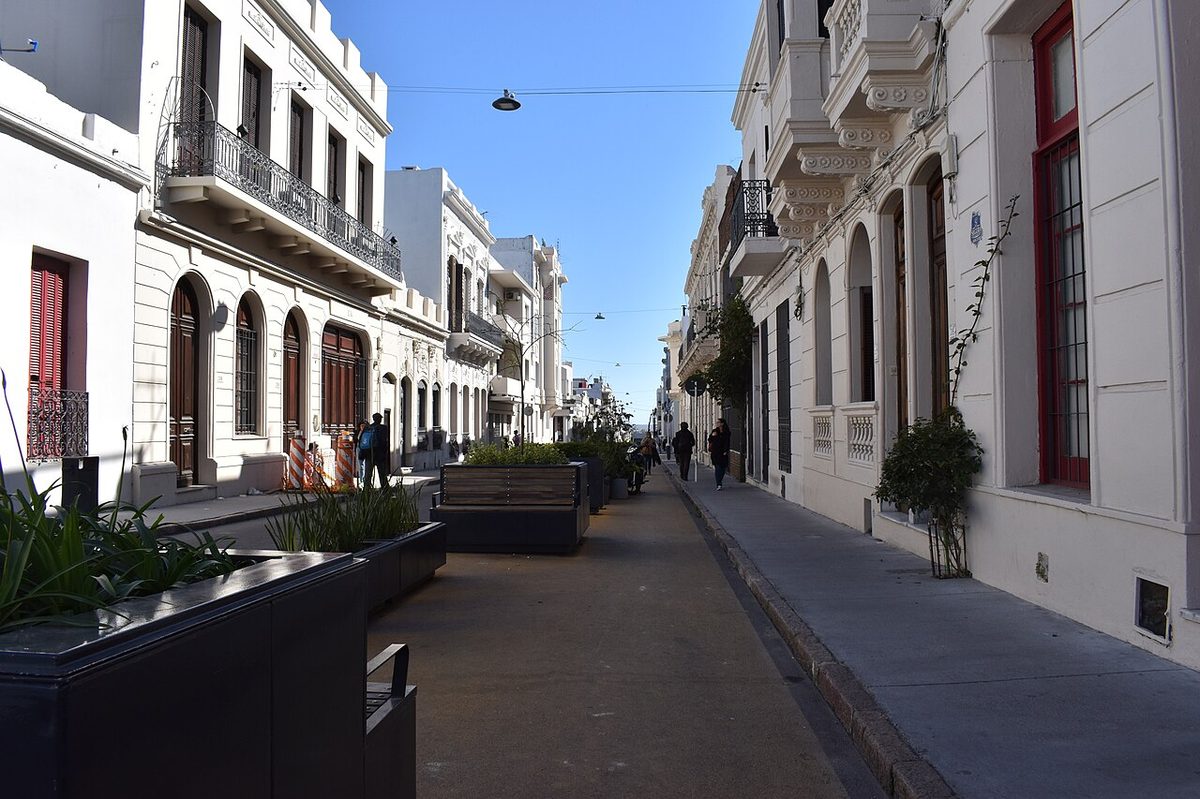
My first morning in Montevideo, I walked into a café in Ciudad Vieja and ordered in what I thought was decent Spanish. The man behind the counter smiled, said something back, and I caught maybe one word in five. He hadn’t slowed down. He’d spoken normally, and his “ll” sounds came out as a soft “sh” I wasn’t expecting.
I’d studied Spanish in Mexico. None of it had prepared me for this.
That gap is the whole reason this page exists. If you’re wondering what language is spoken in Uruguay, and whether your half-remembered high-school Spanish will get you a coffee, here’s a straight answer plus the specifics nobody told me.
What language is spoken in Uruguay? Spanish, spoken by close to 99% of the population. But it’s a specific variety called Rioplatense Spanish, shared with Buenos Aires across the river, shaped by Italian immigration, and marked by a distinctive “sh” pronunciation and the pronoun “vos” instead of “tú.” Portuguese also lives along the Brazilian border.
Who this guide is for
I wrote this for travelers, not linguists. If you’re planning a trip and want to know how far your Spanish will stretch, where you’ll find English, and which phrases actually matter, you’re in the right place. I’ll cover the dialect honestly, hand you a phrasebook organized by situation, walk through café and menu vocabulary, and tell you the truth about translation apps.
And I won’t pretend Uruguay is harder than it is. Most travelers do fine. But I also won’t tell you “everyone speaks English,” because they don’t, and that kind of advice leaves you stranded at a bus station in Tacuarembó. For the wider picture on getting around and what to expect day to day, our Uruguay travel tips guide is the parent to everything here.
At a glance: where you’ll find English (and where you won’t)
Here’s the honest geography of English in Uruguay, based on my own time there and what travelers consistently report. Treat it as a rough map, not a guarantee.
| Setting | How much English? | What to do |
|---|---|---|
| Carrasco Airport (MVD), Montevideo | Good — signage bilingual, staff fluent | Relax; you’ll be fine on arrival |
| Punta del Este (high season) | Decent in hotels, top restaurants, agencies | English works, but Spanish earns warmth |
| Montevideo (tourist spots, younger people) | Patchy — some yes, many no | Lead with Spanish, switch if offered |
| Colonia del Sacramento | Tourism-facing staff often manage | Basic Spanish smooths everything |
| The interior (Tacuarembó, Salto, small towns) | Little to none | Spanish or a translation app, full stop |
| Rivera / Brazilian border | Spanish + Portuguese (Portuñol), not English | Either Romance language beats English |
The pattern is simple. English clusters where tourist money flows and thins out fast everywhere else. That’s not a complaint about Uruguay; it’s just reality in a country of 3.4 million where Spanish does almost all the work.
So what language is spoken in Uruguay, exactly?
Spanish is the answer, but “Spanish” hides a lot. The official language has no rival on paper, and Uruguay never legislated it as “official” precisely because nobody ever doubted it. The Academia Nacional de Letras tends the standard. Indigenous languages mostly vanished generations ago, surviving only in place names and a few borrowed words.
What makes Uruguayan Spanish its own thing is the dialect: Rioplatense Spanish, named for the Río de la Plata, the wide estuary Uruguay shares with Argentina. Cross the river to Buenos Aires and you’ll hear a close cousin. The accent is melodic, sing-song, and unmistakably marked by more than a century of Italian immigration. Uruguayans don’t just speak Spanish with an Italian lilt; they’ve folded Italian words straight into daily life.
Once you can hear the dialect’s three or four signature moves, the whole soundscape clicks into place. Let me break them down.
The “sh” sound (sheísmo and zheísmo)
This is the one that ambushed me. In most of the Spanish-speaking world, the letters “ll” and “y” sound roughly like the English “y” in “yes.” In Uruguay, they come out as a soft “sh” (linguists call it sheísmo) or a buzzier “zh” like the “s” in “measure” (zheísmo).
So calle (street) sounds like “CA-she.” Playa (beach) becomes “PLA-sha.” Pollo (chicken) is “PO-sho.” The first time someone tells you the llave (key) is at the desk, you may hear “SHA-veh” and freeze. Tune your ear to it for a day and it stops tripping you up.
“Vos” instead of “tú” (voseo)
Uruguayans don’t say tú for the informal “you.” They say vos, with its own verb endings. This is voseo, and it’s not slang; it’s the standard, used on TV, in advertising, by everyone.
The conjugation is easier than it looks because the stress just moves to the last syllable and the verb stays regular. Here’s the pattern that unlocks it.
| What you learned (tú) | What you’ll hear (vos) | English |
|---|---|---|
| tú tienes | vos tenés | you have |
| tú quieres | vos querés | you want |
| tú puedes | vos podés | you can |
| tú eres | vos sos | you are |
| ¿cómo estás tú? | ¿cómo estás vos? | how are you? |
| habla (command) | hablá | speak / talk |
You don’t have to use vos yourself. If you say tú tienes, every Uruguayan will understand you perfectly. But recognizing tenés and querés when they’re aimed at you saves a lot of confused blinking. One honest caveat: in parts of Rocha and Maldonado you’ll actually hear tú with voseo verbs (tú tenés), a quirky local blend. Don’t let it rattle you.
The Italian undercurrent
Listen to two Uruguayans argue happily across a café table and the melody sounds almost Italian. That’s not your imagination. Genoese and other Italian dialects poured into the Río de la Plata, and they reshaped both the intonation and the vocabulary.
Some everyday words come straight from Italy. Nona for grandmother. Fainá, the chickpea-flour flatbread (Genoa’s farinata) that Uruguayans eat alongside pizza. Pibe for kid, mina for woman, both Italian-derived. There’s even a trap: pronto means “soon” almost everywhere in Spanish, but in Uruguay it took the Italian meaning and now means “ready.” A waiter saying your table is pronto means it’s ready now, not soon.
Uruguayan words that aren’t Argentine
People lump Uruguay and Argentina together, and the dialect really is shared. But locals are quietly proud of the words that are theirs alone, and a few are worth knowing because you’ll meet them constantly.
- Tá — the most Uruguayan word there is. A clipped form of está, it means “okay,” “alright,” “done.” It ends sentences, signals agreement, soothes, or (shouted) means “enough.” You’ll hear it fifty times a day.
- Bo — the local “hey,” used to get attention, the way Argentines say che. Bo, ¿qué hacés? (“Hey, what are you up to?”)
- Gurí / gurisa — a boy / a girl, from the Guaraní word for child. Pure Uruguay.
- Championes — sneakers. Argentines say zapatillas; this word gives a Uruguayan away instantly.
- Bizcochos — the flaky pastries you’ll eat with coffee. (Argentina’s facturas.)
- Pila — “a lot.” Hay pila de gente means “there are loads of people.”
- Salado — literally “salty,” but here it means incredible or intense, not expensive as it does in Argentina.
- A las órdenes — literally “at your orders,” but it really means “let me know if you need anything.” You’ll hear it as a warm sign-off.
None of this is required vocabulary. Drop two or three of these into conversation, though, and watch faces light up. Slang is the fastest shortcut to being treated like a guest rather than a tourist. For more on the culture these words come from, our guide to Uruguayan culture goes deeper on mate, candombe and the national character.

Do they speak English in Uruguay?
Some do. Many don’t. The honest figure floated by language sources is that roughly 5 to 10% of Uruguayans speak English as a second language, which lines up with what I found on the ground.
Where you’ll find it: hotel front desks, the better restaurants in Punta del Este, tour agencies, Carrasco Airport, and younger people in Montevideo who grew up on subtitled shows and the internet. Staff who deal with travelers daily often manage enough to get you sorted.
Places it runs out: the corner almacén (grocery), the bus ticket window in a provincial town, the taxi driver, most of the interior, and plenty of older people everywhere. Uruguay has a strong public-education tradition, and English is taught from primary school, but it hasn’t produced a broadly English-speaking population the way, say, the Netherlands has. I once spent ten minutes in a Salto bakery communicating entirely through pointing and a phone screen, and it worked out fine, but it wasn’t the place to rely on words alone.
My take: you can travel Uruguay with zero Spanish if you stick to Montevideo, Colonia and Punta del Este, lean on apps, and stay patient. But the experience gets dramatically better with even fifty words of Spanish, and it gets genuinely difficult in the interior without them. The one place English reliably holds up is a private hospital, as our guide to health and travel insurance in Uruguay notes. Compared with its neighbor, the English situation is similar; if you’re weighing the two, our Uruguay vs Argentina comparison covers the broader trade-offs.
One reassurance: Uruguayans are, as a rule, patient and unhurried with foreigners fumbling through Spanish. Nobody sighed at me or switched to a superior tone. The culture runs slow and kind, and that extends to your bad grammar.
Portuñol: the language of the Brazilian border
Drive north to Rivera, on the frontier with Brazil, and the soundtrack changes again. Here, in the twin towns of Rivera (Uruguay) and Santana do Livramento (Brazil), people slide between Spanish and Portuguese mid-sentence, and out of that blend grew a real border tongue: Portuñol (also called fronterizo or, by linguists, Uruguayan Portuguese).
This isn’t broken Spanish or tourist pidgin. It’s a living dialect, learned at home, spoken across generations in the northern departments. The border itself is famously open here; a single plaza, the Parque Internacional, straddles both countries and you can stroll from Uruguay into Brazil without a checkpoint. Languages mingle as freely as the people do.
For a traveler, the practical upshot is small but worth knowing. Up north, Brazilian Portuguese is genuinely useful, and a Portuguese speaker may get further than an English one. Down south, you’ll rarely encounter Portuñol at all. If your Uruguay trip pushes toward the wild northeast or the Brazilian frontier, expect this linguistic crossfade. Our guide to Rocha and the wild coast covers the region where Spanish, Portuguese and a whole lot of empty beach meet.

A practical Uruguay phrasebook, by situation
Forget alphabetical word lists. You need phrases grouped by the moment you’ll actually use them. Here’s the kit I wish I’d had on day one. Accents matter for pronunciation; I’ve kept them in.
The essentials (memorize these six)
- Hola — Hello (“OH-la”)
- Gracias — Thank you (“GRA-syas”)
- Por favor — Please
- Perdón — Excuse me / sorry (to get past someone or apologize)
- ¿Habla inglés? — Do you speak English? (“AH-bla in-GLES”)
- No entiendo — I don’t understand
Greetings and small talk
- Buenos días / buenas tardes / buenas noches — Good morning / afternoon / evening
- ¿Cómo estás? — How are you? (You’ll often just hear ¿Todo bien? — “All good?”)
- Todo bien, gracias — All good, thanks. (The standard reply.)
- Mucho gusto — Nice to meet you
- Chau — Bye (yes, from the Italian ciao; used constantly)
Ordering coffee and food
This is where a little vocabulary pays off fastest, because café culture is central and the words are specific to here.
- Un café cortado — espresso “cut” with a little warm milk; the default Uruguayan coffee
- Un café con leche — coffee with plenty of milk, the breakfast order
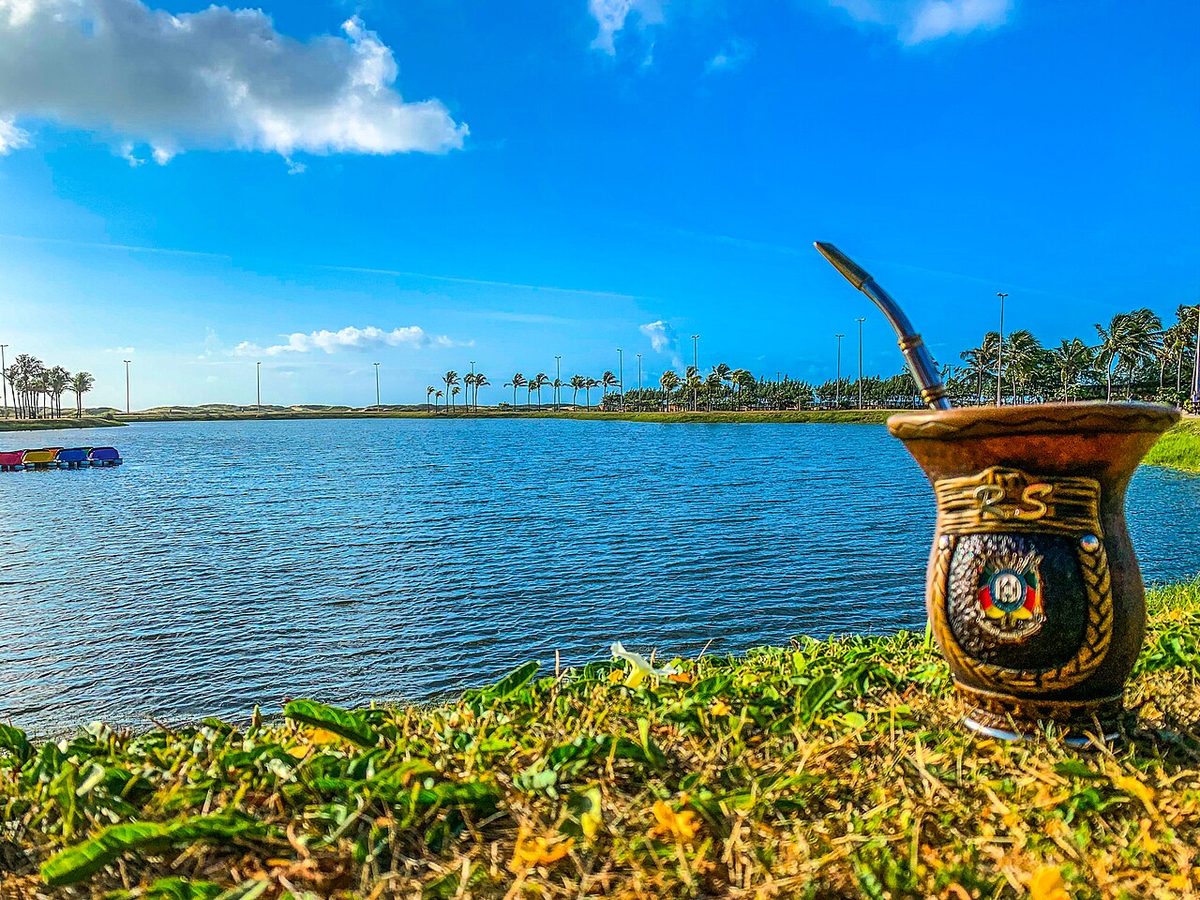
- Una bombilla / un mate — the metal straw / the gourd for mate, the shared herbal tea Uruguayans carry everywhere
- Bizcochos — the pastries you’ll want alongside that coffee
- Un chivito — the legendary steak sandwich; order one
- La cuenta, por favor — the check, please
- ¿Tienen menú en inglés? — Do you have a menu in English? (Often yes in tourist zones, often no elsewhere)
- Para llevar — to go / takeaway (“PA-ra sha-VAR” — there’s that “sh” again)
Hungry for the full rundown of what to order? Our guide to Uruguayan food walks through every dish and drink worth your appetite, chivito included.
Getting around
- ¿Dónde está…? — Where is…?
- ¿Cuánto cuesta? — How much does it cost?
- Quiero ir a… — I want to go to…
- ¿A qué hora sale el ómnibus? — What time does the bus leave? (In Uruguay a bus is an ómnibus, colloquially a bondi)
- La parada — the bus stop
- ¿Está lejos? — Is it far?
- Pará acá, por favor — Stop here, please (to a taxi driver)
Money and shopping
- ¿Puedo pagar con tarjeta? — Can I pay by card? (Often yes; Uruguay is card-friendly)
- ¿Tienen wifi? ¿Cuál es la clave? — Do you have wifi? What’s the password?
- Sólo estoy mirando — I’m just looking
- ¿Aceptan dólares? — Do you accept dollars? (Sometimes, especially in Punta del Este)
For the full picture on cards, cash and the tourist tax discount, see our money in Uruguay guide, and if you’ll want data for those translation apps, the Uruguay SIM card guide covers staying connected.
Translation apps: what actually works
I leaned on apps in Uruguay, and they earned their place, with caveats. Here’s my honest verdict.
Google Translate is the workhorse. Download the Spanish language pack before you go so it works offline, because you won’t always have signal in the interior. The camera feature, where you point your phone at a menu or sign and it overlays the translation, is genuinely the killer tool. It turned indecipherable menus into something I could order from. One drawback: it renders neutral textbook Spanish, so it won’t teach you vos or local slang, and its spoken output can sound stiff to a Uruguayan ear.
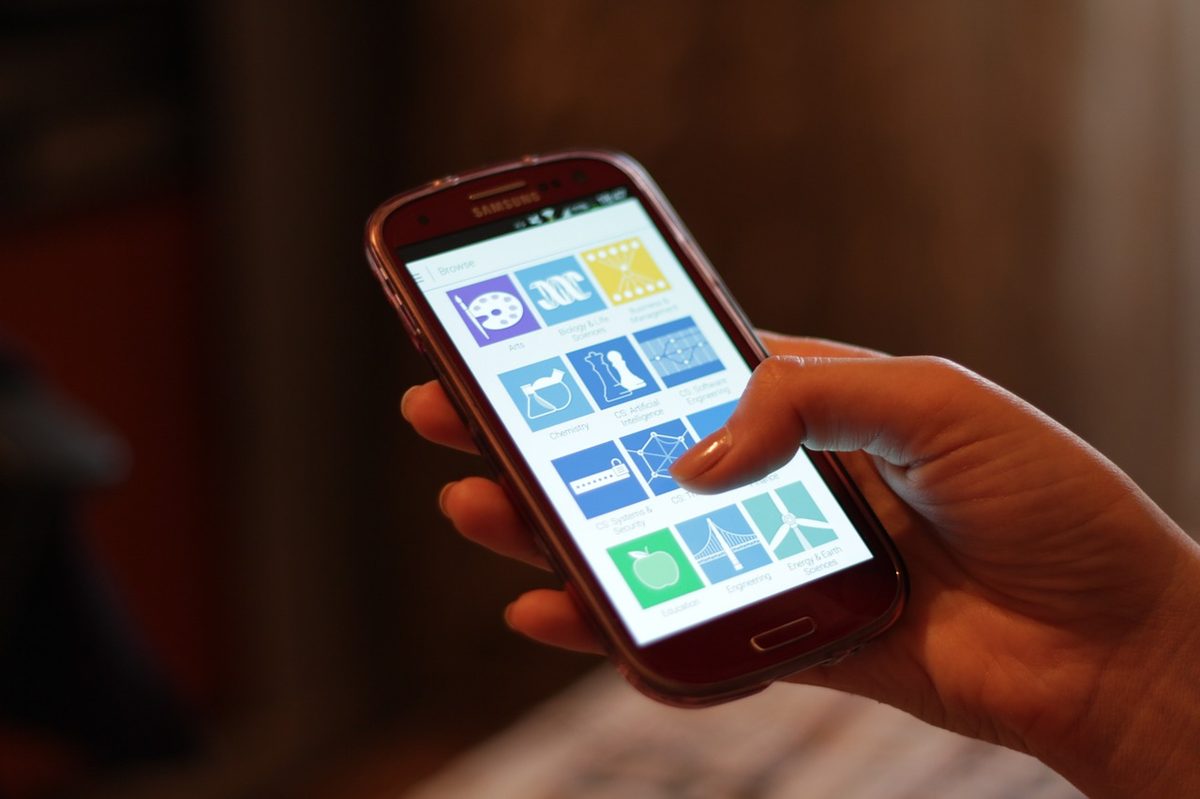
DeepL tends to produce more natural phrasing than Google for longer sentences, useful if you’re emailing a guesthouse. It’s weaker for live camera translation, so I used it as a complement, not a replacement.
For actually learning a little before you go, a few weeks of Duolingo or a similar app will plant the essentials. Just know that mainstream apps teach generic Latin American or Castilian Spanish, not Rioplatense, so the “sh” sound and vos will still surprise your ears. If you want to prep specifically, search for “Rioplatense” or “Argentine” Spanish content on YouTube and let your ear adjust to the music of it.
The thing no app replaces is goodwill. Open with Hola, attempt a clumsy sentence, then reach for the phone if you stall. Uruguayans respond to the effort, not the fluency. Planning the rest of your logistics? The Uruguay itinerary guide helps you decide how much time to give each region, and the Uruguay packing list makes sure the phone with those offline maps is charged and ready.
What language is spoken in Uruguay: your questions answered
Is the Spanish in Uruguay hard to understand?
It’s different, not hard. The two things that throw newcomers are the “sh” pronunciation of “ll” and “y,” and the use of vos instead of tú. Give your ear a day or two to adjust and it settles. If you already speak some Spanish, you’ll adapt quickly. Total beginners manage fine in tourist areas with patience.
Can I get by in Uruguay with only English?
In Montevideo, Colonia and Punta del Este, largely yes, especially in hotels and tourist-facing restaurants. In the interior and small towns, no, not really. English covers maybe 5 to 10% of the population. A translation app plus a handful of Spanish phrases closes the gap almost everywhere.
Is Uruguayan Spanish the same as Argentine Spanish?
They’re the same dialect family, Rioplatense, and sound very close, sharing the “sh” sound and vos. But there are tells. Uruguayans say championes for sneakers (Argentines say zapatillas), use tá constantly, and have their own rhythm. Locals on both sides can spot the difference instantly; most foreigners can’t at first.
What is Portuñol and where is it spoken?
Portuñol (also called fronterizo) is a genuine blend of Portuguese and Spanish spoken along Uruguay’s northern border with Brazil, especially around Rivera. It’s a native dialect passed down at home, not a tourist improvisation. You’ll only encounter it in the north; the southern coast and Montevideo speak standard Rioplatense Spanish.
Should I learn Spanish before visiting Uruguay?
You don’t have to, but even a little transforms the trip. Memorize greetings, please and thank you, numbers, and the food and transport phrases above. That alone unlocks warmer interactions and easier logistics. Deeper study is a bonus; goodwill and a translation app carry the rest.
Final thoughts
The language won’t be the thing that makes or breaks your trip. Uruguay is patient, walkable, and used to visitors who arrive with three words and a smile. You’ll get your coffee.
But I’d nudge you to learn a few phrases anyway, less for survival than for connection. The moment you say tá at the right time, or thank someone with gracias and get a warm a las órdenes back, you stop being a spectator. That small effort is the cheapest upgrade on the whole trip. Pack it alongside everything in our Uruguay travel tips, and you’ll be ready.
Credits & sources
Sources & further reading
- Uruguayan Spanish (Wikipedia) — detailed breakdown of voseo, Italian influence and vocabulary differences.
- Rioplatense Spanish (Wikipedia) — the dialect’s phonology, including sheísmo and intonation.
- Uruguayan Portuguese / Portuñol (Wikipedia) — the border dialect of the Rivera region.
- Ethnologue: Languages of Uruguay — speaker numbers and language data.
Photo credits
All images via Wikimedia Commons: Montevideo Spanish Street Signs by Intendencia de Montevideo (CC BY-SA 4.0); Montevideo Cafe Menu Spanish by Andy Li (CC0); Montevideo Spanish Bookshop by Ypsilon from Finland (CC0); People Chatting Plaza Montevideo by Cesar Vieira (CC BY-SA 4.0); Rivera Uruguay Brazil Border by Mx. Granger (CC0); Translation App Spanish Menu by Océanos y dados (CC0).