Uruguay in February: Carnival, Llamadas and Late Summer
If your dates land in February, two questions tend to come first: will it still be beach weather, and is Carnival worth building the trip around? Both answers are yes, with conditions. February is still high summer, Montevideo spends its nights at Carnival, and a couple of quirks in the calendar change how you should book.
Uruguay in February means high summer and Carnival. Montevideo averages highs of 27°C (81°F), the sea is near its warmest of the year, and the Desfile de Llamadas drums through Barrio Sur and Palermo on February 5 and 6, 2027. Book early for the first ten days; after Carnival weekend there’s more room.
For how February compares with the other eleven months, start with the best time to visit Uruguay, month by month. This page sticks to February: the weather, the 2027 Carnival dates, the Carnival holiday and where to go when Montevideo’s late nights catch up with you. Dates and prices below were checked in November 2026 against the Intendencia de Montevideo, INUMET (the national weather service), IMPO’s database of laws and decrees, and the bus operators; dollar figures use BROU’s November 4, 2026 rates of UYU 39.00 to 41.40 per US dollar.
Uruguay in February at a glance
| Question | Short answer |
|---|---|
| Weather in Montevideo | Average high 27°C (81°F), average low 18.6°C (65°F); 94 mm (3.7 in) of rain over about six days (INUMET, Prado 1991–2020 normals) |
| The sea | Near its warmest of the year. Montevideo’s beaches face the Río de la Plata; Punta del Este’s Playa Brava and the Rocha coast face the Atlantic |
| Carnival | Concurso Oficial at the Teatro de Verano from January 25, 2027, plus neighborhood stages (tablados) |
| Las Llamadas | Friday, February 5 and Saturday, February 6, 2027, on Isla de Flores through Barrio Sur and Palermo |
| Carnival holiday | Monday, February 8 and Tuesday, February 9, 2027; not a paid holiday, so check opening hours |
| Crowds | Busiest through Carnival weekend; lively all month while schools are out |
| Costs | High-season lodging on the coast; tourist IVA breaks on lodging, restaurants and car hire |
| Getting around | COT buses from Montevideo’s Tres Cruces terminal: UYU 466 (about US$11–12) to Punta del Este |
| Book ahead | Coast lodging for February 1 to 9, Llamadas seats, the Teatro de Verano nights you want, and buses on Carnival weekend |
| Time needed | A week covers Carnival in Montevideo plus three or four days on the coast |
| Best for | Carnival, beach days, warm evenings outdoors, the first harvest events at the wineries |
Uruguay weather in February: what the numbers mean
Montevideo’s long-term averages come from INUMET’s station at Prado, using the 1991–2020 normals. For February they give an average daily high of 27°C (81°F), an average low of 18.6°C (65°F) and a monthly mean of 22.8°C (73°F). That’s a fraction below January, whose average high is 27.8°C (82°F), and clearly warmer than March at 25.3°C (78°F). February is still the heart of summer. The slide toward autumn waits for March.
Rain is where weather sites get muddled. Prado averages 94 mm (3.7 in) in February, spread over six days with precipitation. Montevideo’s monthly averages run from 83 to 111 mm, so February sits in the middle of the table, not at the top. Six wet days carrying 94 mm works out to about 16 mm each time it rains: expect the odd proper downpour rather than weeks of drizzle, and keep one indoor plan up your sleeve.
Inland is another climate. INUMET’s January normals put the average high at 30.5°C (87°F) in Durazno and 31.5°C (89°F) in Mercedes, so if you head north for a festival or the hot springs, save outdoor time for mornings and evenings. On the coast, nights stay mild enough for dinner outside.

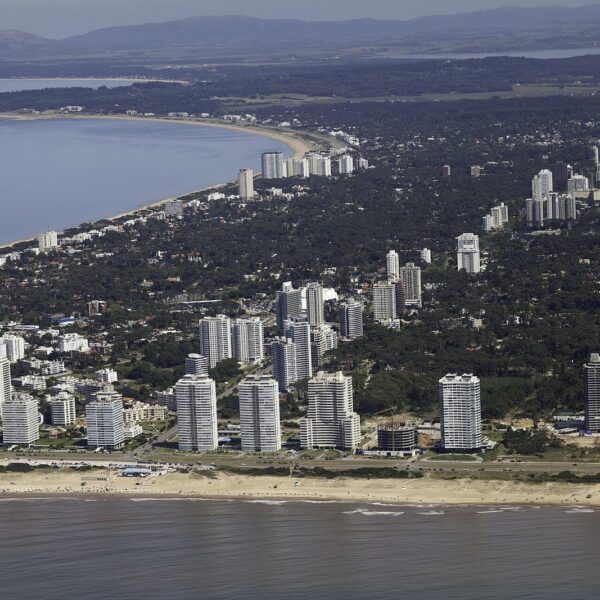
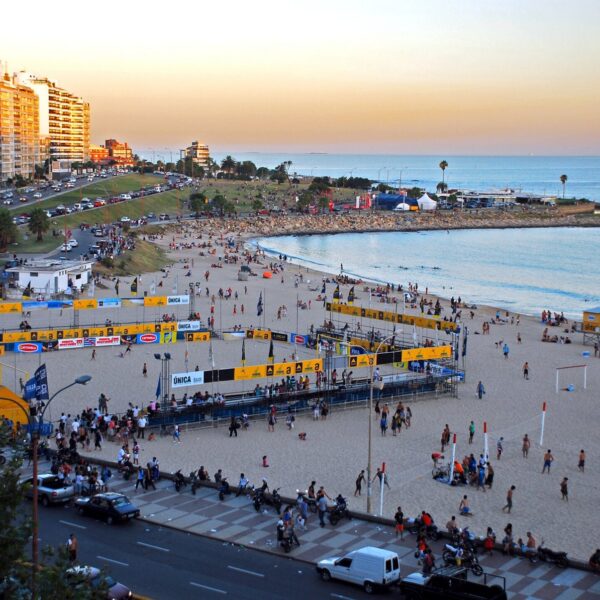
The sea is near its warmest of the year in February, a shade behind January. Montevideo’s city beaches face the Río de la Plata; east of the Punta del Este peninsula, Playa Brava (the name means “rough beach”) and the whole Rocha coast face the open Atlantic. Swim where lifeguards are posted and follow their flags. In Maldonado, the department that includes Punta del Este, lifeguards cover the beaches daily through the summer; check the Intendencias of Maldonado and Montevideo for this season’s dates and hours.
The February sun is strong, and a breezy day hides it well; sunscreen and shade at midday do more for a trip than any itinerary tweak. For the whole year side by side, see Uruguay’s weather, month by month.
Carnival in Uruguay: what February looks like
Montevideo’s Carnival is the one that matters, and February is its middle stretch. The city calls it Uruguay’s largest popular festival, and the country’s own tourism promotion bills its roughly 40 nights as the world’s longest Carnival. The season runs from late January into early March, so by February the opening parades on Avenida 18 de Julio (January 21 and 22 in 2027) are behind you; if you want those too, consider a late-January trip instead.
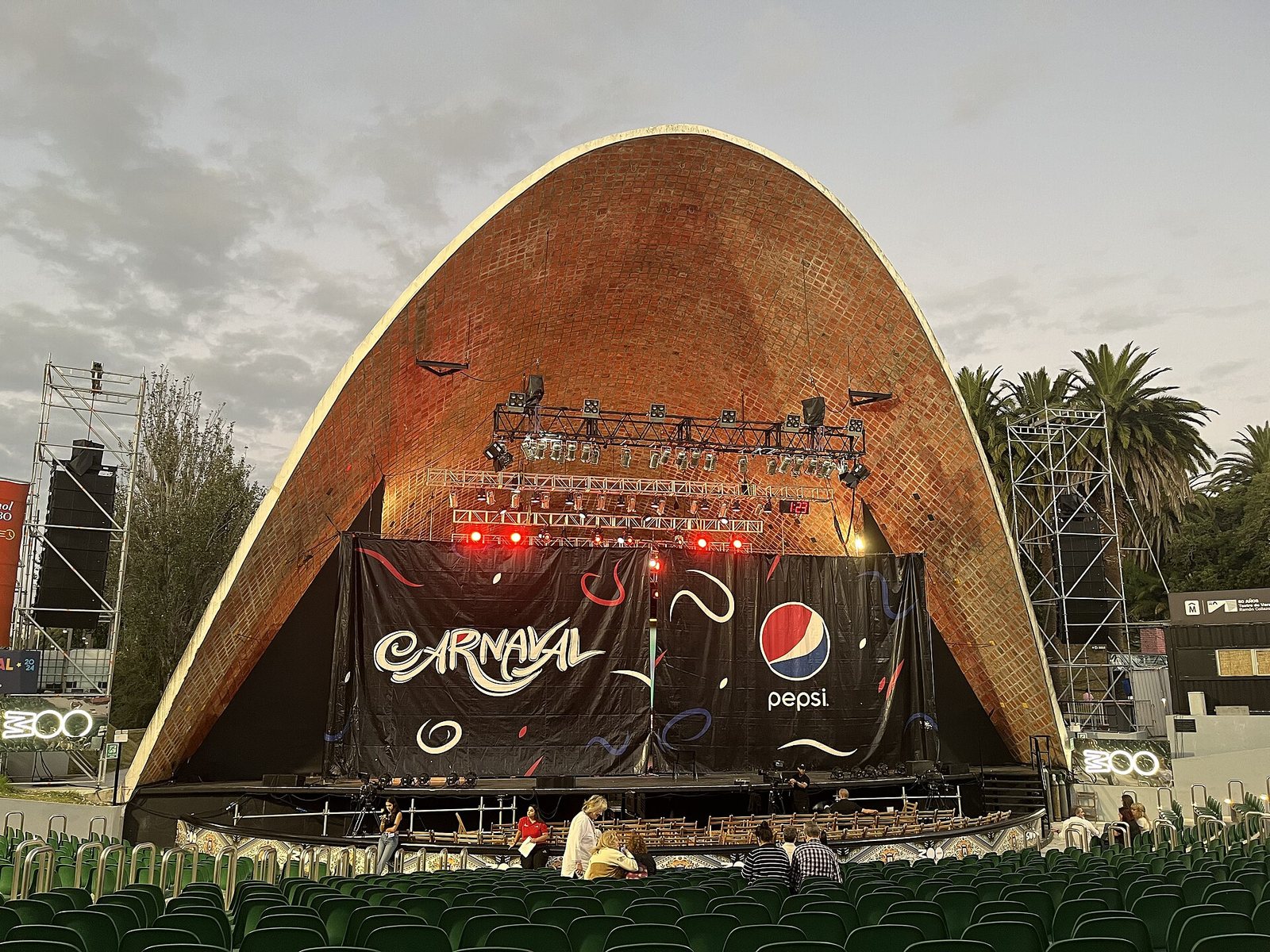
What February does have is the Concurso Oficial, the official competition, in full swing at the Teatro de Verano Ramón Collazo, the open-air theater in Parque Rodó. In 2027 it starts on Monday, January 25. There are five categories: murgas, humoristas, parodistas, revistas and comparsas de negros y lubolos, the candombe troupes. In 2026 the contest had 40 groups, 19 of them murgas.
If you see one thing, make it a murga. A chorus and a director, backed by three percussionists on bombo (bass drum), platillos (cymbals) and redoblante (snare), sing sharp, funny satire about the year’s news. Murga, from Cádiz to Montevideo covers the history and the vocabulary, and how Montevideo’s Carnival works, category by category has the venues and the etiquette.
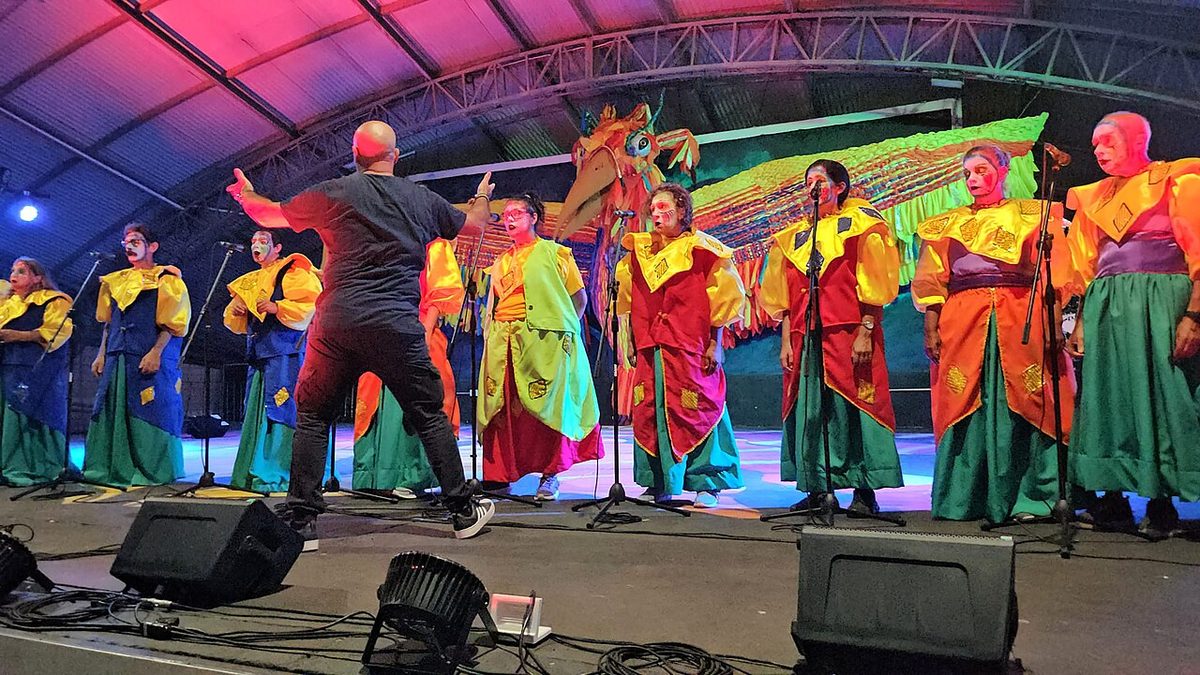
Beyond the big theater, Carnival plays on tablados, neighborhood stages set up in different parts of Montevideo for the season. A tablado is smaller and closer than the Teatro de Verano, and for a first taste it’s where we’d start: you watch a set at arm’s length, in a neighborhood crowd, and move on whenever you like.
The contest builds toward the Liguilla, the final round for the best-placed groups. In 2026 it began on February 21 at 20:30, so if the finals matter to you, look at the end of the month and check the 2027 program. That start time tells you something else: with shows that begin at night, Carnival keeps very late hours. Plan dinner around it, not the other way around.
One honest warning. Murga, parodistas and humoristas are theater in fast, local Spanish, thick with references to Uruguayan politics and daily life. Without good Spanish you’ll enjoy the costumes, the harmonies and the drums but miss most of the jokes. The comparsas need no translation at all.
Verdict: one night at the Teatro de Verano for the spectacle, a tablado or two for the atmosphere, and the Llamadas for everything else.
Plan it: Concurso Oficial from January 25, 2027, at the Teatro de Verano in Parque Rodó; tickets and the nightly program on the Intendencia’s Carnaval pages (Abitab, the payments network, sold 2026 tickets); allow a full evening; best for murga fans and anyone with some Spanish. For the Museo del Carnaval’s hours and tickets, check the museum’s own site.
Las Llamadas: February 5 and 6, 2027
The Desfile de Llamadas is Carnival’s candombe parade, and the one February event we’d plan a whole trip around. Comparsa after comparsa comes down Isla de Flores, the street that runs through Barrio Sur and Palermo, each led by its cuerda: the drum line of tamboriles (barrel drums) playing candombe’s three parts, chico, repique and piano, with dancers, flags and the traditional characters around it. In 2027 it runs on Friday, February 5 and Saturday, February 6.
Candombe is Afro-Uruguayan drumming rooted in these neighborhoods, and UNESCO lists it as intangible cultural heritage. The Llamadas are its biggest night out, but the drumming goes on all year: UNESCO describes drum calls on Sundays and holidays in Barrio Sur, Palermo and Cordón. There’s no timetable for those, which is half the charm. Read up on candombe, its drums and its neighborhoods before you go, and see the Desfile de Llamadas in depth for the route, the seating and the history.
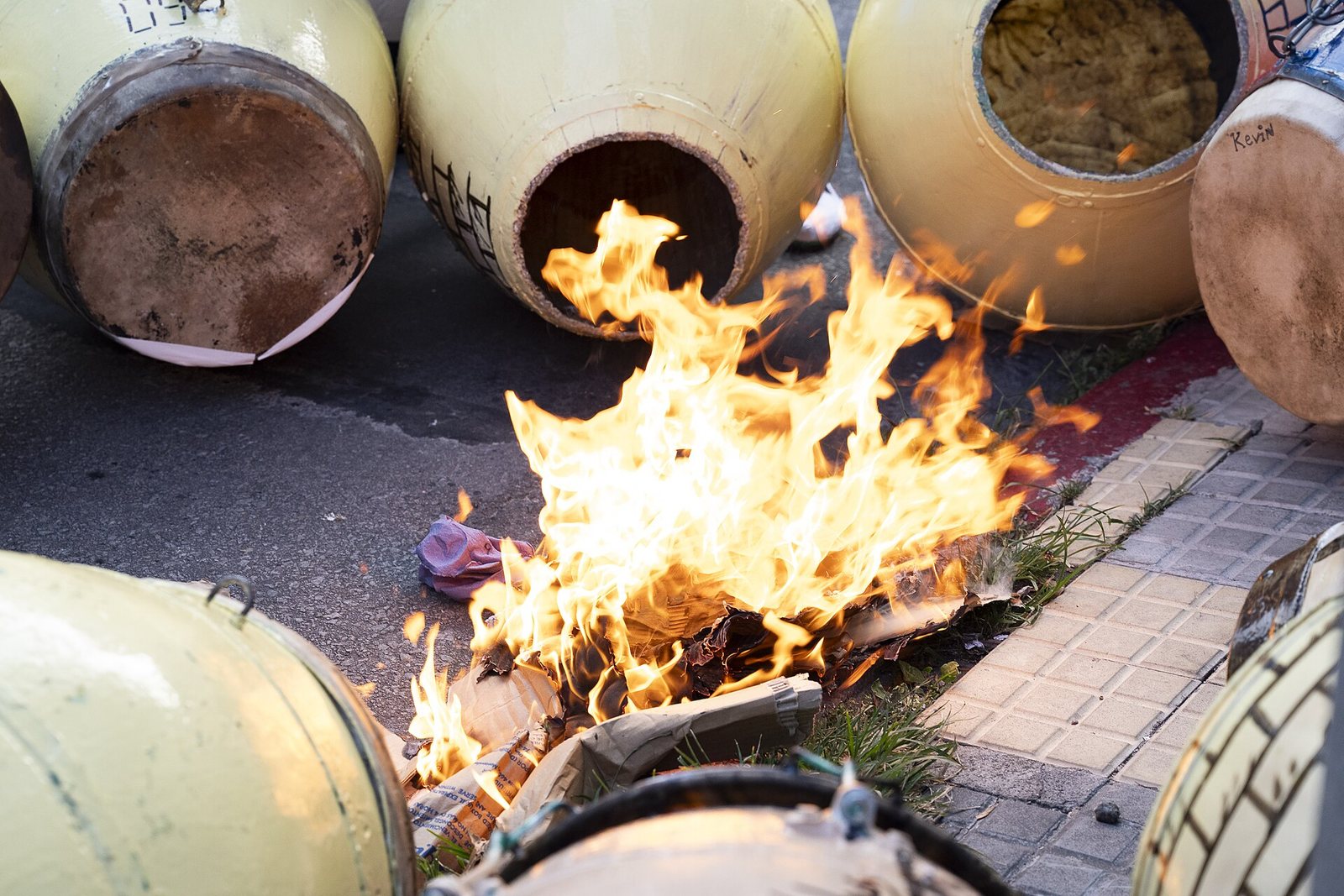
Rain is the one thing that moves the parade. It has been postponed for weather before (it happened in 2020), so check the Intendencia’s announcements on the day and keep the following night free if you can. For a seat in the stands along the route, look for 2027 sales and prices on the city’s Carnaval pages. If you’d rather stand, get there early and pick your spot before the drums arrive.
Crowds bring ordinary city-crowd risks. The US State Department rates Uruguay at Level 2, “Exercise increased caution” (issued July 28, 2026), and Canada’s travel advice notes that tourist police patrol Ciudad Vieja, Centro, Cordón, Parque Rodó, Pocitos and other hotel neighborhoods in summer. Carry a phone, one card and a little cash, and agree on a meeting point.
Plan it: Friday, February 5 and Saturday, February 6, 2027, on Isla de Flores; seats through the Intendencia’s 2027 sales; a walk from Centro and Ciudad Vieja; allow the whole evening; best for everyone, Spanish or not.
Is Carnival Monday a holiday? February 8 and 9, 2027
Carnival Monday and Tuesday are the two days before Ash Wednesday. Easter Sunday 2027 is March 28, so Ash Wednesday falls on February 10 and the Carnival holiday on Monday, February 8 and Tuesday, February 9. Under Law 16,805, as amended in 2001 by Law 17,414, Carnival and Semana de Turismo (Uruguay’s Easter week) stay on their own weekdays instead of moving to a Monday, as some other holidays do.
Here’s the catch: they aren’t paid holidays. The Ministry of Labor and Social Security lists only five of those (January 1, May 1, July 18, August 25 and December 25), and Carnival isn’t among them. So don’t assume the country stops, and don’t assume it doesn’t: some people get the days off and others work as usual, and opening hours for museums, offices, banks and shops can differ from a normal Monday. Check ahead for anything you’re counting on; how Uruguay’s public holidays work has the full calendar.
For a traveler, February 5 to 9 is one long weekend: two Llamadas nights, a Sunday and the holiday itself. Book buses and coast lodging for it early.
Other February dates worth planning around
Iemanjá: February 2
Free; busiest around sunset. Every February 2, followers of Iemanjá, the orisha (deity) of the sea, bring offerings to Montevideo’s beaches, and Playa Ramírez by Parque Rodó is the main gathering point. Devotees stake out spots on the sand from early in the day; by sunset the beach fills with believers, curious onlookers and passers-by, and local press report the crowd growing year on year. In 2027 it falls on a Tuesday. It’s a religious celebration, not a show: watch from a respectful distance and ask before photographing anyone mid-ritual.
Festival Nacional de Folklore, Durazno: February
Inland, one weekend. Durazno’s Festival Nacional e Internacional de Folklore is held in February, and its weekend moves from year to year. If it falls on the Llamadas weekend, you’ll have to choose between folk guitars in Durazno and drums on Isla de Flores. Check the Intendencia de Durazno for the 2027 dates and lineup.
Fiesta de la Patria Gaucha: February 27 to March 7, 2027
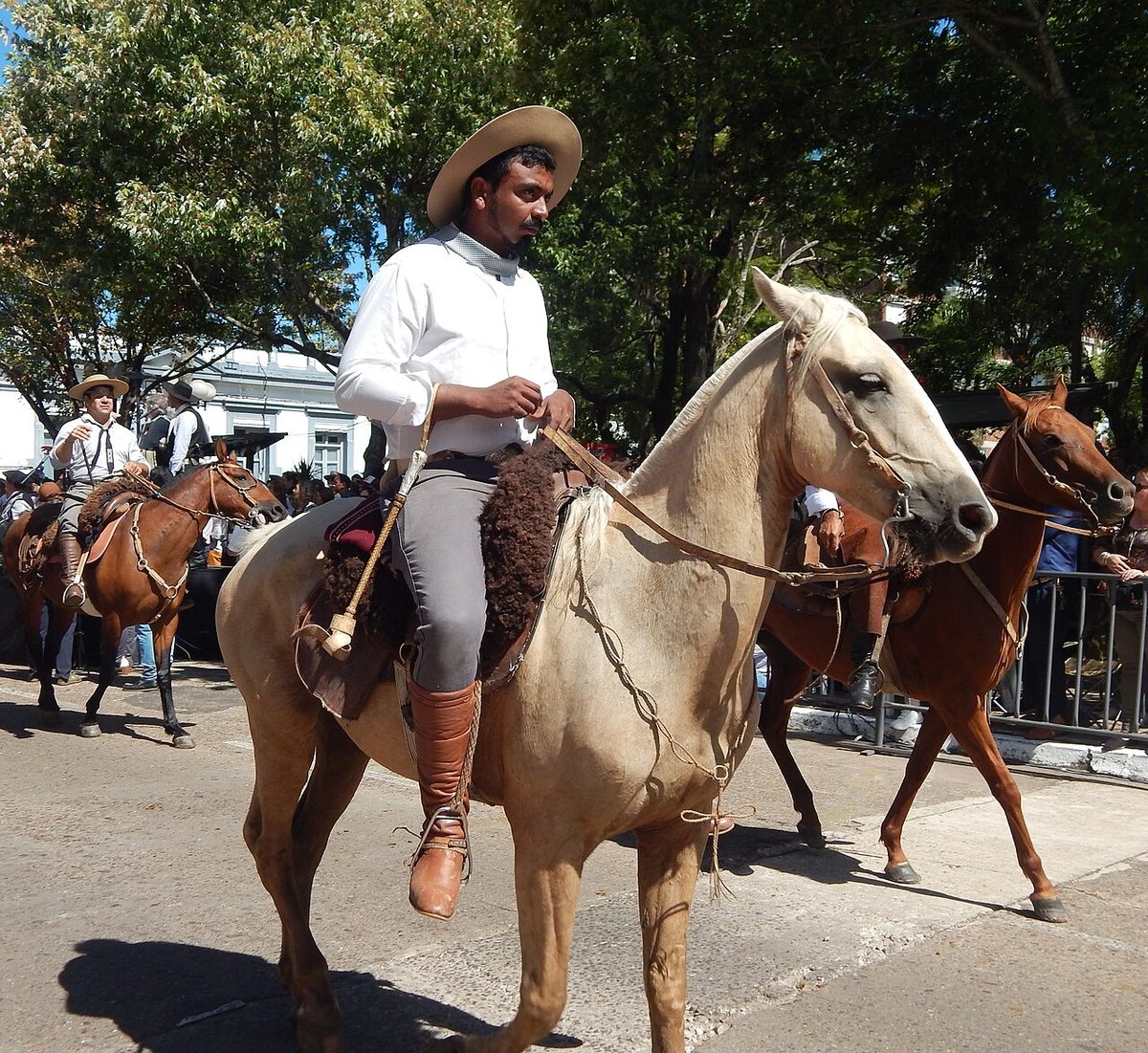
Nine days in Tacuarembó. The 40th Fiesta de la Patria Gaucha runs from Saturday, February 27 to Sunday, March 7, 2027, on the shores of Laguna de las Lavanderas, at Tacuarembó. Its organizers bill it as Uruguay’s largest celebration of gaucho tradition. Criollo (traditional gaucho) societies stage historical re-enactments and competitions, and the program mixes riding with concerts. The Fiesta de la Patria Gaucha, explained has the background; check the organizers’ site for the 2027 program and tickets.
Is the coast still busy in February?
Yes, especially in the first ten days, around Carnival weekend. Schools stay on their summer break all month, so the beach towns don’t empty after Carnival either. Book the first ten days the way you’d book January; after that, you’ll usually find more choice.
Punta del Este and the Maldonado coast
Still in full swing. Punta del Este keeps its summer rhythm through February: beach by day, late dinners, later nights. Playa Mansa, on the river side of the peninsula, is the calmer swim; Playa Brava, on the Atlantic side, is home to La Mano, the fingers rising from the sand at Parada 1. What drives the price of a bed is the date and the distance to the sand, with the peninsula, La Barra and José Ignacio at the top of the range, and Maldonado city and San Carlos, inland, usually cheaper for the same comfort. COT buses from Tres Cruces cost UYU 466 (about US$11–12) one way; the direct runs take about two hours, and services via Piriápolis take longer.
Rocha, from La Paloma to Santa Teresa
Wilder and simpler. The Rocha coast is where February feels least like a resort. COT lists Montevideo to La Paloma at UYU 786 (about US$19–20) and to La Pedrera at UYU 819 (about US$20–21), roughly 3½ to 4 hours on the road. The trucks that carry visitors across the dunes to Cabo Polonio cost UYU 470 (about US$11–12) return. Santa Teresa National Park is open daily from 08:00 to 20:00 between December and February; its reception office closes at 18:00 in Carnival week, and campers arriving after hours register at reception the next day. Bring cash: Turismo Rocha marks several ATMs as summer-only, including those in La Pedrera, Punta del Diablo and the park, so carry enough pesos for a day or two. For a route that strings these together, see a Rocha coast road trip, stop by stop.
Wine country at harvest time
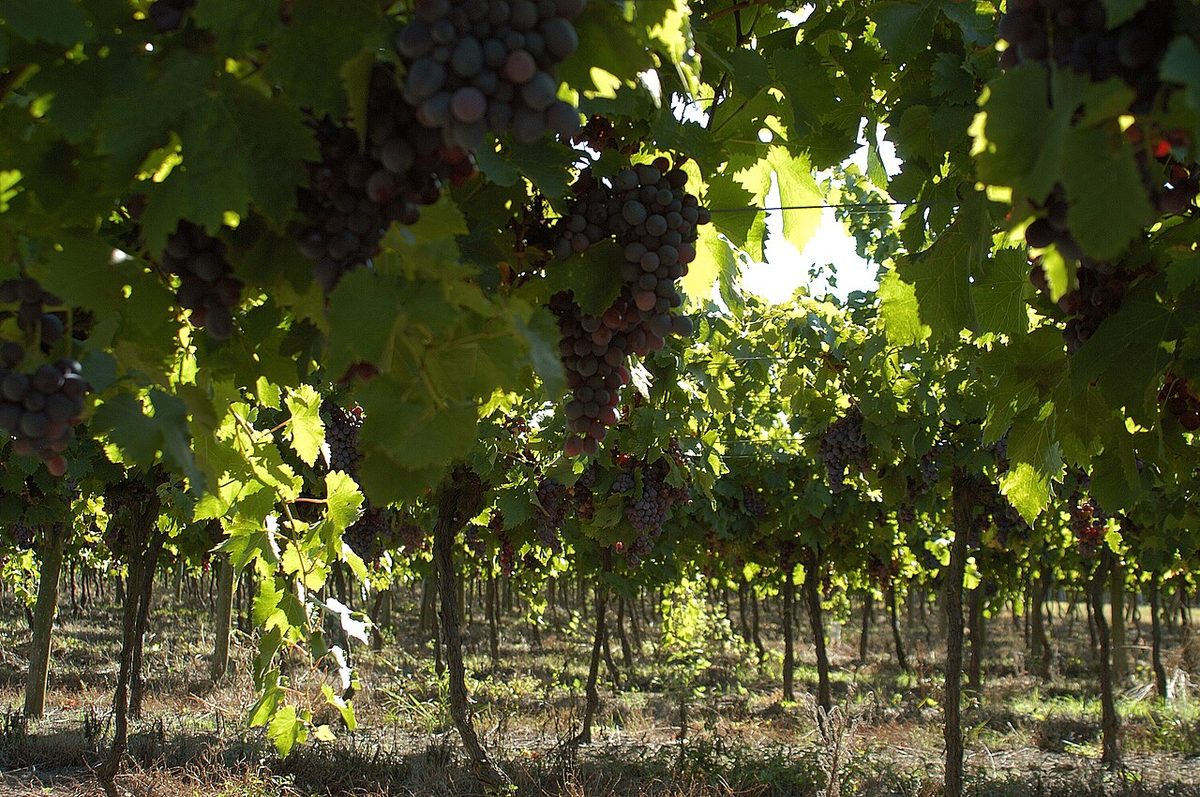
A half-day from Montevideo. Late summer brings the start of the vendimia, the grape harvest. The Ministry of Tourism’s 2026 harvest season ran through February and March, with more than 50 wineries opening for tastings, tours, harvest meals and grape-stomping. Check the ministry’s site for the 2027 agenda. A long winery lunch is a slow, shaded break from the beach crowds, and Uruguay’s wine tours and winery visits lays out the options.
What does February cost, and what should you book?
Lodging on the coast is priced for high season, and rates follow demand: compare a few date combinations on either side of February 9 before you commit, and book early if your dates are fixed.
In Montevideo, Carnival is a reason to think about location. Centro, Cordón and Parque Rodó keep the Llamadas route and the Teatro de Verano within a walk or a short taxi ride, which matters when shows end late; where to stay in Montevideo, neighborhood by neighborhood weighs them up.
Uruguay’s tourist tax breaks are worth understanding before you pay, because they’re three separate rules:
- Lodging: hotels and other accommodation bill non-residents without IVA (Uruguay’s value-added tax) when you show a foreign identity document, all year round.
- Restaurants and car hire: paying by card or electronic money takes 9 points off the IVA on restaurants, catering, event services, car hire without a driver and holiday-rental intermediaries until April 30, 2027 (Decree 235/026). Any card qualifies, and it’s worth about 7.4% off a price that includes the standard 22% IVA.
- The full exemption: the Ministry of Tourism has announced that non-residents paying with foreign cards will again get the full IVA exemption on those services for the 2027 season. Look for the discount on your receipt.
Getting around is cheap by comparison: a one-hour Montevideo city bus ticket costs UYU 64 (about US$1.60) in cash or UYU 52 (about US$1.30) on an STM transit card. Long-distance buses leave from Tres Cruces, a terminal and shopping center in one; getting around Uruguay by bus explains the routes and how to book.
Book ahead, roughly in this order:
- Coast lodging for February 1 to 9, the tightest stretch of the month.
- Llamadas seats, through the Intendencia’s 2027 sales.
- The Teatro de Verano nights you care about, the Liguilla above all.
- Buses out of Tres Cruces from Friday, February 5 to Tuesday, February 9.
- A rental car, if you want to hop between Rocha’s beaches on your own schedule.
When February is the wrong month
If you want empty beaches. The first ten days are the opposite of empty. Verdict: come in March, when the sea is still warm and schools are back; Uruguay’s quieter autumn months pick up the story.
If you came for Carnival theater but have little Spanish. Verdict: build your nights around the Llamadas and a Teatro de Verano bill with comparsas, where rhythm does the talking.
If you’re counting every peso. The first ten days are priced for peak demand. Verdict: base yourself in Montevideo, where the city beaches are a bus ride away, and see the coast on day trips.
A February week that works
Here’s how we’d spend a week built around the 2027 Llamadas. Arrive by Thursday, February 4. Give Friday to Ciudad Vieja and the rambla, Montevideo’s waterfront promenade, then take your place on Isla de Flores for the first Llamadas night. Keep Saturday for the beach at Pocitos or Ramírez, then the second Llamadas night or a tablado. On Sunday afternoon, walk Barrio Sur and Palermo and listen for drums. Monday and Tuesday are the Carnival holiday and a natural moment to head east, with bus tickets bought ahead, for three nights in Punta del Este or on the Rocha coast. Back in Montevideo by Thursday, you’ve had the city at its loudest and the coast at its most summery.
On a later trip, flip it: the coast first, then Montevideo for the contest’s final stretch, and Tacuarembó for the Patria Gaucha’s opening weekend on February 27 and 28. Pick one base per region; every move costs you a beach afternoon.
Uruguay in February: your questions answered
Is February a good time to visit Uruguay?
Yes, if you want summer and Carnival in one trip: beach weather, Montevideo’s Carnival at full strength and the Llamadas on February 5 and 6, 2027. The trade-offs are high-season lodging, especially in the first ten days and over Carnival weekend, and very late nights. For quieter beaches, March suits better.
How hot is Uruguay in February?
In Montevideo, INUMET’s 1991–2020 normals give an average daily high of 27°C (81°F), an average low of 18.6°C (65°F) and a monthly mean of 22.8°C (73°F). The interior runs hotter, with January highs averaging above 30°C (86°F) in Durazno and Mercedes, so plan inland sightseeing for mornings and evenings.
Is the sea warm enough to swim in February?
Yes. The water is near its warmest of the year, just behind January. Montevideo’s beaches are on the Río de la Plata estuary, while Punta del Este’s Playa Brava and the Rocha coast face the Atlantic, where the surf can be stronger. Swim where lifeguards are posted and follow their flags.
When is Carnival in Uruguay in 2027?
Montevideo’s Desfile Inaugural is on Thursday, January 21, 2027, and the samba schools parade on Friday, January 22. The Concurso Oficial starts at the Teatro de Verano on Monday, January 25 and runs into early March. The Desfile de Llamadas is on Friday, February 5 and Saturday, February 6, 2027, on Isla de Flores.
Are Carnival Monday and Tuesday public holidays in Uruguay?
They are holidays, on February 8 and 9 in 2027, and by law they stay on their weekdays. But they aren’t among the five paid holidays the Ministry of Labor and Social Security lists, so some people work and others don’t. Check opening hours ahead for the museums, offices, banks and shops you’re counting on.
Do you need tickets for the Llamadas?
For a seat in the stands along Isla de Flores, yes: look for 2027 sales and prices on the Intendencia de Montevideo’s Carnaval pages (Carnaval tickets went through Abitab in 2026). Wherever you watch from, arrive early, and check the date on the day, because rain has postponed the parade before.
Is Punta del Este busy in February?
Yes, especially up to Carnival weekend: Schools stay on holiday all month. After Carnival you’ll usually find a room more easily, but it’s still summer.
Does it rain a lot in Uruguay in February?
Not especially. Montevideo averages 94 mm (3.7 in) over six days with precipitation, mid-range for a city whose monthly averages run from 83 to 111 mm. Expect the odd heavy downpour rather than weeks of drizzle, and keep a museum afternoon in Ciudad Vieja in reserve.
Final thoughts
February is Uruguay at full volume, and we think that’s the best reason to come. The beaches are warm, Montevideo stays up half the night arguing about murgas, and the Llamadas are the night we’d build the whole trip around. The costs are real: high-season lodging, very late nights, and a holiday that blurs the opening hours. They’re worth paying.
Book the first ten days early or skip them, keep February 5 and 6 free for Isla de Flores, and use the Carnival holiday to swap the city for the coast. For the wider picture, the Uruguayan summer from start to finish puts February in context, and Montevideo’s Carnival, from tablados to the Teatro de Verano helps you pick your nights.
Credits & sources
Sources & further reading
- Intendencia de Montevideo: Carnaval 2027 dates: the official calendar for the opening parades, the Concurso Oficial and the Llamadas
- INUMET: climate statistics tables: the 1991–2020 normals for Prado and stations around the country
- IMPO: Law 16,805 on holidays: why Carnival and Semana de Turismo stay on their weekdays
- Ministry of Labor and Social Security: feriados: which holidays are paid
- IMPO: Decree 235/026: the 9-point IVA reduction on restaurants and car hire to April 30, 2027
- Fiesta de la Patria Gaucha: official site: dates, program and tickets for the 2027 edition
- COT: timetables and fares: buses from Montevideo to Punta del Este and the Rocha coast
- Servicio de Parques del Ejército: visiting hours: summer opening times for Santa Teresa National Park
Photo credits
All images via Wikimedia Commons, used with thanks: A city beach with a skyline across the water by NaBUru38 (CC BY-SA 3.0); A costumed chorus and its director on stage by a Wikimedia Commons contributor (CC BY-SA 4.0); Drums warmed over a fire before the 2024 Llamadas by Sala de Medios – Intendencia de Montevideo (CC BY-SA 4.0); Criollo riders on parade by Ivif28 (CC BY-SA 4.0); Grapes on the vine before the harvest by Viñavarelazarranz (CC BY-SA 3.0); The Teatro de Verano dressed for Carnaval by Marinna (CC BY-SA 4.0).