Uruguay in Winter: June, July & August (2026)

The first time I planned a winter week in Uruguay, I almost cancelled. A friend in Montevideo warned me it would be grey and that half the coast would be shut. Both were true, and it still became one of my favourite trips here, because I had a whole country to myself: whales off an empty beach, a hot-spring pool steaming in the cold air, a four-hour parrilla lunch (the wood-fired grill at the heart of Uruguayan cooking) that ran past dark. So here is my argument for the season nobody books.
Uruguay in winter runs roughly June through August, the austral cold season, and it is genuinely underrated. Expect cool, damp days around 10–15°C (50–59°F), very low prices, almost no crowds, southern right whales off the Atlantic coast, and the hot springs at their best. It is not freezing, and not for swimming, but the case is real.
What this guide covers
I have leaned on three winters of my own travel here plus official tourism and climate sources, and I have tried to be honest about the trade-offs rather than sell you a postcard. Here is the ground we cover:
- What the weather actually feels like in June, July and August, in real numbers
- The four reasons winter earns the word “underrated”: whales, hot springs, city culture, and price
- A month-by-month breakdown so you can pick your week
- Sections by interest, for whale watchers, termas-seekers, city travellers and budget travellers alike
- An honest accounting of the drawbacks, because there are several
- A plain-language FAQ answering the questions people actually ask
If you are still deciding when to come at all, it is worth reading this alongside our wider guide to the best time to visit Uruguay, which sets winter against the other seasons.
Uruguay in winter at a glance
| What you want to know | The short version |
|---|---|
| Months | June, July and August (austral winter); July is coldest |
| Montevideo temperature | Daytime highs 14–17°C (57–62°F); nights 7–8°C (44–46°F); cold snaps near 0°C (32°F) |
| Rain and daylight | Damp, not torrential (~6–7 wet days a month); short days, ~9h50m at the June solstice |
| Crowds | Very low; this is the off season nationwide |
| Prices | Annual lows; coastal hotels a fraction of January rates |
| Headline draw | Southern right whales (June–Nov), hot springs at their best, indoor Montevideo |
| Main drawback | Short damp days, most beach towns shuttered, patchy heating in old buildings |
| Who it suits | Travellers who prefer culture, nature and quiet over sun and swimming |
What winter actually feels like (the honest version)
Let me get the cold out of the way first, because the internet tends to either undersell or melodramatise it. Uruguay sits around 35 degrees south, on the River Plate (Río de la Plata) where it widens toward the Atlantic, and its winter is best described as cool and damp rather than harsh. Think a coastal British or northern-Spanish winter, not Patagonia.
In Montevideo, July is the coldest month, with an average of about 10.6°C (51°F): typically a daytime high near 14–15°C (57–59°F) and a night-time low around 6–7°C (43–45°F). June and August sit a touch milder. What the averages hide is the wind. When a southerly blows in off the estuary, the day can stall at 8°C (46°F) and feel a good deal colder on the exposed rambla, the long waterfront promenade that runs for kilometres along the coast. Cold snaps can push night-time temperatures to around freezing, and on rare occasions just below. The flip side: a still, sunny winter afternoon can climb past 20°C (68°F), and the record highs for these months sit in the mid-20s°C (high 70s°F). You pack for both.
It does not really snow. The last meaningful snowfall in Montevideo was in 1930, during the opening match of the first football World Cup, which Uruguayans will tell you about with some pride. So winter here means cold rain and grey skies, not white ones.
Rain is the thing to plan around more than cold. Each winter month brings roughly 85–95mm of rain spread over six or seven days, so you are not looking at constant downpours, more a pattern of damp, overcast spells broken by clear, sharp days. Daylight is genuinely short: around the June solstice you get under ten hours, with the sun down by about six in the evening. By late August the days are noticeably stretching again. Bring a waterproof layer, a warm one underneath, and adjust your sightseeing around the bright windows when they come.
For a deeper month-by-month climate breakdown across the whole country, our guide to Uruguay’s weather goes further than I can here.
Why Uruguay in winter is underrated: the four-part case
“Underrated” is a word I usually distrust. Here I think it is earned, and it rests on four things that are either better in winter or only happen in winter. Take them together and the season stops looking like a compromise.
1. The whales are here, and you watch them for free
This is the one that converts people. From roughly June to November, southern right whales (in Spanish, ballena franca austral) migrate up the Atlantic coast, moving from colder southern waters toward warmer Brazilian seas to mate and calve. They pass close to Uruguay, and in places the water is deep enough that they come within tens of metres of the shore. You do not need a boat. You stand on a headland or a beach, or climb one of the free observation towers (torres de observación), and wait.
The coast of Maldonado and Rocha is the stage. Reliable spots include Punta Colorada and Punta Negra near Piriápolis, Playa Mansa in Punta del Este between the markers known as Paradas 23 and 40, the bay at La Paloma, and La Pedrera further east. Local law keeps any boats at least 300 metres from the animals, so the whole thing is unobtrusive: it is just you, binoculars, and a creature the size of a bus rolling in the swell. Sightings build through the season; sources broadly agree July is when it starts in earnest and August through November is the sweet spot, though I have known people get lucky as early as June.
One honest caveat: whales are wild and the season is real but not a guarantee. Some days you scan an empty horizon for an hour and go home with cold feet and no spout. Locals share live sightings in a Telegram group called Ballenas UY, and following it (it is in Spanish) genuinely improves your odds, because the animals move and you want to drive to where they were seen that morning. Go with patience, not a schedule. For where the whale coast sits within Uruguay’s wider protected landscapes, see our guide to Uruguay’s national parks, and for the towns themselves, Rocha, including Cabo Polonio.

2. The hot springs are at their best
On the opposite side of the country, the Litoral, the western strip along the Uruguay River, is hot-spring country. The termas (thermal baths) here draw mineral-rich water from deep underground, and the best of them are properly hot. At Termas del Daymán, just south of the city of Salto, the water rises from more than two kilometres down and reaches the pools at temperatures up to around 46°C (115°F), carrying dissolved minerals like calcium, fluoride and magnesium.
Sitting neck-deep in 40-degree water with cold winter air on your face is one of the great small pleasures of travel, and it is precisely the contrast that makes winter the right time to do it. The termas are busiest and most atmospheric from about June to September, exactly when you want the heat. There is a cluster of resorts and complexes around Salto and Paysandú, several with hotels and restaurants attached, so you can settle in for two or three slow days rather than rushing through.
The honest drawback: the springs are popular with Uruguayan and Argentine families during the mid-July school holidays, and a crowded thermal pool loses some of its magic. Go on a weekday, or outside that mid-July window, and you may have a steaming pool nearly to yourself. The full rundown of complexes, prices and which to choose is in our dedicated guide to Uruguay’s hot springs.

3. Montevideo turns indoors, which is when it is most itself
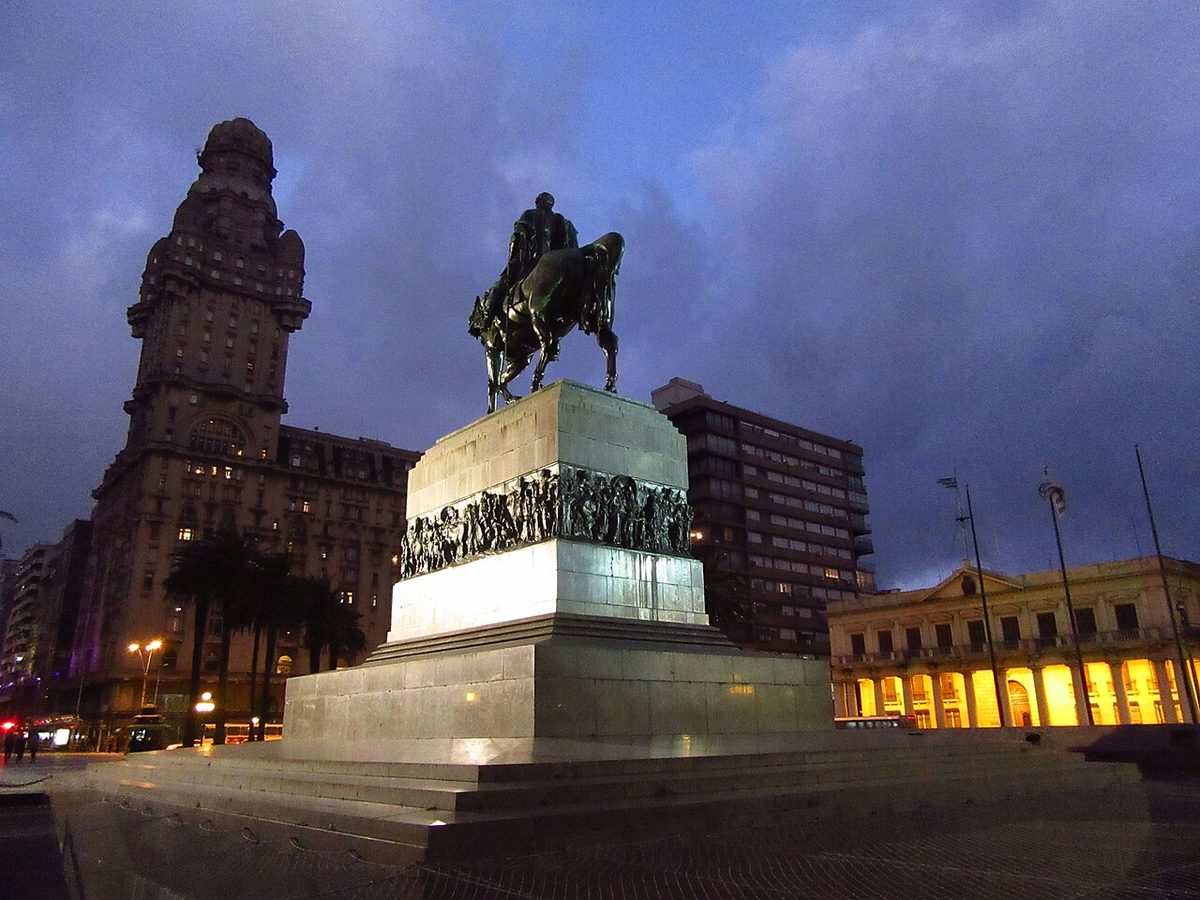
Summer pulls everyone out of the capital and onto the beaches. Winter hands the city back to the people who live in it, and the version of Montevideo you get is, to my mind, the truer one. This is the season of long lunches, café afternoons, museums you can have nearly to yourself, and tango that happens because locals want to dance, not because a tour bus is parked outside.
The indoor culture runs deep. Ciudad Vieja, the old town, packs its museums close together: the Cabildo, the colonial-era seat of government turned history museum; the Museo del Carnaval, which makes more sense in winter when the February carnival is a memory and a promise; and the Museo Torres García for the country’s most famous painter. Tango is genuinely a winter pursuit here, warmer and friendlier than its Buenos Aires cousin, and you can still catch live sets at old institutions like Baar Fun Fun. Add a football match, La Celeste and its clubs are a national religion, and a stadium on a cold afternoon is its own kind of theatre.
Then there is the eating, which is half the point of a Uruguayan winter. This is stew season. Restaurants pull out puchero, a long-simmered beef-and-vegetable broth served in two courses; buseca, a hearty tripe-and-bean stew; and guisos, thick pasta or bean stews built for cold days. And the parrilla never closes: a winter asado (the barbecue itself, and the social event around it) is slower and somehow better when there is no reason to hurry back to the beach. Pair it with mate, the bitter green herbal tea Uruguayans carry everywhere in a gourd, and you have the rhythm of the season.
One caveat worth naming: some restaurants and venues, especially smaller or more tourist-facing ones, keep shorter winter hours or close a day or two more each week. Check before you cross town for a specific place. For the wider picture, our guides to Montevideo, Uruguayan culture and Uruguayan food go deeper on what to see and eat.

4. The prices and the quiet are unbeatable
Winter is the off season across Uruguay, and the prices reflect it. The coast tells the clearest story: in Punta del Este, which is among the most expensive places in South America at New Year, off-season hotel rates can drop to a fraction of summer prices, with rooms advertised from a few tens of dollars a night where a January equivalent might cost five or ten times more. The same logic applies to apartment rentals, restaurants that are not fighting for a table, and the general sense that nobody is trying to squeeze a high-season margin out of you.
Quiet is the other dividend, and it is harder to price. You can walk a Rocha beach for an hour and meet no one. You can get a table at a Montevideo restaurant that takes bookings weeks ahead in January. You can drive the coast road with it nearly to yourself. If your idea of a good trip involves space and slowness rather than scene and sunshine, winter delivers something the high season simply cannot. Our guide to where to stay in Uruguay can help you turn those low rates into a sensible base.
The flip side, stated plainly: low prices exist because demand is low, and demand is low partly because a lot is closed. That is the trade. You are buying quiet and value at the cost of choice and bustle. Whether that is a bargain or a disappointment depends entirely on what you came for.
Uruguay in winter month by month
Uruguay’s three winter months are not interchangeable. If you can choose your week, the differences are worth knowing.

Uruguay in June: the quiet edge of winter
June eases in. Early in the month it can still feel like a cold autumn; by the solstice on the 21st you have hit the shortest, darkest days of the year, with the sun gone before six. Montevideo averages around 11.5°C (53°F), with daytime highs near 15°C (59°F) and chilly nights. It is the quietest of the three months, before any school holidays, which makes it my pick for city culture and empty beaches. Whales are not yet a sure thing, but the first ones do appear, and a lucky walk along the Rocha coast can turn one up. June is for people who want Uruguay at its most unhurried.
Uruguay in July: coldest, wettest, and whale season begins
July is the cold heart of winter, averaging about 10.6°C (51°F) in Montevideo and bringing the year’s lowest temperatures, including the occasional near-freezing night. It is also among the damper months. But it is when whale watching gets going in earnest along the Maldonado and Rocha coast, and when the hot springs feel most rewarding against the cold. The one thing to flag: Uruguayan school holidays fall in mid-July, so the termas and family-friendly spots get busier for a couple of weeks. Time your thermal soak for the start or end of the month and you keep the quiet.
Uruguay in August: still cold, but the light returns
August stays cold, averaging about 12.4°C (54°F), but the trend has turned. Days are visibly longer than in June, the worst of the dark is behind you, and whale sightings are building toward their spring peak. The school holidays are over, so the springs quieten again. If you want winter’s advantages, the whales, the prices, the calm, with a little more daylight to enjoy them in, August is arguably the sweet spot of the three. By the end of the month, the first hints of the coming spring are in the air.
The empty winter coast
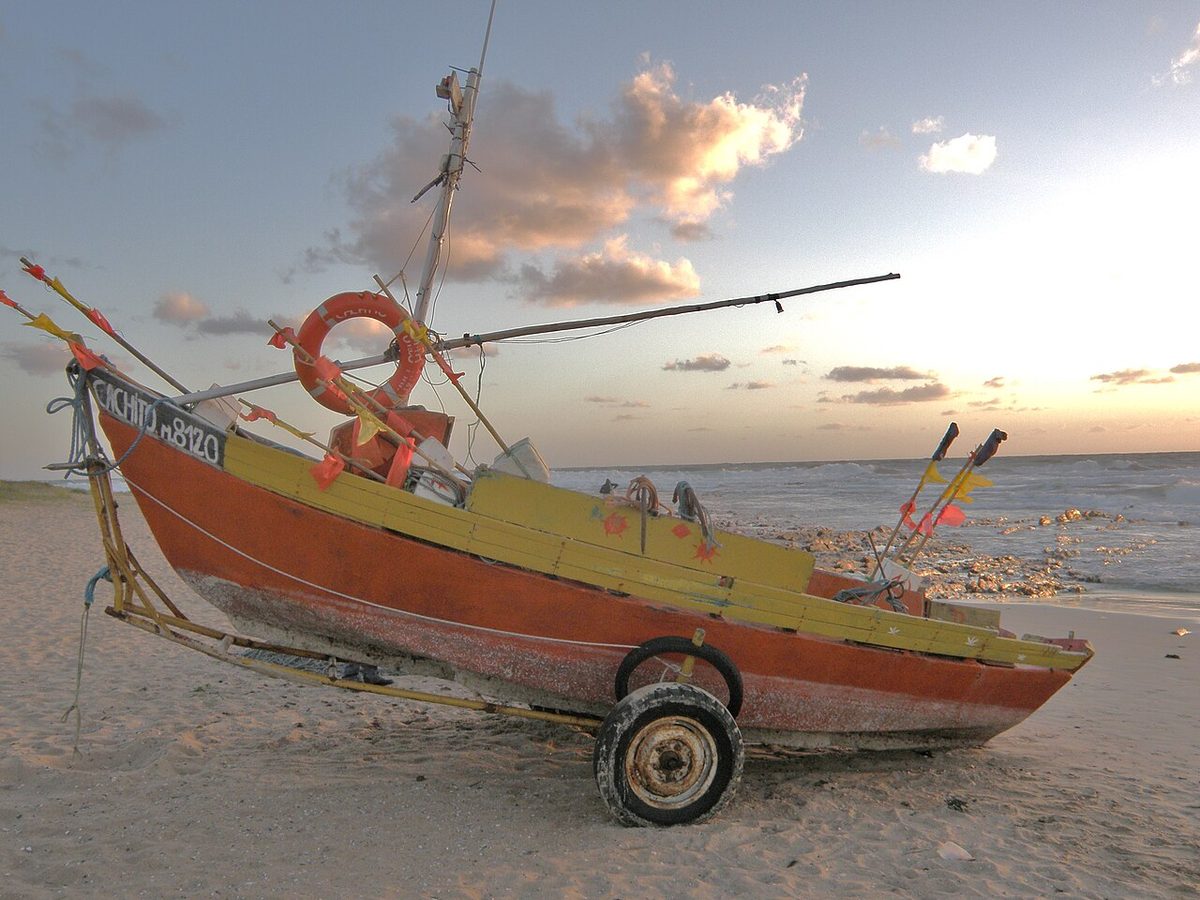
I want to make a case for the coast specifically, because it is the part most people write off in winter and the part that surprised me most. Yes, the beach towns are largely shuttered. Cabo Polonio, that off-grid spit of dunes and sea lions in Rocha, runs on a skeleton of what it is in summer. La Paloma and La Pedrera are quiet. Punta del Este, so frantic in January, feels like a film set after the crew has gone home.
But an empty Atlantic coast in winter has a stark beauty the summer crowds never see: wide grey beaches, big skies, heavy surf, the occasional whale, and long stretches of sand with a single set of footprints, yours. Wrap up, bring a flask of coffee or a mate, and walk. The light in winter is low and long and very good for photographs. You will not be swimming, the sea sits around 11°C (52°F), but that was never the point. This is coast for looking at, not lying on.
The practical drawback: with so much closed, you need to plan food and lodging more carefully than in summer. In the smaller towns, a single open restaurant might be it, and some places shut entirely between seasons. Base yourself somewhere with a reliable open option, or stock up in a larger town before you head out. This is the kind of trip where a little forethought is the difference between romantic solitude and a cold, hungry afternoon.
Winter in Uruguay by interest
Different travellers will weigh winter’s pros and cons differently. Here is the quick steer depending on what matters most to you.
For whale watchers
Base yourself on the Maldonado or Rocha coast and treat it as a flexible nature trip, not a fixed itinerary. July through to spring is your window; August is a strong bet. Bring binoculars, follow live sightings, and build in spare days so a blank morning is not a wasted trip. Combine whale mornings with the empty beaches and a stew lunch, and a cold day fills itself.
For hot-spring seekers
Head west to the Litoral, around Salto and Paysandú, and give it two or three nights rather than a day trip. Termas del Daymán is the hot favourite; there are quieter complexes nearby if you want fewer people. Avoid the mid-July school-holiday fortnight if you can, and aim for weekdays. This is the single most weather-proof winter plan: the colder it is outside, the better the water feels.
For city culture
Make Montevideo your anchor and lean into the indoors. Museums, tango, long parrilla lunches, a football match, café afternoons in Ciudad Vieja. June is quietest; any winter month works because the culture is built to be enjoyed in the cold. Day-trip to Colonia del Sacramento on a bright spell if you want a change of scene without committing to the coast.
For budget travellers
Winter is your season, full stop. Off-season rates on the coast and in the capital are the lowest of the year, restaurants are affordable and uncrowded, and you can travel slowly without high-season pressure. The trade is that some things are closed and the weather is hit-or-miss, but if value and quiet rank above sunshine, nothing else on the Uruguayan calendar comes close.
Uruguay in winter: your questions answered
Is Uruguay worth visiting in winter?
Yes, if you want culture, nature and quiet rather than beach weather. Winter brings southern right whales to the coast, the hot springs at their best, an indoor Montevideo of museums and tango, the year’s lowest prices, and almost no crowds. The catch is short, damp days and many shuttered beach towns. For sun and swimming, come in summer instead.
How cold does Uruguay get in winter?
Cool and damp rather than harsh. Montevideo’s coldest month, July, averages about 10.6°C (51°F): daytime highs near 14–15°C (57–59°F) and nights around 6–7°C (43–45°F). Cold snaps off the south can push nights near freezing and stall days at 8°C (46°F). It essentially never snows, but the wind off the river makes it feel colder than the numbers suggest.
Can you see whales in Uruguay in winter?
Yes. Southern right whales (ballena franca austral) migrate along the Maldonado and Rocha coast from roughly June to November, and you watch them for free from beaches and observation towers, no boat needed. Sightings build through the season; July onward is reliable, with August to November the strongest. Bring binoculars and patience, as the whales are wild and move along the coast.
What is the best month to visit Uruguay in winter?
August is my pick of the three. It is still cold but the days are lengthening, the mid-July school-holiday crowds at the hot springs have gone, and whale sightings are building toward their peak. June is the quietest and best for empty cities and beaches; July is coldest but the true start of whale season. Any of them beats the high-season crush for value.
Are the beaches open in Uruguay in winter?
The beaches themselves are open and often stunningly empty, but the beach towns largely shut down. In places like La Paloma, La Pedrera and Cabo Polonio, many hotels, restaurants and shops close between seasons, and Punta del Este runs at a fraction of its summer self. You can walk and photograph freely; just plan food and lodging carefully, as options thin out considerably.
What should I pack for Uruguay in winter?
Layers and a waterproof. Days swing from chilly mornings to mild sunny afternoons, so pack a warm mid-layer, a windproof and rainproof outer shell, and something for cold nights. Add a swimsuit for the hot springs and binoculars for whales. Heating in older buildings can be patchy, so warm sleepwear earns its place in the bag.
Final thoughts
Winter is the season that asks something of you. You have to pack right, plan around the weather, accept that a lot is closed, and trade the easy sunshine for something quieter and more particular. In return you get a country that feels uncrowded and unhurried, whales off an empty beach, a hot pool steaming in the cold, a city living its real indoor life, and prices that make a slow trip easy. That is not a consolation prize. For the right traveller, it is the best version of Uruguay there is.
My honest advice: come if you are the kind of person who would rather have a grey beach to yourself than a packed one in the sun, and stay flexible. Chase the bright windows in the weather, follow the whales where they actually are, and let a long lunch run long. Do that, and the season everyone skips becomes the trip you remember.
If winter sounds a degree too cold, the shoulder months either side soften the edges. Our guide to Uruguay in autumn covers the warmer, golden season just before this one.
Credits & sources
Sources & further reading
- Climates to Travel: Montevideo climate, monthly averages for the temperature, rainfall and daylight figures.
- Guru’Guay: where and when to whale-watch in Uruguay for the whale season, viewing spots and the Ballenas UY live-sightings group.
- Turismo Rocha (official): whale watching on the beaches of Rocha for the local government’s guidance on the Rocha coast.
- Termas del Daymán for background on the Salto hot springs.
Photo credits
All images via Wikimedia Commons: Montevideo Rambla Winter Grey Day by Felipe Restrepo Acosta (CC BY-SA 4.0); Southern Right Whale Uruguay Coast by CarlosCecche (CC BY-SA 4.0); Termas Del Dayman Salto Hot Springs by Fadesga (CC BY-SA 3.0); Ciudad Vieja Montevideo Winter by Felipe Restrepo Acosta (CC BY-SA 4.0); Uruguay Winter Asado Parrilla by Guzmán128 (CC BY-SA 4.0); La Paloma Rocha Empty Winter Beach by alvaro errandonea (CC BY 3.0).