Uruguay in January: Peak Summer, Prices and Where to Go
January is the month most people picture when they think of a Uruguayan summer, and that is exactly the problem. The sea is at its warmest, the evenings run late, Carnival kicks off in Montevideo, and half of Buenos Aires seems to have the same idea you do. So is it the best month to come, or just the busiest? The honest answer depends on what you want from the trip and how early you can book.
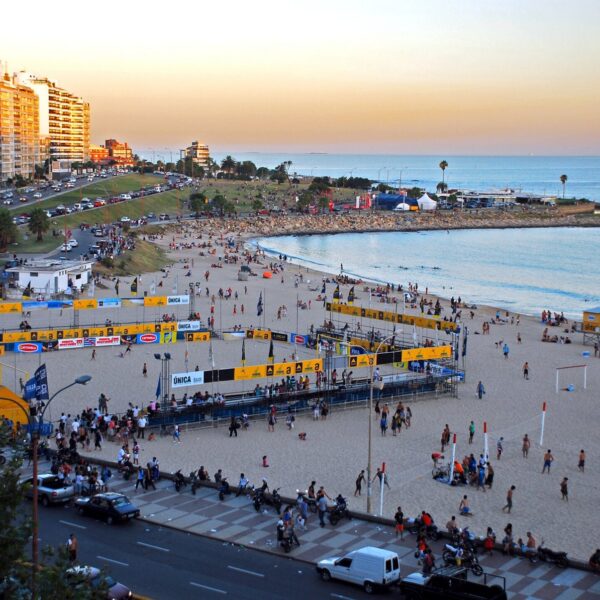
Uruguay in January means full summer: Montevideo averages highs near 28°C (82°F), the sea is close to its warmest, and the Atlantic coast is at peak season, with Punta del Este at its fullest. It is a great month for beaches, festivals and the opening of Carnival, if you book early and accept peak prices.
For how January compares with the other eleven months, start with our month-by-month guide to the best time to visit Uruguay. This page is about January alone: the weather in numbers, who you’ll share the coast with, what is on in January 2027, what the month costs and the places that stay calmer while Punta del Este fills up. Climate figures come from INUMET, Uruguay’s national weather service; bus fares and event dates were checked in November 2026 against the operators, organizers and the Intendencia de Montevideo.
Uruguay in January at a glance
| Question | Short answer |
|---|---|
| Weather | Hot and mostly dry: Montevideo averages 27.8°C (82°F) by day and 18.8°C (66°F) at night; Salto in the north averages 32.2°C (90°F) highs |
| Sea | About 24°C (76°F) off Montevideo, the warmest month of the year |
| Crowds | Peak season on the coast, from Punta del Este to Punta del Diablo; Montevideo is calmer than usual |
| Cost | Highest of the year for beach accommodation; buses, museums and city prices barely change |
| Book ahead? | Yes: accommodation, rental cars and Buenos Aires ferries as early as you can; long-distance buses a few days ahead on weekends |
| Big dates in 2027 | Punta del Este jazz festival January 4-11; Este Arte January 5-8; Carnival’s opening parade January 21 |
| Time to allow | A week covers Montevideo, one Maldonado beach and one Rocha village; ten days lets you slow down |
| Best for | Beach time, nightlife, festivals, families on school holidays |
| Skip it if | You want empty beaches, low prices or the Llamadas parade, which falls in February |
Uruguay weather in January: heat, sun and the odd storm
January is Uruguay’s hottest month on the long-term averages. At Montevideo’s Prado station, INUMET’s 1991-2020 normals give a mean daily maximum of 27.8°C (82°F), a mean minimum of 18.8°C (66°F) and a monthly mean of 23.3°C (74°F). That is warm rather than brutal, and the breeze off the Río de la Plata takes the edge off most afternoons. Average relative humidity at Prado in January is 68% on INUMET’s older 1961-1990 table, noticeably lower than in winter, so the heat feels drier than many visitors expect.
The interior is a different story. Salto, up on the Argentine border, averages January highs of 32.2°C (90°F), and the record books show how far a hot spell can go: INUMET’s 1961-1990 January extremes reach 38.8°C (102°F) at Prado and 42.2°C (108°F) at Salto. Those are extremes, not forecasts, but they are a reminder that a January road trip through the Litoral needs air-conditioning, water and an early start.
Rain is not a big factor. Prado’s normals give 95 mm across six days with precipitation in an average January, and summer rain often comes as short, heavy storms rather than gray, drizzly days. When INUMET issues a yellow or orange warning for storms or heat, take it seriously; on the beach, that’s your cue to pack up.
Two more numbers matter for planning. The sea off Montevideo averages about 24°C (76°F) in January, the warmest of the year on the published monthly figures, which makes the city beaches genuinely swimmable. And the sun sets around 8 p.m. in Montevideo in January (Uruguay stays on UTC-3 all year), so beach days stretch well into the evening and dinner rarely starts before 9:30 p.m. The UV is strong at this latitude in midsummer: high-factor sunscreen, a hat and shade between late morning and mid-afternoon are not optional.
Plan it: pack for 18-30°C (64-86°F) with a light layer for windy evenings on the coast; carry water inland; check INUMET’s warnings before long drives; best for anyone who wants reliable beach weather.
Who else is traveling: the January crowd
January is the heart of the southern-hemisphere summer holidays. Uruguayan families take their vacations, Argentine families cross the river in large numbers, and Brazilians drive or fly south to the Atlantic beaches. The result is a country where the capital feels calmer than usual while the coast from Piriápolis to the Brazilian border runs at capacity.
The first half of the month is usually the most intense, carrying straight on from the New Year rush. If you are arriving for the countdown itself, our Punta del Este New Year’s Eve guide covers the night of December 31, and the guide to Uruguay in December covers the run-up to Christmas, the start of the season and the December 8 Día de las Playas. Once the calendar turns, what changes is the mood: fewer parties, more long family holidays, and beach towns that settle into a slow rhythm of late breakfasts, sand and sunset.
Two public holidays fall in January. January 1 is one of the quietest days of the year, with many shops and restaurants closed until the evening. January 6, Día de Reyes (Three Kings’ Day, when children traditionally get presents), is also a holiday. Under Law 16,805, as amended in 2001, both are observed on their actual date rather than moved to a Monday, so in 2027 Reyes falls on a Wednesday. Check opening hours for both days before you plan a museum or a long lunch.
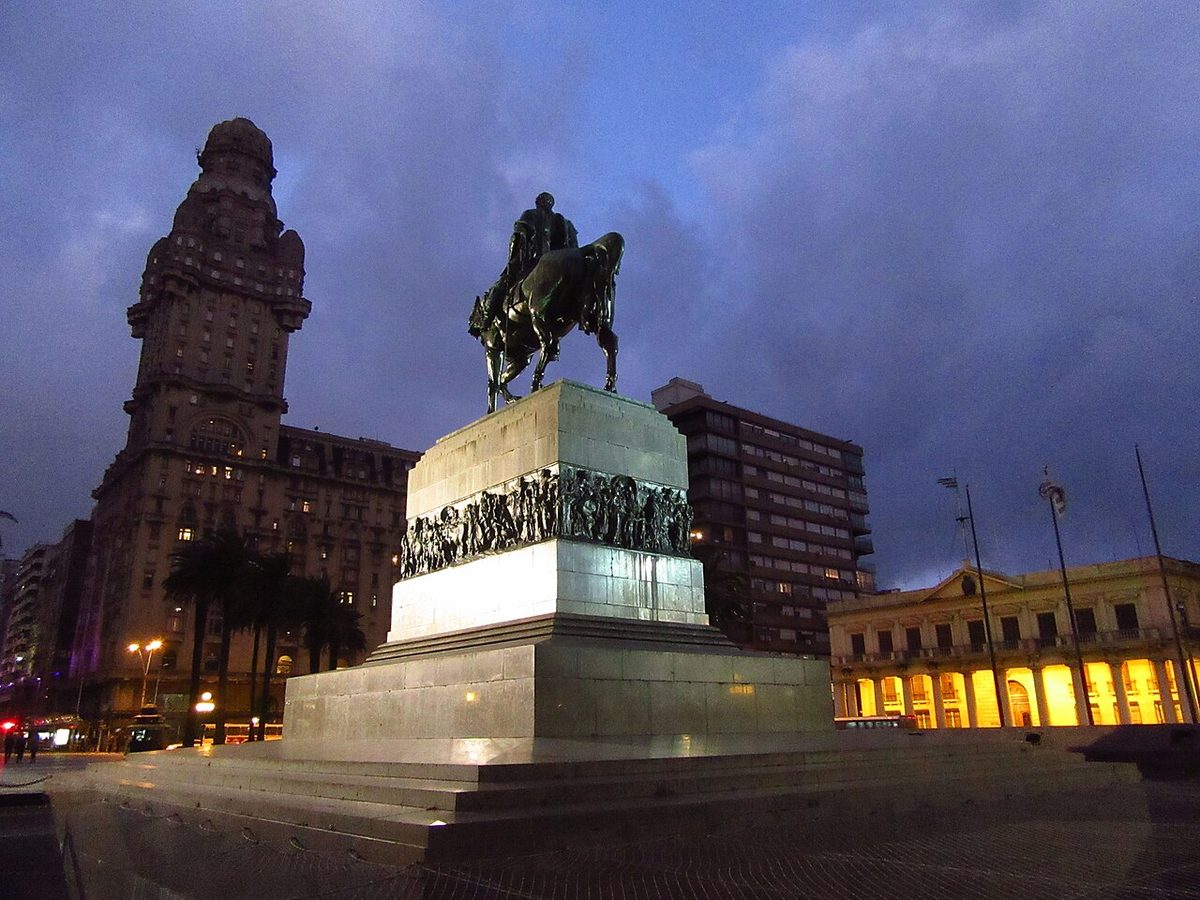
Montevideo is the quiet winner of the month. With many residents away on the coast, traffic thins, tables are easier to get, and the rambla (the long waterfront promenade) is at its best in the long evenings. If your trip is short and your interest is the city’s food, architecture and music, January is a good time to be there, not a compromise.
Punta del Este in January: is it worth the fuss?
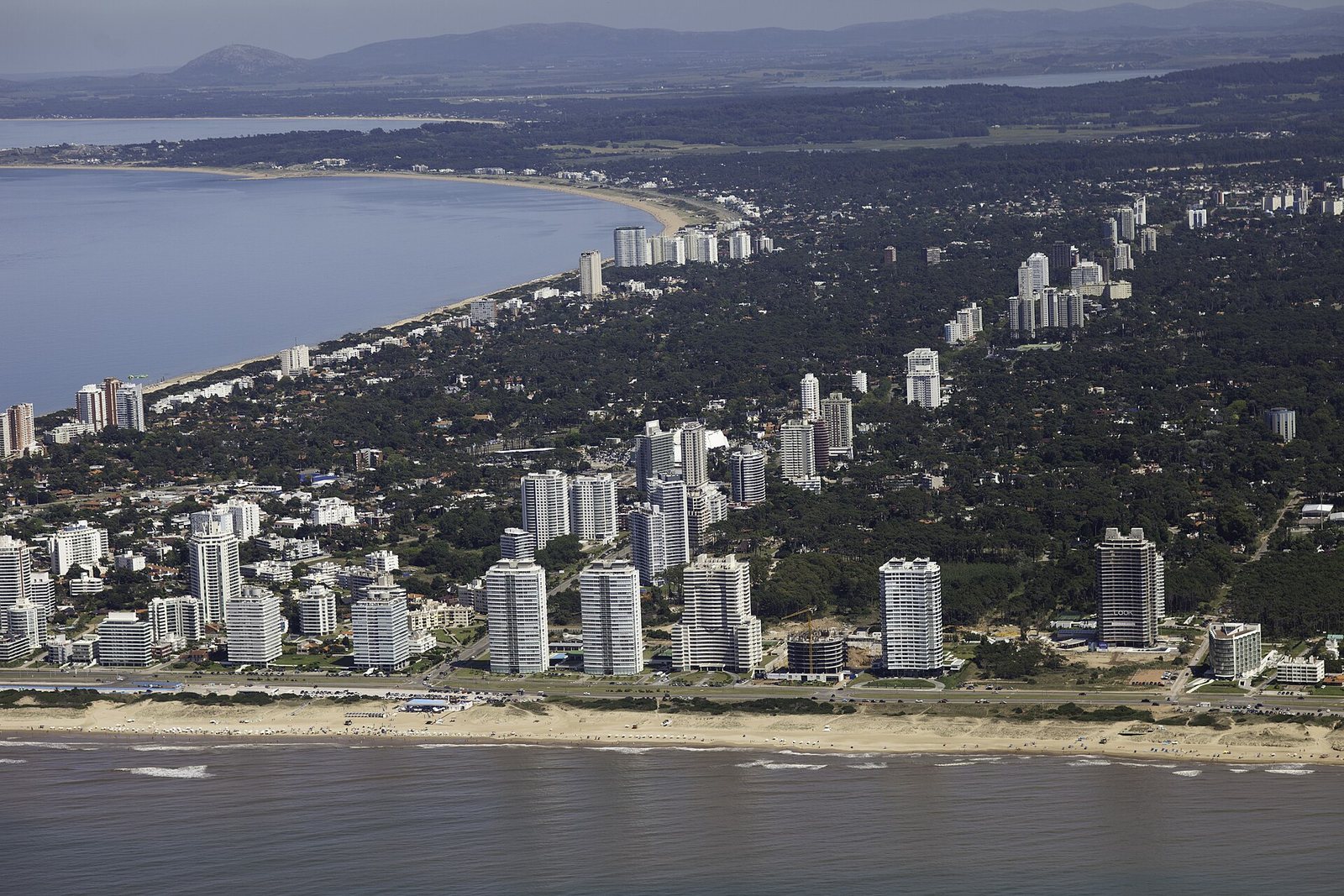
Punta del Este is a town of about 18,200 permanent residents that becomes the center of South American summer for a few weeks. In January the peninsula is crowded, the beach clubs and restaurants along the coast are full, the traffic toward La Barra is slow, and the people-watching is excellent. It is not subtle, and it isn’t trying to be.
Get the geography straight before you book, because “Punta del Este” in a listing can mean several different places. The peninsula itself has the port, Avenida Gorlero (the main shopping street) and two very different beaches: Playa Mansa on the west side, sheltered by Isla Gorriti and calmer for swimming, and Playa Brava on the east side, open to the Atlantic with stronger waves. Maldonado is the department and also the separate city just inland. Heading east, La Barra, Manantiales and José Ignacio are distinct beach villages, each a step further from the peninsula and, broadly, a step quieter.
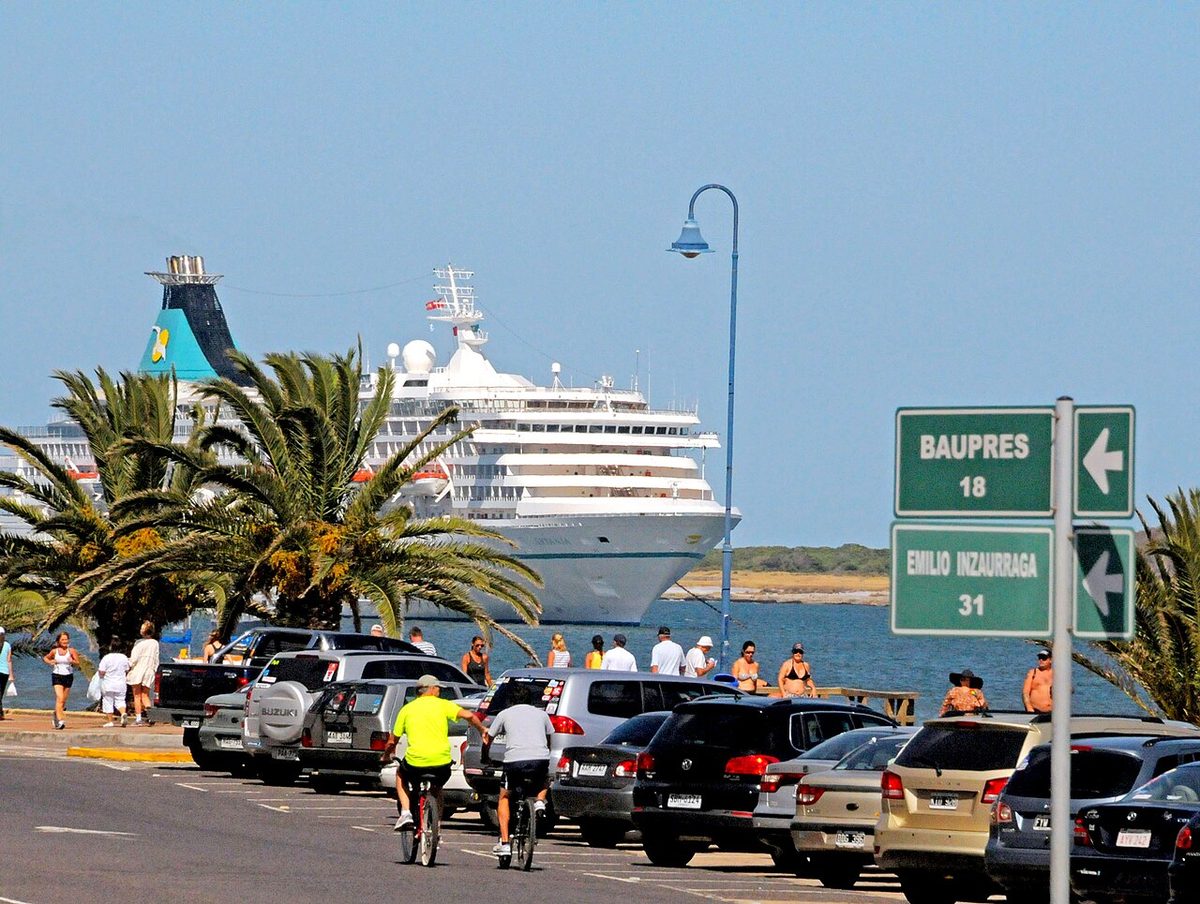
What is worth doing in Punta del Este in January?
Free, any time. La Mano, Mario Irarrázabal’s sculpture of five fingers rising out of the sand, sits at Parada 1 on Playa Brava. Expect a queue for photos in January; go early in the morning if you want the fingers without a crowd.
Ticketed, an hour or two around sunset. Casapueblo, the white, hand-built home and studio of artist Carlos Páez Vilaró at Punta Ballena, holds its Ceremonia del Sol every day, about 15 minutes before sunset, with a recording of Páez Vilaró reading a poem. It’s lovely, and in January it’s also crowded: arrive well before the ceremony and check the ticket price on the museum’s own site. Our Casapueblo visitor guide has the practical detail.
A boat trip from the port. Isla de Lobos lies about 8.1 km off Punta del Este, and excursions leave the port for the waters around the island and its sea-lion colony. Calm mornings are best; the Atlantic swell makes the afternoon crossing a gamble for anyone prone to seasickness.
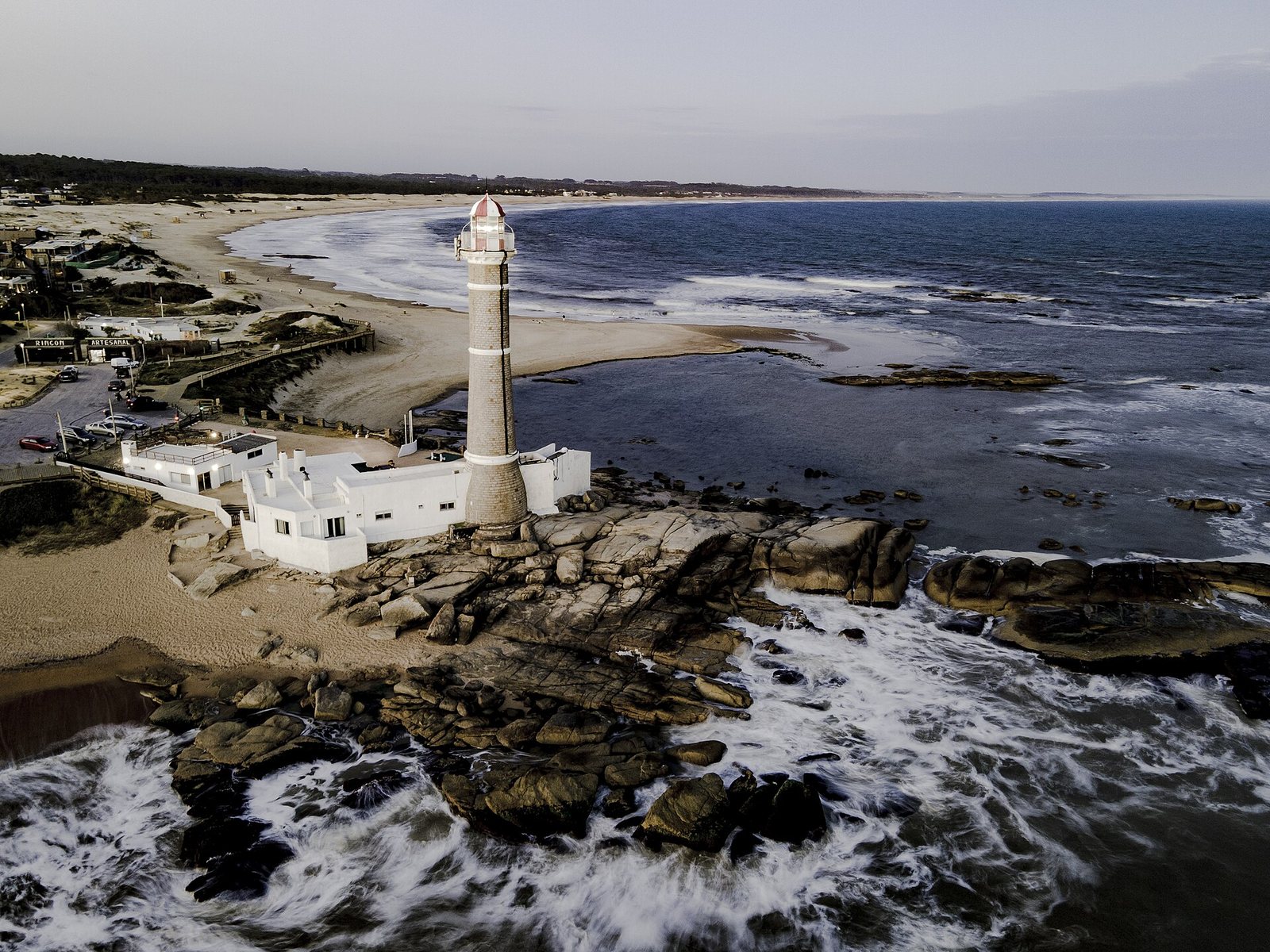
The coast road east. Driving or taking the bus along Ruta 10 to La Barra and José Ignacio is half the point of a January stay. You cross the Laguna Garzón circular bridge, designed by Rafael Viñoly and opened in December 2015, into Rocha a little further on. Our José Ignacio village guide explains why this lighthouse point draws such a well-heeled summer crowd.
Beaches with lifeguards. The Intendencia de Maldonado’s 2026-27 lifeguard contracts run from December 1 to March 31, so the main beaches are covered through January. Swim between the flags, especially on Playa Brava.
Verdict: go if you want energy, nightlife and the sense of being where everyone else is. Skip the first fortnight of January if you dislike queues, traffic and paying peak rates for a room. For the bigger picture of the resort, its beaches and its neighborhoods, see the complete Punta del Este travel guide.
Plan it: COT and COPSA buses from Montevideo’s Tres Cruces terminal cost UYU 466 one way (about US$11-12, checked November 2026), and direct services take about 2 hours 10 minutes to 2 hours 20 minutes; trips via Piriápolis take longer. The Montevideo to Punta del Este transport guide compares bus, car and transfer. Allow at least two nights; best for nightlife, beach clubs and people-watching.
What’s on in January 2027?
January has the densest event calendar of the Uruguayan year. Here is what has been confirmed for 2027 by the organizers or the authorities, and where to check the rest.
Festival Internacional de Jazz de Punta del Este: January 4-11, 2027
The coast’s big music week. The 31st edition runs from Monday, January 4 to Monday, January 11, 2027. Uruguay’s Presidency declared it of national interest in May 2026. The resolution doesn’t name a venue, so check the festival’s own site for the location, lineup and tickets before you plan around a particular night.
Este Arte: January 5-8, 2027
Contemporary art in José Ignacio, US$35-40. The 13th edition of the Este Arte fair takes place at Pavilion VIK, Ruta 10 km 182.5, José Ignacio. January 5 is a preview by invitation only; the public days are January 6, 7 and 8, from 5 to 10 p.m. Advance tickets cost US$35 until January 5, and the regular price is US$40 from January 6. It is not free, and it isn’t trying to be a casual drop-in, but for anyone who follows Latin American art it is the highlight of the summer on this coast.
Montevideo Carnival opens: January 21, 2027
By the city’s own description, Montevideo’s Carnival is Uruguay’s largest popular festival. The season runs for around 40 nights from late January into early March, and the Intendencia de Montevideo has published the 2027 opening dates:
- Desfile Inaugural: Thursday, January 21, 2027, along Avenida 18 de Julio
- Desfile de Escuelas de Samba: Friday, January 22, 2027, also on Avenida 18 de Julio
- Concurso Oficial: the official competition begins on Monday, January 25, 2027, at the Teatro de Verano
- Desfile de Llamadas: Friday, February 5 and Saturday, February 6, 2027, on Isla de Flores, so not in January
The opening parade is the easiest introduction: murgas (choirs of satirical singers in greasepaint), comparsas of candombe drummers, parodistas, humoristas and revistas all file down the main avenue in costume. For 2026 the city sold parade seats through Abitab, the payment network with branches across the country; check the Intendencia’s Carnival page for 2027 ticket details. After the parade, the real nightly life of Carnival is the tablados, the neighborhood stages scattered across Montevideo. Everything about how they work, plus the competition categories and the Llamadas, lives in our Montevideo Carnival guide.
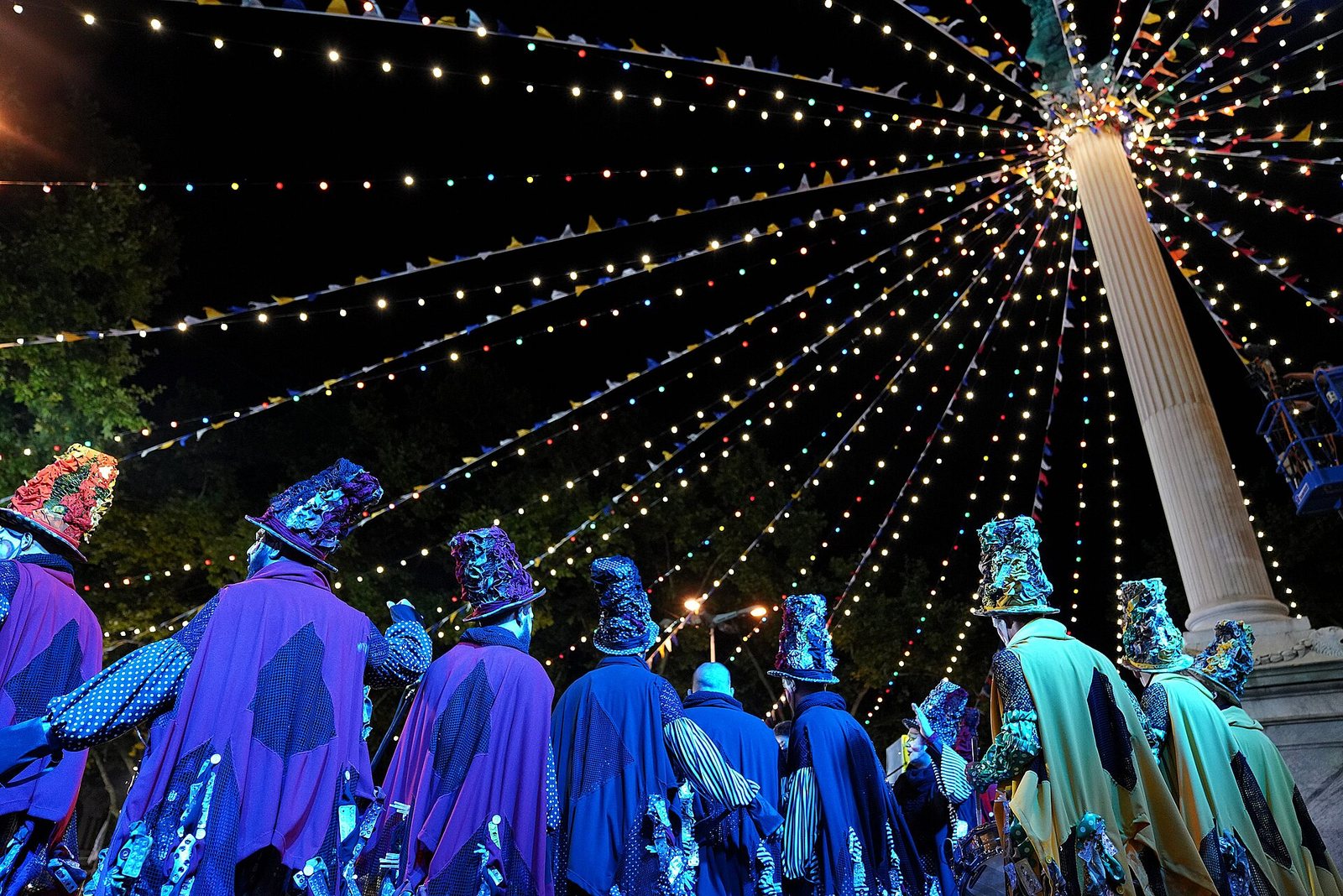
Verdict: if your dates are flexible, plan to be in Montevideo on January 21. It is one of the best free nights in the country, and it pairs well with a beach week either side.
Festivals still to confirm their 2027 dates
Several regular summer events have not put out their 2027 programs. Jazz a la Calle is held in Mercedes, in Soriano, not in Punta del Este; check the Intendencia de Soriano’s channels and the Ministry of Tourism’s events listings for the 2027 dates. The Festival del Lago takes place at Andresito, in Flores; check the same ministry listings and the Intendencia de Flores. For beach concerts, sunset sessions and the rest of the Punta del Este season, the Intendencia de Maldonado publishes its summer agenda month by month. Our calendar of Uruguay’s festivals covers the rest of the year.
Quieter alternatives when Punta del Este is full
Let’s be honest about the word “quiet”. Nowhere on the Uruguayan coast is empty in January. The Rocha villages that feel half-asleep in April are busy in midsummer too, especially Punta del Diablo and Cabo Polonio. What changes as you go east is the scale: smaller buildings, fewer cars, more dunes and a crowd that comes for the sea rather than the scene. Our Rocha department travel guide covers the whole coast; here is how its main villages behave in January.
La Paloma and La Pedrera
The easiest switch from Punta del Este. La Paloma has the supermarkets, pharmacies and restaurants that make a family week simple, surfable beaches, and La Balconada, where people gather each evening to watch the sunset and applaud it. La Pedrera, just up the coast, is smaller and leans toward surfers and a younger crowd. COT buses from Montevideo take about 3 hours 30 minutes to La Paloma and about 3 hours 45 minutes to La Pedrera; the one-way fare to La Paloma is UYU 786 (about US$19-20, checked November 2026). Best for: families, surfers and anyone who wants a real town with a beach attached.
Cabo Polonio
No cars, no streetlights, plenty of sea lions. Private vehicles can’t enter this protected area. You leave the car or bus at the access terminal on Ruta 10 at km 264.5 and ride in on an open-sided truck across the dunes, a crossing of roughly 20 to 30 minutes. The return truck ticket costs UYU 470 per person (about US$11-12, checked November 2026), and children up to five ride free. Rocha’s tourism office says the village has no electric lighting or running water, and Uruguay’s environment ministry says almost half of the country’s fur-seal and sea-lion populations live on the park’s islands.
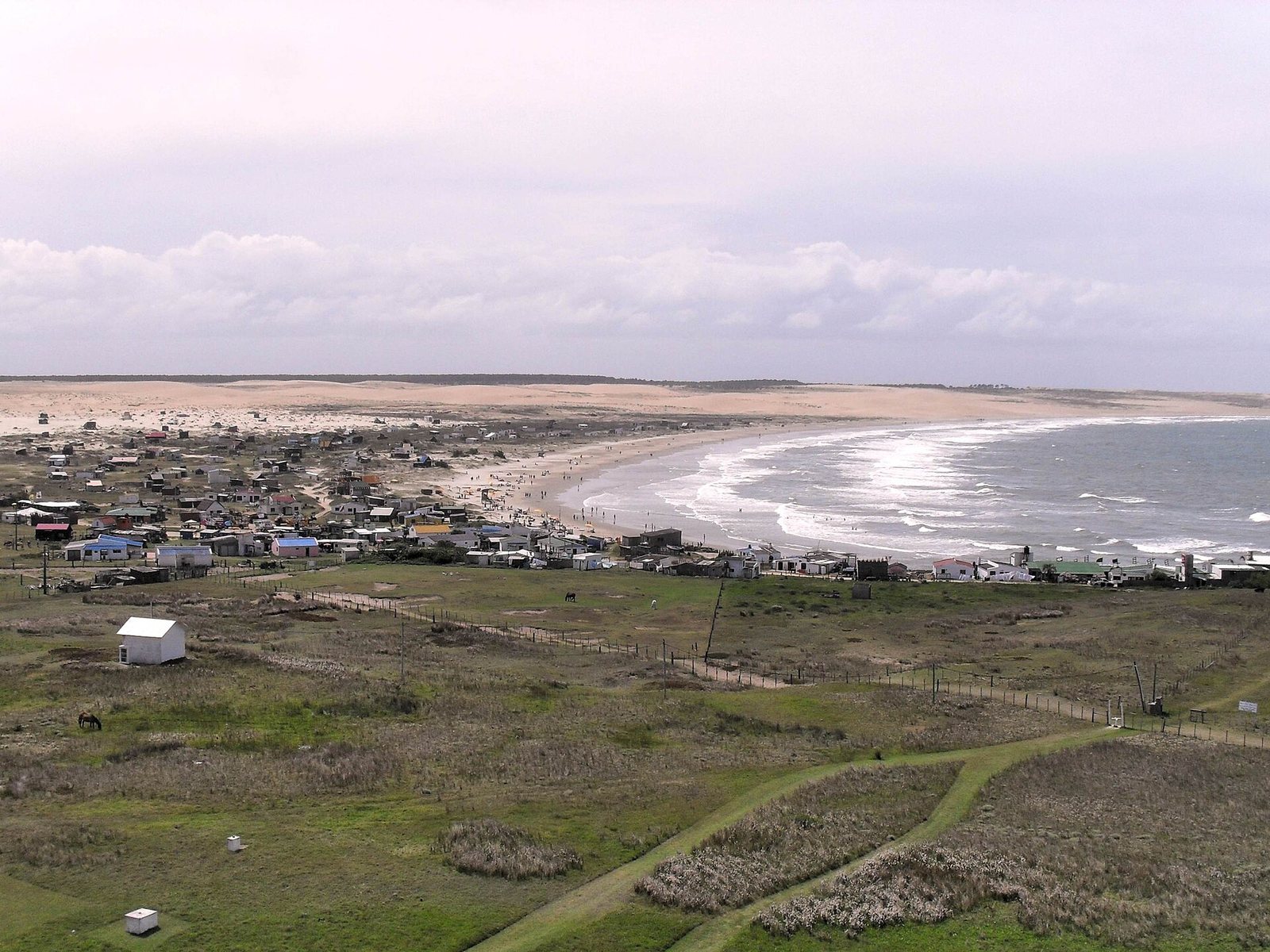
In January, day-trippers pour in through the middle of the day. The village is at its best before the first trucks arrive and after the last ones leave, which means staying the night. The last entry truck leaves at 20:00 on the published timetable (it waits for the bus until 20:30), but check Turismo Rocha’s timetable page for the season’s exceptions before you go. Our Cabo Polonio guide covers where to stay and what to bring. Verdict: a day trip in January is worth it only if you can’t stay; one night changes the experience completely.
Punta del Diablo and Santa Teresa
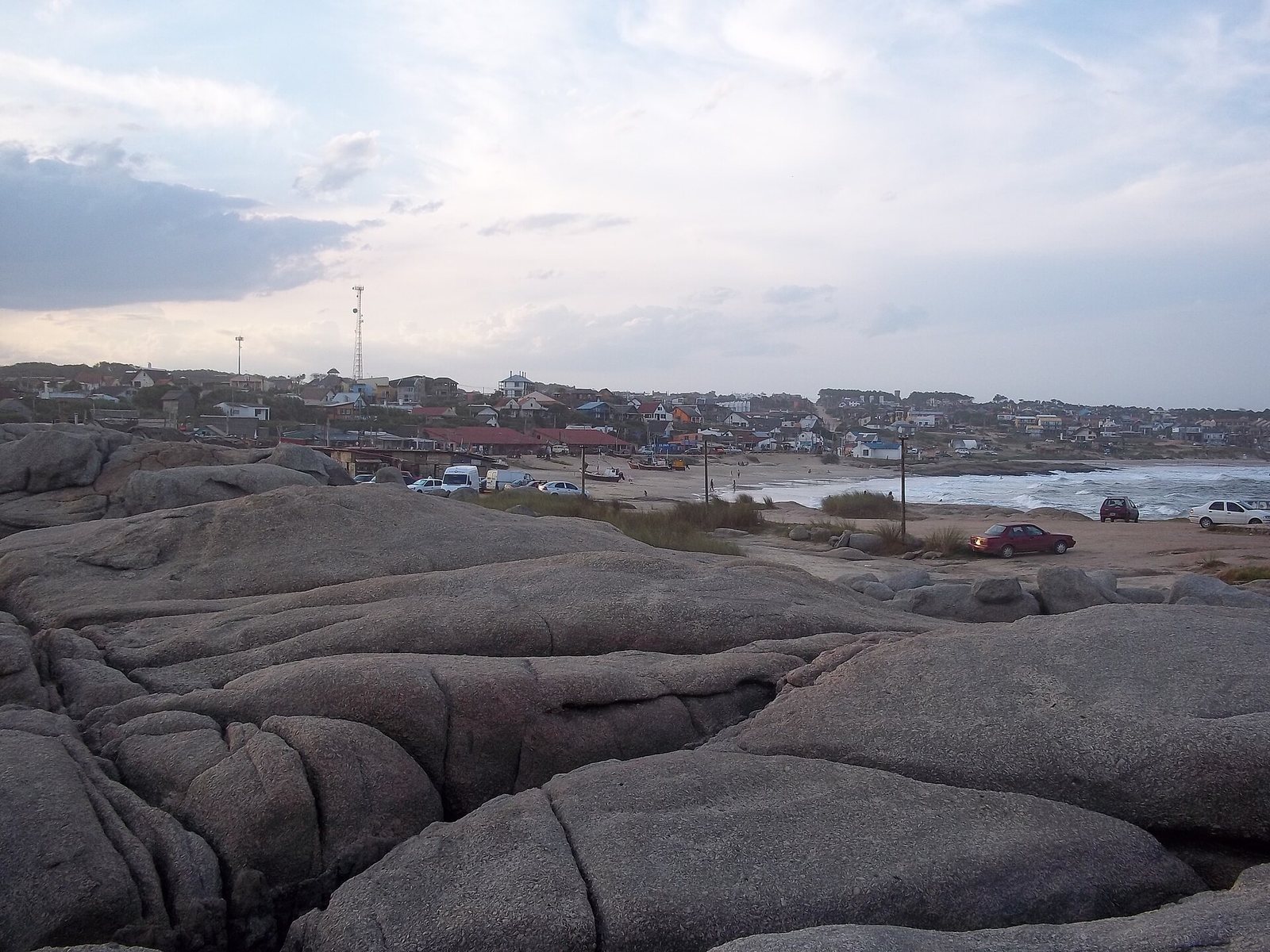
Fishing village turned surf town. Punta del Diablo sits about 45 km from the Brazilian border at Chuy and has grown fast, with cabin complexes, hotels and campgrounds behind the old fishermen’s beach. La Viuda is the surf beach; Playa Grande runs north to the edge of Santa Teresa National Park, whose 18th-century fortress (construction began in 1762) charges UYU 50 admission, payable only in Uruguayan pesos, with under-12s and over-65s free. COT buses from Montevideo take about 4 hours 10 minutes to 4 hours 25 minutes and cost UYU 1,015 one way (about US$25, checked November 2026). Read our Punta del Diablo travel guide before you choose a neighborhood: the village is spread out, and where you sleep decides how much you walk.
Inland: shade, rivers and hot springs
Most visitors never leave the coast in January, which is the best argument for doing exactly that. The hills of Lavalleja, the estancias (working ranches that take guests) of the interior and the river towns of the Litoral are quiet in high summer, with one catch: the heat. With Salto averaging 32°C (90°F) highs, the hot-spring resorts near the city are a strange choice for midsummer. Termas del Daymán, about 10 km from Salto, has pools as hot as 44°C. They make far more sense in winter, though an early-morning or evening soak is still pleasant. Estancias with a pool, horses and a long lunch under the trees are the better January bet.
Plan it: book Rocha cabañas (self-catering cabins) and posadas (small inns) as early as you can for the first half of January; buy bus tickets a few days ahead for Friday and Sunday departures; allow at least two nights in any village; best for travelers who want the beach without the nightlife.
What does January cost, and how far ahead should you book?
January is the most expensive month for beach accommodation in Uruguay. The rest of the trip barely changes: bus fares, museum entry, supermarket prices and a meal in Montevideo cost about what they do in October. What moves is the price of a bed near the sand, and it moves a lot.
Accommodation. Prices for hotels and summer rentals depend on how close you are to the peninsula and the beach, the week (the first half of January is the most expensive), and how long you stay; in peak weeks, many owners prefer longer stays over a weekend or two. Book as early as you can, ideally before the turn of the year for anything in Punta del Este, La Barra, José Ignacio or Cabo Polonio. If you are traveling as a family or a group, a house or apartment is often better value than hotel rooms; our guide to renting a beach house in Uruguay explains how the seasonal rental market works, from deposits to what a listing really includes.
Tax breaks for visitors. Uruguay’s tourist IVA (value-added tax) rules come in three parts, and it pays to know which is which:
- Hotels and other lodging bill non-residents without IVA when you show a foreign identity document, all year round. It applies to the accommodation, not to the card you pay with.
- A 9-point IVA reduction applies to restaurants, catering, event services, car hire without a driver and holiday-rental mediation paid by card or electronic money, until April 30, 2027 (Decree 235/026). It covers residents and non-residents, so any card qualifies. That works out at about 7.4% off a price that includes the standard 22% IVA.
- Non-residents paying with foreign-issued cards had a full IVA exoneration on those same services for the 2025-26 season, and the Ministry of Tourism announced in September 2026 that it continues for the 2027 season. Check your receipt to see which discount was applied.
Getting there. January flights from North America and Europe fill early. American Airlines’ seasonal Miami-Montevideo route runs daily from December 3, 2026 to March 2, 2027, according to the government announcement. From Buenos Aires, the direct ferry to Montevideo takes about 2½ to 2¾ hours; book a specific sailing well ahead for the first week of January and the weekends, and check that the direct ship is running before you buy.
Driving. Rental cars at Carrasco Airport and in Punta del Este can run short in January, so reserve with your flights. Toll rates on the main highways change on December 1 and June 1, so check the Ministry of Transport’s current tariff before you set off; Telepeaje, the electronic tag, is cheaper per crossing than paying the standard rate.
Verdict: January is not the month to come to Uruguay on a tight budget, but the extra cost is mostly in one line of your budget. Stay in Montevideo, Rocha or a Maldonado village other than the peninsula, and the month gets much more reasonable.
A week in January, without the stress
Here is one way to spend seven days in January that catches the season at its best and avoids the worst of the crowds. It assumes the bus; with a car, you can shave a few hours off the transfers.
- Days 1-2, Montevideo: the Ciudad Vieja (old town) in the morning before the heat, the rambla and the city beaches in the afternoon, and a late dinner. Time it for January 21 if you can and catch Carnival’s opening parade.
- Days 3-4, Punta del Este or José Ignacio: one night on or near the peninsula for La Mano, Playa Mansa and the sunset at Casapueblo, or two nights in José Ignacio if your budget stretches and you want calm.
- Days 5-7, Rocha: La Paloma or La Pedrera as a base, with a night in Cabo Polonio if you can get a bed. Head back to Montevideo for your flight on the morning of day 7, since the bus takes more than three hours.
Want more beach and less transit? Cut Punta del Este and spend four nights in Rocha instead. In the first half of January, that swap saves money and patience.
When January isn’t worth it
January is the right month for most first-time beach trips, but not for everyone. Think twice if any of these apply:
- You want peace and empty sand. Late February and March keep the warm sea with far fewer people.
- You are on a tight budget. Beach accommodation is at its yearly peak, and the cheap options go first.
- You came for the Llamadas. The great candombe parade falls on February 5 and 6, 2027, so a January-only trip misses it.
- You want to see whales. Rocha’s whale-watching season runs from July to October, the opposite end of the year.
- You don’t do heat. Montevideo is manageable, but the north regularly passes 30°C (86°F), and a city-and-wine trip is more comfortable in spring or autumn.
If one of those is you, the season as a whole still has plenty to offer outside its busiest weeks.
Uruguay in January: your questions answered
Is January a good time to visit Uruguay?
Yes, if you want beaches, warm water, long evenings and the start of Carnival. It is the peak of the summer season, so you pay more for accommodation and share the coast with Uruguayan, Argentine and Brazilian holidaymakers. Book early, and consider basing yourself in Montevideo or the Rocha coast rather than the Punta del Este peninsula to keep costs and crowds down.
How hot is Uruguay in January?
Montevideo’s long-term averages (INUMET, Prado, 1991-2020) give a mean daily high of 27.8°C (82°F) and a mean low of 18.8°C (66°F). The north is hotter: Salto averages 32.2°C (90°F) highs. Heat waves can push well past those averages, so carry water, plan outdoor sightseeing for mornings and evenings, and watch INUMET’s warnings on travel days.
Can you swim in the sea in January?
Yes. January is when the water is warmest, with average sea temperatures of about 24°C (76°F) off Montevideo. The river beaches of Montevideo are calm, Playa Mansa in Punta del Este is sheltered, and the Atlantic beaches farther east have bigger waves and stronger currents. Maldonado’s lifeguards are contracted from December 1 to March 31; swim where they are posted.
Is Punta del Este crowded in January?
Very, especially in the first half of the month. Expect full beaches on the peninsula, queues at La Mano and Casapueblo, and slow traffic on the road to La Barra and José Ignacio. Crowds usually ease a little in the second half of January and more after mid-February. Book accommodation and rental cars as far ahead as you can.
When does Carnival start in 2027?
The Intendencia de Montevideo has set the Desfile Inaugural for Thursday, January 21, 2027, on Avenida 18 de Julio, followed by the samba schools on Friday, January 22. The official competition at the Teatro de Verano begins on Monday, January 25. The Desfile de Llamadas follows on February 5 and 6, 2027, on Isla de Flores.
Is Uruguay expensive in January?
Accommodation on the coast is at its most expensive of the year, especially around Punta del Este. Everyday costs such as buses, food and museums stay about the same as the rest of the year. Hotels bill non-residents without IVA on a foreign ID, and card payments at restaurants get an IVA reduction until April 30, 2027, which softens the bill a little.
How far ahead should I book a January trip?
As early as you can. Beachfront rentals, small posadas in Rocha, Cabo Polonio beds and rental cars are the first things to go, followed by the ferries and flights around New Year and the first weekend of January. City hotels in Montevideo are the easiest to find at short notice. Long-distance buses are best bought a few days ahead for Friday and Sunday travel.
What should I pack for Uruguay in January?
Light summer clothes, a swimsuit, high-factor sunscreen, sunglasses and a hat, plus a light sweater or windbreaker for breezy evenings on the coast. Bring sandals and comfortable walking shoes for Cabo Polonio’s sandy paths, and a small flashlight if you stay there, since the village has no street lighting. Insect repellent helps on still evenings.
Final thoughts
January is Uruguay at full volume, and for a first beach trip it is hard to beat: hot days, a sea that’s warm enough to stay in, the jazz week and Este Arte on the coast, and Carnival opening on Avenida 18 de Julio. Its weak points are price and crowds, and both are concentrated in a few places in the first half of the month. Our advice is to book early, spend less time on the peninsula than you think you need, and give the second half of the trip to Rocha or Montevideo. For how January fits into the whole season, from December’s first warm weekends to the last days of March, read our Uruguay in summer guide. If you can’t decide between the coast’s two personalities, our comparison of Punta del Este versus the Rocha coast will settle it.
Credits & sources
Sources & further reading
- INUMET: climate statistics tables: Uruguay’s official long-term temperature and rainfall normals by station
- Intendencia de Montevideo: Carnaval 2027 dates: the official opening parade, competition and Llamadas dates
- Presidencia de la República: resolution on the 31st Punta del Este jazz festival: confirms the January 4-11, 2027 dates
- Este Arte: official site: dates, opening hours and tickets for the January 2027 fair
- Turismo Rocha: Cabo Polonio transport timetable: truck times, fares and seasonal exceptions
- COT: timetables and fares: bus times and prices from Montevideo along the coast
- IMPO: Decree 235/026: the IVA reduction on tourism services to April 30, 2027
- IMPO: Law 16,805 on public holidays: which holidays move to a Monday and which stay on their date
Photo credits
All images via Wikimedia Commons, used with thanks: Summer at the port of Punta del Este by Andrés Franchi Ugart… (CC BY-SA 3.0); José Ignacio lighthouse from the air by Jimmy Baikovicius (CC BY-SA 2.0); Inaugural Carnival parade, Montevideo, 2019 by Unknown photographer (CC BY-SA 4.0); Cabo Polonio from the lighthouse by Niamfrifruli (CC BY-SA 4.0); Playa de los Pescadores, Punta del Diablo by Elcolorin123 (CC BY-SA 3.0); Punta del Este from the air by Jimmy Baikovicius from Montevideo, Uruguay (CC BY-SA 2.0).