What Is Uruguay Known For? 25 Things (2026)

People tend to underestimate Uruguay. It sits between Brazil and Argentina — two countries that suck up most of the attention in South America — and at first glance it looks modest: small population, no Andean peaks, no Amazon, no obvious hook. Then you spend a week here and start realising that this quiet little country has been quietly extraordinary for most of its existence. Stay two weeks and you start finding the hidden gems nobody bothers to market. Two football World Cups. The world’s longest carnival. Cannabis legal before almost anywhere else on earth. A president who drove a 1987 VW Beetle and gave away most of his salary. More cows than people by a factor of four. There is a lot going on, and almost none of it is what you expect.
So, what is Uruguay known for? In short: Uruguay is famous for its asado and per-capita beef consumption — the highest on earth — its mate-drinking culture (also the world’s highest per person), two FIFA World Cup titles including the very first in 1930, the world’s longest carnival, UNESCO-listed candombe drumming, tango’s most celebrated song, progressive politics that led the world on cannabis legalisation and same-sex marriage, near-100% renewable electricity, and around 660 kilometres of Atlantic and river beaches.
This piece is an identity profile, not an itinerary. It covers roughly 25 things Uruguay is known for — grouped by food and drink, sport, culture, society, nature and a handful of genuine oddities — for anyone trying to understand what makes this country tick before they travel, or simply because they’re curious. If you want the where-to-go guide, our piece on the best things to do in Uruguay covers the ground.
| Category | Known for | The detail that surprises people |
|---|---|---|
| Food & drink | Beef & asado | Highest per-capita beef consumption on earth — more than Argentina |
| Food & drink | Mate | Also highest per-capita consumption on earth; thermos under the arm is literal everywhere |
| Food & drink | Chivito | A steak sandwich of such ambition it effectively replaces a meal |
| Food & drink | Tannat wine | Uruguay’s signature red — structured, dark, built for beef |
| Food & drink | Dulce de leche | On everything: toast, alfajores, ice cream, fingers |
| Sport | Football | Two World Cups (1930, 1950) + hosted the first tournament ever |
| Sport | Maracanazo | 1950 final: beat Brazil in Brazil. Still discussed with discomfort in Rio |
| Culture | Longest carnival on earth | 40+ nights; murga satire; the Llamadas drumming parade |
| Culture | Candombe | UNESCO-listed 2009; African drumming tradition, very much alive on Sunday streets |
| Culture | Tango / La Cumparsita | The world’s most famous tango was written by a Uruguayan teenager in 1917 |
| Society | Cannabis legalisation | First country in the world to fully legalise production, sale and use — 2013 |
| Society | Progressive laws | Same-sex marriage 2013; abortion rights long established; strict secularism since 1916 |
| Society | José “Pepe” Mujica | President who donated ~90% of his salary; drove a 1987 Beetle; lived on a flower farm |
| Society | Renewable energy | Roughly 95–100% of electricity from renewables — achieved in under a decade |
| Nature & landscape | 660 km of coastline | From glamorous Punta del Este to roadless Cabo Polonio |
| Nature & landscape | Gauchos & estancias | Working cattle culture; gaucho is a profession, not a costume |
| Nature & landscape | Wildlife | Southern right whales offshore; capybaras in national parks; rheas on roadsides |
| Quirks | Cows outnumber people ~4:1 | Roughly 12 million cattle; about 3.4 million people |
| Quirks | Andes 1972 survival | Crashed Uruguayan rugby team survived 72 days in the Andes; survivors still live in Montevideo |
| Quirks | Fray Bentos corned beef | Fed half the planet; gave Britain OXO; now a UNESCO industrial heritage site |
Food & drink: what Uruguay is famous for eating and drinking
Uruguayan food culture is unhurried, carnivorous and quietly proud. There are no celebrity-chef empires here, no twelve-course tasting menus. What there is: fire, beef, a shared gourd and a national devotion to eating well without fuss.
1. Beef and asado — the highest per-capita consumption on earth
Uruguay is, by most estimates, the world’s biggest consumer of beef per person. Not in total — Argentina and the US eat far more in absolute terms — but per head, Uruguayans edge ahead of even their beef-obsessed neighbours, consuming somewhere around 55–60 kilograms per person per year, though this figure shifts depending on the source. What’s certain: the parrilla (the wood-and-charcoal grill) is not a weekend hobby. It is a weekly ritual. Asado — the slow, social grilling of ribs, short cuts and offal over wood embers — is how Uruguay marks almost every occasion worth marking. The Mercado del Puerto in Montevideo, where a dozen parrillas operate under one iron roof, is a reasonable introduction, but the real thing happens on a Sunday at someone’s house, with an argument about the fire and lunch stretching to five o’clock. Our guide to Uruguayan food goes deep on the cuts and the rituals.
2. Mate — the national drink, the national obsession
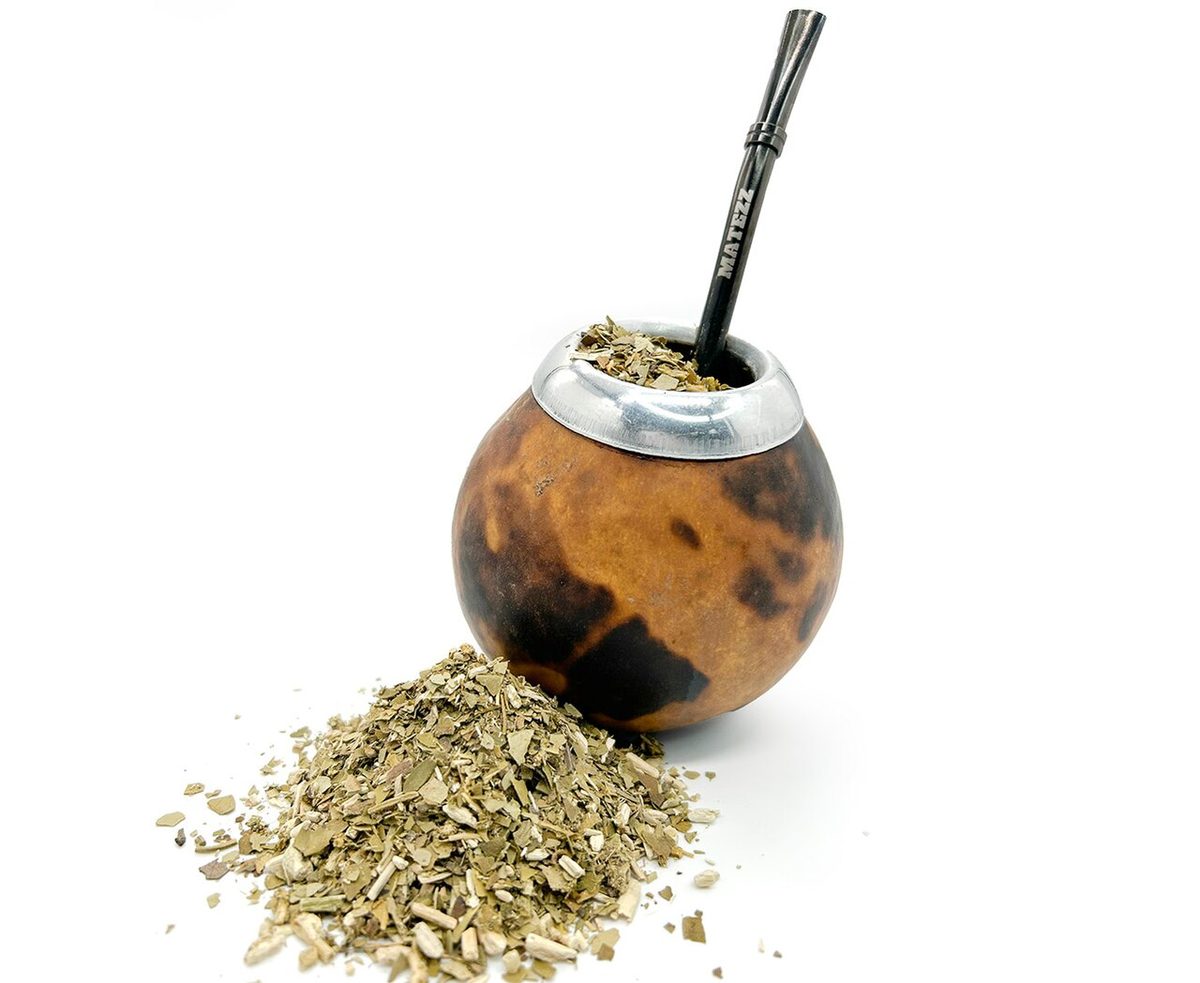
Yerba mate (Ilex paraguariensis, a caffeinated leaf steeped in hot water) is shared across Argentina, Brazil and Paraguay. Uruguay, however, consumes more per person than all of them. The key Uruguayan distinction is the thermos. Everywhere you go — the Rambla in Montevideo at seven in the morning, a bus stop in Salto, the back of a tractor — you’ll see people with a gourd in one hand and a large insulated thermos wedged under the opposite arm. The thermos keeps the water hot; the mate stays portable. It is a constant companion rather than a sit-down ceremony. Mate (mah-teh) is passed in rounds: the person brewing — the cebador — refills and circulates the gourd. Saying “gracias” (thank you) signals you’re done; saying it too early earns a look. Joining a mate round is the fastest social shortcut in the country.
3. The chivito — Uruguay’s national sandwich
The chivito (literally “little goat,” which it contains no trace of) is Uruguay’s national dish: a thin churrasco steak, fried egg, ham, bacon, mozzarella, olives, tomato and mayo, all wedged into a bun with fries threatening to escape underneath. The legend goes that a restaurateur in Punta del Este invented it around 1944 when a customer asked for roasted kid and he had none — so he improvised with beef and an apology, and the customer came back the next day asking for the same thing. Order it al pan (in the bun, as intended) rather than al plato (deconstructed over fries, fork required). It costs roughly US$10–15, it replaces both lunch and the need for dinner, and anyone who tells you they didn’t enjoy it is probably just stubborn.
4. Tannat wine — Uruguay’s signature red
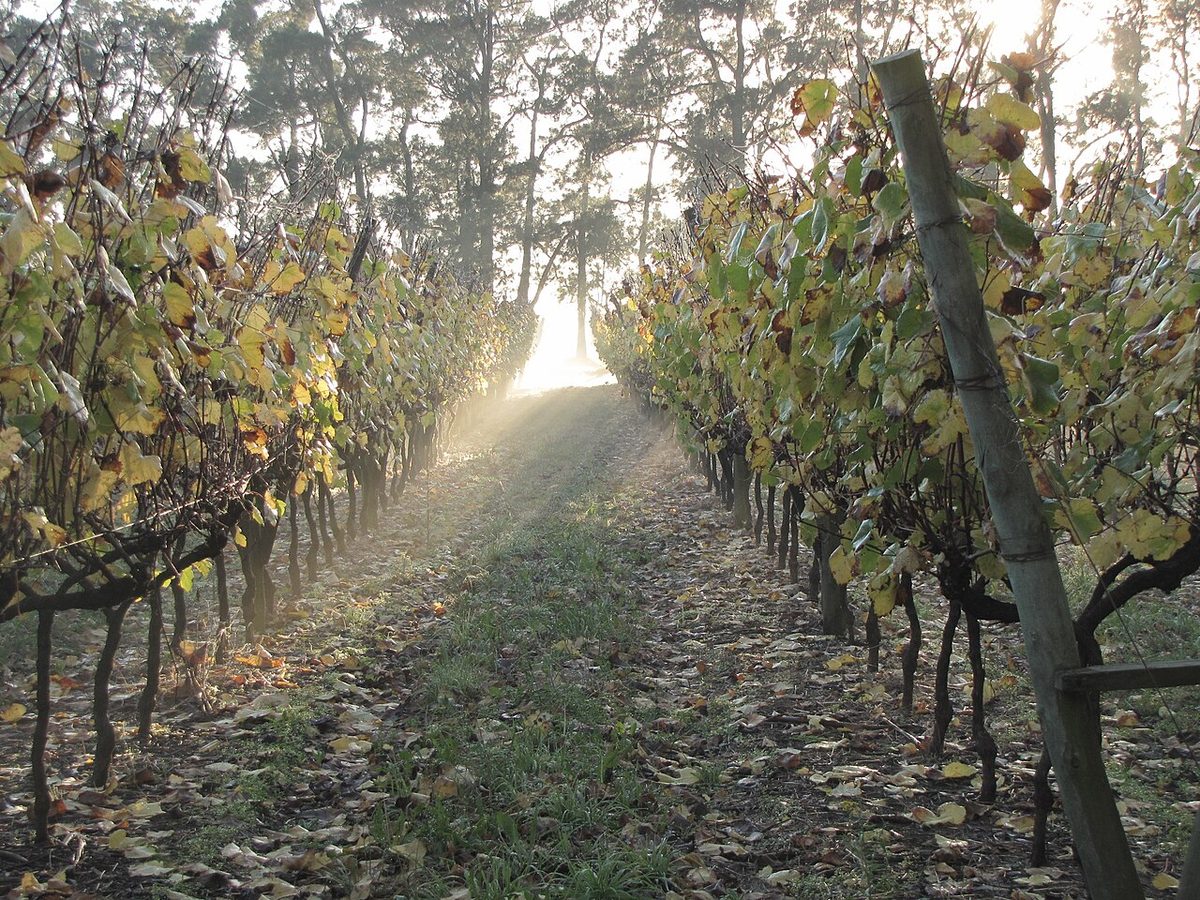
Tannat arrived from the French Basque country in the 1870s in the luggage of immigrant Pascual Harriague, who planted it in Salto. The rest of the world treats Tannat as a blending grape; Uruguay made it the star. Dark, structured, high in tannins and polyphenols, it pairs with beef the way you’d hope something would after 150 years of being grown next to it. The showpiece winery is Bodega Garzón, half an hour inland from José Ignacio — a gravity-flow facility that has put Uruguayan wine on the international map. Family-run bodegas in Canelones, within an hour of Montevideo, offer the same grape at more forgiving prices. Full rundown in our Uruguay wine guide.
5. Dulce de leche
Uruguay and Argentina both claim dulce de leche as their own, and both will argue about it with genuine feeling. The caramel-coloured milk-and-sugar spread is on breakfast toast, inside alfajor biscuits, folded into ice cream, spooned directly from the jar — it appears at every meal in some form, usually several forms. Uruguay’s version tends to be slightly lighter in colour and less tooth-achingly sweet than some Argentine equivalents, though the differences are subtle enough that the argument is more about territory than taste. Try it warm on bread at any confitería. Try also grappamiel — a honey-and-grape spirit that functions as Uruguay’s informal digestif — and medialunas for breakfast, because some habits from the Argentine side of the river crossed over and nobody complained.
Sport: what Uruguay is famous for on the field
6. Hosting and winning the very first World Cup — 1930
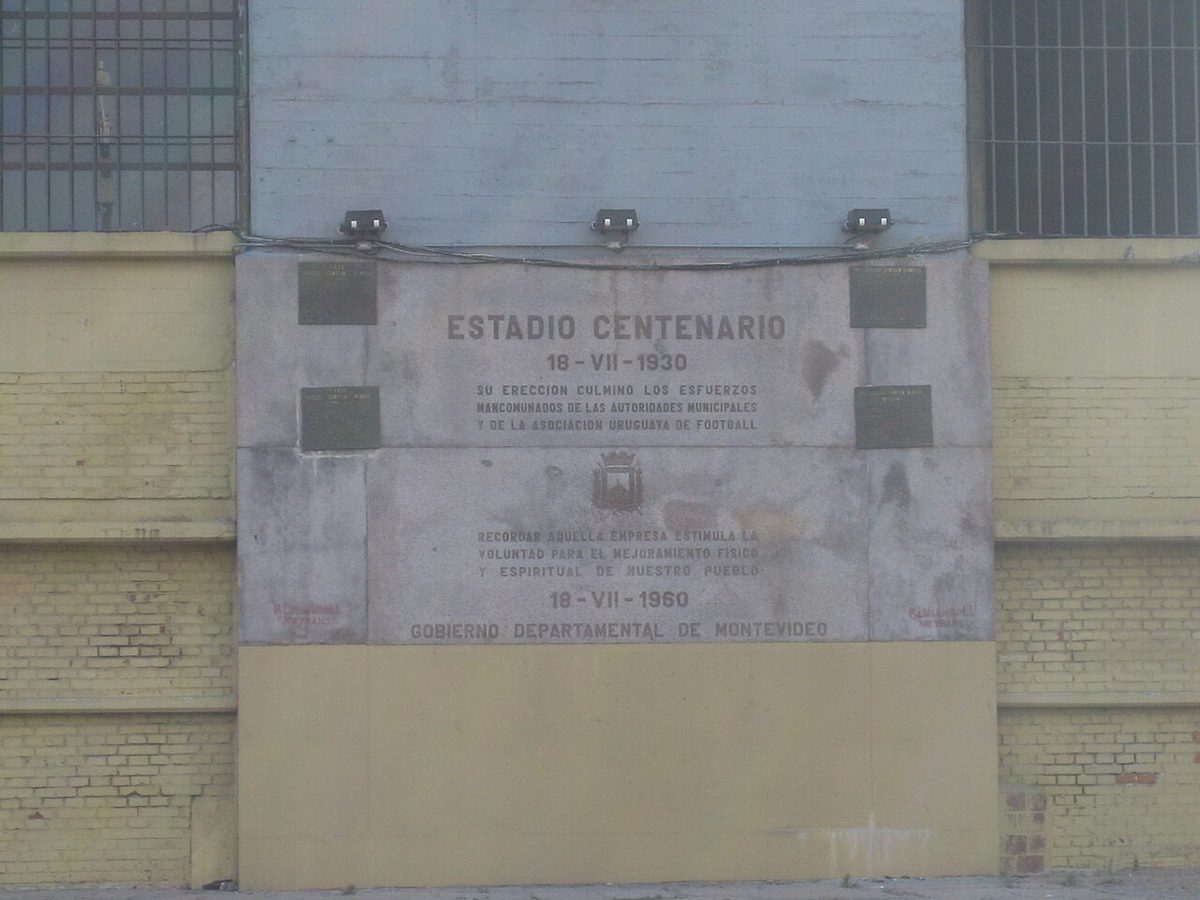
In 1930, FIFA needed a host for the inaugural World Cup and chose Uruguay: the country had just won back-to-back Olympic football gold medals (Paris 1924, Amsterdam 1928) and offered to build a new stadium and cover travel costs for the visiting teams. The Estadio Centenario in Montevideo — named for the centenary of Uruguayan independence — was the venue, and Uruguay beat Argentina 4–2 in the final. This makes Uruguay uniquely the only country to have both hosted and won the first-ever World Cup. The Centenario still stands, still hosts matches, and FIFA designated it a FIFA Historical Monument — one of only a handful in the world. The Museo del Fútbol inside it holds the relics with appropriate reverence.
7. The Maracanazo — winning in Brazil in 1950
Uruguay’s second World Cup, in 1950, is arguably the more dramatic of the two. The format involved a final round-robin rather than a knockout final, and the last match — Brazil versus Uruguay at the Maracanã in Rio de Janeiro, before a crowd estimated at 173,000 — effectively decided the title. Brazil needed only a draw; Uruguay needed to win. Uruguay won 2–1. The moment is known in Uruguay as La Hazaña (the feat) and in Brazil as the Maracanazo, a word carrying roughly the weight of “the catastrophe.” Brazilian commentator Ary Barroso had prepared a victory speech; what he broadcast instead has never been fully quoted in polite company. In Uruguay, the scorer of the winning goal — Alcides Ghiggia — remained a national hero until his death in 2015, the year of the Copa América centenary. Uruguay has also won the Copa América a record-equal number of times (fifteen, shared with Argentina as of this writing).
8. La Celeste — the national team that punches endlessly above its weight
Uruguay’s population is around 3.4 million people — roughly the size of Connecticut. For a nation that small to have won two World Cups, produced Luis Suárez, Edinson Cavani, Diego Forlán and a conveyor belt of players who command top-flight European wages, is statistically improbable. La Celeste (the sky-blue, named for the pale blue of the national shirt) qualifies for most World Cups and consistently makes the latter stages. The football culture here isn’t marketed the way Brazil or Argentina’s is; it runs deeper and quieter. The clásico between Peñarol and Nacional — one of the oldest football derbies outside Britain — is Montevideo at its most tribal. Attend carefully and with a local.
Culture & carnival: what Uruguay is known for artistically
9. The world’s longest carnival
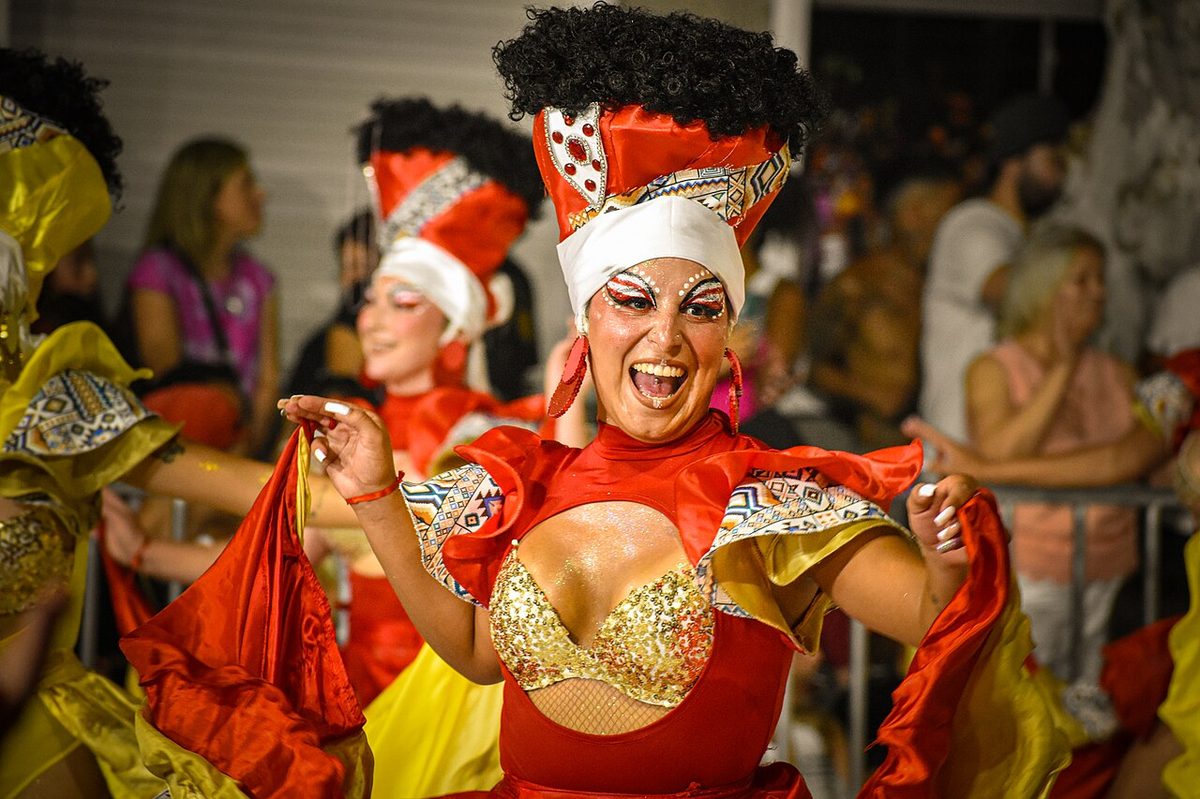
Rio de Janeiro’s carnival is bigger and louder. Montevideo’s lasts longer. Officially running for around 40 days — from late January into early March — Uruguayan carnival is a marathon of neighbourhood stages called tablados, travelling comparsas and satirical theatrical troupes. The two centrepiece street events are the Desfile Inaugural down 18 de Julio avenue and the Desfile de Llamadas through the Afro-Uruguayan neighbourhoods of Barrio Sur and Palermo: hours of candombe drum groups processing through streets so narrow the sound bounces back on itself. More information about what to expect across Uruguay’s cultural calendar is in our Uruguay culture guide.
10. Candombe — UNESCO intangible heritage, alive on Sunday evenings
Candombe (can-DOM-beh) is the drum language preserved by descendants of enslaved Africans in Uruguay, developed in the 1800s and added to UNESCO’s Intangible Cultural Heritage list in 2009. Three barrel-shaped drums — chico (smallest, highest pitch), repique (middle) and piano (deepest) — form the cuerda (group). Most Sunday evenings in Barrio Sur and Palermo, comparsas rehearse through the streets: 30 to 60 drummers walking abreast, with people trailing behind. It costs nothing to watch, nobody is performing for tourists, and the patterns are complex enough that fifteen minutes in you’re tracking the interplay between drums and losing track of time. This is living heritage in the truest sense: the tradition survived colonisation, then prohibition, then decades of military dictatorship, and still shows up every Sunday.
11. Tango — and the song the world knows best
Tango was born in the Río de la Plata basin, which sits between Buenos Aires and Montevideo, and both cities have an equally valid claim to its origins. What Uruguay has a specific claim to is La Cumparsita — written in 1917 by Gerardo Matos Rodríguez, an 18-year-old student from Montevideo, and premiered at a café on 18 de Julio avenue. It became, over the following century, the most recorded tango in history and by tradition closes every milonga in the world. By UNESCO convention (2009), the tango tradition was listed jointly for Argentina and Uruguay, which is the diplomatically correct outcome if not the one Buenos Aires ever fully accepts.
12. Murga — political satire in glitter and chorus
Murga is carnival’s most distinctly Uruguayan art form: an ensemble of 15 to 17 performers in elaborate costume delivering satirical commentary on the year’s politics, scandals and culture — part Greek chorus, part stand-up, part protest march, with choreography. The texts are written freshly for each carnival; the judges score literary quality alongside performance. During the dictatorship years (1973–1985), murga kept dissent alive through double-meaning lyrics the censors couldn’t quite pin down. Today it remains sharp, topical and genuinely funny in a way that doesn’t translate but rewards learning enough Spanish to follow. The teatro de verano stages in Parque Rodó are the main venues; tickets are modest and sell quickly for the good comparsas.
Progressive society: what Uruguay is known for politically
13. First country to fully legalise cannabis — 2013
In December 2013, Uruguay became the first country in the world to legalise the production, distribution and sale of cannabis for recreational use. Not decriminalise — legalise, with a state-regulated market. The bill was championed by President José Mujica’s government on public-health grounds: bring the market into daylight, reduce gang revenue, treat use as a health issue rather than a criminal one. The system required residents to register with the state to buy from pharmacies — it wasn’t a free-for-all tourist dispensary model — but the principle was world-first. Several countries have since followed with their own versions; Uruguay had the precedent.
14. Same-sex marriage — 2013, second in Latin America
Uruguay legalised same-sex marriage in April 2013, making it the second country in Latin America after Argentina. Anti-discrimination protections had been in place since 2003; same-sex adoption since 2009. The progression was part of a broader social liberalism that has characterised Uruguay for longer than most people realise: divorce was legal here in 1907, the welfare state was established in 1903, and voting rights for women came in 1938. The 2013 law simply updated the country’s long-standing habit of doing these things before they were fashionable.
15. Secularism — Tourism Week, Family Day and the separation that stuck
In 1916 — well before most Western democracies had fully separated church and state — Uruguay wrote strict secularism into its constitution and banned religious instruction in public schools. The downstream effects are unusual: Easter is officially Semana de Turismo (Tourism Week), Christmas is Día de la Familia (Family Day) and the December 8 feast of the Immaculate Conception is Beach Day. Only roughly 42% of the population identifies as Catholic; around 37% identifies as religiously unaffiliated. This is not indifference — it’s a deliberate, century-old national project, and it underpins much of the liberal politics that followed. Uruguay consistently ranks as the least religious and least corrupt country in Latin America.
16. José “Pepe” Mujica — the president who kept almost nothing
José Mujica served as Uruguay’s president from 2010 to 2015. He donated roughly 90% of his presidential salary to social housing and small enterprises, leaving himself approximately the Uruguayan average wage. He lived throughout his term on his wife’s small flower farm outside Montevideo rather than the official residence. He drove a 1987 Volkswagen Beetle. He had been a guerrilla fighter in the 1960s and 70s (Tupamaros), was shot six times, and spent nearly 15 years in solitary confinement during the dictatorship. After all of that, he became president and refused to change his habits. Foreign press called him “the world’s poorest president”; Mujica found the framing slightly absurd, pointing out that poverty is not owning little but wanting much. He died in May 2025, aged 89. The farm still grows chrysanthemums.
17. Near-100% renewable electricity — achieved in under a decade
By around 2017, Uruguay was generating roughly 95–100% of its electricity from renewable sources — wind, hydropower, solar and biomass. A decade earlier, oil imports made up more than a quarter of the country’s energy budget. The transformation came through a combination of state investment, regulatory framework changes and long-term planning that most energy analysts describe as unusually coherent for any country, let alone one with Uruguay’s modest resources. Electricity prices fell; reliability improved; the country now exports surplus power to Brazil and Argentina. It is, by most measures, the most complete renewable energy transition completed by any country of Uruguay’s size.
18. Democratic stability and low corruption — in a region where neither is guaranteed
Uruguay consistently tops Latin American rankings for democracy, press freedom, rule of law and absence of corruption — Transparency International routinely places it first in the region. This was not inevitable: a military dictatorship ran the country from 1973 to 1985, and its final leader was sentenced in 2009 to 25 years in prison for murder and human rights violations. The transition to democracy since then has been thorough and stable. The practical result for visitors is a country where traffic cops don’t expect bribes, where institutions function, and where the taxi driver doesn’t need to know which neighbourhood you’re heading to before agreeing the fare.
Nature & landscape: what Uruguay is known for outdoors
19. Gauchos, estancias and a landscape without mountains
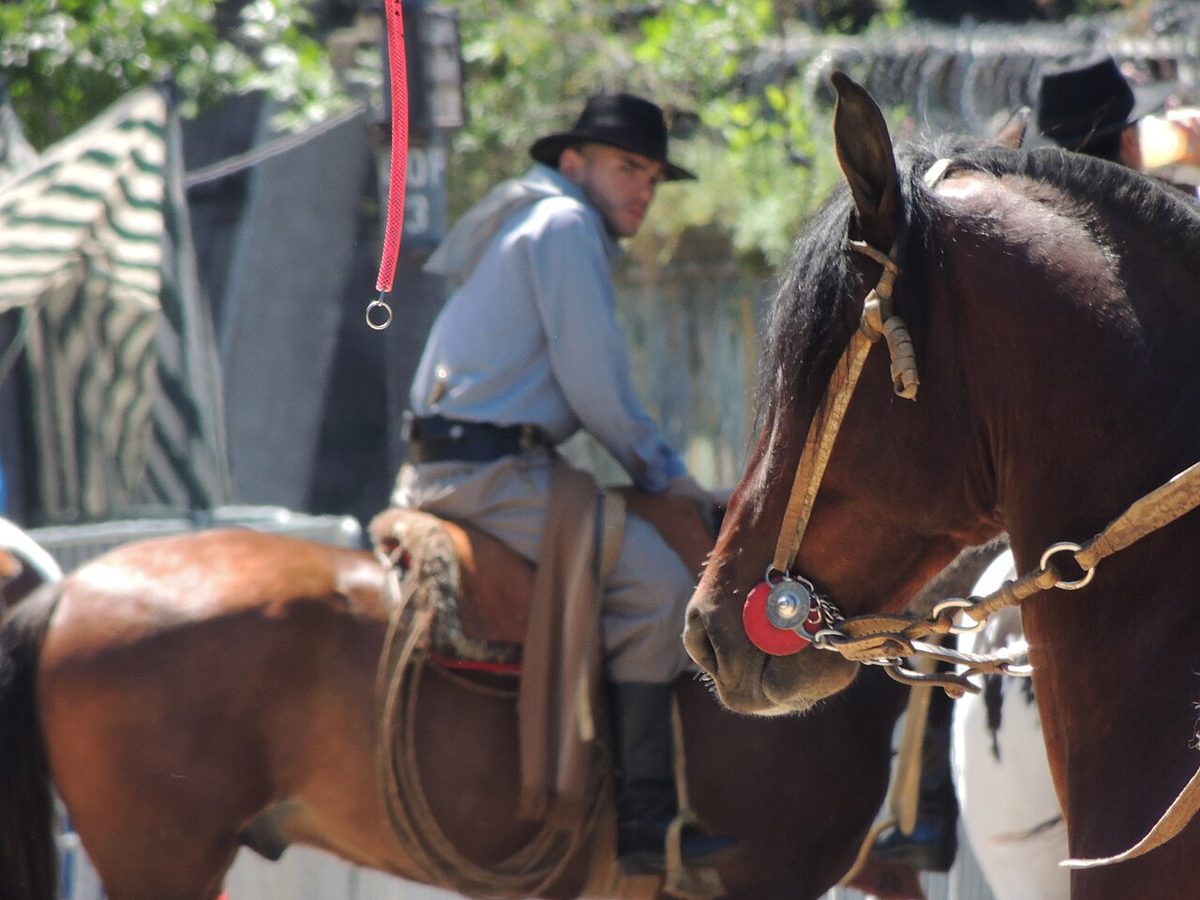
Uruguay’s highest point is Cerro Catedral at 514 metres — a hill rather than a mountain, though Uruguayans are attached to it. The interior is rolling cuchilla grassland: cattle country, green in winter, golden in summer, broken by eucalyptus windbreaks and the occasional dirt road. The gaucho — the horseback cattle worker of the Río de la Plata — is not folklore here; he is a working profession. Estancias (cattle ranches) have been taking guests for decades, offering horseback rides, open-fire asado and the specific quiet of land without fences. It’s an underrated part of the country and the part most visitors miss entirely. Our guide to estancia stays in Uruguay covers the best options and what to expect.
20. Around 660 kilometres of beaches
Uruguay’s Atlantic and river coastline runs for around 660 kilometres, from the mouth of the Río de la Plata near Montevideo east to the Brazilian border. It covers every personality type: the glamorous, see-and-be-seen beaches of Punta del Este; the family-friendly coves of Piriápolis and Atlántida; the bohemian fishing villages of Punta del Diablo and Valizas; and the genuinely roadless, off-grid dunes of Cabo Polonio, accessible only by 4×4 or on foot. The full menu is covered in our guide to Uruguay’s best beaches. The variation within 660 kilometres is remarkable: you can go from a beach club serving rose at umbrellaed tables to a place with no power grid and sea lions barking in about two hours of driving.
21. Southern right whales — offshore, every winter
Between roughly July and October, southern right whales migrate through Uruguayan waters, and from the rocky headlands between La Paloma and Punta del Diablo they’re visible close enough that you can watch them breach from dry land. The Rocha coast, particularly around Punta del Diablo and La Paloma, is the main vantage point. No boat needed, no fee paid — just timing. The right whale was hunted close to extinction by the 19th century and is recovering slowly; current global population is estimated at around 10,000, with numbers increasing. Seeing one breach 200 metres offshore is the kind of thing that sticks. Our guide to Uruguay’s national parks covers the protected coastal areas where wildlife watching is best.
22. Capybaras, rheas and the wildlife nobody mentions
Uruguay isn’t marketed as a wildlife destination, which means the wildlife comes as a pleasant surprise. Capybaras — the world’s largest rodents, resembling improbably large guinea pigs — wander Santa Teresa National Park at dusk, unfazed by campers. Rheas (the South American near-relative of the ostrich) stalk roadsides in the interior. Armadillos cross rural roads after dark. Sea lions bark on the rocks at Cabo Polonio and at the Isla de Lobos colony offshore from Punta del Este. Flamingos filter Laguna Garzón’s shallows. None of these sightings requires a safari; most happen casually, which is part of their appeal.
Quirks & surprises: the interesting facts about Uruguay that stick
23. Cows outnumber people roughly four to one
Uruguay has around 3.4 million people and roughly 12 million cattle. The ratio fluctuates with market conditions, but four cows per person is approximately right, and it shapes the country more than almost any other single fact. It explains the asado culture, the low price of beef relative to most things, the gaucho tradition, the landscape (more than half the country’s land is pasture), and the significant role of beef exports in the economy. It also means that driving through the interior you will see more cattle than cars by a wide margin, which is a genuinely unusual experience after most of the world’s countryside.
24. The Andes 1972 plane crash — a survival story that’s still Montevideo’s
In October 1972, Uruguayan Air Force Flight 571 crashed in the Andes carrying a Montevideo Old Christians rugby team and their supporters. Of 45 people on board, 16 survived 72 days at 3,600 metres in temperatures reaching -40°C, resorting to eating the deceased to survive before two members crossed a glacial mountain range to find help. The story was told in Piers Paul Read’s book Alive and three film adaptations, most recently the 2023 Netflix film Society of the Snow. What the international versions don’t always convey is how thoroughly Montevideo this story is: the survivors (several of whom are still alive and living in the city) established the Fundación Viven and a small museum in Ciudad Vieja that is genuinely moving. It is not disaster tourism; it is a community’s way of understanding what happened to it.
25. Fray Bentos — the factory that fed the world and is now a UNESCO site
From 1863, the Liebig Extract of Meat Company plant at Fray Bentos on the Río Uruguay processed beef for global export at an industrial scale that was revolutionary. The factory provisioned both World Wars, gave the British the OXO cube and a cultural synonym for cheap canned pie (the “Fray Bentos” brand is still on UK supermarket shelves), and at its peak employed workers from 60 countries, shipping corned beef and meat extract across Europe, North America and beyond. UNESCO listed the entire frigorífico complex as a World Heritage Site in 2015, recognising it as an outstanding example of 19th and 20th century industrial food technology. The guided tour through its echoing machine rooms is one of the strangest, most gripping museum experiences in the country. Combine it with Carmelo’s wine country or the nearby hot springs for a northwest loop worth the detour.
The bonus detail: Uruguay’s national anthem is the longest in the world
Francisco Esteban Acuña de Figueroa wrote the text; Francisco José Debali composed the music; the result, officially proclaimed in 1833, runs nearly five minutes in full performance — making it the longest national anthem in the world by duration. The original had eleven verses, several of which were diplomatically colourful about former colonisers Spain, Portugal and Brazil. Only the chorus and first verse are now sung, which takes the edge off the running time without quite solving it. It is also, separately, quite catchy.
What is Uruguay known for: your questions answered
What is Uruguay most famous for?
Ask locally and most Uruguayans will lead with football — specifically the two World Cups (1930 and 1950) — followed quickly by mate, asado and carnival. Internationally, Uruguay’s reputation is increasingly built on its progressive politics: first in the world to legalise cannabis (2013), early same-sex marriage, near-total renewable energy and low corruption. The combination of football obsession and extraordinary political progressivism in a country of 3.4 million people is part of what makes it genuinely unusual.
What is Uruguay known for in food?
Beef and the asado tradition are the centrepiece — Uruguay’s per-capita beef consumption is the highest on earth. The chivito (steak sandwich with egg, ham, bacon and cheese) is the national dish and a serious meal in its own right. Mate is the ubiquitous drink: a caffeinated leaf infusion consumed all day from a shared gourd. Tannat wine is the signature local red, built for the beef. Dulce de leche appears on or in almost everything sweet. Our Uruguayan food guide covers all of this in detail.
Is Uruguay known for being safe?
Yes — Uruguay consistently ranks as one of South America’s safest and most stable countries, and among the least corrupt in Latin America by Transparency International’s index. Normal city-sense applies in Montevideo (phone snatching exists in Ciudad Vieja and on crowded buses), but most visitors, including solo and LGBTQ+ travellers, report feeling notably comfortable. The interior and beach towns are very relaxed. For context on whether it suits your kind of travel, our honest assessment of whether Uruguay is worth visiting covers the tradeoffs.
What are the most interesting facts about Uruguay?
The ones that tend to land hardest: cows outnumber people four to one; Uruguay was the first country to fully legalise cannabis in 2013; the world’s most famous tango (La Cumparsita) was written by an 18-year-old Uruguayan in 1917; the national anthem is the longest in the world by performance time; a Uruguayan factory at Fray Bentos provisioned both World Wars and is now UNESCO-listed; and the country achieved near-100% renewable electricity in under a decade. None of these facts feel like they belong to the same country, which is part of what Uruguay is.
What is Uruguay known for compared to Argentina?
They share much: Spanish, mate, the gaucho, asado, the tango birthplace, football passion. Uruguay is smaller, quieter, somewhat more expensive and considerably less self-promotional. What it does differently: Uruguay was first in the world on cannabis legalisation; its cattle-to-people ratio is higher; its renewable energy record is better; its corruption index is lower; and its politics have been more consistently progressive. Argentina gets the international food reputation; Uruguay has the higher beef consumption per head. The full comparison is in our guide to the best places to visit in Uruguay.
Why should you visit Uruguay?
Because it accumulates rather than dazzles — which is a different, and often better, kind of travel. The mate circle eventually includes you. The drums get into your rhythm. An estancia morning on horseback with nobody else in any direction is not a minor experience. The beaches have room. The food is honest and very good. And for a country of 3.4 million people, its cultural and political output-per-capita is genuinely extraordinary. For practical trip planning, start with our complete guide to things to do in Uruguay.
Final thoughts
Twenty-five things Uruguay is known for, and the list still feels incomplete — because this is a country where the layers keep coming. The more you read about it, the more improbable it seems that one small republic between two enormous neighbours managed to host and win the first World Cup, write the world’s most famous tango, invent or at least strongly co-invent the parrilla tradition that feeds a continent, achieve near-total renewable energy before most rich nations managed it, and elect a former guerrilla fighter who gave away his salary and kept his 1987 Beetle. None of that is the same kind of story. All of it is Uruguay.
The pause people give when you tell them you’re going there is, as I said at the start, their loss. This is one of the most interesting countries in the Americas. It just doesn’t shout about it.
Credits & sources
Sources & further reading
- Uruguay Ministry of Tourism (turismo.gub.uy) — official destination information, events and regional guides
- UNESCO Intangible Cultural Heritage: Candombe and its socio-cultural space (2009)
- FIFA: 1930 FIFA World Cup Uruguay — official tournament records
- Uruguay Ministry of Industry, Energy and Mining — energy policy and renewables data
Photo credits
All images via Wikimedia Commons: Asado Parrilla Uruguay by Guzmán128 (CC BY-SA 4.0); Mate Gourd Thermos Uruguay by Lexspion (CC BY-SA 4.0); Estadio Centenario Montevideo by Stefano Vigorelli (CC BY-SA 4.0); Candombe Drummers Llamadas by Fcoriaph (CC BY 4.0); Gaucho Horseback Uruguay by Facndo (CC BY-SA 4.0); Tannat Vineyard Uruguay by Viñavarelazarranz (CC BY-SA 3.0).

3 comments