Colonia del Sacramento: Complete Guide to Uruguay’s Oldest Town (2026)
Last updated: June 2026
Colonia del Sacramento is Uruguay’s oldest town — a Portuguese smuggling port founded in 1680, whose cobbled historic quarter is now a UNESCO World Heritage Site. Most visitors see it as a one-hour ferry hop from Buenos Aires. This guide covers the ferry logistics, what’s actually worth your time, where to eat, and why I’d argue for staying the night.
I’ll be upfront about my bias: Colonia is my favorite small town in Uruguay. Not because it’s packed with blockbuster sights — it isn’t — but because it does one thing better than almost anywhere on this side of South America. It slows you down. You walk on stones laid by Portuguese soldiers three centuries ago, a 1950s Studebaker rusts photogenically on the corner, and somewhere behind a fig tree someone is pouring Tannat at four in the afternoon. That’s the town. It’s wonderful.
It’s also widely misunderstood, mostly because 90% of what’s written about it treats Colonia as a checklist day trip from Argentina. Day-trippers sprint the same three streets between ferries and leave thinking they’ve seen it. So in this guide I’m covering the day-trip mechanics properly — prices, terminals, the check-in traps — but also the Colonia that appears after the 6pm ferry leaves, plus the wine country an hour up the road that almost nobody adds on.
Colonia del Sacramento at a glance
| Essentials | The short version |
|---|---|
| What it is | Uruguay’s oldest town (1680) and its first UNESCO World Heritage Site (listed 1995) |
| Where | On the Río de la Plata, 50 km across the water from Buenos Aires; 177 km west of Montevideo |
| Getting there | Ferry from Buenos Aires (about 1h 15m, roughly US$25–65 each way); bus from Montevideo (2.5–3 hours, around US$12–15) |
| Time needed | 5–6 hours covers the historic quarter; one night is the sweet spot |
| Costs on the ground | Lighthouse climb around UYU 50 (~US$1.25); museum pass around UYU 150 (~US$4); meals US$10–35 |
| Best time | October–April; midweek beats weekends by a mile |
| Don’t miss | Calle de los Suspiros, the lighthouse at sunset, a picada at a 300-year-old house, the Real de San Carlos bullring |
Three hundred years of being fought over
You don’t need a history degree to enjoy Colonia, but five minutes of background makes the streets make sense — because the town’s whole layout is a leftover argument between two empires. If you want the longer version, I have set out how the town kept changing hands in a separate piece.
In 1680, Manuel Lobo, the Portuguese governor of Rio de Janeiro, sailed into the Río de la Plata and planted a fortified colony directly opposite Buenos Aires — about as subtle as parking a warship in your rival’s driveway. Spain controlled the river trade through Buenos Aires; Portugal wanted a back door. Colonia do Sacramento, as it was then spelled, became exactly that: a smuggling hub where British and Portuguese goods slipped past Spanish customs for a century.
Spain, unsurprisingly, objected. The town changed hands at least half a dozen times — besieged, traded away in European treaties, snatched back — until the Treaty of San Ildefonso handed it to Spain in 1777. Independence struggles followed, Brazil held the region for a while, and by 1828 it was part of the brand-new country of Uruguay.
The practical upshot for you: the historic quarter is a rare hybrid. Portuguese-era houses with sloped tile roofs and thick rubble walls sit beside flat-roofed Spanish colonial buildings on the same block. The Portuguese laid streets that follow the terrain, draining rain down the middle; the Spanish grid marches in straight lines. Once you know to look for the difference, you can read the whole power struggle in the architecture — which is a big part of why UNESCO listed the Barrio Histórico in 1995, the first site in Uruguay to get the nod.
One more thing worth knowing: locals just say “Colonia.” Officially, Colonia is the surrounding department (province), and Colonia del Sacramento is its capital. If a bus timetable says Colonia, this is the place it means. For a deeper look at where the town fits in the country’s story, my guide to the best things to do in Uruguay puts it in context.
Things to do in Colonia del Sacramento
The Barrio Histórico is about twelve compact blocks on a peninsula, so nothing here is more than a ten-minute walk from anything else. Don’t treat the list below as a route to march through. Half of Colonia’s magic is aimless wandering; the other half is knowing which of the modest-looking doorways are worth pushing open.
Enter through the Portón de Campo
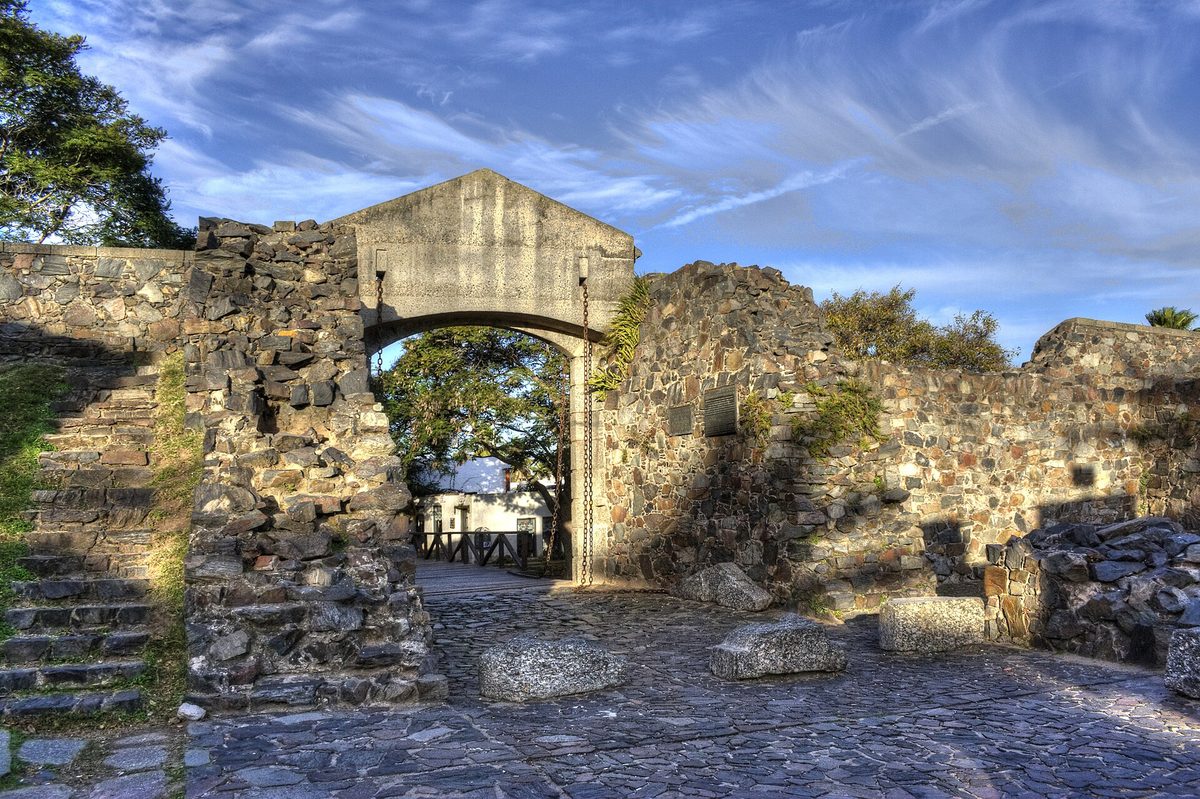
Start where everyone started for three centuries: the city gate. The Portón de Campo, with its wooden drawbridge and surviving chunk of fortified wall, was rebuilt on the original 1745 Portuguese foundations, and crossing it remains the correct way to enter the old town — over the moat, past the stone bastions, straight into the 18th century. Climb the rampart to the left of the gate for a quick view over the rooftops and the river. It takes two minutes and most people walk right past it.
Calle de los Suspiros
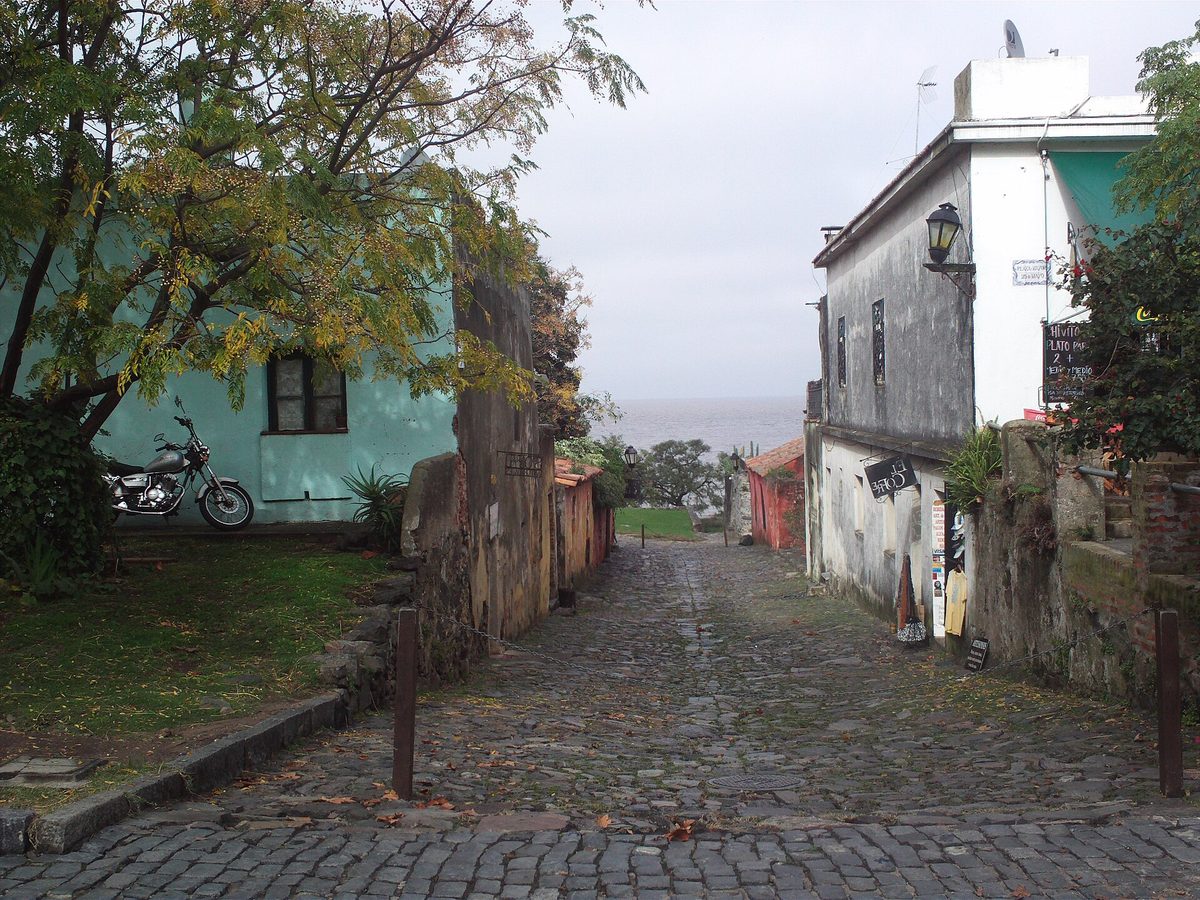
The Street of Sighs is the single most photographed spot in Uruguay, and for once the crowds are right. It’s a short, sloping lane of rough cobbles with a drainage channel down the center — the Portuguese signature — flanked by squat stone houses with sloped roofs that have barely changed since the 1700s. No one agrees on the name: the polite theory is the wind sighing off the river, the grim one involves condemned prisoners taking their last walk to the shore, and the cheeky one points to the brothels that operated here in the early 1900s. I lean toward the wind story but tell the other two anyway.
The honest drawback: between roughly 11am and 4pm it’s a conveyor belt of day-trippers taking the same photo. Come before 10am or after 6pm and you’ll have it nearly to yourself, with low light raking across the stones. This street alone is half the argument for sleeping in Colonia.
Climb the lighthouse (El Faro)
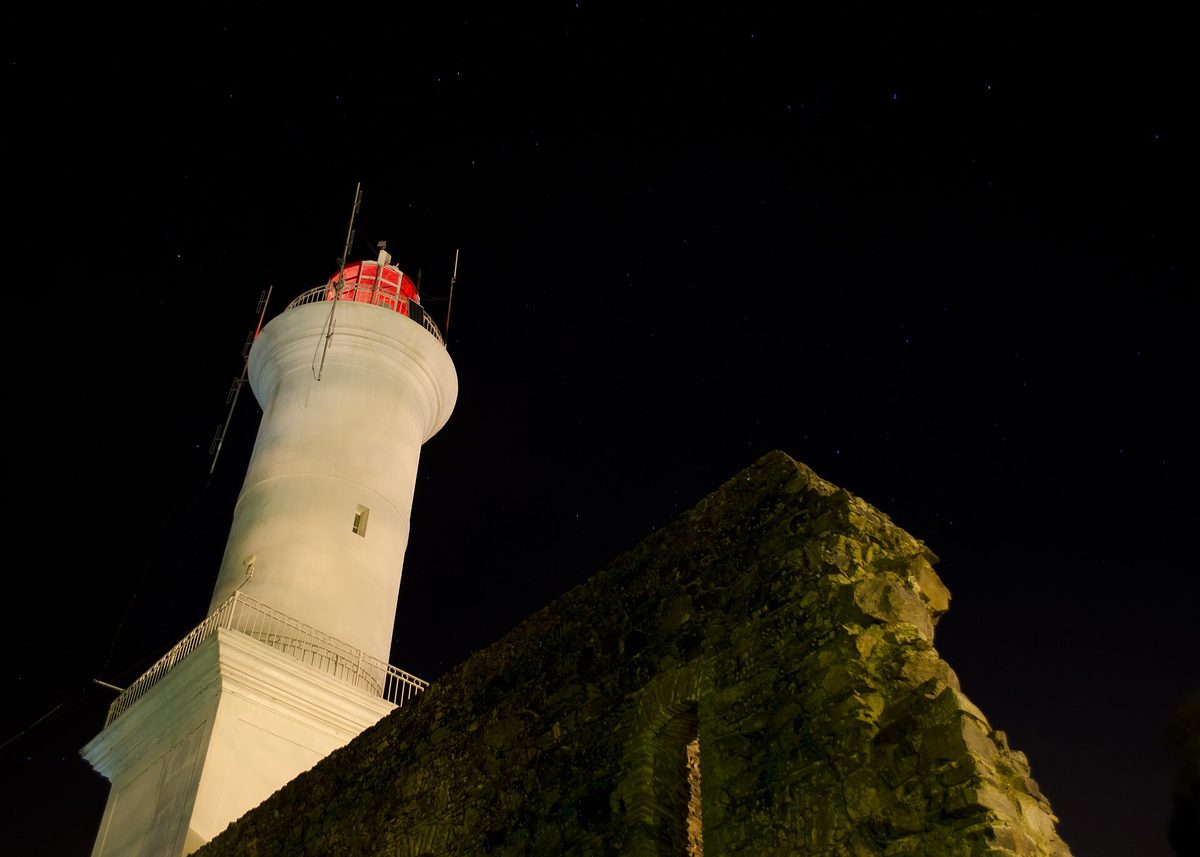
Colonia’s 1857 lighthouse grew out of the ruins of the San Francisco convent, one of the oldest religious buildings in the country, which burned in the early 1700s. The result is pleasantly odd: a square colonial base with a white cylindrical tower poking out of it, still working today. Around 110 tight spiral steps take you to a balcony with the best view in town — terracotta roofs, the full sweep of the peninsula, and on a clear evening the faint towers of Buenos Aires across 50 km of water.
Entry cost around UYU 50 last I checked — call it a dollar and change — and it’s worth triple that at sunset. Fair warning: the stairs are narrow and one-way traffic is a negotiation, the balcony is small, and on windy days it feels every one of its 26 meters. Skip it if heights aren’t your thing; the rampart by the gate gives you a decent consolation view.
The Basílica del Santísimo Sacramento and the two plazas
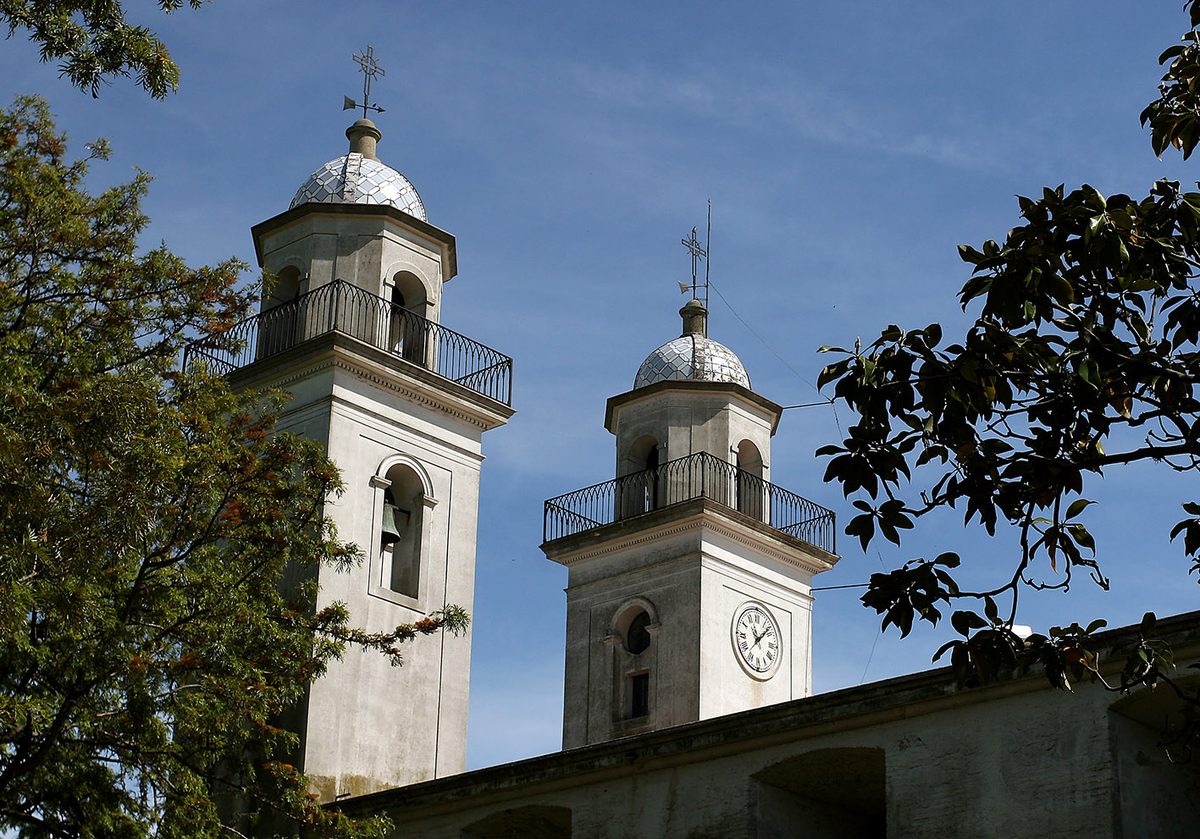
The white-and-cream basilica on Plaza de Armas is generally considered the oldest church in Uruguay — there’s been a church on this spot since the 1680s, though fires, sieges and an exploded gunpowder store meant it was rebuilt more than once, most thoroughly in the early 1800s. The interior is simple to the point of austerity, which I find more moving than gold leaf. Pop in for ten minutes; it’s free.
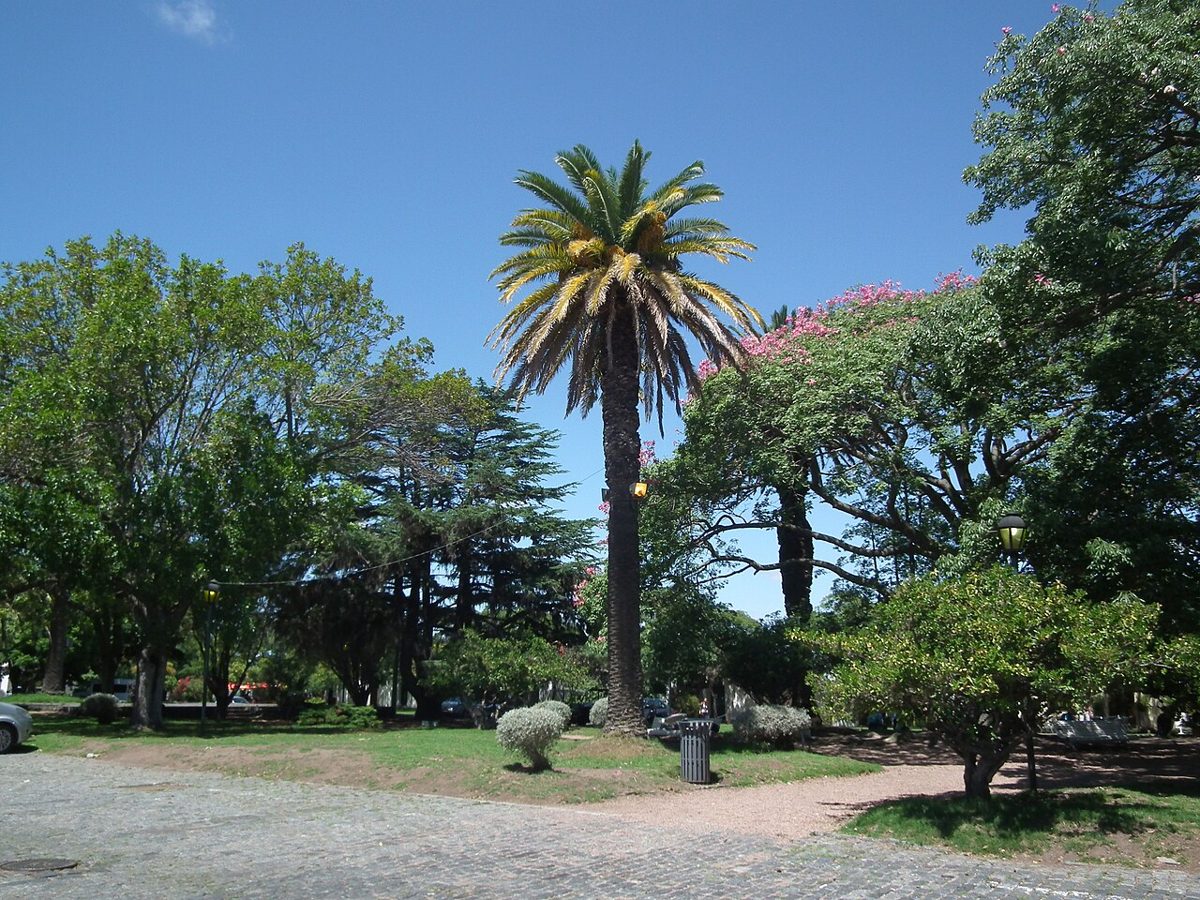
Here’s a distinction that confuses nearly everyone, because even guidebooks mix them up: Colonia’s old town has two main squares. Plaza de Armas (officially Plaza Manuel Lobo) is the small one beside the basilica, with the foundations of a vanished 18th-century house exposed under glass-and-steel walkways. Plaza Mayor 25 de Mayo is the big leafy rectangle near the Street of Sighs, ringed by museums and craft stalls, where palms and jacarandas shade benches that practically demand a siesta. Both earn their place; just don’t tell a taxi driver the wrong one.
Do the museum circuit — selectively
Colonia’s museums are tiny, charming, and uneven. A single combined ticket — around UYU 150, bought at the Museo Municipal on Plaza Mayor — covers the lot of them, roughly eight depending on what’s open. That’s the right price for what they are: most occupy historic houses that outshine their collections.
My ranking, having done the full circuit so you don’t have to: the Casa Nacarello (a Portuguese house from the 1750s restored with period furniture, low doorways and all — the best five minutes of domestic time travel in town), the Museo Portugués (maps and military kit from the Portuguese era, in another lovely house), and the Museo del Azulejo, a one-room celebration of antique tiles in a 1740s farmhouse by the water. The Municipal museum has a whale skeleton and a bit of everything; the rest are skippable unless it’s raining. Note that each museum takes a different day of the week off, so on any given day a couple will be shut — check the chalkboard at the Municipal when you buy the ticket.
The Museo del Origami curveball
Separate from the circuit, and the strangest cultural footnote in town: a small, well-curated origami museum — the first in the Americas — operating out of a historic house on the cobbles. Entry runs around UYU 80. It sounds like a gimmick. It isn’t; the work on display is by serious international folders, and it’s a perfect twenty-minute rain plan. The drawback is simply that it’s tiny, so manage expectations accordingly.
Hunt the vintage cars
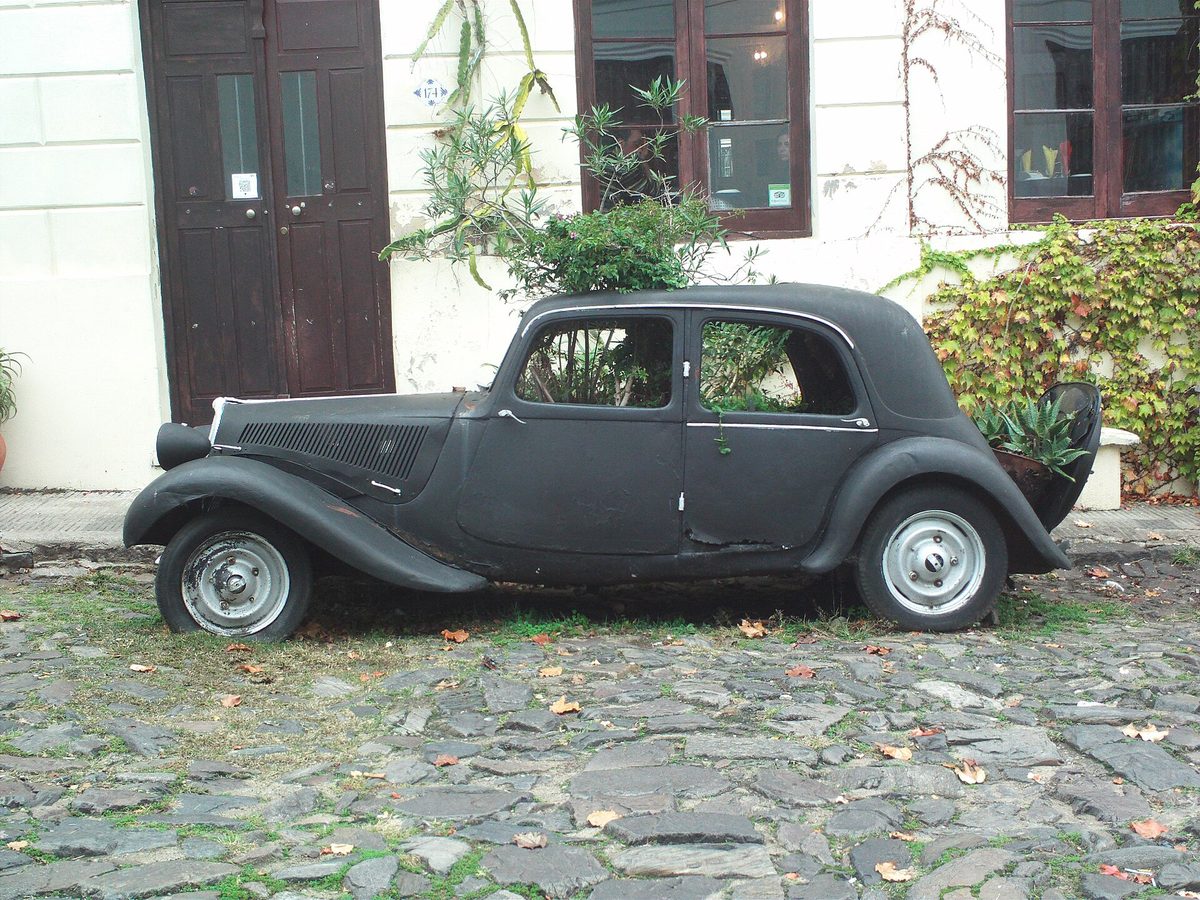
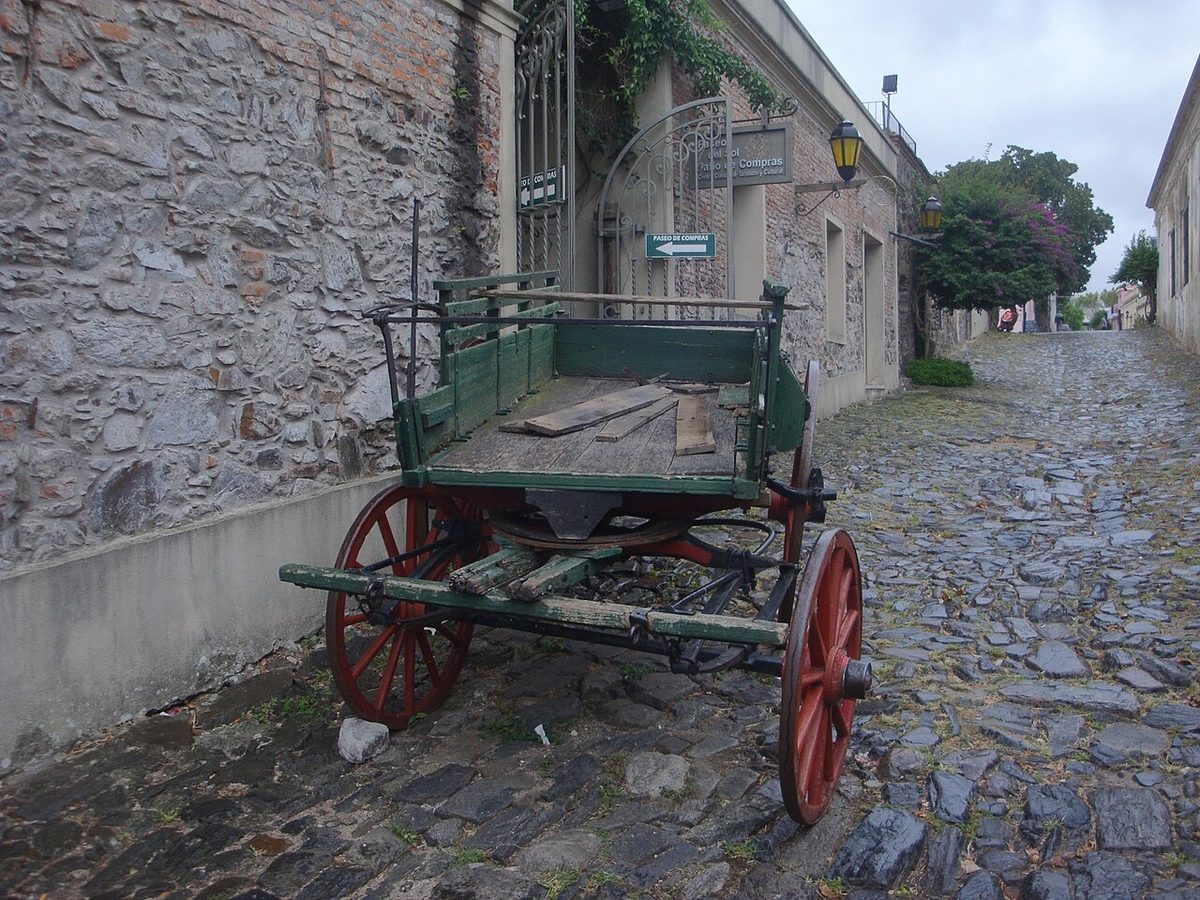
At some point you’ll round a corner and find a 1930s Citroën with a tree growing through its chassis, parked as if the driver stepped out for a coffee in 1962 and never came back. Colonia is scattered with these antique cars — some genuinely abandoned, some carefully staged by bar owners who know exactly what they’re doing (the famous one doubles as a planter outside El Drugstore, opposite the basilica). Uruguay’s old import restrictions kept mid-century cars on the road for decades, and the survivors became props. It’s kitsch. I love it anyway, and you’ll fill a camera roll before you notice.
Walk the rambla to Real de San Carlos
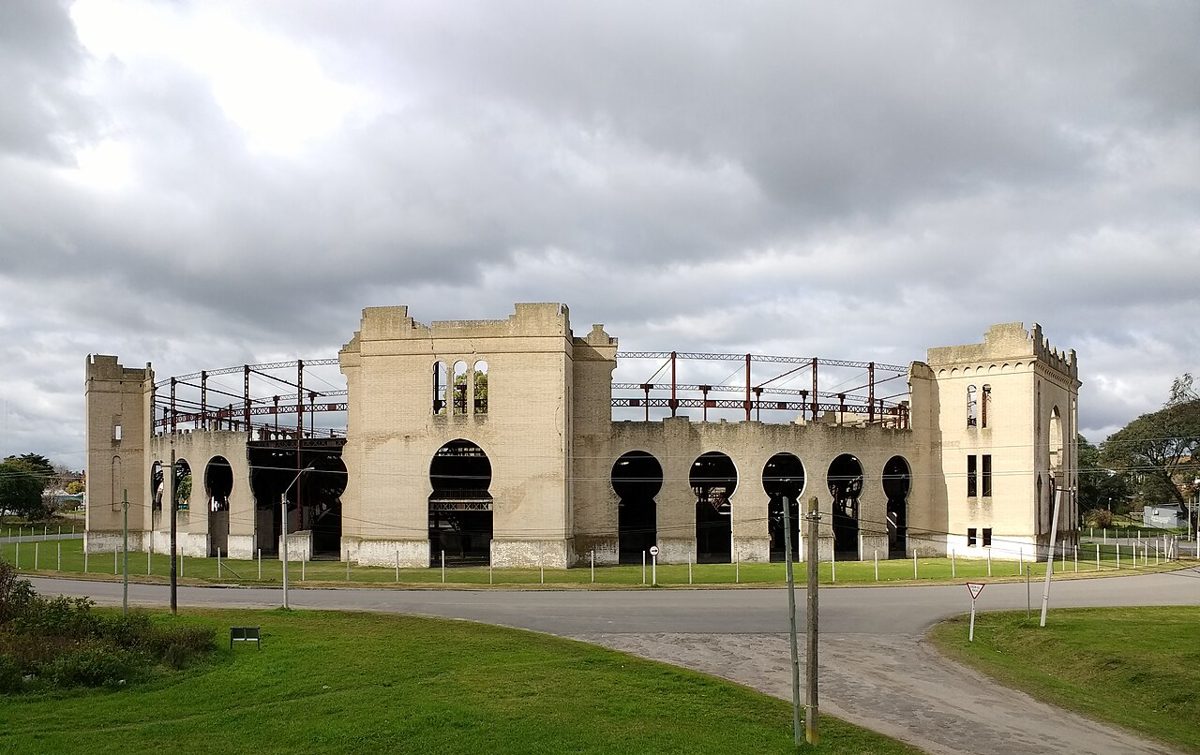
When the old town starts feeling small, head north along the waterfront rambla — a flat, easy 5 km round trip past small beaches and fishing spots to one of the oddest sights in Uruguay: the Plaza de Toros Real de San Carlos, a 10,000-seat Moorish-style bullring standing alone on the pampas like a beached ship.
The story is peak Belle Époque hubris. Around 1910, Argentine-Croatian magnate Nicolás Mihanovich built an entire pleasure complex here — bullring, 3,000-seat pelota fronton, racetrack, pier and hotel-casino — to lure Buenos Aires high society across the river. Eight bullfights later, Uruguay banned bullfighting (in 1912), and the complex began a century of elegant decay. The ring was restored and reopened for guided visits in 2021 after decades shut; the racetrack next door, remarkably, still runs horses. Check tour times locally as they shift with the season. Getting there: it’s a pleasant walk or a short taxi; bikes and golf carts are the fun middle option (more on rentals below).
Beaches, sunsets and the river that thinks it’s a sea
Let’s set expectations: the Río de la Plata at Colonia is fresh-to-brackish water the color of milky tea. It is not the Caribbean, and anyone selling you “beach paradise” here is fibbing. What you get instead are calm, sandy, family-friendly river beaches — tiny Playa Honda in town, and nicer, longer strands like Playa Ferrando a few kilometers northeast among eucalyptus trees. On a 33-degree January afternoon, a swim is exactly what you want, and locals are entirely unbothered by the color. For proper ocean beaches you’ll want the Atlantic coast — that’s a different trip, covered in my Punta del Este guide.
What Colonia does beat the ocean resorts at is sunsets. The town faces west over open water, so the sun drops straight into the river. The classic spots: the end of the 1860s harbor jetty (Muelle Viejo), the rocks below the lighthouse, or a waterfront table with a glass of Tannat. There’s also a sunset catamaran cruise from the yacht harbor — about an hour on the water for roughly US$30–50 — which is lovely on a still evening, though I’d call it optional rather than essential; the show is free from shore.
Tours, tastings and rainy-day backups
A few bookable things hold up well. A guided walking tour of the historic quarter (about 90 minutes, typically under US$20, several depart from near the basilica in the early afternoon) adds a layer of stories the plaques don’t tell — worth it if the Portuguese-vs-Spanish history grabs you. Wine people should look at Vinoteca de la Colonia or a winery run outside town: Uruguay’s signature Tannat grape grows well in this department, and a tasting with local Colonia cheese runs around US$20–25. And if the weather turns, between the museum pass, the origami museum, a long parrilla lunch and a café crawl, a wet day in Colonia is no tragedy.
Getting to Colonia del Sacramento
The ferry from Buenos Aires (and its traps)
This is how most people arrive, and it’s easier than crossing an international border has any right to be — provided you know the quirks. I have written the crossing up step by step, terminals and check-in times included, in my Buenos Aires day-trip walkthrough.
Two companies run direct fast ferries, from different terminals in Buenos Aires:
| Operator | Crossing | BA terminal | Typical one-way fare | My take |
|---|---|---|---|---|
| Buquebus | About 1h 15m | Puerto Madero (Dársena Norte) | Around US$45–65, promos lower | The polished option: biggest boats, central terminal, duty-free on board. Usually pricier. |
| Colonia Express | About 1h 15m–1h 30m | Near La Boca (Av. Pedro de Mendoza) | Around US$25–50 with advance promos | The budget pick. Smaller terminal, less central — factor in the longer taxi ride. |
Fares swing wildly with season, day and how far ahead you book — locking tickets in two to three weeks early can genuinely halve the price, and midweek sails cheaper than weekends. Book directly with the operators or through an aggregator if their checkout rejects your foreign card, which happens more than it should. Round trips commonly land between US$50 and US$140 in total. Prices move, so treat all of this as ballpark and check current fares.
Now the traps, learned the annoying way:
- Arrive at least an hour before departure. Some blogs say 20 minutes is fine. It is not — both countries’ passport controls happen side by side in the departure terminal (a genuinely civilized arrangement: you clear Argentine exit and Uruguayan entry in one queue, so you walk straight off the boat in Colonia). On busy mornings that queue eats 45 minutes by itself. Operators say 1–2 hours; I’d show up 90 minutes early in summer.
- Bring your actual passport. It’s an international crossing. Mercosur nationals can use ID cards; everyone else needs the passport, and you may get a stamp if you ask nicely.
- The through-ticket trap: Buenos Aires–Montevideo combo tickets route “via Colonia” (ferry + connecting bus), but they don’t allow a stopover. If you want to actually stop in Colonia en route between the two capitals — which you should — buy the ferry leg and the onward bus leg separately.
- Walking off the boat: the ferry terminal sits a flat ten-minute walk from the old town gate. You need no taxi, no tour bus, nothing. Day-trip packages sold on deck are mostly paying someone to walk you down a street you cannot get lost on.
From Montevideo and the rest of Uruguay
Coming from inside Uruguay, the bus is the easy answer — in fact the only one, since no ferry covers the run west from the capital, whatever the booking sites imply. Comfortable coaches (COT, Turil and friends) leave Montevideo’s Tres Cruces terminal at least hourly through the day, take 2.5–3 hours along Ruta 1, cost around US$12–15, and usually have wifi that works most of the way. The Colonia bus terminal sits right beside the ferry port, ten minutes’ walk from the historic quarter. The only times seats sell out are Christmas, New Year and Carnival weekends. One scam to know: a classic move at the terminal is taxi drivers telling arriving travelers the buses are “sold out” — smile, walk past, and ask at the actual ticket counter.
If you’re building a wider route through the country — Montevideo, the beaches, wine country — my Uruguay itinerary guide shows where Colonia slots in best (short version: first or last, paired with the ferry).
Driving is pleasant and dead simple: 177 km of well-kept, tolled highway from Montevideo, about 2.5 hours. A car is overkill for the old town itself — you’ll park it and walk — but it unlocks the wine country around Carmelo and the quiet beaches east of town. Rentals can cross on the ferry from Argentina too, but only if your contract explicitly allows the border; most don’t by default.
Luggage, and the question everyone asks
Traveling through with bags? The bus terminal next to the port has a left-luggage service for a few dollars a bag — the port itself has none. Drop your pack there and do Colonia unencumbered between connections. This one tip turns a stopover from sweaty to effortless.
Day trip or overnight? (The case for staying)
Here’s the truth both the ferry companies and the day-tour sellers gloss over: between 11am and 5pm in high season, the historic quarter belongs to the day-trippers. Tour groups shuffle down Calle de los Suspiros, the lunch spots fill, and the town performs its postcard routine on cue. It’s still lovely. But it’s a show.
Then the last big ferry leaves, and Colonia exhales. The streetlights come on — actual wrought-iron lanterns on the old blocks — the stones go amber, cats reclaim the plazas, and you can stand alone in the middle of the most photographed street in the country listening to the river. Dinner stops being a race. Sunrise over the Río de la Plata is yours and the fishermen’s. If you have any slack in your schedule at all, stay one night. Two is plenty unless you’re adding wine country; this is a small town and I won’t pretend otherwise.
If you only have a day: the realistic plan
| Time | Plan |
|---|---|
| 08:00–09:30 | Morning ferry from Buenos Aires (or earlier bus from Montevideo); coffee on board |
| 09:45 | Walk up from the terminal; drop bags at the bus station if needed |
| 10:00–11:00 | Enter via the Portón de Campo, climb the rampart, then Calle de los Suspiros before peak crowds |
| 11:00–12:30 | Museum pass highlights: Casa Nacarello, Museo Portugués, Azulejo — plus the basilica and both plazas |
| 12:30–14:00 | Long lunch: parrilla or a picada with Tannat (book ahead on weekends) |
| 14:00–15:30 | Walking tour, or rent a bike/golf cart out to the Real de San Carlos bullring |
| 15:30–17:00 | Ice cream, browse the craft stalls on Plaza Mayor, lighthouse climb (or save it for golden hour if staying) |
| 17:00–18:00 | Drink on the rambla or the jetty; day-trippers head to the evening ferry |
| Evening | Overnighters: sunset from the lighthouse rocks, slow dinner on the cobbles, town to yourself |
Five to six hours on the ground genuinely covers the quarter at a humane pace. What it doesn’t cover is the town’s actual mood, which clocks in after 6pm.
Where to eat and drink
For a town of 27,000, Colonia feeds you well — Uruguayan classics (beef, more beef, Tannat to wash it down) plus a surprising café culture. Tourist-strip mediocrity exists here too, so it pays to aim. My short list, with the catch for each:
- El Buen Suspiro — a low-doored 1700s house on Calle de los Suspiros doing picadas: boards of local Colonia cheese, cured meats, and small-producer Tannat by the glass. Atmospheric in a way that borders on unfair. The catch: it’s cramped and popular, so reserve or come at odd hours.
- Charco Bistró — the polished riverfront option attached to Charco Hotel, with a terrace practically in the water. Excellent fish and sunset real estate. The catch: prices to match the view, around US$25–40 a head with wine.
- Parrillada El Portón — an old-school grillhouse on Avenida General Flores that’s been feeding locals for some four decades. Order the asado de tira and stop overthinking. The catch: zero romance under the fluorescent-adjacent lighting; you’re here for meat, not mood.
- Lentas Maravillas — a teahouse in a garden sloping toward the river, with cakes, books and the strong impression of being a friend’s living room. The catch: hours are whimsical; it’s a daytime place, often closed when you most wish it weren’t.
- La Bodeguita — riverside terrace beloved for its crispy square pizzas and sundowners. The catch: service can be glacial when the terrace fills, which is daily in summer.
- Colonia Sandwich — proper coffee, fresh juices and good sandwiches by Plaza de Armas; the right quick lunch when you’d rather spend the hours walking. The catch: seats are few and day-trip demand is not.
- Helados Dinezzo — artisanal ice cream in the quarter; the dulce de leche flavors are the correct order in this country. The catch: none. It’s ice cream. Have it daily.
Two food-culture notes: try a chivito (Uruguay’s gloriously excessive steak-egg-and-everything sandwich) at least once — most parrillas and cafés do a version — and know that Uruguayans eat late; many kitchens go quiet from 3 to 8pm, then refill. A craft-beer scene also took root here: Cervecería Barbot and MBC Sacramento pour local pints, evenings only as a rule, which is one more small argument for the overnight. For the fuller run-down of parrillas, cafés and where to find a proper chivito, see my guide to eating in Colonia.
Where to stay in Colonia del Sacramento
The rule is simple: sleep in or beside the Barrio Histórico. The whole point of overnighting is stepping out your door into the empty evening streets. Options are mostly small posadas in colonial buildings — book ahead for summer weekends, when porteños take over the town. Four I’d actually recommend, across budgets:
- Charco Hotel — the boutique flagship: a restored stone house on the waterline with a handful of minimalist rooms and that bistro terrace. Around US$150–250 a night. The catch: smallest rooms at the price, and it books out absurdly far ahead.
- Posada Plaza Mayor — colonial house, fountain courtyard dripping with plants, steps from the Street of Sighs. Around US$90–140. The catch: historic-building quirks — uneven floors, the odd thin wall — that I find charming and light sleepers may not.
- Posada Boutique Las Terrazas — comfortable mid-ranger in the quarter with roof terraces and good breakfasts, usually US$80–120. The catch: less period character than the name suggests; it wins on comfort, not romance.
- Viajero Posada — the budget-to-midrange standby near the old town, part hostel DNA, part B&B polish, often US$40–70 for privates. The catch: a social vibe that’s lively or noisy depending on your age and bedtime.
The Radisson and other modern hotels sit just outside the quarter with pools and river views — fine choices in midsummer heat, but you trade away the only thing Colonia has that nowhere else does: waking up inside 1730. My rundown of posadas and hotels compares both sides of the old wall in more detail.
Beyond the cobblestones: Carmelo and the quiet coast
Most visitors never leave the twelve blocks, which is exactly why you should. An hour northwest lies Carmelo, the relaxed heart of Uruguay’s south-western wine country — small family bodegas growing Tannat and Albariño among vineyards you’ll frequently have to yourself. Tastings at places like El Legado or the century-old Almacén de la Capilla feel like visiting an opinionated friend’s farm, in the best way. Without a car you’ll want a tour or a remise (private driver) for the day; budget accordingly, as the flexibility costs more than the bus.
Closer in, the coast east of town hides long sandy stretches backed by eucalyptus, busiest at Ferrando and emptier the further you go. And if this taste of slow Uruguay hooks you, the logical next step is two hours down the road: my guide to things to do in Montevideo covers the capital that day-trippers from Buenos Aires never reach.
Practical stuff: money, weather, timing, safety
Money in 2026: Uruguay’s currency is the peso (UYU), but Colonia is the most payment-flexible town in the country — cards and contactless work nearly everywhere, US dollars are widely accepted at decent rates, and even Argentine pesos pass at unflattering ones. You can do a day trip without exchanging a thing if you pay by card. Getting some pesos from an ATM makes sense if you’re continuing into Uruguay (small cafés and craft stalls prefer them), and brace yourself gently: Uruguay runs noticeably pricier than Argentina, closer to southern-European levels.
When to come: the town works year-round. Summer (December–February) brings beach weather, long evenings and the biggest crowds; winter is grey, windswept and quietly atmospheric if you like your colonial towns moody and cheap. The shoulder months — October, November, March, April — are my pick: jacarandas or autumn light, warm days, manageable ferry queues. Far more important than the month is the day: go midweek if you possibly can. Saturdays double the day-tripper load. The seasonal trade-offs across the whole country are mapped out in my guide to the best time to visit Uruguay.
Getting around: the historic quarter is entirely walkable — cobbles and all, so leave the heels and bring grippy shoes. For the rambla and bullring, rent a bike or one of the ubiquitous golf carts and scooters near the port (carts run somewhere around US$20–30 for a few hours; fun, and faintly ridiculous, which is part of the appeal). Taxis exist but you’ll rarely need one.
Safety: Colonia is about as low-risk as Latin American travel gets — a small, prosperous, tourism-dependent town in one of the region’s safest countries. Normal city sense after dark covers it. The “dangers” worth naming are ankle-twisting cobbles, summer sunburn on the shadeless rambla, and the bus-station taxi fib mentioned above.
Language and connectivity: Spanish, with serviceable English in hotels and the main restaurants and much less elsewhere — a few pleasantries go a long way. An eSIM or Antel SIM sorts data cheaply, and most cafés have wifi.
Colonia for your kind of trip
Couples have it easiest: this is plainly one of the most romantic towns on the continent — stay the night, book El Buen Suspiro, do the lighthouse at golden hour. Families get a compact, traffic-light town with beaches, ice cream, a drawbridge and golf carts; the museums are mercifully short for small attention spans. Photographers should sleep over without debate — blue hour on empty cobbles is the shot, and midday is the worst light through the busiest crowds. History-minded travelers get more from a guided walk plus the Portuguese and Nacarello museums than from doubling their sight count. And if you’re a Buenos Aires day-tripper deciding whether the crossing is worth a precious BA day: yes, once — it’s the easiest second country you’ll ever add, and nothing in Argentina looks like these twelve blocks.
Colonia del Sacramento FAQ
Is Colonia del Sacramento worth visiting?
Yes — it’s the best-preserved colonial townscape in this part of South America and an effortless add-on to Buenos Aires or any Uruguay route. Manage expectations on size: it’s twelve blocks of atmosphere rather than a sight-packed city, which is precisely the charm. History lovers, photographers and anyone needing a slow day will be happiest.
Is one day enough for Colonia del Sacramento?
One day comfortably covers the historic quarter — five to six hours on the ground sees the gate, the Street of Sighs, the lighthouse, a couple of museums and a long lunch. But the town is at its best after the day boats leave, so if your schedule allows one overnight anywhere extra, spend it here.
How do I get from Buenos Aires to Colonia del Sacramento?
Direct ferry: Buquebus from Puerto Madero or Colonia Express from near La Boca, both about 75–90 minutes, roughly US$25–65 each way depending on operator, season and how early you book. Arrive 60–90 minutes before departure for the dual passport control. The Colonia terminal is a ten-minute walk from the old town.
Do I need a passport for the ferry?
Yes — it’s a full international border. Non-Mercosur visitors need a passport (Mercosur nationals can travel on national ID). Both exit and entry checks happen at the departure terminal before boarding, so the arrival side is walk-straight-off. Most Western nationalities need no visa for Uruguay; you typically get 90 days.
Can I pay in US dollars or Argentine pesos in Colonia?
Mostly, yes. Cards and contactless are accepted almost everywhere, US dollars are taken widely at reasonable rates, and many places grudgingly accept Argentine pesos at weak ones. Uruguayan pesos get marginally better prices at small shops and stalls. For a pure day trip, a credit card plus a few emergency dollars is all you need.
Is it worth staying overnight in Colonia del Sacramento?
If you can, absolutely. The town transforms once the last ferry leaves around sunset: empty lantern-lit streets, unhurried dinners, and dawn over the Río de la Plata to yourself. Photographers and couples get the most from it. One night is the sweet spot; add a second only if you’re doing Carmelo wine country.
What’s the difference between Colonia and Colonia del Sacramento?
Colonia is the department (province) in south-western Uruguay; Colonia del Sacramento is its capital city and the UNESCO town everyone means. Locals shorten the city’s name to “Colonia” in conversation and on bus boards, which causes the confusion. If you book transport to “Colonia,” you’ll arrive in the right place.
Can you swim in Colonia del Sacramento?
Yes — the town has calm, sandy river beaches like Playa Honda in the center and longer Ferrando east of town. The Río de la Plata’s water is brown year-round; that’s sediment, not pollution, and locals swim happily in summer. Just don’t expect turquoise: for ocean swimming, head to Uruguay’s Atlantic coast instead.
Final thoughts
I’ve come to think of Colonia del Sacramento as a test of travel temperament. Visitors who race it between ferries leave with three photos and a shrug; visitors who give it an evening leave quietly smitten and recommending it for years. The town has been contested, smuggled through, abandoned by empires and rediscovered by tourism — and through all of it, it kept the unhurried river-port soul that the rest of the region modernized away. Take the ferry, walk the drawbridge, stay for the lanterns. Then come tell me a day trip would have been enough.
Credits & sources
Sources & further reading
- UNESCO World Heritage Centre — Historic Quarter of the City of Colonia del Sacramento — the listing and its criteria.
- Ministerio de Turismo del Uruguay — official national tourism information.
- Buquebus and Colonia Express — current ferry schedules and fares.
Photo credits
- Calle de los Suspiros: Ypsilon from Finland / Wikimedia Commons (CC0)
- Lighthouse at night: Angelo77ss / Wikimedia Commons (CC BY-SA 3.0)
- Portón de Campo: HalloweenHJB / Wikimedia Commons (CC BY-SA 3.0)
- Basílica del Santísimo Sacramento: Carlos E. González / Wikimedia Commons (CC BY-SA 3.0)
- Vintage car: Ypsilon from Finland / Wikimedia Commons (CC0)
- Plaza de Toros Real de San Carlos: Mx. Granger / Wikimedia Commons (CC0)
- Plaza Mayor: Fulviusbsas / Wikimedia Commons (CC BY-SA 3.0)


1 comment
Comments are closed.