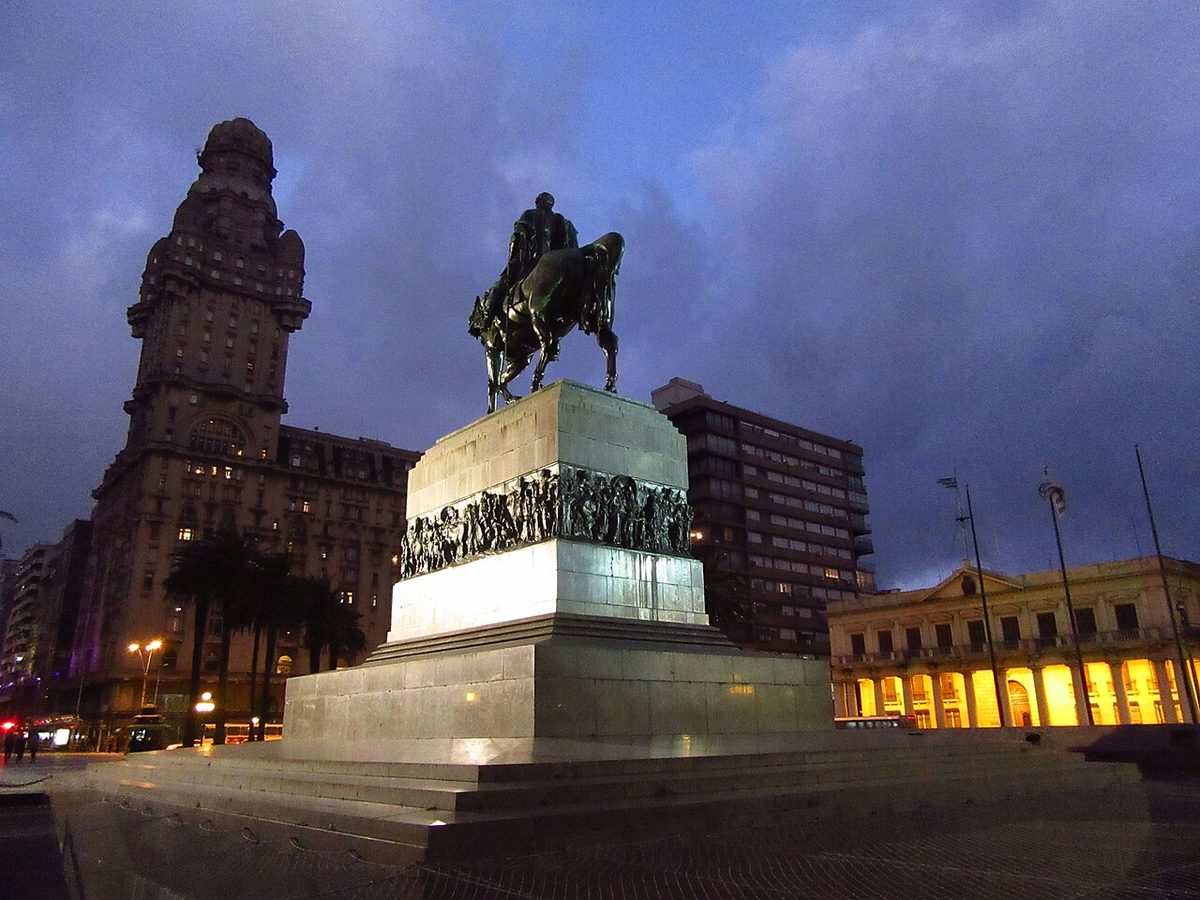
Christmas & New Year’s Eve in Uruguay (2026)
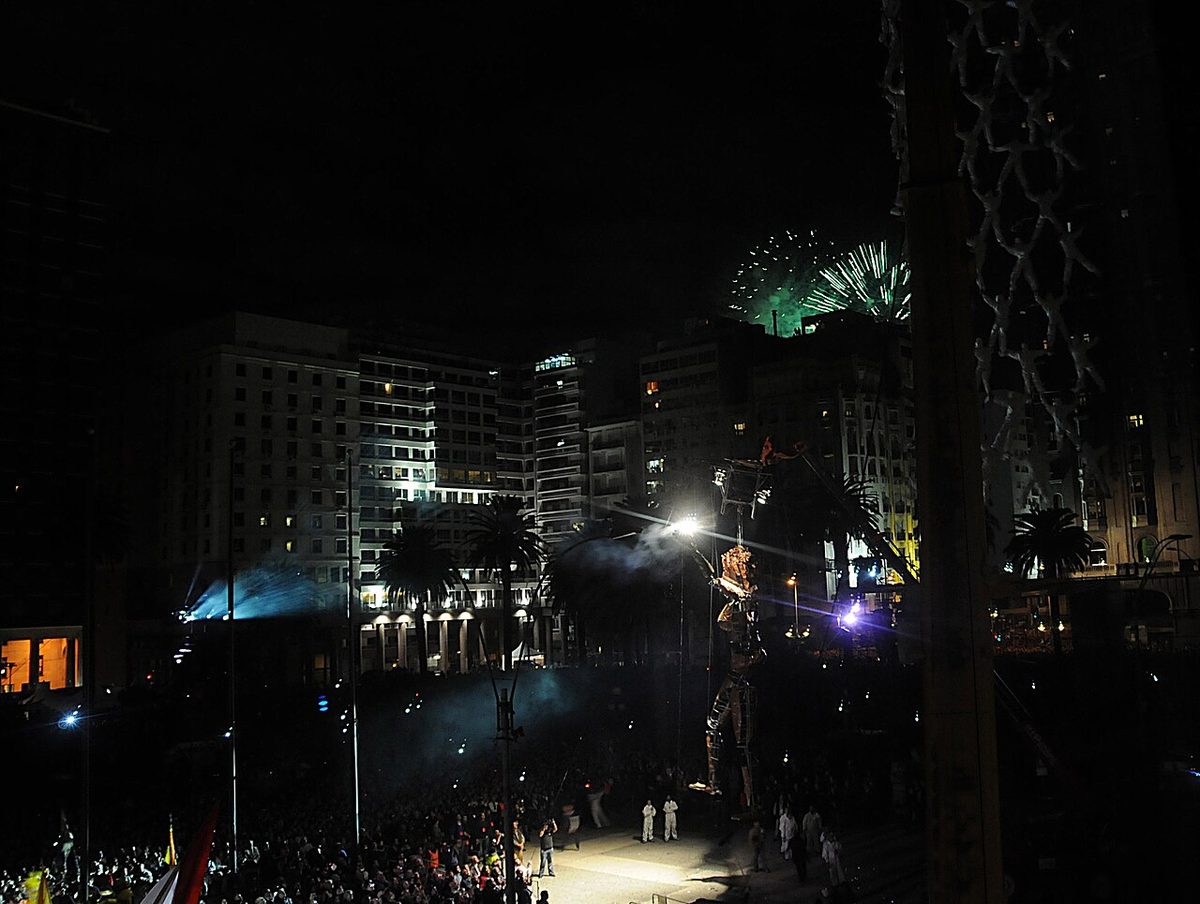
The first time I spent Christmas in Uruguay, I made the rookie mistake of packing a sweater. It was 30 degrees Celsius at 11pm on the 24th, and I was standing on a rooftop in Montevideo’s Pocitos neighbourhood, sweating through a t-shirt, watching the entire skyline erupt in amateur fireworks while somebody’s grandmother passed me a glass of ice-cold wine punch. There was no snow. There was no carol-by-candlelight hush. There was an asado the size of a small car, a dog hiding under the table from the bangs, and a teenager setting off a roman candle off the balcony with a casualness that would give a North American fire marshal a stroke.
That night reset everything I thought I knew about the holidays. Down here the season runs hot and loud and family-first, and the calendar tilts in ways visitors rarely expect.
Christmas in Uruguay falls in the middle of the southern summer, so it is hot, not snowy. The real celebration is the night of the 24th — Noche Buena (Christmas Eve) — with a late family barbecue, fireworks at midnight across every city, and sweet treats like pan dulce. The 25th itself is quiet, with most shops shut.
New Year’s Eve is the other headline, and it pulls in a completely different crowd. That’s where Punta del Este comes in, and where the prices go vertical. I’ll get to all of it.
What this guide covers
This is the on-the-ground version, written from a few summers of doing this in person rather than reading about it. Here’s the map of what’s ahead:
- Christmas Eve (Noche Buena) — what actually happens on the 24th, the food, the fireworks, the midnight gift swap.
- Christmas Day — why the 25th is the quietest day of the Uruguayan year, and how to plan around it.
- New Year’s Eve in Punta del Este — the fireworks, the beach clubs, the gala dinners, and the honest truth about the cost.
- Local New Year customs — the grapes, the underwear, the suitcase walk, and the Montevideo water fights.
- Food and drink — asado, lechón, pan dulce, turrón, sidra and clericó, explained.
- Planning — where to be, when to book, and exactly what’s open on the days everything closes.
If you’re weighing up the wider season first, my guide to the best time to visit Uruguay puts these two weeks in context against the rest of the year.
Christmas and New Year in Uruguay at a glance
| Date | What happens | What’s open |
|---|---|---|
| Dec 24 — Noche Buena | The main event. Late family asado, midnight fireworks nationwide, gifts after twelve. | Shops and supermarkets open until early afternoon, then close. Taxis vanish from ~5pm. |
| Dec 25 — Christmas Day | Quiet recovery day. Beach, leftovers, family visits. | Almost everything shut. Malls closed. A handful of restaurants open with set menus. |
| Dec 26–30 | Coast fills up; Montevideo empties out. Beach season in full swing. | Back to normal. Coastal towns busy; the capital noticeably quieter. |
| Dec 31 — New Year’s Eve | Gala dinners, beach parties, midnight fireworks. Punta del Este is the headline. | Shops close early afternoon. Restaurants on set menus only. Taxis scarce from ~4pm. |
| Jan 1 — New Year’s Day | The slowest day of all. First sunrise on the beach, then sleep. | Everything shut. No city buses at all. Taxis return around 4am. |
Keep that table in mind, because the two red days — the 25th and the 1st — catch out more visitors than anything else about the Uruguayan holidays.
Christmas Eve: Noche Buena is the whole show
Here is the single most important thing to understand about Christmas in Uruguay: the 24th is the event, not the 25th. Noche Buena — literally “the good night” — is when families gather, when the food comes out, and when the sky goes up in flames at midnight. By comparison, Christmas Day is an afterthought, a slow exhale.
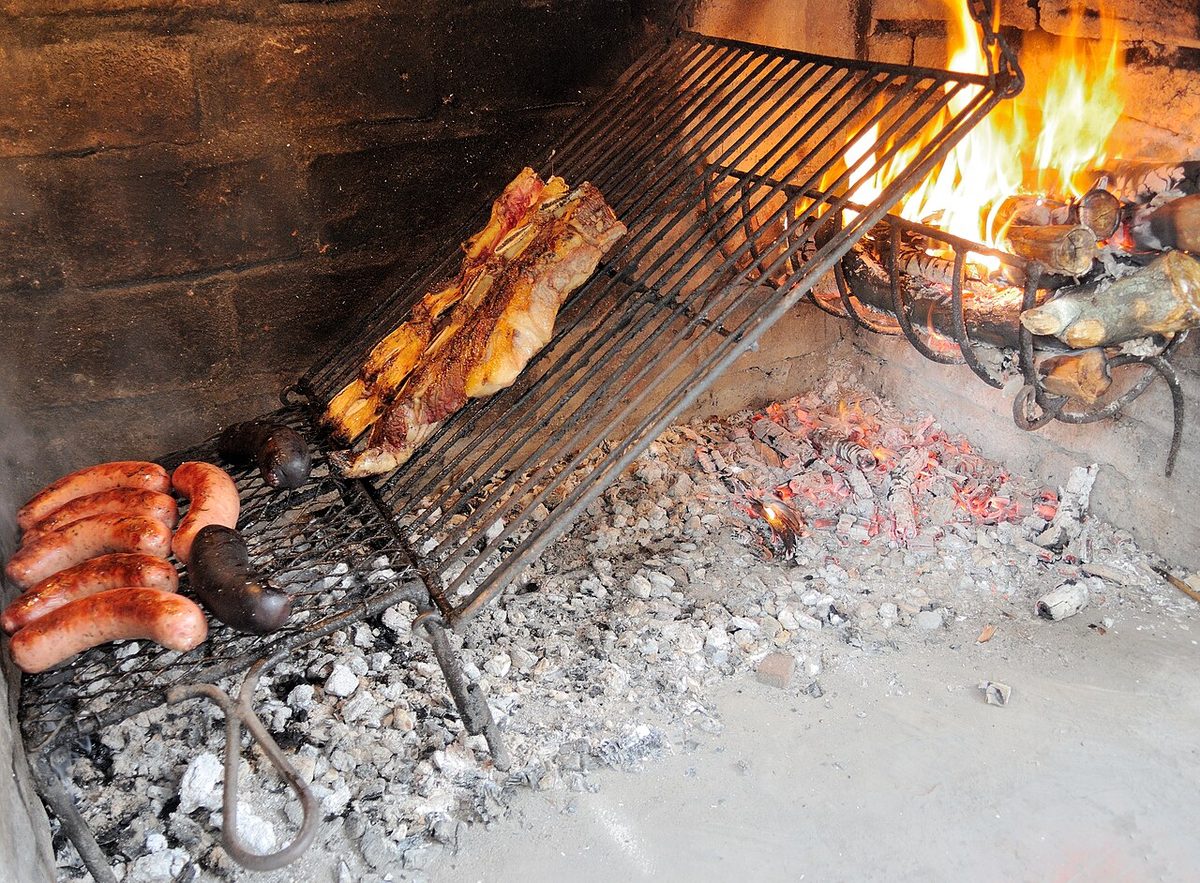
The evening builds slowly. People drift to a relative’s house in the late afternoon and early evening, and nobody is in a hurry. The grill — the parrilla — gets lit hours before anyone expects to eat. This is an asado, the Uruguayan barbecue, and calling it “a barbecue” undersells it badly. It is a slow, social ritual built around a wood fire, with the person tending the coals (the asador) holding a position of genuine honour.
The table: what’s actually on it
Dinner usually lands around 10 or 11pm, sometimes later. A typical Noche Buena spread runs something like this:
- Asado — grilled beef, plus sausages, sweetbreads and often a rack of lamb cooked slowly over the fire. On the coast, lechón (slow-roasted suckling pig) is a holiday classic and you can buy it ready-cooked from bakeries if you’re not running your own fire.
- Ensalada rusa — a cold potato, carrot and pea salad bound in mayonnaise. It appears at every festive table without fail.
- Cold cuts and stuffed ham to start, sometimes open savoury tarts.
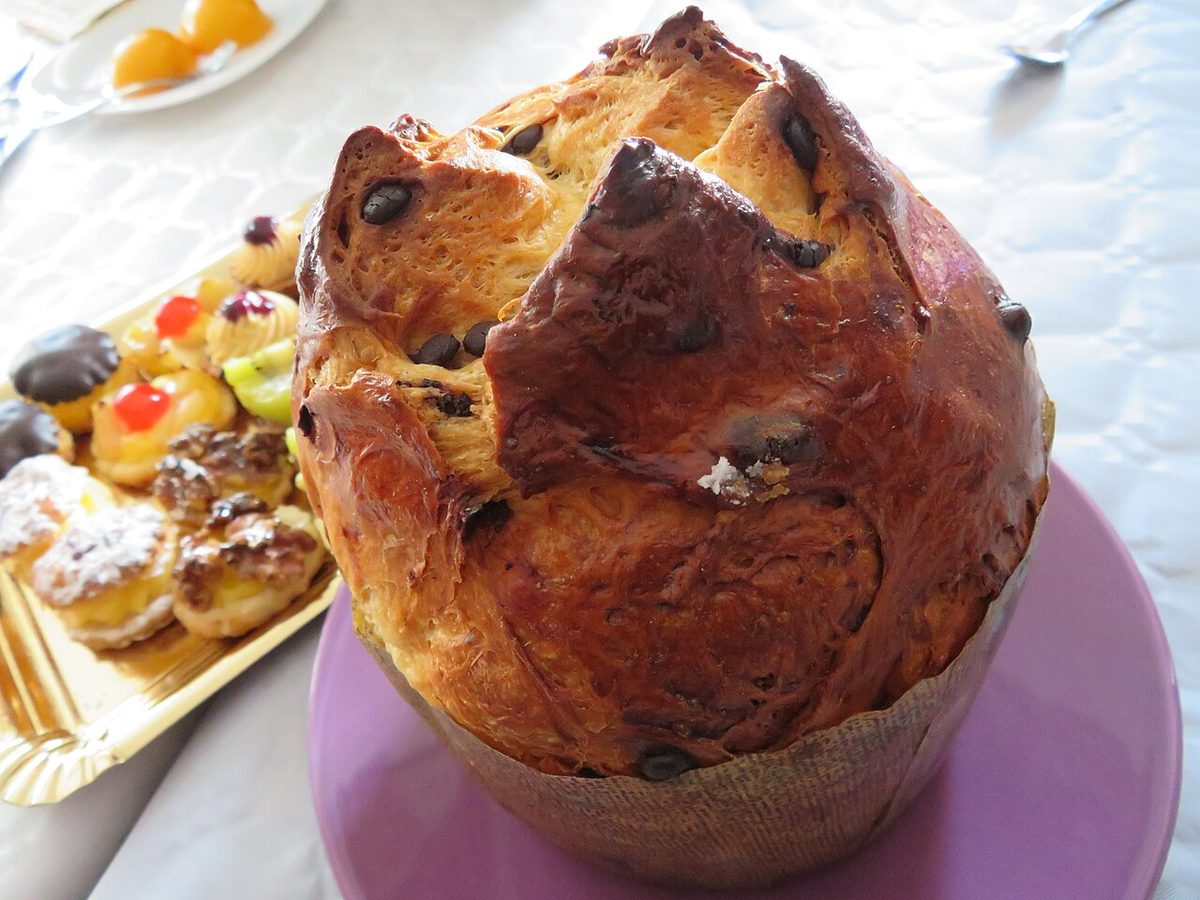
- Pan dulce — a sweet, domed bread studded with candied fruit and nuts, the local cousin of Italian panettone. Bakeries pile it high from late November.
- Turrón — a dense nougat of almonds and honey, Spanish in origin, sold in slabs.
- Fresh summer fruit — and plenty of it, because it’s high summer and the stone fruit is perfect.
To drink, two things define the night. Sidra (sparkling cider) is the toast at midnight — cheap, sweet, fizzy, and uncorked with ceremony. And clericó, a chilled punch of white wine cut with soda, sugar and a heap of chopped summer fruit, is the thing people sip all evening. Think of it as a lighter, fruitier cousin of sangria, born in the Río de la Plata region and built for heat. On a 28-degree night it goes down dangerously easily.
For a deeper run through the national dishes behind all this, my guide to Uruguayan food covers asado, the cuts, and the sweet stuff in proper detail.
Midnight: fireworks, then presents
As midnight nears, the energy shifts. People step outside, onto balconies, into gardens, down to the street. And then at twelve, the whole country seems to detonate at once.
This isn’t an organised municipal display. It’s thousands of families and neighbours letting off their own fireworks simultaneously, so the sky over every city and town fills with colour and smoke and noise from horizon to horizon. From a rooftop or anywhere near the Montevideo rambla (the waterfront promenade) it is genuinely spectacular. Up close it is chaos, often with unsupervised kids and adults handling small explosives, so keep a sensible distance and keep nervous pets indoors.
One honest caveat: the fireworks have been winding down a little in recent years, as awareness campaigns around autism, animal welfare and the environment take hold. There’s still plenty — just maybe not quite the wall-to-wall barrage of a decade ago.
After the fireworks come the gifts. Children wait for Papa Noel (Father Christmas), and here’s a lovely local wrinkle: in the Uruguayan telling, Papa Noel travels by horse rather than sleigh, so kids sometimes leave grass out in their shoes for the horse rather than cookies for the man. Families open presents together in the small hours, and the party rolls on well past 1am.
Christmas Day: the quietest day of the year
If Noche Buena is the loudest night of the Uruguayan calendar, the 25th is one of its quietest days. People sleep in. Nobody is rushing anywhere. The whole country is, frankly, a bit hungover.
Plan for this. On Christmas Day almost everything is closed — shops, most restaurants, shopping malls, the lot. If you want to eat out, you’ll be choosing from a short list of places that open with a fixed holiday menu, and you should reserve well ahead. If you’re self-catering, do your shopping on the 23rd or the morning of the 24th, because by mid-afternoon on the 24th the supermarkets shut and won’t reopen until the 26th.
What people actually do on the 25th is simple and pleasant: they go to the beach. It’s high summer, the weather is glorious, and the public beaches are all open and free. Families pick at the leftovers from the night before, visit relatives they didn’t see at midnight, and generally take it easy. If you lean into that rhythm — beach in the day, a long lazy lunch at home or a pre-booked table — the 25th is a genuinely nice day. Fight it, expecting shops and buzz, and you’ll find a ghost town.
Because the holidays land in peak season, it’s worth reading up on what Uruguay in summer is like more broadly — the crowds, the heat and the coastal rush all shape these two weeks.
New Year’s Eve in Punta del Este: the headline scene
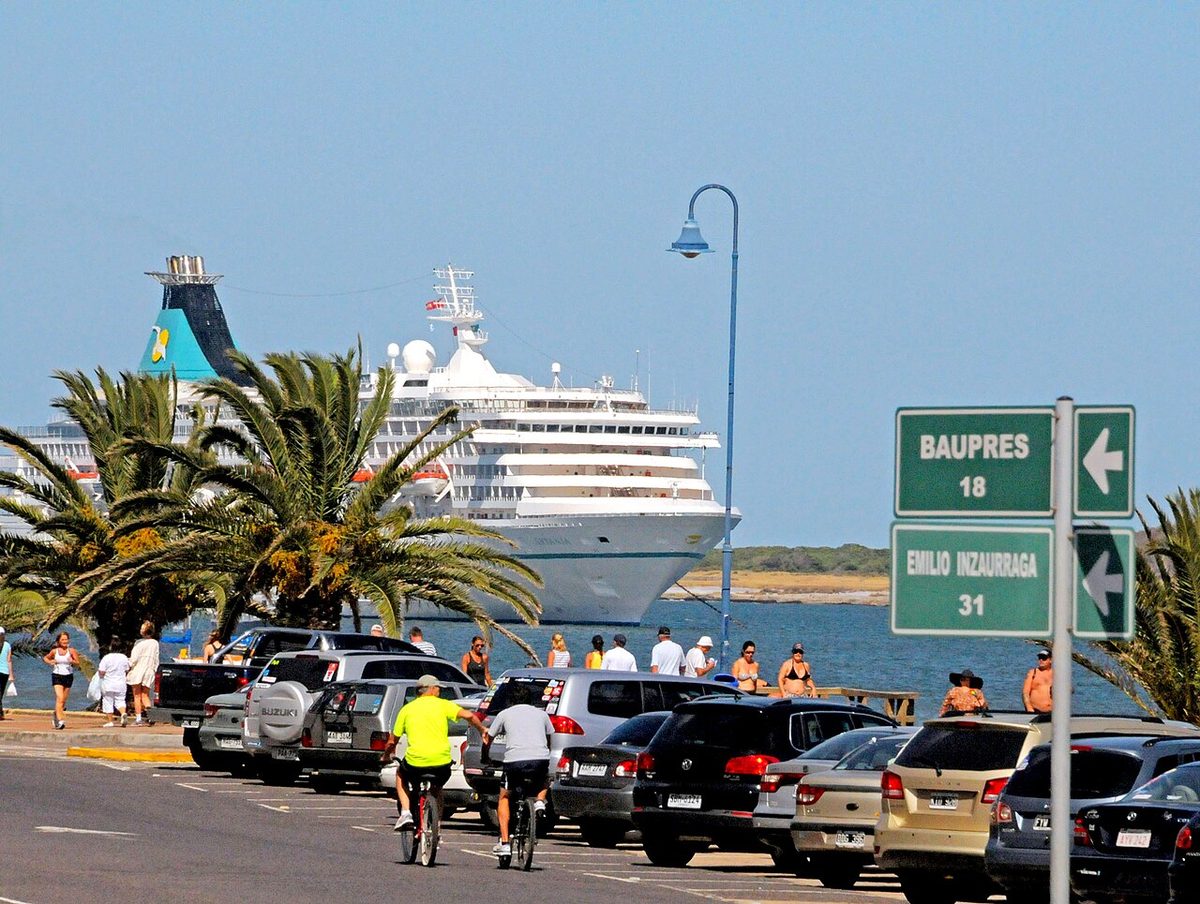
If Christmas belongs to family living rooms, New Year’s Eve belongs to the coast — and above all to Punta del Este. By late December the centre of gravity of the entire country has shifted east, to the peninsula and the beaches that fan out around it. Montevideo empties; “Punta” fills to bursting.
This is Uruguay’s glamour town, and on the 31st it leans all the way in. The crowd is a mix of well-heeled Argentines, Brazilians, Europeans, Americans and Uruguayans, a properly international, see-and-be-seen scene. People dress up. Money is on display. It is fun, and it is not subtle.
What the night looks like
There are a few ways to do New Year’s Eve here, and they suit very different budgets and temperaments.
The gala dinners. Most hotels and the better restaurants run a fixed-price New Year’s gala — multi-course dinner, sparkling wine, often a DJ or live music and dancing afterward, frequently with an open bar that runs till sunrise. At the upper end, expect to pay around USD 200 per person for a good table with a view of the fireworks, and at many hotels the gala dinner is compulsory if you’re a guest. Book these weeks ahead, minimum.
The beach clubs. After the formal dinners wind down, the party migrates to the beach clubs and the late-night scene around the port and La Barra, the strip just east of Punta proper. These places turn the sand into open-air nightclubs that don’t really get going until 2 or 3am and run until 11am the next morning. This is the heart of the young, loud, all-night Punta del Este experience.
The free option. You don’t have to spend a peso to see the best of it. At midnight, fireworks go up over the harbour and along the coast, and the whole horseshoe of La Mansa beach lights up as families set off their own. Stand on the promenade or the sand, and you get miles of fireworks over the water for nothing. Plenty of locals simply bring drinks down to the beach and stay up to watch the first sunrise of the year — a quiet, lovely tradition in the middle of all the noise.
The honest drawback: cost and availability
Here’s the part the glossy coverage skips. New Year’s in Punta del Este is expensive, and it sells out absurdly early. Hotel rooms and the big parties get booked months in advance. In peak NYE week you may find you simply cannot get a room for fewer than five to seven nights, and that what’s left is priced at a level that puts Punta on par with Western Europe rather than the rest of South America.
If your heart is set on Punta del Este for the 31st, treat it like booking a major festival: lock in accommodation several months out, accept the minimum-stay rules, and budget hard. If that makes you wince — and it’s a reasonable thing to wince at — the good news is there are quieter, cheaper alternatives that I’ll come to. The town itself is worth a visit on its own terms too; my full guide to Punta del Este covers what it’s like outside the NYE madness, and where to stay in Uruguay lays out the options up and down the coast.

Local New Year traditions: grapes, white underwear and a suitcase round the block
Behind the fireworks and the beach clubs sits a layer of small, superstitious New Year customs that Uruguayans share with much of Latin America and Spain. Half the fun of being here on the 31st is watching them play out — and joining in. These are the Uruguay new year traditions worth knowing:
- White clothes and lucky underwear. Many people wear white on New Year’s Eve for peace and a clean start to the year. There’s also a widely followed custom around the colour of your underwear at midnight — pink or red for love, yellow for money — depending on what you’re hoping the year brings.
- Twelve grapes at midnight. As the clock strikes twelve, you eat one grape per chime — twelve in all, one for each month. Manage all twelve and the year ahead is supposed to go your way. It’s harder than it sounds with a mouthful and a countdown.
- The suitcase walk. Anyone hoping to travel in the coming year grabs an empty suitcase and walks it around the block (or at least around the house) at midnight, to summon a year full of journeys.
- Lentils for prosperity. Some families keep a few lentils in a pocket or eat a spoonful for financial luck. It’s more of an Argentine habit than a deeply Uruguayan one, but you’ll still meet people who do it.
- Out with the old. A bucket of water tossed out the window, or off the balcony, clears out the bad energy of the closing year. Which brings us to Montevideo on the 31st.
Montevideo’s water and paper wars
The capital may empty of its residents, but the ones who stay throw one of the more entertaining send-offs anywhere. In the office districts of Ciudad Vieja (the Old City) and Centro, workers finishing their final shift of the year tear their old desk diaries to shreds and hurl the paper out of high office windows, so the streets fill with drifting confetti. Then come the buckets: cider, beer and water get flung around with abandon, and a huge, soaking crowd takes over the Mercado del Puerto (the old Port Market) for what amounts to a giant street party and cider fight. Nobody minds getting drenched. It’s well over 30 degrees and the water is a relief.
On New Year’s Day itself, the city offers one last gentle tradition: a free open-air tango party, usually in the evening in a Montevideo square, where famous dancers turn up and anyone can join in. After a night of fireworks and cider, it’s a soft, melancholy way to start the year. To understand why tango, candombe and these street rituals matter so much here, my piece on Uruguayan culture digs into the roots.
Food and drink: a hot-weather holiday table
Because the whole thing happens in summer, the holiday menu here looks nothing like a northern Christmas dinner. There’s no roast goose steaming in a cold kitchen. There’s a fire in the garden, cold salads, fruit, and a lot of chilled wine. Here’s the short glossary to walk in prepared.
- Asado — the wood-fired barbecue at the centre of it all. Beef cuts, sausages (chorizo and the blood sausage morcilla), sweetbreads, often lamb. Slow, smoky, social.
- Lechón — suckling pig roasted until the skin crackles. A coast favourite at Christmas; sold ready-roasted by bakeries, perfect for a beach picnic if you don’t fancy lighting a fire.
- Pan dulce — sweet domed holiday bread with candied fruit and nuts, the local panettone. Everywhere from late November.
- Turrón — almond-and-honey nougat in firm slabs.
- Sidra — sparkling cider, the midnight toast. Cheap, sweet, and uncorked with a flourish.
- Clericó — chilled white-wine-and-fruit punch, the everyday drink of the season. Light, sweet, lethal in the heat.
A practical note worth its weight in gold: the asado runs late, so eat something in the afternoon. Dinner genuinely may not hit the table until 11pm, and trying to pace your drinking on an empty stomach from 8pm onward is how visitors end up missing the fireworks.
Planning your Uruguayan Christmas and New Year
This is the section to actually act on. Get these few things right and the holidays here are a joy; get them wrong and you’ll spend the 25th hungry and confused in front of a row of shutters.
Where to be
For Christmas Eve, the best possible spot is a Uruguayan home — if you’re lucky enough to be invited, say yes to everything and bring pan dulce or sidra. Failing that, a hotel or apartment with a balcony or rooftop near the Montevideo rambla gives you a front-row seat to the midnight fireworks. On the coast, anywhere with a sea view works.
For New Year’s Eve, decide early what kind of night you want. Punta del Este for the full glamorous spectacle, knowing the cost. Montevideo for the cider-soaked street chaos and the rambla fireworks. Or somewhere genuinely quiet — José Ignacio, the chic little village up the coast, or off-grid Cabo Polonio, where New Year is celebrated around campfires under an enormous sky with no electricity to dim the stars. Each is a different holiday entirely. If it’s Punta, the area decides the night you get, so read our guide to where to stay in Punta del Este before you choose between the Peninsula, La Barra and José Ignacio.
When to book
For anywhere on the coast over New Year, book months ahead — three or more for Punta del Este, and expect minimum-stay requirements over the peak window. Restaurants offering holiday dinners on the 24th, 25th and 31st take reservations early and fill up; don’t assume you’ll walk in. Even the Montevideo restaurants that stay open over the holidays want you to reserve.
What’s open (and what absolutely isn’t)
This is the one to tattoo on the back of your hand:
- December 24 and 31: shops and supermarkets open in the morning, then close in the early afternoon. From around 4–5pm, taxis and Uber become very hard to find, and don’t fully return until about 4am. Buses in Montevideo run until roughly 6:30pm on the 31st.
- December 25 and January 1: almost everything is shut — shops, malls, most restaurants. On January 1 there are no city buses at all in Montevideo (it’s Transport Workers’ Day). Ride-hailing returns in the small hours.
- The exceptions: a limited number of restaurants open on the holidays with set menus (reserve ahead), the beaches and the rambla are always open and free, and ride-hailing limps back into service after about 4am on the 1st.
Pack accordingly: cash for when card systems and ATMs are quiet, water and snacks for the closed days, and sunscreen, because the holiday “weather problem” here is heat, not cold. If you want the numbers, my Uruguay weather guide has the seasonal detail, and the best beaches in Uruguay rundown will help you pick where to spend those long, shut-down afternoons.
One more seasonal note: if these dates don’t quite work and you’re looking slightly earlier in the calendar, Uruguay in spring (roughly September to November) is gentler, cheaper and far less crowded than the Christmas-to-New-Year crush.
Christmas in Uruguay: your questions answered
Is Christmas in Uruguay hot or cold?
Hot. Uruguay sits in the southern hemisphere, so December is high summer. Coastal highs sit around 23–25°C and often climb past 30°C inland and in Montevideo, with long, bright evenings. People celebrate in t-shirts and shorts, head to the beach on Christmas Day, and the only “weather” to plan for is sun and heat, not snow.
What day do Uruguayans celebrate Christmas?
The 24th. Noche Buena (Christmas Eve) is the main celebration — a late family asado, fireworks at midnight, and gifts opened in the early hours of the 25th. Christmas Day itself is a quiet recovery day spent at the beach or with family, and almost all shops and restaurants are closed, so it’s the opposite of a busy shopping day.
Is Punta del Este worth it for New Year’s Eve?
If you want glamour, a big international crowd and all-night beach parties, yes — it’s the best New Year’s scene in Uruguay. But it’s expensive and books out months ahead, often with minimum-stay rules. If the budget or the booking window doesn’t work, Montevideo’s rambla or quieter spots like José Ignacio and Cabo Polonio offer the fireworks without the eye-watering price.
What is open in Uruguay on December 25 and January 1?
Very little. Both are public holidays when shops, malls and most restaurants close completely. On January 1 there are no city buses in Montevideo, and taxis are scarce until around 4am. A small number of restaurants open with set holiday menus if you reserve ahead. The beaches and waterfront, though, are always open and free.
What food do Uruguayans eat at Christmas?
The centrepiece is asado (wood-fired barbecue) and often lechón, roast suckling pig. Alongside come cold salads like ensalada rusa, and on the sweet side pan dulce (the local panettone) and turrón (almond nougat). To drink, it’s sidra (sparkling cider) for the midnight toast and clericó, a chilled white-wine-and-fruit punch, throughout the evening.
What are Uruguay’s New Year traditions?
At midnight many people eat twelve grapes (one per chime, for luck through the year), wear white clothes with lucky-coloured underwear, and walk an empty suitcase around the block to wish for travel. Some keep lentils for prosperity. In Montevideo, office workers throw shredded diaries and buckets of water from windows in a soaking street send-off.
Final thoughts
What I love about the holidays here is how thoroughly they refuse the script. The cold, the snow, the quiet reverence — none of it applies. Instead you get a hot night, a fire in the garden, a country that detonates fireworks at midnight in unison, and a fortnight where the whole nation seems to migrate to the beach.
Get the practicalities right — book the coast early, shop before the 24th, and make peace with the 25th and the 1st being shut — and you’re free to enjoy the rest. Whether that’s a glass of clericó on a Montevideo rooftop on Noche Buena or fireworks over the harbour at Punta del Este as the year turns, it’s a holiday that’s worth crossing a hemisphere for.
Credits & sources
Sources & further reading
- Guru’Guay — Montevideo over New Year: 5 things you need to know
- Guru’Guay — Public holidays in Uruguay
- Uruguay Natural (Ministry of Tourism) — Schedules and holidays
- Weather Atlas — Punta del Este weather in December
Photo credits
All images via Wikimedia Commons: Uruguay New Year Fireworks by Andrés Franchi Ugart… (CC BY-SA 3.0); Uruguay Christmas Asado Parrilla by Fernando da Rosa (Fedaro) (CC BY-SA 3.0); Punta Del Este Beach Summer Crowd by Andrés Franchi Ugart… (CC BY-SA 3.0); Montevideo Christmas Tree Plaza Fabini by Ganímedes (CC BY-SA 4.0); Uruguay Pan Dulce Panettone by Juan Emilio Prades Bel (CC BY 4.0); Montevideo Rambla Summer Night by Barba289 (CC BY-SA 3.0).