Renting a Car & Driving in Uruguay: Rules, Tolls & Tips (2026)

The first time I picked up a rental car at Carrasco, the agent pointed at the windshield and said one word: “luces.” Lights. I looked blank, so she mimed flicking the switch and added “siempre” — always. Renting a car in Uruguay comes with a handful of local rules like that one, where your headlights stay on in broad daylight or you get fined, and I’d rather you learn them over a coffee than at a toll plaza with a line of cars behind you.
Driving here is genuinely one of the great pleasures of the country. The roads are quiet, the distances are short, and the payoff — a string of beach towns you can reach on your own schedule — is hard to match by bus. But there are quirks: a cashless toll system that confuses first-timers, gravel roads that void some insurance policies, and a cross-border rule that catches Buenos Aires day-trippers off guard. Here’s everything I wish I’d known before I turned the key.
Renting a car in Uruguay is straightforward for most foreign visitors: you need your home driver’s license (an International Driving Permit is recommended but rarely demanded), a credit card for the deposit, and to be at least 21–23 depending on the agency. Expect to pay roughly USD 35–70 a day for a small car, plus tolls of around UYU 150 per plaza and fuel that runs high by global standards. Book early for an automatic.
This guide covers the whole picture: how renting actually works and where to pick up, what documents and insurance you really need, the rules of the road that differ from home, how the toll and fuel systems work, the deal with gravel roads, the cross-border trap, and parking and safety once you arrive. A separate guide handles the actual road-trip routes and itineraries — I’ll point you there rather than mapping every drive here.
| What | The short version |
|---|---|
| What you need | Home license + passport; IDP recommended; credit card for deposit (USD 500–2,000 hold); age 21–25 minimum depending on agency |
| Typical cost | Around USD 35–70/day for a compact (last I checked); automatics cost more and sell out |
| Where to pick up | Carrasco airport (MVD), central Montevideo, Punta del Este; Colonia for ferry arrivals |
| Tolls (peajes) | Fully cashless since 2024; ~UYU 150 per plaza with a tag, ~22% more without; Tourist Pass for foreign plates |
| Fuel | State-run ANCAP stations; petrol around UYU 90+/litre (June 2026) — expensive; budget accordingly |
| Good to know | Headlights on by day (law); zero blood-alcohol limit; most rentals cannot legally leave the country |
How renting a car in Uruguay actually works
Renting a car in Uruguay feels familiar if you’ve rented anywhere else, with a few local wrinkles. The Uruguay car rental market runs on familiar names — Hertz, Avis, Europcar, Budget — alongside regional players and Localiza, the Brazilian giant that’s everywhere down here, all operating at the airport and in the cities. You can book online from home and collect on arrival, same as anywhere.
Carrasco International Airport (MVD) is where most visitors collect, and it’s the easy option: the counters sit right in the arrivals hall, the staff speak enough English, and you’re on the Interbalnearia within fifteen minutes. If you’re flying in, my guide to flights and the airport covers the arrival itself. Central Montevideo has downtown offices if you’d rather spend a day or two in the capital first and pick up the car when you actually need it — which is what I’d recommend, because you do not want a car in Montevideo’s old town.
Punta del Este has its own rental offices and even a small airport (Laguna del Sauce), handy if you’re skipping the capital and heading straight for the beach. And if you’re arriving by ferry from Argentina, you can rent in Colonia del Sacramento right at the port — more on why that matters below.
Manual versus automatic: book the automatic early
Here’s the one that trips up North Americans every single time. Most rental cars in Uruguay are manual transmission. Automatics exist, but they’re a minority of the fleet, they cost noticeably more, and in high season (December through February, and again over Easter) they sell out. If you can’t drive a stick, you must reserve an automatic specifically and well ahead — don’t assume you can sort it at the counter, because the honest answer is often that there isn’t one on the lot.
The flip side: if you can drive manual, you’ll save money and have far more choice. The one drawback is that Uruguay’s hillier coastal towns — Piriápolis, parts of Punta — involve some steep starts, so shake off the rust before you’re nose-to-tail on an incline.
What you need to rent and drive
Documents first. You need a valid full driver’s license from your home country, held for at least a year, plus your passport. If your license is in a non-Roman alphabet, an International Driving Permit (IDP) is required; for everyone else it’s officially recommended and occasionally requested, cheap to get before you travel, and worth carrying as a hedge. I’ve rented several times on a plain US/UK-style license without issue, but I always bring the IDP because the downside of not having it — being turned away, or a problem with insurance after an incident — isn’t worth the gamble.
Age is the next gate. The practical minimum is usually 21, but many agencies set it at 23, and drivers under 25 typically pay a young-driver surcharge. If you’re under 23, check the specific agency’s policy before you book rather than after.
Then the credit card. This is non-negotiable: you need a physical credit card (not debit, in most cases) in the main driver’s name, with enough headroom for the security deposit. That hold is real money frozen on your card — anywhere from around USD 500 for an economy car to USD 2,000 for an SUV or with certain budget operators. It’s released after you return the car undamaged, but it ties up your credit limit for the trip, so don’t max your card out on hotels first.
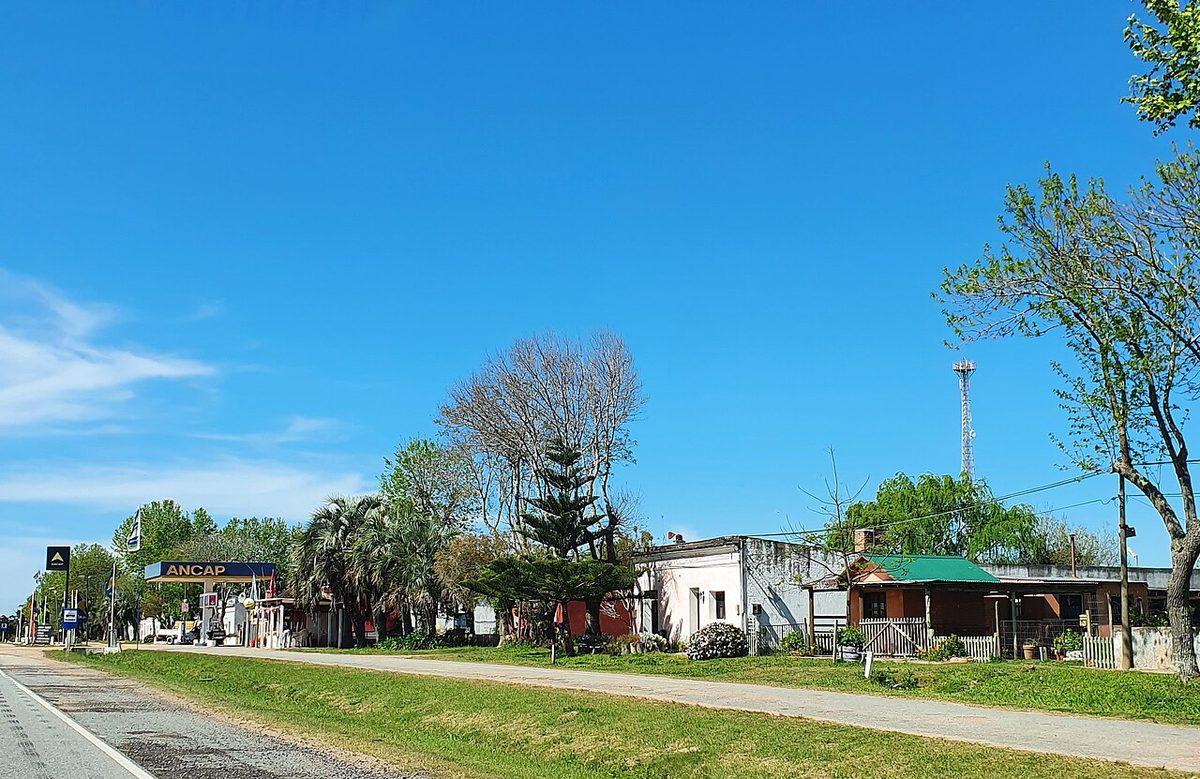
Insurance and CDW: read the gravel clause
Rental rates usually include a basic liability and a Collision Damage Waiver (CDW) with a hefty excess — meaning you’re still on the hook for the first chunk of any damage, often well over USD 1,000. Agencies will offer to sell down that excess, and the upsell is where they make their margin, so prices vary wildly. You can also buy standalone rental excess insurance from a third party before you travel, which is far cheaper than the counter product; just keep the paperwork, because you’ll pay the agency first and claim back later.
The clause that actually matters in Uruguay is gravel. Many standard policies exclude damage sustained on unpaved roads — and as you’ll see, some of the best coastal spots are reached by exactly those roads. If your itinerary includes ripio, confirm in writing that you’re covered on unsealed surfaces, or accept that a cracked windshield or undercarriage ding is on you. That’s the single most expensive assumption a coastal road-tripper can make here.
Renting a car in Uruguay: the rules of the road
Uruguayans drive on the right, and the overall culture is calmer and more orderly than most of South America — closer to rural Europe than to the chaos people brace for. But the rules are enforced, and a few differ sharply from what you’re used to.
Headlights on, always. Dipped headlights are mandatory during daylight on all highways and interurban roads, year-round. This is the law that catches everyone. Get in the habit the moment you leave the lot.
Zero alcohol. Uruguay enforces a zero blood-alcohol limit for drivers. Not “one glass is fine” — zero. With a glass of Tannat at lunch being one of the country’s pleasures, the simple rule is: if you’re driving, you don’t drink, full stop. Police breathalyze, and the penalties are serious.
Seatbelts and kids. Belts are mandatory for everyone in the car. Children under 12 ride in the back, and small children need appropriate child seats — reserve these with the car, as they’re not always sitting in stock.
Phones. Handheld phone use while driving is prohibited; hands-free only. Mount your phone if you’re using it to navigate.
Speed limits. As a rule of thumb: around 45 km/h in town, roughly 75–90 km/h on secondary and suburban roads, and up to 110 km/h on the main highways like the Interbalnearia. Limits are signposted and they change, so watch the signs rather than my numbers. Radar enforcement exists, particularly on the coastal corridor in summer.
One cultural note worth its own line: pedestrians and cyclists are common on rural shoulders, horse carts still appear on back roads, and stray dogs wander into lanes at dusk. None of it is dangerous if you’re driving at a sane speed, but it rewards attention more than the empty-looking roads might suggest.
Tolls in Uruguay: how peajes work now
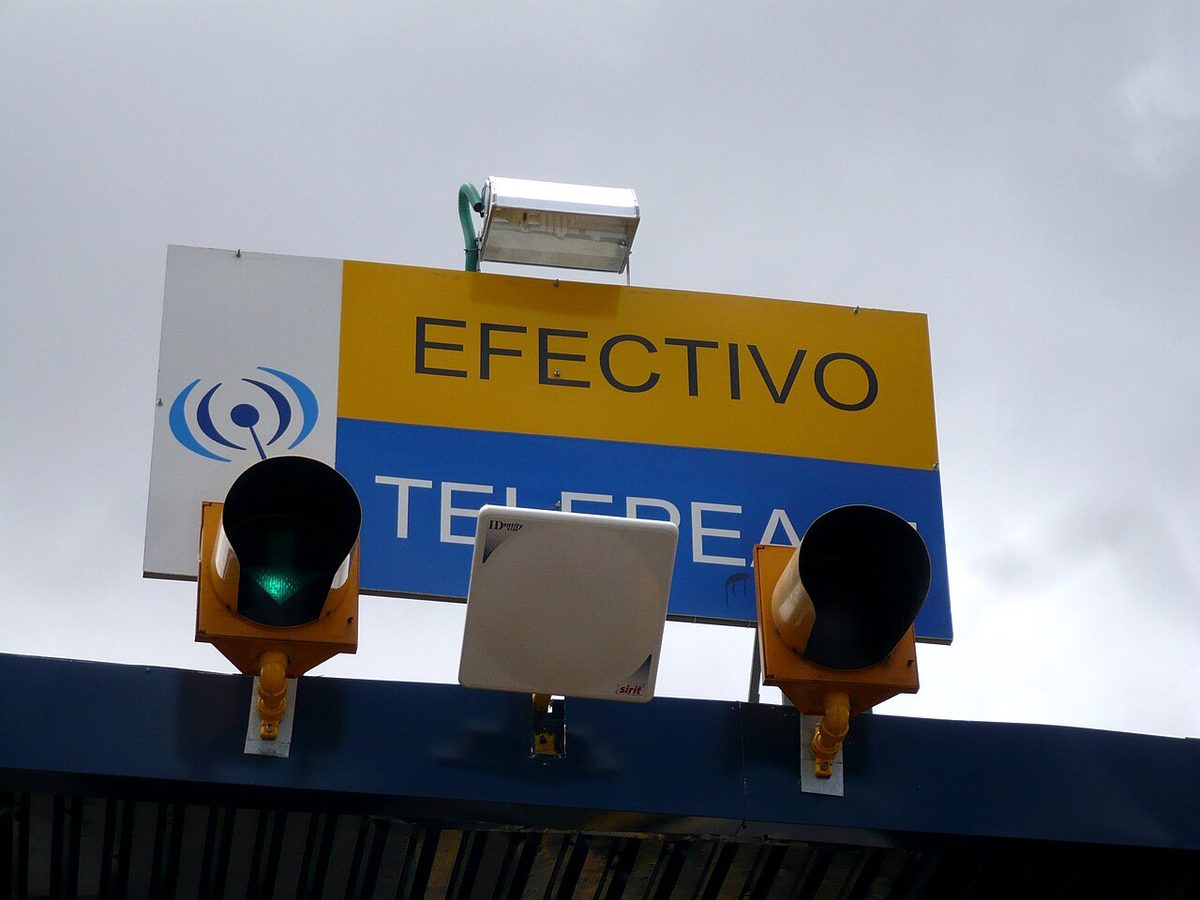
The toll system in Uruguay changed in a way that trips up anyone relying on an old guidebook, so pay attention here. A peaje is a toll plaza, and as of 2024 the entire national network went cashless. There is no booth, no attendant, no coins. You drive through an open barrier and the system charges you electronically — either by reading a windshield tag or by photographing your license plate.
You’ll hit peajes on essentially every intercity route: the Interbalnearia east toward Punta del Este and Rocha, Ruta 1 west toward Colonia, Ruta 9 down the coast, and the northbound highways. They’re spaced out, so a single drive crosses one to several plazas.
So how do you, a foreigner in a rental, actually pay? Three realities:
If the car has a tag (telepeaje). Many rental cars come fitted with the electronic tag — the same RFID transponder locals use — and toll charges simply get billed through to your rental, sometimes with a small admin fee. This is the painless option. Ask at pickup whether the car carries a working tag and how tolls are reconciled; if it does, you just drive and settle up at the end. The tag also earns the discounted rate, around UYU 150 per plaza at the time of writing versus roughly 22% more for plate-recognition billing.
No tag? Use the Tourist Pass. Uruguay runs a system specifically for foreign and non-tagged plates: you register the plate (online or via app), drive normally, and pay afterward at the ubiquitous Abitab or RedPagos payment kiosks, or with an international card. The cleanest move is to ask your rental agency exactly how they expect tolls to be handled on your specific car — because the one thing you do not want is to ignore them entirely.
The drawback: unpaid tolls escalate. Because billing is automated and tied to the plate, an unpaid toll doesn’t just vanish — it lands on the registered keeper (your rental company), which then charges your card, potentially with penalties stacked on top. Don’t treat the open barrier as a free pass. Confirm the payment method at pickup and keep it simple.
| Sample route | Rough toll cost (car, with tag) |
|---|---|
| Montevideo → Punta del Este (Interbalnearia) | Around UYU 300–450 total across plazas |
| Montevideo → Colonia del Sacramento (Ruta 1) | Around UYU 450–600 total |
| Per individual plaza (Category 1 car) | Around UYU 150 with tag; ~22% more without |
Those are ballpark figures from mid-2026; rates adjust twice a year, so treat them as orientation rather than gospel.
Fuel, ANCAP and the gravel-road reality
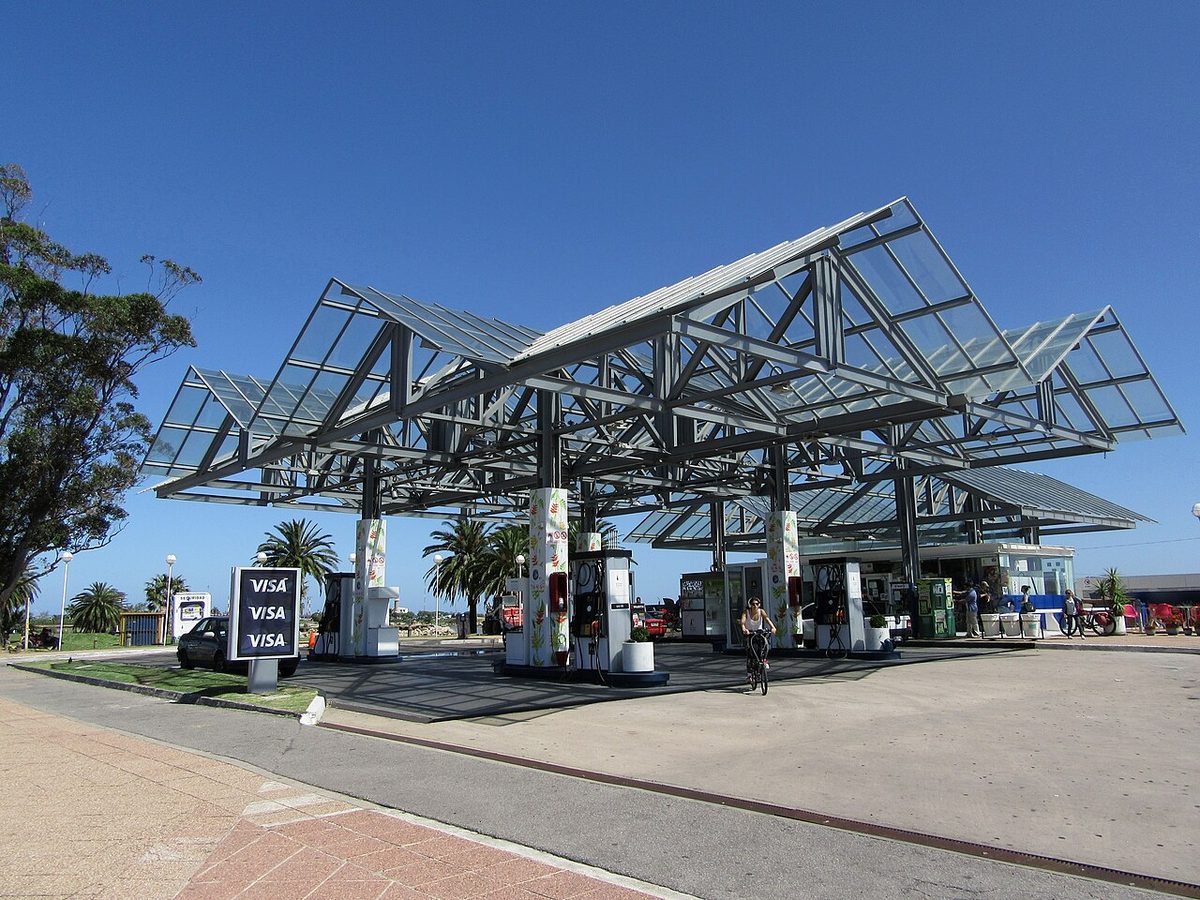
Petrol in Uruguay comes from ANCAP, the state oil company, whose stations you’ll see in every town — green-and-blue branding, often with a little shop and decent coffee attached. Pumps are attended; you don’t usually fill your own, you tell the attendant how much and they handle it, and a small tip is normal but not obligatory.
Brace yourself for the price. Uruguay’s petrol is expensive by international standards — it was sitting north of UYU 90 a litre for the common grade when I last checked in June 2026, and prices are set centrally and revised periodically, generally upward. For a coastal road trip the fuel bill is a real line item, not an afterthought, so factor it into whether driving beats the bus for your particular plans. The upside is consistency: ANCAP prices are the same everywhere, so there’s no hunting for a cheaper station.
Now, ripio. “Ripio” is the local word for gravel or dirt road, and Uruguay has a lot of it once you leave the main highways. The paved network connecting Montevideo, Punta del Este and Colonia is good. But the moment you turn off toward the wilder coast — much of Rocha’s beaches, the back routes to fishing villages, stretches off Ruta 10 — you’re on ripio, and it ranges from smooth-packed to washboard to genuinely rough after rain. Our Rocha coast itinerary spells out which stretches of that coast are paved and which are ripio.
A normal car handles most ripio fine if you slow down — and slowing down is the whole skill. The mistakes that crack windshields and shred tyres come from driving gravel like tarmac. Two specifics worth knowing: the famous village of Cabo Polonio can’t be reached by your rental at all — you leave it at a car park off Ruta 10 and ride a 4×4 dune transport in. And if your route is serious gravel, a compact SUV with a bit of clearance buys peace of mind. Just remember the insurance point from earlier: confirm you’re covered off-pavement before you commit, because this is precisely where a cheap policy bites.
The Buenos Aires cross-border trap
This one deserves a flashing warning sign, because it catches people planning the obvious trip. If you’re combining Uruguay with Buenos Aires, you cannot simply rent a car on one side and drive (or ferry) it across to the other. Most rental contracts flatly prohibit taking the vehicle out of the country, and the ferry companies generally won’t let an unauthorized rental aboard anyway.
Crossing legally is possible only if the rental company pre-authorizes it — which typically means requesting a special permit days in advance (around 72 hours), paying a cross-border fee (I’ve seen figures around USD 65), carrying extra documentation, and accepting that many agencies just won’t do it for the ferry route at all. For a short trip it’s far more hassle than it’s worth.
The sane approach is to treat the two countries as separate driving zones: rent in Argentina for Argentina, cross as a foot passenger, and rent again in Uruguay once you arrive — picking up right at the Colonia port if that’s your entry point. For the crossing itself, my Buenos Aires to Montevideo ferry guide covers schedules, ports and booking; I won’t re-tread it here. Just don’t assume your rental can come with you.

Parking, safety and the day-to-day
Leaving the car somewhere is the small daily friction in the cities. In central Montevideo and in Punta del Este, on-street parking is paid in the busy zones, but there are no coin meters — you pay through an app, by SMS, or at a kiosk, which is mildly baffling the first time and trivial once someone shows you. Sundays are generally free. Plenty of hotels and apartments include or arrange parking, and outside the two big centres parking is mostly free and easy.
Honestly, my standing advice is to not have a car when you’re actually staying in Montevideo. The capital is walkable, the old town’s streets are narrow and one-way, and a car is a liability you have to feed and guard. Pick the car up when you leave the city, not before. For getting around town without one, the city’s buses and ride apps both work — covered in our guide to getting around Montevideo, so I’ll leave them there.
On safety: driving in Uruguay is, by regional standards, relaxed and low-stress. The country is one of the safest in South America, the roads are uncrowded, and the main hazards are mundane — gravel, the occasional pothole, dusk-time animals, and summer traffic on the coast. Standard precautions apply: don’t leave valuables visible in a parked car, prefer guarded or hotel parking overnight in cities, and fill up before long empty stretches inland where stations thin out. None of this should put you off; it’s a country that genuinely rewards a road trip.

Who should rent — and who shouldn’t
A car isn’t the right call for every trip, so here’s how I’d think about it by traveller type.
Coastal road-trippers. This is the sweet spot. If your plan is to string together beach towns — Piriápolis, Punta del Este, José Ignacio, and on into Rocha — a car transforms the trip. The distances are short, the Interbalnearia is fast and easy, and the freedom to stop at an empty beach or a roadside parrilla (grill restaurant) on a whim is the entire point. The full run of beach towns opens up in a way buses can’t match.
Two-week explorers. If you’ve got the time for a proper loop, driving lets you reach inland estancias and the wilder east that public transport barely serves. Pair this guide with the two-week itinerary for a route that earns the rental cost.
Families. A car is a real upgrade with kids — your own schedule, room for beach gear, no lugging bags between bus stations. Just reserve child seats with the booking, build in the fuel and toll budget, and prefer an automatic if the windy coastal roads aren’t where you want to be working a clutch.
City-and-day-trip travellers. If you’re basing yourself in Montevideo and only venturing out occasionally, you may not need a car for the whole stay. Renting for specific day trips from Montevideo — and returning it between — can beat paying for parking you don’t use. For the deeper coastal pull toward Punta del Este, though, that’s when the car earns its keep.
All of it sits under the broader question of getting to Uruguay and around it — the pillar guide that frames how flights, ferries, buses and driving fit together.
Renting a car in Uruguay: your questions answered
Do I need an International Driving Permit to drive in Uruguay?
If your home license uses the Roman alphabet (most English-speaking visitors), an IDP is officially recommended but not strictly demanded — you can usually rent on your home license plus passport. If your license is in another script, the IDP is required. Either way it’s cheap and quick to obtain before you travel, and I always carry one as insurance against a fussy agent or an insurance dispute.
How much does it cost to rent a car in Uruguay?
Plan on roughly USD 35–70 a day for a compact, last I checked, with automatics and SUVs costing more and high-season rates climbing. Beyond the daily rate, budget separately for tolls (around UYU 150 per plaza), notably expensive fuel, the excess-reduction insurance if you buy it, and a refundable deposit hold of USD 500–2,000 on your credit card. The headline price is never the whole price.
Can I take my Uruguayan rental car to Argentina or Brazil?
Usually not. Most rental contracts prohibit leaving the country, and ferry operators won’t carry an unauthorized rental. Crossing legally requires the agency to pre-approve it, typically with a permit requested days ahead and a cross-border fee — and many simply won’t allow it for the ferry. The practical answer is to rent separately in each country and cross as a foot passenger.
How do tolls work for tourists in Uruguay?
The toll network is fully cashless — you drive through an open barrier and pay electronically. Many rentals carry a windshield tag that bills tolls (at the discounted rate) straight to your contract; if yours doesn’t, Uruguay’s Tourist Pass system lets you register the plate and pay afterward at Abitab or RedPagos kiosks or by international card. Confirm the method with your agency at pickup so nothing escalates later.
Is it safe to drive in Uruguay?
Yes — by South American standards it’s notably calm and safe. Main highways are well maintained, traffic is light outside summer hotspots, and the driving culture is orderly. The real hazards are mundane: gravel roads, the odd pothole, animals at dusk, and coastal congestion in peak season. Drive at sensible speeds, keep your headlights on by day, and observe the zero-alcohol rule, and you’ll be fine.
Do I need a 4×4 in Uruguay?
For most trips, no — the paved coastal and intercity network is fine in a normal car. A 4×4 or higher-clearance SUV only earns its cost if you’re tackling a lot of rough ripio in Rocha or the deep countryside after rain. Note that even a 4×4 can’t drive into Cabo Polonio; you park off Ruta 10 and take the official dune transport regardless.
Manual or automatic — which should I book?
Book an automatic specifically if you can’t drive a stick, and do it early, because they’re the minority of the fleet and sell out in high season. Manuals are cheaper and far more plentiful. If you’re comfortable with a clutch, the manual is the easy money-saver; just be ready for some steep hill starts in the coastal towns.
Final thoughts
Driving turned my Uruguay trip from a series of bus timetables into something I actually controlled — pulling over for a swim at an empty beach, lingering over an asado (barbecue) because nobody was waiting for me to catch the 4 o’clock. The country is built for it: short distances, quiet roads, and a coastline that unspools one good town after another.
Get the boring stuff right and the rest is a pleasure. Carry your license and an IDP, bring a credit card with room for the deposit, sort out how you’re paying tolls before you leave the lot, respect the headlights-and-zero-alcohol laws, and confirm your insurance covers gravel if you’re heading for the wild coast. Do that, and renting a car in Uruguay is one of the best decisions you’ll make on the trip. The freedom is worth every peso of the fuel bill — and that’s coming from someone who winced at the fuel bill.
Credits & sources
Sources & further reading
- Corporación Vial del Uruguay (CVU) — official toll operator: tag setup, Tourist Pass and current peaje rates.
- ANCAP — Uruguay’s state fuel company, for official current fuel prices.
- Ministerio de Transporte y Obras Públicas — Uruguay’s transport ministry, for road rules and network information.
Photo credits
All images via Wikimedia Commons: Ruta Interbalnearia Uruguay Coast by CITY MVD (CC BY-SA 3.0); Carretera Ruta 9 Uruguay by CITY MVD (CC BY-SA 4.0); Peaje Toll Plaza Uruguay by EL CORRRESPONSAL (CC BY-SA 3.0); Ancap Estacion De Servicio Uruguay by Felipe Restrepo Acosta (CC BY-SA 4.0); Camino De Ripio Gravel Road Rocha by vozachudo2004 (CC BY-SA 3.0); Ruta 10 Jose Ignacio Uruguay by Joao Vicente (CC BY 2.0).



2 comments