Cabo Polonio: Uruguay’s Off-Grid Beach Village (2026)
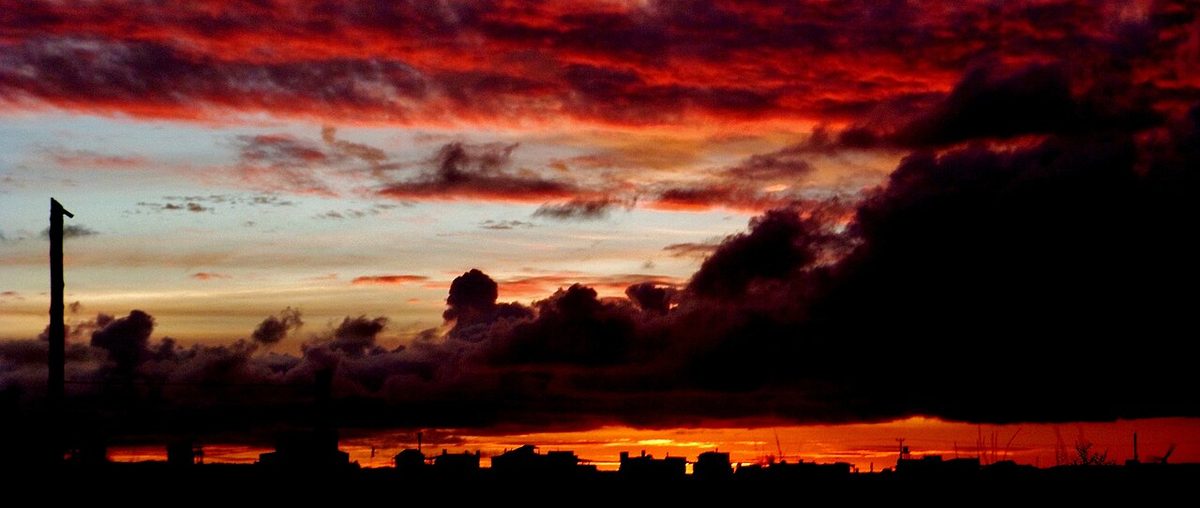
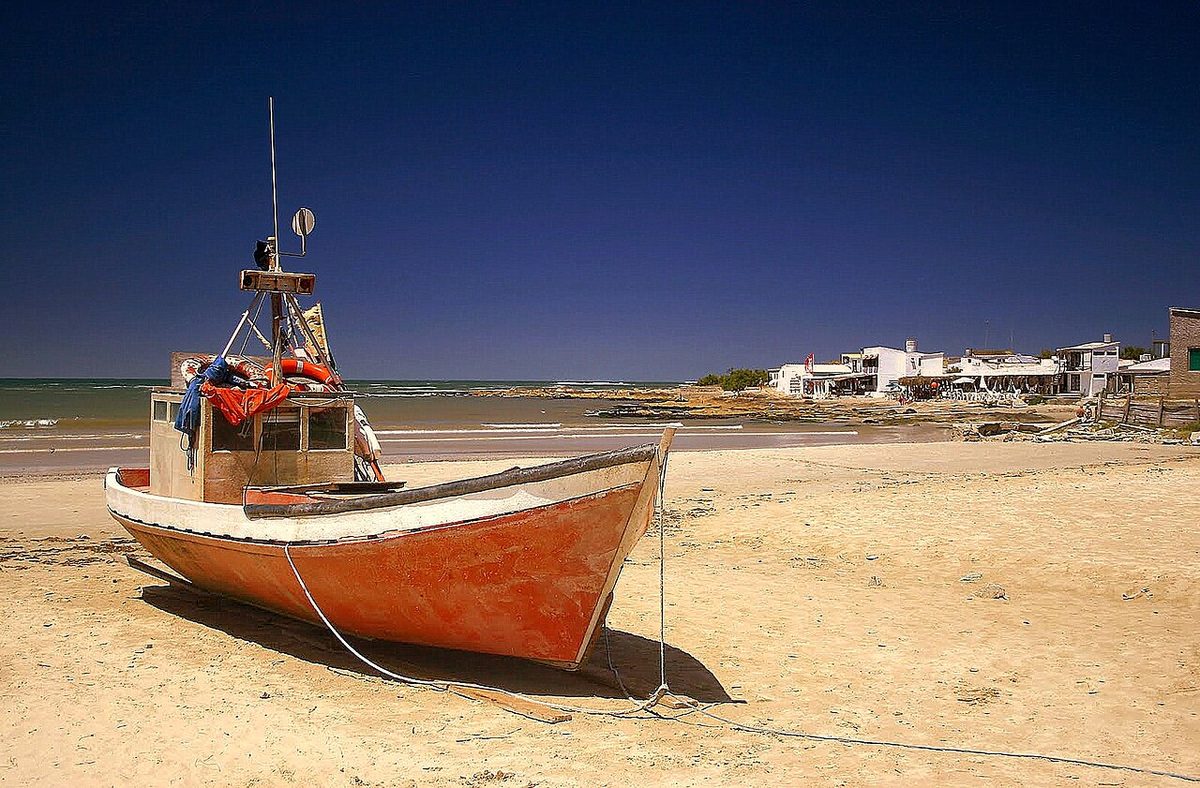
The truck dropped down off the last dune and the whole point opened up at once: a scatter of low wooden houses with no two roofs at the same height, a stubby candy-striped lighthouse, and beyond it the Atlantic throwing itself at black rocks where dozens of sea lions lay piled like sandbags. No tarmac. No power lines marching in. Just sand, salt wind, and the diesel growl of the 4×4 winding down. I climbed out at the grass roundabout that passes for the centre of Cabo Polonio, sand already in my shoes, and thought: right, this is the one everyone warned me would ruin me for ordinary beach towns.
Cabo Polonio is a roadless, mostly off-grid fishing village on a sandy point in Uruguay’s Rocha department, sitting inside a national park (the Parque Nacional Cabo Polonio, part of the country’s SNAP protected-areas system). You reach it by 4×4 across the dunes; there’s no mains electricity for most homes, no ATM and no paved street. People come for the sea lion colony, the lighthouse, the enormous dunes, some of the darkest night skies in the country, and a slow, candle-and-solar way of life that has barely changed in decades.
I’ve written this as the guide I wish I’d had before my first trip: what the place actually is, what there is to do, where to sleep, and the honest annoyances nobody mentions until you’re standing at a shut shop at lunchtime with no cash. It’s for travellers who want the experience of the village itself rather than a logistics checklist. If you’re plotting the wider region, start with the parent guide to Rocha and Uruguay’s wild Atlantic coast, then come back here for the cape.
Cabo Polonio at a glance
If you only read one thing before you go, read this. The cape rewards a little planning and punishes none more than people who turn up expecting a normal resort town with a card reader and a hot tub.
| The basics | What to expect |
|---|---|
| Where | A sandy point on the Atlantic in Rocha, eastern Uruguay; roughly 250 km (around 3.5 hours’ drive) northeast of Montevideo, between La Paloma and Punta del Diablo |
| How you arrive | Leave your car at the park entrance on Route 10 and ride a high-clearance 4×4 truck across the dunes (about 20-30 minutes). No private cars in the village |
| Electricity | No mains grid for most homes. Solar panels, wind and small generators power the posadas (guesthouses), hostels and the one grocery; many rooms run on candles and lanterns at night |
| Water | No municipal supply. Drinking and washing water comes from wells and rain collection. Treat it as precious |
| ATM / cards | None, and card payment is patchy at best. Bring cash (Uruguayan pesos), and more than you think you’ll need |
| Best months | December to March for warm beach weather; late November and March-April for far fewer people. January is the wildest and most crowded |
| How long to stay | One night minimum to feel it; two nights is the sweet spot. Day-trippable, but you’ll miss the stars and the silence |
| Don’t miss | The sea lion colony at the point, climbing the lighthouse, the night sky, a sunset on the rocks with a beer or a mate |
What Cabo Polonio actually is (and isn’t)
Strip away the postcards and Cabo Polonio is a tiny settlement, fewer than 150 permanent residents at the last census, clinging to a point where a peninsula meets the ocean. The land behind it is a sea of dunes; the rocks in front host one of the largest sea lion populations in Uruguay. There are no roads in. There is no town grid. That scarcity is the whole point, and the locals have fought hard to keep it that way.
People romanticise the “no electricity, no running water” line, so let me be straight about the reality. It’s true that the village isn’t connected to the national power or water network, and a good number of the older fishing shacks genuinely do run on candlelight and collected rainwater. But most places that take paying guests now have solar panels, a generator, or both, so you can usually charge a phone and sometimes even find patchy WiFi (often switched on for only an hour or two a day). It’s rustic, not survivalist. Think “cabin off the grid,” not “shipwrecked.”
The village sits on a tombolo, a sandbar joining the point to the mainland, and the whole area is protected. It was folded into Uruguay’s SNAP system of protected areas in 2009 and has carried various conservation designations, including a UNESCO biosphere listing, for decades. That status is why there’s a controlled park entrance, why you can’t drive your own car across the dunes, and why the building stays low and the lights stay off. If you like your nature managed and your wilderness genuinely wild at the edges, the wider story sits in the guide to Uruguay’s national parks and reserves.
One honest caveat before you fall in love with the idea: this is not a polished destination, and it isn’t trying to be. If your idea of a good holiday involves reliable hot water on tap, room service and a cocktail bar, Cabo Polonio will frustrate you within hours. It’s a place you visit for what it lacks.
The lighthouse and climbing it
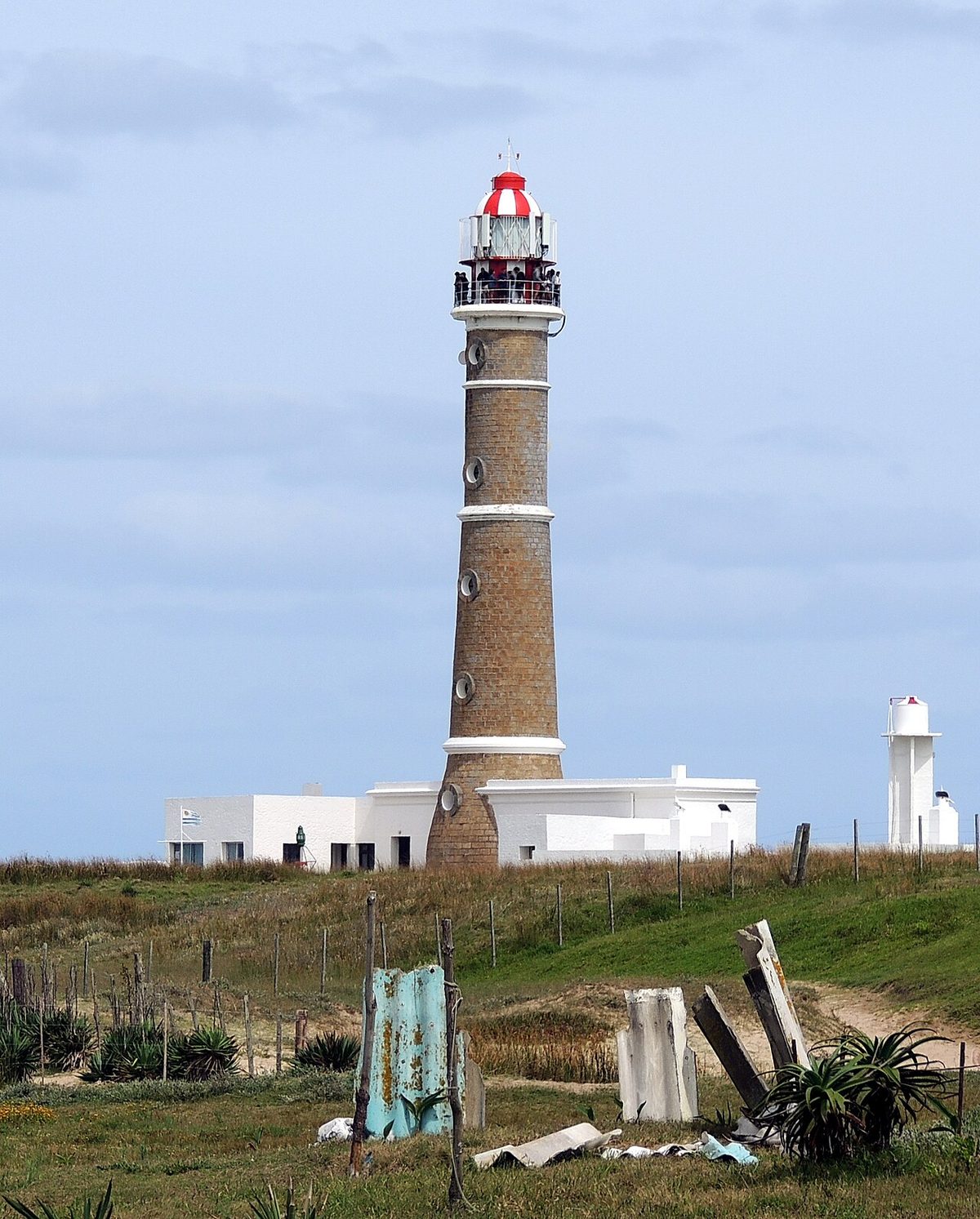
Faro de Cabo Polonio is the thing you’ll see first and remember last. The lighthouse went up in 1881 to cut down the appalling rate of shipwrecks off the point, and it has been turning its beam over these rocks ever since. It’s squat and unglamorous from a distance, candy-striped and weathered, but it anchors the whole village.
You can climb it. There’s a small fee (a token amount, last I checked just a handful of pesos), an attendant who decides whether the wind is too strong to let people up, and a tight spiral staircase of around 130-odd steps. The reward at the top is the best orientation you’ll get of the place: the dunes rolling inland on one side, the village rooftops below, the rocky islands offshore, and the sea lions hauled out directly beneath you. Go up early or late if you can; midday light flattens everything and the platform gets busy in summer.
The one downside is that the opening hours are loose and weather-dependent. I’ve turned up to find it shut for wind with no notice, so treat the climb as a bonus rather than the centre of your plans, and try again later in the day if you’re staying over.
The sea lions: lobos marinos on the rocks
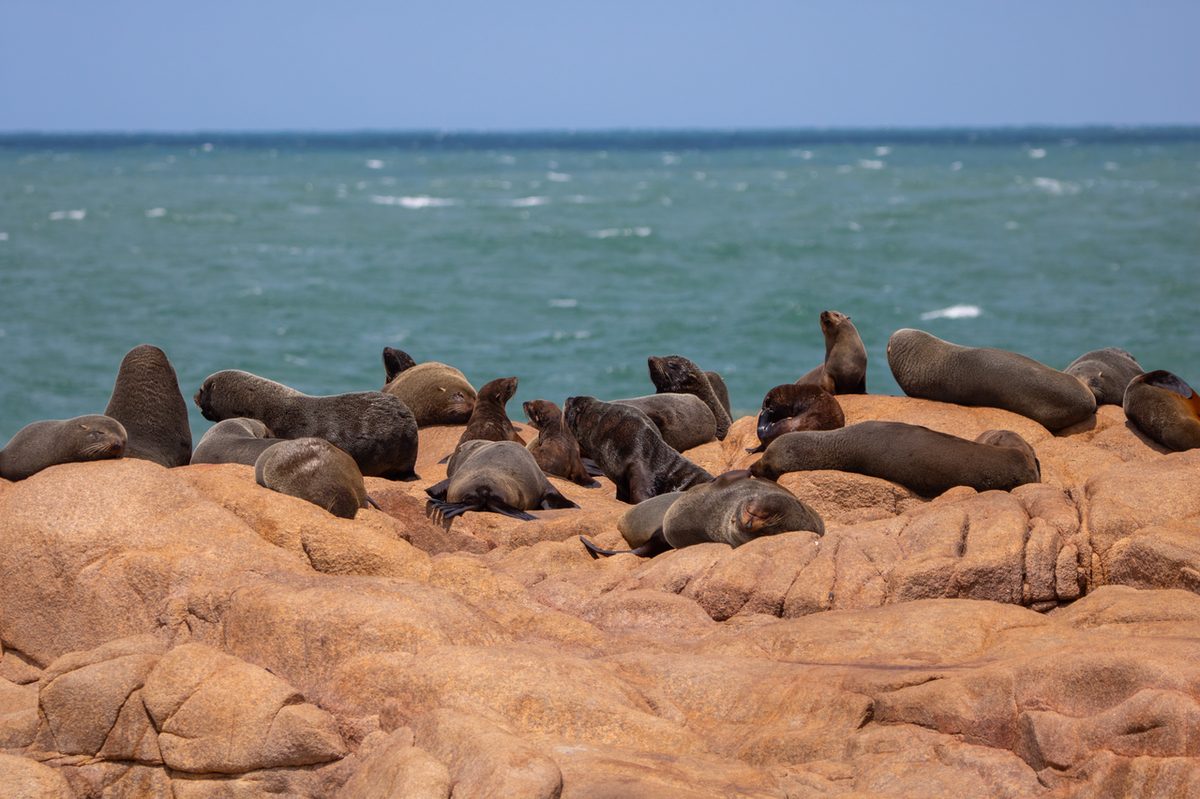
Walk past the lighthouse to the very tip of the point and you reach the reason Cabo Polonio existed in the first place. The rocks here, and the three small islands offshore known as the Islas de Torres, hold one of the largest colonies of South American sea lions and fur seals (lobos marinos, “sea wolves” in Spanish) in the country. On a good day there are hundreds of them: bulls bellowing, pups squabbling, the whole heap shifting and snorting in the spray.
You can get genuinely close, close enough to smell them, which is to say close enough that the wind off the colony is pungent. Keep your distance from the animals themselves; they’re wild, the big males are enormous, and this is a breeding and resting site, not a petting zoo. Don’t climb out onto their rocks. The colony is busiest and noisiest in the warmer months when the islands are used for breeding.
A practical note that the glossy guides skip: because this is a working wild colony, you will sometimes find dead animals on the beach near the point, especially after rough weather. There was also a serious bird-flu outbreak along this coast in recent years that hit the sea lions hard. None of this should put you off, but it’s why I tend to point first-timers toward the western beach for swimming and sunbathing, away from the carcasses and the smell, and save the eastern point for a wildlife walk.
The dunes
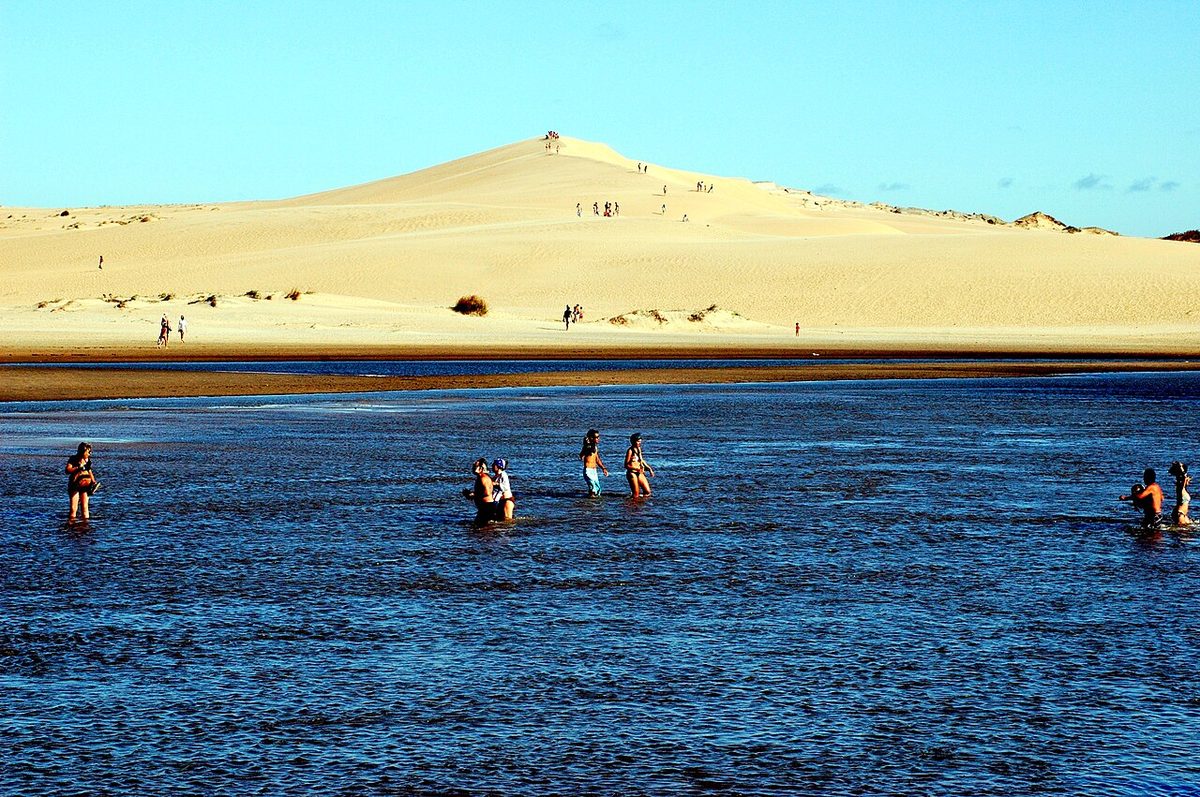
The dunes are the other great spectacle, and they start working on you before you even arrive, because you cross them in the truck. This is the most extensive mobile dune field left on the Uruguayan coast, some of it 20 to 30 metres high, shifting slowly with the wind. Walking out into them, away from the village, is one of the simplest and best things you can do here: within ten minutes you can be standing in what feels like a small desert with the ocean roaring somewhere behind a ridge.
Go in the soft light of early morning or late afternoon, take water, and keep a landmark in view, the lighthouse beam at dusk works well, because the dunes genuinely disorient people and there are no signposts out there. Barefoot is lovely until the midday sand is scorching, so bring something for your feet.
The night sky: stargazing with no grid
Here’s the upside of having no street lighting and no town grid for miles: the dark is real. On a clear, moonless night the Milky Way comes up over the dunes in a way most people simply never see at home, and the only competition is the slow sweep of the lighthouse beam. I’ve stood on the western beach at midnight and watched the surf glow faintly blue with bioluminescent plankton while the sky did its thing overhead. It’s the single best argument for staying the night rather than day-tripping.
You don’t need any kit. Walk away from the few lit windows of the village, let your eyes adjust for fifteen minutes, lie back on the sand or the rocks, and look up. A red-filtered torch (or your phone screen dimmed and covered) keeps your night vision intact. Cloud and the coastal haze can ruin it, so don’t promise yourself a perfect sky on any single night, which is one more reason two nights beats one.
The bohemian scene
By day the centre of the village is a loose knot of wooden shacks selling cold beer, fried fish, hand-strung jewellery and the offer to braid your hair. Someone is usually playing a guitar, more or less in tune. Uruguay’s relaxed laws mean a joint is often doing the rounds, and nobody blinks. It’s been a magnet for a certain kind of slow traveller for decades, and the off-season skews hippie-hermit while January brings a younger, louder crowd.
Evenings tilt toward bonfires on the sand and a couple of bar-hostels, the Lobo places among them, that put on live music and brew their own beer. It’s sociable without being a party town in the Punta sense; the energy is campfire, not nightclub. If you want to understand how different this end of the country feels from the glossy resorts further west, the comparison in Punta del Este versus Rocha spells it out, and Cabo Polonio is Rocha at its most extreme.
Surfing and the beaches
There are beaches on both sides of the point, and they have different personalities. Playa Sur, the long southern beach you race along in the truck, is the calmer, broader one and the better all-round choice for swimming and lying about. The eastern, ocean-facing side is wilder, rockier and closer to the sea lions.
Surf is part of the appeal but keep expectations honest. The Atlantic here is cold, the water often rough, and the breaks are inconsistent; this is a place for a fun session and some wave-jumping rather than a dedicated surf pilgrimage. Bring a wetsuit, because even in high summer the water has bite, and there are no surf shops to rent from on the point itself. If serious waves are the priority, see the wider rundown of surfing along the Uruguayan coast and treat Cabo Polonio as a bonus rather than the main event. For pure beach quality across the country, the roundup of the best beaches in Uruguay puts these in context.
The honest drawback worth flagging for the beaches: sandflies and mosquitoes can be vicious near dusk, especially in the calmer, vegetated spots and after rain. Pack repellent. I learned this the itchy way.
Where to sleep
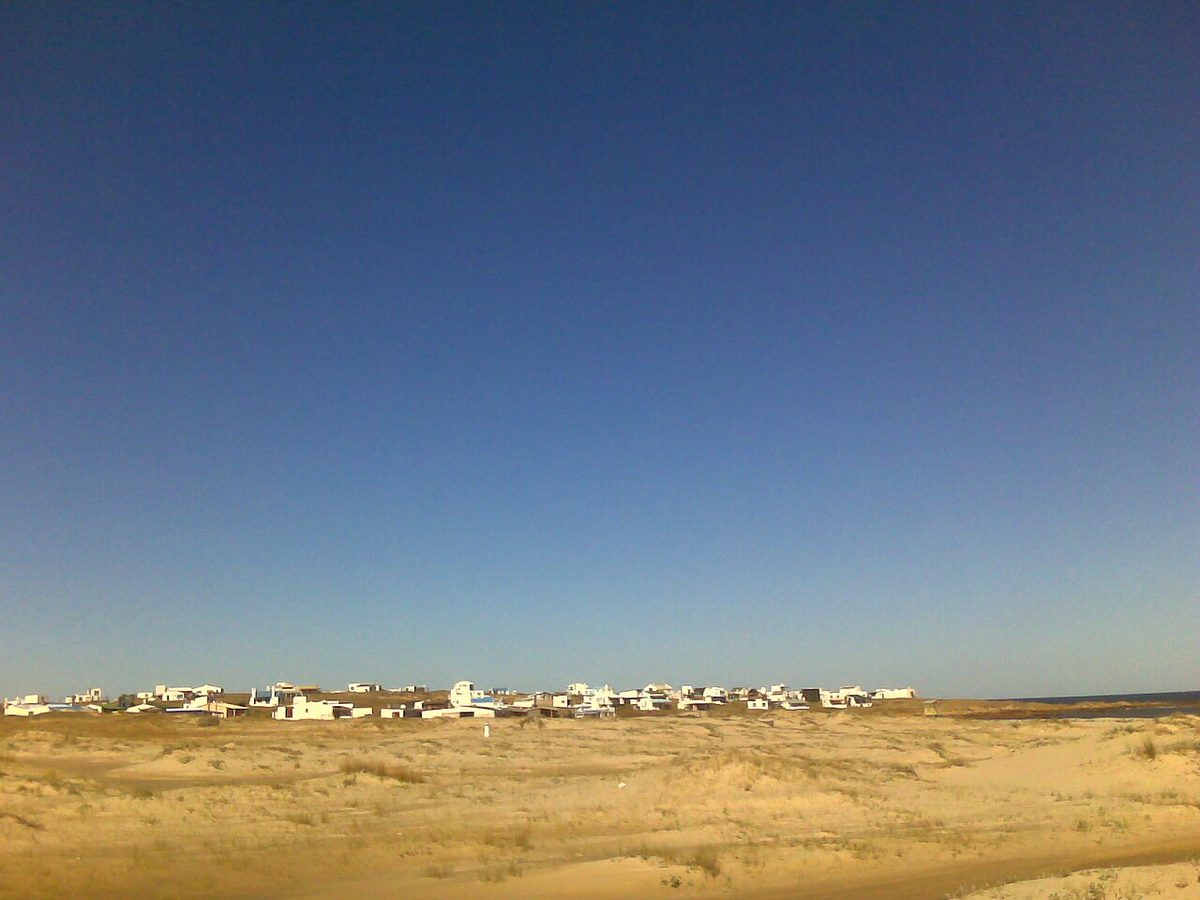
Sleeping options here are simple by design: small posadas (family-run guesthouses), a few hostels, and rented cabañas (cabins) scattered from the village centre out toward the wilder edges. Nobody is building a resort. The places near the central roundabout put you a minute from the shacks and the beach path; the ones out along the southern beach feel properly remote, which is either the dream or the deal-breaker depending on your mood.
A handful of names come up again and again, the Lobo hostels for the sociable bonfire-and-beer crowd, and a clutch of cosier posadas and cabañas for couples and families who want a roof, a bed and a sea view without the dorm. Standards are basic but the welcome is usually warm. The single most important booking tip: reserve well ahead for any visit between December and February, when beds genuinely run out, and confirm what “electricity” and “hot water” actually mean at your specific place before you commit, because it varies wildly from candlelit-and-cold to solar-and-comfortable.
For the bigger picture of accommodation styles across the country, from city hotels to coastal cabañas, the overview of where to stay in Uruguay is a useful companion. The drawback to name here is price: in peak January, the modest rooms on the point command surprisingly steep rates for what they are, simply because demand swamps the tiny supply.
Food, water and money
Eating is part of the charm and part of the challenge. In season, the little restaurants and shacks fry up the catch of the day, simple seafood, fresh and unfussy, and a cold beer never tastes better than after a walk in the dunes. Out of season, expect many of them to be shut, and plan accordingly.
The village has essentially one small grocery, and it keeps its own hours, often only a window in the morning and another in the early evening. Miss them and you’re rummaging in your bag for crackers. If you’re self-catering in a cabaña, bring the bulk of your food in with you; the choice on the point is thin and pricier than on the mainland.
Water deserves a word of its own. With supply coming from wells and rainwater, it is finite and, in a packed summer, genuinely stretched. Don’t take long showers, don’t leave taps running, and carry your own drinking water in if you’re at all unsure about your accommodation’s source. And to repeat the single most important practical fact about Cabo Polonio: there is no ATM and cards often don’t work, so arrive with enough cash in pesos to cover your whole stay plus a buffer. The nearest reliable cash machines are back in the larger towns. General money, safety and packing advice for the country lives in the Uruguay travel tips guide, and it’s worth a skim before any trip out to Rocha.
Getting there, briefly
The short version, because the cape deserves its own dedicated transport write-up rather than a cramped paragraph: you cannot drive in. You leave your vehicle (or step off the bus) at the official park entrance on Route 10, buy a ticket, and ride one of the chunky 4×4 trucks across the dunes and beach into the village, a bumpy, genuinely fun 20-30 minutes. Trucks run on a timetable that changes with the season, so check the day’s departures and, crucially, the last truck out if you’re not staying over. The other way in is on foot, a walk of roughly seven to ten kilometres across the dunes and beach from Barra de Valizas. If you’re touring the country without your own wheels, the broader strategies in the guide to visiting Uruguay without a car cover how the buses connect to the coast.
Things to do in Cabo Polonio
You can cross the whole village on foot in fifteen minutes, so “things to do” here means slow, simple pleasures rather than a packed itinerary. Here’s how I’d spend the time, and how to tailor it to who you are.
The essential list
- Visit the sea lion colony at the point below the lighthouse, the headline wildlife encounter.
- Climb the lighthouse for the only proper overview of the dunes, village and islands.
- Walk into the dunes at golden hour, away from the village, for that small-desert silence.
- Stay up for the stars on the western beach, ideally on a clear, moonless night.
- Catch a sunset on the rocks with a beer or a mate, the village’s nightly ritual.
- Eat fried fish at a shack and drink a beer round a bonfire afterward.
- Swim or wave-jump on the calmer southern beach (wetsuit advised).
- Just wander the grassy paths between the mismatched wooden houses; this is a place to do very little, well.
By the kind of traveller you are
Couples and slow travellers get the most out of an overnight in a quiet cabaña on the southern beach: sunset, stars, a long lie-in, and nowhere you have to be. Backpackers and solo travellers should aim for one of the bonfire hostels for the easy company; this is a friendly, low-stress stop, and the wider notes in the guide to solo travel in Uruguay apply nicely here. Families with older kids will love the truck ride, the sea lions and the freedom of a car-free village, though the lack of comforts makes it hard work with toddlers. Wildlife and photography people should build the day around the soft light at each end and the colony in between.
Best time to visit
Summer, roughly December to March, is when the weather is warm enough to swim and the village is fully alive, with every shack and restaurant open. The trade-off is crowds and prices: January is the absolute peak, when day-trippers pour in, beds vanish and the little place strains at the seams. It’s still wonderful, but it’s the opposite of the empty-beach fantasy.
My preference is the shoulder, late November and especially March into early April. The water is still swimmable, the light is gorgeous, enough is open to eat and sleep comfortably, and you get the dunes and the stars closer to yourself. Winter (June to August) is raw, windy and largely shut, atmospheric if you want solitude, bleak if you want a beach holiday. For the country-wide rhythm of seasons and crowds, see the breakdown of the best time to visit Uruguay.
The national park and its wildlife
It’s worth understanding that you are not just visiting a village, you’re inside Parque Nacional Cabo Polonio, a protected area within Uruguay’s SNAP system that covers both a strip of coast and a large swathe of the adjacent ocean and islands. That protection is the reason the experience exists in the form it does.
The wildlife is the heart of it. Beyond the famous sea lions and fur seals on the Islas de Torres, the waters off the cape are a breeding ground for dozens of fish species, and whales, dolphins, orcas and sea turtles all pass through. The dunes have their own quieter cast, burrowing rodents, ground-nesting birds and salt-tolerant plants adapted to a brutal, sandy, wind-blasted habitat. Offshore islands host nesting seabirds. If you slow down and look, there’s far more here than the headline colony.
Visiting responsibly is simple: keep your distance from the animals, stay off the colony rocks and the fragile vegetated dunes, carry out your rubbish (collection here is minimal), and tread lightly on water and power. The place survives precisely because it has been kept small and largely wild. Where Cabo Polonio fits into a broader trip, the country’s best places to visit and a sample Uruguay itinerary both help you slot it in without rushing it.
Cabo Polonio: your questions answered
Is Cabo Polonio worth visiting?
For the right traveller, absolutely. If you want wild dunes, a huge sea lion colony, dark skies and a slow, off-grid village with real character, few places in Uruguay compare. If you need reliable comfort, fast WiFi and a card machine, you’ll likely leave frustrated. It’s a place you visit for the experience, not the amenities.
How many days should I spend in Cabo Polonio?
One night is the minimum to feel the place properly and catch the stars and the silence after the day-trippers leave. Two nights is the sweet spot: enough for the lighthouse, the colony, a dune walk, a swim and a slow morning, with a spare evening in case the weather hides the sky. You can technically day-trip, but you’ll miss the best of it.
Does Cabo Polonio have electricity and WiFi?
There’s no mains electricity grid for most of the village. Guesthouses and hostels run on solar panels, generators and wind, so you can usually charge a phone and find a light, but it’s limited. WiFi exists in some places, often switched on for just an hour or two a day. Treat connectivity as a bonus, not a given, and tell people back home you may go quiet.
Are there ATMs in Cabo Polonio?
No. There is no ATM anywhere in the village, and card payments are unreliable, so you must bring enough cash in Uruguayan pesos to cover your whole stay plus a little extra. The nearest dependable cash machines are in the larger towns you pass through on the way, so withdraw before you reach the park entrance.
How do you get to Cabo Polonio?
You can’t drive in. Park at the official entrance on Route 10 (or arrive by bus), buy a ticket, and ride one of the 4×4 trucks that cross the dunes and beach into the village, around 20 to 30 minutes of fun, bumpy track. Departures follow a seasonal timetable, so always check the day’s schedule and the last truck out if you aren’t staying the night.
Can you swim at Cabo Polonio?
Yes, the calmer southern beach is the better spot for swimming and lounging. The ocean is cold year-round and can be rough, so it’s more refreshing dip than warm bathwater, and a wetsuit helps if you’re surfing. Keep clear of the eastern point near the sea lion colony, both for the animals’ sake and because the water and rocks are wilder there.
Final thoughts
Some places sell themselves on what they offer. Cabo Polonio sells itself on what it withholds, the lights, the roads, the noise, the constant connection, and somehow ends up richer for it. I went expecting a quirky photo stop and left having genuinely rested for the first time in weeks. The sea lions and the lighthouse are the postcard, but the real souvenir is the dark, the quiet, and the sense of having stepped briefly out of the modern world.
Go with cash, a wetsuit, repellent and low expectations of comfort, and high ones of atmosphere. Stay at least one night. With a week to spare, our Rocha coast road trip fits it in between La Pedrera and Punta del Diablo. Keep your distance from the animals and your footprint light on the dunes. Do that, and this stubborn little point on the edge of Uruguay will likely ruin you for ordinary beach towns too.
Credits & sources
Sources & further reading
- Uruguay Natural (Ministry of Tourism) — Cabo Polonio
- SNAP — Uruguay’s National System of Protected Areas
- Turismo Rocha — official regional tourism office
- Wikipedia — Cabo Polonio (history, geology and ecology)
Photo credits
All images via Wikimedia Commons: Cabo Polonio Village Houses Dunes by Analía Mosqueira (CC BY-SA 3.0); Cabo Polonio Lighthouse Rocha Uruguay by Braveheart (CC BY-SA 4.0); Cabo Polonio Sea Lions Lobos Marinos Rocks by Carolinasosa17 (CC BY-SA 4.0); Cabo Polonio Beach Dunes Atlantic by Gonzalo Acuña (CC BY-SA 3.0); Cabo Polonio Village Paths Shacks by rodoluca (CC BY-SA 3.0).
2 comments