Fray Bentos, Uruguay: The UNESCO Meat Factory (2026)
The first thing that hit me at Fray Bentos was the smell of river mud, and the second was the size of the chimney. It rises over a flat green spit of land on the Río Uruguay, brick and stubborn, and once you know what it is you cannot un-see it. This was the boiler house of a factory that, for the better part of a century, tinned beef and shipped it to half the planet. The town is quiet now and the factory is a museum, yet Fray Bentos Uruguay turned out to be one of the strangest, most rewarding day trips I have taken anywhere in the country.
I had driven up from the coast expecting a footnote and got a full chapter instead.
Fray Bentos Uruguay is a small river city in the country’s west, best known for the Fray Bentos Industrial Landscape — the former Liebig and Anglo meat-packing plant that exported corned beef and OXO around the world and became a UNESCO World Heritage Site in 2015. You come here for industrial history, not beaches: a vast machine hall, a lived-in workers’ neighbourhood called the Barrio Anglo, and the museum that tells the story of the “factory that fed the world.”
This guide is for travellers who want the real Fray Bentos — the history, the UNESCO site, the museum visit, the town and its riverfront, and how to fold it into a wider trip. I’ll be candid about what’s worth your time and what isn’t.
| At a glance | Fray Bentos, Río Negro |
|---|---|
| Where it is | Western Uruguay on the Río Uruguay; about 310 km (roughly 4 to 4.5 hours) northwest of Montevideo |
| UNESCO status | Fray Bentos Industrial Landscape, inscribed 2015 (criteria ii and iv) |
| What to see | Museo de la Revolución Industrial, the Anglo factory plant, the Casa Grande, the Barrio Anglo, the riverfront |
| Opening days / tours | Museum generally Tuesday to Sunday; guided plant tours typically around 10:00 and 15:00 (confirm before you go) |
| Time needed | Half a day for the essentials; a full day if you take every tour and linger in town |
| How to get there | Bus from Montevideo’s Tres Cruces terminal (around 4h20), or drive; the bridge to Argentina lands here too |
The factory that fed the world: Liebig, the Anglo and OXO
To understand why a town of about 25,000 people has a UNESCO listing, you have to go back to a German chemist and a problem of distance. In the mid-19th century, the prairies of the Río de la Plata held enormous herds of cattle. Europe held enormous numbers of hungry people. Between them sat an ocean and no refrigeration. Beef rotted long before it could cross.
Justus von Liebig had worked out how to concentrate the goodness of meat into a dark, keepable paste — an extract. In 1865 the Liebig Extract of Meat Company set up shop on this spit of land just west of the town, on a site where a salting works had already been founded in 1859. The river gave them deep-water access for ships. The land behind gave them cattle. The extract gave them a product that didn’t spoil on the voyage to Antwerp or London.
This is the birthplace of some genuinely famous food. Liebig’s Extract of Meat became a Victorian kitchen staple. From it came OXO, the bouillon cube that still sits in British and Irish cupboards today. And from 1873 the company stamped corned beef with the name of the nearest town — Fray Bentos — which is how a small Uruguayan place ended up on tins and, much later, on pies in British supermarkets.
One honest footnote that surprises people: the famous Fray Bentos tinned pie was made for the British market and never actually produced in this factory. The name travelled further than the recipe.
In 1924 the Vestey Group — a Liverpool-founded meat empire — bought the operation and renamed it the Anglo Meat Packing Plant, the frigorífico (a “frigorífico” is a refrigerated meat-packing works). With refrigeration finally cracked, the Anglo began exporting frozen and chilled beef on its own Blue Star Line ships. The locals simply called it “el Anglo,” and the name stuck so hard that the whole neighbourhood is still the Barrio Anglo.
The plant’s reach during wartime is the detail that stays with me. As a supplier to the Allied armies, Fray Bentos shipped more than 16 million cans of corned beef to Europe in 1943 alone. Soldiers in two world wars ate from this place. The marketing line “the factory that fed the world” was, for once, close to literal. The old boast on site is that they used “everything but the moo” — beef extract, corned beef and frozen cuts, plus glue, fertiliser, and even dice cut from bone.
The UNESCO industrial landscape: what makes it World Heritage
I’ll be honest: I went in slightly sceptical that an old meat plant deserved to sit on the same list as Machu Picchu. By the end I was converted, and it’s worth explaining why, because it changes how you look at the place.
UNESCO didn’t list a building. It listed a landscape — the whole chain of meat production frozen in one spot. The official name is the Fray Bentos Industrial Landscape, and the inscription came in 2015 under cultural criteria (ii) and (iv). The protected property covers about 274 hectares, wrapped in a much larger buffer zone. That generous boundary is the point.
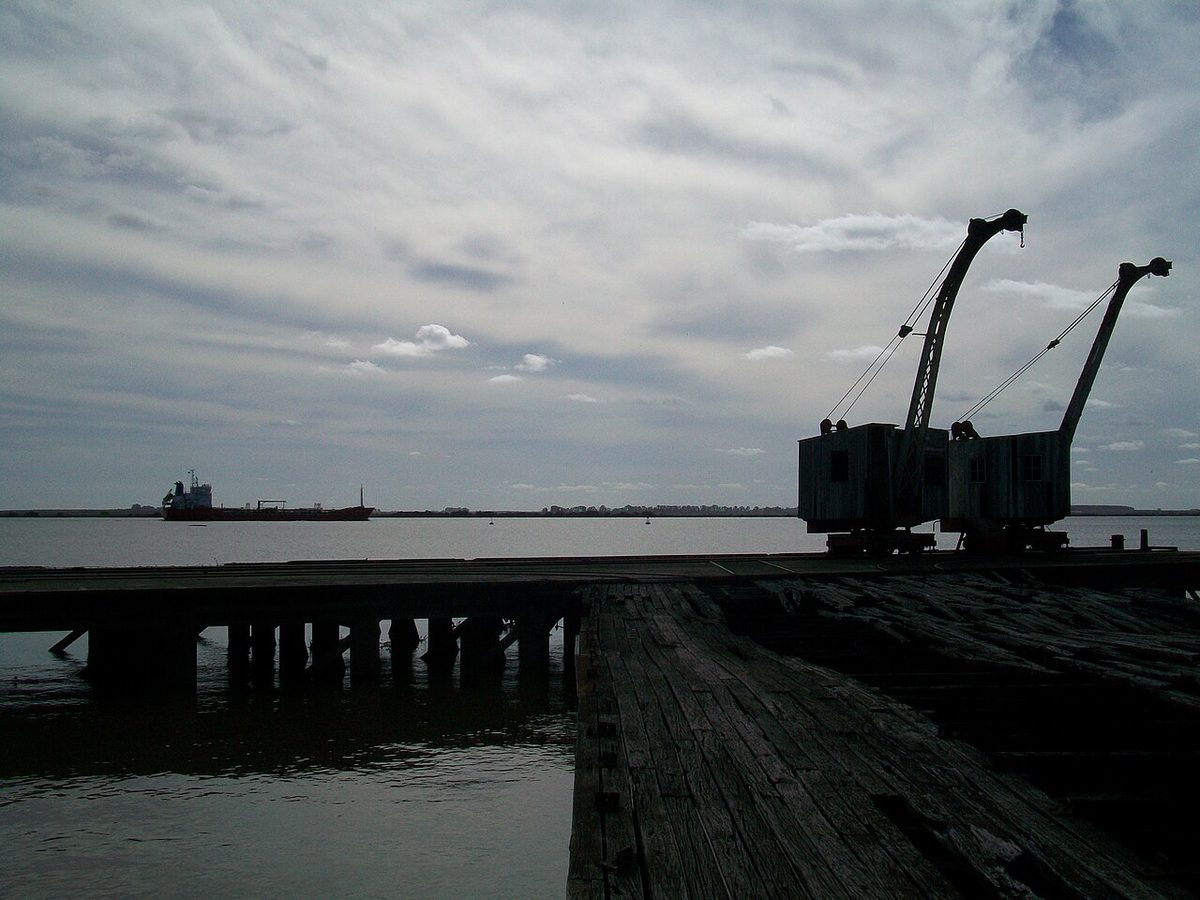
Walk the site and you can read the entire industrial process in sequence. Cattle came off the surrounding prairies and through the handling pens. They moved into the killing and processing halls. The product was canned, frozen or reduced to extract, then carried to the docks and loaded onto ships bound for Europe. Around all of it grew the housing, schools, sports clubs and churches for a workforce drawn from more than 55 nations. The selection panel called it evidence of the “interchange of human values” between Europe and South America — German science, English capital, and immigrant labour, all meeting on one riverbank.
It’s one of a small handful of UNESCO World Heritage Sites in Uruguay, and the only one celebrated for industry rather than colonial architecture or natural beauty. If you’re tracking them, I’ve gathered the full set in our guide to Uruguay’s UNESCO sites — Fray Bentos pairs naturally with Colonia del Sacramento downriver, which is the country’s other, very different, World Heritage town.
Visiting the Museo de la Revolución Industrial
The heart of any visit is the Museo de la Revolución Industrial — the Museum of the Industrial Revolution — housed in the old factory buildings. This is where the abstract idea of “industrial heritage” becomes something you can touch.
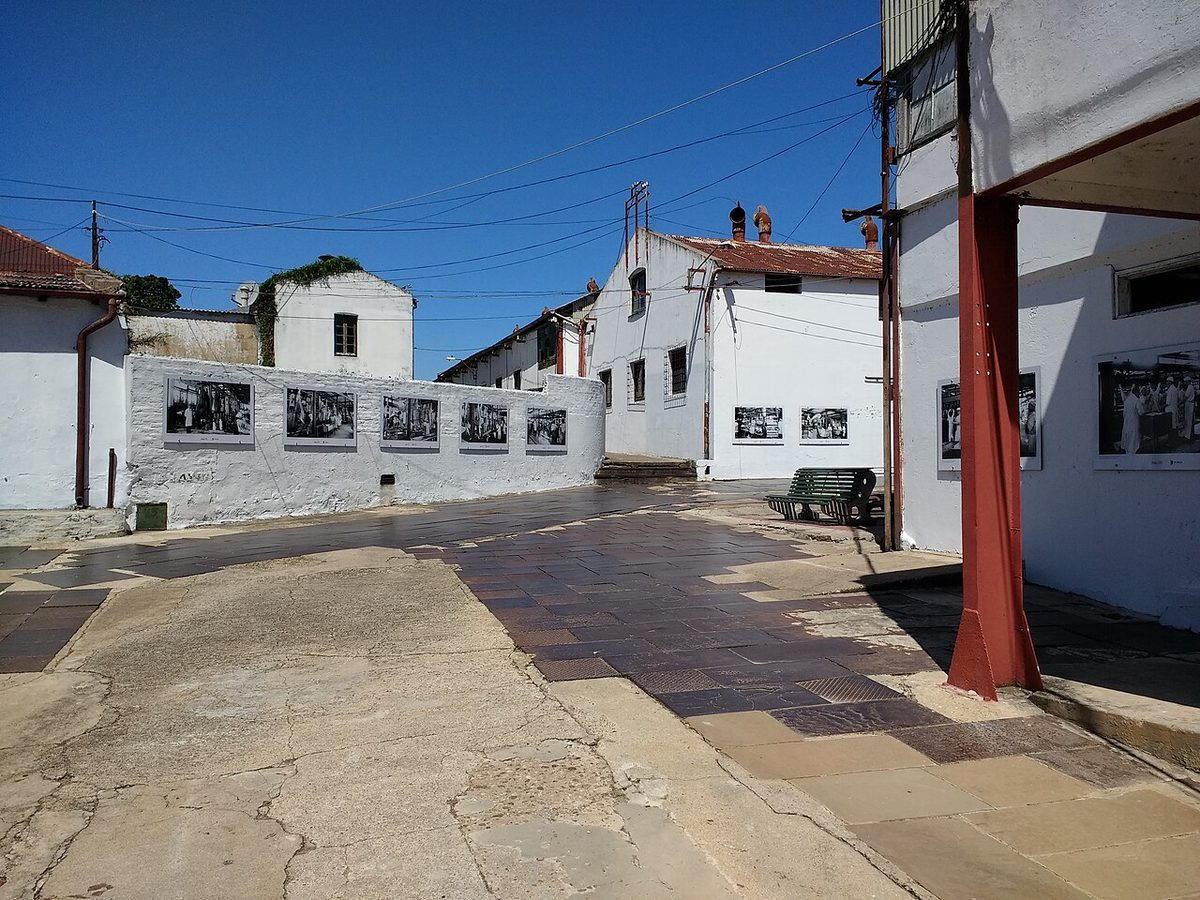
Exhibition halls are the gentle introduction. Cases of original packaging, advertising, OXO tins and corned-beef labels chart the brand across decades; old photographs show the plant at full roar with thousands of workers. The administration office is the detail I keep describing to people: the original desks are still there, and the floorboards are scored with curved grooves worn by decades of chairs being scraped back at the end of a shift. It’s a small thing that makes a hundred years feel suddenly present.
Then there’s the factory plant itself — the great machine hall — which you see on a guided tour rather than wandering alone, and rightly so. Guides walk you through the cold-storage rooms, the rail of overhead hooks, the boilers and the engines, much of it left as it was when production wound down. It is part cathedral, part abandoned ship. If you, like me, have an unreasonable affection for decaying machinery, you will be very happy here.
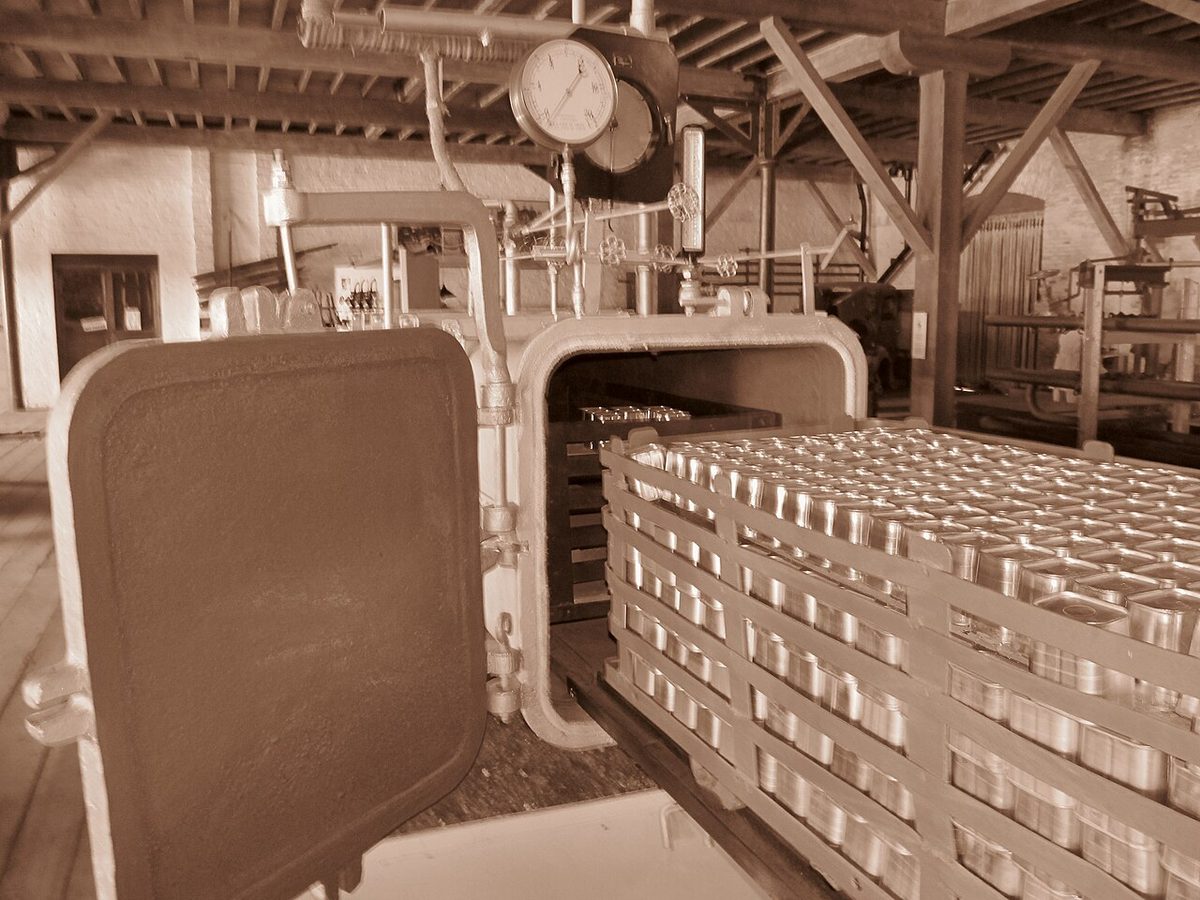
Here’s the practical shape of it, and please treat times as a guide rather than gospel:
- Exhibition halls: generally open Tuesday to Sunday, roughly 9:30 to 17:00. Entry to the halls is cheap — around 50 Uruguayan pesos last I checked, a couple of US dollars.
- Guided factory-plant tour: typically twice a day, around 10:00 and 15:00, for an additional fee (in the region of 150 pesos). This is the one to prioritise.
- Casa Grande: the old directors’ residence, often free to enter, with its own opening hours.
- Specialist tours: there are sometimes extras — the cattle-handling area (the “manga del ganado”) and a guided cycle around the workers’ neighbourhood — but these usually need booking a day or two ahead by phone.
The one honest drawback: opening days and tour times shift with the season, public holidays and staffing, and the official information is almost all in Spanish. Phone ahead or have your accommodation confirm the day’s schedule, because turning up to a locked plant after a four-hour bus ride would be a genuinely bad day. A few general Uruguay travel tips apply here: carry some cash in pesos, and don’t assume card machines.
The Barrio Anglo: a company town that’s still lived in
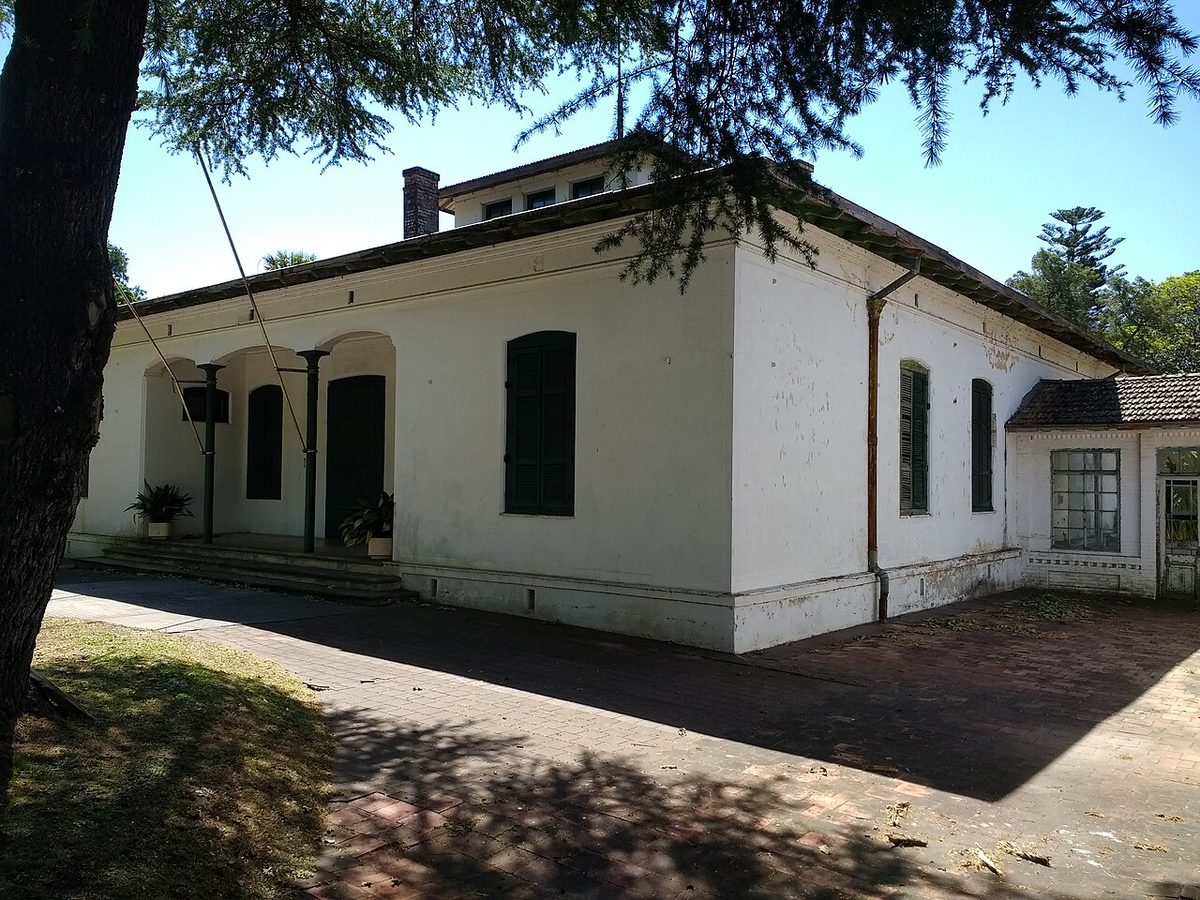
What I didn’t expect was that the Barrio Anglo isn’t a ghost. People still live here. A “barrio” is simply a neighbourhood, and this one grew up around the factory gates to house a workforce pulled from dozens of countries — Britons, Italians, Greeks, Spaniards, Eastern Europeans, all on one Uruguayan riverbank.
The company built them a small world: rows of workers’ housing, the grander homes of the managers, a hospital, schools, sports grounds and clubs. It’s often compared to Port Sunlight, the model village the soap-makers built on Merseyside, and the comparison holds. Wander the quiet streets and you read the old social hierarchy in the architecture, from modest cottages up to the directors’ Casa Grande overlooking the water.
Many of today’s residents are descended from people who worked the plant, which gives the neighbourhood a memory rather than just a heritage plaque. If the guided bicycle tour of the barrio is running, take it; cycling the streets where a whole multinational town once lived and worked is the best way to feel the scale of the thing.
The town and the riverfront
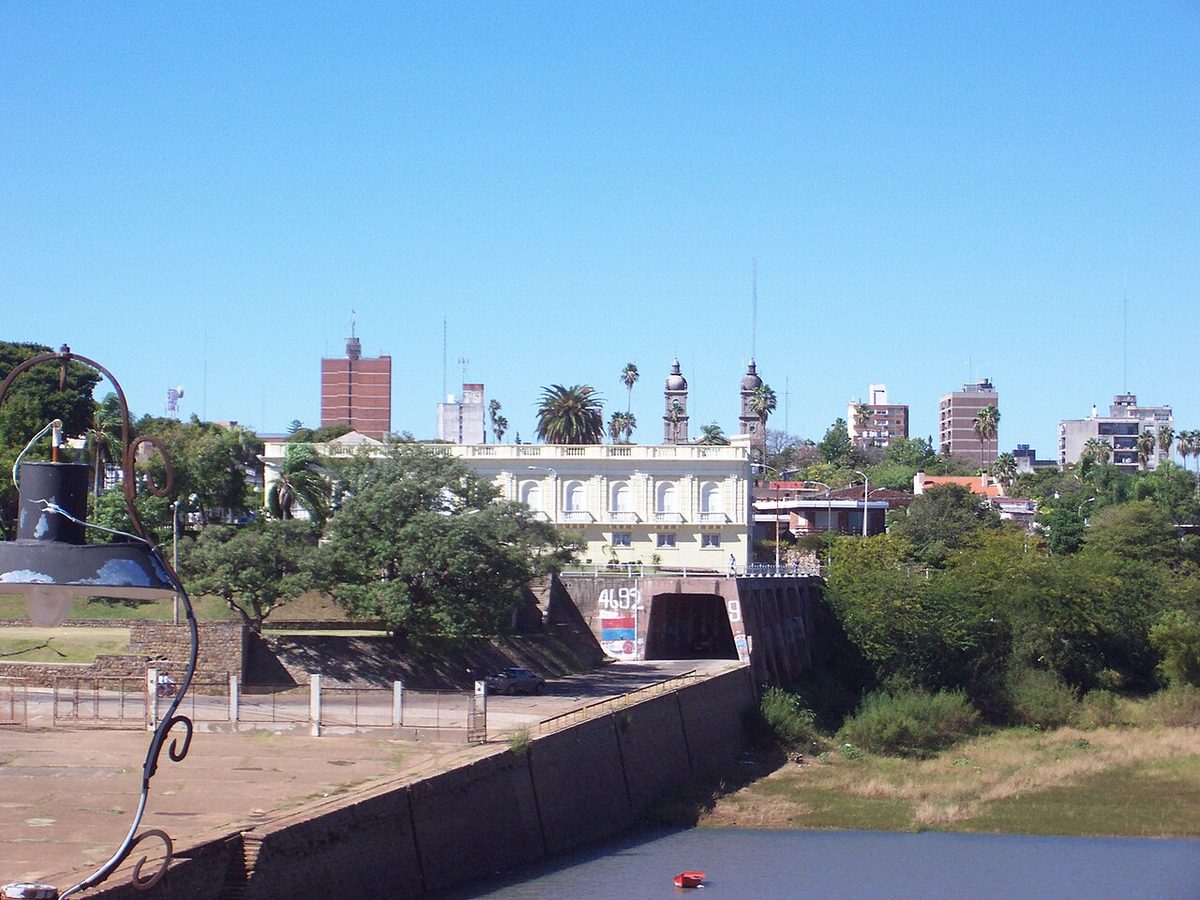
Beyond the factory, Fray Bentos is the unhurried capital of the Río Negro department, and it makes a pleasant enough base for a night. The proper name to know is the rambla — the riverside avenue (a “rambla” is the waterfront promenade you’ll find in almost every Uruguayan river or coastal town). Fray Bentos has a good one along the Río Uruguay, and at dusk it fills with locals walking, cycling, and sharing mate — the bitter green herbal tea, sipped through a metal straw from a shared gourd, that is practically the national handshake.
Don’t come for a beach holiday. The drawback to be straight about is that this is a working river town, not a resort: the waterfront is for strolling and watching the sunset over Argentina, not for swimming or sunbathing. Set your expectations to “industrial-heritage day with a nice river view” and you’ll leave delighted instead of disappointed.
The centre has the usual handsome Uruguayan civic square, a few cafés, and the Teatro Young, a grand old theatre that’s a reminder of how much money once flowed through here. Eat the way the country does best — at a parrilla, the wood-fired grill restaurant at the centre of Uruguayan life. Given that this town built its fortune on beef, a plate of grilled meat feels less like a meal and more like paying respects. Our deep dive into the national grill ritual, the Uruguayan asado, explains why the “asado” (a slow barbecue over coals) is closer to a ceremony than a cookout.
The bridge to Gualeguaychú, Argentina
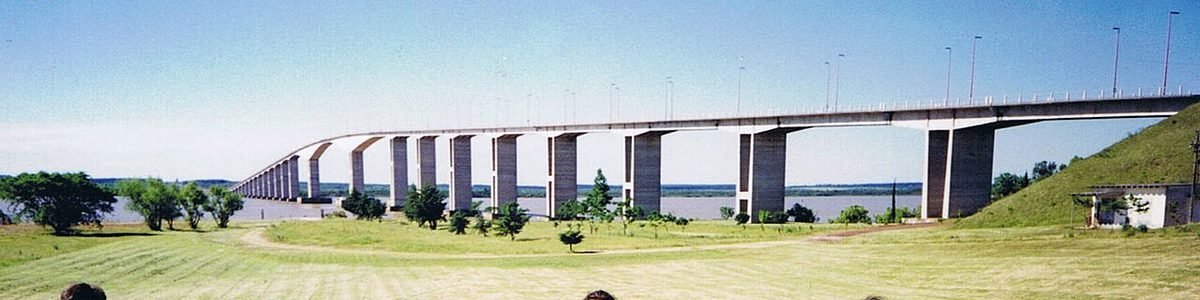
One reason Fray Bentos sees any through-traffic at all is that it’s a border town. The Puente Libertador General San Martín — the General San Martín Bridge — leaps the Río Uruguay here and lands at Puerto Unzué, just outside Gualeguaychú in the Argentine province of Entre Ríos.
It’s a serious piece of engineering in its own right. Opened in 1976, it runs more than five kilometres across the river and its floodplain, and when it was designed its central span briefly held a world record for a cantilever bridge of its type. If you’re combining countries, this is one of the main road crossings between Uruguay and Argentina, with full immigration controls at the bridge.
For most travellers, though, the bridge is context rather than a destination. It explains the town’s position and gives you the option of crossing into Argentina, but Gualeguaychú is a separate trip with its own customs queue. I’d treat the bridge as a fine thing to photograph from the Uruguayan rambla rather than a reason in itself to cross.
Planning your visit: getting there, staying, and combining the trip
Getting there
Fray Bentos sits roughly 310 km northwest of Montevideo. Long-distance buses run from the capital’s main terminal, Tres Cruces, several times a day; the ride takes around four to four and a half hours and costs in the region of 20 to 26 US dollars. Buses are comfortable and reliable, which is the Uruguayan default. If you’re flying into the country first, our overview of getting to Uruguay covers your arrival options before you head west.
Honestly, though, the best way to do this region is to drive. A car turns Fray Bentos from a long there-and-back into one stop on a loop, and lets you reach the factory and the riverfront on your own clock. We’ve laid out the mechanics in our guide to renting a car in Uruguay, and the roads up the Litoral are flat, quiet and easy.
Where to stay and eat
The town has a modest range of hotels and guesthouses — enough for a comfortable night, not a lavish one. A single evening is plenty to see the essentials and eat well; two if you’re moving at a genuinely slow pace or crossing to Argentina. For the lay of the land on accommodation styles across the country, from estancias to city hotels, see where to stay in Uruguay.
For dinner, point yourself at a parrilla and order beef. It would be perverse to do otherwise in the town that canned it for the planet. If you want to understand what you’re eating and why Uruguayans take it so seriously, our guide to Uruguayan food is the place to start.
Combining Fray Bentos with the Litoral route
Here’s where Fray Bentos really earns its place: it’s the southern anchor of Uruguay’s Litoral, the string of river towns running up the Argentine border. Treat it as one stop rather than a standalone pilgrimage and the long drive pays off handsomely.
North of here lies Paysandú, a larger river city with its own history, and beyond that Salto, the gateway to the region’s thermal springs. That hot-springs belt is the headline draw of this whole corner of the country, and Fray Bentos slots in as the cultural, UNESCO-flavoured counterpoint to a soak in the Uruguay hot springs further upriver. A classic route runs Colonia, then Fray Bentos, then Paysandú and Salto, with a thermal-spa finish.
If you’re building the bigger picture, Fray Bentos belongs on any thorough Uruguay road trip, and it’s exactly the kind of off-the-obvious-track stop that earns a place among the country’s hidden corners. For first-timers still sketching the trip, our roundup of the best places to visit in Uruguay shows where it sits relative to the coast and the capital.
Fray Bentos Uruguay: your questions answered
Is Fray Bentos worth visiting?
Yes, if industrial history appeals and you set the right expectations. It’s a genuine UNESCO World Heritage Site with a remarkable story and an atmospheric, half-derelict factory you can tour. It is not a beach or party destination. Come for the museum and the Barrio Anglo, give it half a day to a full day, and you’ll find it one of Uruguay’s most distinctive stops.
Why is Fray Bentos a UNESCO World Heritage Site?
The Fray Bentos Industrial Landscape was inscribed in 2015 because it preserves the entire chain of global meat production in one place — from cattle pens through the factory to the docks — alongside the multinational workers’ town. UNESCO recognised it as evidence of the exchange of technology and people between Europe and South America in the 19th and 20th centuries.
What is the Fray Bentos brand and is it from Uruguay?
Yes and no, which is the fun of it. The name comes from this Uruguayan town, where Liebig and later the Anglo plant canned corned beef and made OXO from 1865 onward. But the Fray Bentos tinned pies familiar in Britain were produced for the UK market and were never actually made in the Uruguayan factory. The town is real; the pie is a namesake.
How do I get to Fray Bentos from Montevideo?
Direct buses leave Montevideo’s Tres Cruces terminal several times daily, taking about four to four and a half hours for roughly 20 to 26 US dollars. Driving takes a similar time and gives you freedom to continue up the Litoral. The town also sits at the Uruguayan end of the General San Martín Bridge from Argentina.
How long do you need at the Anglo factory and museum?
Half a day covers the essentials: the exhibition halls, a guided factory-plant tour, and a wander through the Barrio Anglo. If you take every available tour, visit the Casa Grande, and explore the town and rambla as well, a full day is comfortable. An overnight in town makes it relaxed rather than rushed.
Final thoughts
I came to Fray Bentos braced for an anticlimax and left genuinely moved by it. There’s something about standing in a silent machine hall that once fed armies, in a town named after the beef it tinned, that reorganises how you think about food, distance and the strange threads that tie a Uruguayan riverbank to a tin in a British pantry.
Go with the right frame of mind — historian’s curiosity, not beach towel — and confirm the museum’s opening day before you set out. Do that, and the factory that fed the world will feed your imagination too.
Credits & sources
Sources & further reading
- UNESCO World Heritage Centre — Fray Bentos Industrial Landscape
- Intendencia de Río Negro — guided visits to the Paisaje Industrial Fray Bentos (Spanish)
- National Museums Liverpool — Fray Bentos, Uruguay: the Port Sunlight of pies
Photo credits
All images via Wikimedia Commons: Frigorifico Anglo Fray Bentos by Mx. Granger (CC0); Fray Bentos Industrial Landscape River by Eduardo Gonzalez (CC BY-SA 3.0); Museo Revolucion Industrial Fray Bentos Machinery by Elbetobm (CC BY-SA 3.0); Barrio Anglo Fray Bentos Houses by Mx. Granger (CC0); Puente Libertador San Martin Fray Bentos by Foto familiar (CC BY-SA 4.0).