Punta del Este Cruise Port: How to Spend a Shore Day
Punta del Este turns up on plenty of South America cruise itineraries, and the questions before the call are nearly always the same. Will the ship dock or anchor? Where do the launches come ashore? And is there enough on a small resort peninsula to fill the day without paying for an excursion?
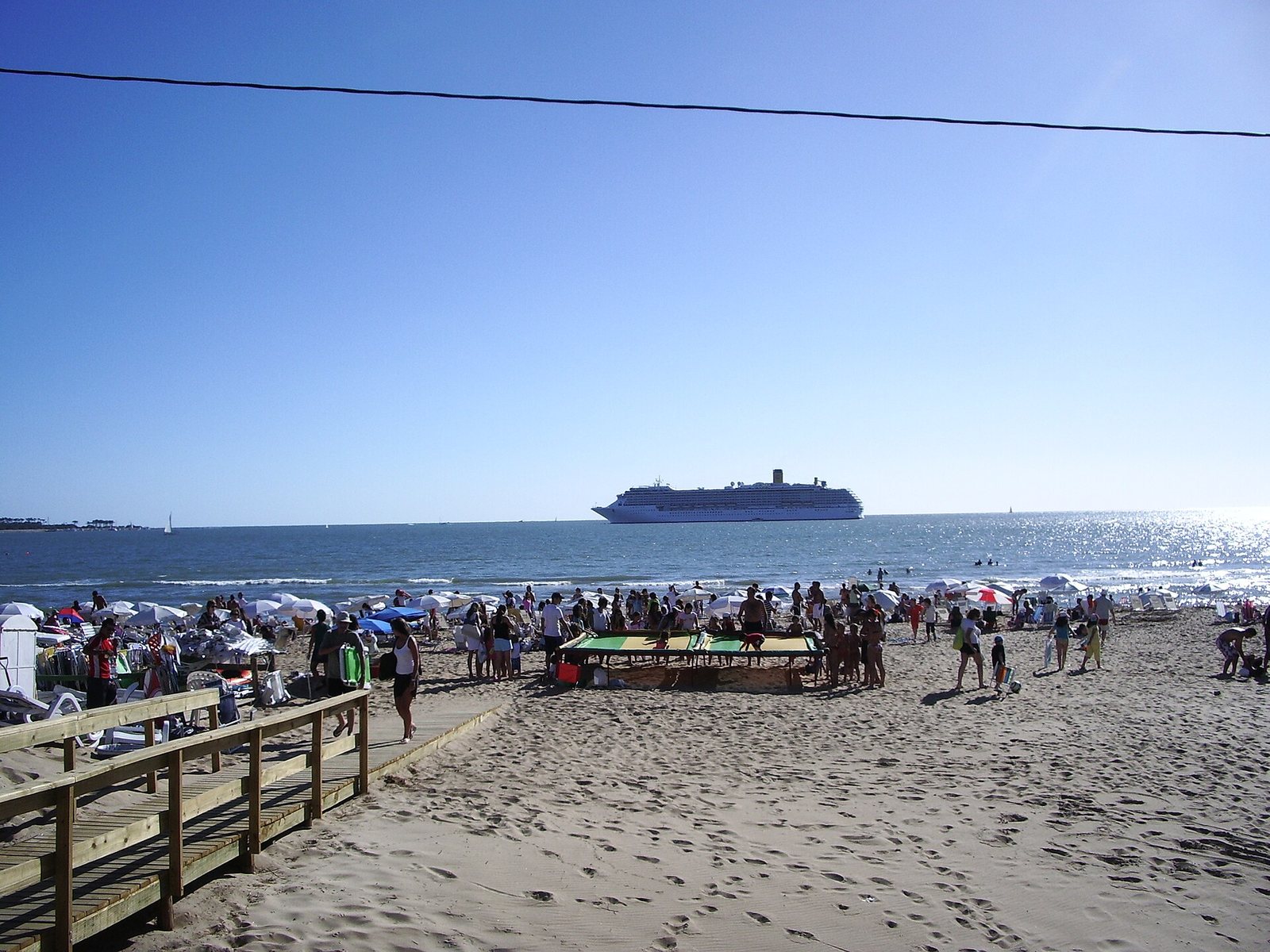
The Punta del Este cruise port is a tender stop: ships anchor in the bay and run launches ashore, about 25 minutes each way by the government’s own count, to La Pastora pier on Playa Mansa or into the port itself. La Mano, Avenida Gorlero and the lighthouse are walkable; Casapueblo and Isla de Lobos need a taxi or a boat.
For the resort as a whole, start with our complete Punta del Este travel guide. This page covers the shore day only: where you land, what fits into a short or a long call, paying in pesos or dollars, and what happens when the sea won’t cooperate. Season figures and port details below were checked in November 2026 against Uruguay’s Ministry of Transport and Public Works (MTOP), the Ministry of Tourism and the Intendencia de Maldonado, the departmental government.
Punta del Este cruise port at a glance
| What you need to know | The short answer |
|---|---|
| Dock or tender? | Tender. Ships anchor in the bay and bring passengers ashore by launch. |
| Tender ride | About 25 minutes each way, the figure the tourism minister gave for the 2025-26 season |
| Where you land | La Pastora pier on Playa Mansa (around Parada 3), or the tender berths inside the port |
| Getting around | On foot around the peninsula; taxi or Uber beyond it |
| Cost of a do-it-yourself day | La Mano, the port, the beaches, Gorlero and the lighthouse are free; Casapueblo tickets, taxis and boat trips cost extra (check each operator) |
| Book ahead? | Yes for Isla de Lobos boats and winery tours; no for the peninsula |
| Best for a short call | The port and its sea lions, La Mano, Gorlero, the lighthouse |
| Best for a long call | Add Casapueblo by taxi, or a boat out to Isla de Lobos |
| Season | The last two seasons ran from mid-November or late October into March or April |
| Currency | Uruguayan pesos, about 40 to US$1 (Banco República cash rate, checked November 2026) |
Where do the cruise tenders land in Punta del Este?
Big ships don’t come alongside here. They drop anchor in the bay off the peninsula and shuttle passengers in by launch, which the government puts at about 25 minutes from ship to shore. Add the wait for your tender number to be called, and the boarding and unloading at both ends, and it’s sensible to budget well beyond the ride itself each way on a busy morning.
There are two landing points, and the one you get changes how you plan the day.
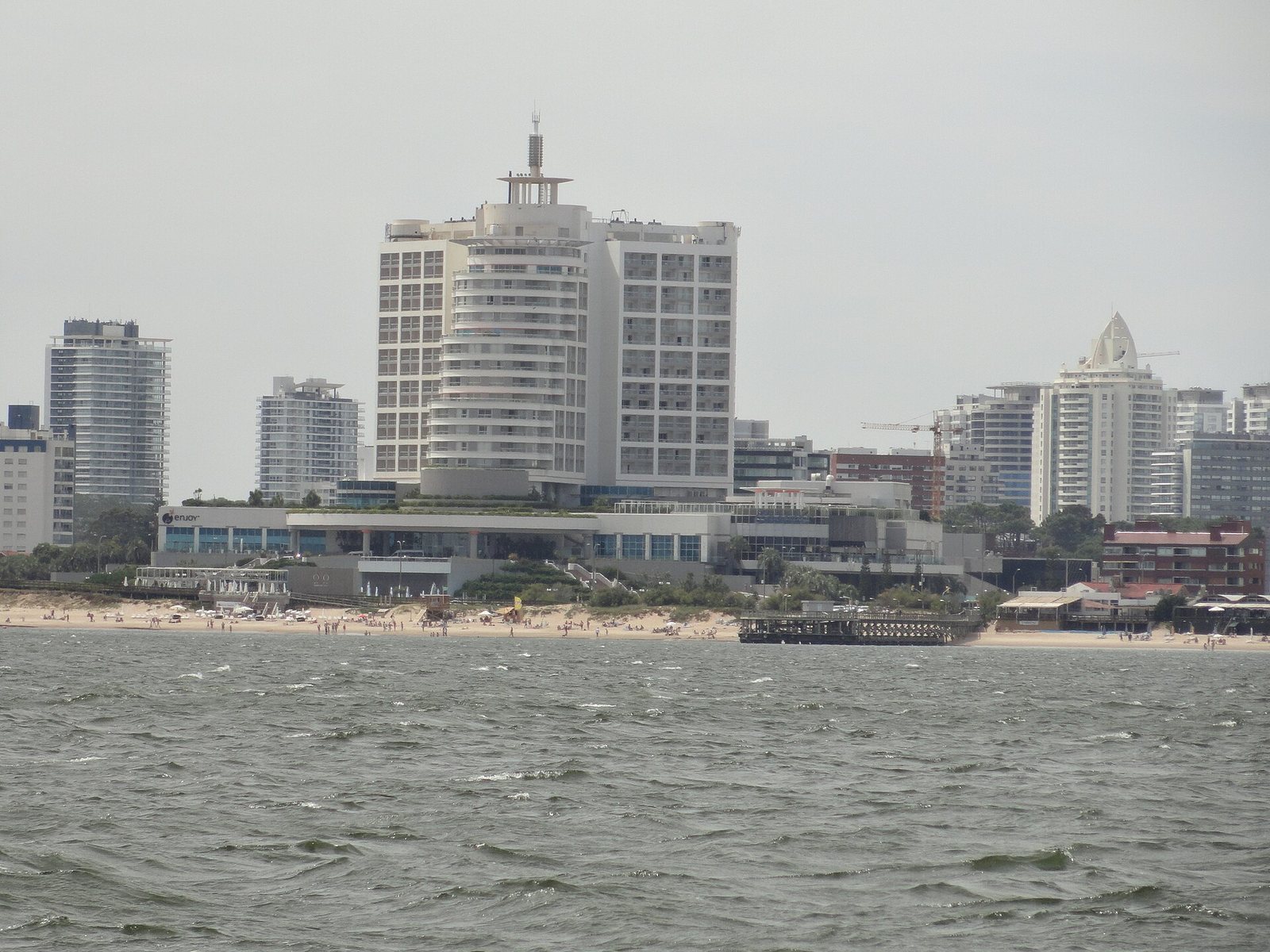
La Pastora pier, on Playa Mansa. This is the cruise landing on the bay side of town, around Parada 3. The paradas are the numbered markers along the beachfront road that everyone in Punta del Este uses as addresses. The pier sits opposite the Enjoy Punta del Este resort, the big hotel and casino on the rambla (the seafront road and promenade) that used to be the Conrad and has been reported as heading for a Fasano conversion. For the 2025-26 season MTOP added a 60-meter awning over the landing, along with security cameras and repaired pavements.
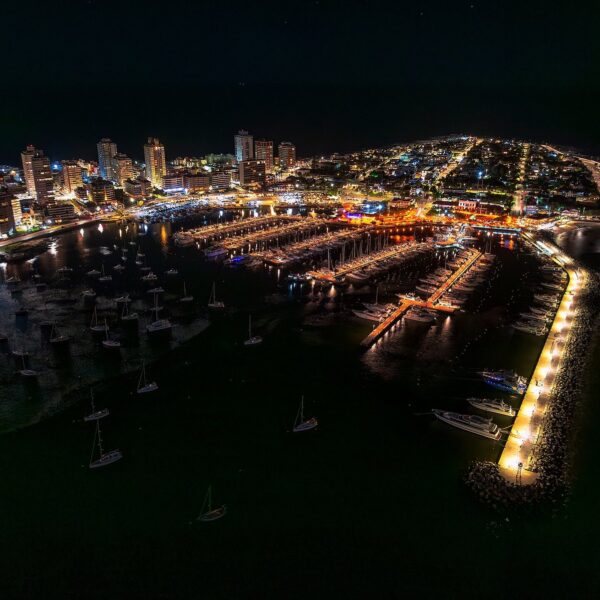
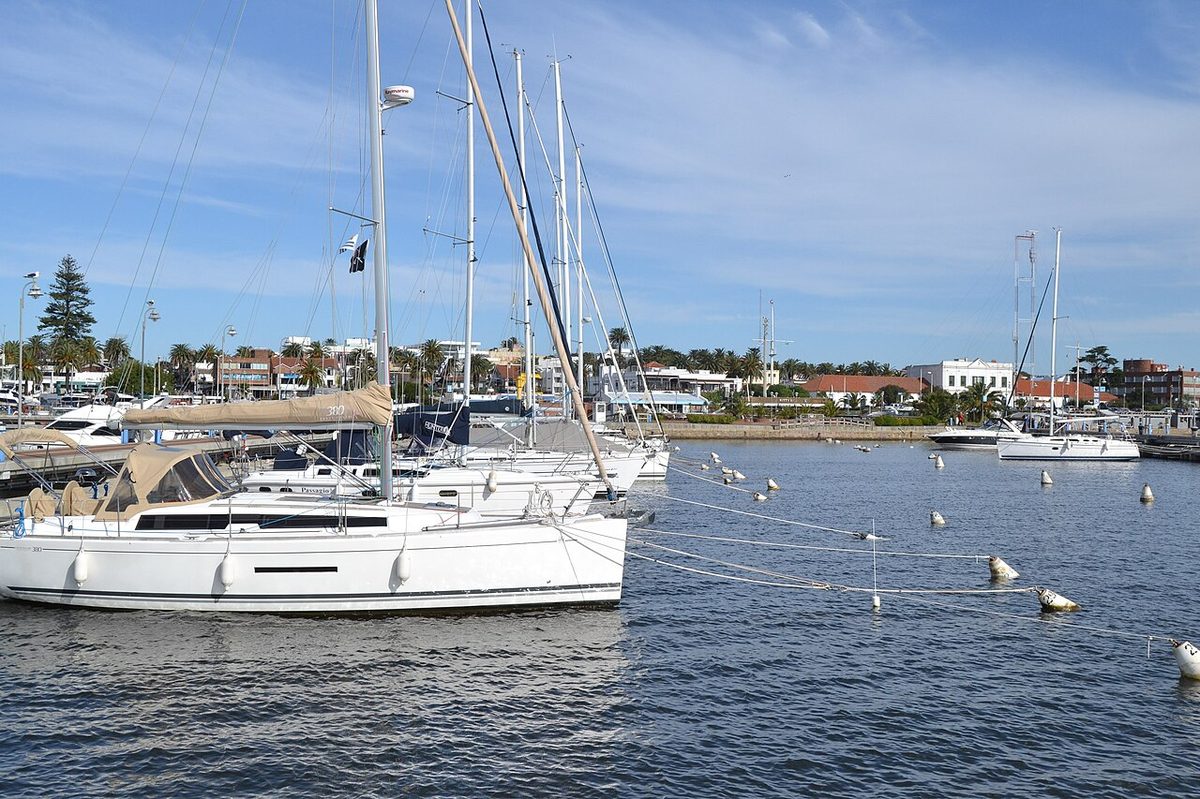
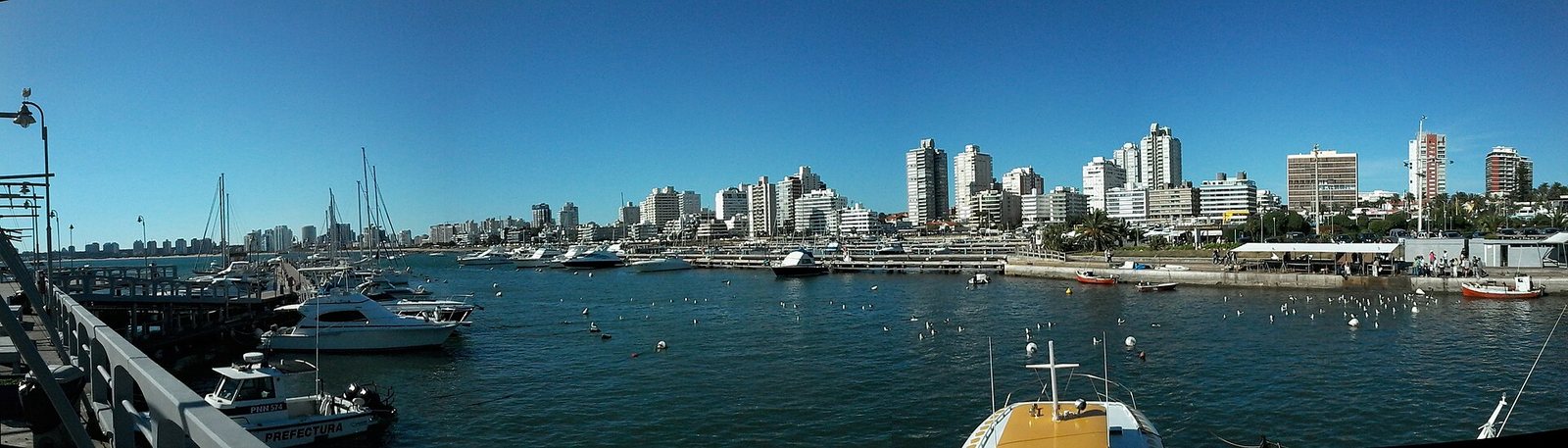
The port itself. Punta del Este’s port is the yacht and fishing harbor on the sheltered west side of the peninsula, and the same brochure lists five berths there for cruise tender operations. It is run by MTOP’s Dirección Nacional de Hidrografía, not by the national ports authority that runs the Port of Montevideo. In December 2025 Hidrografía’s director described it as fully occupied, on land and on the water, at the height of summer. Land here and you step off among the yachts, with Avenida Gorlero and the old grid of the peninsula right behind you.
Which landing you use depends on your line and the day. The daily program or the tender ticket will say. If it lands you at La Pastora, you are on the Mansa side a little north of the peninsula, and La Mano is across the narrow strip of land on Playa Brava. If it lands you in the port, everything on the peninsula is a short walk away.
Who calls here, and when is the season?
Punta del Este is a summer port, and its season follows the Southern Hemisphere summer. MTOP launched the 2024-25 season with 49 calls planned, from November 15 into April. The 2025-26 season ran from October 20, 2025, to March 25, 2026, with 39 calls and about 115,000 passengers expected. The Ministry of Tourism’s launch of that season, on December 19, 2025, featured the Celebrity Equinox, a 2,850-passenger ship that was due to make five Punta del Este calls that summer.
For the 2026-27 season, your cruise line’s itinerary is the document that counts: it gives the date, the arrival and departure times and, in the final days before the call, the tender plan. The last two official launches were held in December, and the Ministry of Tourism and MTOP publish them on their gub.uy news pages if you want the season totals.
One question comes up a lot for 2026-27. In March 2026 Montevideo Portal reported, citing travel-agency sources, that MSC would move its Uruguay calls from Montevideo to Punta del Este for the 2026-27 summer. Treat it as a report until MSC or your booking confirms it. Your booking shows which Uruguayan port your ship calls at; if it’s the capital, our Montevideo cruise port guide covers that call from the terminal outward.
Calls over Christmas and New Year’s fall in the busiest weeks of the Uruguayan summer, when Punta del Este fills up with visitors from Argentina, Brazil and Montevideo. Expect busier beaches, longer lunch waits and more traffic on the rambla. Our guide to Uruguay in December covers the holidays, the weather and what’s open.
Will the weather cancel your tender?
It can, and it’s worth planning around. Punta del Este marks the outer edge of the Río de la Plata where the river meets the Atlantic, and although Isla Gorriti and the peninsula shelter Playa Mansa, the anchorage is still open water. Tendering depends on wind and swell at the anchorage and at the landing, and the captain makes the call on the morning. A rough day can delay the first tenders, cut the call short, or cancel it outright, in which case the ship sails on.
The weather can also turn during the day. If the wind picks up, the ship may bring the last tender forward, and the line will announce it. Keep an eye on the sky and the water, and head back to the landing early rather than late if the bay starts showing whitecaps.
A few habits protect the day:
- Book anything you arrange independently, such as a boat trip or a private driver, with a cancellation policy you can live with if the ship never anchors.
- Ship-sold excursions are normally refunded when the line cancels a call. Check your line’s terms rather than assuming.
- Take the printed all-aboard time seriously. Tenders run on a schedule, and the queue for the last ones back is longer than you’d think.
- Carry the port agent’s phone number from the daily program, and a charged phone.
Verdict: nothing on the peninsula is worth a nonrefundable prepayment that a stiff wind can wipe out. Keep the expensive plans for the ship’s own tours, or for operators who refund weather cancellations.
Money: pesos, dollars and cards
Uruguay’s currency is the peso, and price tags use a symbol that looks exactly like a dollar sign. A menu reading 600 means 600 pesos, not 600 dollars. Banco República (BROU), the state bank, listed its US dollar cash rate at UYU 39.00 buying and UYU 41.40 selling on November 4, 2026, so about 40 pesos to the dollar is a fair working figure. At that rate, UYU 400 is about US$10.
Cards are the easy option for meals, shops and tickets on a cruise day. They also bring a tax break. Uruguay’s sales tax is IVA (impuesto al valor agregado), charged at 22% on most things. Restaurants, catering and car hire paid by card or other electronic means get a 9-point IVA reduction through April 30, 2027, under Decree 235/026, which works out to about 7.4% off a price that includes 22% IVA. The Ministry of Tourism has also announced that the full IVA exoneration for non-residents paying with foreign cards continues for the 2027 season. Check your receipt to see what was applied.
US dollar bills are a fallback, not a plan. If a café or taxi driver accepts them, ask what exchange rate they use before you pay, and expect your change in pesos. Bring small bills either way. For ATMs, card fees and the rest, see our guide to Uruguayan money and cards.
Verdict: pay by card where you can, keep a few thousand pesos for small things, and don’t bother changing money on the ship.
What can you do in Punta del Este on foot?
The peninsula is compact, and a cruise call is the right amount of time for it. From the port, La Mano is less than 2 km away in a straight line, across the neck of the peninsula; the lighthouse sits near the southern tip, and Avenida Gorlero runs down the middle of the peninsula toward the port. Open a map app on your phone at the landing and pick a loop that suits your knees and your all-aboard time.
The port and its sea lions
Free, any time. Even if you land at La Pastora, walk down to the port. It’s a working harbor for yachts and fishing boats, and the sea lions that cruise the water around the fishermen’s stalls are a reliable show. Local reporting puts the big males at around 300 kg. They are wild animals with very large teeth, so keep your distance and don’t feed them. Across the water you’ll see Isla Gorriti, the wooded island that shelters Playa Mansa, and this is also where the boat trips to Isla de Lobos leave from.
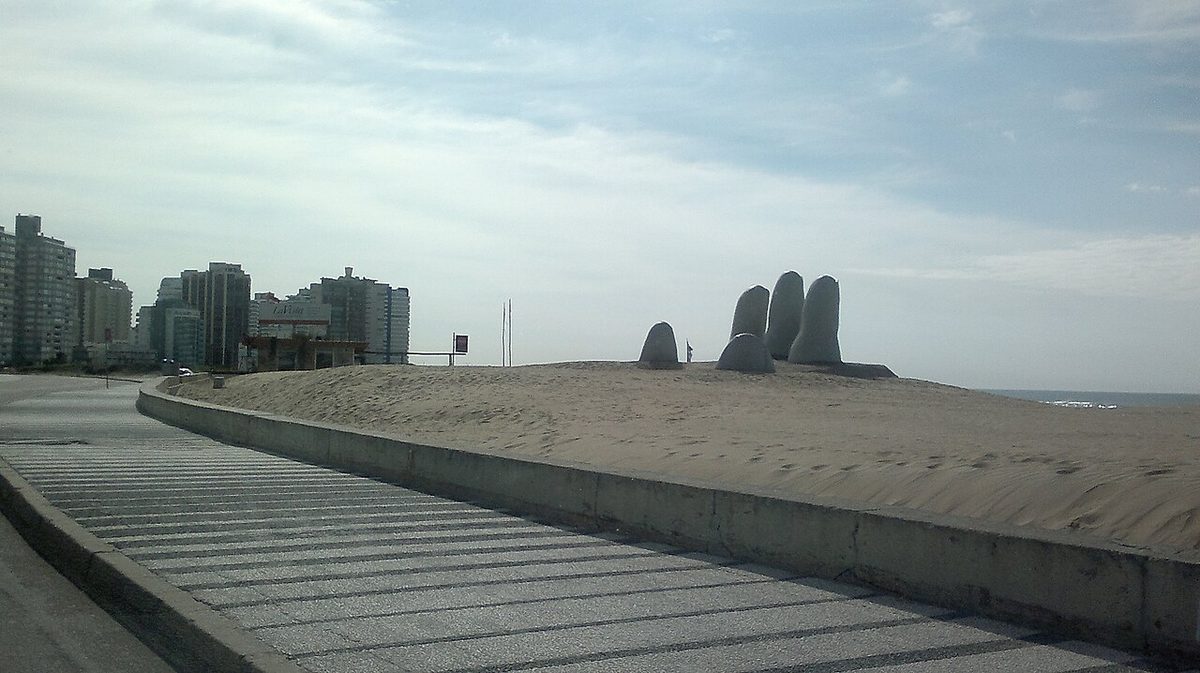
La Mano on Playa Brava
Free, open air, always accessible. The five concrete fingers rising out of the sand at Parada 1, Playa Brava, are the photo every cruise passenger wants. Chilean artist Mario Irarrázabal made the cement-and-steel sculpture in six days for an international outdoor sculpture meeting in 1982, and it has been the resort’s emblem ever since. On a cruise day it gets busy; for a clean shot, go early or accept other people’s children climbing on the thumb. Our La Mano sculpture guide has the backstory and the best angles.
Plan it: open all day; free; walk across the neck of the peninsula from either landing; allow time for the crowd around it; best for first-timers and photographers.
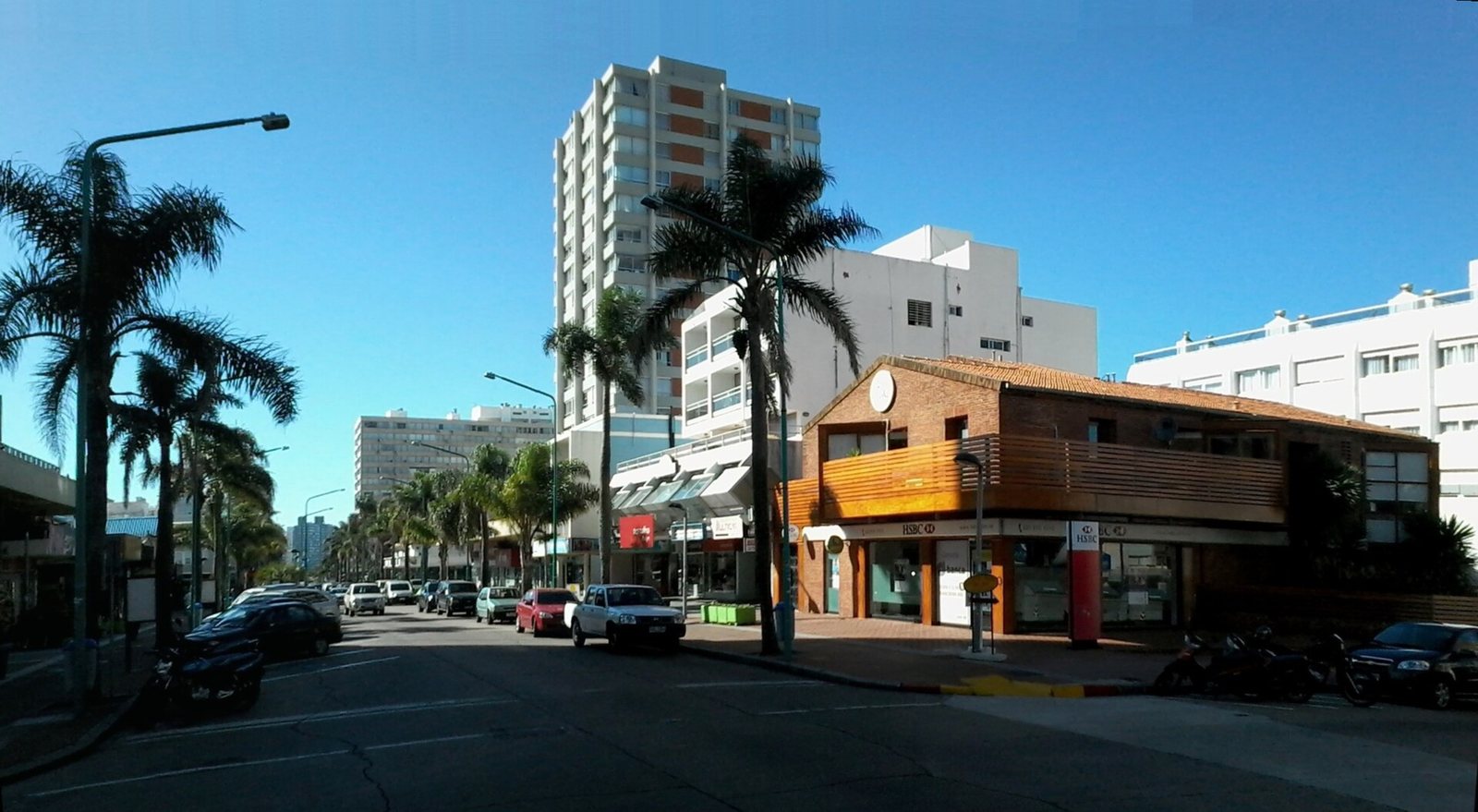
Avenida Gorlero and Calle 20
Free to browse, not cheap to buy. Avenida Gorlero is Punta del Este’s main commercial street, lined with cafés and shops, and it’s the obvious spine for a walk down the peninsula. One block over, Calle 20 is the outdoor shopping street the Intendencia calls Fashion Road, lined with international brands. Neither is a bargain: prices in Punta del Este run high even by Uruguayan standards, and international labels rarely cost less here than at home.
Verdict: walk Gorlero for the atmosphere and a coffee, buy your souvenirs (leather, wool, mate gourds) only if something really catches your eye, and skip Calle 20 unless shopping is the point of your trip.
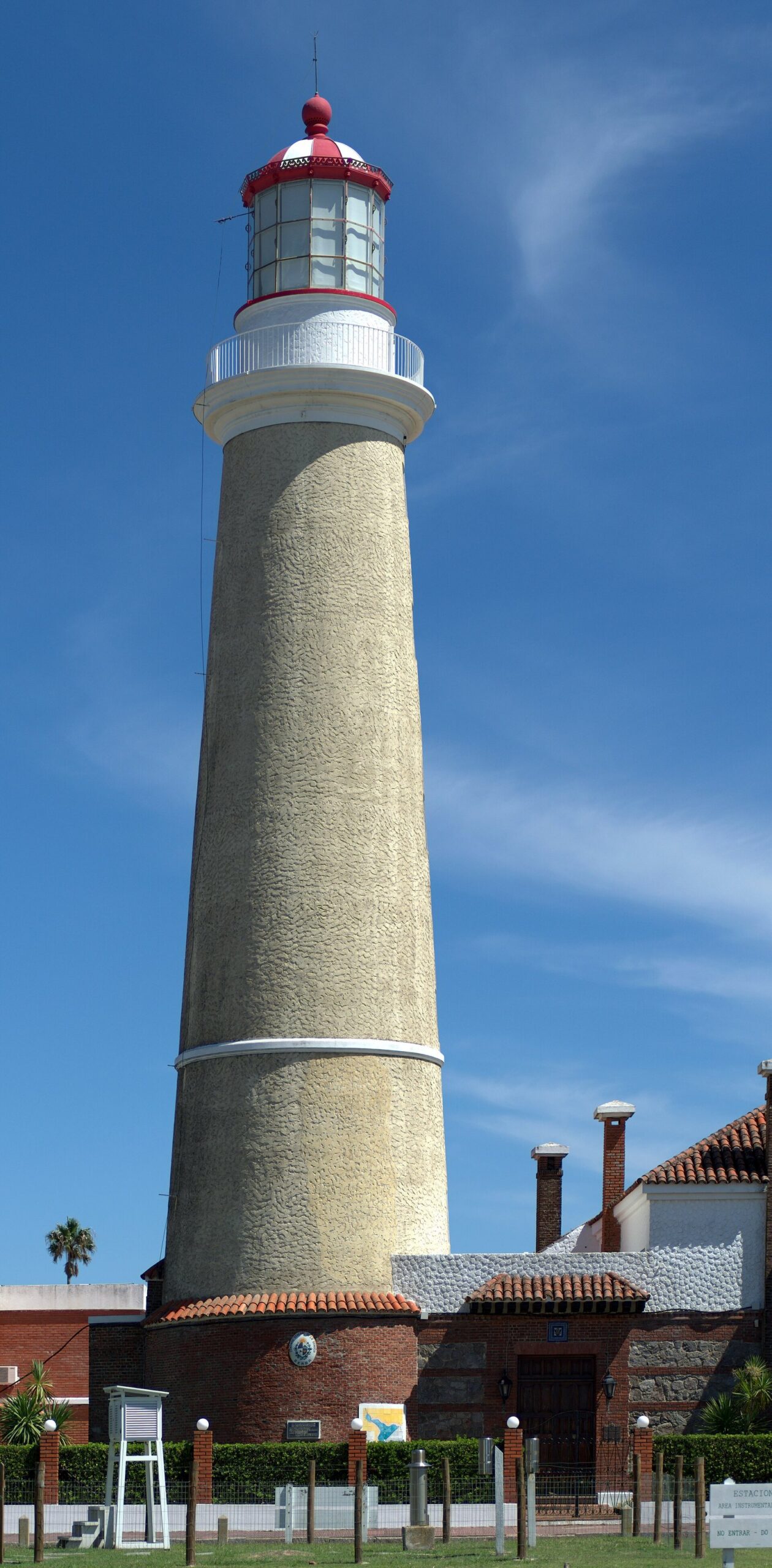
The lighthouse and the tip of the peninsula
Free from the outside. Walk south to the tip and you reach the quieter, older end of town. The Punta del Este lighthouse dates from 1860 and is listed at 45 meters, and beside it stands the Iglesia de la Candelaria, whose first church went up in 1911 and whose present chapel was blessed on February 2, 1922. From there, follow the rambla around the point, where the bay on one side meets the open ocean on the other. It’s the best free walk in town and the one most cruise passengers miss.
Plan it: open air; free; walk south from the port, then loop back along the rambla; best for a relaxed morning and sea views.
A swim at Playa Mansa or Playa Brava
Free; bring a towel from the ship. The two beaches tell you which way you’re facing. Playa Mansa, the “calm” beach, lies west of the peninsula on the bay and is sheltered by Isla Gorriti. Playa Brava, the “rough” one, faces east to the Atlantic and gets bigger waves. If you only have time for one swim, Mansa is the gentler choice, and it’s right beside the La Pastora landing. Maldonado’s lifeguard season for 2026-27 runs from December 1 to March 31, so on an earlier call you may find no lifeguards; otherwise swim near a lifeguard post and obey the flags. Our guide to the beaches of Punta del Este goes parada by parada.
Lunch on the peninsula
Uruguayans lunch late, and seafood is the obvious order this close to the fishing boats. The chivito, Uruguay’s towering steak sandwich, traces its origin to a bar in Punta del Este in the 1940s, so ordering one here is close to a civic duty; our chivito explainer tells the story. For specific tables, from casual to special-occasion, see our Punta del Este restaurant picks, and check each place’s summer hours before you walk over.
Beyond the peninsula: taxis, boats and tours
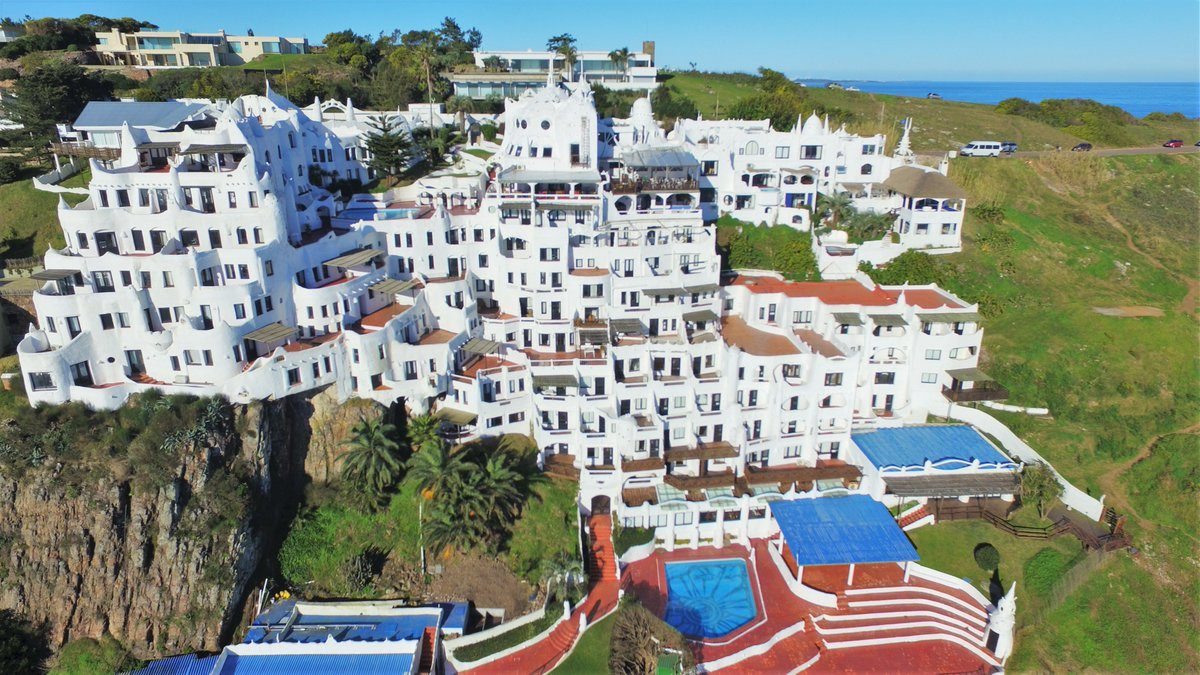
Casapueblo at Punta Ballena
Ticketed; taxi or tour. Casapueblo is the white, sculpted building on the Punta Ballena headland that the artist Carlos Páez Vilaró shaped by hand over more than forty years. It holds a museum and gallery as well as a hotel, and you can see the headland across the bay from Playa Mansa on a clear day. It’s about 11 km west of the port as the crow flies and farther by road along the coast, so a taxi or rideshare is the practical way there on a call.
Museum tickets are sold online through Casapueblo’s own shop, which is the place to check the current price and opening hours. The famous part, the Ceremonia del Sol, happens daily about 15 minutes before sunset, with a recording of Páez Vilaró reading his words to the sun. In midsummer, sunset comes around 8:00 p.m., which on most cruise calls is after the last tender. Go for the building, the views and the gallery, and don’t plan the trip around the ceremony unless your ship stays into the evening. More in our Casapueblo visitor guide.
Plan it: check hours and tickets on casapueblo.com.uy; agree the taxi fare, the waiting time and the ride back before you set off; allow the road time both ways plus your visit; best for art lovers and anyone who has already seen La Mano.
A boat trip to Isla de Lobos
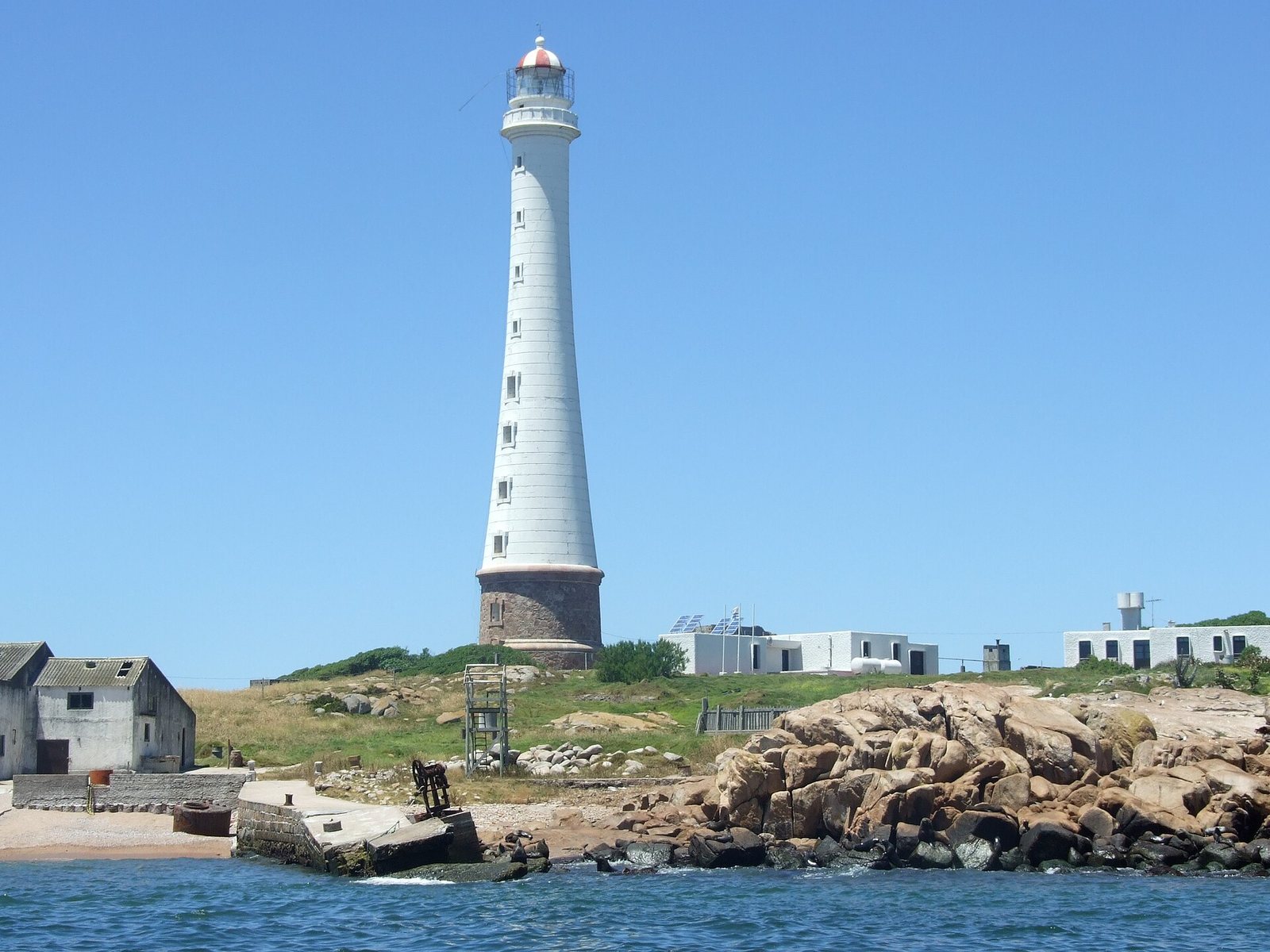
Book ahead; weather permitting. Isla de Lobos lies 8.1 km (4.4 nautical miles) off Punta del Este and is home to a large colony of sea lions and fur seals, described in Spanish-language references as the largest in the Western Hemisphere. Its lighthouse, 49.5 meters tall, was inaugurated on July 18, 1906. Trips leave from the port and head out to the waters around the island to see the colony.
Two cautions. This is a ride across open sea, so the same wind that threatens your tender can cancel the boat, and anyone prone to seasickness should take that seriously. And the trip has to fit inside your call with a margin to spare: before you pay, ask the operator for the return time and compare it with your all-aboard time, not with the time the ship sails. If you’d rather not do that sum, book the ship’s own version. Our Isla de Lobos guide covers the island and its wildlife.
Wineries and José Ignacio on a long call
With a long day ashore, the countryside behind the coast opens up. Wine tours are the usual pick: some local operators, such as The Wine Experience, advertise port pickups in Punta del Este, and our Bodega Garzón guide covers the region’s showpiece winery. Further east, the village of José Ignacio sits 40 km along Route 10. CODESA’s line 14 runs from the Punta del Este bus terminal through La Barra and Manantiales to José Ignacio, and COPSA lists the fare at UYU 161 (about US$4), but a stopping bus plus the tender is a lot of clock on a cruise day. Read up on the village in our José Ignacio guide, then go by tour or taxi.
Montevideo? Skip it
The capital is about 135 km away by road. COT’s direct buses take 2 hours 10 to 2 hours 20 minutes each way, at UYU 466 (about US$12). More than four hours on a bus, plus the tenders, leaves almost nothing for the city. Verdict: stay on the coast and save Montevideo for another trip.
Getting around: taxis, rideshares and buses
Taxis are the simplest way to reach Casapueblo or anywhere off the peninsula. Before you get in, agree the fare, whether the driver will wait, and the time you need to be back at the landing. Ask whether he takes cards, pesos or dollars, and at what rate.
Uber lists Punta del Este as one of its Uruguay service cities, which gives you an upfront price and a card payment. Pickups may be slower at the busiest landing times, when hundreds of passengers come ashore at once. Our guide to Uber in Uruguay covers how it works here.
Local buses run by CODESA connect Punta del Este with Maldonado, San Carlos, Piriápolis and José Ignacio, and the long-distance companies run to Montevideo. They’re cheap and fine for a relaxed day, but nobody on a bus is watching your all-aboard time.
Punta del Este shore excursions: ship tour or on your own?
For the peninsula, go on your own. Everything in the walking section above is free, signposted by the sea on both sides, and hard to get lost in. A guided walking tour adds little that a map and this page don’t give you.
For anything farther out, the ship’s tour has two real advantages. If the tour runs late, the ship waits for its own passengers, and if the call is canceled, lines normally refund it. That matters more in a tender port than in most. The trade-off is price and pace: ship tours cost more than a shared taxi and move at the speed of the slowest coach.
Verdict: do the peninsula yourself, book the ship’s tour for wineries or Isla de Lobos if the timings are tight, and take a taxi to Casapueblo if you’re happy to watch the clock.
Two ways to spend the day
A short call. Take an early tender. If you land at La Pastora, walk across to La Mano first, while it’s quieter, then walk down Gorlero to the port for the sea lions, and on to the lighthouse and the Candelaria church at the tip. Loop back along the rambla, have lunch near the port, and head for the tender with a margin to spare.
- Best for: first-time visitors, short calls, anyone who doesn’t want to spend money on transport
- Skip: Calle 20’s shops, unless shopping is the plan
- Watch: the time of the last tender, and the wind
A long call. Do the peninsula in the morning, then pick one big outing: Casapueblo by taxi, a booked boat to Isla de Lobos, or a winery tour. Trying to fit in two of the three is where cruise passengers end up running for the tender. Finish with a swim at Playa Mansa beside the La Pastora pier if your tenders land there.
- Best for: second-time visitors, art lovers, wildlife fans
- Skip: Montevideo, and José Ignacio by bus
- Watch: the operator’s return time against your all-aboard time
Punta del Este cruise port: your questions answered
Do cruise ships dock in Punta del Este?
No. Punta del Este is a tender port. Cruise ships anchor in the bay off the peninsula and take passengers ashore by launch, which the tourism minister put at about 25 minutes each way. Tenders land at La Pastora pier on Playa Mansa or at the tender berths in the port. Allow for queues on busy mornings, and check the daily program for the times of the first and last tenders.
Where do the tenders drop you off?
Either at La Pastora pier, on Playa Mansa around Parada 3, opposite the Enjoy Punta del Este resort (the former Conrad), or at the berths inside the port on the west side of the peninsula. Your tender ticket or the ship’s daily program will tell you which. Both are within walking distance of the peninsula’s sights, and La Pastora has a 60-meter awning over the landing.
Can you walk from the cruise tender to La Mano?
Yes. La Mano stands at Parada 1 on Playa Brava, across the neck of the peninsula from Playa Mansa and less than 2 km from the port in a straight line. It’s an easy walk from either landing. Use a map app to plot the route from wherever your tender lands, and go early if you want a photo without a crowd.
Do I need a shore excursion in Punta del Este?
Not for the peninsula. La Mano, the port, Avenida Gorlero, the lighthouse and the beaches are free and walkable. An excursion earns its price for things farther away, such as an Isla de Lobos boat trip or a winery visit, because the ship waits for its own tours and refunds them if a call is canceled. Casapueblo works either way.
Can I use US dollars in Punta del Este?
Sometimes, but cards are better. Uruguay’s currency is the peso, and price tags use a sign that looks like a dollar sign. Some businesses take US dollar bills at a rate they set, with change in pesos. Paying by card gets you the official rate and, at restaurants, a 9-point IVA reduction through April 30, 2027. Carry some pesos for small purchases and taxis.
What happens if the tender is canceled because of the weather?
The ship sails on to its next port, and what replaces the lost day is up to the line. Wind and swell decide whether tendering is safe, and the captain makes the call. Ship-sold excursions are refunded under most lines’ terms. Anything you booked independently depends on that operator’s cancellation policy, so check it before you pay.
Can I visit Casapueblo on a cruise stop?
Yes, on most calls. It’s about 11 km west of the port as the crow flies, farther by road, so take a taxi, a rideshare or a ship’s tour. Check the museum’s hours and ticket price on Casapueblo’s own site. The Ceremonia del Sol starts about 15 minutes before sunset, which in summer usually falls after the last tender back to the ship.
Is Punta del Este safe for cruise passengers?
Broadly, yes, with ordinary big-resort care. The US State Department rates Uruguay at Level 2, “Exercise increased caution,” in an advisory issued July 28, 2026. Keep phones and bags close in crowds around La Mano and Gorlero, and don’t leave belongings unattended on the beach. Our Uruguay safety guide covers the details.
Final thoughts
Punta del Este is one of the easier cruise calls in South America to do on your own, as long as you respect the tender. The peninsula rewards a slow loop on foot, and the two big extras, Casapueblo and Isla de Lobos, are each worth a long call on their own. Don’t try to do everything, don’t bother with Montevideo from here, and treat the all-aboard time as the real deadline, because the ship can’t send a launch back for you once the last one has left.
If the day leaves you wanting more (it usually does), plan a return with our rundown of where to stay in Punta del Este, and read up on the rest of the resort in our Punta del Este overview for longer stays.
Credits & sources
Sources & further reading
- MTOP: Punta del Este prepares for 115,000 cruise passengers: the 2025-26 season dates, calls, tender time and La Pastora improvements
- Ministry of Tourism: 2025-26 Punta del Este cruise season launch: the season launch and the Celebrity Equinox calls
- Intendencia de Maldonado: nautical and cruise tourism brochure (PDF): the port’s tender berths
- Intendencia de Maldonado: Punta del Este attractions: the departmental tourism office’s overview of the peninsula
- IMPO: Decree 235/026: the 9-point IVA reduction on card payments through April 30, 2027
- Banco República: exchange rates: the day’s peso to US dollar rate
- US State Department: Uruguay travel advisory: the current advisory level and safety notes
Photo credits
All images via Wikimedia Commons, used with thanks: Cruise ship anchored off Playa Mansa by Talkingheads (CC BY-SA 3.0); Yachts in the port of Punta del Este by Zulmabm (CC BY-SA 4.0); La Mano on Playa Brava by Paola15 (CC BY-SA 3.0); Avenida Gorlero by Babels (CC BY-SA 4.0); The Punta del Este lighthouse by Ezarate (CC BY-SA 4.0); Casapueblo at Punta Ballena by Re Uruguayo (CC BY-SA 4.0); Isla de Lobos lighthouse by Priscilla Jordão (CC BY 2.0); Playa Mansa seen from the bay by NaBUru38 (CC BY-SA 4.0).